
IMCMPALUSPTRMA GPPWWOLCFAVD Guess what does this acronym stands


- Slides: 48
“IMCMPALUSPTRMA GPPWWOLCFAVD” • Guess what does this acronym stands for?
“IMCMPALUSPTRMA GPPWWOLCFAVD” • A “free-form” lens is an “Individually Measured, Computed and Manufactured Progressive Addition Lens Using Software Programs To Run Multiple-Axis Generators and Polishers to Provide the Wearer With an Optimized Lens Correction For A Visual Defect!”
WHAT IS IT? • That acronym may prove a little long so … • Lens designers are coining—and Trademarking or Registering—terms, and phrases to describe—and differentiate—the free-form process.
Terms Synonymous to Freeform • • • Digitally Computed PAL. Individual PAL. Direct-to-surface technology. Digital Surfacing™. Direct-to-surface PAL. Vision First Design™. High Definition (HD) Technology. Personalized Progressive Lenses. These are but a few of the names and terms all being used to describe the same, new category of lenses generically called free-form.
WHAT IS IT? It is a manufacturing process, not a lens. This technology allows lens designers greater freedom for lens designs as they are not confined to using the traditional semifinished lens blanks. The new lens designs can be customized and optimized to the fitting requirements and prescription of each patient.
TRADITIONAL LENS TECHNOLOGY VS FREE-FORM TECHNOLOGY
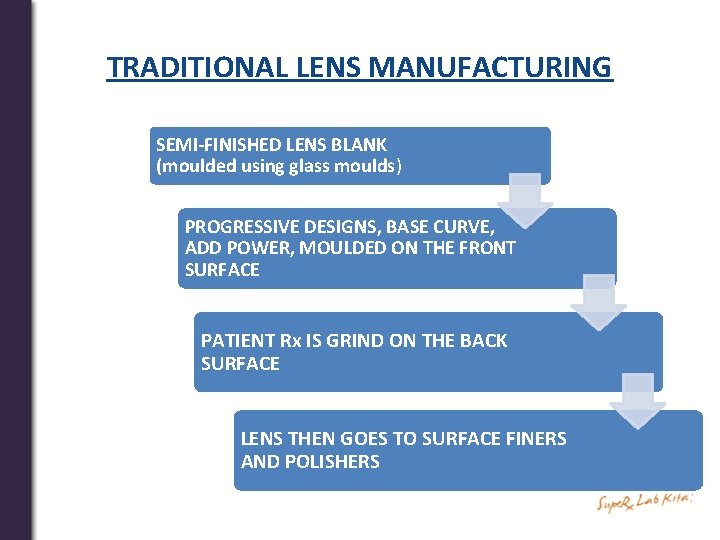
TRADITIONAL LENS MANUFACTURING SEMI-FINISHED LENS BLANK (moulded using glass moulds) PROGRESSIVE DESIGNS, BASE CURVE, ADD POWER, MOULDED ON THE FRONT SURFACE PATIENT Rx IS GRIND ON THE BACK SURFACE LENS THEN GOES TO SURFACE FINERS AND POLISHERS
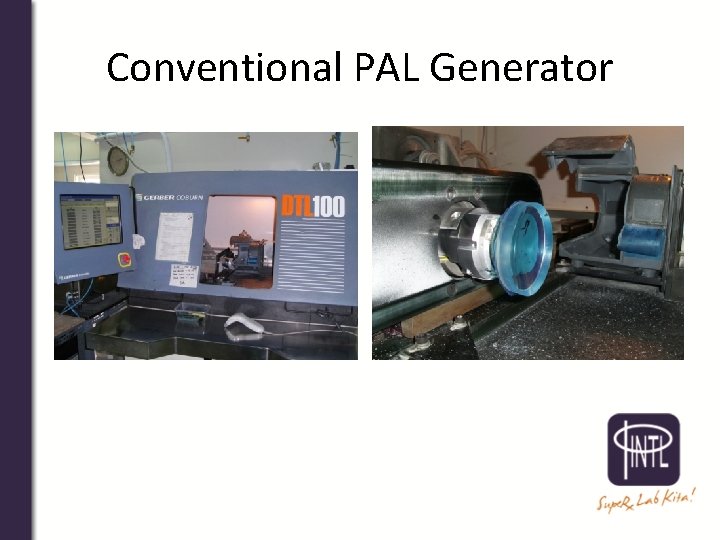
Conventional PAL Generator
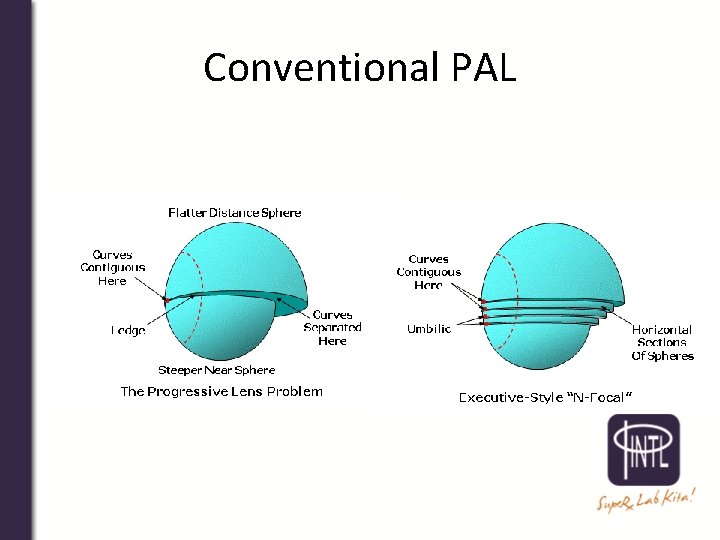
Conventional PAL
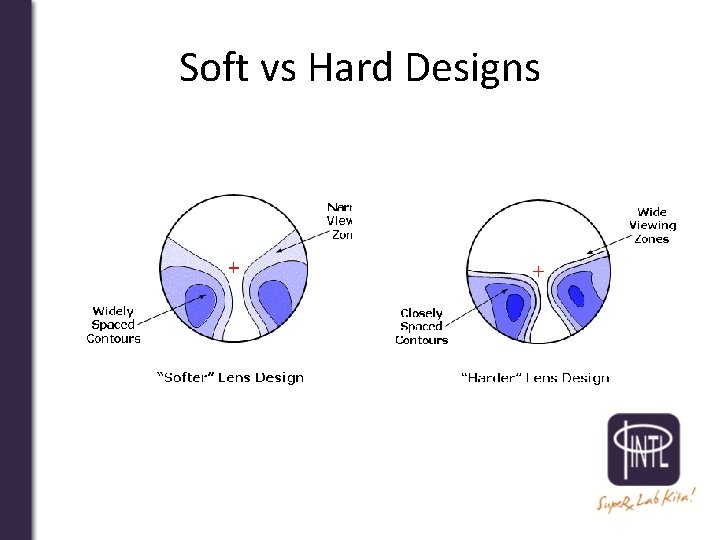
Soft vs Hard Designs
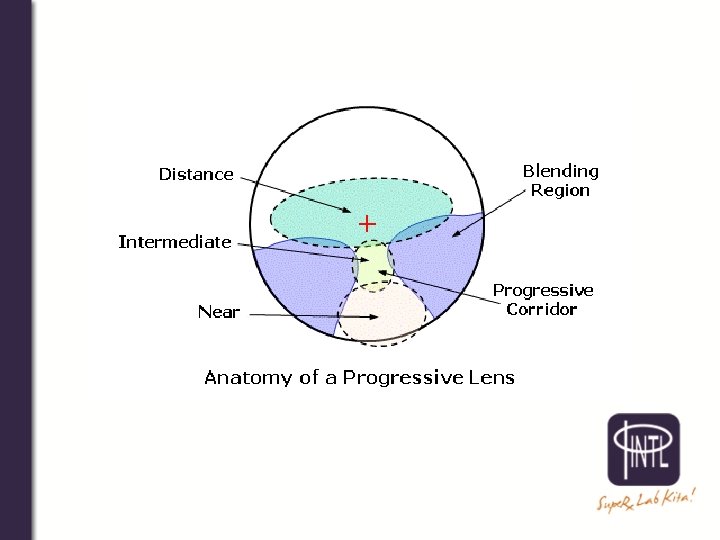
LIMITATIONS OF PROGRESSIVE LENS DESIGNS • Restricted visual field • progressive curves are often positioned a considerable distance from the eye as they are fabricated on the front side of a conventional progressive addition lens, this restricts the wearer’s field of vision
LIMITATIONS OF PROGRESSIVE LENS DESIGNS • Off- center astigmatism and power errors • The near portion/ reading area in a progressive addition lens is affected the most regarding astigmatism and power errors because that portion of the lens is positioned so far away from the optical center of the lens
LIMITATIONS OF PROGRESSIVE LENS DESIGNS • Compromised optics – Conventional PALs are produced in varying base curves with each base curve averaged for a wide range of prescriptions. This represents a compromise from the best possible optics
–IS THERE A SOLUTION?
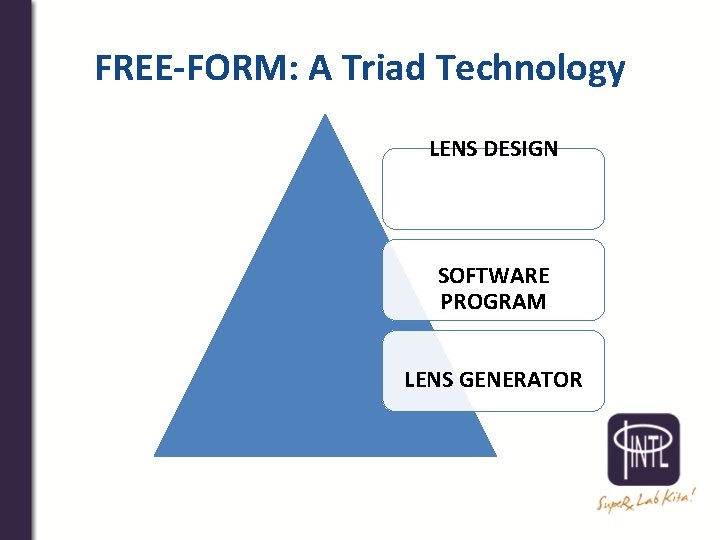
FREE-FORM: A Triad Technology LENS DESIGN SOFTWARE PROGRAM LENS GENERATOR
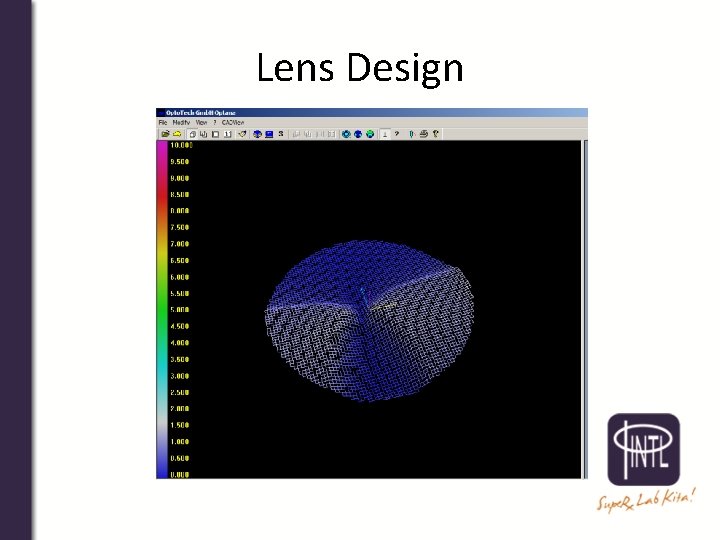
Lens Design
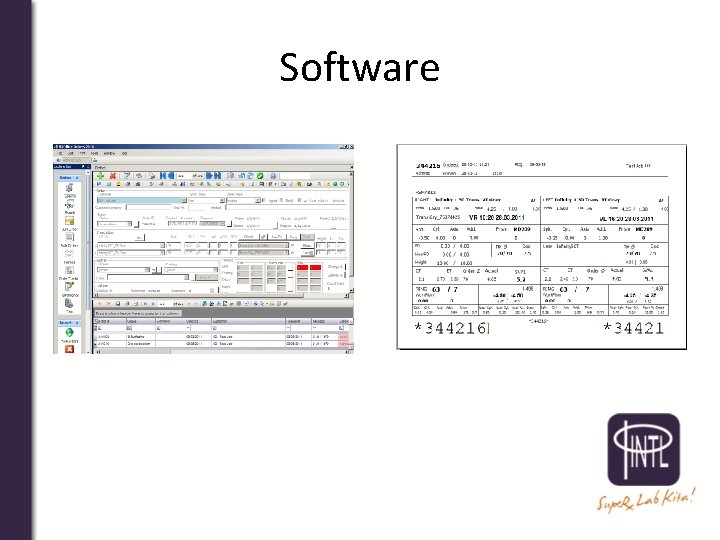
Software
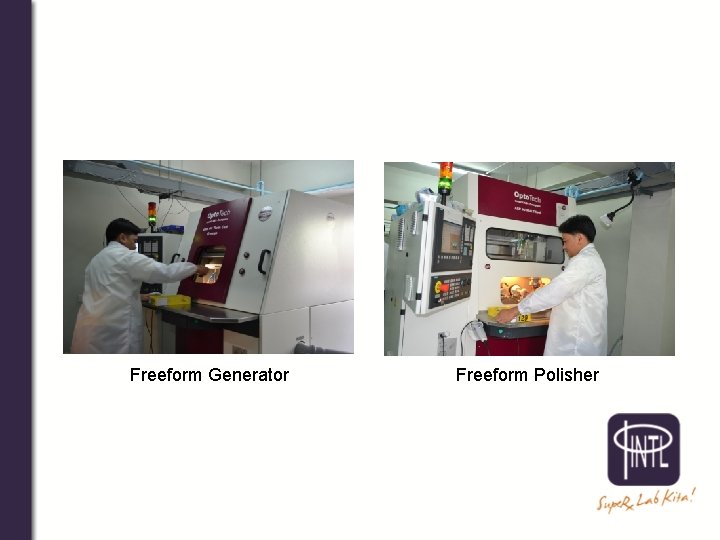
Freeform Generator Freeform Polisher
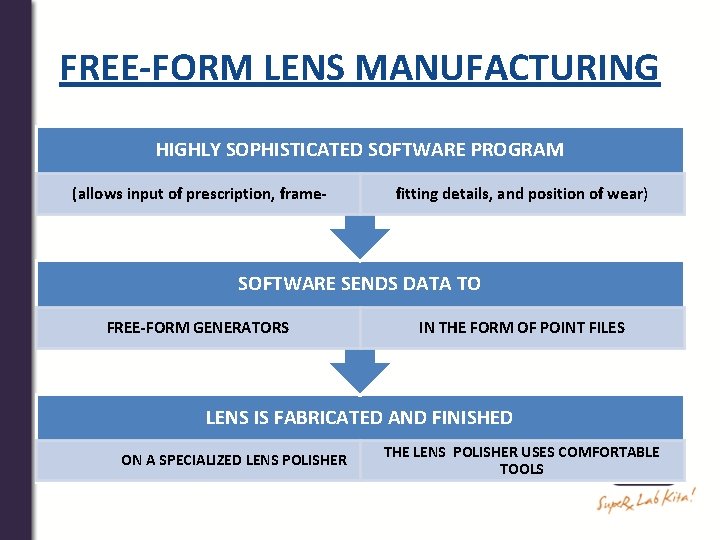
FREE-FORM LENS MANUFACTURING HIGHLY SOPHISTICATED SOFTWARE PROGRAM (allows input of prescription, frame- fitting details, and position of wear) SOFTWARE SENDS DATA TO FREE-FORM GENERATORS IN THE FORM OF POINT FILES LENS IS FABRICATED AND FINISHED ON A SPECIALIZED LENS POLISHER THE LENS POLISHER USES COMFORTABLE TOOLS
LENS DESIGNS
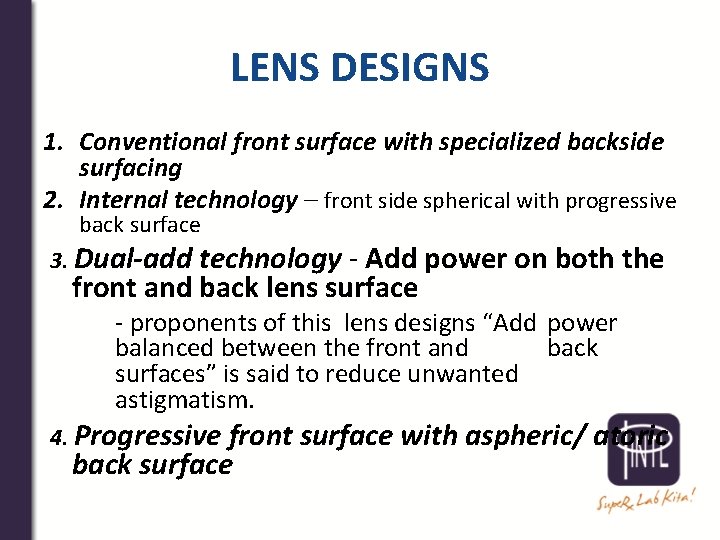
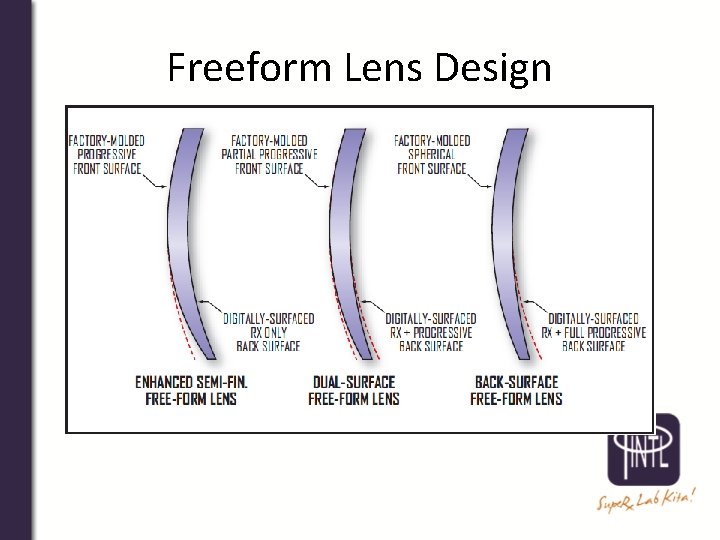
LENS DESIGNS 1. Conventional front surface with specialized backside surfacing 2. Internal technology – front side spherical with progressive back surface 3. Dual-add technology - Add power on both the front and back lens surface - proponents of this lens designs “Add power balanced between the front and back surfaces” is said to reduce unwanted astigmatism. 4. Progressive front surface with aspheric/ atoric back surface
Freeform Lens Design
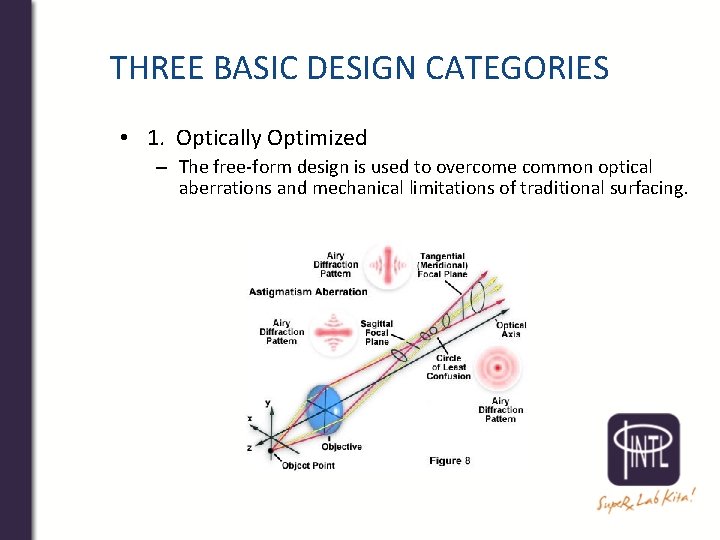
THREE BASIC DESIGN CATEGORIES • 1. Optically Optimized – The free-form design is used to overcome common optical aberrations and mechanical limitations of traditional surfacing.
LENS DESIGN • Any ophthalmic lens with refractive power placed in front of the eye will cause aberrations away from the optical center. – – – Spherical Aberration, Chromatic Aberration, Coma, Marginal Astigmatism, Distortion, Curvature of Field. • Progressive addition lenses compound the problem inasmuch as they use asymmetric curves to correct for distance, intermediate and near vision creating more physical distortions in the lens.
OVERCOMING LENS ABERRATION • Spectacle lenses suffer from various ‘lens aberrations’ that affect the quality of peripheral vision afforded by the lens. Optical performance can be improved by reducing these aberrations, or ‘optimizing’ the lens.
• Optical use of Aspheric Surface • The primary use of aspheric lens design is to reduce or eliminate the lens/ optical aberrations produced by looking through an ophthalmic lens obliquely. • Lenses can be made flatter, thinner, and lighter
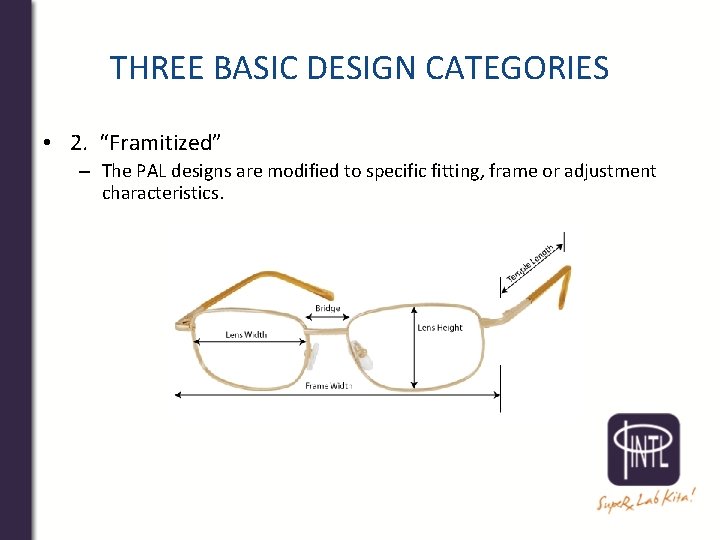
THREE BASIC DESIGN CATEGORIES • 2. “Framitized” – The PAL designs are modified to specific fitting, frame or adjustment characteristics.
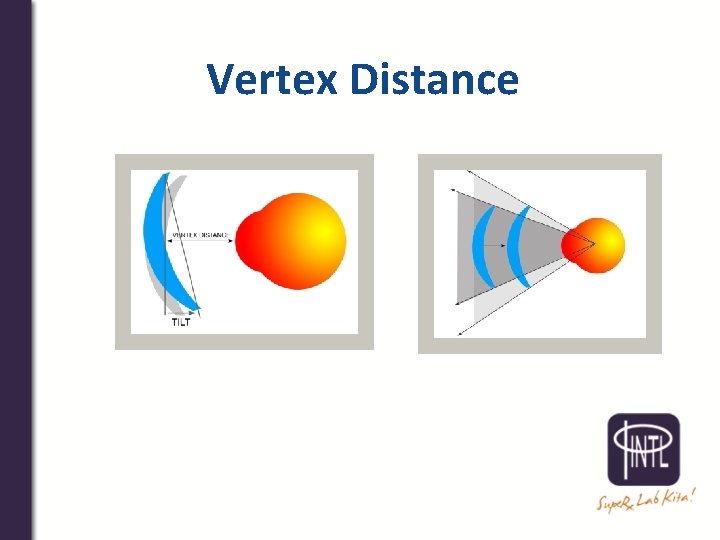
FRAMATIZED • The PAL designs are modified to specific fitting, frame or adjustment characteristics. – Intermediate corridors can be lengthened or shortened depending upon the frame “B” measurement. – Powers can be calculated based upon measured vertex distances.
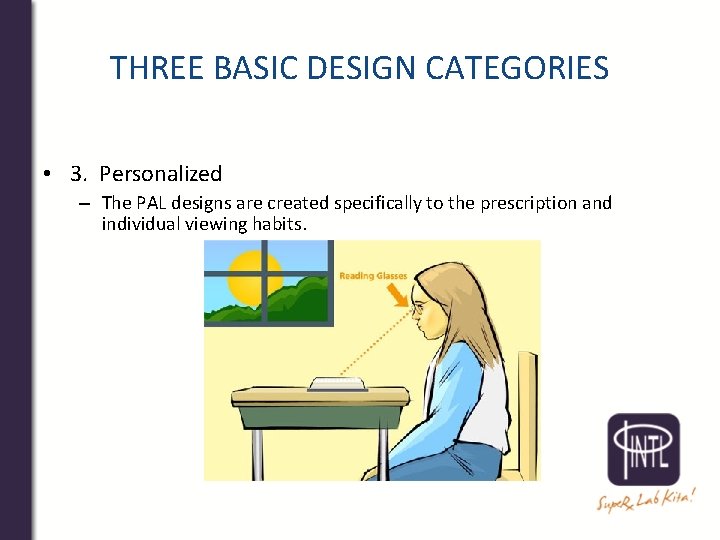
THREE BASIC DESIGN CATEGORIES • 3. Personalized – The PAL designs are created specifically to the prescription and individual viewing habits.
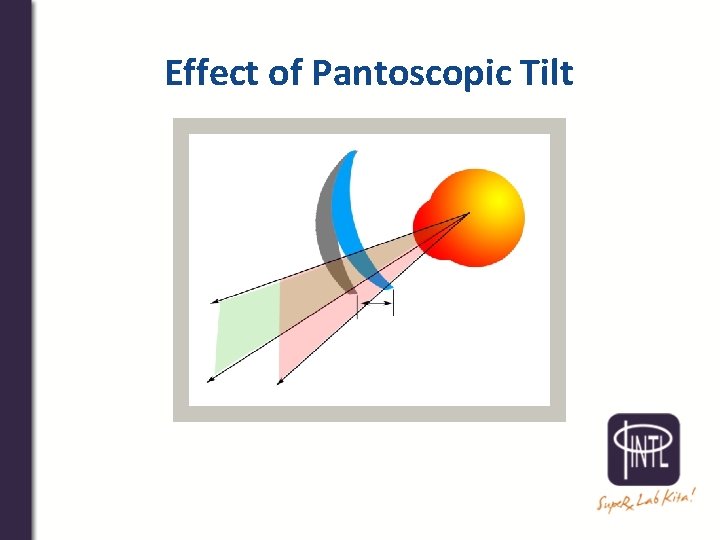
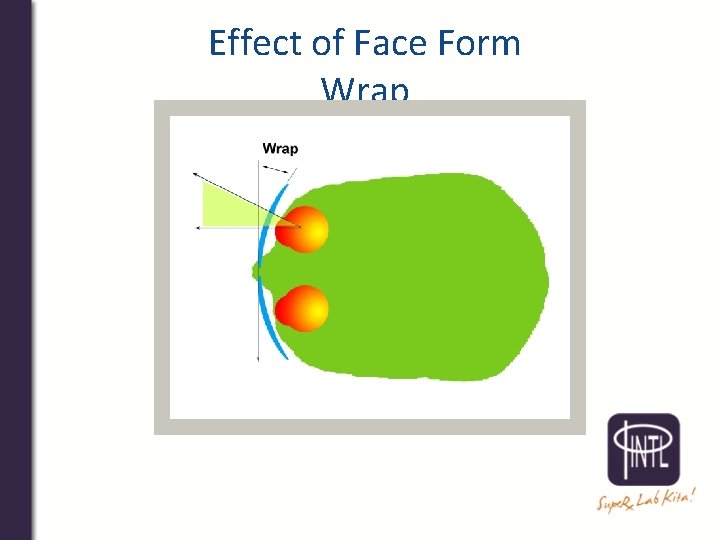
PERSONALIZED • Individuals look at the world differently • Head movers • Eye movers • Reading distance • Specific physical measurements – Measuring these tendencies allows the program to offer even a better design • Vertex distance • Frame wrap • Pantoscopic angle
Vertex Distance
Effect of Pantoscopic Tilt
Effect of Face Form Wrap
BENEFITS OF FREE-FORM • • • Field of view is wider Less unwanted astigmatism Lenses are flatter and thinner Less adaptation period More comfortable Unusual Rxs are accommodated
Prescribing & Dispensing
Do I need to refract the patient differently for free-form PAL lenses? • No difference – use standard refracting equipment & instrumentation • Ask questions about the patient’s lifestyle viewing needs viewing distances not wanting to drop their eyes too far into the lens when doing near work, – and other questions you would normally ask before performing a refraction – –
Good Technique • One of the biggest contributors to progressive lens failures is inaccurate measurements, especially segment heights and monocular PDs. • Measure monocular PDs. • Pre-adjust the frame – – Vertical & horizontal positioning Pantoscopic tilt Face form (wrap) Vertex distance • Sit properly aligned in front of the patient to avoid parallax
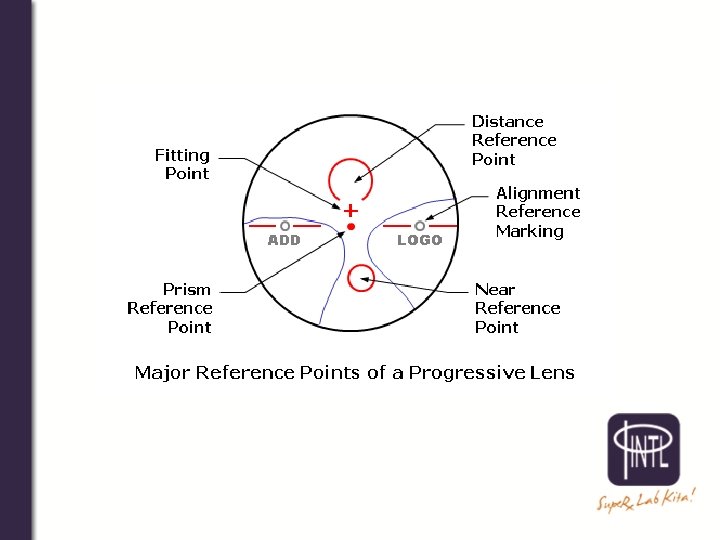
What information do I need to provide to the lens laboratory? • For most – no more than usual – Fitting height & mono PD – Frame data, lens material, etc. • Others – more info – Ex. vertex distance, pantoscopic tilt and face form
Measuring – con’t • Once you begin – don’t move your head! – just your hands from eye to eye. • Moving your head creates errors • If you break alignment, start over. • Take fitting height readings at least twice to ensure accuracy.
Do I need any special equipment to measure the patient for free-form PAL lenses? • In most cases – no – Just mono PD and fitting height • For vertex distance – Ruler measurement of VD? • For pantoscopic tilt & face form – Use a protractor
I’ve heard that free-form PAL lenses may be too complicated for ECPs to dispense. Is this true? • No. • Some lenses use standard measurements – no more difficult • Some need more measurements – A little training is the key to success – Emphasize accuracy of measurements • Why is less important than how.
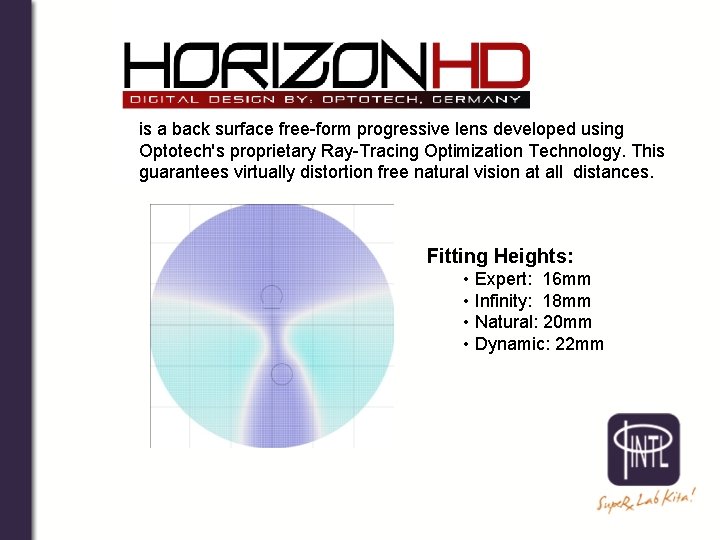
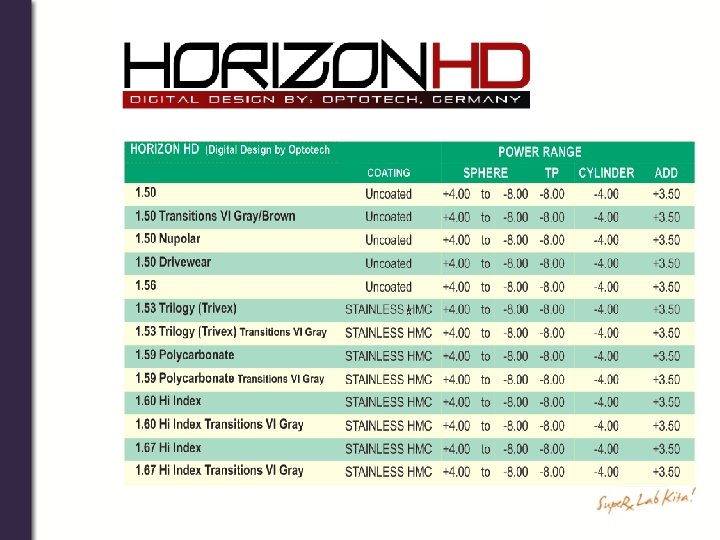
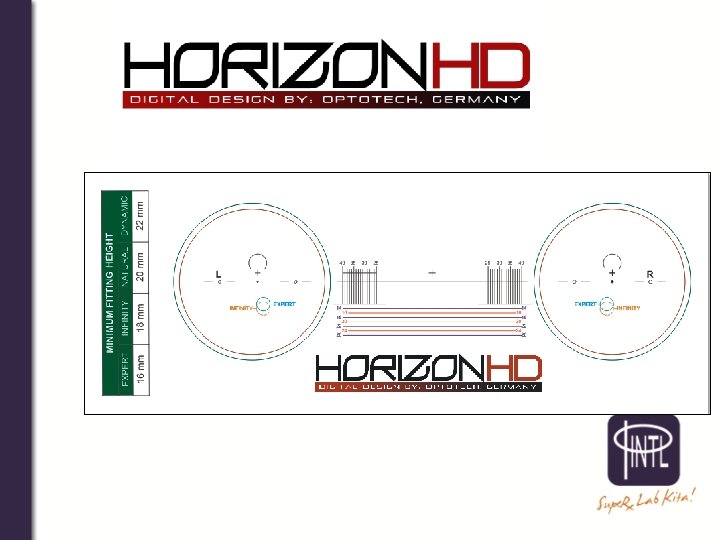
is a back surface free-form progressive lens developed using Optotech's proprietary Ray-Tracing Optimization Technology. This guarantees virtually distortion free natural vision at all distances. Fitting Heights: • Expert: 16 mm • Infinity: 18 mm • Natural: 20 mm • Dynamic: 22 mm
Fitting Heights: • Expert: 16 mm • Infinity: 18 mm • Natural: 20 mm • Dynamic: 22 mm