
Imaging the Awake Animal MRI Efforts Overview W
- Slides: 31
Imaging the Awake Animal MRI Efforts Overview W. Rooney May 20, 2004 1
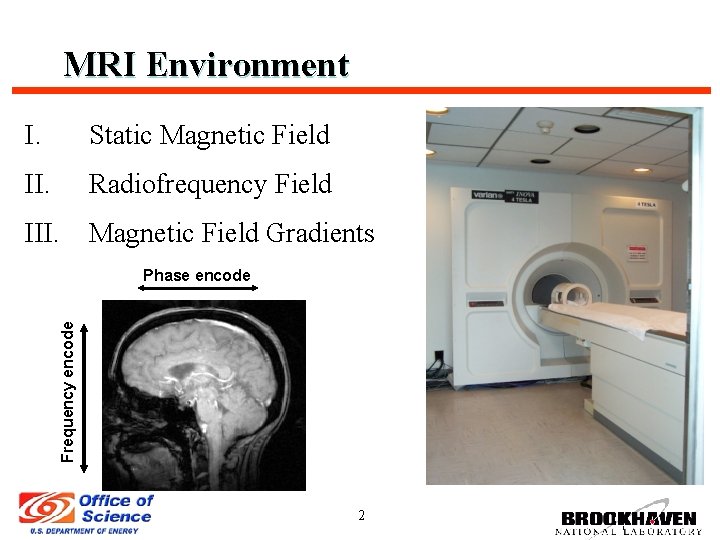
MRI Environment I. Static Magnetic Field II. Radiofrequency Field III. Magnetic Field Gradients Frequency encode Phase encode 2
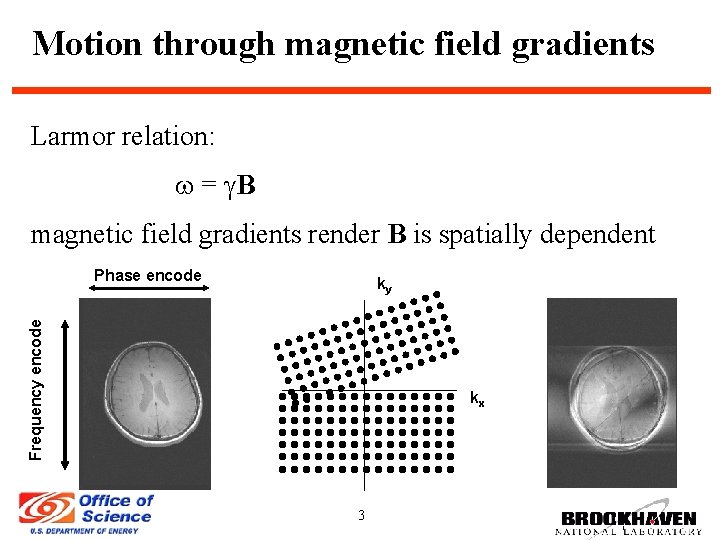
Motion through magnetic field gradients Larmor relation: w = g. B magnetic field gradients render B is spatially dependent Phase encode Frequency encode ky kx 3
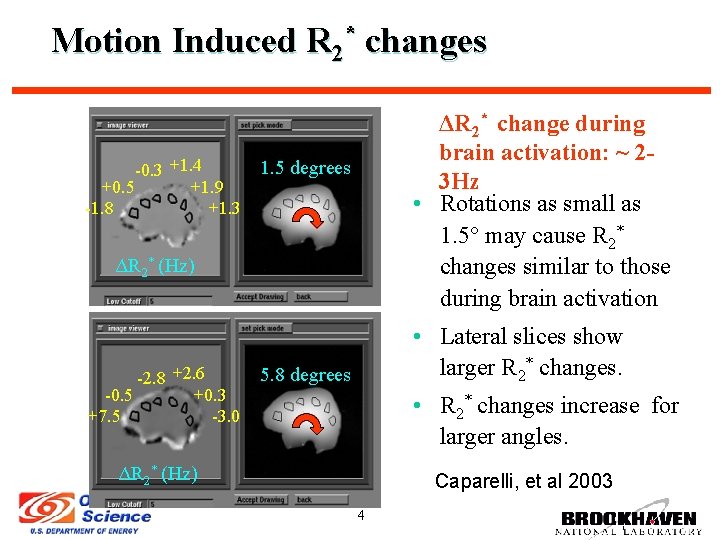
Motion Induced R 2* changes -0. 3 +1. 4 +0. 5 +1. 9 -1. 8 +1. 3 ΔR 2* change during brain activation: ~ 23 Hz • Rotations as small as 1. 5° may cause R 2* changes similar to those during brain activation 1. 5 degrees ΔR 2* (Hz) -2. 8 +2. 6 -0. 5 +0. 3 +7. 5 -3. 0 • Lateral slices show larger R 2* changes. 5. 8 degrees • R 2* changes increase for larger angles. ΔR 2* (Hz) Caparelli, et al 2003 4
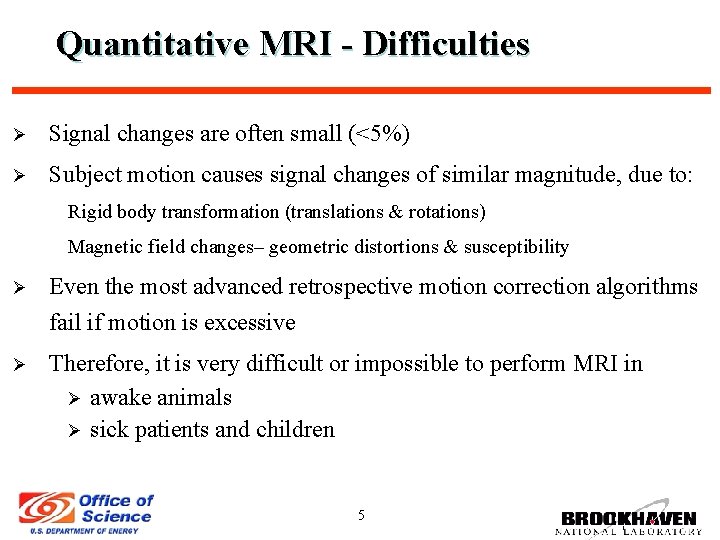
Quantitative MRI - Difficulties Ø Signal changes are often small (<5%) Ø Subject motion causes signal changes of similar magnitude, due to: Rigid body transformation (translations & rotations) Magnetic field changes– geometric distortions & susceptibility Ø Even the most advanced retrospective motion correction algorithms fail if motion is excessive Ø Therefore, it is very difficult or impossible to perform MRI in Ø awake animals Ø sick patients and children 5
Overall Goal - MRI Increase 5 to 10 -fold the range of motion acceptable for susceptibilitybased functional MRI techniques. 6
MRI Projects I. Prospective motion correction in MRI (Lead: Rooney, BNL Chemistry) II. Dynamic prospective adjustment of main magnetic field during MRI (Lead: Wanderer, BNL Magnet Division) III. Retrospective motion correction (Lead: Ernst, BNL Medical) 7
Imaging the Awake Animal Prospective Motion Correction in MRI W. Rooney, X. Li, J. Mead, R. Wang May 20, 2004 8
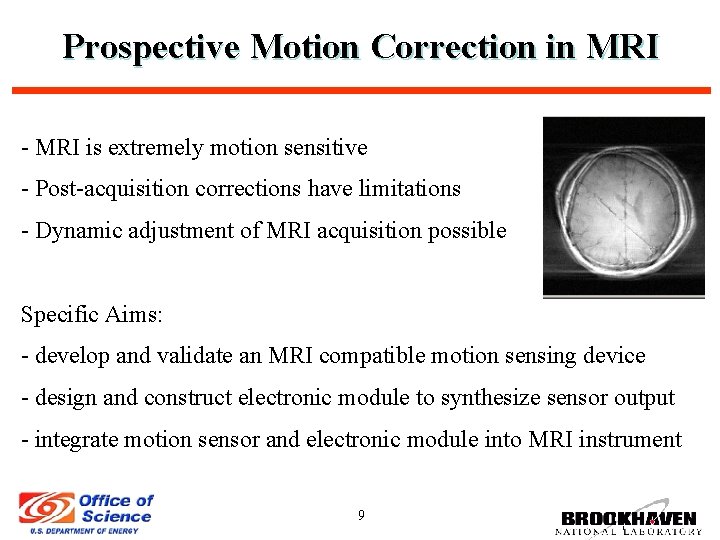
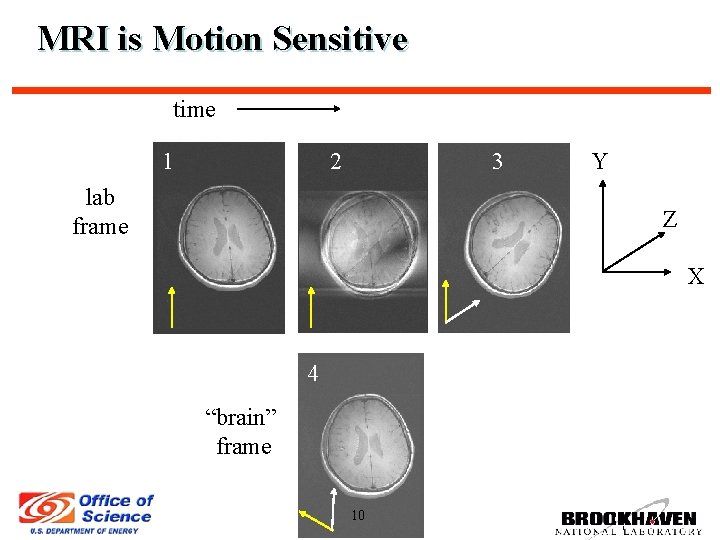
Prospective Motion Correction in MRI - MRI is extremely motion sensitive - Post-acquisition corrections have limitations - Dynamic adjustment of MRI acquisition possible Specific Aims: - develop and validate an MRI compatible motion sensing device - design and construct electronic module to synthesize sensor output - integrate motion sensor and electronic module into MRI instrument 9
MRI is Motion Sensitive time 1 2 3 lab frame Y Z X 4 “brain” frame 10
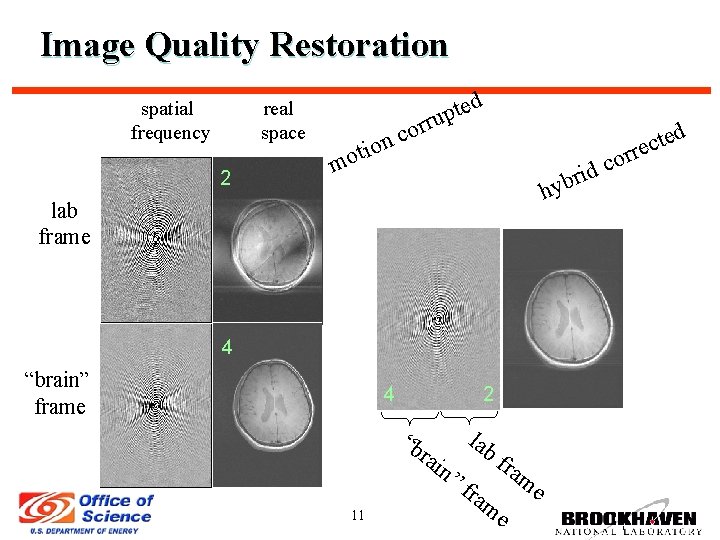
Image Quality Restoration spatial frequency ed t p rru real space 2 mo co n tio id r b y h lab frame 4 “brain” frame 4 2 “b rai 11 n” lab fra me me c d e t c orre
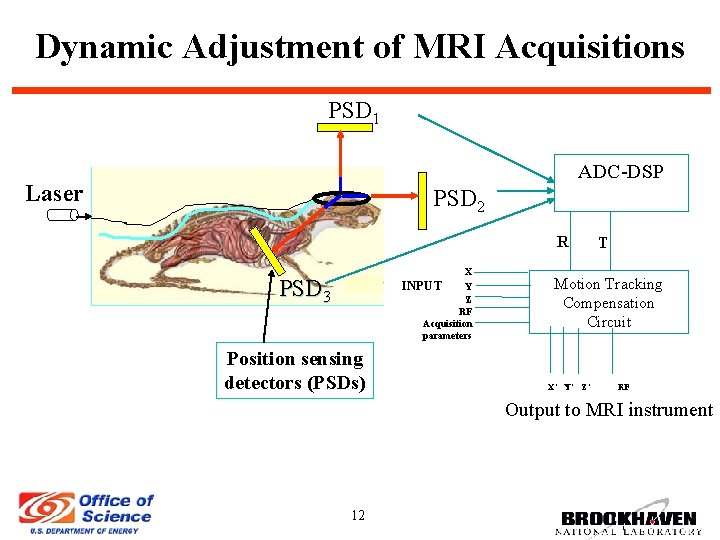
Dynamic Adjustment of MRI Acquisitions PSD 1 ADC-DSP Laser PSD 2 R X INPUT Y Z RF Acquisition parameters PSD 3 Position sensing detectors (PSDs) T Motion Tracking Compensation Circuit X' Y' Z' RF Output to MRI instrument 12
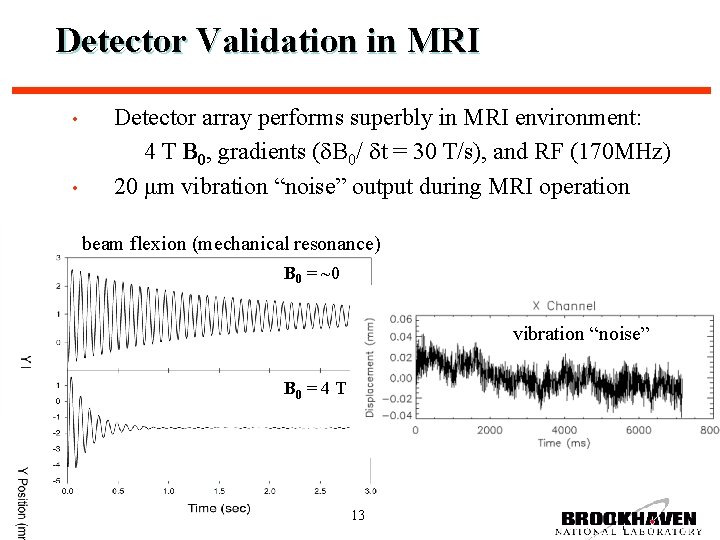
Detector Validation in MRI • • Detector array performs superbly in MRI environment: 4 T B 0, gradients ( B 0/ t = 30 T/s), and RF (170 MHz) 20 μm vibration “noise” output during MRI operation beam flexion (mechanical resonance) B 0 = ~0 vibration “noise” B 0 = 4 T 13
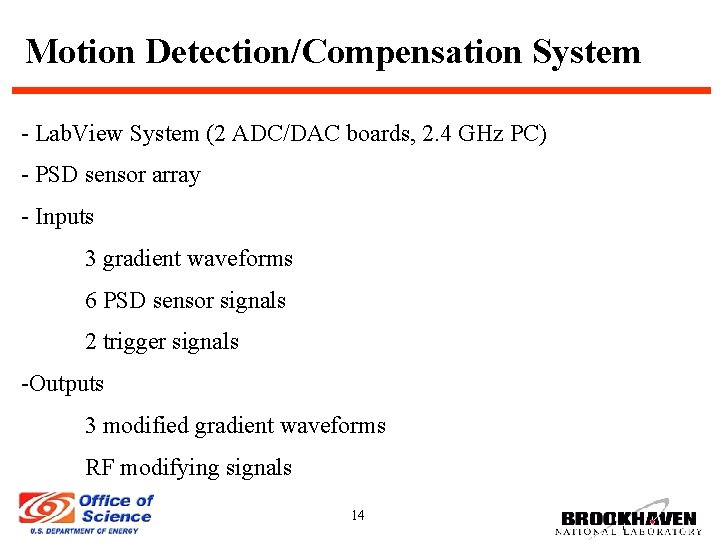
Motion Detection/Compensation System - Lab. View System (2 ADC/DAC boards, 2. 4 GHz PC) - PSD sensor array - Inputs 3 gradient waveforms 6 PSD sensor signals 2 trigger signals -Outputs 3 modified gradient waveforms RF modifying signals 14
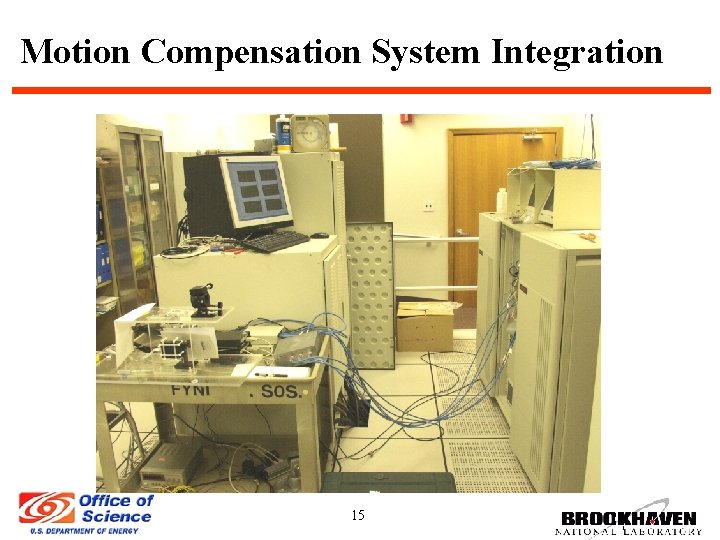
Motion Compensation System Integration 15
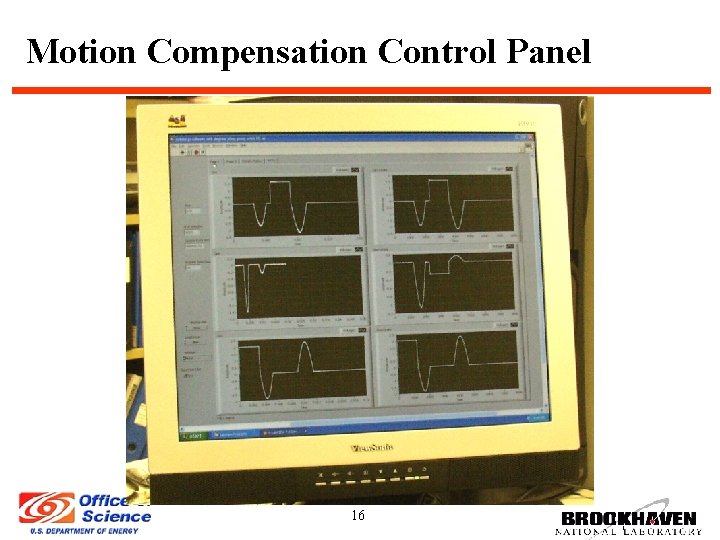
Motion Compensation Control Panel 16
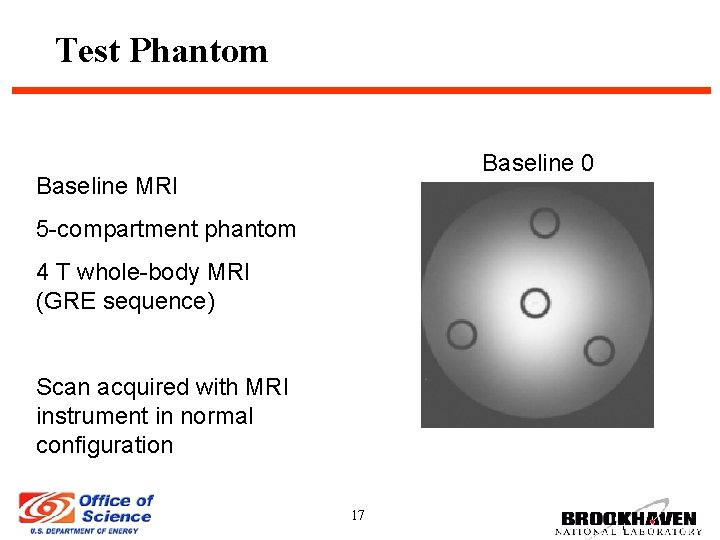
Test Phantom Baseline 0 Baseline MRI 5 -compartment phantom 4 T whole-body MRI (GRE sequence) Scan acquired with MRI instrument in normal configuration 17
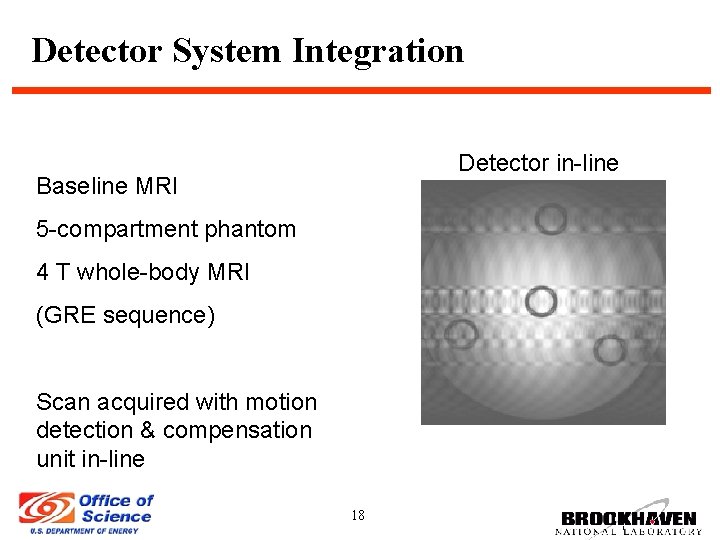
Detector System Integration Detector in-line Baseline MRI 5 -compartment phantom 4 T whole-body MRI (GRE sequence) Scan acquired with motion detection & compensation unit in-line 18
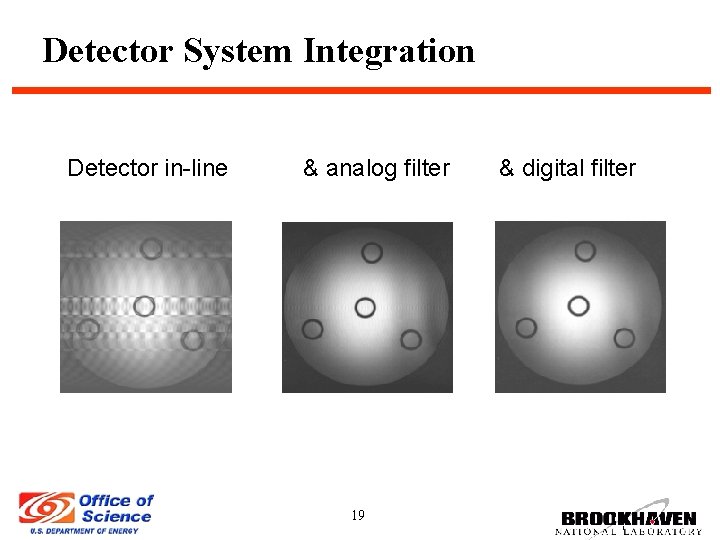
Detector System Integration Detector in-line & analog filter 19 & digital filter
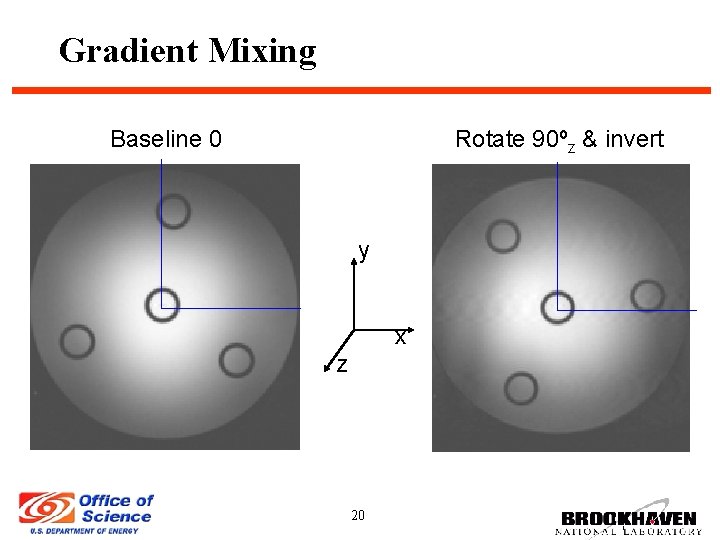
Gradient Mixing Baseline 0 Rotate 90ºz & invert y x z 20
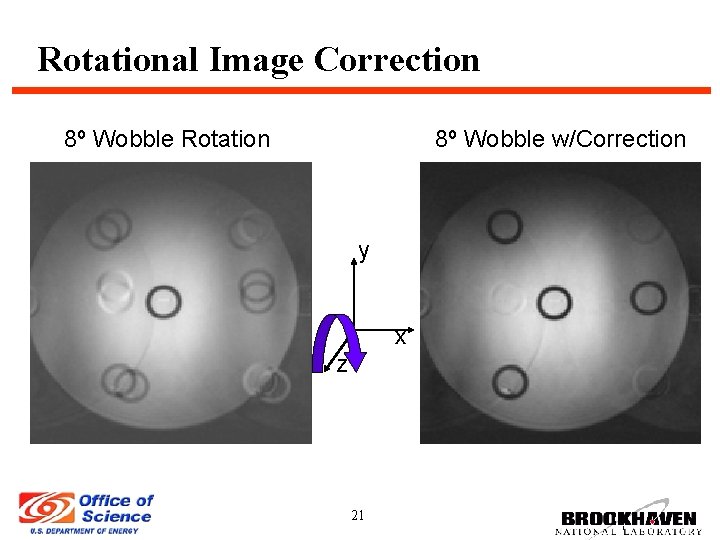
Rotational Image Correction 8º Wobble Rotation 8º Wobble w/Correction y x z 21
PET-MRI Instrumentation D. Schlyer, C. Woody, P. Vaska, W. Rooney May 20, 2004 22
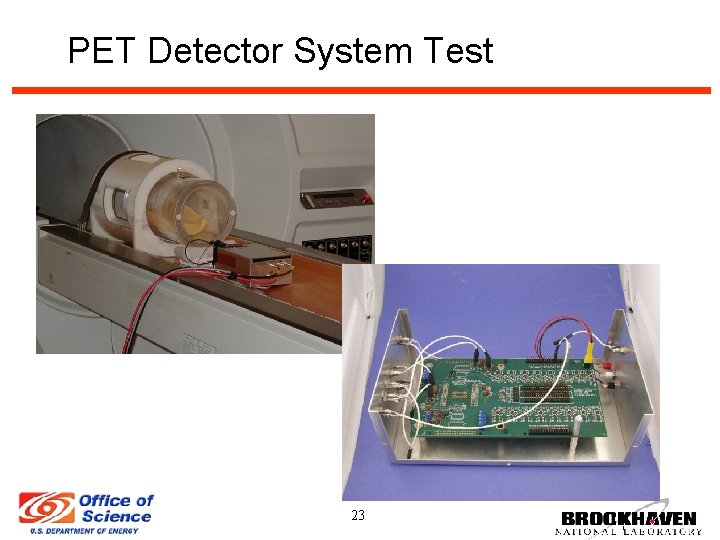
PET Detector System Test 23
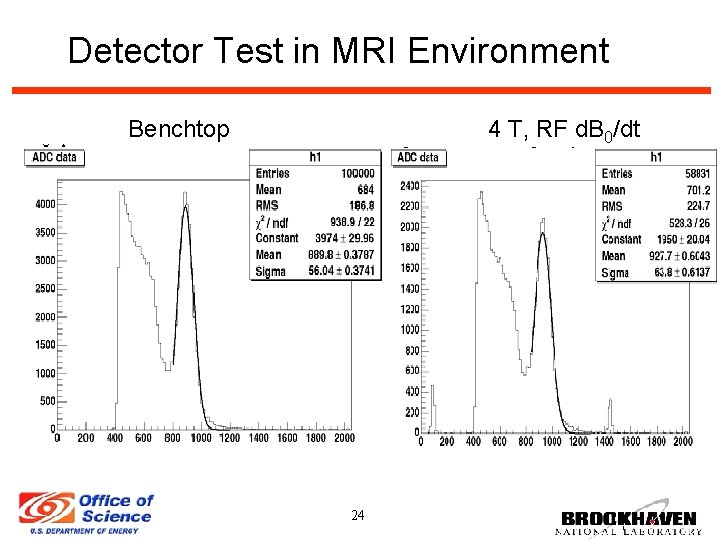
Detector Test in MRI Environment Benchtop 4 T, RF d. B 0/dt 24
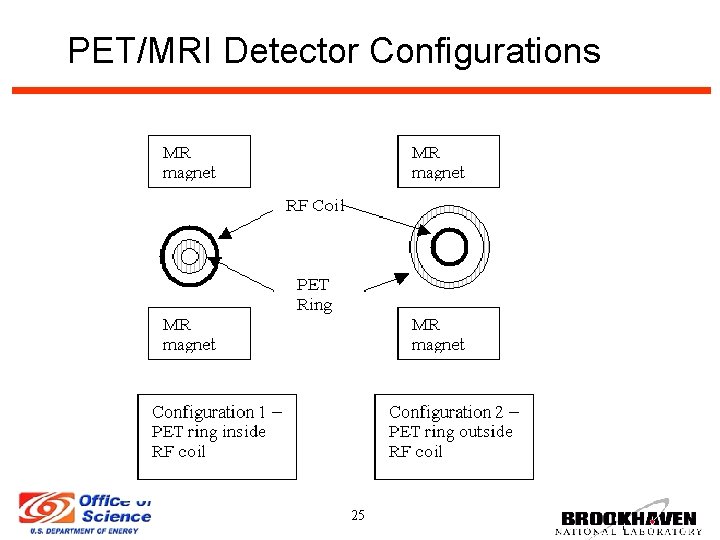
PET/MRI Detector Configurations 25
Animal Position Tracking W. Rooney, X. Li, J. Mead, R. Wang May 20, 2004 26
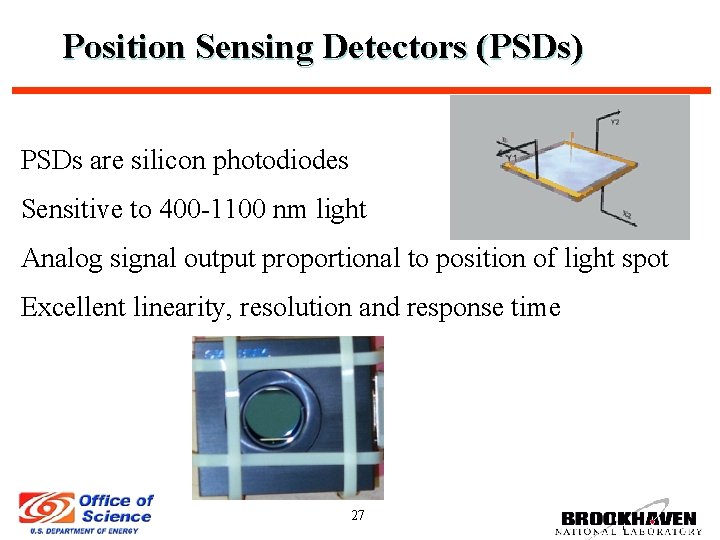
Position Sensing Detectors (PSDs) PSDs are silicon photodiodes Sensitive to 400 -1100 nm light Analog signal output proportional to position of light spot Excellent linearity, resolution and response time 27
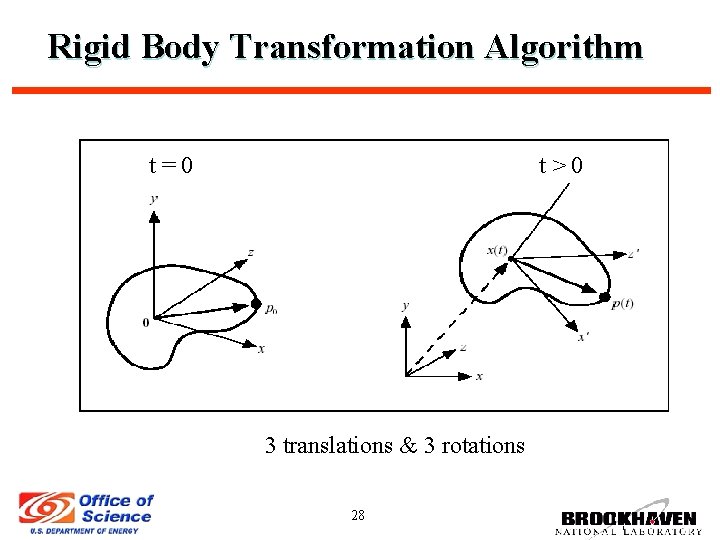
Rigid Body Transformation Algorithm t=0 t>0 3 translations & 3 rotations 28
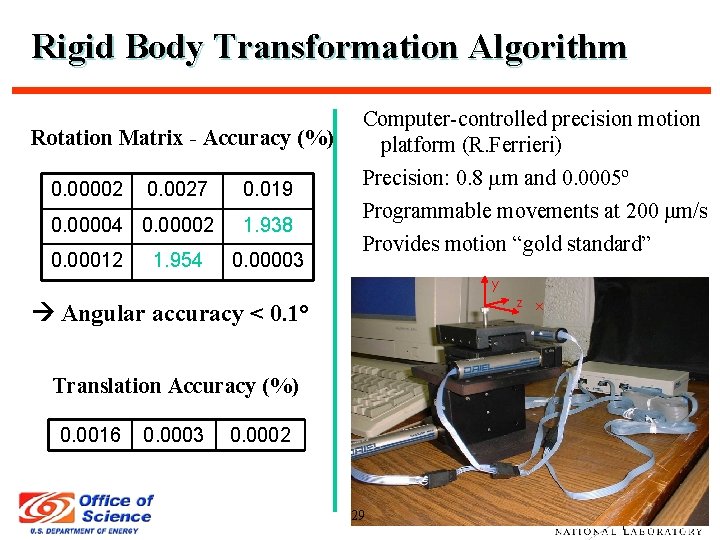
Rigid Body Transformation Algorithm Rotation Matrix - Accuracy (%) 0. 00002 0. 0027 0. 019 0. 00004 0. 00002 1. 938 0. 00012 1. 954 0. 00003 Computer-controlled precision motion platform (R. Ferrieri) Precision: 0. 8 m and 0. 0005º Programmable movements at 200 μm/s Provides motion “gold standard” y Angular accuracy < 0. 1° Translation Accuracy (%) 0. 0016 0. 0003 0. 0002 Accuracy < 1μm 29 z x
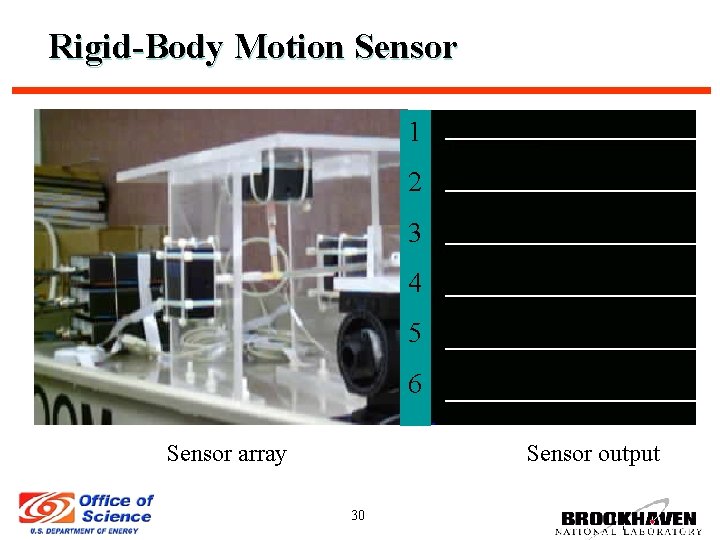
Rigid-Body Motion Sensor 1 2 3 4 5 6 Sensor array Sensor output 30
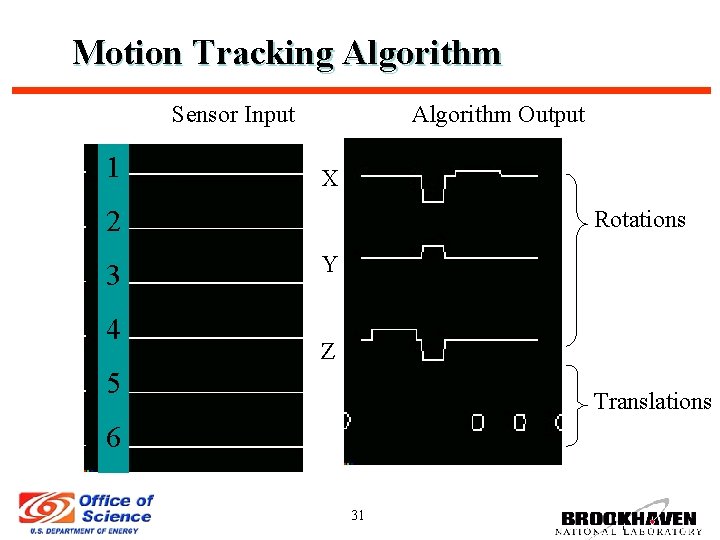
Motion Tracking Algorithm Sensor Input 1 Algorithm Output X 2 3 4 Rotations Y Z 5 Translations 6 31