
Imaging modalities in trauma surgery AO Trauma Basic
Imaging modalities in trauma surgery AO Trauma Basic Principles Course
Learning objectives • Outline advantages and disadvantages of imaging modalities used in trauma surgery • Describe appropriate imaging modalities for specific injuries • Combine imaging modalities to achieve improved patient care
Imaging modalities in trauma surgery • Conventional x-ray • 3 -D C-arm • CT scan • Spiral CT scan • MRI • Ultrasound • Arthroscopy (optical imaging) • Radioisotope scan
Conventional x-ray • Advantages • Relatively cheap and available • Time • Fractures and dislocations straightforward to interpret • Disadvantages • Exposure to radiation • Some fractures and subluxations difficult to see • Poor visualization of soft tissues • Potentially insufficient information for planning, eg, complex intraarticular fractures – 3 -D reconstructions may be necessary
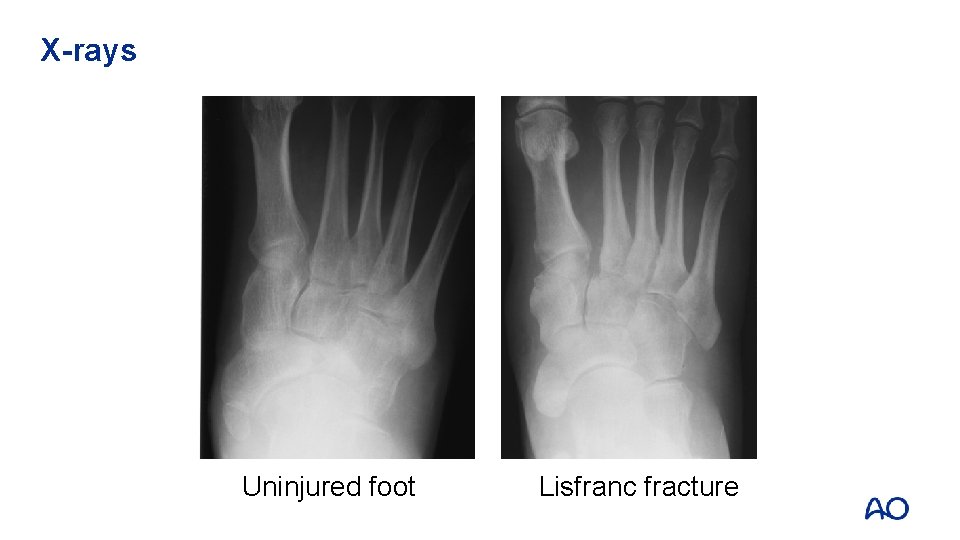
X-rays Uninjured foot Lisfranc fracture

Fat pad sign: x-ray evidence of lipohemarthrosis
When to use another modality • Occult bony injury suspected • More information needed, eg, fractures of acetabulum, os calcis, pilon • Specific soft-tissue injury suspected, eg, meniscus, ligament, tendon • Cervicothoracic junction poorly visualized on x-rays • Neurological spinal injury • Polytrauma
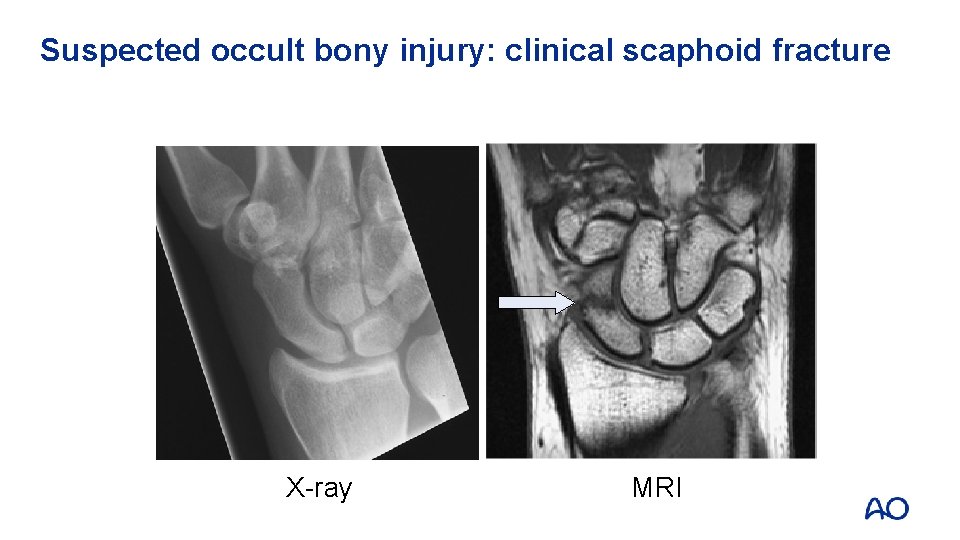
Suspected occult bony injury: clinical scaphoid fracture X-ray MRI
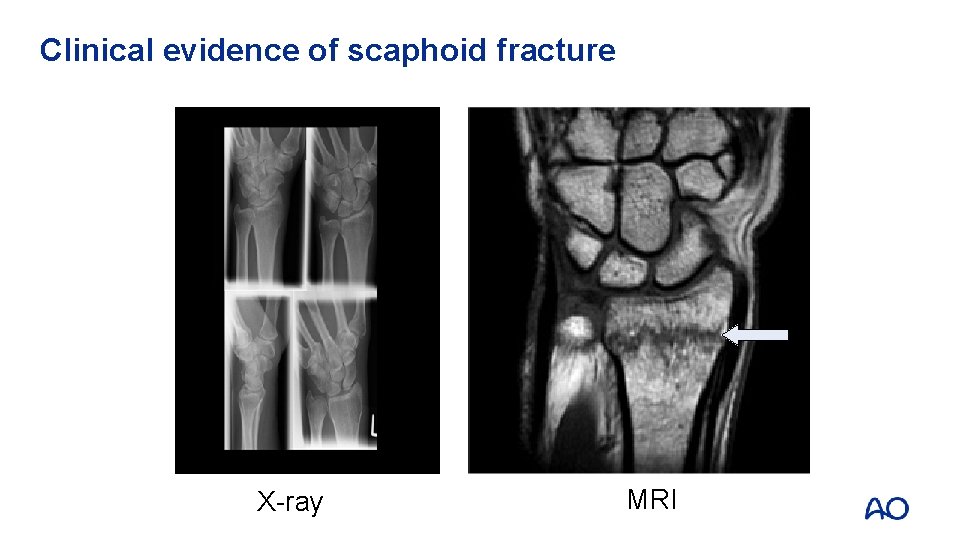
Clinical evidence of scaphoid fracture X-ray MRI
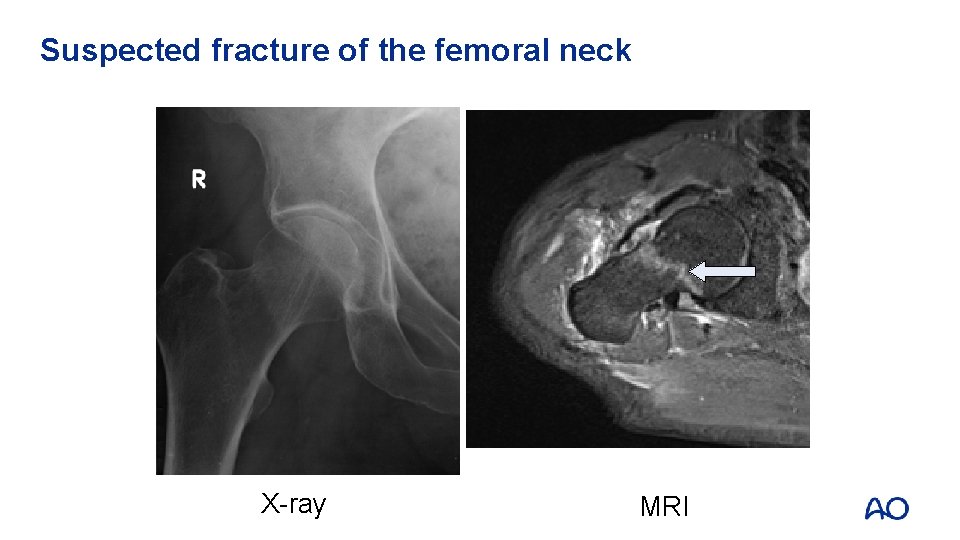
Suspected fracture of the femoral neck X-ray MRI
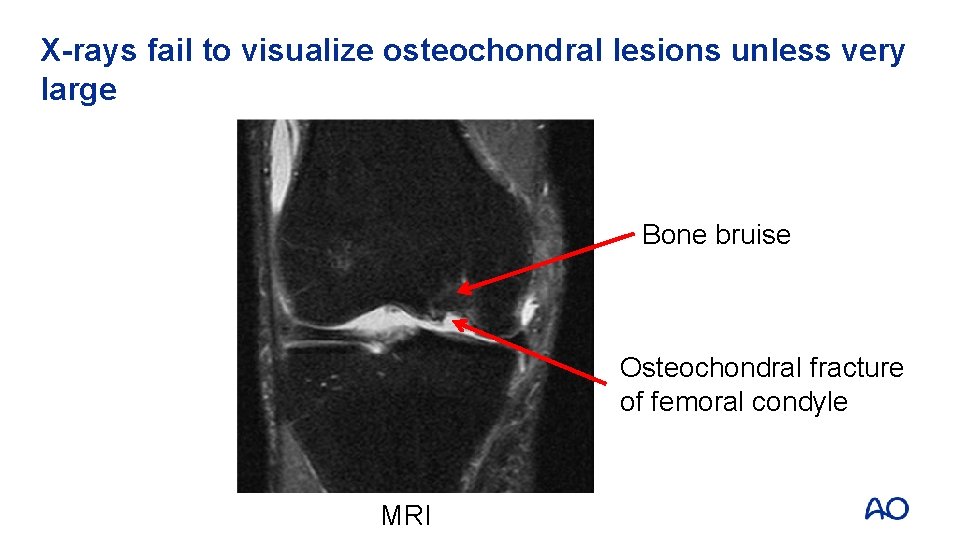
X-rays fail to visualize osteochondral lesions unless very large Bone bruise Osteochondral fracture of femoral condyle MRI
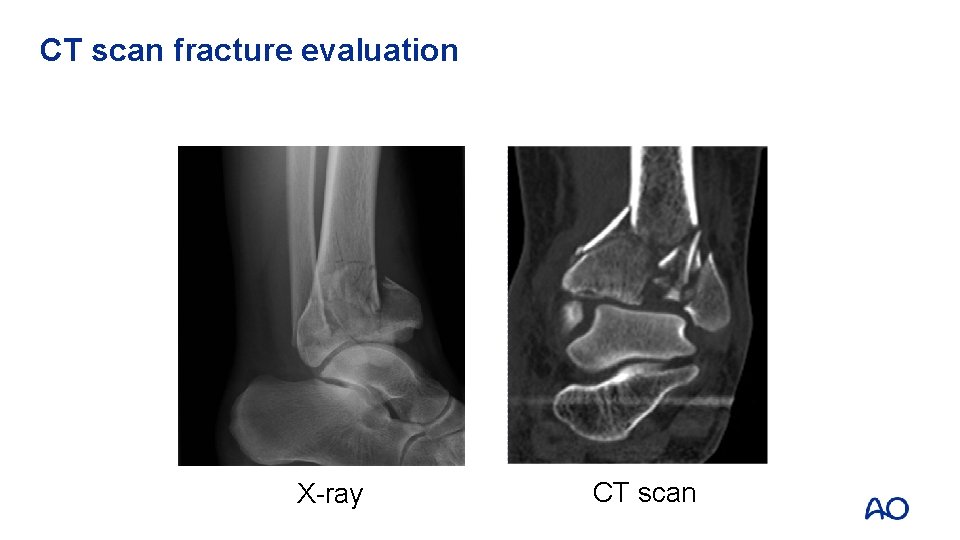
CT scan fracture evaluation X-ray CT scan
3 -D C-arm • Advantages • Accurate visualization during surgery • Decreased total radiation dose because fewer x-rays required* • Disadvantages • Expensive equipment • Increased radiation exposure per examination • Problems with metal artefacts especially in steel implants * In combination with image guidance
3 -D C-arm technology • 3 -D imaging required to assess quality of reduction and fixation before skin closure: conventional C-arm technology produces images that may give false impressions in intraarticular fractures • 3 -D C-arm technology produces CT-like images creating more accurate images • Appropriate use of 3 -D C-arm technology helps detection of problems intraoperatively
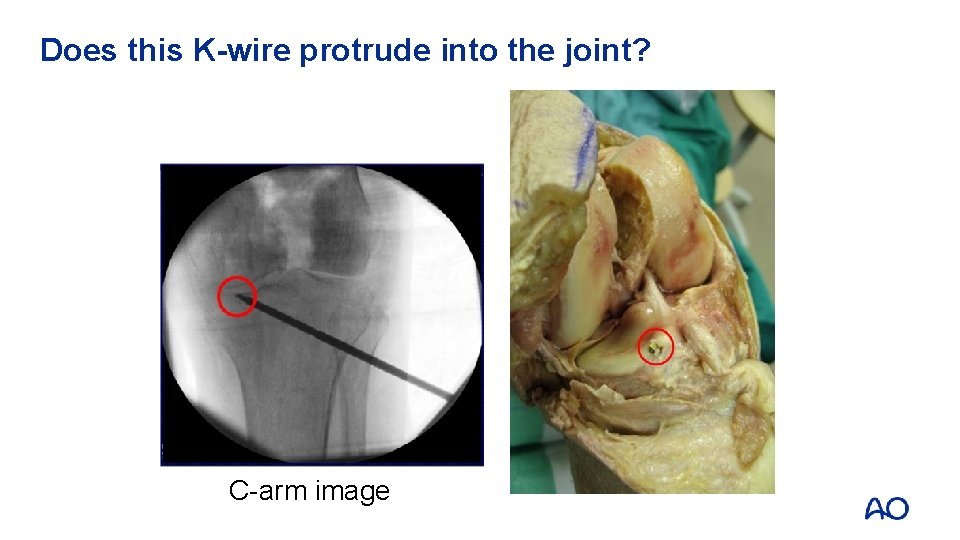
Does this K-wire protrude into the joint? C-arm image

Clinical uses of 3 -D C-arm: intraoperative assessment Penetration of joint by screw not visible with conventional C-arm studies (left) but easily seen in 3 -D reconstruction (right)
CT scan • • Advantages • Excellent visualization of fracture fragments • Analysis of rotation possible • 3 -D reconstruction possible; useful for complex articular fractures • Either fixed or mobile (eg, i. CT or Airo) Disadvantages • Expensive equipment • Availability • Radiation depending on region and protocol • Image distortion with stainless steel implants; titanium less problematic
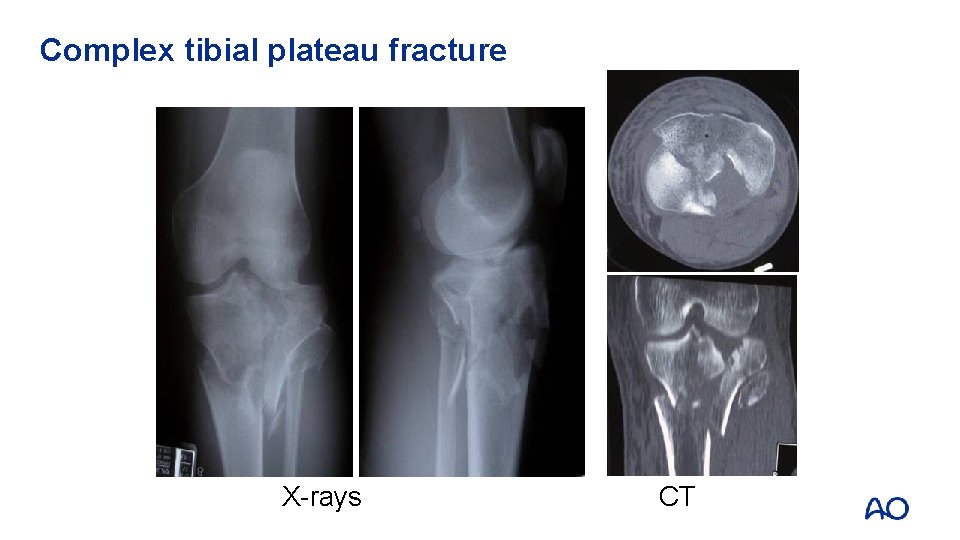
Complex tibial plateau fracture X-rays CT
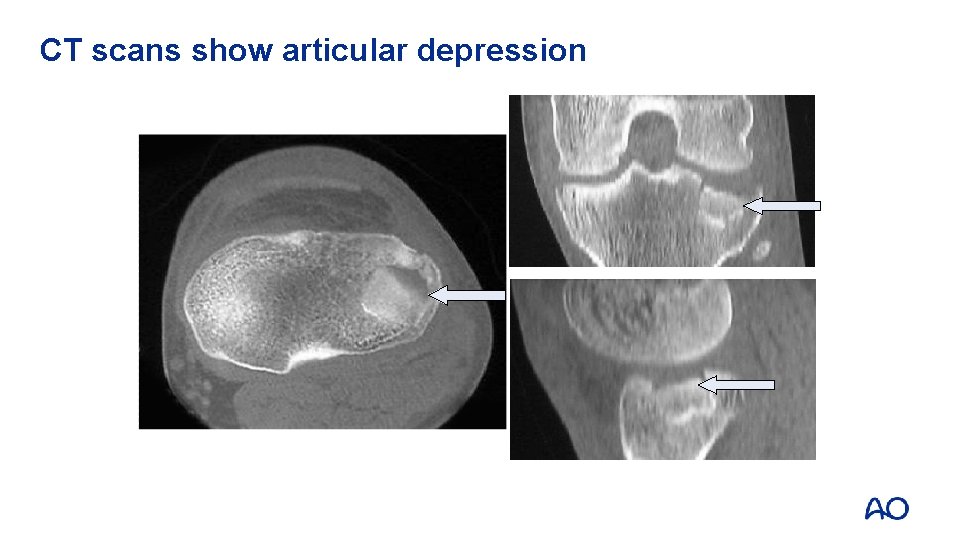
CT scans show articular depression
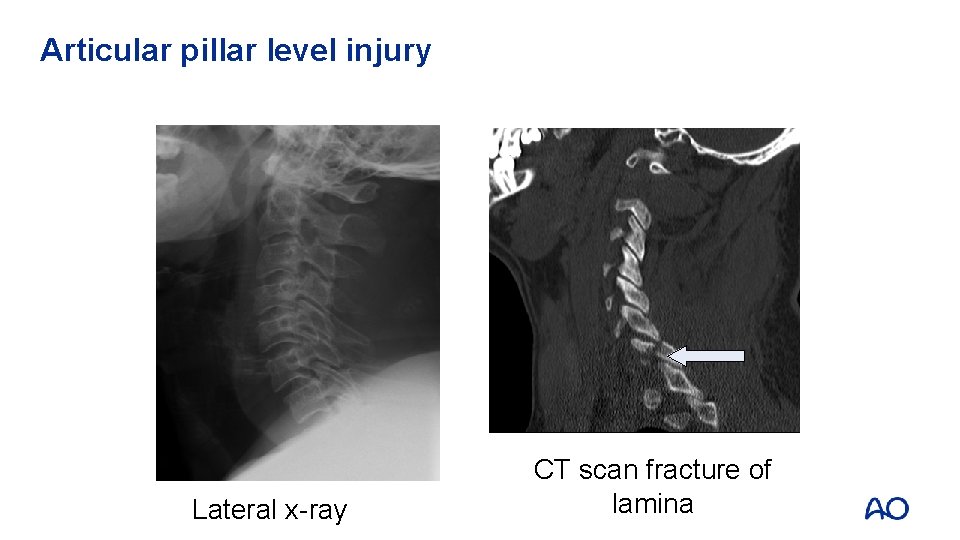
Articular pillar level injury Lateral x-ray CT scan fracture of lamina
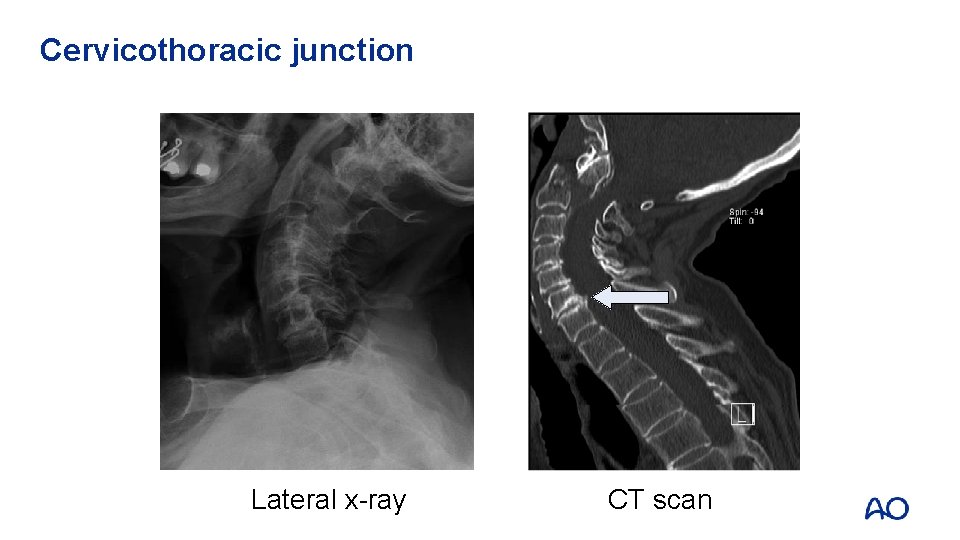
Cervicothoracic junction Lateral x-ray CT scan
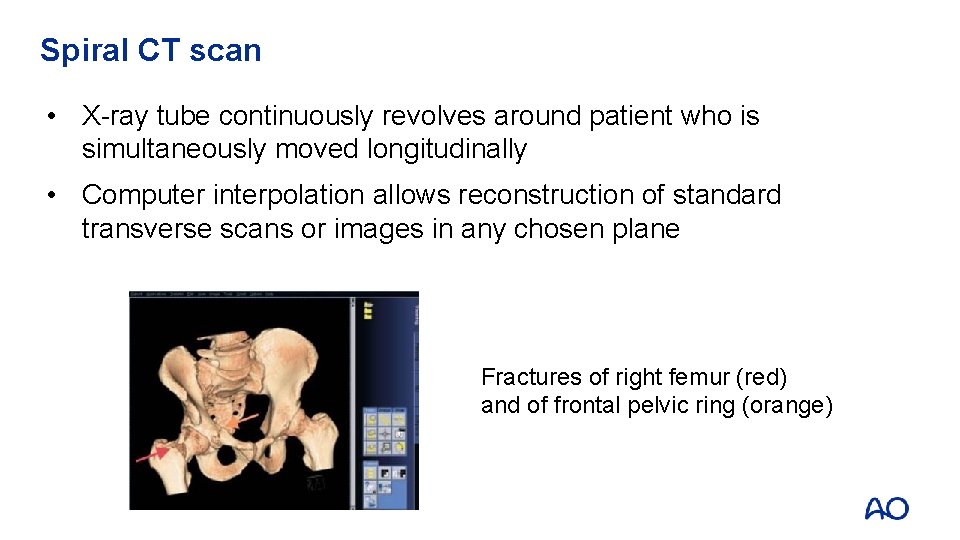
Spiral CT scan • X-ray tube continuously revolves around patient who is simultaneously moved longitudinally • Computer interpolation allows reconstruction of standard transverse scans or images in any chosen plane Fractures of right femur (red) and of frontal pelvic ring (orange)

Spiral CT scan • Advantages • Disadvantages • Fast multiregional imaging • Risk of 'over scanning‘ • Patient not moved • • High-resolution, improved image quality Scanning time short but data manipulation time may be long • Expensive equipment • Availability • Volume imaging: multiplanar reconstructions, 3 -D imaging • Gantry angulation unnecessary

Spiral CT scan in polytrauma (1 of 2) Liver laceration found with a hematoma and active portal-venous hemorrhage

Spiral CT scan in polytrauma (2 of 2) • • • Performed in emergency department Patient resuscitation has priority over spiral CT scan Albrecht T et al (Rofo. 2004; 176: 1142– 1150) • • Wurmb TE et al (J Trauma. 2009; 66: 658– 665) • • Detects almost all soft-tissue injuries to thorax and abdomen Superior to chest x-ray and abdominal ultrasound All spinal injuries found Spiral CT scan may shorten time from arrival in trauma emergency department to obtaining final diagnosis and management plan Huber-Wagner (Lancet. 2009; 373: 1455– 61) • Whole body CT in early trauma care significantly increased the probability of survival in patients with polytrauma

Soft-tissue injuries • MRI, ultrasound: best modalities to visualize soft-tissue structures • MRI • Deep structures or larger field of view • Shows bone • Visualization of articular cartilage • Ultrasound • Superficial structures
MRI • Advantages • Details of soft-tissue lesions and bone pathology visualized • No radiation exposure • Disadvantages • Expensive, immobile equipment • Availability • Metal implants interfere with images • Numerous contraindications (eg, pacemakers) • Ventilated patients difficult to handle
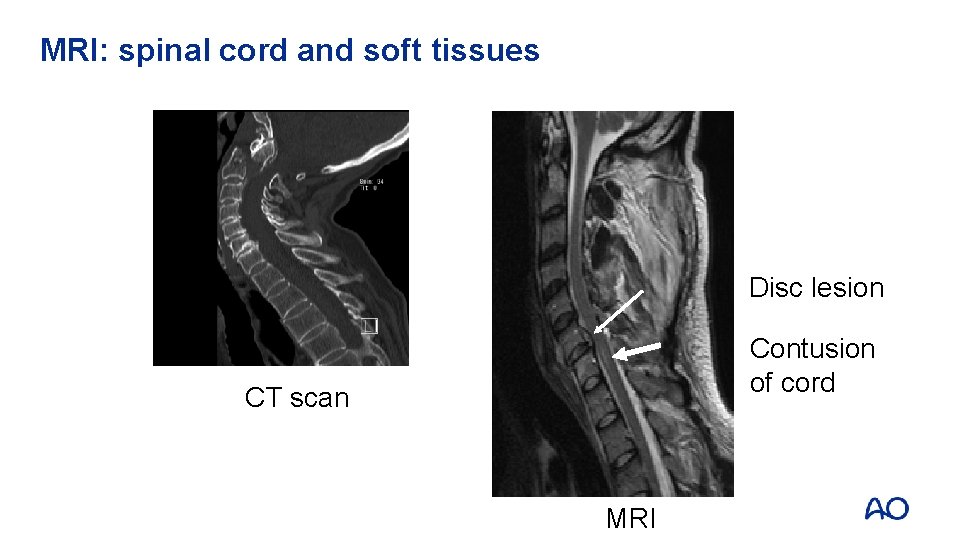
MRI: spinal cord and soft tissues Disc lesion Contusion of cord CT scan MRI
Ultrasound • Advantages • Noninvasive • No radiation exposure • Dynamic studies possible • Good details on soft tissues • Disadvantages • Difficult to interpret • Less detail of bone structure
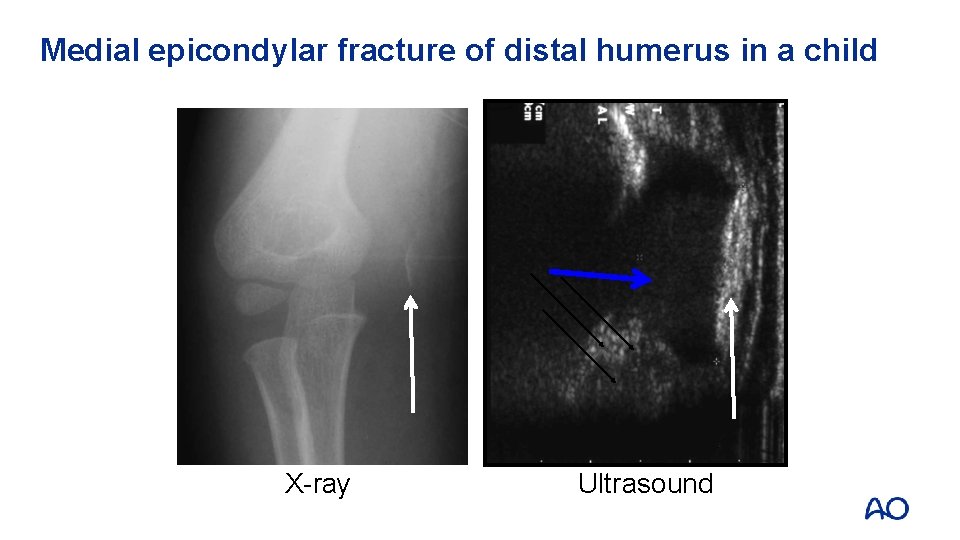
Medial epicondylar fracture of distal humerus in a child X-ray Ultrasound
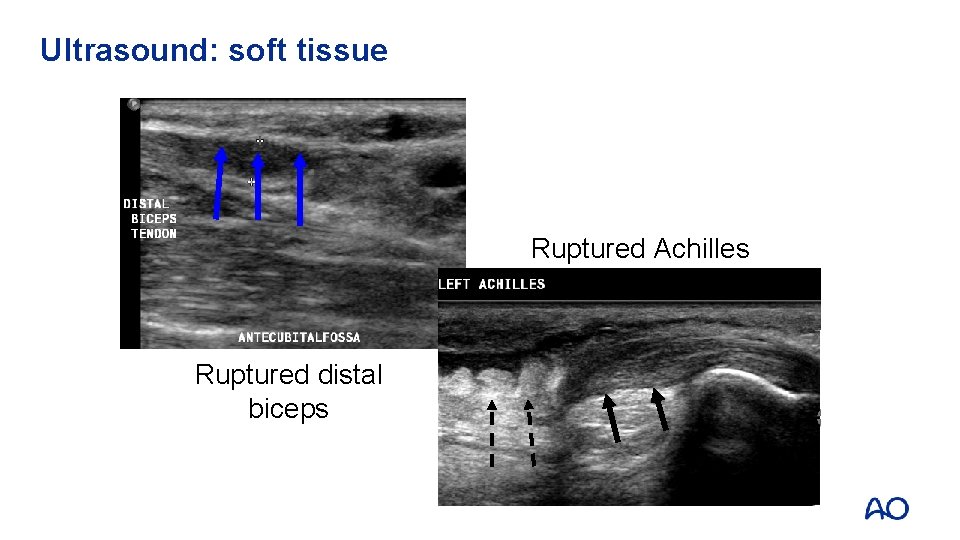
Ultrasound: soft tissue Ruptured Achilles tendon Ruptured distal biceps
Arthroscopy (optical imaging) • Advantages • Excellent visualization of joint surfaces and soft tissues within joint • Enables soft-tissue reconstructive surgery • Assessment of reduction • Disadvantages • Invasive procedure • Fluid leakage may cause compartment syndrome • High level of skills • Additional equipment may be required
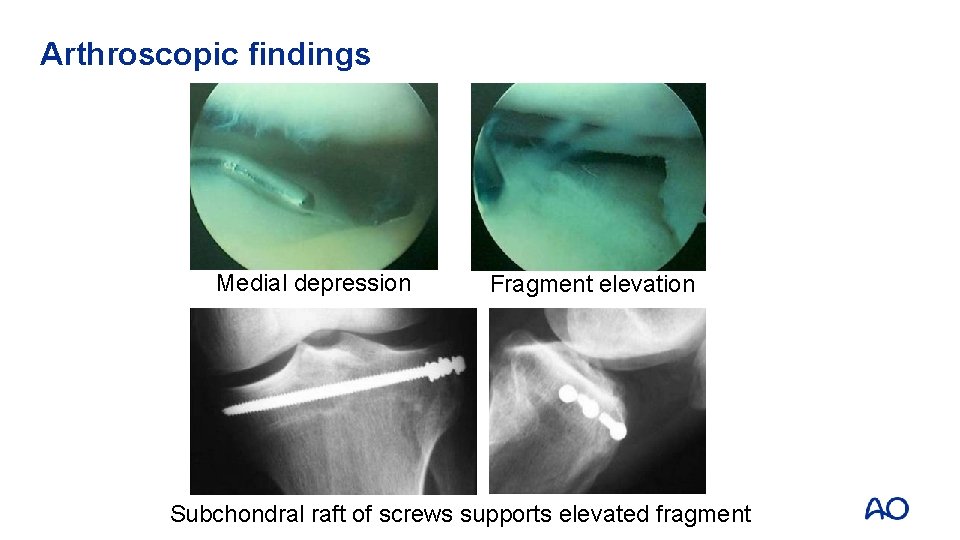
Arthroscopic findings Medial depression Fragment elevation Subchondral raft of screws supports elevated fragment
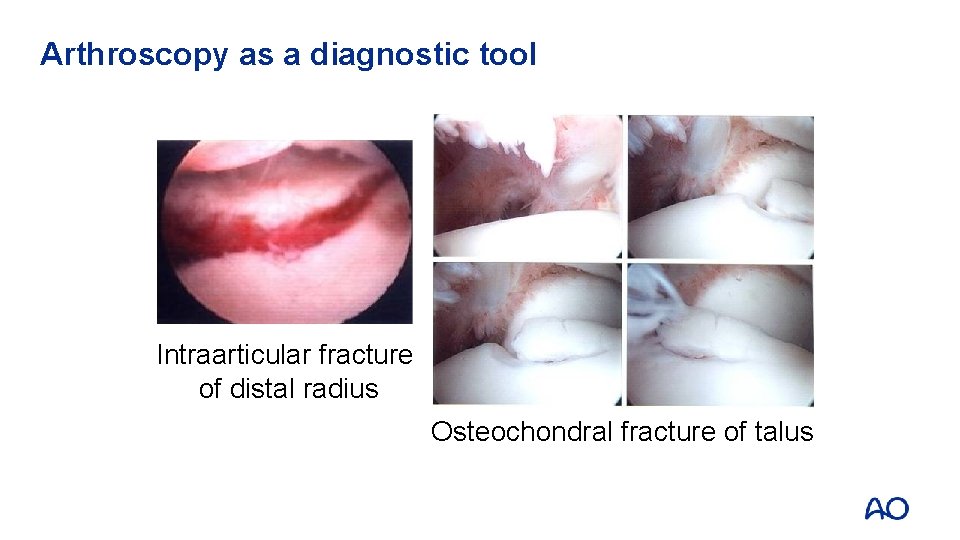
Arthroscopy as a diagnostic tool Intraarticular fracture of distal radius Osteochondral fracture of talus
Radioisotope scan / PET-CT • Advantages • Early identification of bone pathology: osteomyelitis, neoplasia • Information about whole body in one investigation • Disadvantages • Radiation dose: ~3 m. Sv/h for whole body Tc 99 bone scan (~300 times radiation from chest x-ray) • Nonspecific: cannot differentiate between fracture, infection, tumor
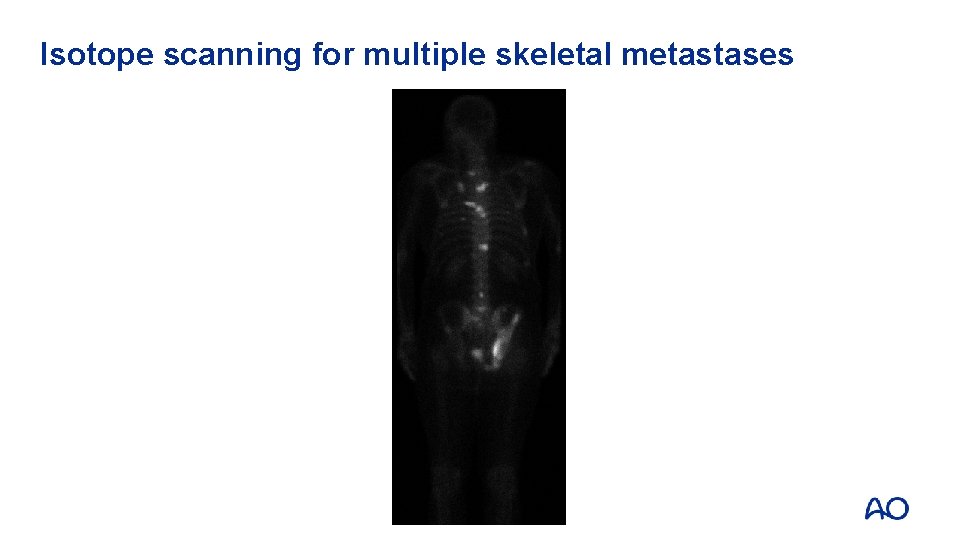
Isotope scanning for multiple skeletal metastases
Take-home messages • • Various imaging modalities exist. Indications include: • Conventional x-ray: adequate for most bone injuries • 3 -D C-arm: intraoperative assessment of reduction and fixation • CT scan: imaging of complex intraarticular fractures • Spiral CT scan: polytrauma • MRI: deep soft-tissue lesions, spine lesions with neurology • Ultrasound: superficial soft-tissue lesions • Radioisotope scan/PET-CT: imaging of skeletal metastases and infections Combination of modalities may be necessary to improve patient care
- Slides: 37