
Imaging mantle structure of the central Mariana subductionarcback
Imaging mantle structure of the central Mariana subduction-arc-back arc system using marine magnetotellurics N. Seama 1, 2, A. White 3, A. D. Chave 4, K. Baba 5, T. Goto 2, T. Matsuno 1, R. L. Evans 4, G. Boren 3, A. Yoneda 5, H. Iwamoto 1, R. Tsujino 1, Y. Baba 5, H. Utada 5, G. Heinson 6, and K. Suyehiro 2 Kobe Univ. , 2 JAMSTEC, 3 Flinders Univ. , WHOI, 5 ERI, Univ. of Tokyo, 6 Univ. of Adelaide 1 4 Contents: * Observation & Data analysis * 2 -D resistivity models & their interpretations
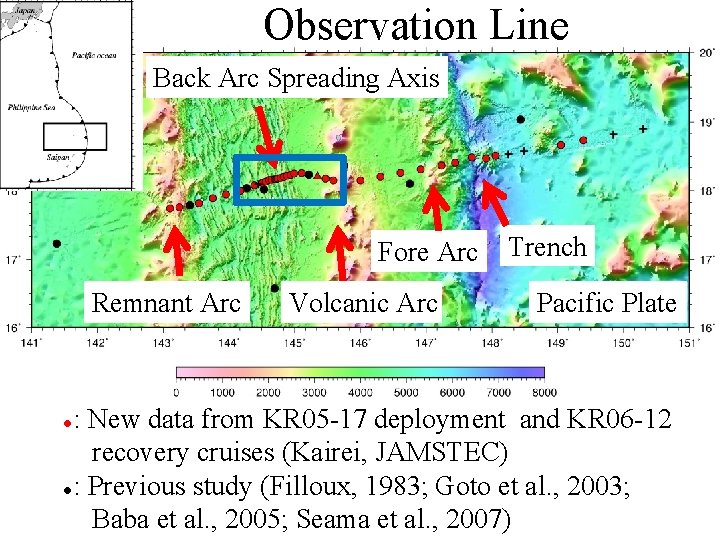
Observation Line Back Arc Spreading Axis Fore Arc Remnant Arc Volcanic Arc Trench Pacific Plate : New data from KR 05 -17 deployment and KR 06 -12 recovery cruises (Kairei, JAMSTEC) ●: Previous study (Filloux, 1983; Goto et al. , 2003; Baba et al. , 2005; Seama et al. , 2007) ●
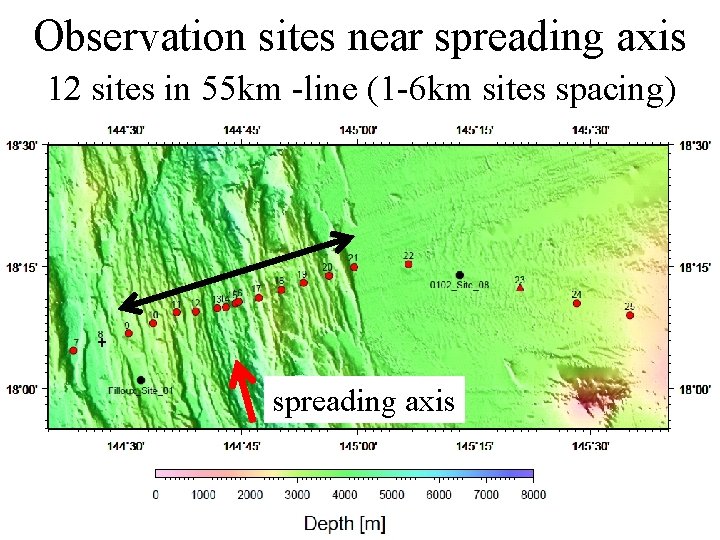
Observation sites near spreading axis 12 sites in 55 km -line (1 -6 km sites spacing) spreading axis
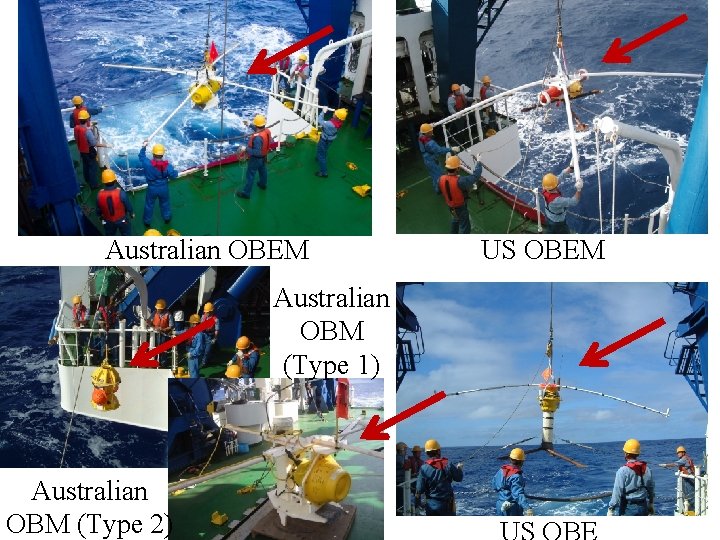
Australian OBEM Australian OBM (Type 1) Australian OBM (Type 2) US OBEM
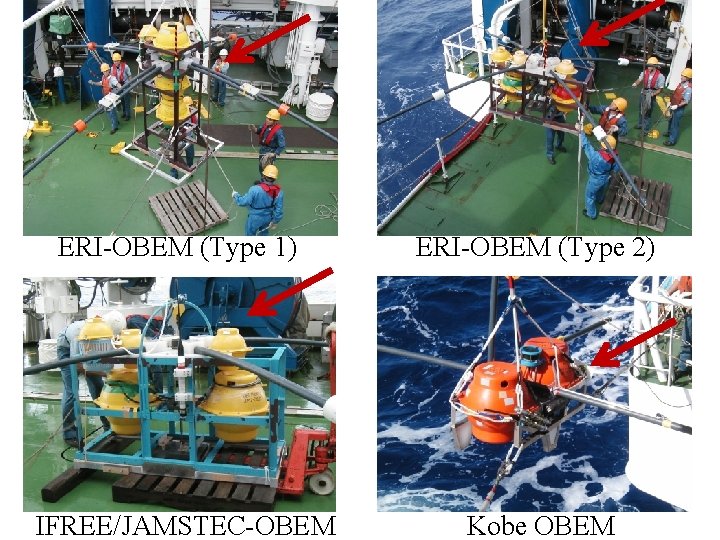
ERI-OBEM (Type 1) ERI-OBEM (Type 2) IFREE/JAMSTEC-OBEM Kobe OBEM
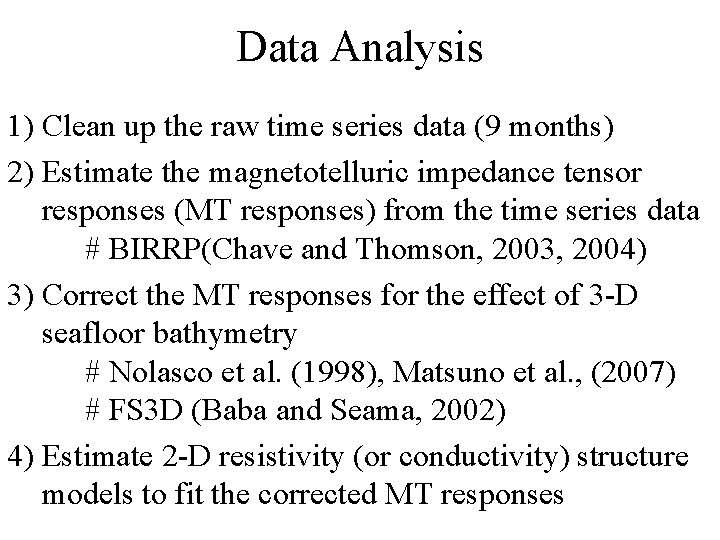
Data Analysis 1) Clean up the raw time series data (9 months) 2) Estimate the magnetotelluric impedance tensor responses (MT responses) from the time series data # BIRRP(Chave and Thomson, 2003, 2004) 3) Correct the MT responses for the effect of 3 -D seafloor bathymetry # Nolasco et al. (1998), Matsuno et al. , (2007) # FS 3 D (Baba and Seama, 2002) 4) Estimate 2 -D resistivity (or conductivity) structure models to fit the corrected MT responses
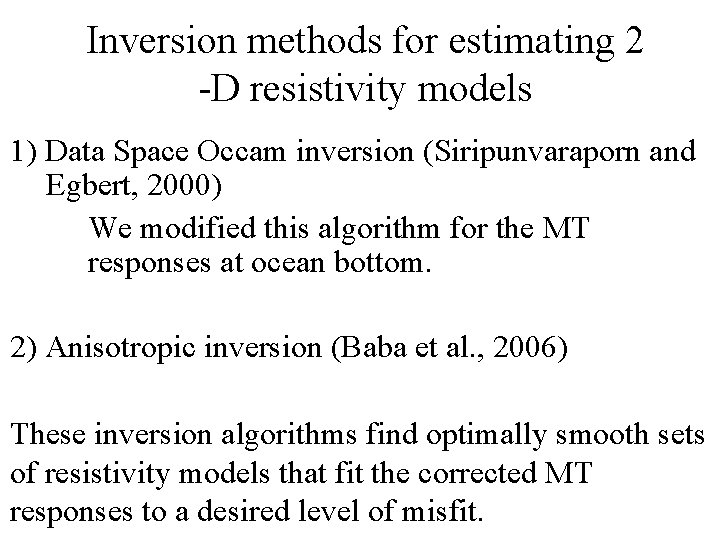
Inversion methods for estimating 2 -D resistivity models 1) Data Space Occam inversion (Siripunvaraporn and Egbert, 2000) We modified this algorithm for the MT responses at ocean bottom. 2) Anisotropic inversion (Baba et al. , 2006) These inversion algorithms find optimally smooth sets of resistivity models that fit the corrected MT responses to a desired level of misfit.
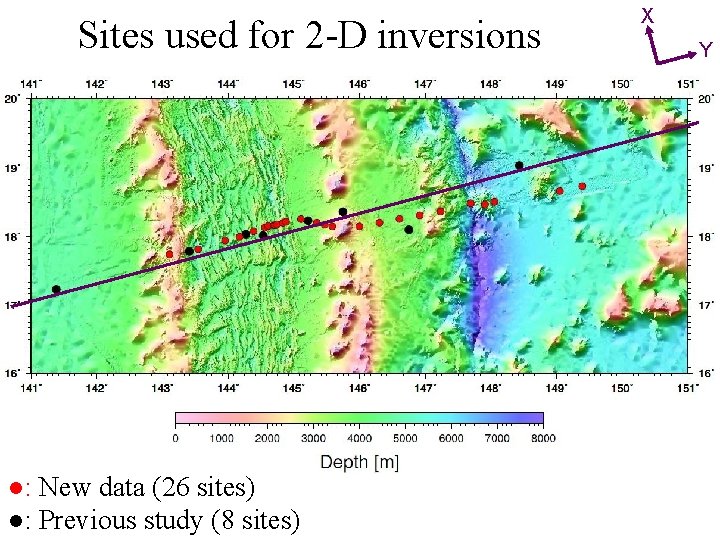
Sites used for 2 -D inversions ●: New data (26 sites) ●: Previous study (8 sites) X Y
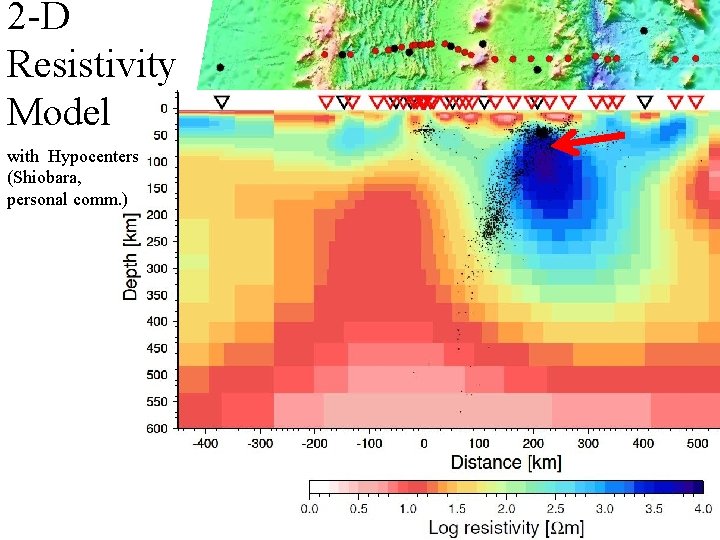
2 -D Resistivity Model with Hypocenters (Shiobara, personal comm. )
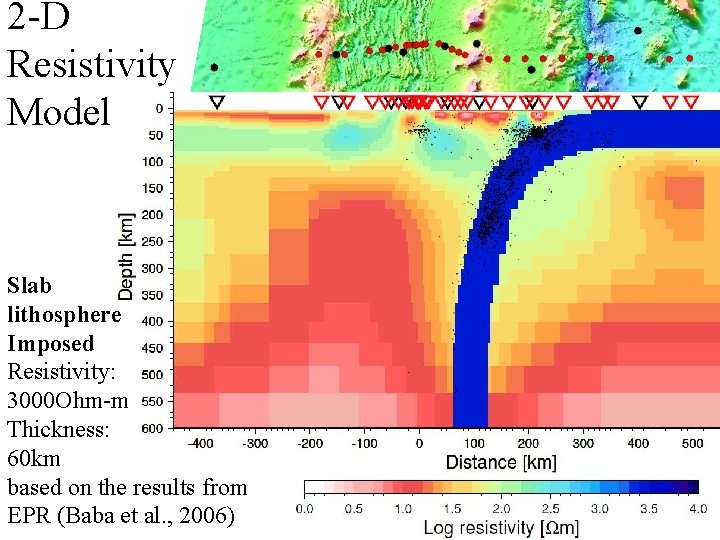
2 -D Resistivity Model Slab lithosphere Imposed Resistivity: 3000 Ohm-m Thickness: 60 km based on the results from EPR (Baba et al. , 2006)
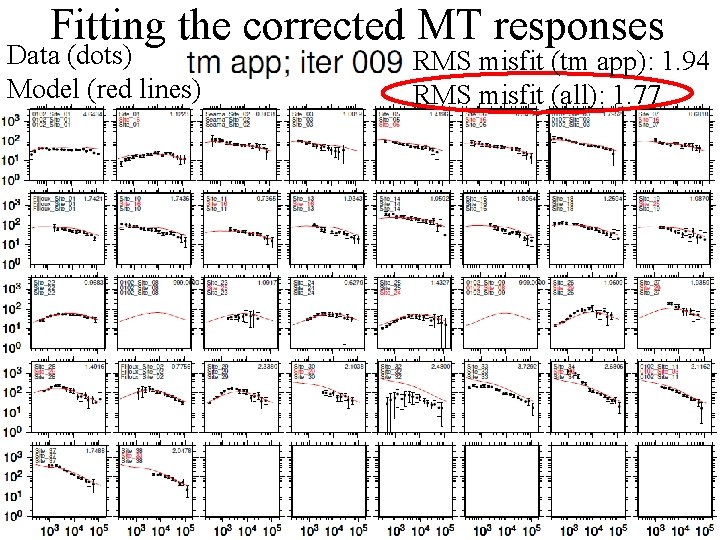
Fitting the corrected MT responses Data (dots) Model (red lines) RMS misfit (tm app): 1. 94 RMS misfit (all): 1. 77
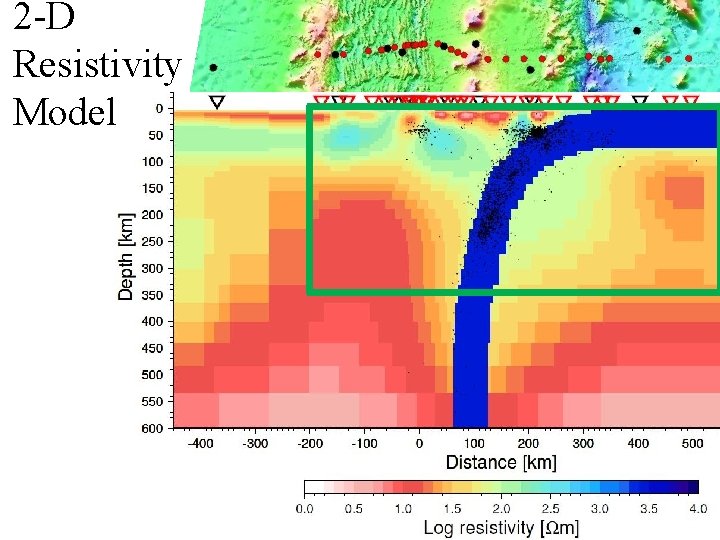
2 -D Resistivity Model
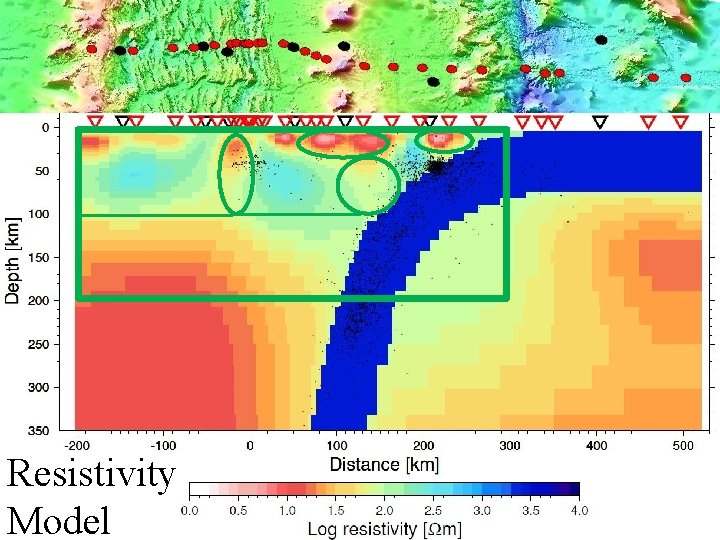
Resistivity Model
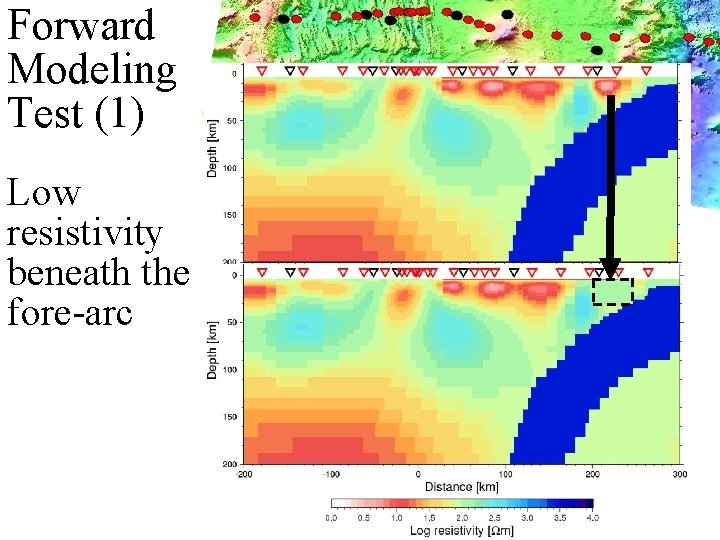
Forward Modeling Test (1) Low resistivity beneath the fore-arc
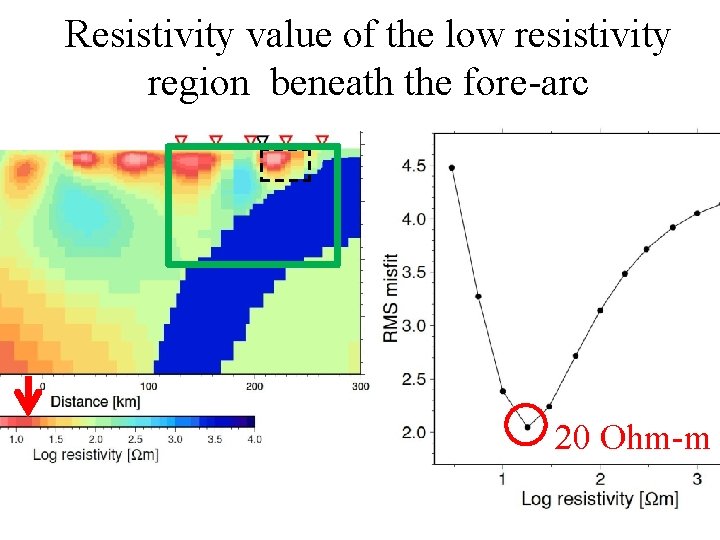
Resistivity value of the low resistivity region beneath the fore-arc 20 Ohm-m
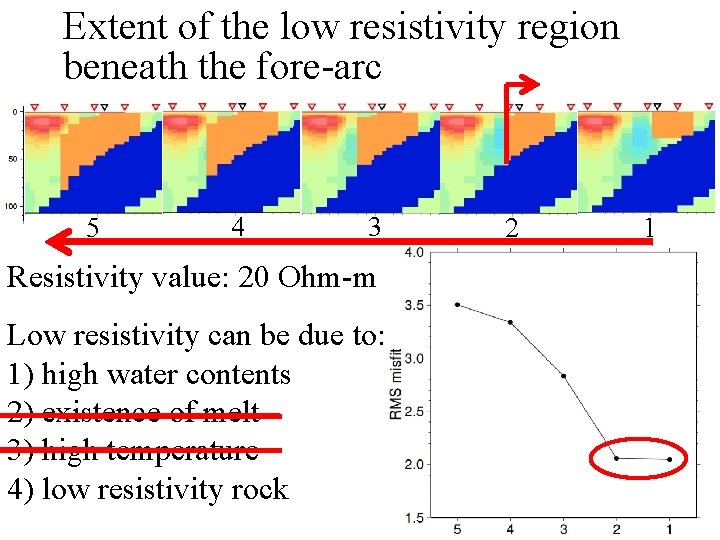
Extent of the low resistivity region beneath the fore-arc 5 4 3 Resistivity value: 20 Ohm-m Low resistivity can be due to: 1) high water contents 2) existence of melt 3) high temperature 4) low resistivity rock 2 1
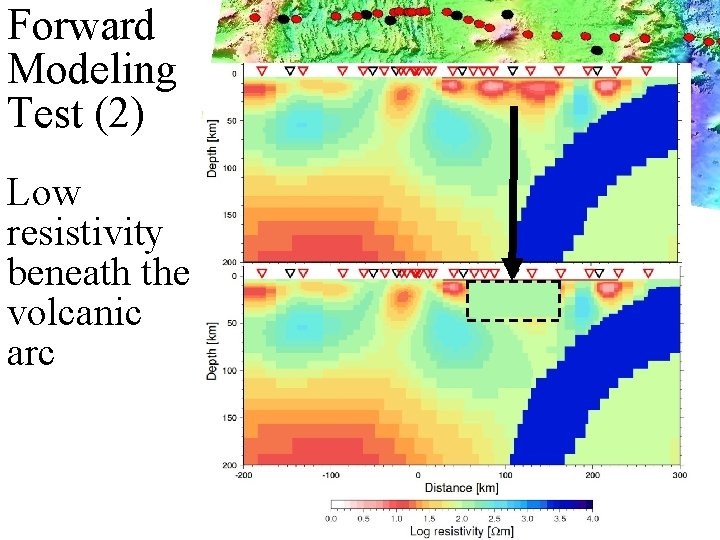
Forward Modeling Test (2) Low resistivity beneath the volcanic arc
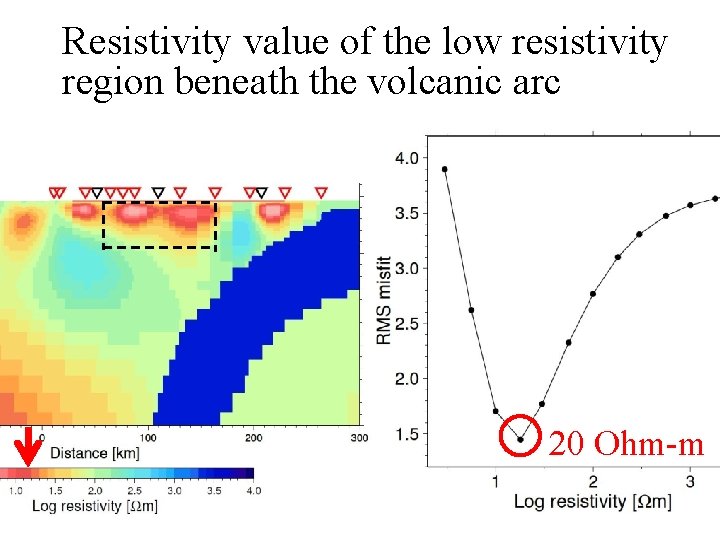
Resistivity value of the low resistivity region beneath the volcanic arc 20 Ohm-m
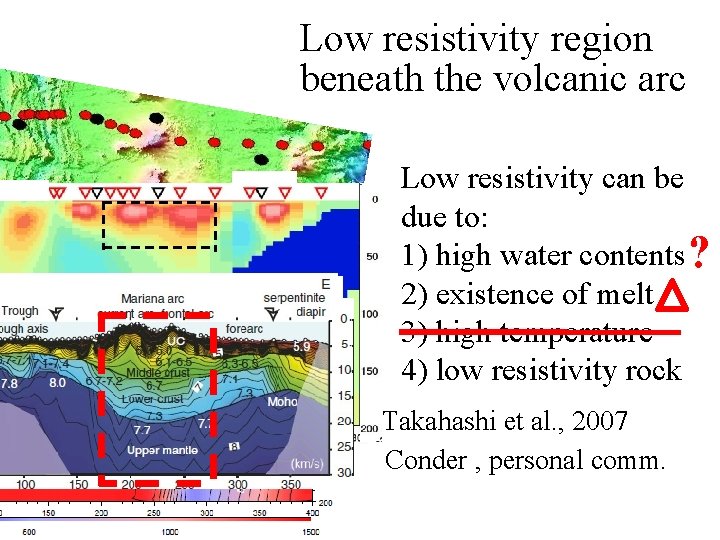
Low resistivity region beneath the volcanic arc Low resistivity can be due to: 1) high water contents ? 2) existence of melt 3) high temperature 4) low resistivity rock Takahashi et al. , 2007 Conder , personal comm.
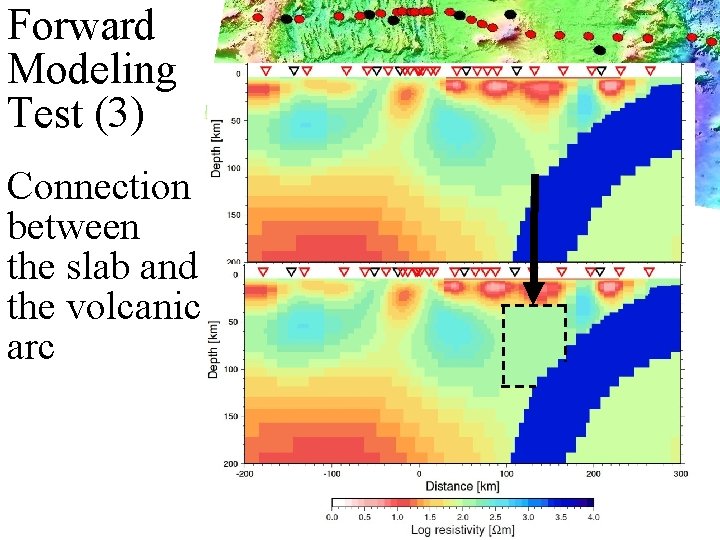
Forward Modeling Test (3) Connection between the slab and the volcanic arc
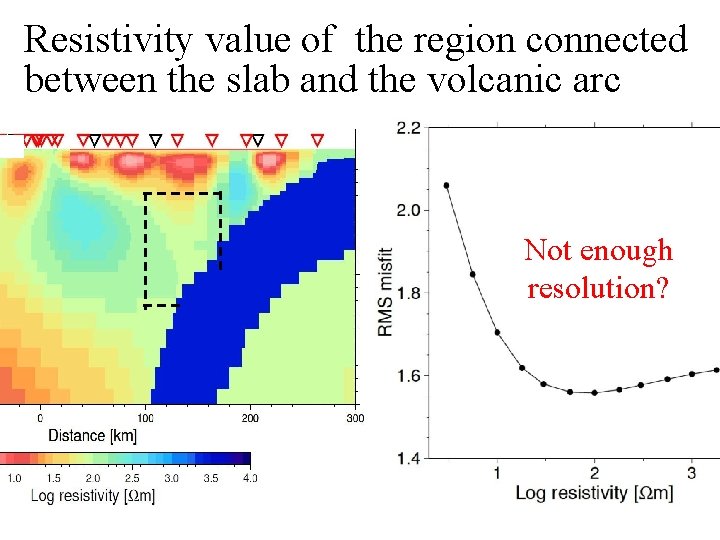
Resistivity value of the region connected between the slab and the volcanic arc Not enough resolution?
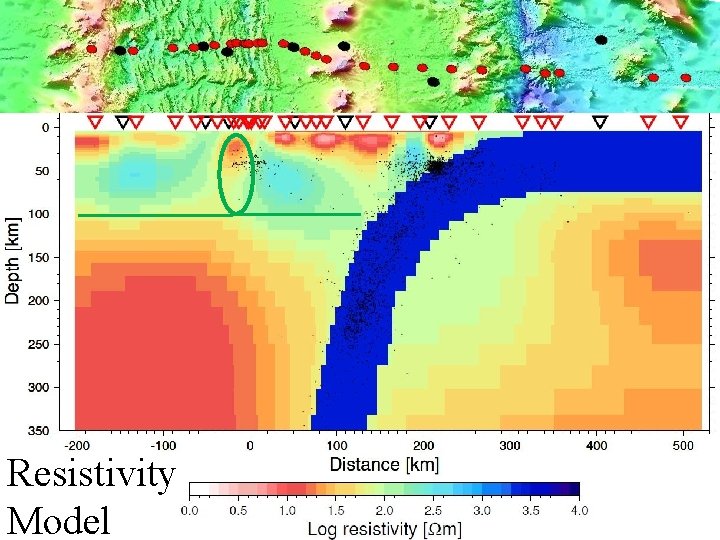
Resistivity Model
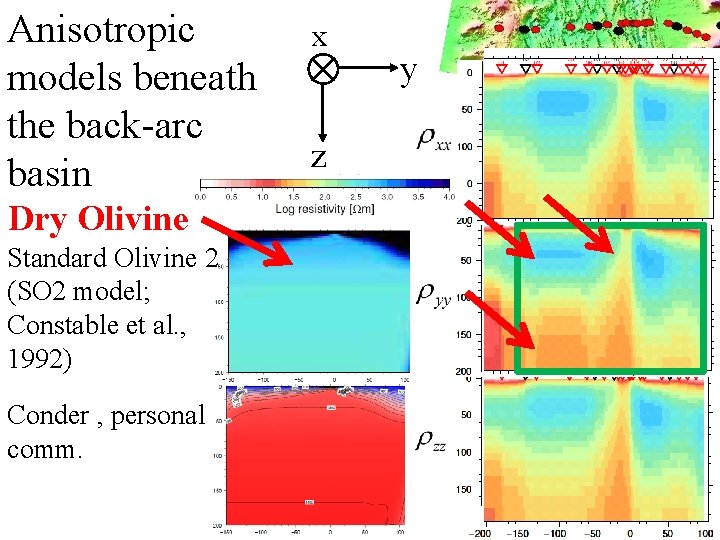
Anisotropic models beneath the back-arc basin Dry Olivine Standard Olivine 2 (SO 2 model; Constable et al. , 1992) Conder , personal comm. x z y
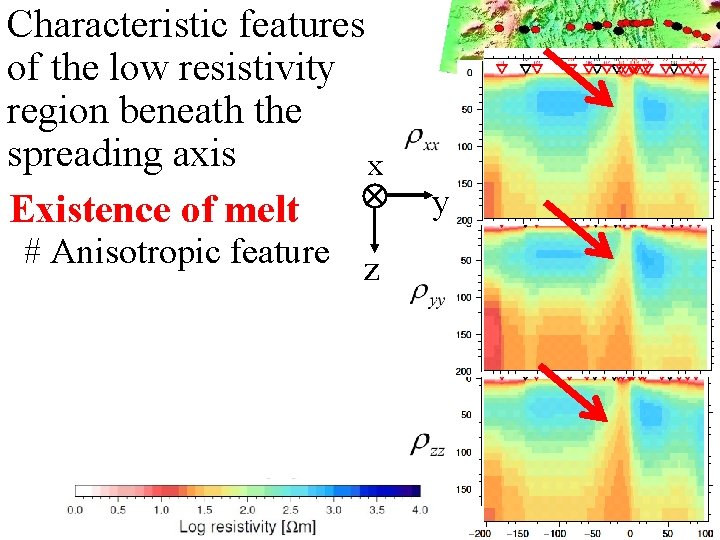
Characteristic features of the low resistivity region beneath the spreading axis x Existence of melt # Anisotropic feature z y
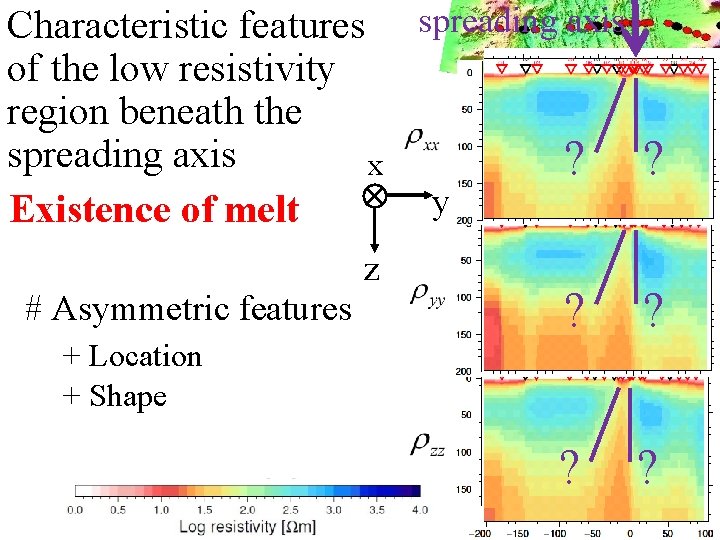
Characteristic features spreading axis of the low resistivity region beneath the spreading axis ? x y Existence of melt # Asymmetric features z ? ? ? + Location + Shape
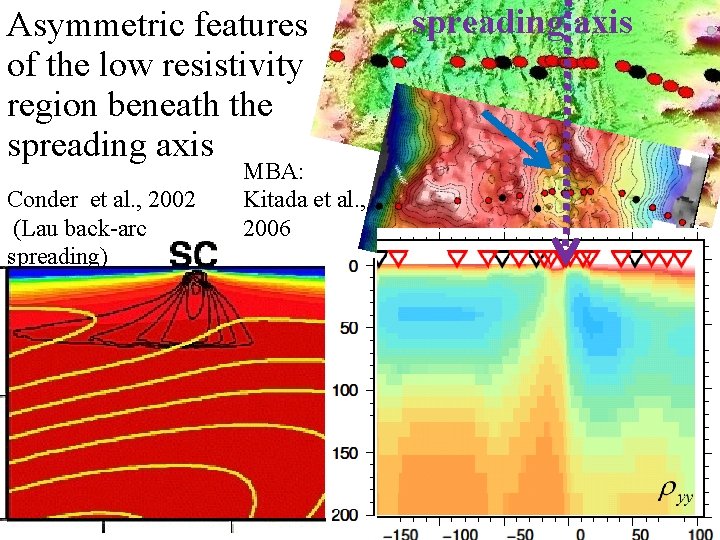
Asymmetric features of the low resistivity region beneath the spreading axis Conder et al. , 2002 (Lau back-arc spreading) MBA: Kitada et al. , 2006 spreading axis
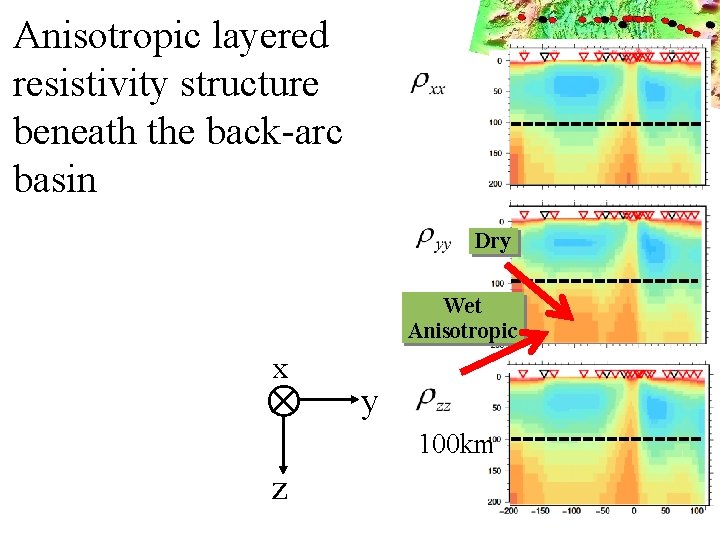
Anisotropic layered resistivity structure beneath the back-arc basin Dry Wet Anisotropic x y 100 km z
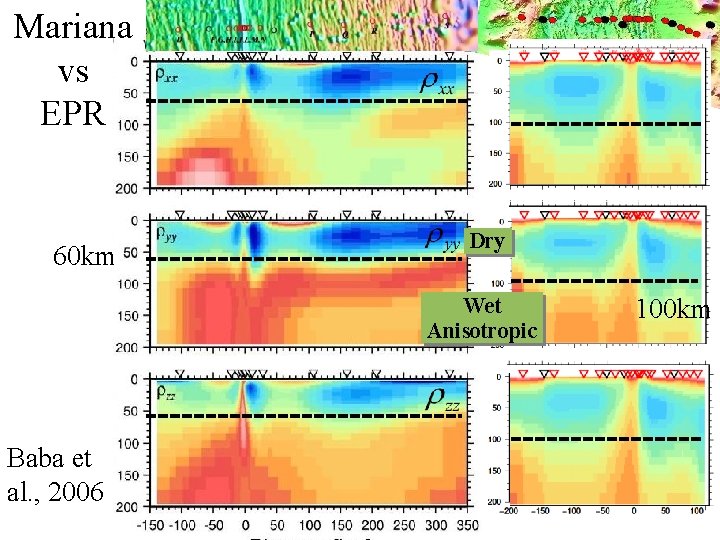
Mariana vs EPR 60 km Dry Wet Anisotropic Baba et al. , 2006 100 km
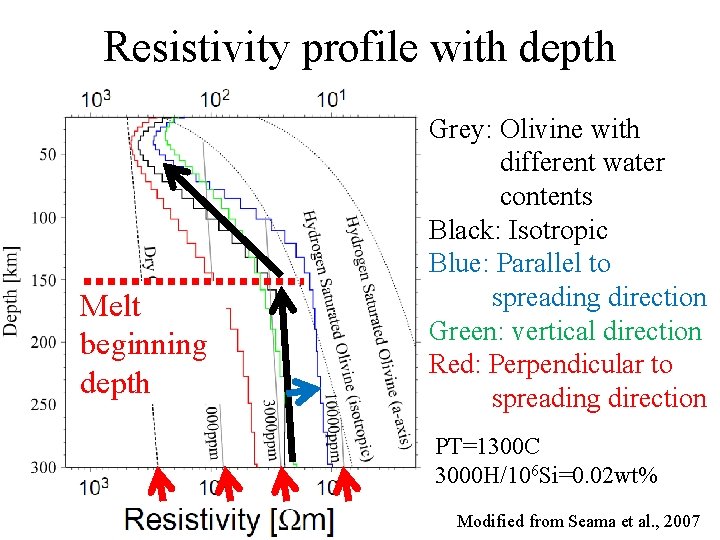
Resistivity profile with depth Melt beginning depth Grey: Olivine with different water contents Black: Isotropic Blue: Parallel to spreading direction Green: vertical direction Red: Perpendicular to spreading direction PT=1300 C 3000 H/106 Si=0. 02 wt% Modified from Seama et al. , 2007
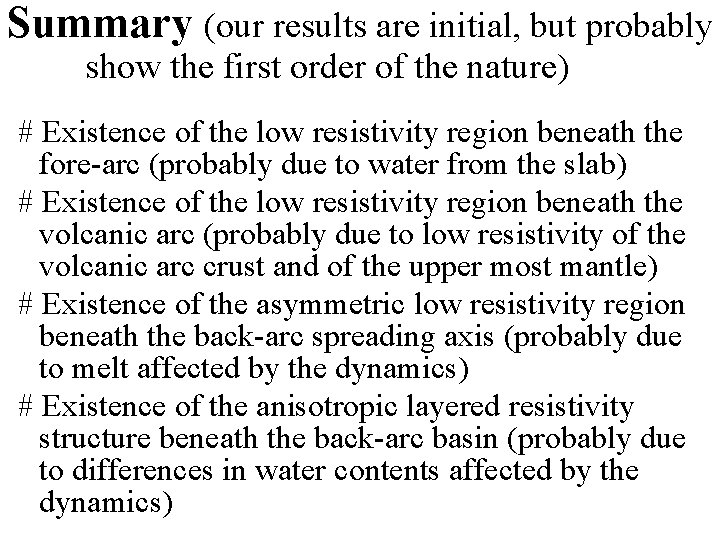
Summary (our results are initial, but probably show the first order of the nature) # Existence of the low resistivity region beneath the fore-arc (probably due to water from the slab) # Existence of the low resistivity region beneath the volcanic arc (probably due to low resistivity of the volcanic arc crust and of the upper most mantle) # Existence of the asymmetric low resistivity region beneath the back-arc spreading axis (probably due to melt affected by the dynamics) # Existence of the anisotropic layered resistivity structure beneath the back-arc basin (probably due to differences in water contents affected by the dynamics)

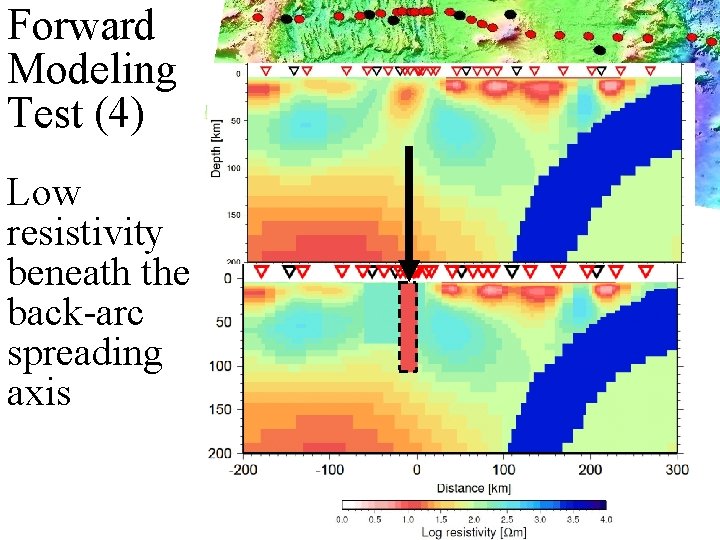
Forward Modeling Test (4) Low resistivity beneath the back-arc spreading axis
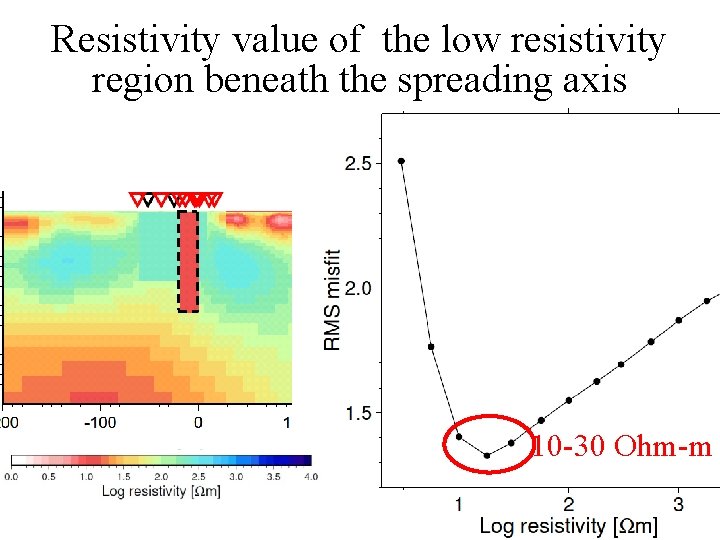
Resistivity value of the low resistivity region beneath the spreading axis 10 -30 Ohm-m
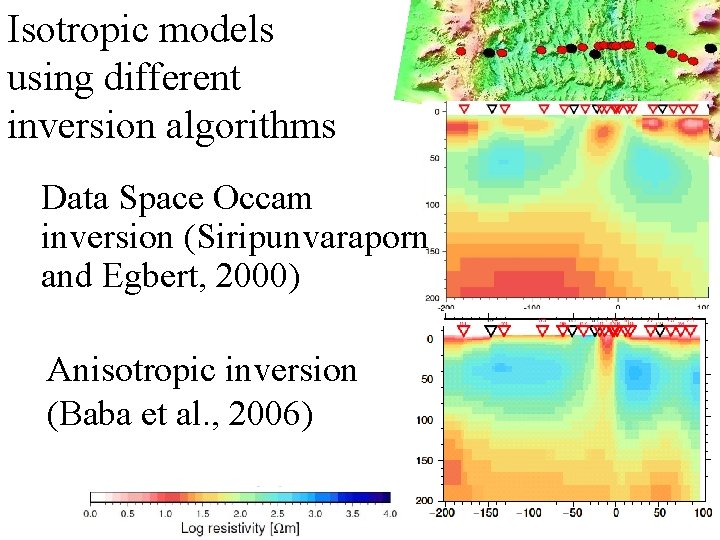
Isotropic models using different inversion algorithms Data Space Occam inversion (Siripunvaraporn and Egbert, 2000) Anisotropic inversion (Baba et al. , 2006)
- Slides: 34