
Imaging Intrinsic Signals in the Retina Using Different

- Slides: 17
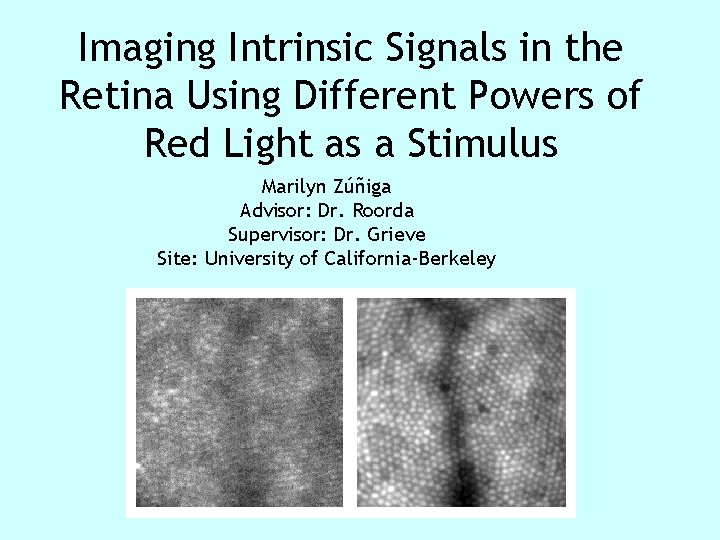
Imaging Intrinsic Signals in the Retina Using Different Powers of Red Light as a Stimulus Marilyn Zúñiga Advisor: Dr. Roorda Supervisor: Dr. Grieve Site: University of California-Berkeley
• Background Outline – Anatomy of Eye – References • Experiment – Adaptive Optics Scanning Laser Ophthalmoscope (AOSLO) – Methods: Dual Frame Imaging • Results – Systematic Trend Observed with Higher Energies – Limitations – Future Experiments
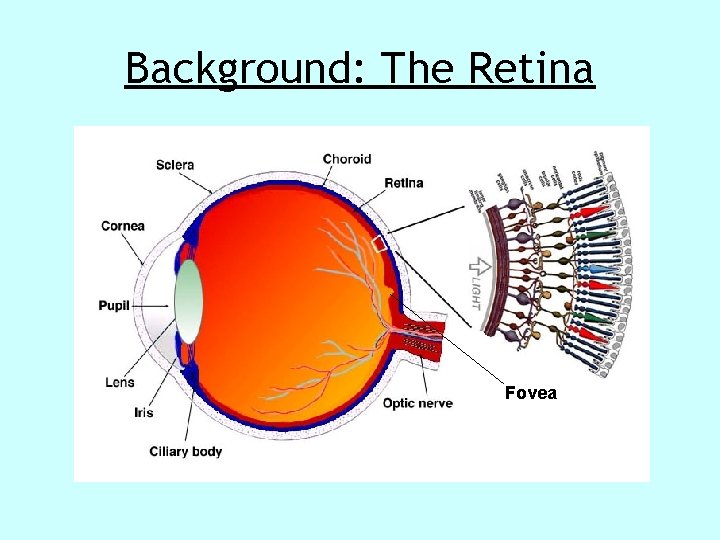
Background: The Retina Fovea
Motivation • In brain imaging, brain function is assessed by looking for changes in scattered light in response to a stimulus • Researchers have recently observed similar reflectance changes in the retina in response to a visible light stimulus • We want to look for these intrinsic signals in the retina using AOSLO
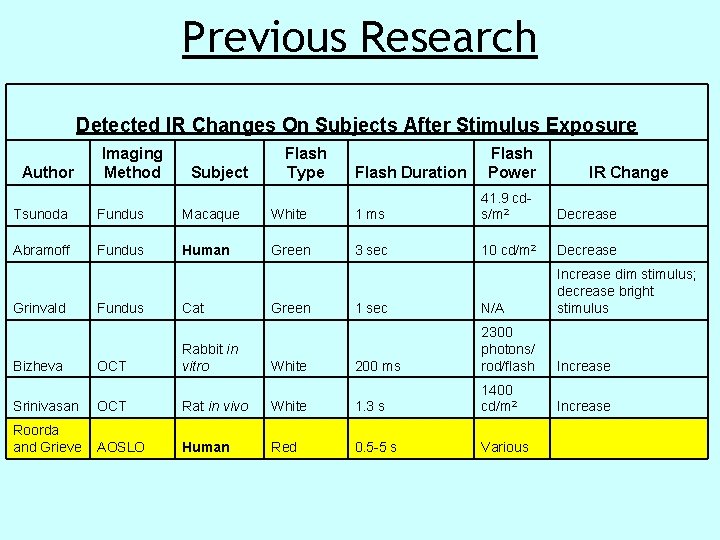
Previous Research Detected IR Changes On Subjects After Stimulus Exposure Author Imaging Method Subject Flash Type Flash Duration Flash Power IR Change Tsunoda Fundus Macaque White 1 ms 41. 9 cds/m 2 Abramoff Fundus Human Green 3 sec 10 cd/m 2 Decrease 1 sec N/A Increase dim stimulus; decrease bright stimulus 200 ms 2300 photons/ rod/flash Increase Grinvald Bizheva Fundus OCT Cat Rabbit in vitro Green White Srinivasan OCT Rat in vivo White 1. 3 s 1400 cd/m 2 Roorda and Grieve AOSLO Human Red 0. 5 -5 s Various Decrease
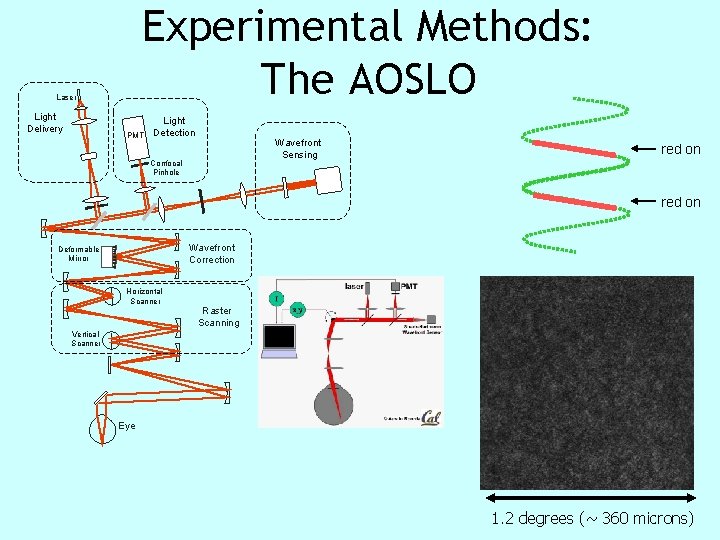
Experimental Methods: The AOSLO Laser Light Delivery PMT Light Detection Wavefront Sensing Confocal Pinhole red on Wavefront Correction Deformable Mirror Horizontal Scanner Raster Scanning Vertical Scanner Eye 1. 2 degrees (~ 360 microns)
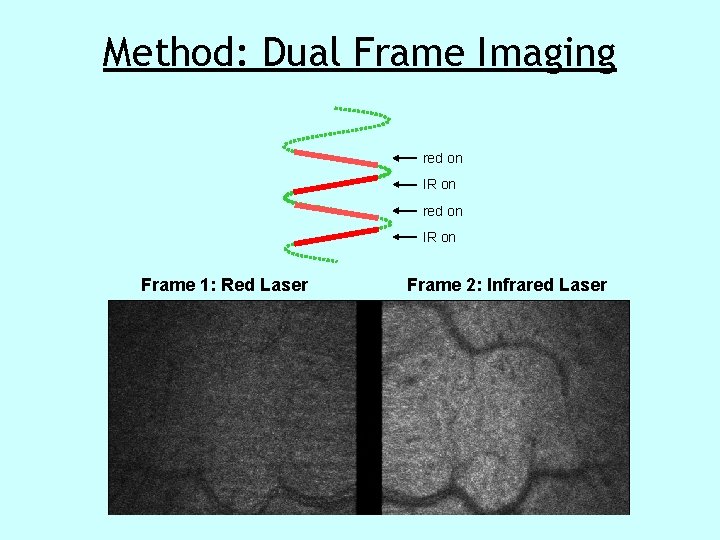
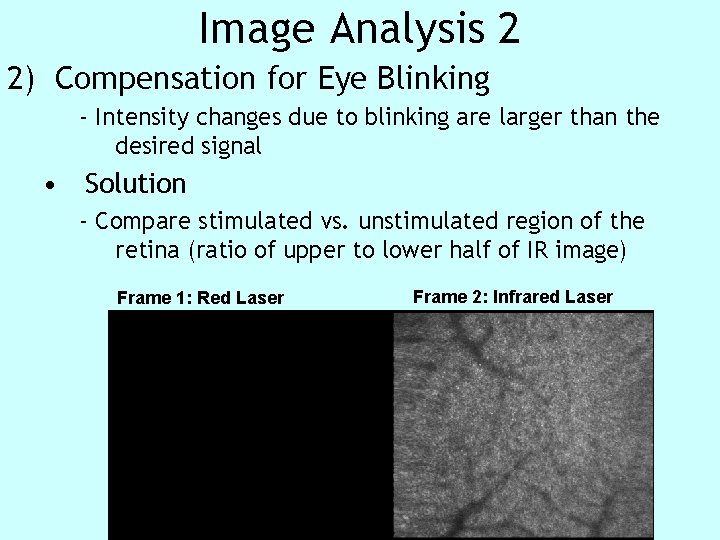
Method: Dual Frame Imaging red on IR on Frame 1: Red Laser Frame 2: Infrared Laser
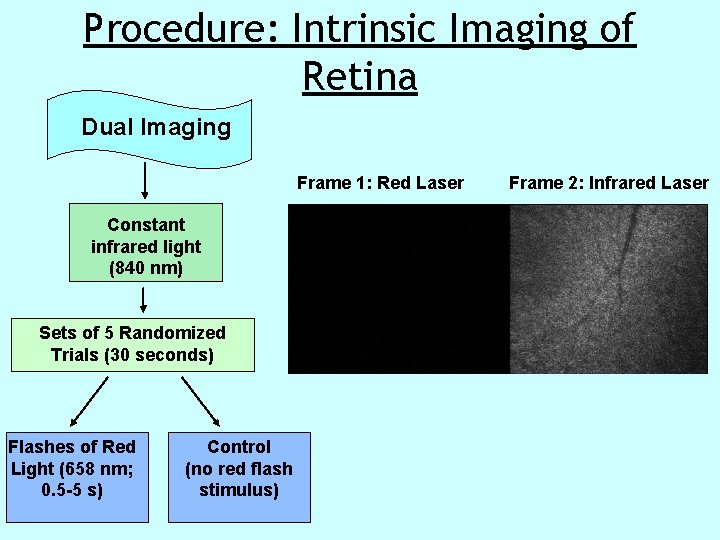
Procedure: Intrinsic Imaging of Retina Dual Imaging Frame 1: Red Laser Constant infrared light (840 nm) Sets of 5 Randomized Trials (30 seconds) Flashes of Red Light (658 nm; 0. 5 -5 s) Control (no red flash stimulus) Frame 2: Infrared Laser
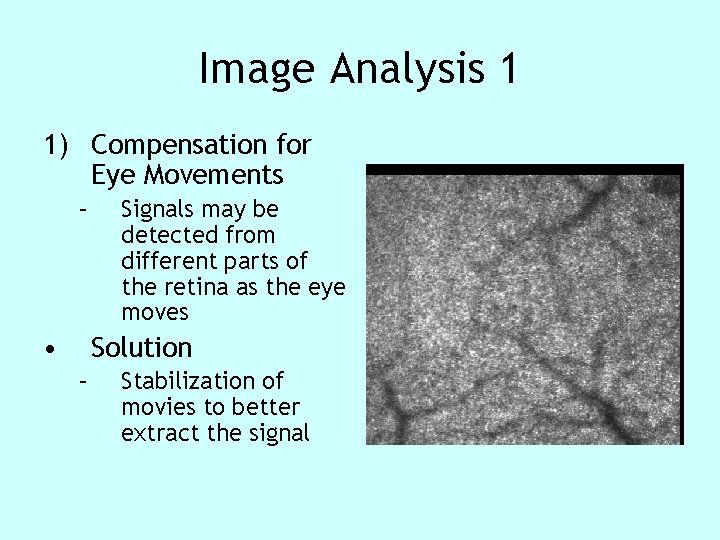
Image Analysis 1 1) Compensation for Eye Movements – • Signals may be detected from different parts of the retina as the eye moves Solution – Stabilization of movies to better extract the signal
Image Analysis 2 2) Compensation for Eye Blinking - Intensity changes due to blinking are larger than the desired signal • Solution - Compare stimulated vs. unstimulated region of the retina (ratio of upper to lower half of IR image) Frame 1: Red Laser Frame 2: Infrared Laser
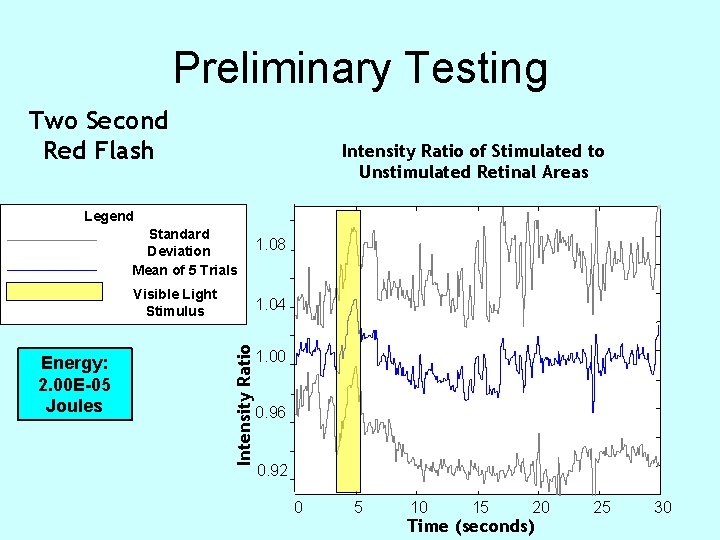
Preliminary Testing Two Second Red Flash Intensity Ratio of Stimulated to Unstimulated Retinal Areas Legend Standard Deviation Mean of 5 Trials Visible Light Stimulus 1. 04 Intensity Ratio Energy: 2. 00 E-05 Joules 1. 08 1. 00 0. 96 0. 92 0 5 10 15 20 Time (seconds) 25 30
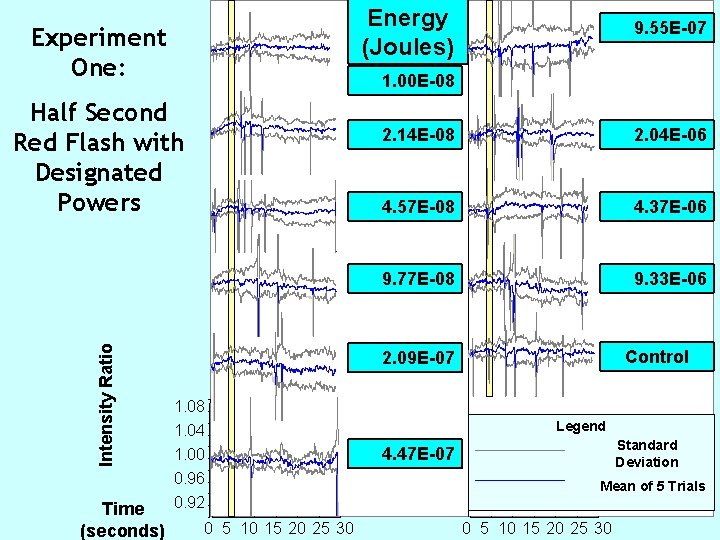
Energy (Joules) Experiment One: 1. 00 E-08 Intensity Ratio Half Second Red Flash with Designated Powers Time (seconds) 9. 55 E-07 2. 14 E-08 2. 04 E-06 4. 57 E-08 4. 37 E-06 9. 77 E-08 9. 33 E-06 Control 2. 09 E-07 1. 08 1. 04 1. 00 0. 96 0. 92 0 5 10 15 20 25 30 Legend Standard Deviation 4. 47 E-07 Mean of 5 Trials 0 5 10 15 20 25 30
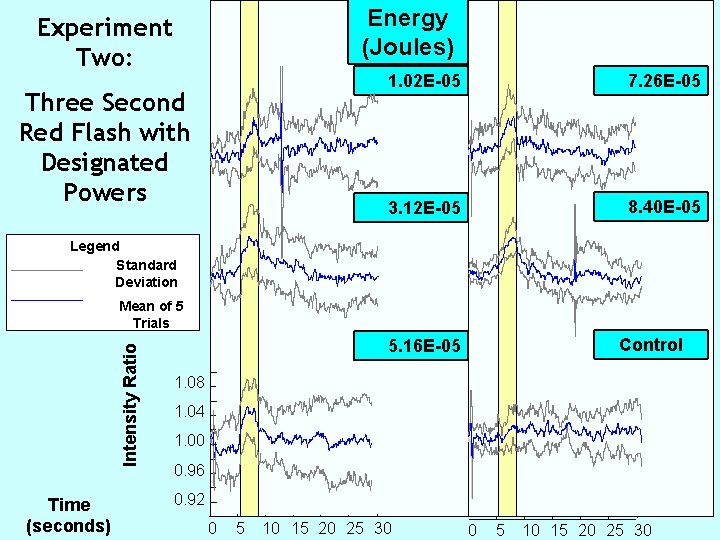
Energy (Joules) Experiment Two: Three Second Red Flash with Designated Powers 1. 02 E-05 7. 26 E-05 3. 12 E-05 8. 40 E-05 Legend Standard Deviation Intensity Ratio Mean of 5 Trials Time (seconds) Control 5. 16 E-05 1. 08 1. 04 1. 00 0. 96 0. 92 0 5 10 15 20 25 30
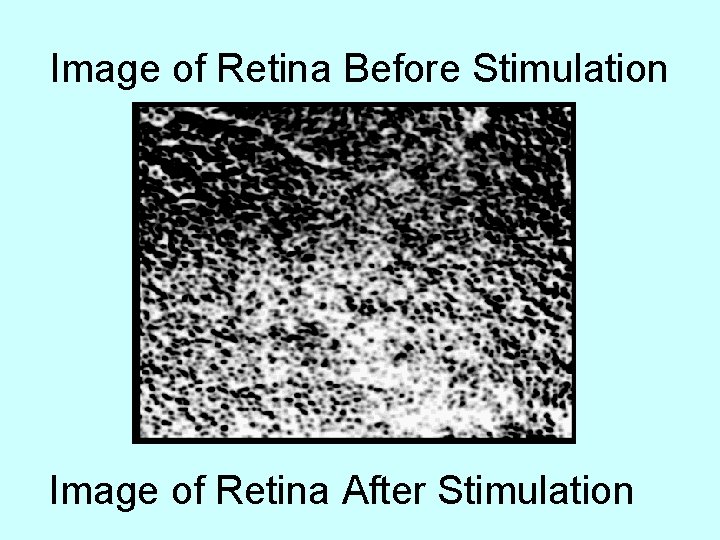
Image of Retina Before Stimulation Image of Retina After Stimulation
Summary/Conclusion • Systematic change (increase in scattered l. R light in response to stimulation) observed with higher flash energies and a longer flash duration Future Plans • More testing with different stimuli and possibly patients with retinal disease
Acknowledgements • • Austin Roorda; Advisor Kate Grieve; Supervisor Kaccie Li Ethan Rossi Pavan Tiruveedhula Pinky Weiser Yuhua Zhang Funding Provided by NSF and the Center for Adaptive Optics Grant No. AST 9876783
Thank you! Questions?