
Imaging Instruments part I Principal Planes and Focal

- Slides: 46
Imaging Instruments (part I) • Principal Planes and Focal Lengths (Effective, Back, Front) • Multi-element systems • Pupils & Windows; Apertures & Stops • the Numerical Aperture and f/# • Single-Lens Camera • Human Eye • Reflective optics • Scheimpflug condition MIT 2. 71/2. 710 09/22/04 wk 3 -b-1
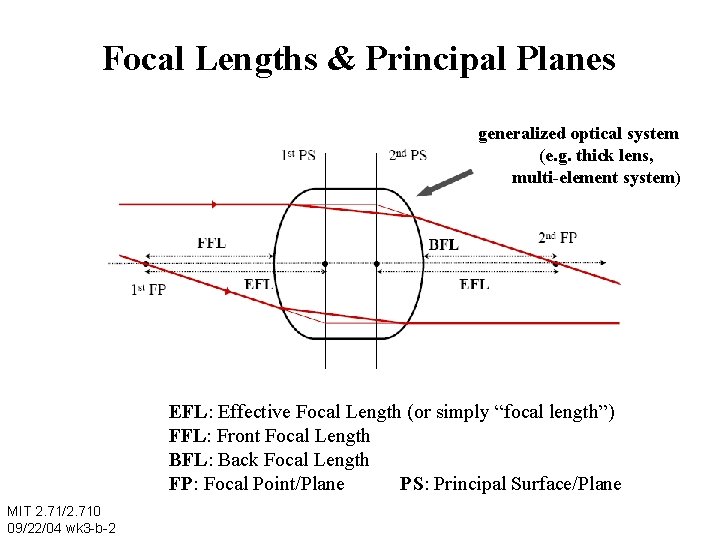
Focal Lengths & Principal Planes generalized optical system (e. g. thick lens, multi-element system) EFL: Effective Focal Length (or simply “focal length”) FFL: Front Focal Length BFL: Back Focal Length FP: Focal Point/Plane PS: Principal Surface/Plane MIT 2. 71/2. 710 09/22/04 wk 3 -b-2
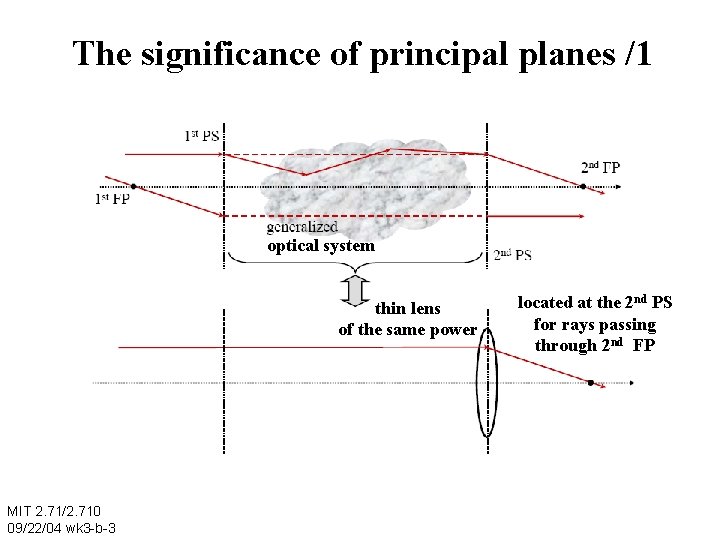
The significance of principal planes /1 optical system thin lens of the same power MIT 2. 71/2. 710 09/22/04 wk 3 -b-3 located at the 2 nd PS for rays passing through 2 nd FP
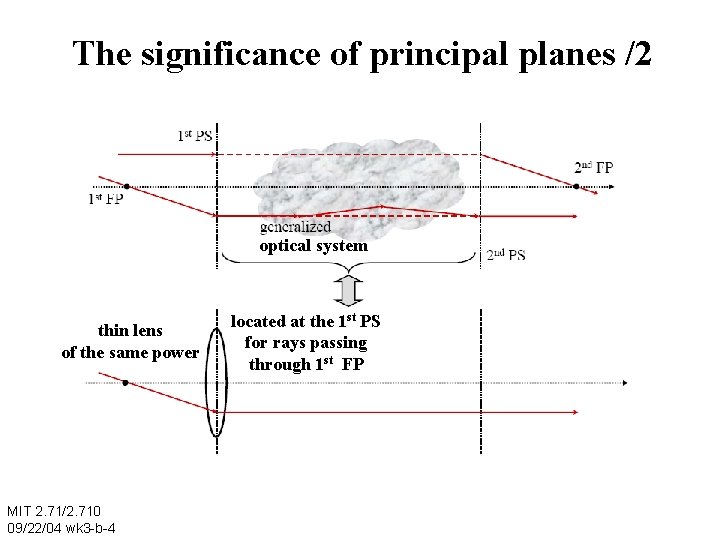
The significance of principal planes /2 optical system thin lens of the same power MIT 2. 71/2. 710 09/22/04 wk 3 -b-4 located at the 1 st PS for rays passing through 1 st FP
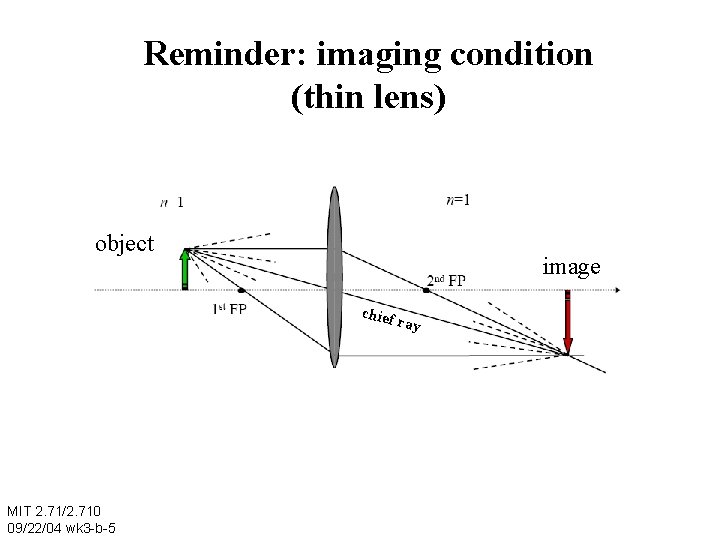
Reminder: imaging condition (thin lens) object image chief MIT 2. 71/2. 710 09/22/04 wk 3 -b-5 ray
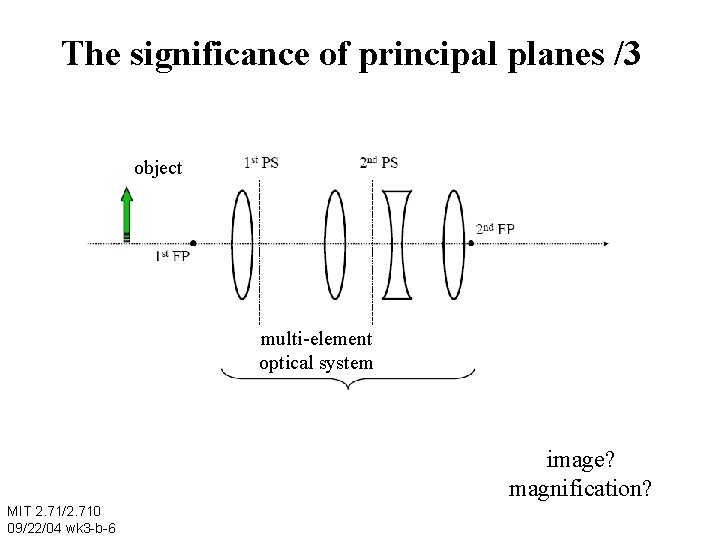
The significance of principal planes /3 object multi-element optical system image? magnification? MIT 2. 71/2. 710 09/22/04 wk 3 -b-6
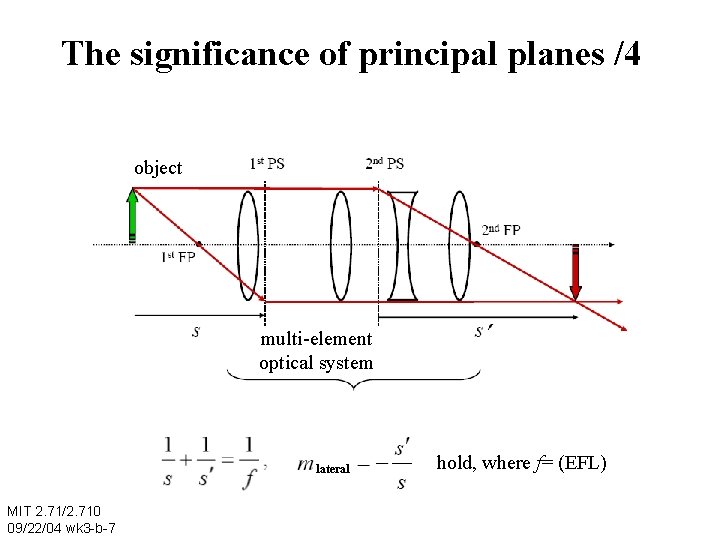
The significance of principal planes /4 object multi-element optical system lateral MIT 2. 71/2. 710 09/22/04 wk 3 -b-7 hold, where f= (EFL)
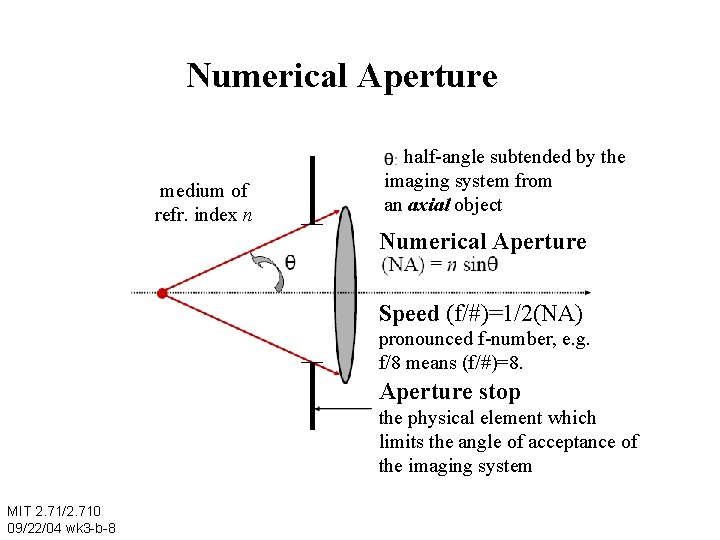
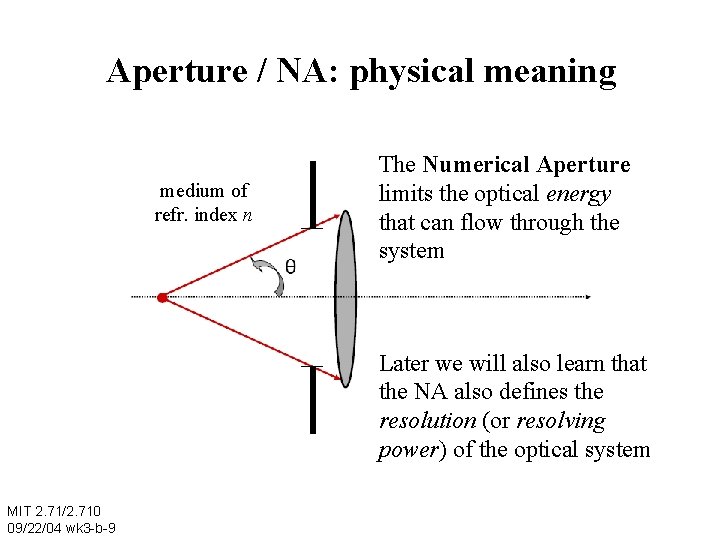
Numerical Aperture medium of refr. index n half-angle subtended by the imaging system from an axial object Numerical Aperture Speed (f/#)=1/2(NA) pronounced f-number, e. g. f/8 means (f/#)=8. Aperture stop the physical element which limits the angle of acceptance of the imaging system MIT 2. 71/2. 710 09/22/04 wk 3 -b-8
Aperture / NA: physical meaning medium of refr. index n The Numerical Aperture limits the optical energy that can flow through the system Later we will also learn that the NA also defines the resolution (or resolving power) of the optical system MIT 2. 71/2. 710 09/22/04 wk 3 -b-9
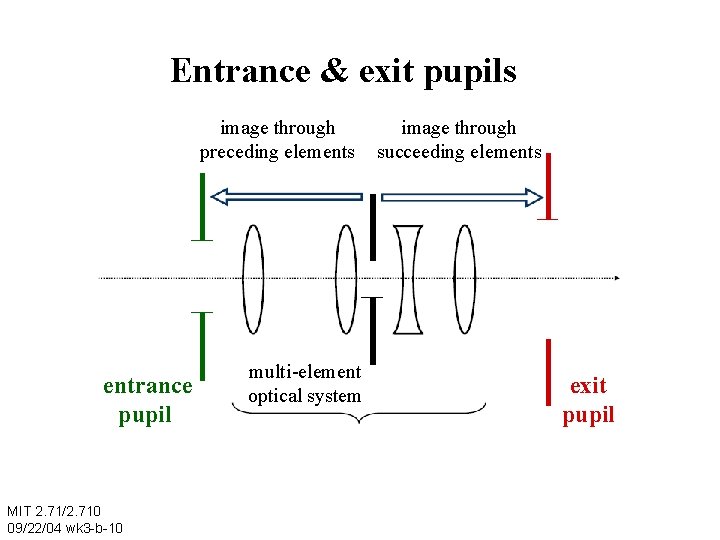
Entrance & exit pupils image through preceding elements entrance pupil MIT 2. 71/2. 710 09/22/04 wk 3 -b-10 multi-element optical system image through succeeding elements exit pupil
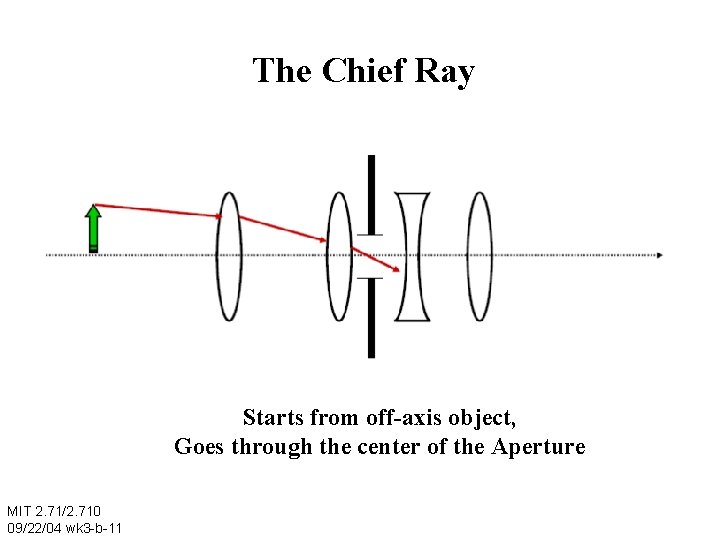
The Chief Ray Starts from off-axis object, Goes through the center of the Aperture MIT 2. 71/2. 710 09/22/04 wk 3 -b-11
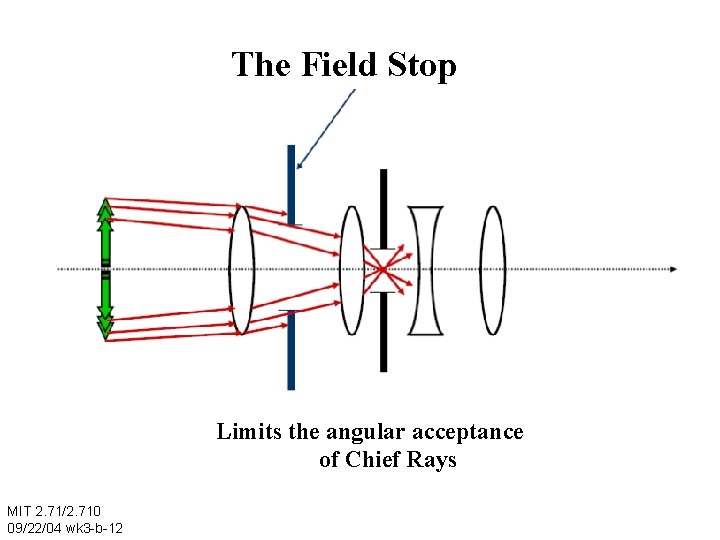
The Field Stop Limits the angular acceptance of Chief Rays MIT 2. 71/2. 710 09/22/04 wk 3 -b-12
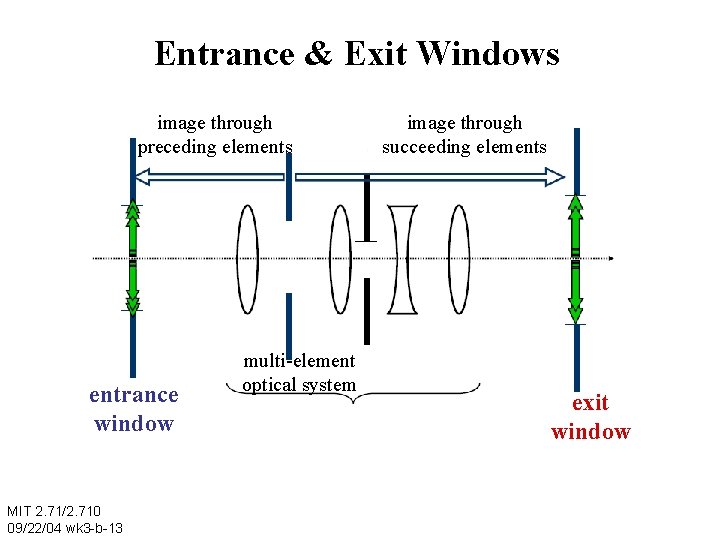
Entrance & Exit Windows image through preceding elements entrance window MIT 2. 71/2. 710 09/22/04 wk 3 -b-13 multi-element optical system image through succeeding elements exit window
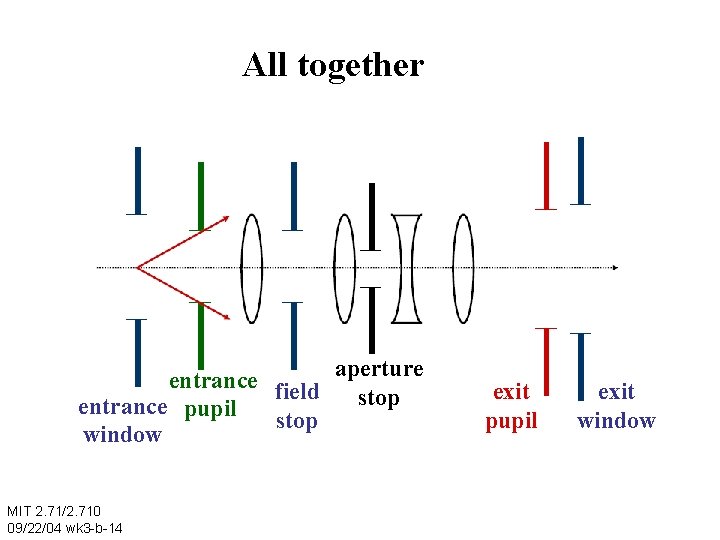
All together entrance field aperture stop entrance pupil stop window MIT 2. 71/2. 710 09/22/04 wk 3 -b-14 exit pupil exit window
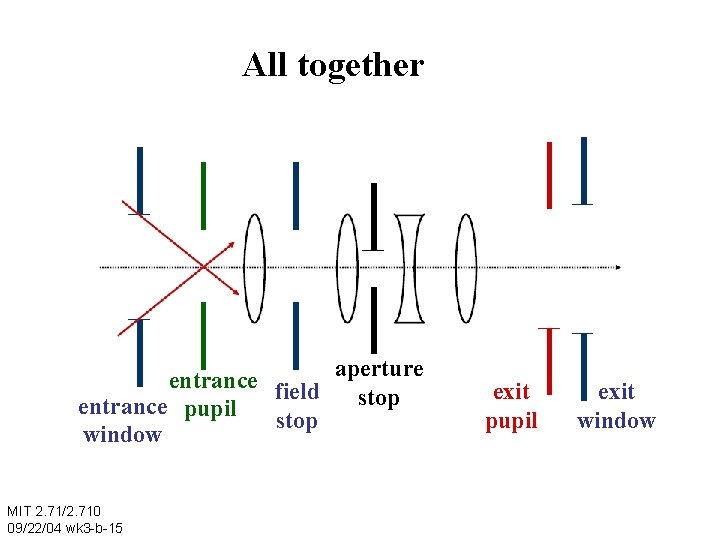
All together entrance field aperture stop entrance pupil stop window MIT 2. 71/2. 710 09/22/04 wk 3 -b-15 exit pupil exit window
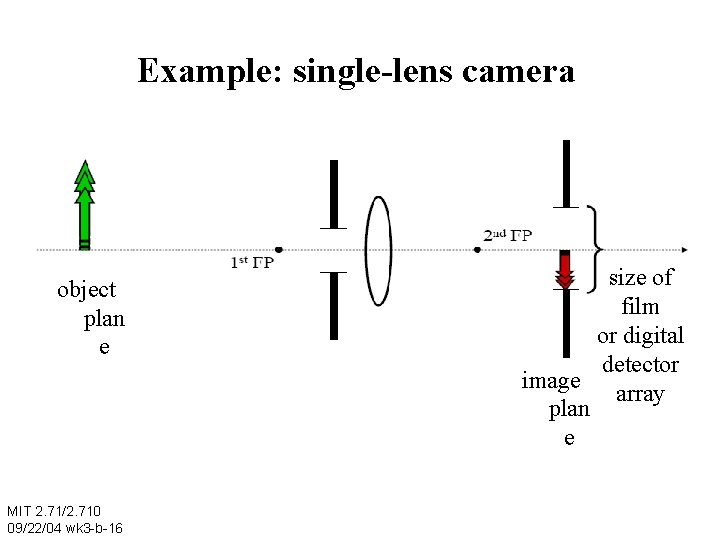
Example: single-lens camera object plan e MIT 2. 71/2. 710 09/22/04 wk 3 -b-16 size of film or digital detector image array plan e
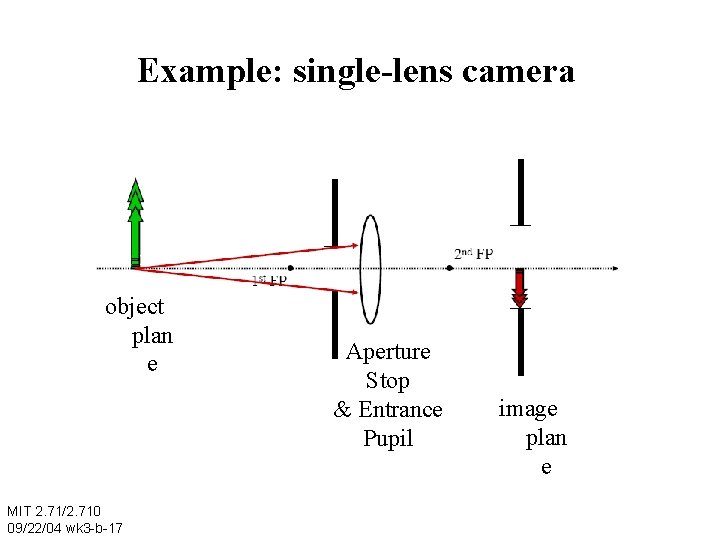
Example: single-lens camera object plan e MIT 2. 71/2. 710 09/22/04 wk 3 -b-17 Aperture Stop & Entrance Pupil image plan e
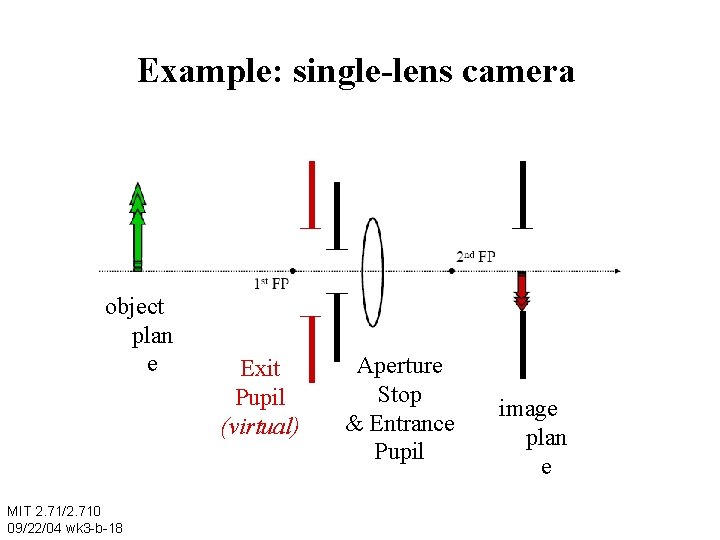
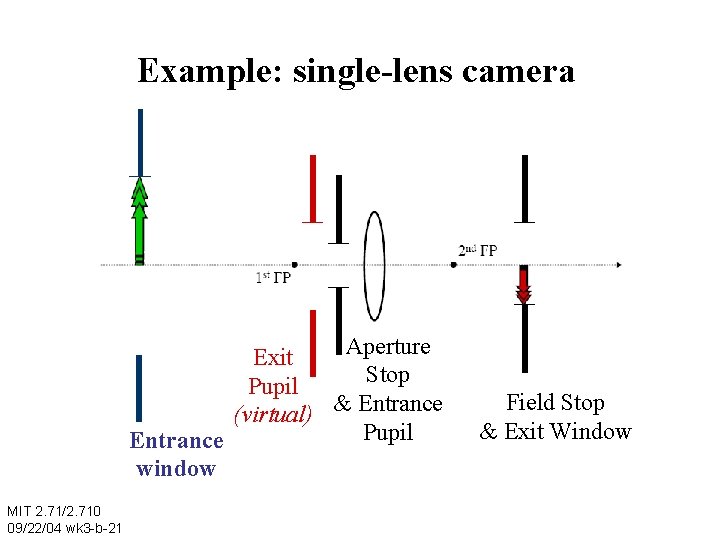
Example: single-lens camera object plan e MIT 2. 71/2. 710 09/22/04 wk 3 -b-18 Exit Pupil (virtual) Aperture Stop & Entrance Pupil image plan e
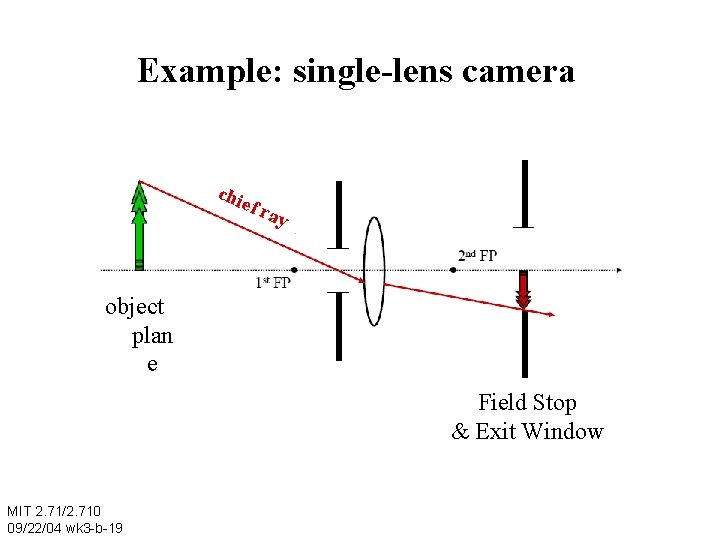
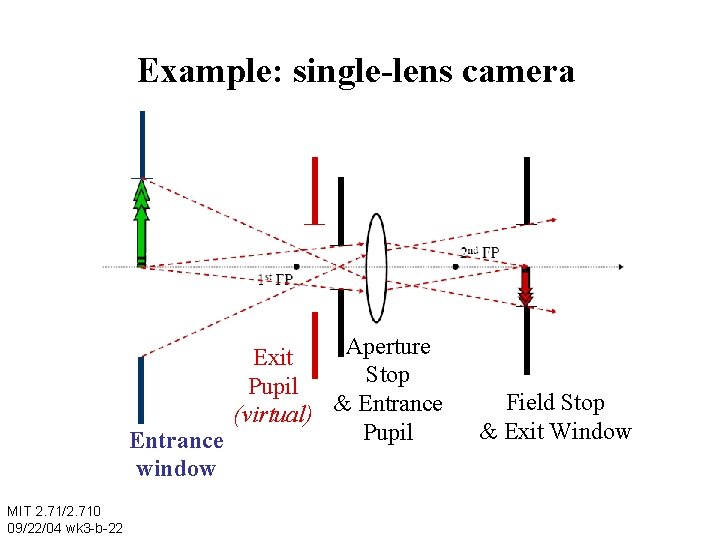
Example: single-lens camera chi ef r ay object plan e Field Stop & Exit Window MIT 2. 71/2. 710 09/22/04 wk 3 -b-19
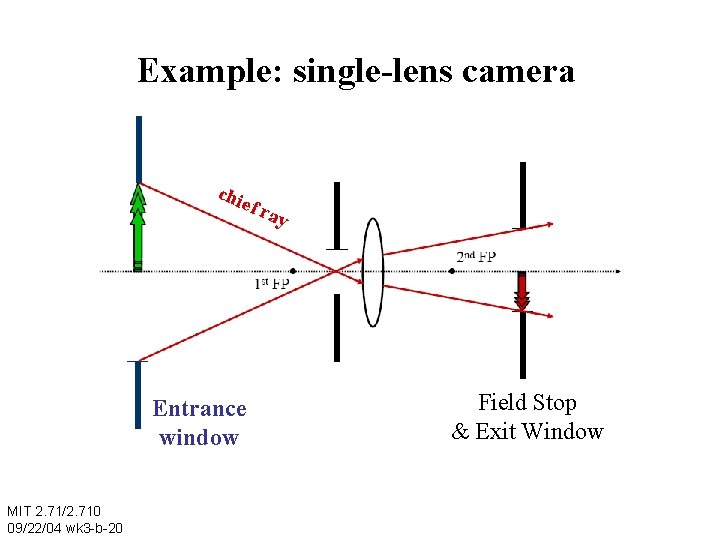
Example: single-lens camera chi ef r Entrance window MIT 2. 71/2. 710 09/22/04 wk 3 -b-20 ay Field Stop & Exit Window
Example: single-lens camera Aperture Exit Stop Pupil (virtual) & Entrance Pupil Entrance window MIT 2. 71/2. 710 09/22/04 wk 3 -b-21 Field Stop & Exit Window
Example: single-lens camera Aperture Exit Stop Pupil (virtual) & Entrance Pupil Entrance window MIT 2. 71/2. 710 09/22/04 wk 3 -b-22 Field Stop & Exit Window
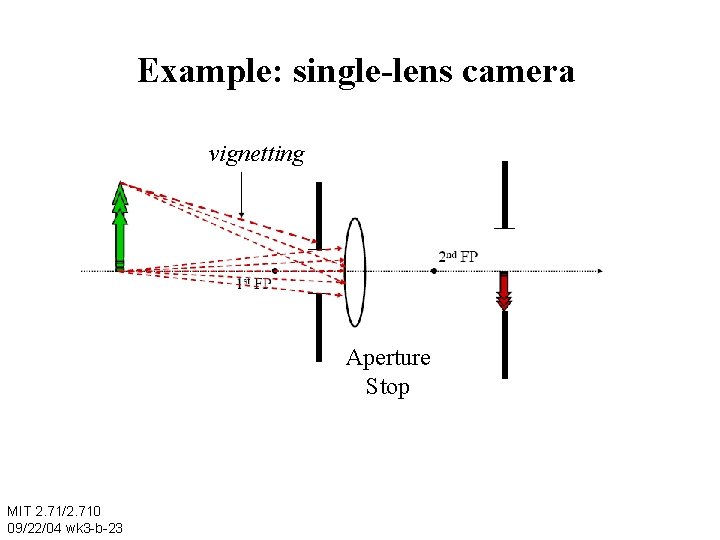
Example: single-lens camera vignetting Aperture Stop MIT 2. 71/2. 710 09/22/04 wk 3 -b-23
Imaging systems in nature • “Physical” architecture matches survival requirements and processing capabilities • Human eye: evolved for – adaptivity (e. g. brightness adjustment) – transmission efficiency (e. g. mexican hat response) – bypass structural defects (e. g. blind spot) – other functional requirements (e. g. stereo vision) • Insect eye: similar, but muchsimpler processor (human brain = ~1011 neurons; insect brain = ~104 neurons) MIT 2. 71/2. 710 09/22/04 wk 3 -b-24
Anatomy of the human eye Images removed due to copyright concerns MIT 2. 71/2. 710 09/22/04 wk 3 -b-25 W. J. Smith, “Modern Optical Engineering, ” Mc. Graw-Hill
Images removed due to copyright concerns Eye schematic with typical dimensions Photographic camera concerns Images removed due to copyright concerns MIT 2. 71/2. 710 09/22/04 wk 3 -b-26
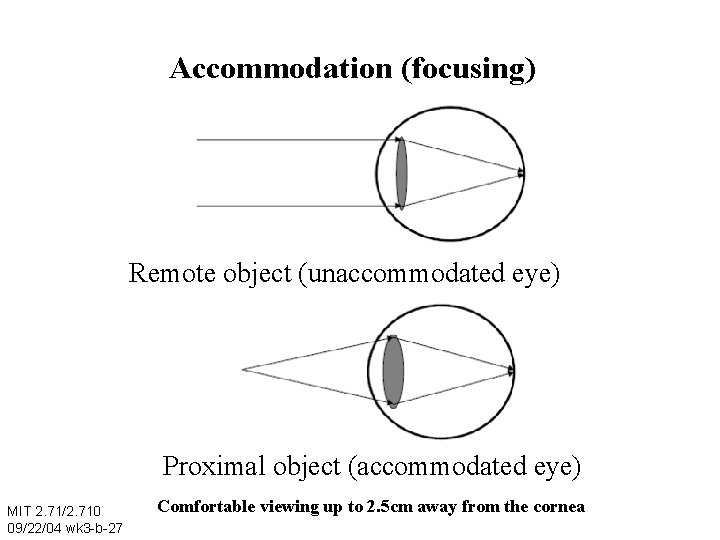
Accommodation (focusing) Remote object (unaccommodated eye) Proximal object (accommodated eye) MIT 2. 71/2. 710 09/22/04 wk 3 -b-27 Comfortable viewing up to 2. 5 cm away from the cornea
Eye defects and their correction Images removed due to copyright concerns from Fundamentals of Optics by F. Jenkins & H. White MIT 2. 71/2. 710 09/22/04 wk 3 -b-28
The eye’s “digital camera”: retina Images removed due to copyright concerns http: //www. mdsupport. org MIT 2. 71/2. 710 09/22/04 wk 3 -b-29
The eye’s “digital camera”: retina rods: intensity (grayscale) cones: color (R/G/B) Images removed due to copyright concerns http: //www. phys. ufl. edu/~avery/ MIT 2. 71/2. 710 09/22/04 wk 3 -b-30
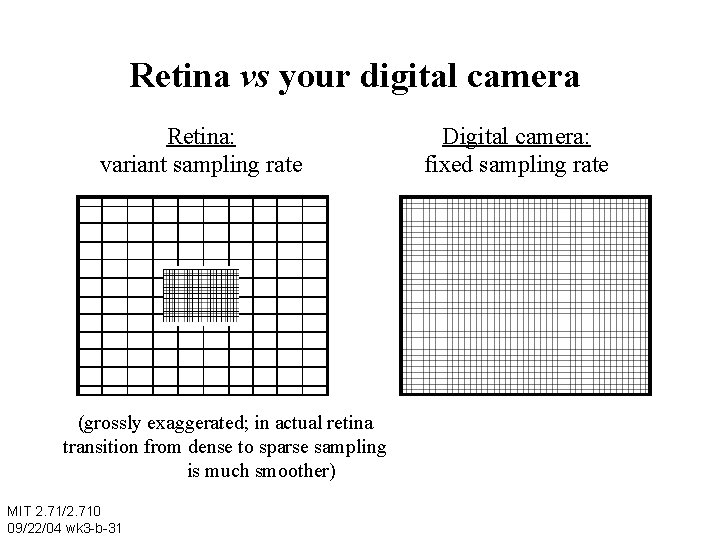
Retina vs your digital camera Retina: variant sampling rate (grossly exaggerated; in actual retina transition from dense to sparse sampling is much smoother) MIT 2. 71/2. 710 09/22/04 wk 3 -b-31 Digital camera: fixed sampling rate
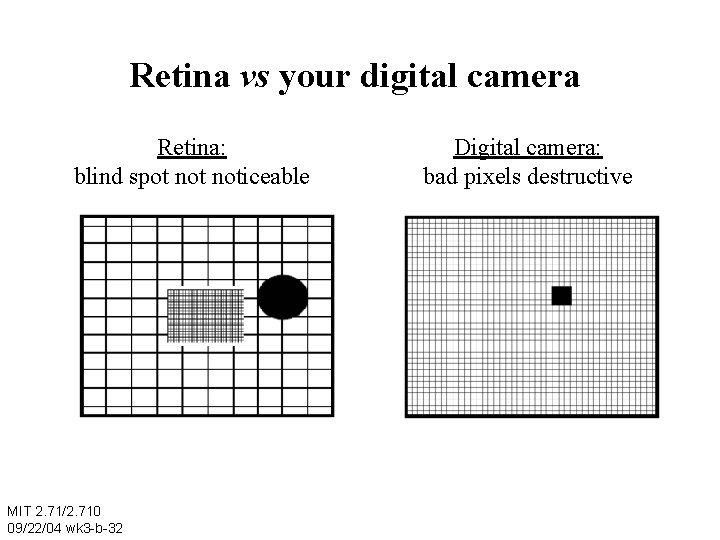
Retina vs your digital camera Retina: blind spot noticeable MIT 2. 71/2. 710 09/22/04 wk 3 -b-32 Digital camera: bad pixels destructive
Retina vs your digital camera Images removed due to copyright concerns Retinal image CCD image http: //www. klab. caltech. edu/~itti/ MIT 2. 71/2. 710 09/22/04 wk 3 -b-33
Spatial response of the retina – lateral connections Images removed due to copyright concerns http: //webvision. med. utah. edu/ MIT 2. 71/2. 710 09/22/04 wk 3 -b-34
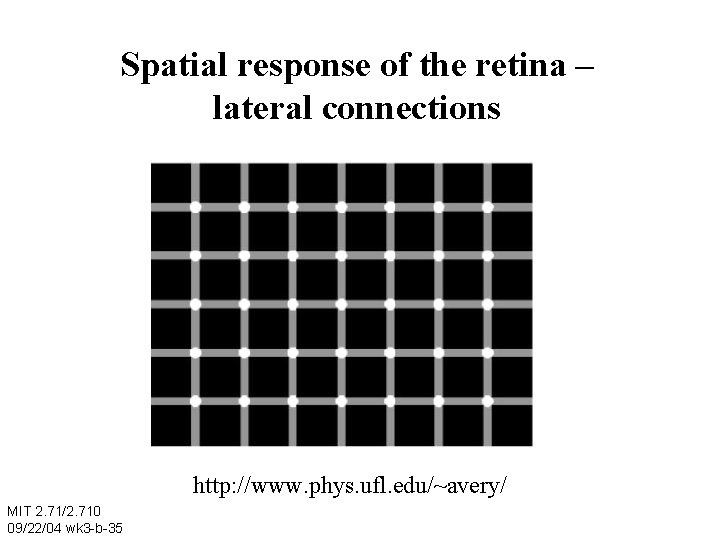
Spatial response of the retina – lateral connections http: //www. phys. ufl. edu/~avery/ MIT 2. 71/2. 710 09/22/04 wk 3 -b-35
Spatial response of the retina – lateral connections Explanation of the “flipping dot” illusion: the Mexican hat response Images removed due to copyright concerns MIT 2. 71/2. 710 09/22/04 wk 3 -b-36 http: //faculty. washington. edu/wcalvin
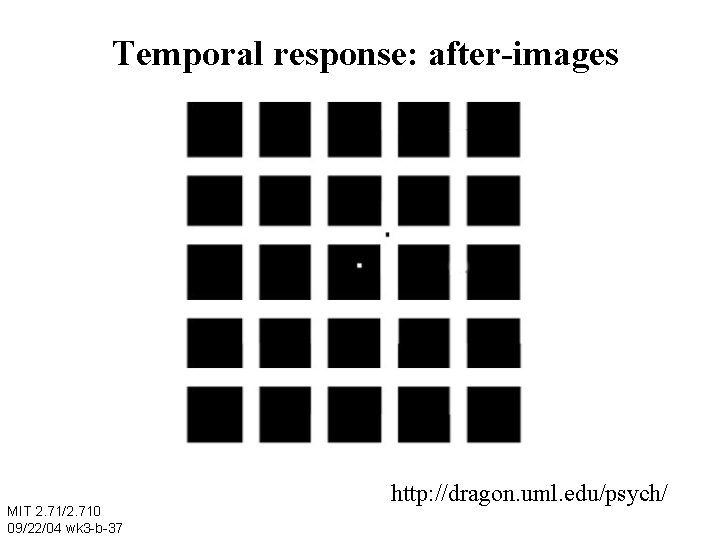
Temporal response: after-images MIT 2. 71/2. 710 09/22/04 wk 3 -b-37 http: //dragon. uml. edu/psych/
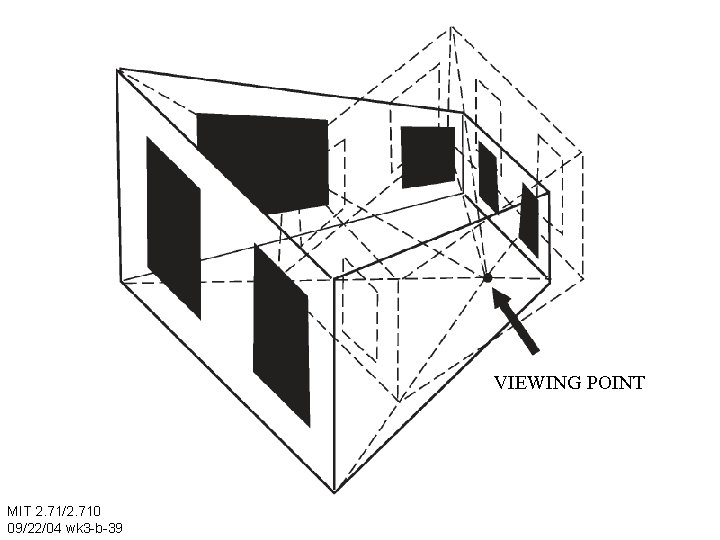
Seeing 3 D Images removed due to copyright concerns MIT 2. 71/2. 710 09/22/04 wk 3 -b-38 http: //www. ccom. unh. edu/vislab/Vis. Course
VIEWING POINT MIT 2. 71/2. 710 09/22/04 wk 3 -b-39
The compound eye Images removed due to copyright concerns MIT 2. 71/2. 710 09/22/04 wk 3 -b-40
Elements of the compound eye: ommatidia (=little eyes) Images removed due to copyright concerns “image” formation: blurry, but computationally efficient for moving-edge detection MIT 2. 71/2. 710 09/22/04 wk 3 -b-41
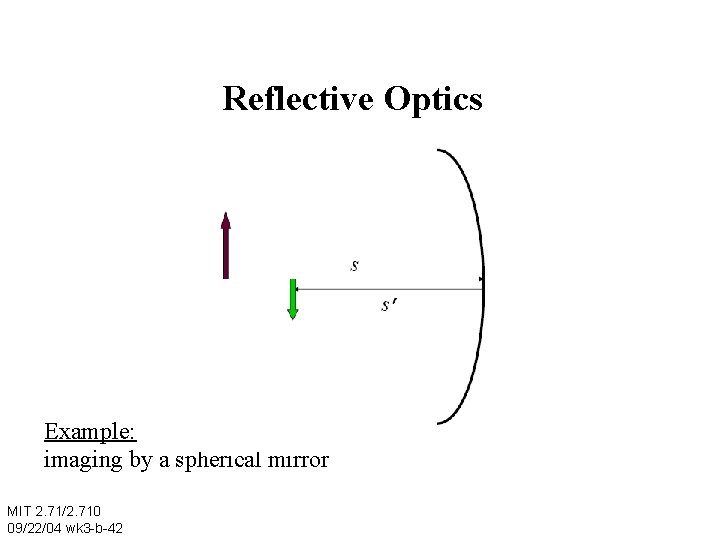
Reflective Optics Example: imaging by a spherical mirror MIT 2. 71/2. 710 09/22/04 wk 3 -b-42
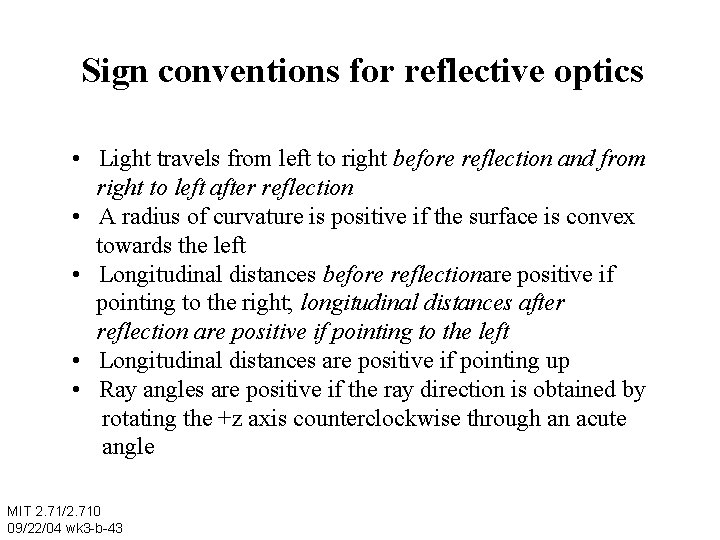
Sign conventions for reflective optics • Light travels from left to right before reflection and from right to left after reflection • A radius of curvature is positive if the surface is convex towards the left • Longitudinal distances before reflectionare positive if pointing to the right; longitudinal distances after reflection are positive if pointing to the left • Longitudinal distances are positive if pointing up • Ray angles are positive if the ray direction is obtained by rotating the +z axis counterclockwise through an acute angle MIT 2. 71/2. 710 09/22/04 wk 3 -b-43
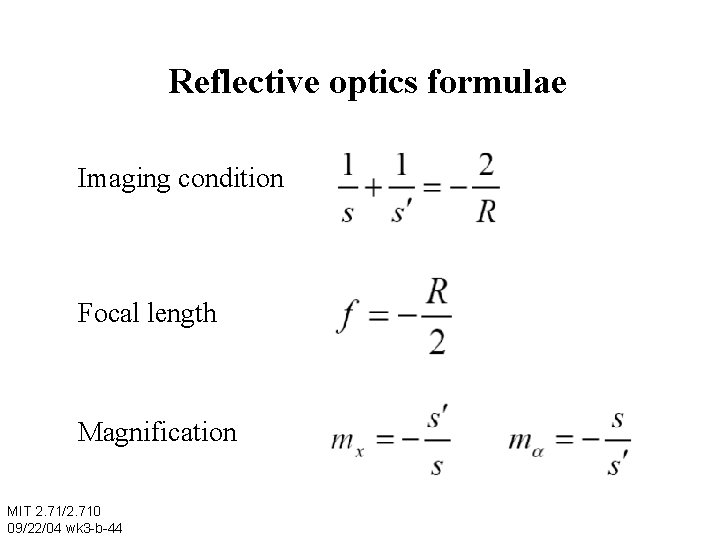
Reflective optics formulae Imaging condition Focal length Magnification MIT 2. 71/2. 710 09/22/04 wk 3 -b-44
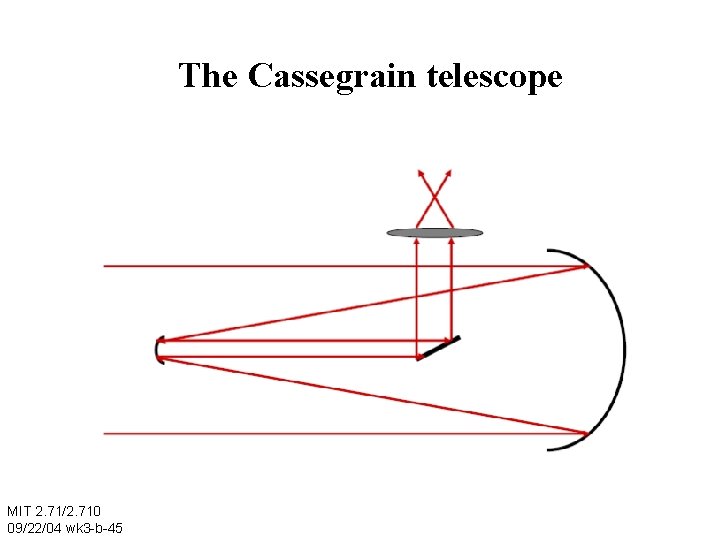
The Cassegrain telescope MIT 2. 71/2. 710 09/22/04 wk 3 -b-45
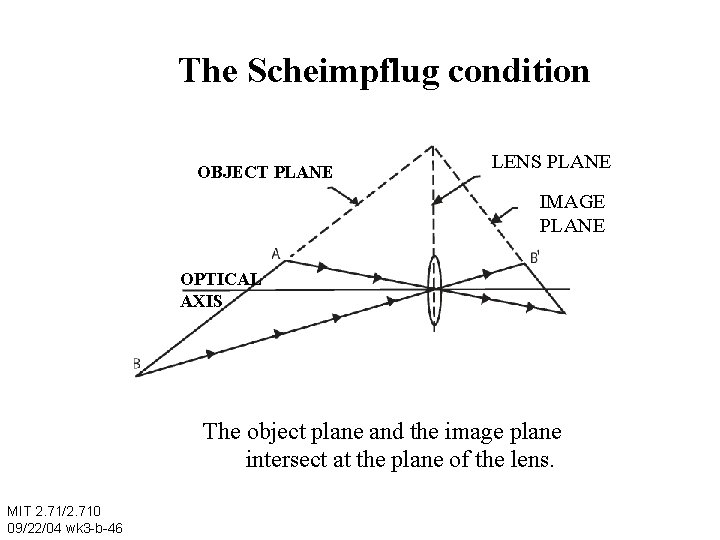
The Scheimpflug condition OBJECT PLANE LENS PLANE IMAGE PLANE OPTICAL AXIS The object plane and the image plane intersect at the plane of the lens. MIT 2. 71/2. 710 09/22/04 wk 3 -b-46