
ImageBased Steering for Integrative Biology Lakshmi Sastry Richard
Image-Based Steering for Integrative Biology Lakshmi Sastry, Richard Wong, Helen Wright with contributions from Ronald Fowler, Sri Nagella and Anjan Pakhira
Acknowledgements o Ken Brodlie and Jason Wood o Compu. Steer funding o Integrative Biology project scientists
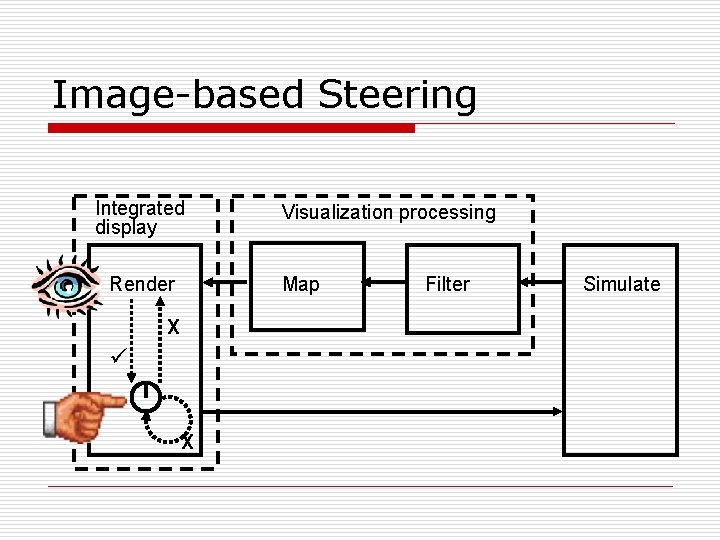
Image-based Steering Integrated display Render Visualization processing Map X X Filter Simulate
Integrative Biology (IB) o Grid technology to enable in-silico experiments by computational biologists o Combined resources for computation, data management, visualization and data analysis o Focus on fatal diseases – heart and cancer
Example IB Applications Modelling heart electrical activity during arrhythmia: o Tulane whole ventricular model – epicardial potential distribution over heart geometry during shock-induced arrhythmia o Fenton-Karma 4 -variable model on 2 D slice of tissue
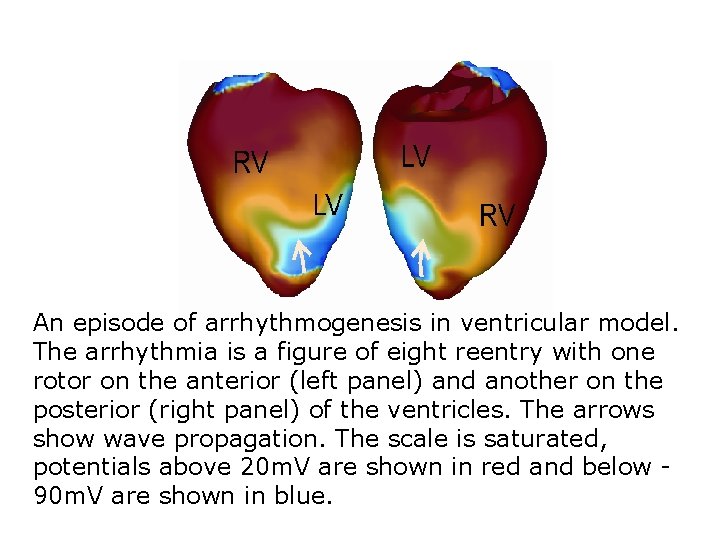
An episode of arrhythmogenesis in ventricular model. The arrhythmia is a figure of eight reentry with one rotor on the anterior (left panel) and another on the posterior (right panel) of the ventricles. The arrows show wave propagation. The scale is saturated, potentials above 20 m. V are shown in red and below 90 m. V are shown in blue.
Example IB Applications o In vitro and in-silico models of tumour growth during very early stages o Seamless secure access to very large volumes of image data, processing, simulation and interaction will accelerate understanding of disease process.
Steering for IB Applications o Complex and compute intensive with tens and hundreds of parameters o Verification of models that continue to be refined o Computational exploration of parameter space o Expanding set of simulations and visualization toolkits
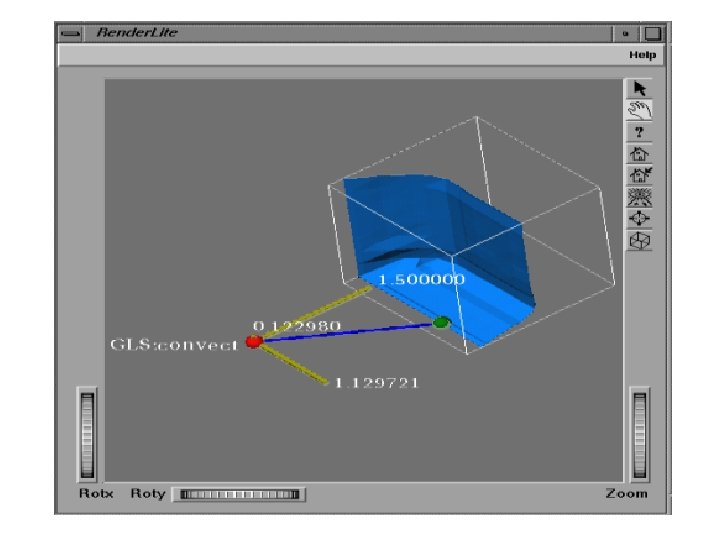
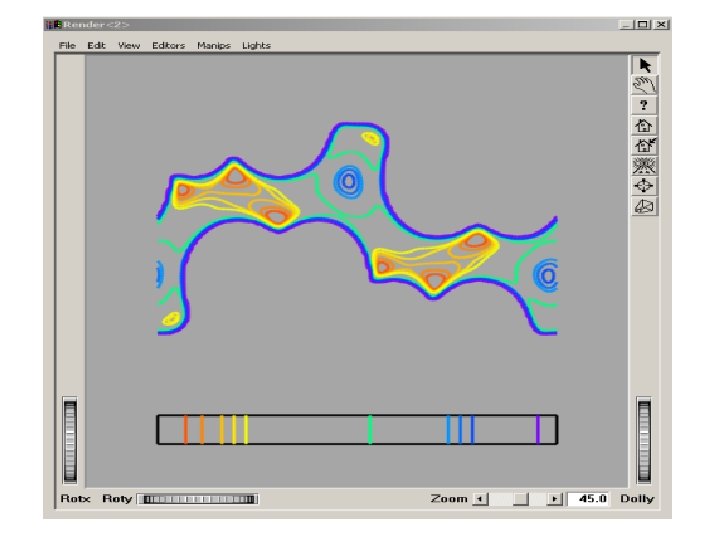
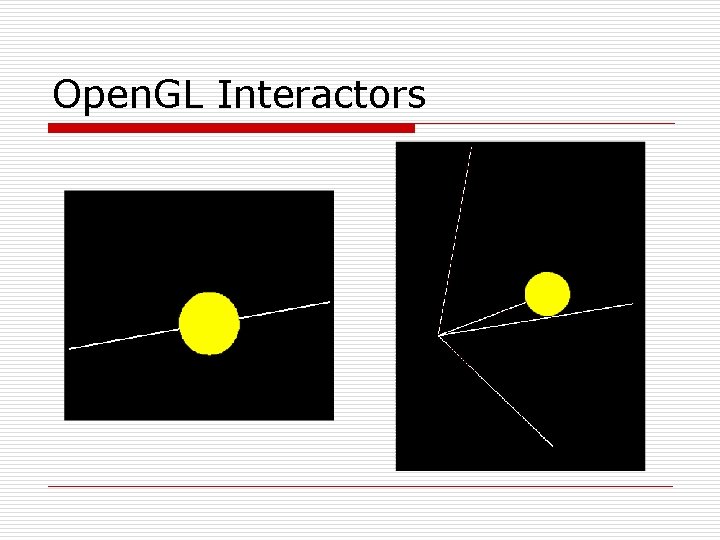
Image-based Interaction o Extrinsic parameters (scalars, vectors) mimic widgets but minimise context switching o Parameters intrinsic to the solution graphic, e. g. position specifications o The IB interface provides a layer of abstraction above the clientside libraries for computational steering.
The Case for Server-side Applications o Application may already have steering embedded o Developing a steerable interface and other scalable services for each application does not scale o Difficult to embed steering and other services into certain visualization toolkits o Users want continuity in their visualization toolkits o Minimises changes needed to application software
Client-side Consequences o Keep client generic – configure on set -up to meet application requirements o Needs to handle various geometry and image formats o Application-specific activity e. g. to resolve geometry elements or nodes, takes place server-side
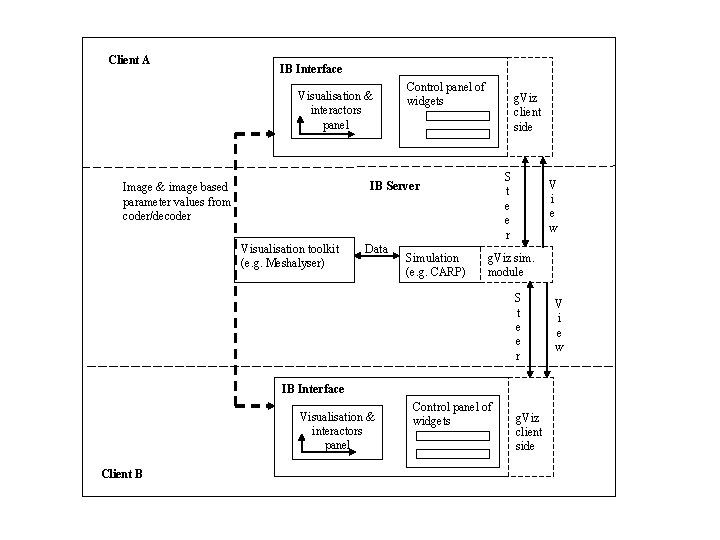
Client A IB Interface Visualisation & interactors panel Control panel of widgets g. Viz client side S t e e r IB Server Image & image based parameter values from coder/decoder Visualisation toolkit (e. g. Meshalyser) Data Simulation (e. g. CARP) V i e w g. Viz sim. module S t e e r IB Interface Visualisation & interactors panel Client B Control panel of widgets g. Viz client side V i e w
Collaborative g. Viz Overview o Parameter changes are passed to all collaborators for visibility (steer/view arrows) o Committed parameters are passed to all collaborators and the simulation, locking interactors o Arrival of data unlocks interactors – implies token-passing o Data streams – not used here – separate results from parameters
Demonstrator Elements o Tumour modelling – growth of ductal carcinoma in breast o Results – time-varying tumour cell counts in axial and radial direction of duct o Steering of nutrient consumption rate and cell-to-duct-wall slip coefficient o Utilises g. Viz rel. 2 (collaborative) for parameter passing, calling Fortran
Visualization Back-end o IRIS Explorer, loosely coupled o Simulation outputs file of results (time step) which triggers visualization o Height-field plot varying in time n height = cell numbers n colour = pressure
Steering nutrient consumption and cell death rate (6 MB movie)
Open. GL Interactors
Experiences o Hard to ‘wipe the slate clean’ before starting again o New collaboration helps o Mode is ‘extreme collaboration’ (cf. extreme programming) o Needs dedicated time o Trips - how long is ‘just long enough’?
Remaining Question Marks o Token maintenance over the various architecture pathways o Recombination of 3 rd party geometries/images with interactors n Anticipate little problem for extrinsics n Intrinsics more difficult o g. Viz and multiple simulations?
Remaining Question Marks o How scalable is the architecture really? o Will scientists and steering libraries ever really mix? o What support do scientists need to use steering libraries – documentation, examples, GUI builders?
- Slides: 22