
Image Tampering Detection Using Bayesian Analytical Methods 04112005
Image Tampering Detection Using Bayesian Analytical Methods 04/11/2005 As presented by Jason Kneier ELEN E 6886 Spring 2005
The Problem • Common image processing tools are capable of creating forgeries undetectable to the eye • Data can also be hidden in regions of an image where it is less likely to perturb the original image
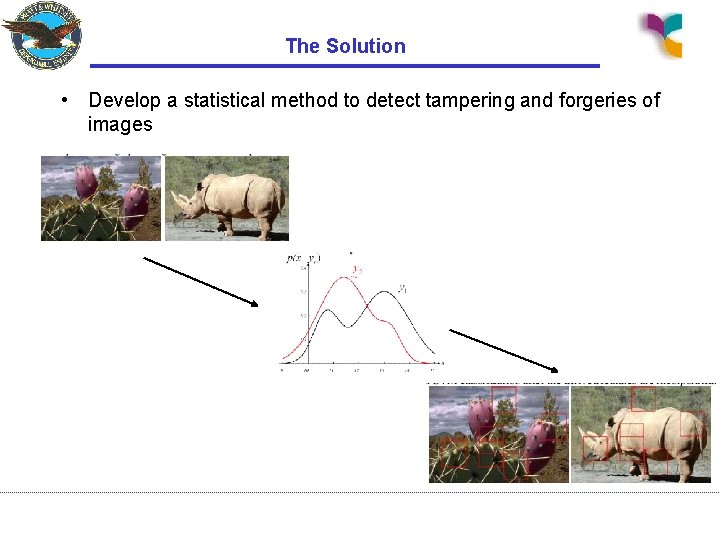
The Solution • Develop a statistical method to detect tampering and forgeries of images
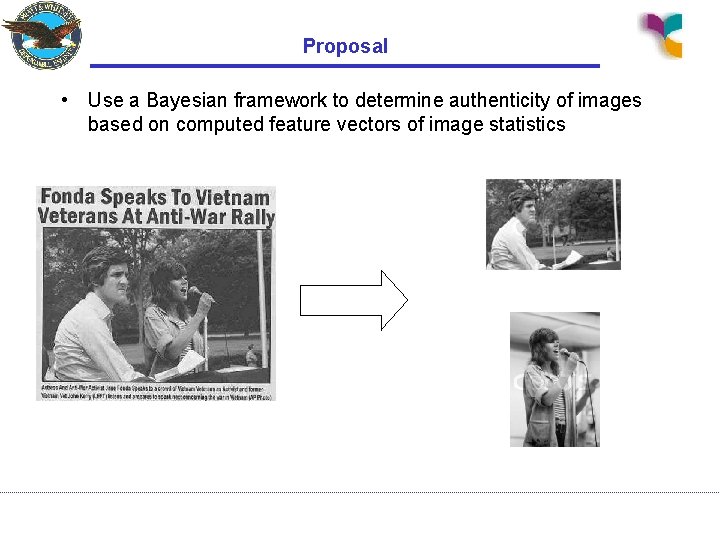
Proposal • Use a Bayesian framework to determine authenticity of images based on computed feature vectors of image statistics
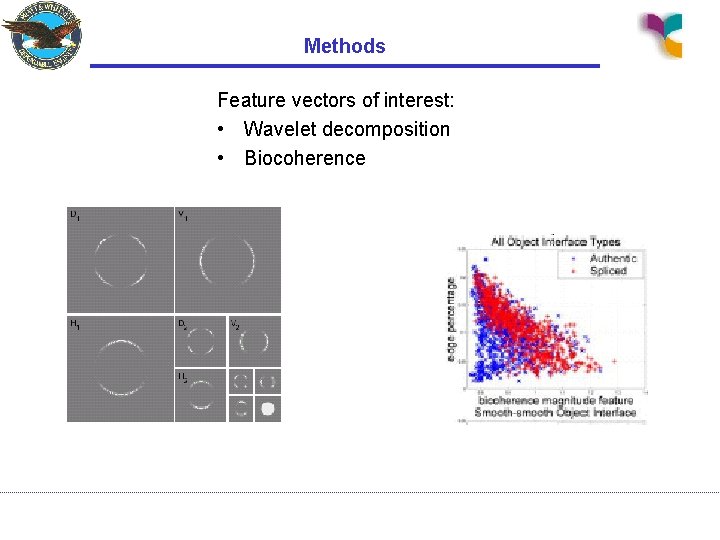
Methods Feature vectors of interest: • Wavelet decomposition • Biocoherence
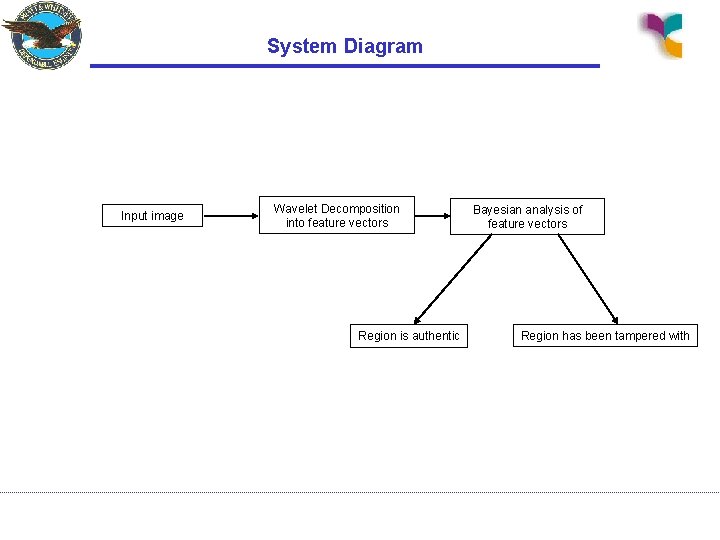
System Diagram Input image Wavelet Decomposition into feature vectors Region is authentic Bayesian analysis of feature vectors Region has been tampered with
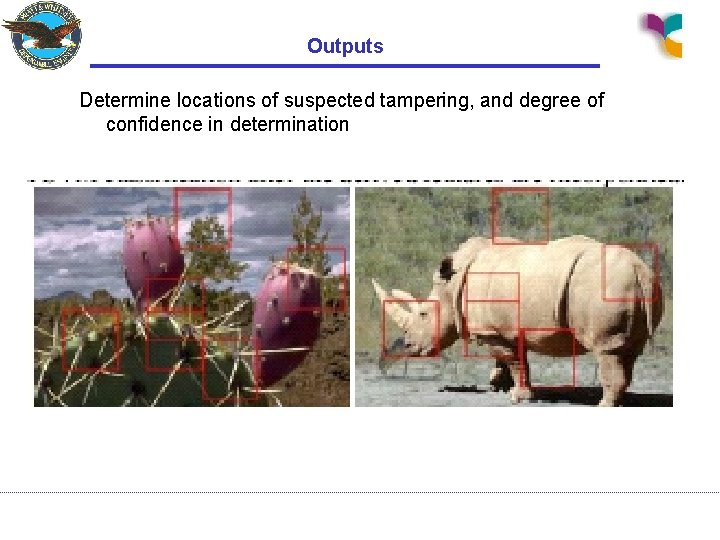
Outputs Determine locations of suspected tampering, and degree of confidence in determination
![References [1] A. C. Popescu and H. Farid, “Exposing Digital Forgeries by Detecting Traces](http://slidetodoc.com/presentation_image/72af89704155ba4bd8938874c7fd9529/image-8.jpg "References [1] A. C. Popescu and H. Farid, “Exposing Digital Forgeries by Detecting Traces")
References [1] A. C. Popescu and H. Farid, “Exposing Digital Forgeries by Detecting Traces of Re-sampling, “ IEEE Transactions on Signal Processing, 53(2): 758 -767, 2005. [2] A. C. Popescu and H. Farid, “Statistical Tools for Digital Forensics, ” 6 th International Workshop on Information Hiding, Toronto, Canada, 2004. [3] S. Lyu and H. Farid, “How Realistic is Photorealistic? , ” IEEE Transactions on Signal Processing, 53(2): 845 -850, 2005. [4] Tian-Tsong Ng, Shih-Fu Chang, “Blind Detection of Photomontage using Higher Order Statisics, ” Online: http: //www. ee. columbia. edu/~qibin/papers/qibin 2004_iscas_1. pdf, Columbia University, 2004. [5] R. Duda, P. Hart and D. Stork, Pattern Classification. New York, John Wiley & Sons, 2001. [6] T. Cover and J. Thomas, Elements of Information Theory. New York, John Wiley & Sons, 1991. [7] W. Pratt, Digital Image Processing. New York, John Wiley & Sons, 2001. [8] A. Papoulis and S. Pillai, Probability, Random Variables and Stochastic Processes. Boston, Mc. Graw Hill, 2002.
- Slides: 8