
IMAGE SENSOR KyoungSu Park 105235112 Introduction Image sensor
- Slides: 11
IMAGE SENSOR Kyoung-Su Park (105235112)
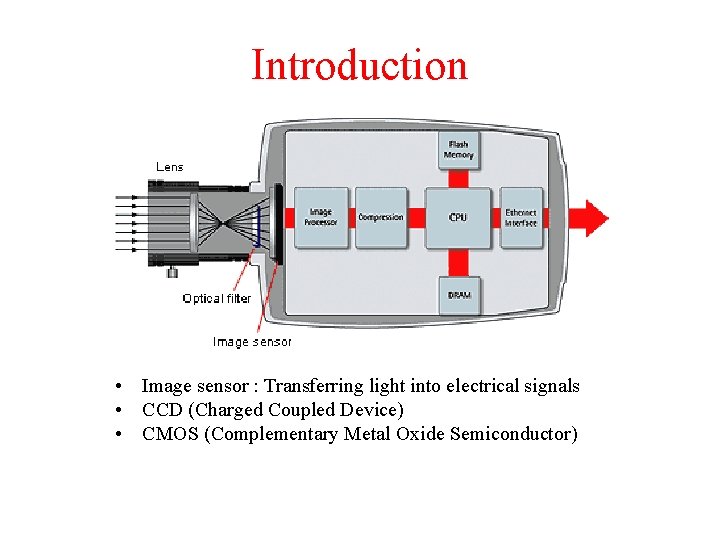
Introduction • Image sensor : Transferring light into electrical signals • CCD (Charged Coupled Device) • CMOS (Complementary Metal Oxide Semiconductor)
Image Basics • Image transferring (1) exposure which converts light into an electronic charge at discrete sites called pixels (2) charge transfer which moves the packets of charge within the silicon substrate (3) charge to voltage conversion and output amplification.
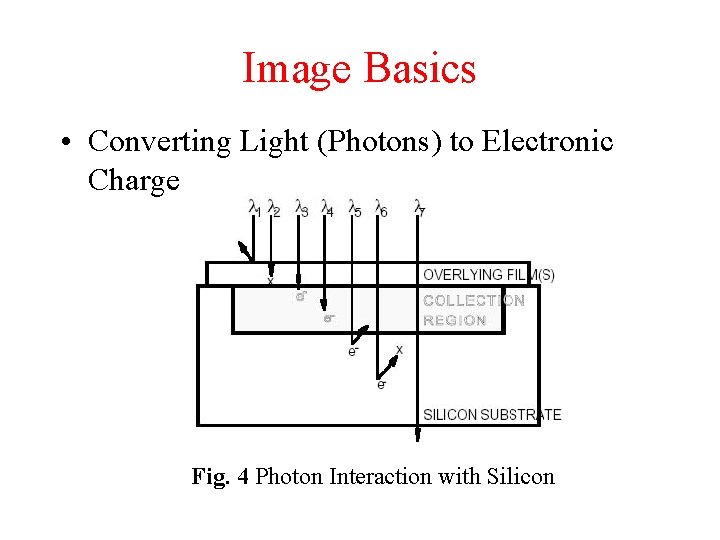
Image Basics • Converting Light (Photons) to Electronic Charge Fig. 4 Photon Interaction with Silicon
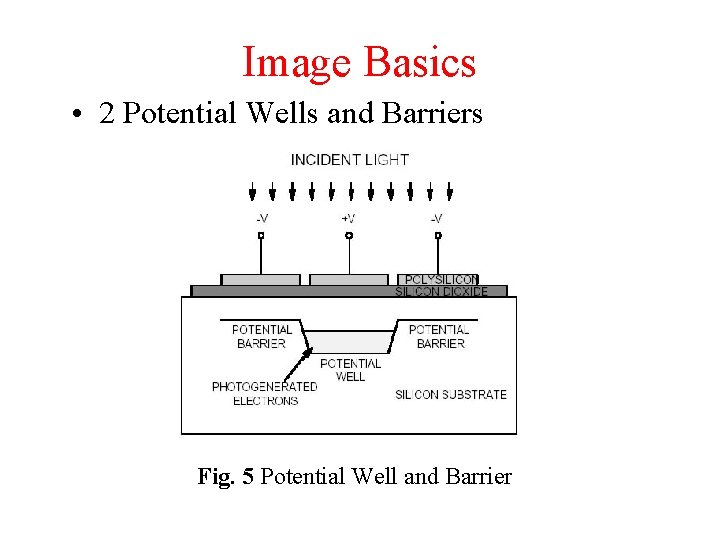
Image Basics • 2 Potential Wells and Barriers Fig. 5 Potential Well and Barrier
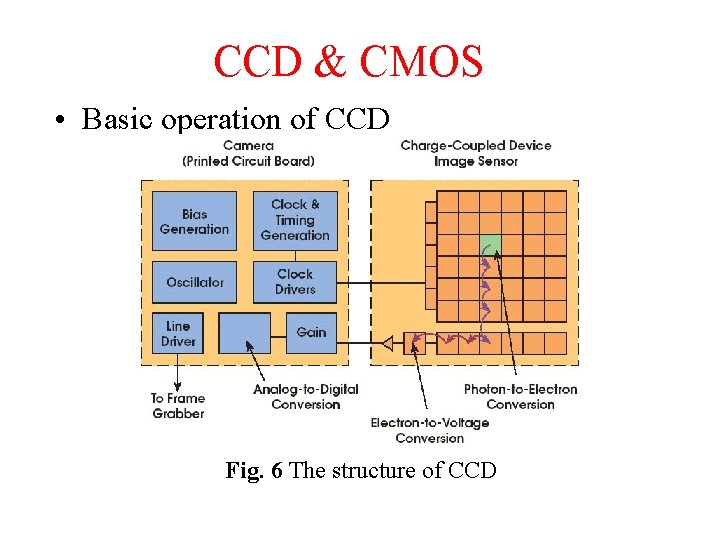
CCD & CMOS • Basic operation of CCD Fig. 6 The structure of CCD
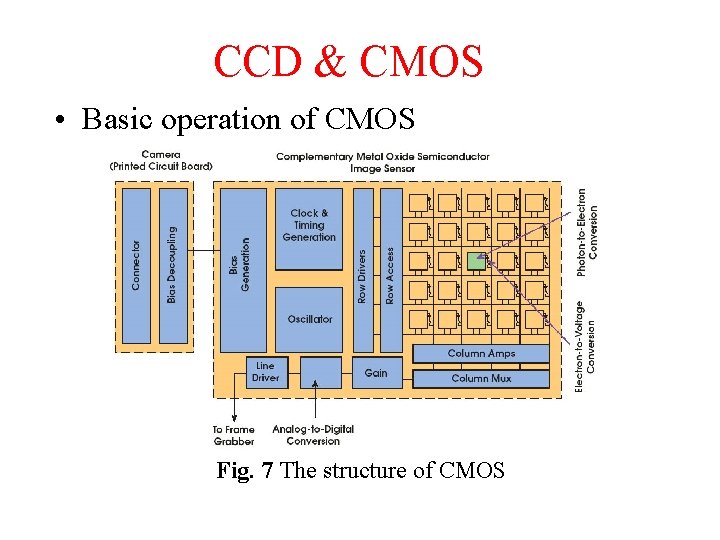
CCD & CMOS • Basic operation of CMOS Fig. 7 The structure of CMOS
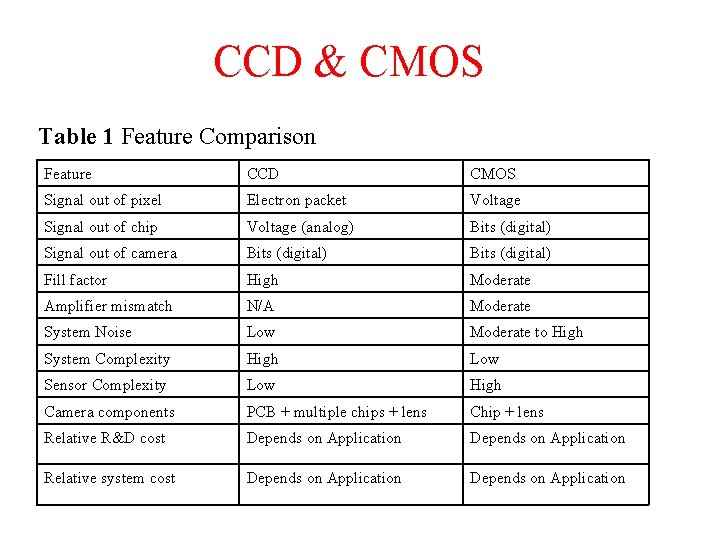
CCD & CMOS Table 1 Feature Comparison Feature CCD CMOS Signal out of pixel Electron packet Voltage Signal out of chip Voltage (analog) Bits (digital) Signal out of camera Bits (digital) Fill factor High Moderate Amplifier mismatch N/A Moderate System Noise Low Moderate to High System Complexity High Low Sensor Complexity Low High Camera components PCB + multiple chips + lens Chip + lens Relative R&D cost Depends on Application Relative system cost Depends on Application
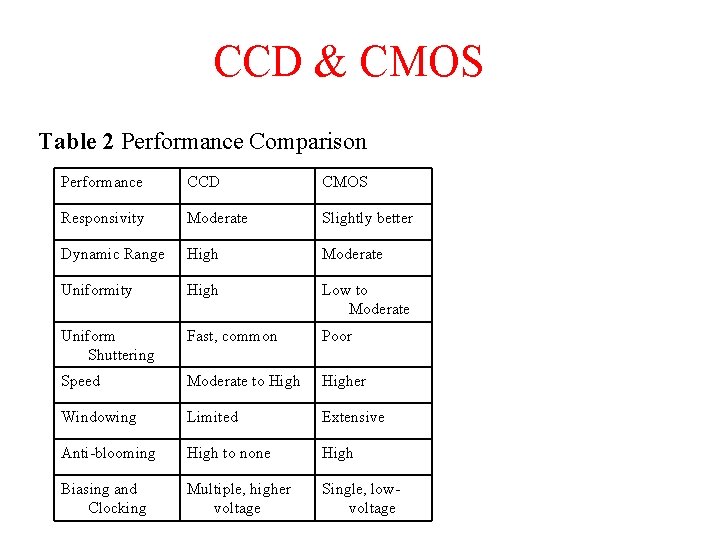
CCD & CMOS Table 2 Performance Comparison Performance CCD CMOS Responsivity Moderate Slightly better Dynamic Range High Moderate Uniformity High Low to Moderate Uniform Shuttering Fast, common Poor Speed Moderate to Higher Windowing Limited Extensive Anti-blooming High to none High Biasing and Clocking Multiple, higher voltage Single, lowvoltage
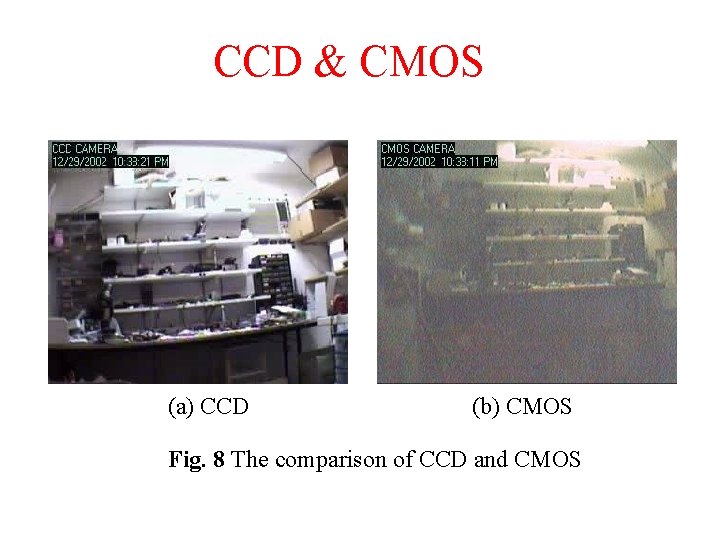
CCD & CMOS (a) CCD (b) CMOS Fig. 8 The comparison of CCD and CMOS
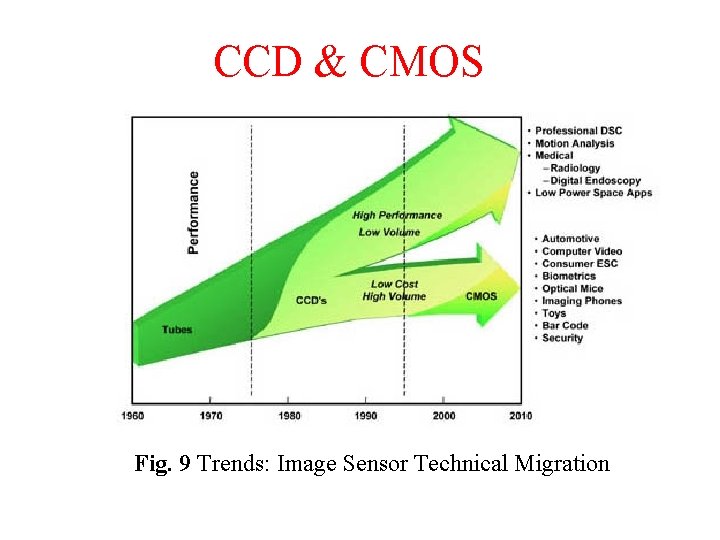
CCD & CMOS Fig. 9 Trends: Image Sensor Technical Migration