
Image Processing Jitendra Malik Different kinds of images






- Slides: 26
Image Processing Jitendra Malik
Different kinds of images • Radiance images, where a pixel value corresponds to the radiance from some point in the scene in the direction of the camera. • Other modalities – X-rays, MRI… – Light Microscopy, Electron Microscopy… –…
Canonical Image Processing problems • Image Restoration – denoising – deblurring • Image Compression – JPEG, JPEG 2000, MPEG. . • Computing Field Properties – orientation – optical flow – disparity • Locating Structural Features – corners – edges
Image Restoration (lookup Wikipedia for more details) • Based on priors of what the “true” image should be like. Typically the world consists of opaque piecewise smooth surfaces, and illumination is also piecewise smooth, therefore the resulting radiance images are piecewise smooth. • Some techniques – – – Median filtering Gaussian smoothing Anisotropic diffusion Non-Local means Deconvolution
Image Compression • Based on prior distributions on natural images, as well as properties of the human visual system, which is more sensitive to some error than others
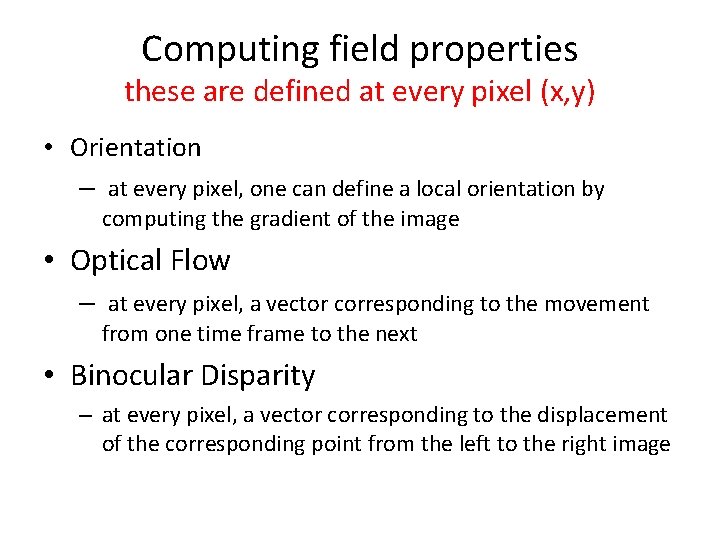
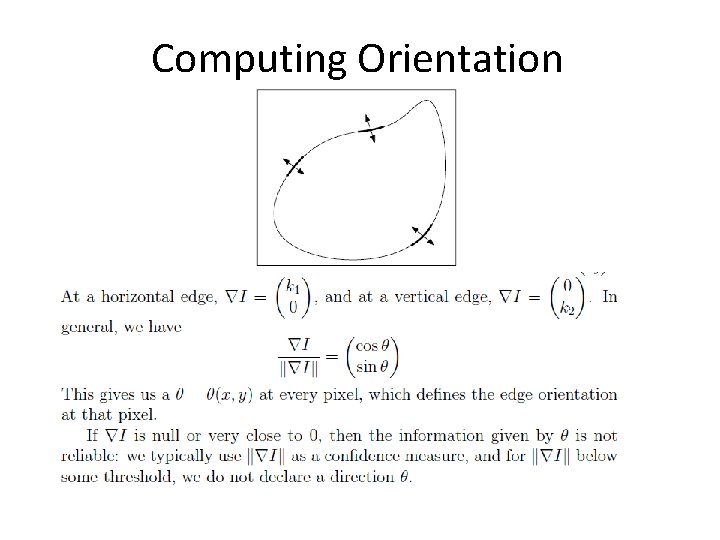
Computing field properties these are defined at every pixel (x, y) • Orientation – at every pixel, one can define a local orientation by computing the gradient of the image • Optical Flow – at every pixel, a vector corresponding to the movement from one time frame to the next • Binocular Disparity – at every pixel, a vector corresponding to the displacement of the corresponding point from the left to the right image
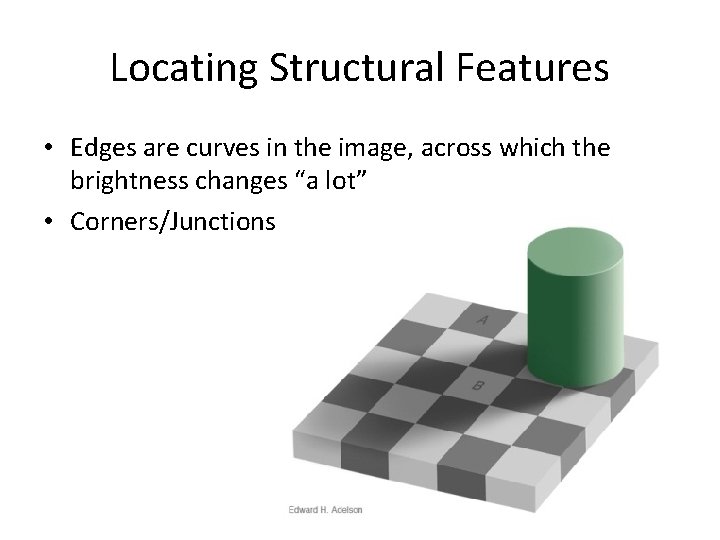
Locating Structural Features • Edges are curves in the image, across which the brightness changes “a lot” • Corners/Junctions
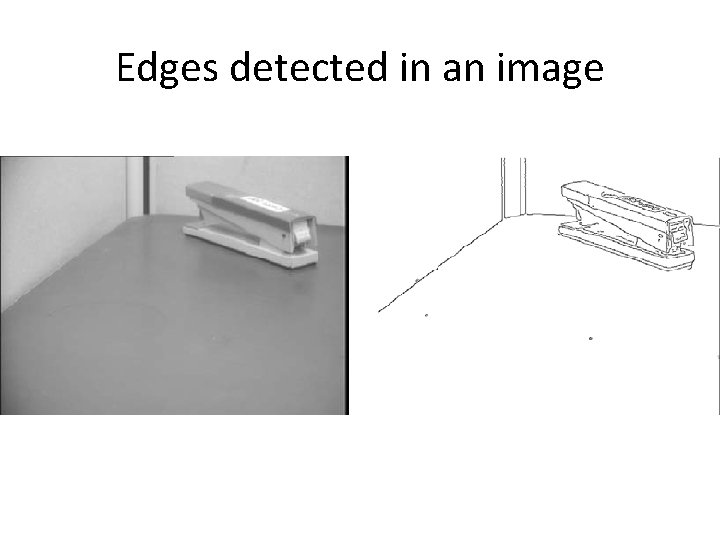
Edges detected in an image
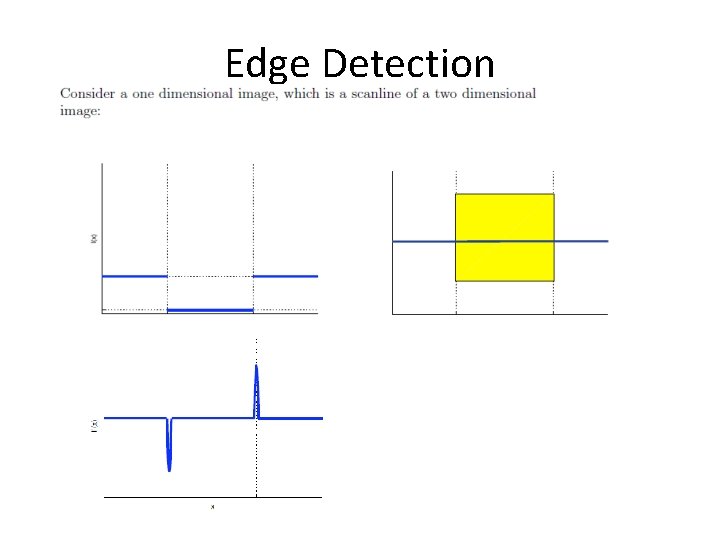
Edge Detection
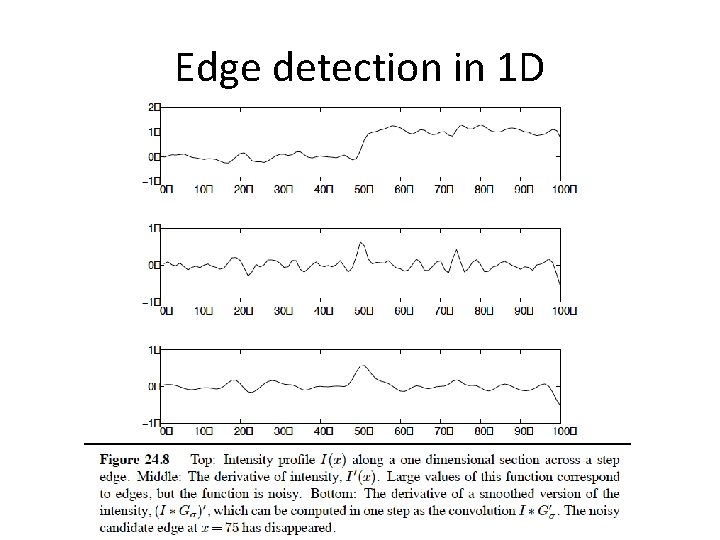
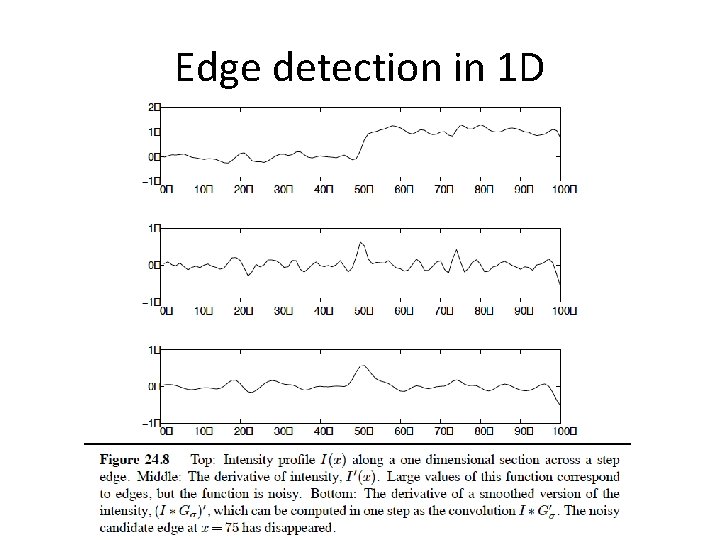
However… • Differentiation amplifies noise • Compensate by Gaussian smoothing • Both of these are examples of convolution
Edge detection in 1 D
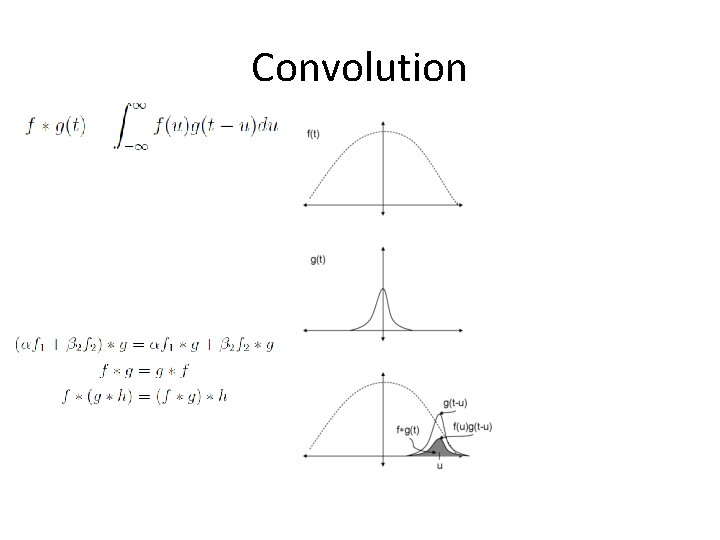
Convolution
Implementation Details • Images are 2 D arrays of numbers, so how does one implement the process of computing derivatives, gradients etc? • The solution: use discrete convolution. In the formula for convolution, replace integral by sum. You can find an exposition in the Wikipedia entry on convolution, also in Wolfram Math. World
An example
An example
An example
An example
An example
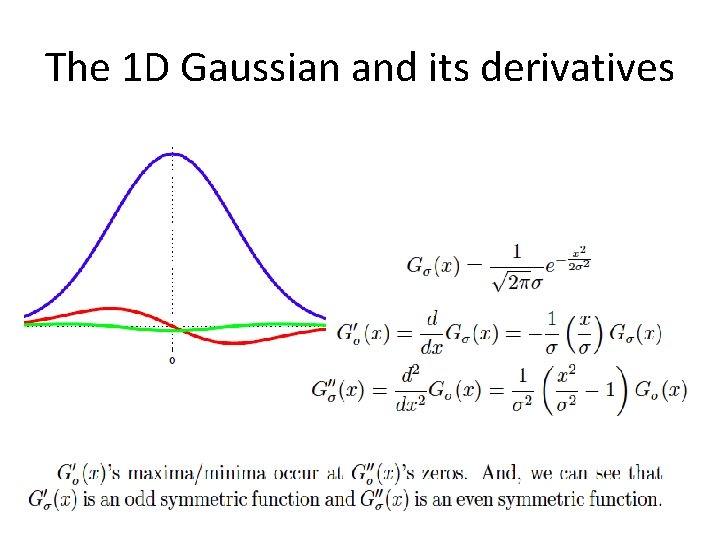
The 1 D Gaussian and its derivatives
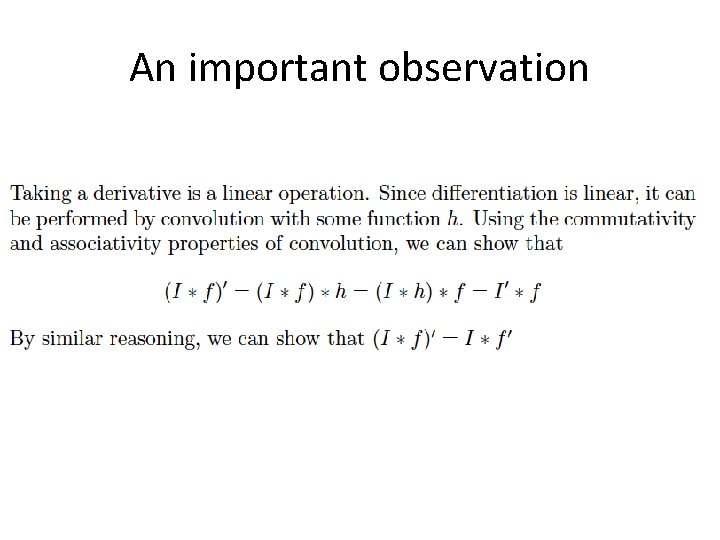
An important observation
Edge detection in 1 D
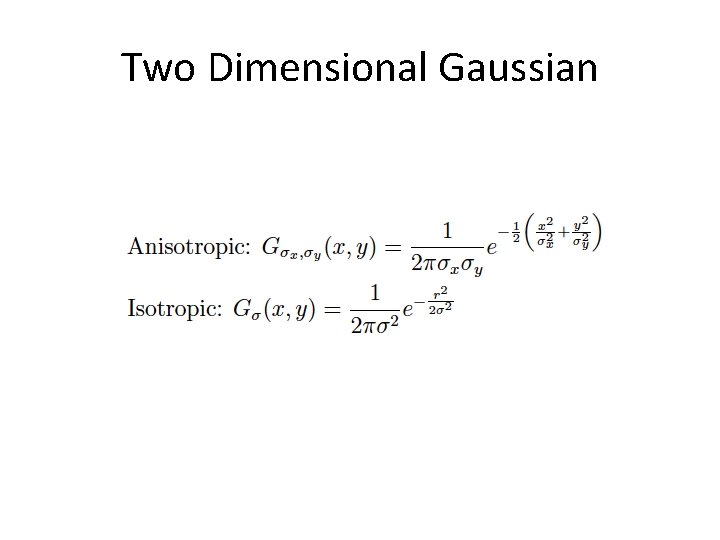
Two Dimensional Gaussian
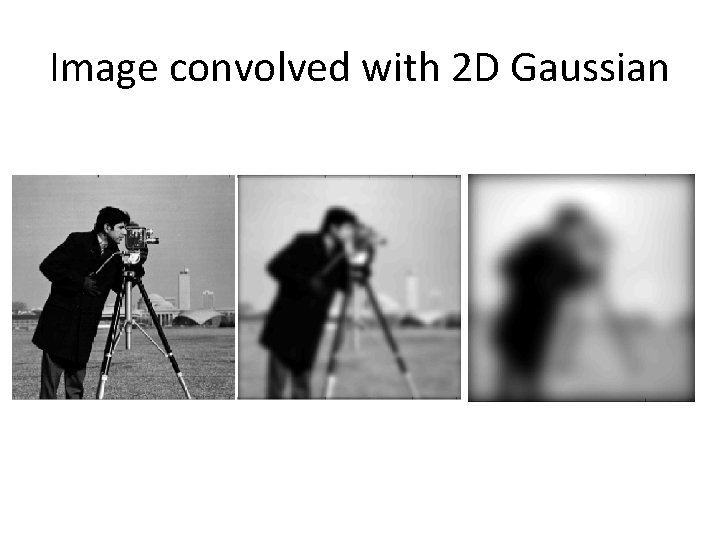
Image convolved with 2 D Gaussian
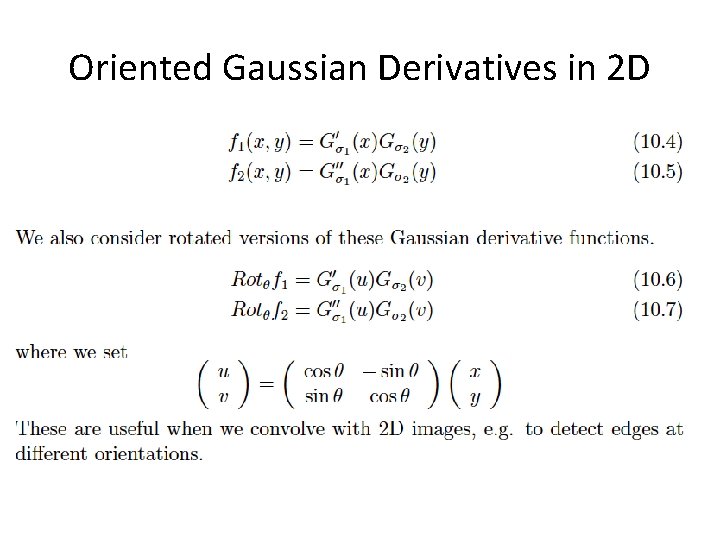
Oriented Gaussian Derivatives in 2 D
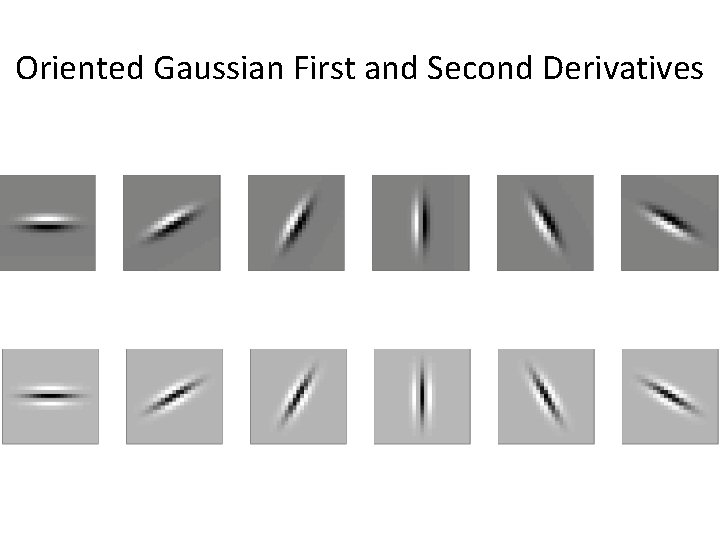
Oriented Gaussian First and Second Derivatives
Computing Orientation