
Image Filtering and Gaussian Pyramids CS 194 Image

![Image Pyramids Known as a Gaussian Pyramid [Burt and Adelson, 1983] • In computer](https://slidetodoc.com/presentation_image_h/f4f452308cf016e9b86a55db494a66bc/image-64.jpg "Image Pyramids Known as a Gaussian Pyramid [Burt and Adelson, 1983] • In computer")

- Slides: 67
Image Filtering and Gaussian Pyramids CS 194: Image Manipulation & Computational Photography Alexei Efros, UC Berkeley, Fall 2017
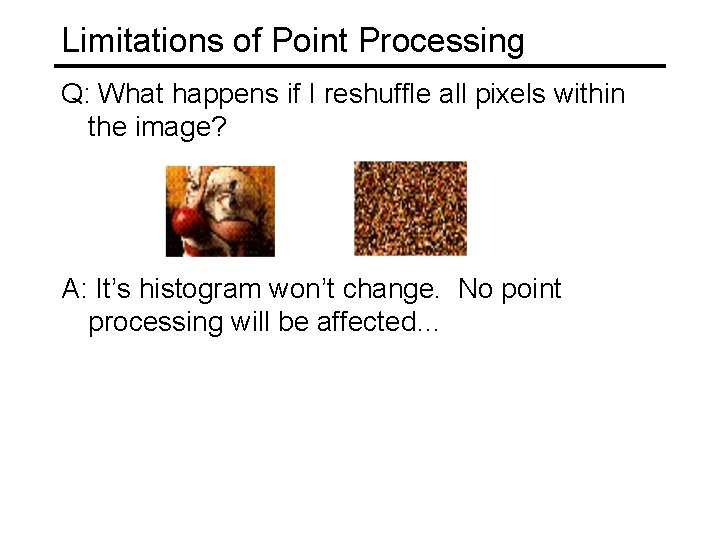
Limitations of Point Processing Q: What happens if I reshuffle all pixels within the image? A: It’s histogram won’t change. No point processing will be affected…
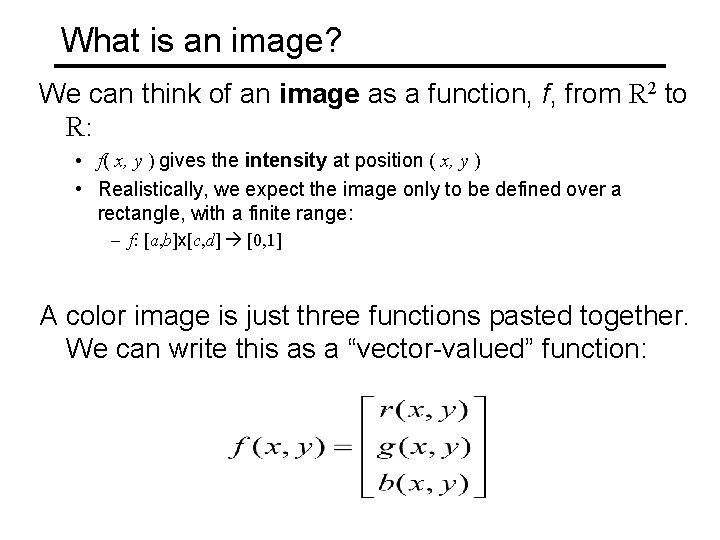
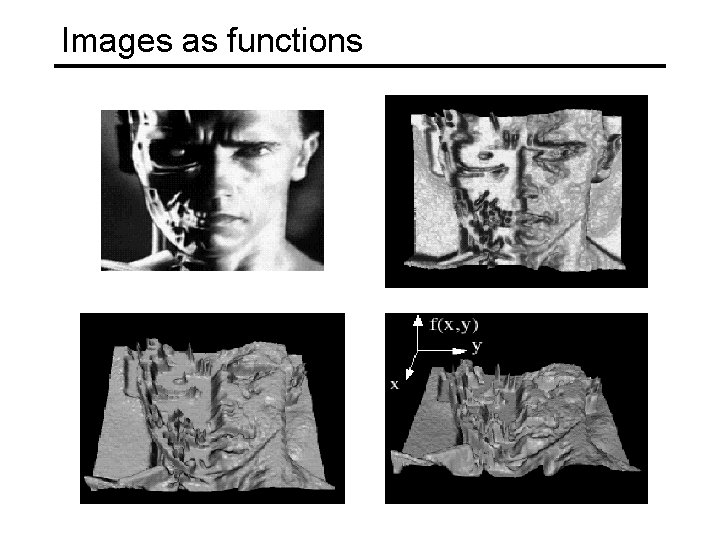
What is an image? We can think of an image as a function, f, from R 2 to R: • f( x, y ) gives the intensity at position ( x, y ) • Realistically, we expect the image only to be defined over a rectangle, with a finite range: – f: [a, b]x[c, d] [0, 1] A color image is just three functions pasted together. We can write this as a “vector-valued” function:
Images as functions
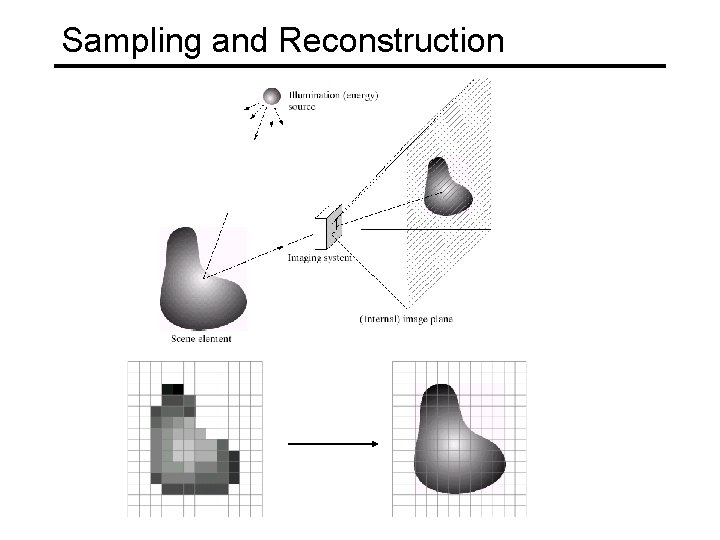
Sampling and Reconstruction
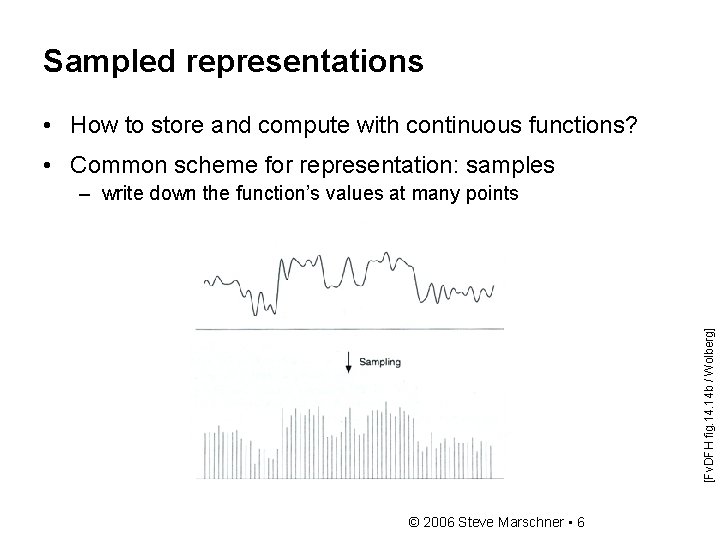
Sampled representations • How to store and compute with continuous functions? • Common scheme for representation: samples [Fv. DFH fig. 14 b / Wolberg] – write down the function’s values at many points © 2006 Steve Marschner • 6
Reconstruction • Making samples back into a continuous function [Fv. DFH fig. 14 b / Wolberg] – for output (need realizable method) – for analysis or processing (need mathematical method) – amounts to “guessing” what the function did in between © 2006 Steve Marschner • 7
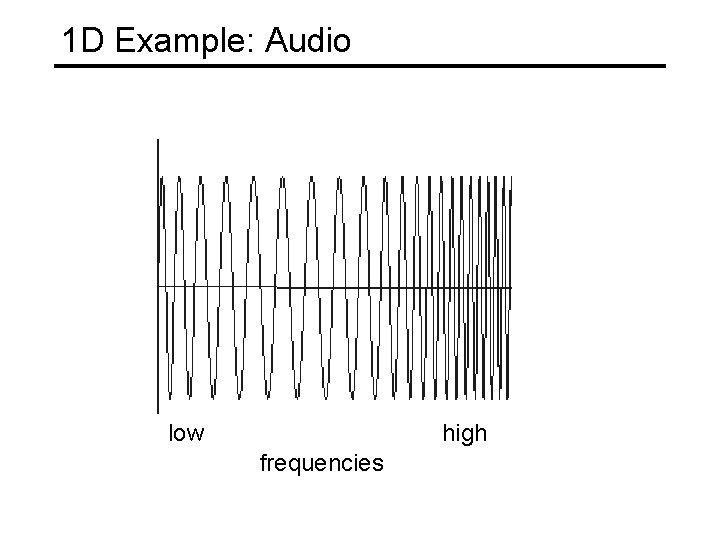
1 D Example: Audio low high frequencies
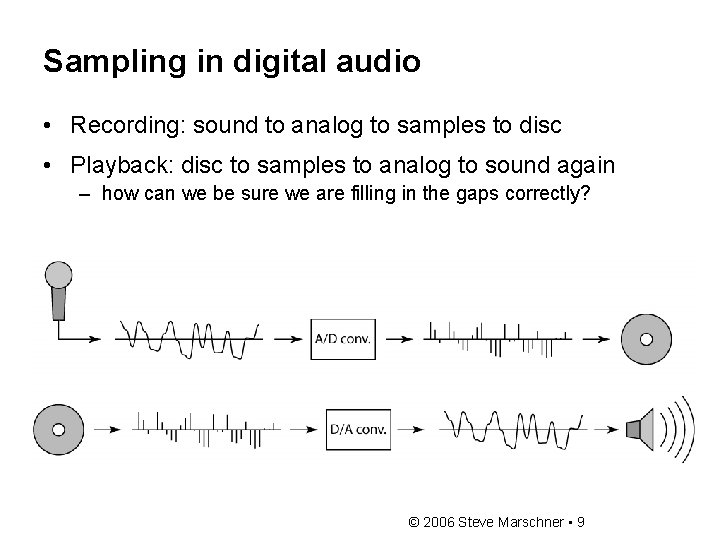
Sampling in digital audio • Recording: sound to analog to samples to disc • Playback: disc to samples to analog to sound again – how can we be sure we are filling in the gaps correctly? © 2006 Steve Marschner • 9
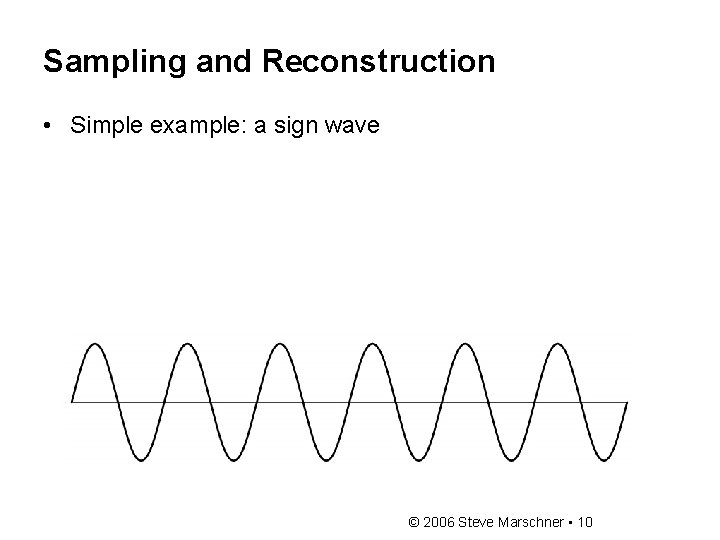
Sampling and Reconstruction • Simple example: a sign wave © 2006 Steve Marschner • 10
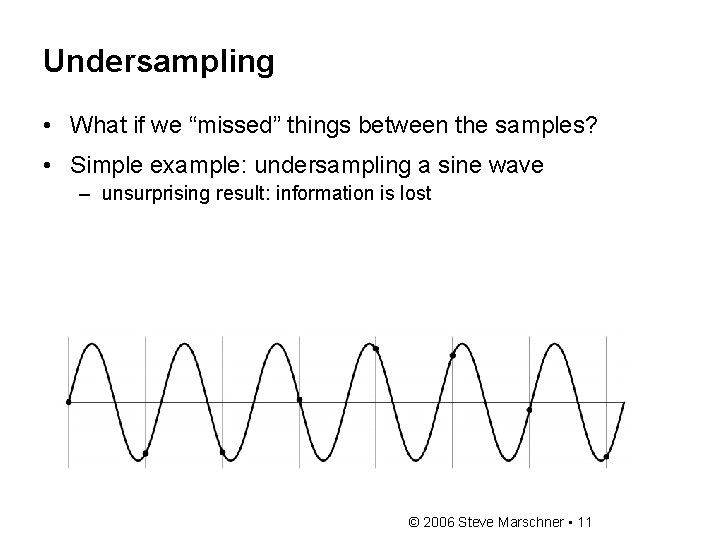
Undersampling • What if we “missed” things between the samples? • Simple example: undersampling a sine wave – unsurprising result: information is lost © 2006 Steve Marschner • 11
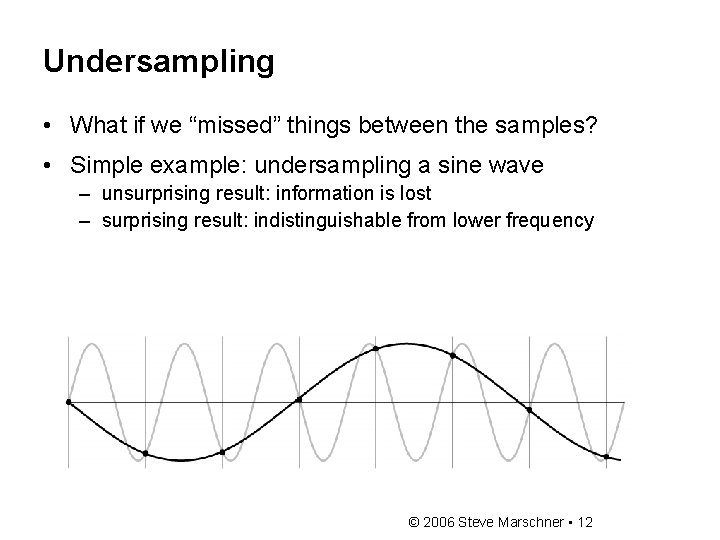
Undersampling • What if we “missed” things between the samples? • Simple example: undersampling a sine wave – unsurprising result: information is lost – surprising result: indistinguishable from lower frequency © 2006 Steve Marschner • 12
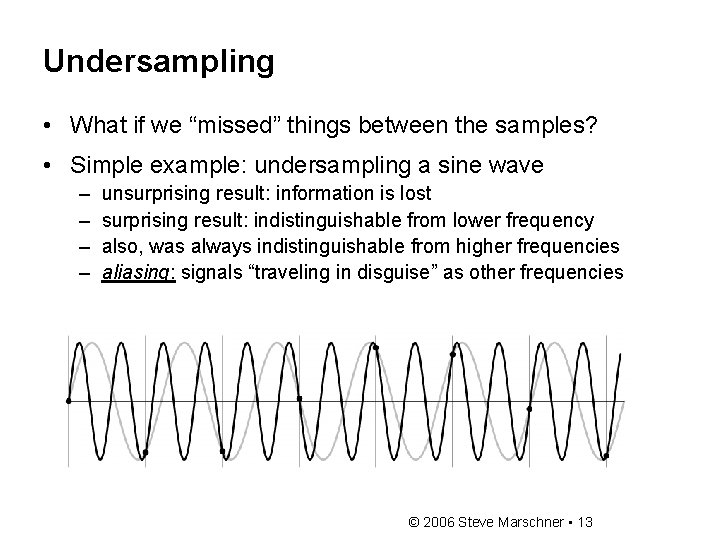
Undersampling • What if we “missed” things between the samples? • Simple example: undersampling a sine wave – – unsurprising result: information is lost surprising result: indistinguishable from lower frequency also, was always indistinguishable from higher frequencies aliasing: signals “traveling in disguise” as other frequencies © 2006 Steve Marschner • 13
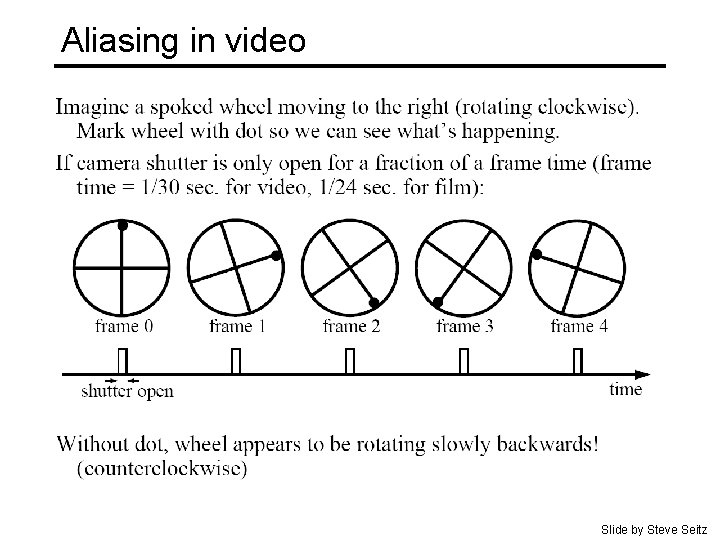
Aliasing in video Slide by Steve Seitz
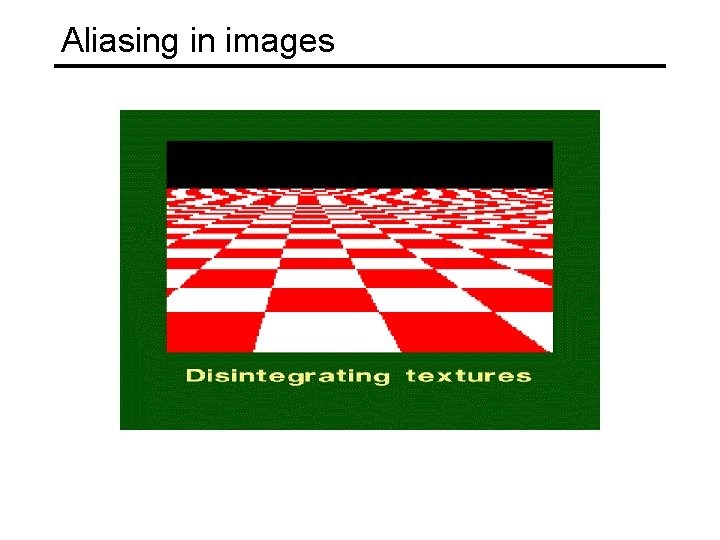
Aliasing in images
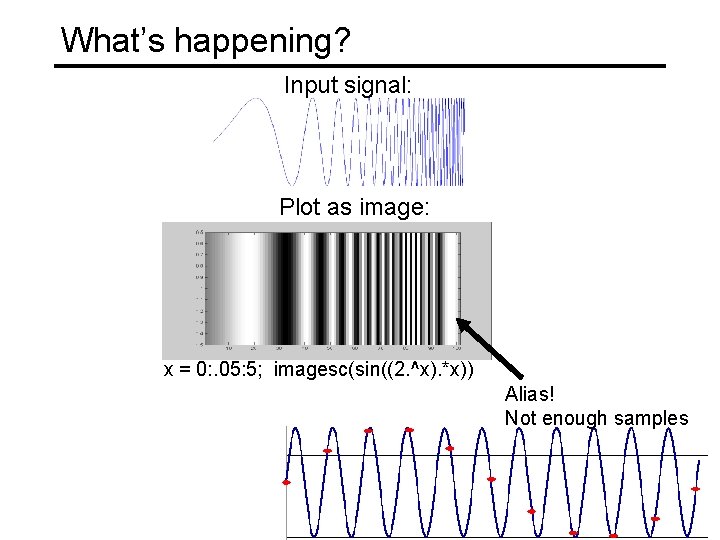
What’s happening? Input signal: Plot as image: x = 0: . 05: 5; imagesc(sin((2. ^x). *x)) Alias! Not enough samples
Antialiasing What can we do about aliasing? Sample more often • • Join the Mega-Pixel craze of the photo industry But this can’t go on forever Make the signal less “wiggly” • • • Get rid of some high frequencies Will loose information But it’s better than aliasing
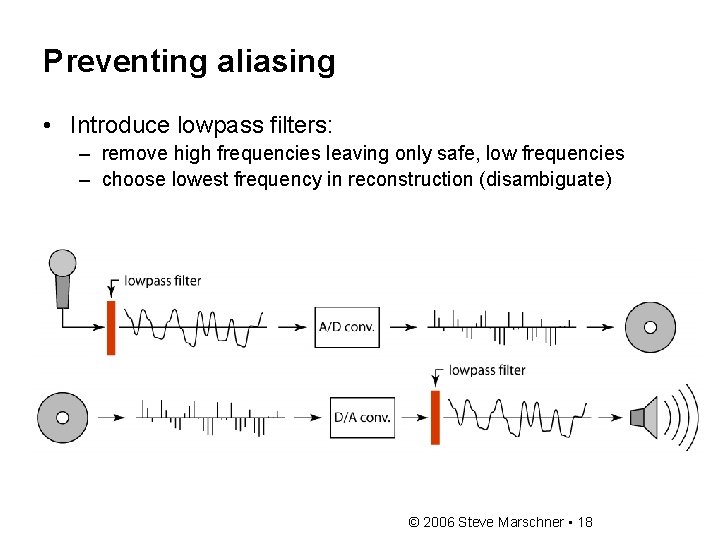
Preventing aliasing • Introduce lowpass filters: – remove high frequencies leaving only safe, low frequencies – choose lowest frequency in reconstruction (disambiguate) © 2006 Steve Marschner • 18
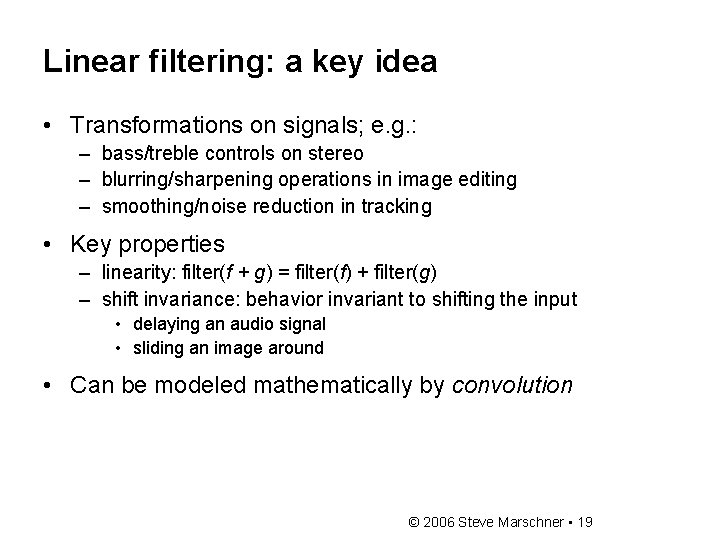
Linear filtering: a key idea • Transformations on signals; e. g. : – bass/treble controls on stereo – blurring/sharpening operations in image editing – smoothing/noise reduction in tracking • Key properties – linearity: filter(f + g) = filter(f) + filter(g) – shift invariance: behavior invariant to shifting the input • delaying an audio signal • sliding an image around • Can be modeled mathematically by convolution © 2006 Steve Marschner • 19
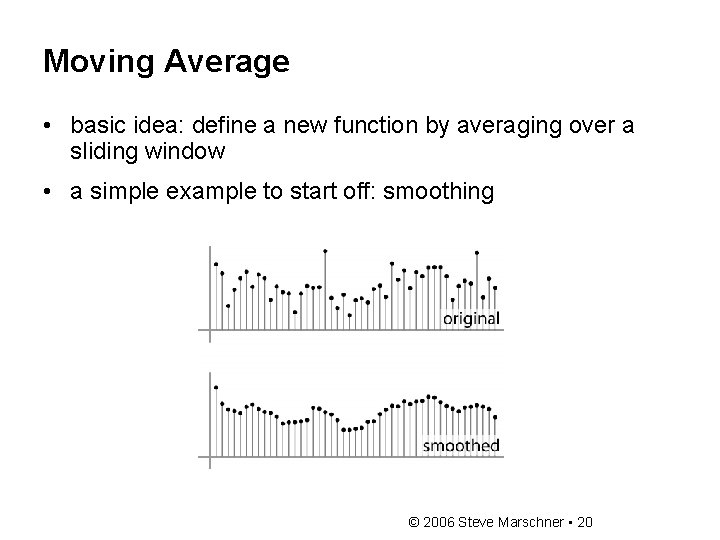
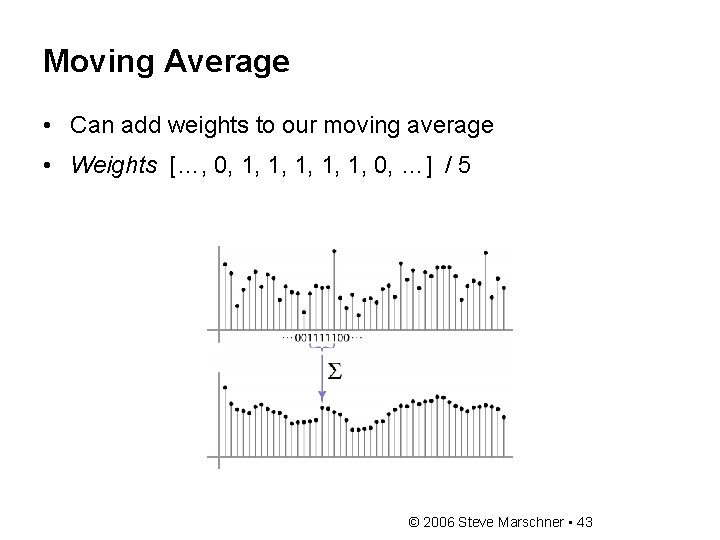
Moving Average • basic idea: define a new function by averaging over a sliding window • a simple example to start off: smoothing © 2006 Steve Marschner • 20
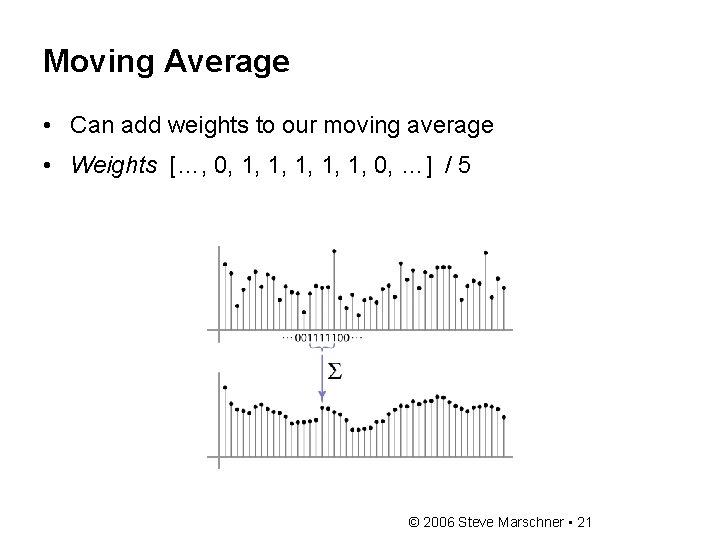
Moving Average • Can add weights to our moving average • Weights […, 0, 1, 1, 1, 0, …] / 5 © 2006 Steve Marschner • 21
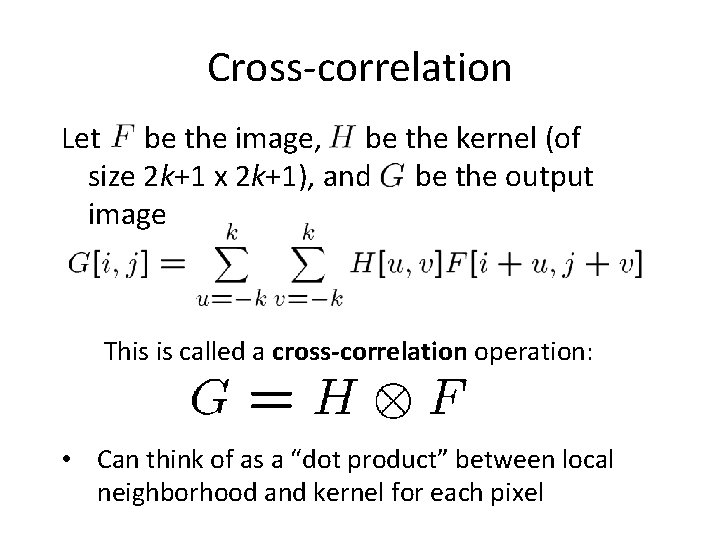
Cross-correlation Let be the image, be the kernel (of size 2 k+1 x 2 k+1), and be the output image This is called a cross-correlation operation: • Can think of as a “dot product” between local neighborhood and kernel for each pixel
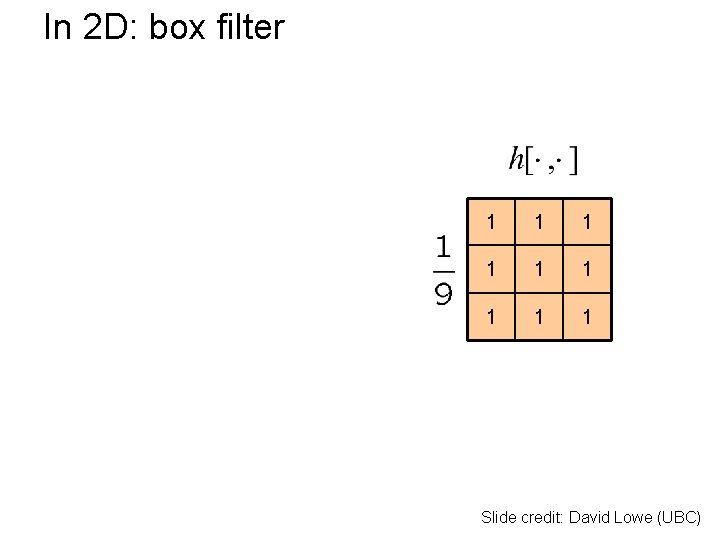
In 2 D: box filter 1 1 1 1 1 Slide credit: David Lowe (UBC)
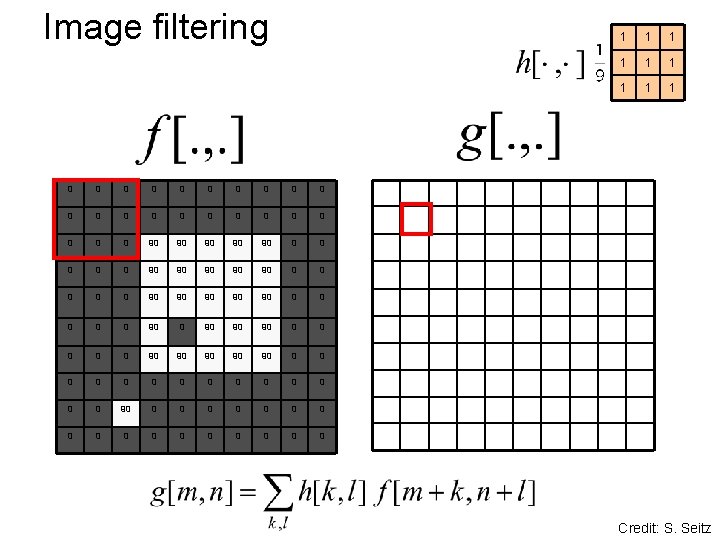
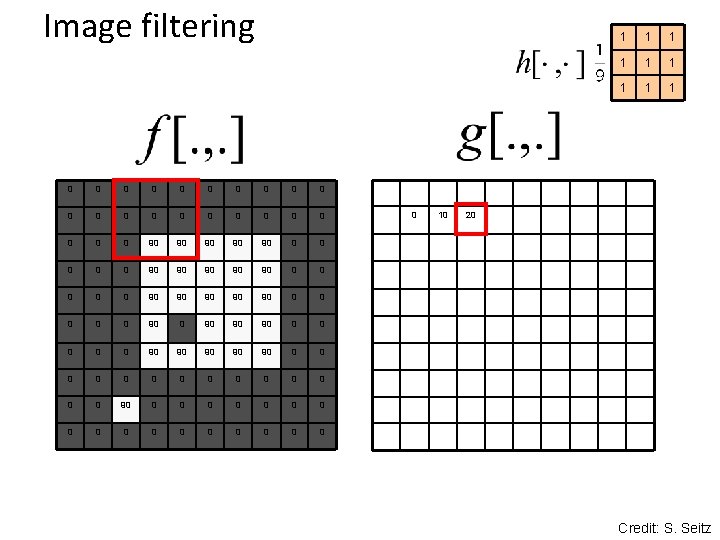
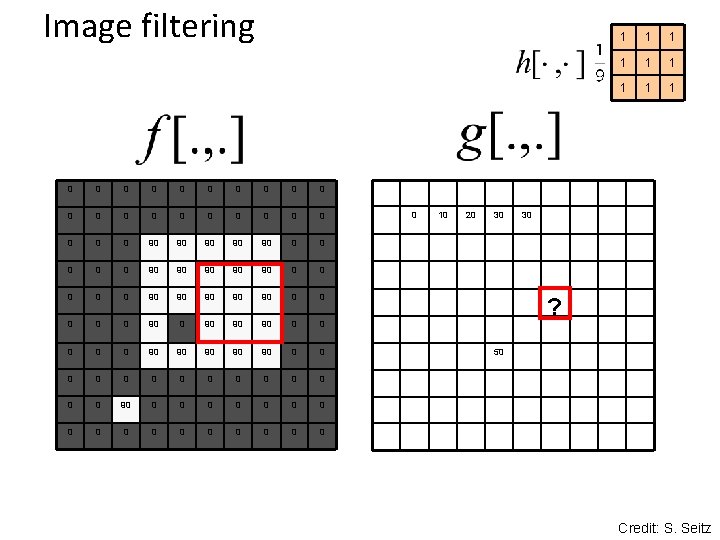
Image filtering 0 0 0 0 0 0 90 90 90 0 0 90 90 90 0 0 0 0 90 90 90 0 0 90 90 90 0 0 0 0 0 0 0 90 90 0 0 0 0 0 0 0 0 1 1 1 1 1 0 Credit: S. Seitz
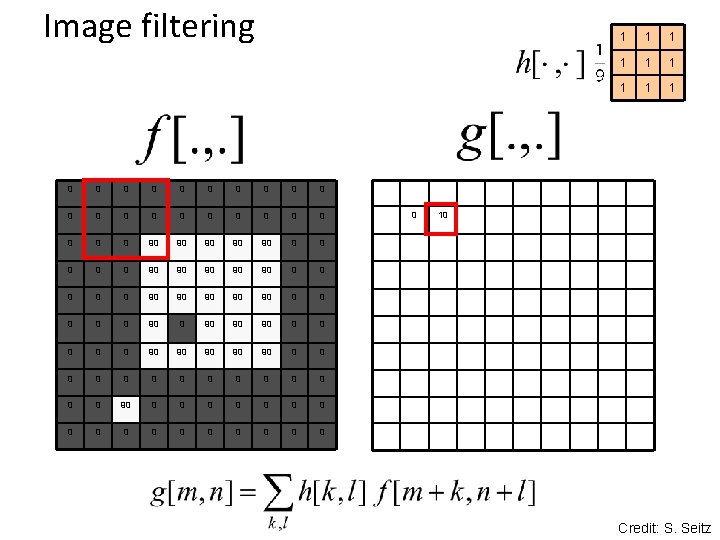
Image filtering 0 0 0 0 0 0 90 90 90 0 0 90 90 90 0 90 90 90 0 0 0 0 0 0 0 0 0 1 1 10 Credit: S. Seitz
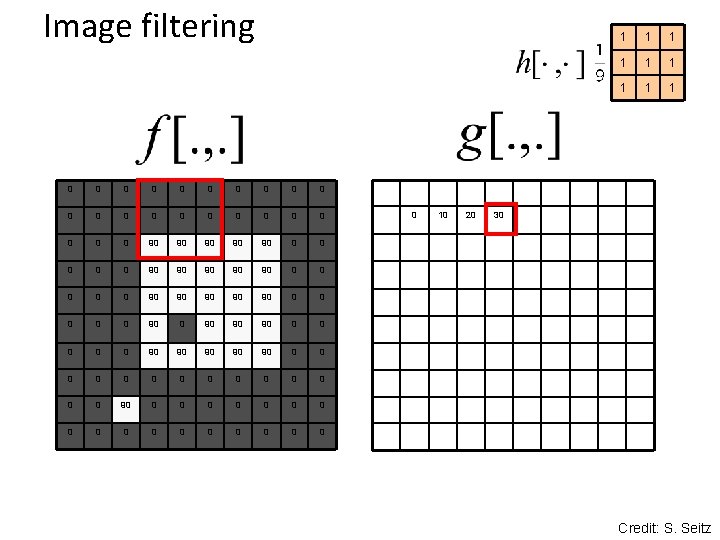
Image filtering 0 0 0 0 0 0 90 90 90 0 0 90 90 90 0 90 90 90 0 0 0 0 0 0 0 0 0 10 1 1 1 1 1 20 Credit: S. Seitz
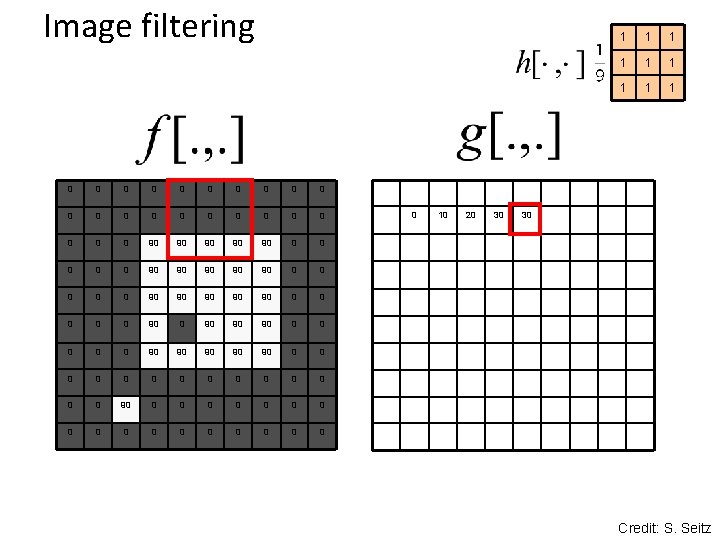
Image filtering 0 0 0 0 0 0 90 90 90 0 0 90 90 90 0 90 90 90 0 0 0 0 0 0 0 0 0 10 20 1 1 1 1 1 30 Credit: S. Seitz
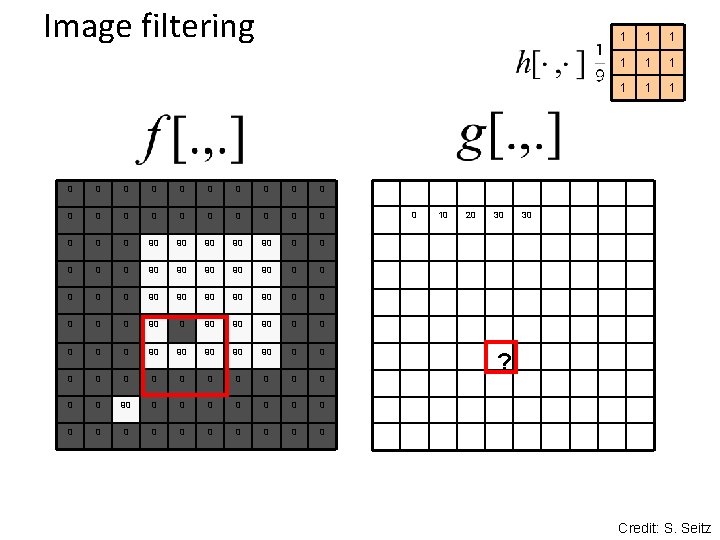
Image filtering 0 0 0 0 0 0 90 90 90 0 0 90 90 90 0 90 90 90 0 0 0 0 0 0 0 0 0 10 20 30 1 1 1 1 1 30 Credit: S. Seitz
Image filtering 0 0 0 0 0 0 90 90 90 0 0 90 90 90 0 90 90 90 0 0 0 0 0 0 0 0 0 10 20 30 1 1 1 1 1 30 ? Credit: S. Seitz
Image filtering 0 0 0 0 0 0 90 90 90 0 0 90 90 90 0 90 90 90 0 0 0 0 0 0 0 0 0 10 20 30 1 1 1 1 1 30 ? 50 Credit: S. Seitz
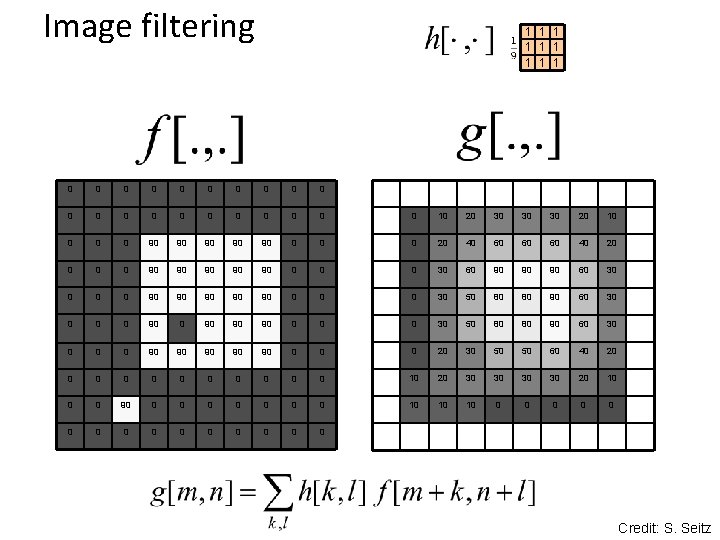
Image filtering 1 1 1 1 1 0 0 0 0 0 0 10 20 30 30 30 20 10 0 90 90 90 0 20 40 60 60 60 40 20 0 90 90 90 0 30 60 90 90 90 60 30 0 90 90 90 0 30 50 80 80 90 60 30 0 90 90 90 0 20 30 50 50 60 40 20 0 0 10 20 30 30 20 10 0 0 90 0 0 0 10 10 10 0 0 0 Credit: S. Seitz
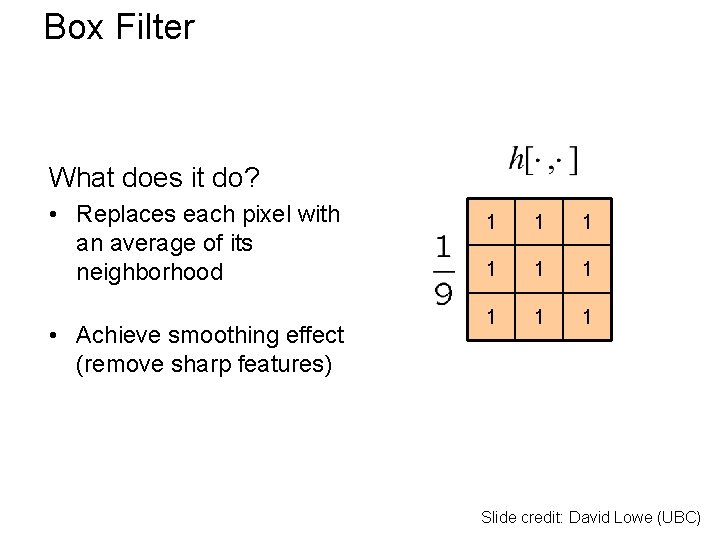
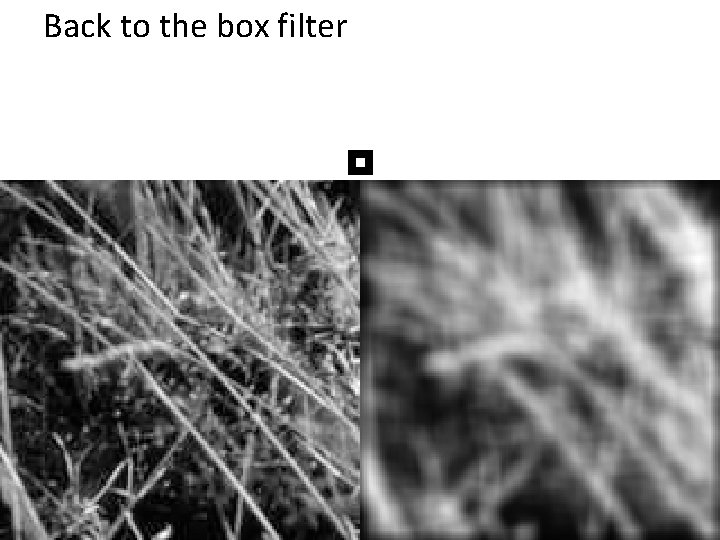
Box Filter What does it do? • Replaces each pixel with an average of its neighborhood • Achieve smoothing effect (remove sharp features) 1 1 1 1 1 Slide credit: David Lowe (UBC)
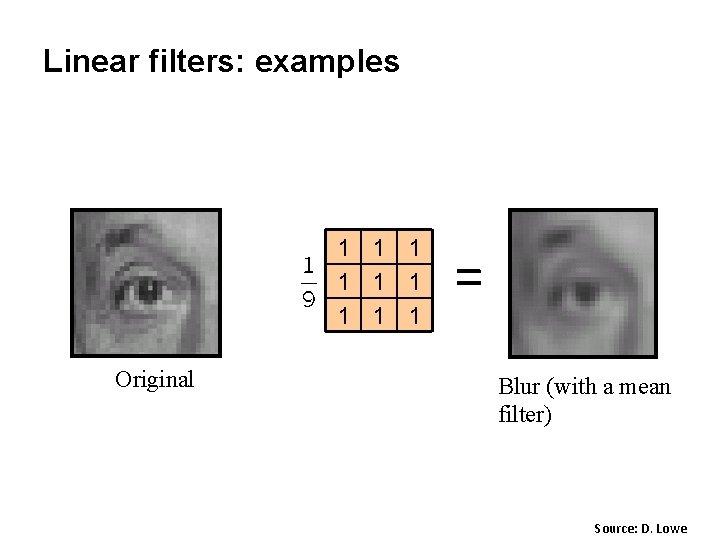
Linear filters: examples 1 1 1 1 1 Original = Blur (with a mean filter) Source: D. Lowe
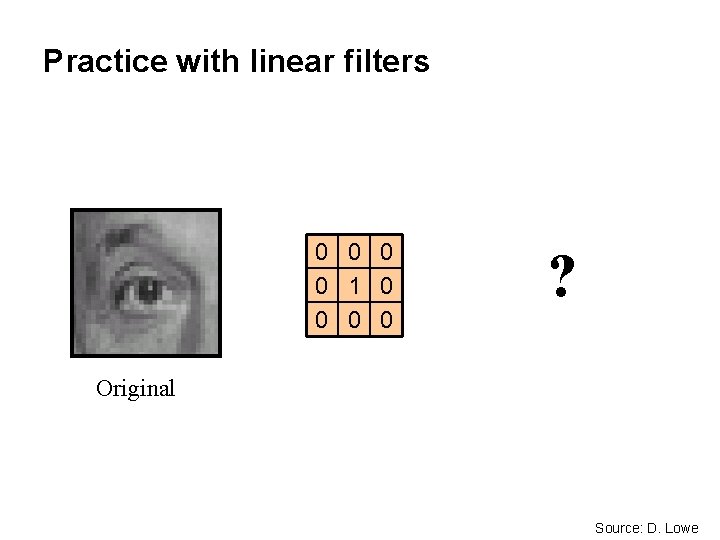
Practice with linear filters 0 0 1 0 0 ? Original Source: D. Lowe
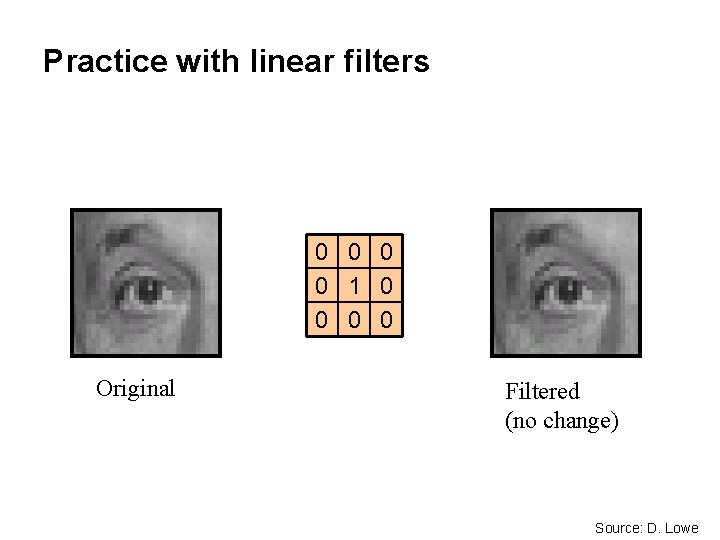
Practice with linear filters 0 0 1 0 0 Original Filtered (no change) Source: D. Lowe
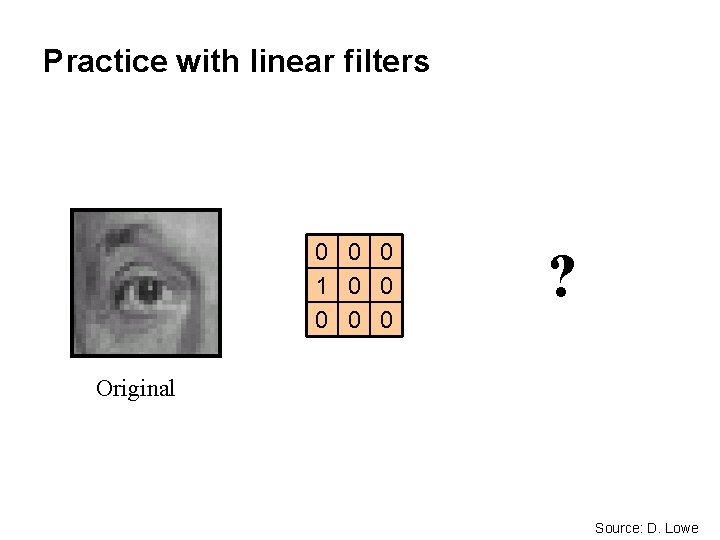
Practice with linear filters 0 0 0 1 0 0 0 ? Original Source: D. Lowe
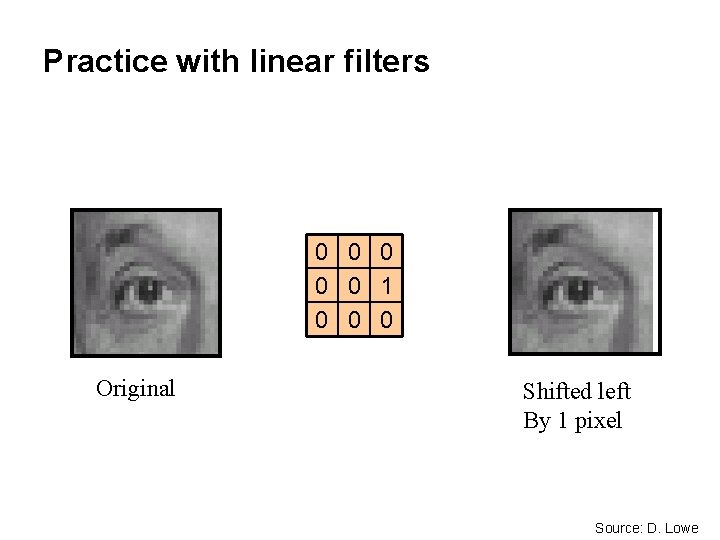
Practice with linear filters 0 0 0 1 0 0 0 Original Shifted left By 1 pixel Source: D. Lowe
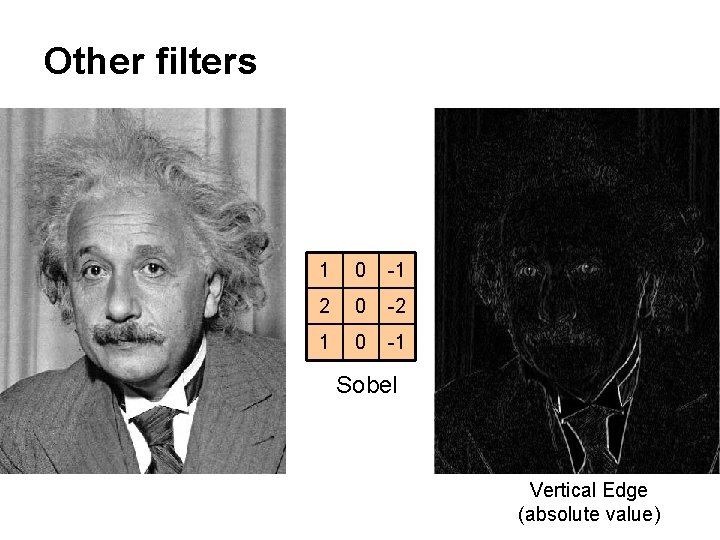
Other filters 1 0 -1 2 0 -2 1 0 -1 Sobel Vertical Edge (absolute value)
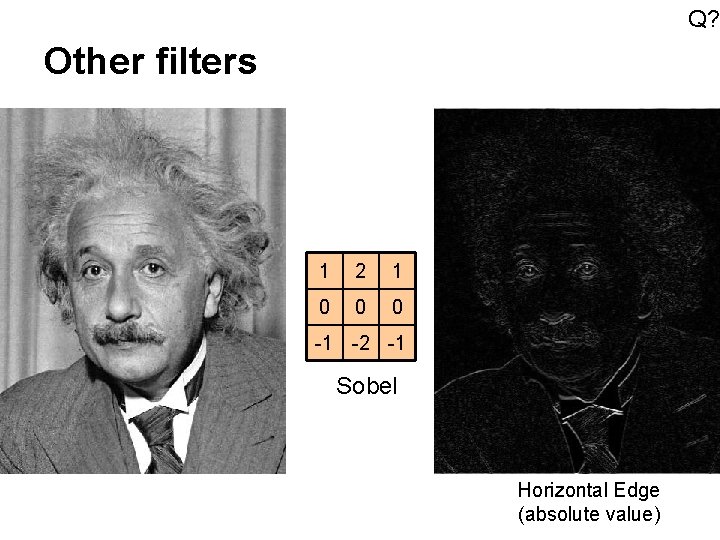
Q? Other filters 1 2 1 0 0 0 -1 -2 -1 Sobel Horizontal Edge (absolute value)
Back to the box filter
Moving Average • Can add weights to our moving average • Weights […, 0, 1, 1, 1, 0, …] / 5 © 2006 Steve Marschner • 43
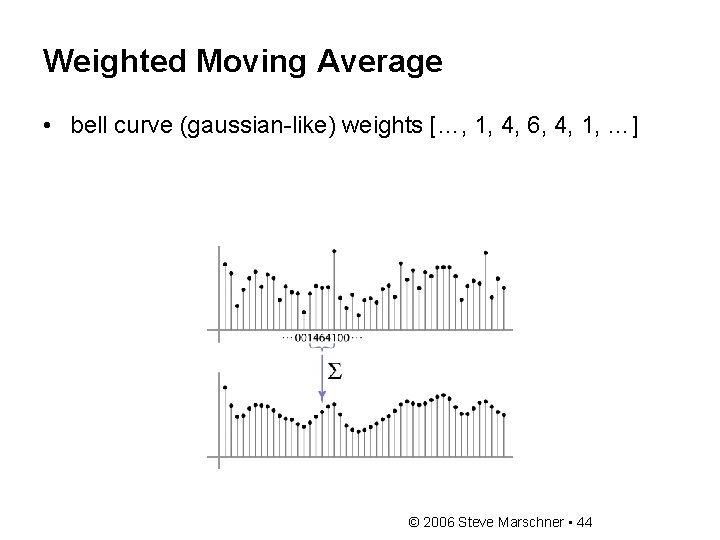
Weighted Moving Average • bell curve (gaussian-like) weights […, 1, 4, 6, 4, 1, …] © 2006 Steve Marschner • 44
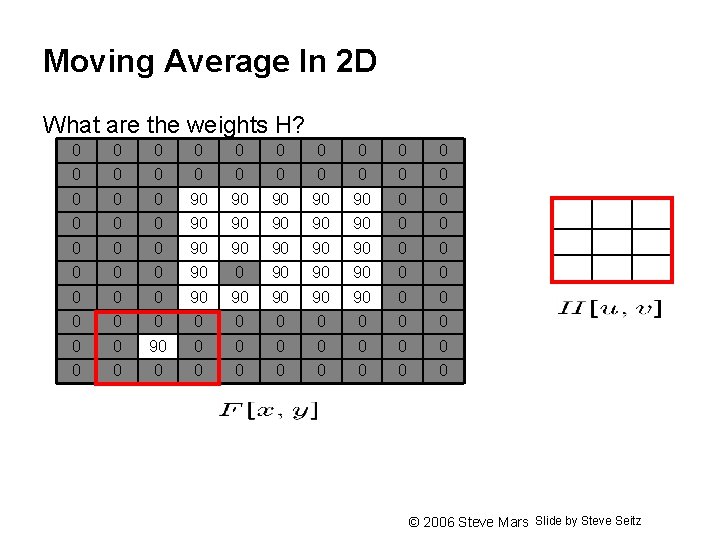
Moving Average In 2 D What are the weights H? 0 0 0 0 0 0 90 90 90 0 0 90 90 90 0 90 90 90 0 0 0 0 0 0 0 0 0 0 Slide by Steve Seitz © 2006 Steve Marschner • 45
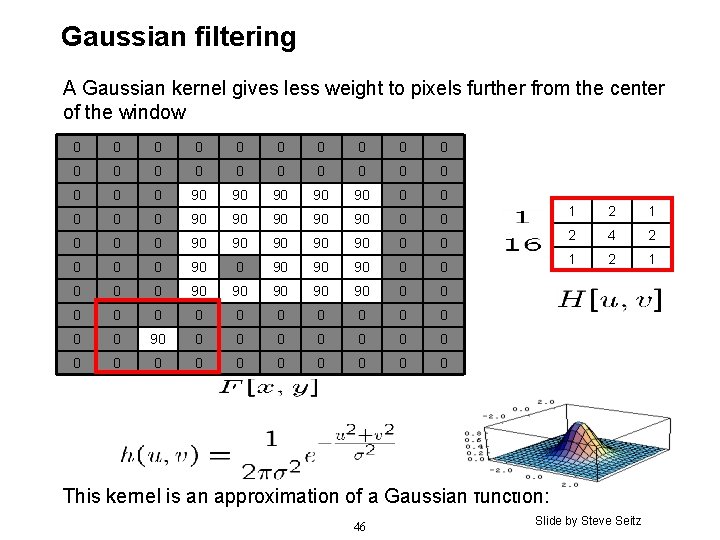
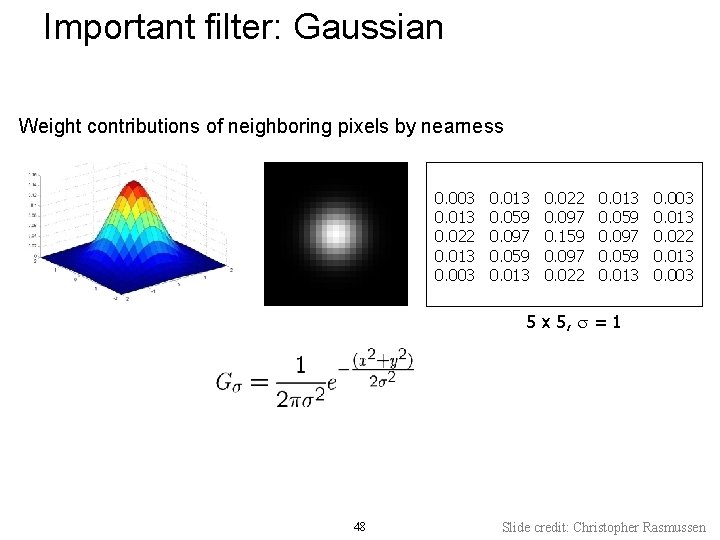
Gaussian filtering A Gaussian kernel gives less weight to pixels further from the center of the window 0 0 0 0 0 0 90 90 90 0 0 90 90 90 0 90 90 90 0 0 0 0 0 0 0 0 0 0 1 2 4 2 1 This kernel is an approximation of a Gaussian function: 46 Slide by Steve Seitz
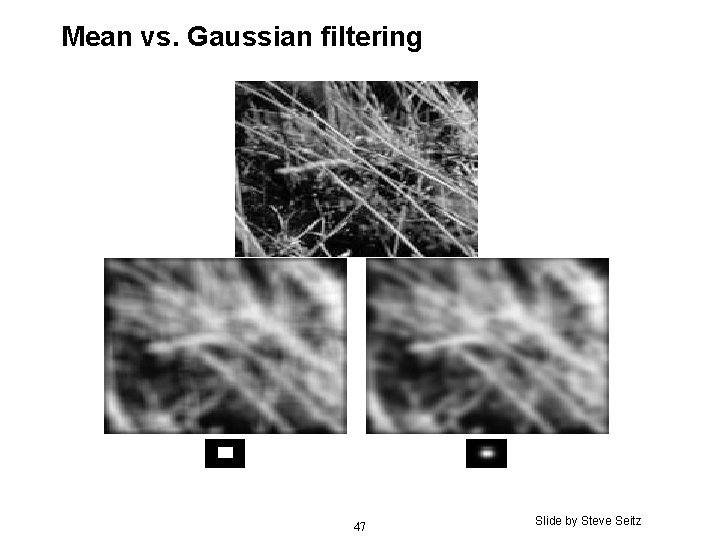
Mean vs. Gaussian filtering 47 Slide by Steve Seitz
Important filter: Gaussian Weight contributions of neighboring pixels by nearness 0. 003 0. 013 0. 022 0. 013 0. 003 0. 013 0. 059 0. 097 0. 059 0. 013 0. 022 0. 097 0. 159 0. 097 0. 022 0. 013 0. 059 0. 097 0. 059 0. 013 0. 003 0. 013 0. 022 0. 013 0. 003 5 x 5, = 1 48 Slide credit: Christopher Rasmussen
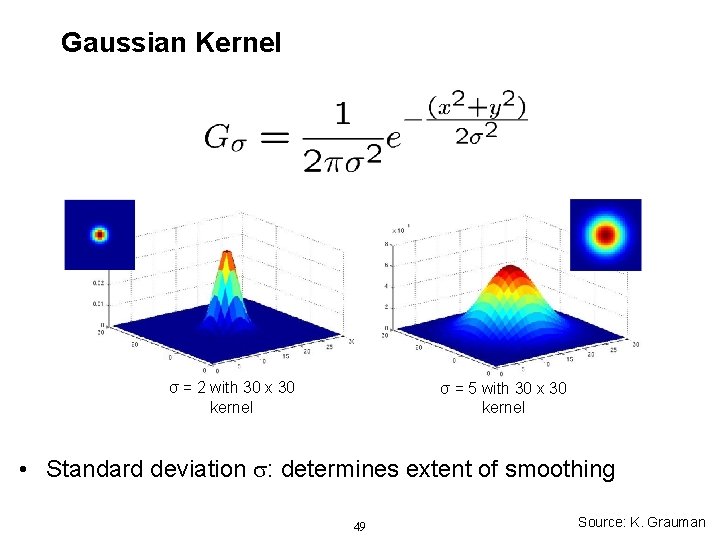
Gaussian Kernel σ = 2 with 30 x 30 kernel σ = 5 with 30 x 30 kernel • Standard deviation : determines extent of smoothing 49 Source: K. Grauman
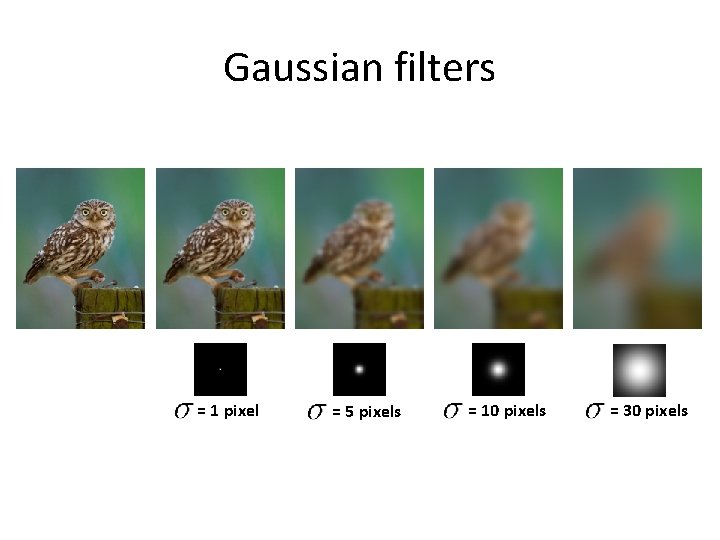
Gaussian filters = 1 pixel = 5 pixels = 10 pixels = 30 pixels
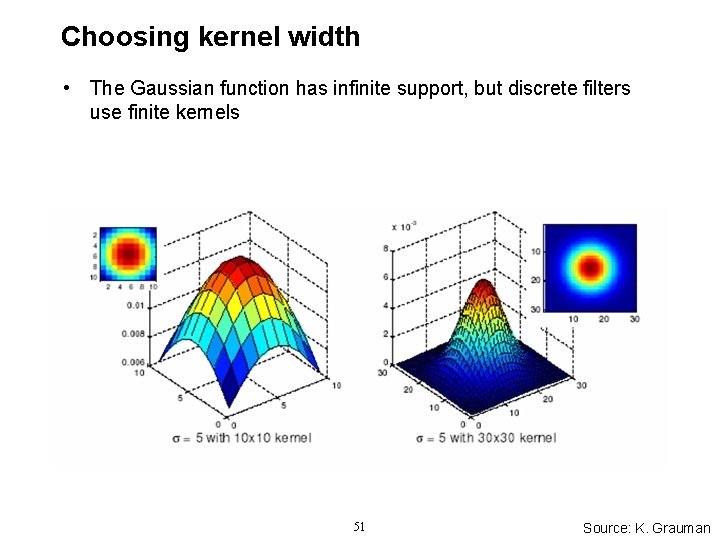
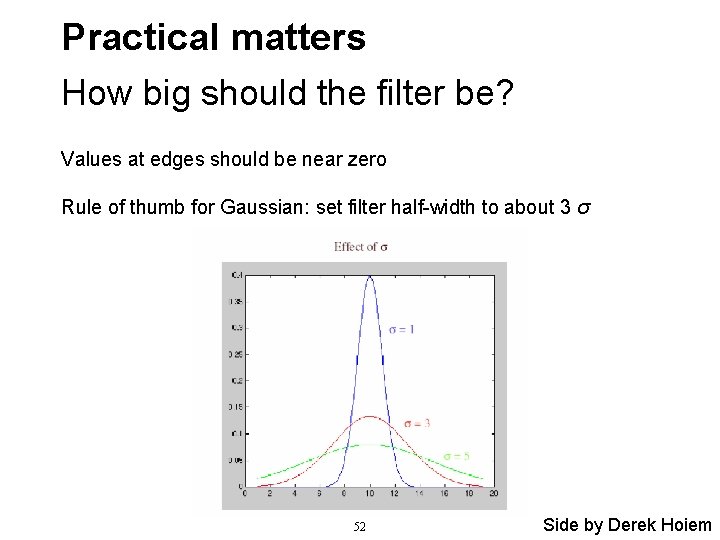
Choosing kernel width • The Gaussian function has infinite support, but discrete filters use finite kernels 51 Source: K. Grauman
Practical matters How big should the filter be? Values at edges should be near zero Rule of thumb for Gaussian: set filter half-width to about 3 σ 52 Side by Derek Hoiem
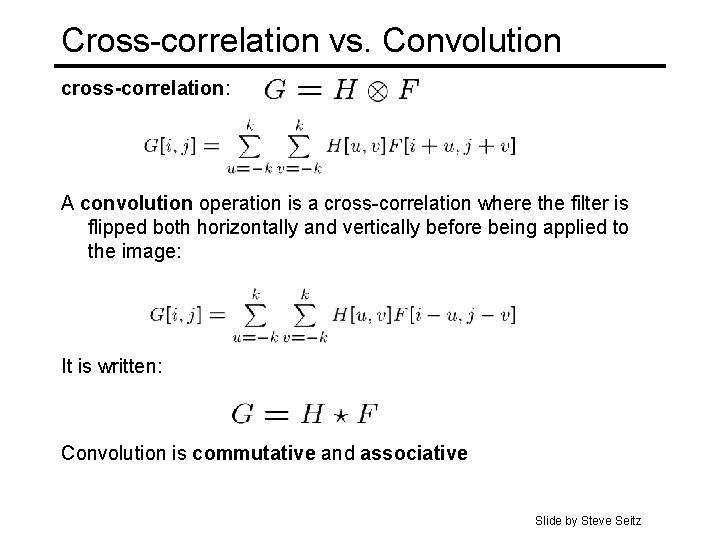
Cross-correlation vs. Convolution cross-correlation: A convolution operation is a cross-correlation where the filter is flipped both horizontally and vertically before being applied to the image: It is written: Convolution is commutative and associative Slide by Steve Seitz
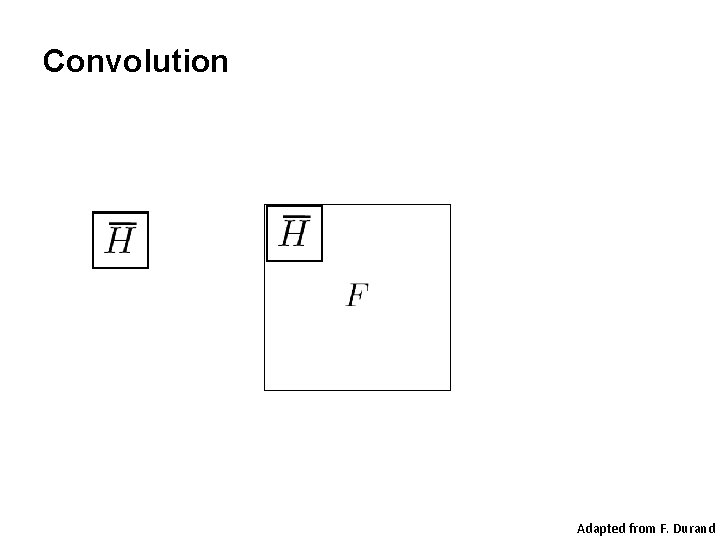
Convolution Adapted from F. Durand
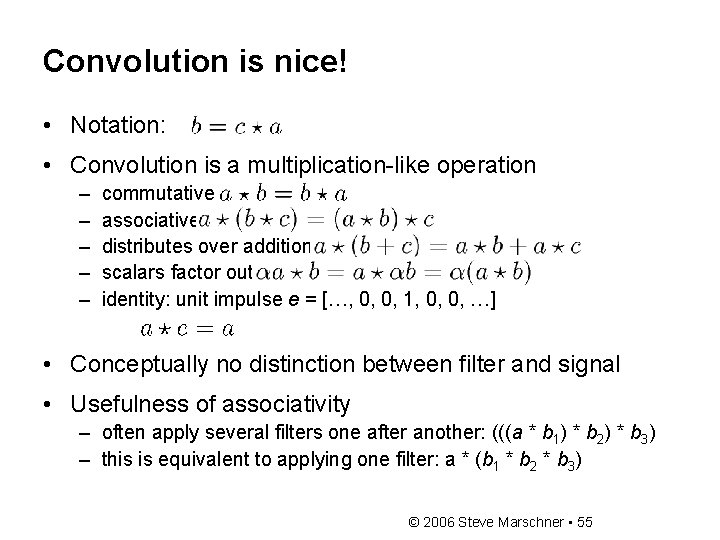
Convolution is nice! • Notation: • Convolution is a multiplication-like operation – – – commutative associative distributes over addition scalars factor out identity: unit impulse e = […, 0, 0, 1, 0, 0, …] • Conceptually no distinction between filter and signal • Usefulness of associativity – often apply several filters one after another: (((a * b 1) * b 2) * b 3) – this is equivalent to applying one filter: a * (b 1 * b 2 * b 3) © 2006 Steve Marschner • 55
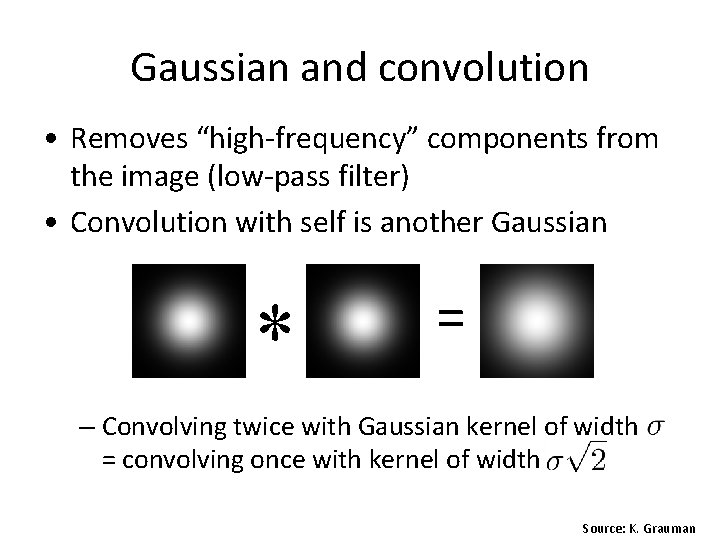
Gaussian and convolution • Removes “high-frequency” components from the image (low-pass filter) • Convolution with self is another Gaussian * = – Convolving twice with Gaussian kernel of width = convolving once with kernel of width Source: K. Grauman
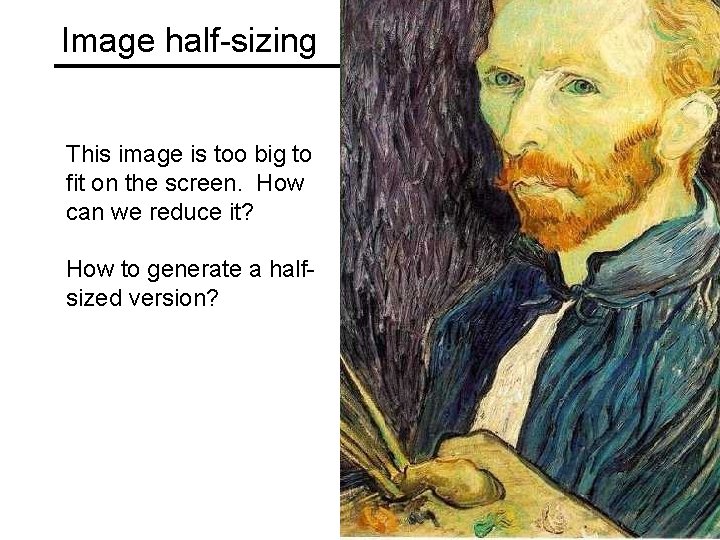
Image half-sizing This image is too big to fit on the screen. How can we reduce it? How to generate a halfsized version?
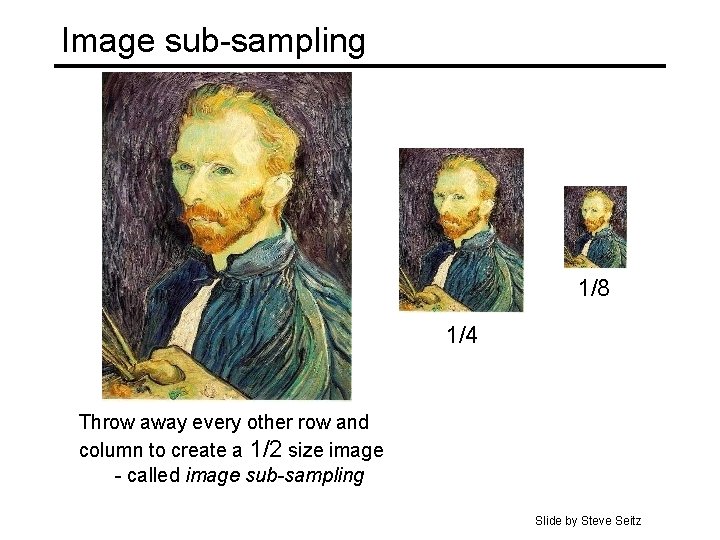
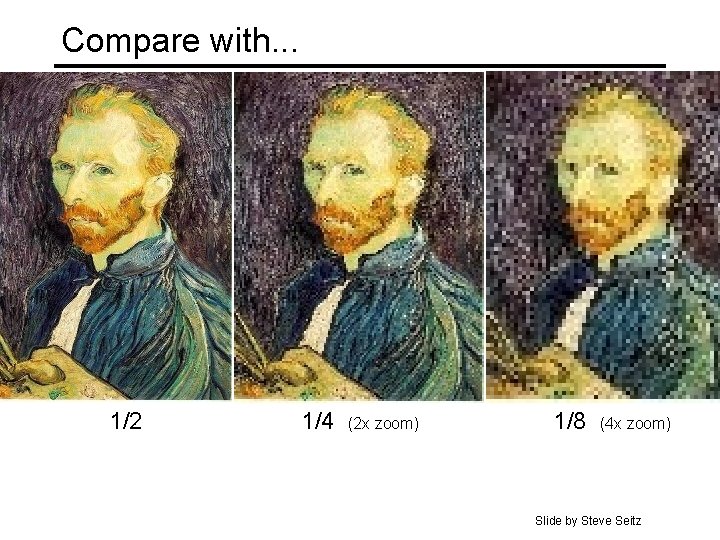
Image sub-sampling 1/8 1/4 Throw away every other row and column to create a 1/2 size image - called image sub-sampling Slide by Steve Seitz
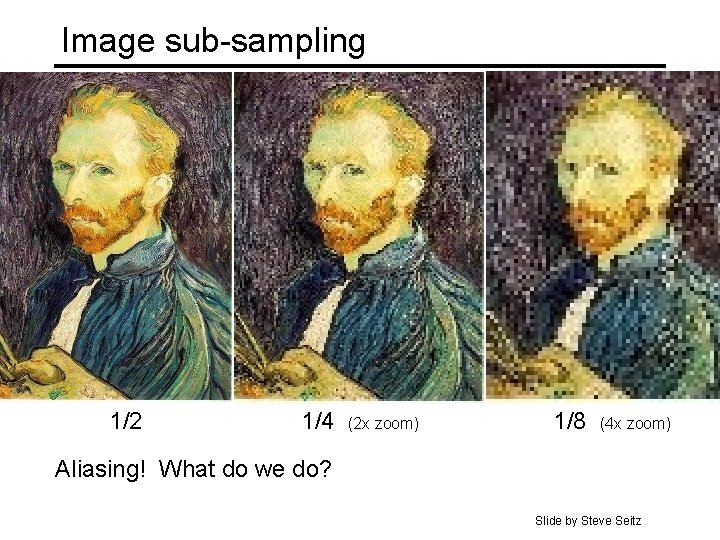
Image sub-sampling 1/2 1/4 (2 x zoom) 1/8 (4 x zoom) Aliasing! What do we do? Slide by Steve Seitz
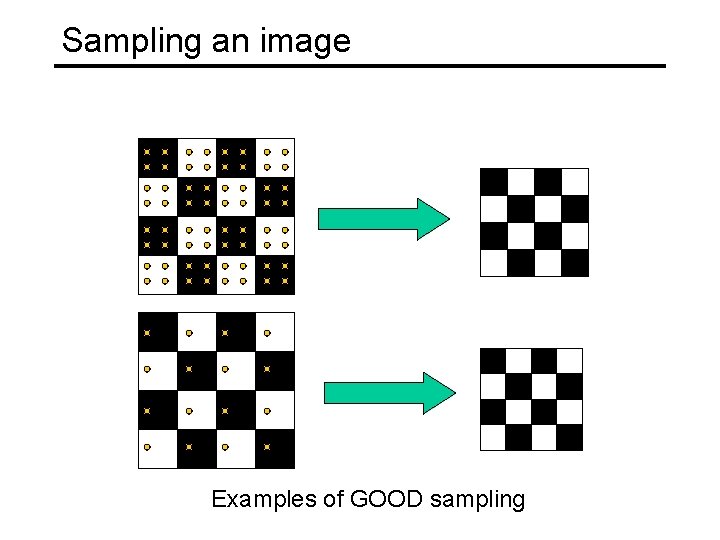
Sampling an image Examples of GOOD sampling
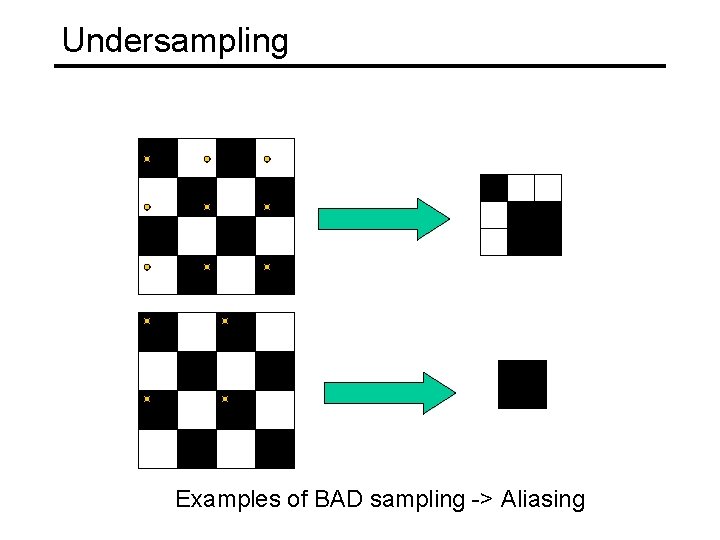
Undersampling Examples of BAD sampling -> Aliasing
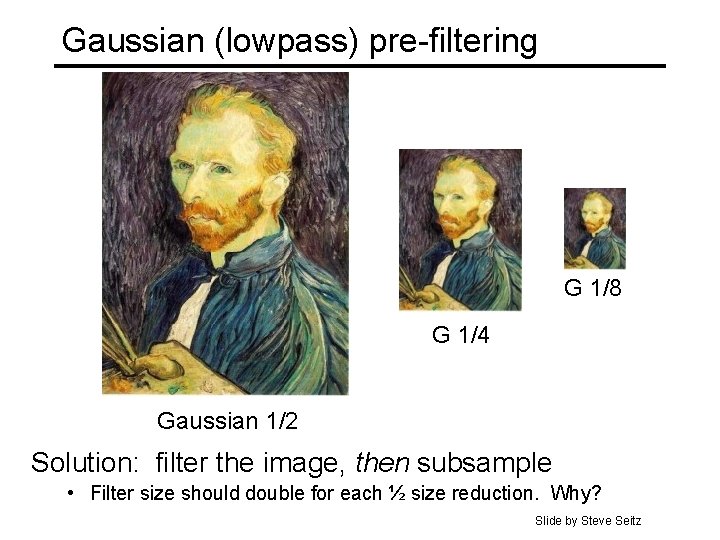
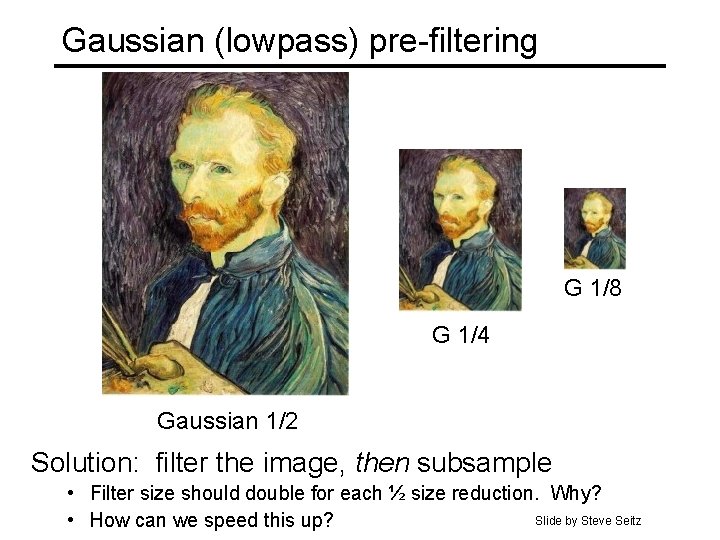
Gaussian (lowpass) pre-filtering G 1/8 G 1/4 Gaussian 1/2 Solution: filter the image, then subsample • Filter size should double for each ½ size reduction. Why? Slide by Steve Seitz
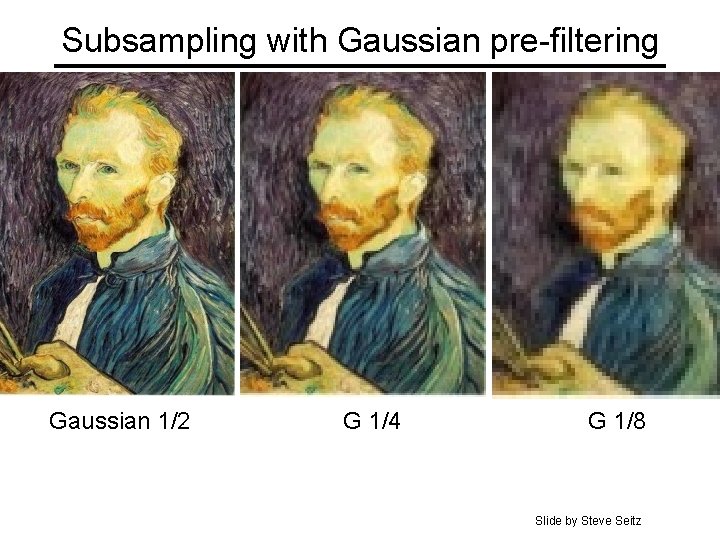
Subsampling with Gaussian pre-filtering Gaussian 1/2 G 1/4 G 1/8 Slide by Steve Seitz
Compare with. . . 1/2 1/4 (2 x zoom) 1/8 (4 x zoom) Slide by Steve Seitz
Gaussian (lowpass) pre-filtering G 1/8 G 1/4 Gaussian 1/2 Solution: filter the image, then subsample • Filter size should double for each ½ size reduction. Why? Slide by Steve Seitz • How can we speed this up?
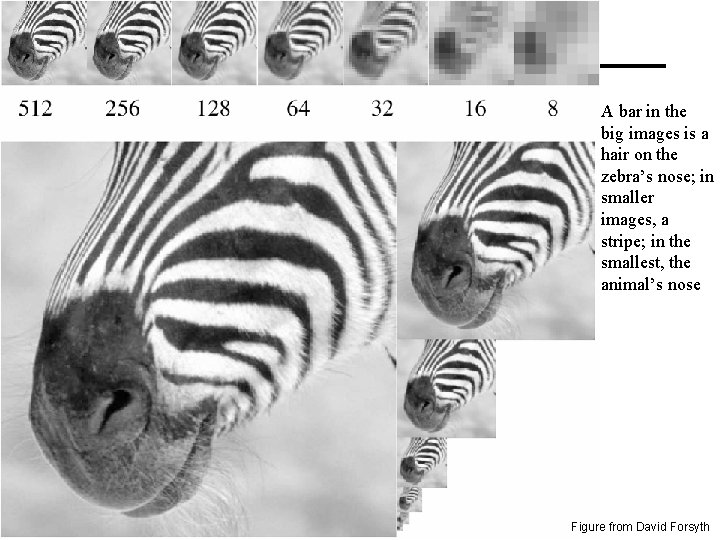
Image Pyramids Known as a Gaussian Pyramid [Burt and Adelson, 1983] • In computer graphics, a mip map [Williams, 1983] • A precursor to wavelet transform Slide by Steve Seitz
A bar in the big images is a hair on the zebra’s nose; in smaller images, a stripe; in the smallest, the animal’s nose Figure from David Forsyth
Gaussian pyramid construction filter mask Repeat • Filter • Subsample Until minimum resolution reached • can specify desired number of levels (e. g. , 3 -level pyramid) The whole pyramid is only 4/3 the size of the original image! Slide by Steve Seitz
What are they good for? Improve Search • Search over translations – Classic coarse-to-fine strategy • Search over scale – Template matching – E. g. find a face at different scales