
Image classification for biodiversity assessment and nature conservation
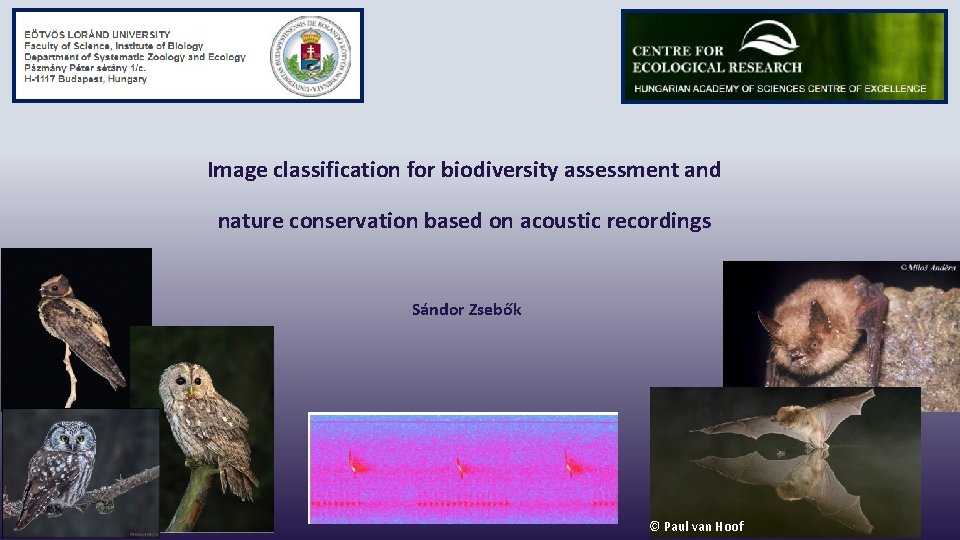
Image classification for biodiversity assessment and nature conservation based on acoustic recordings Sándor Zsebők © Paul van Hoof
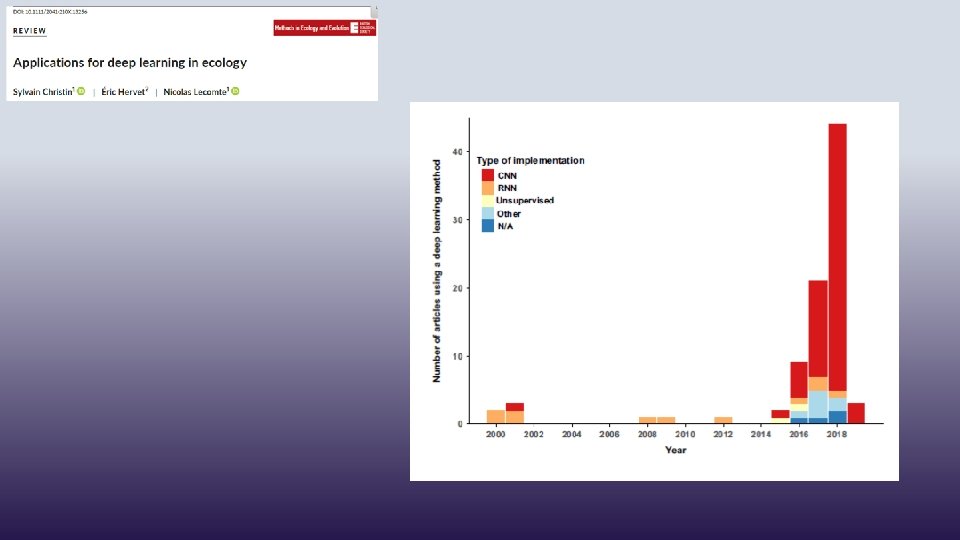

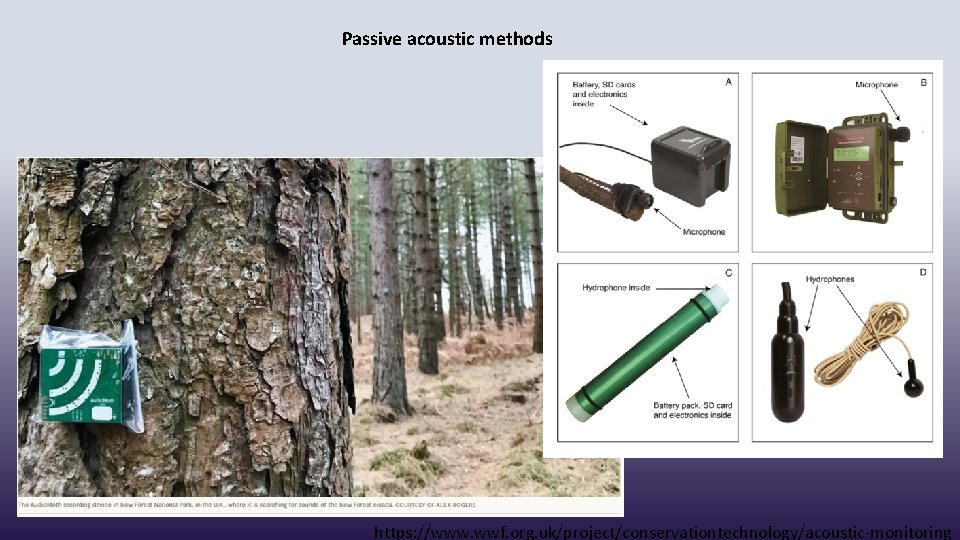
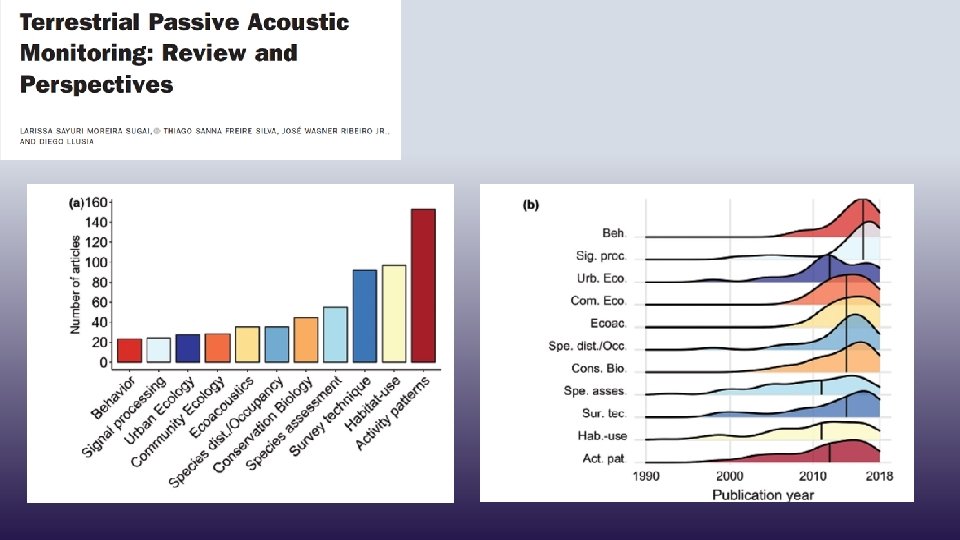
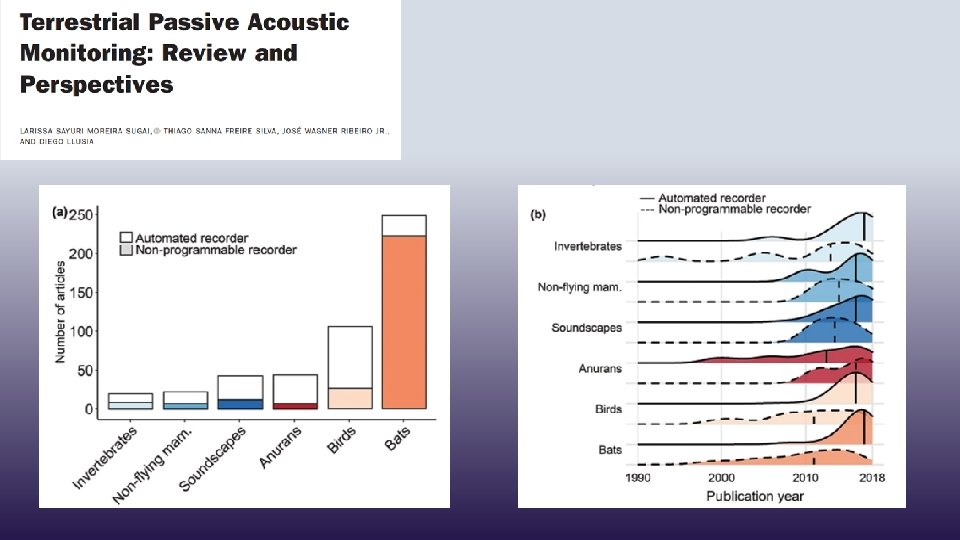
Passive acoustic methods https: //www. wwf. org. uk/project/conservationtechnology/acoustic-monitoring
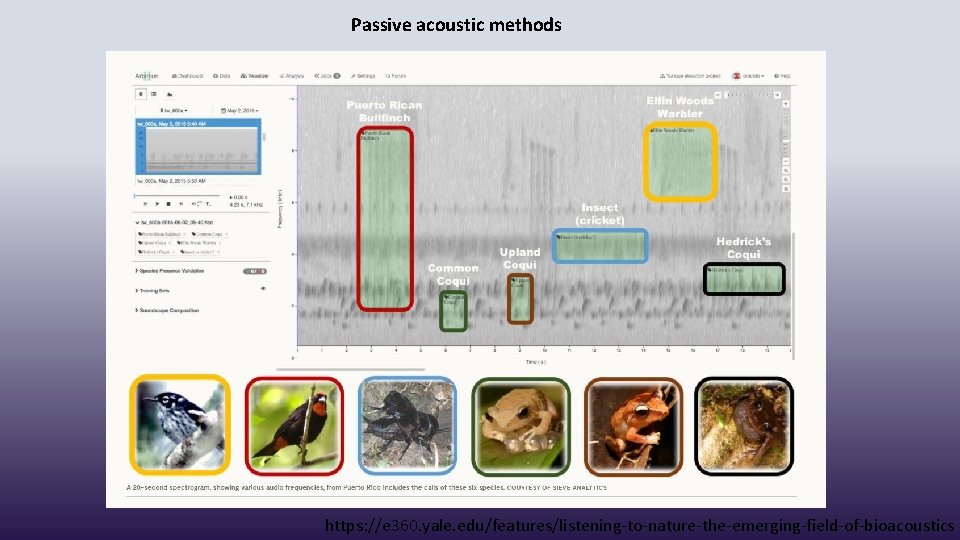
Passive acoustic methods https: //e 360. yale. edu/features/listening-to-nature-the-emerging-field-of-bioacoustics
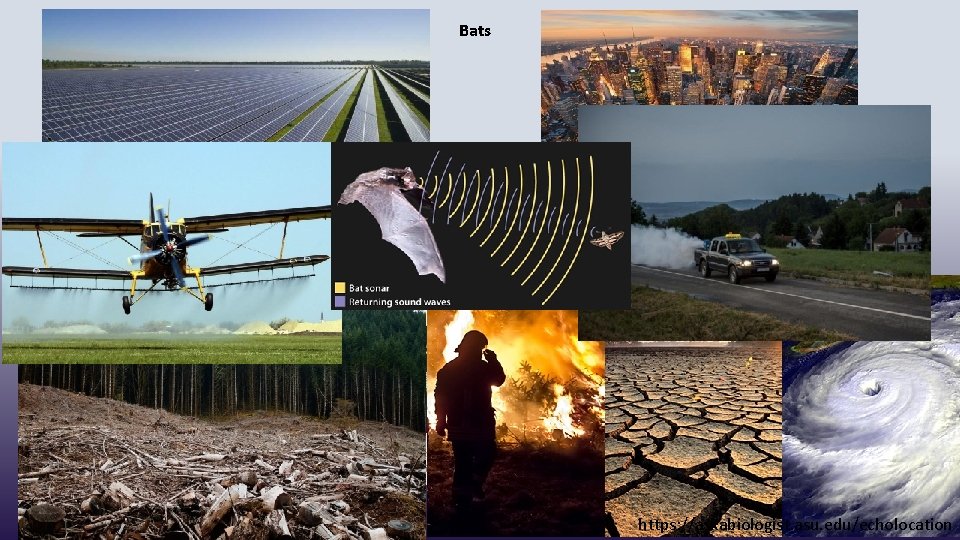
Bats https: //askabiologist. asu. edu/echolocation
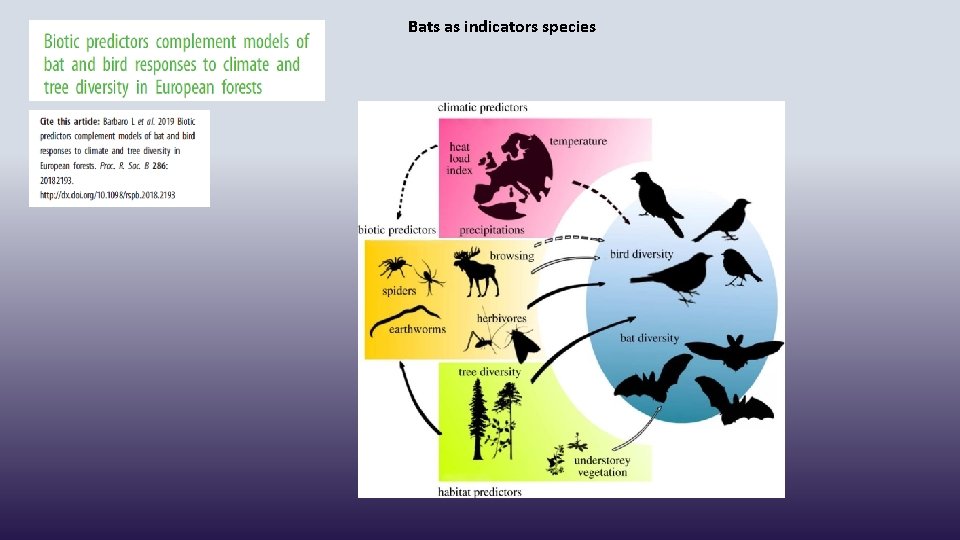
Bats as indicators species
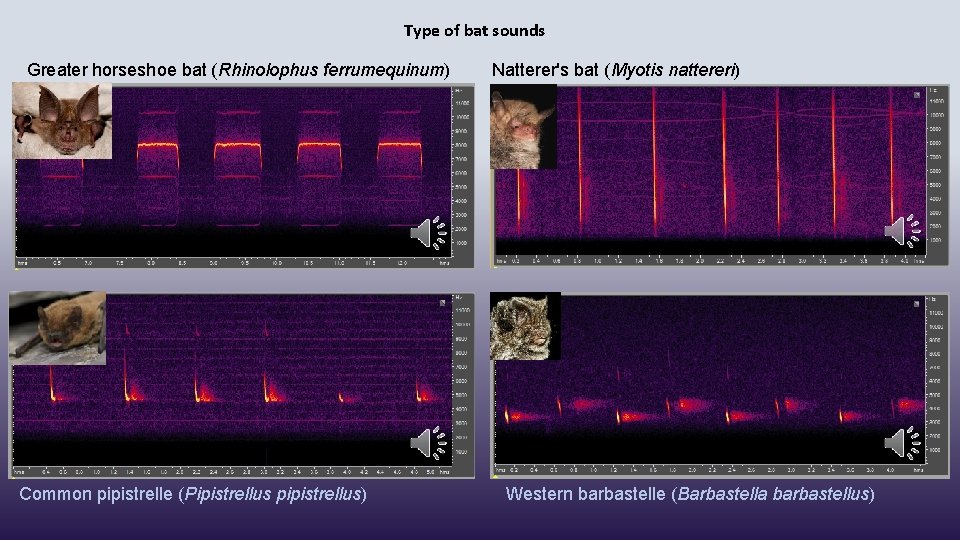
Type of bat sounds Greater horseshoe bat (Rhinolophus ferrumequinum) Common pipistrelle (Pipistrellus pipistrellus) Natterer's bat (Myotis nattereri) Western barbastelle (Barbastella barbastellus)
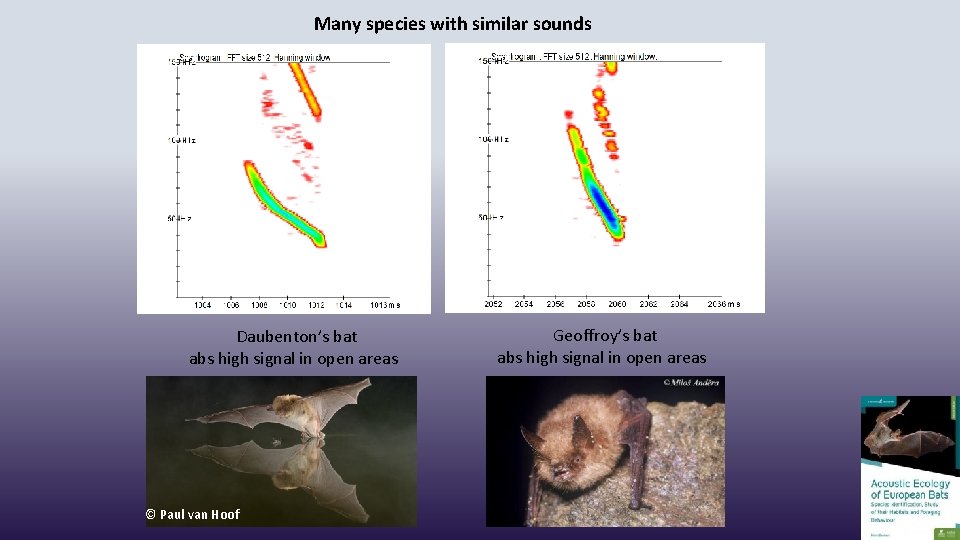
Many species with similar sounds Daubenton’s bat abs high signal in open areas © Paul van Hoof Geoffroy’s bat abs high signal in open areas
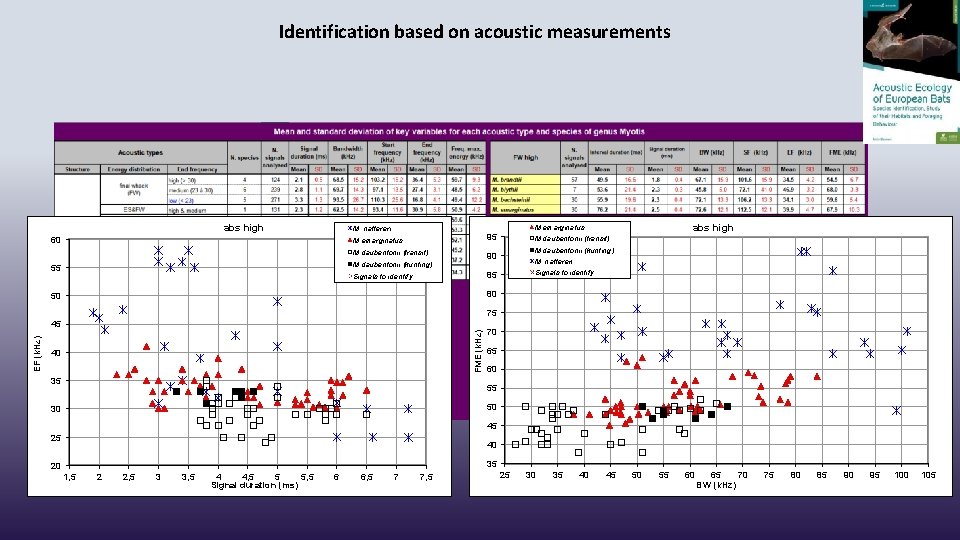
Identification based on acoustic measurements abs high M. nattereri 60 M. emarginatus 95 M. daubentonii (transit) 90 M. daubentonii (hunting) 55 85 Signals to identify abs high M. emarginatus M. daubentonii (transit) M. daubentonii (hunting) M. nattereri Signals to identify 80 50 75 FME (k. Hz) EF (k. Hz) 45 40 35 70 65 60 55 50 30 45 25 40 35 20 1, 5 2 2, 5 3 3, 5 4 4, 5 5 5, 5 Signal duration (ms) 6 6, 5 7 7, 5 25 30 35 40 45 50 55 60 65 70 BW (k. Hz) 75 80 85 90 95 100 105
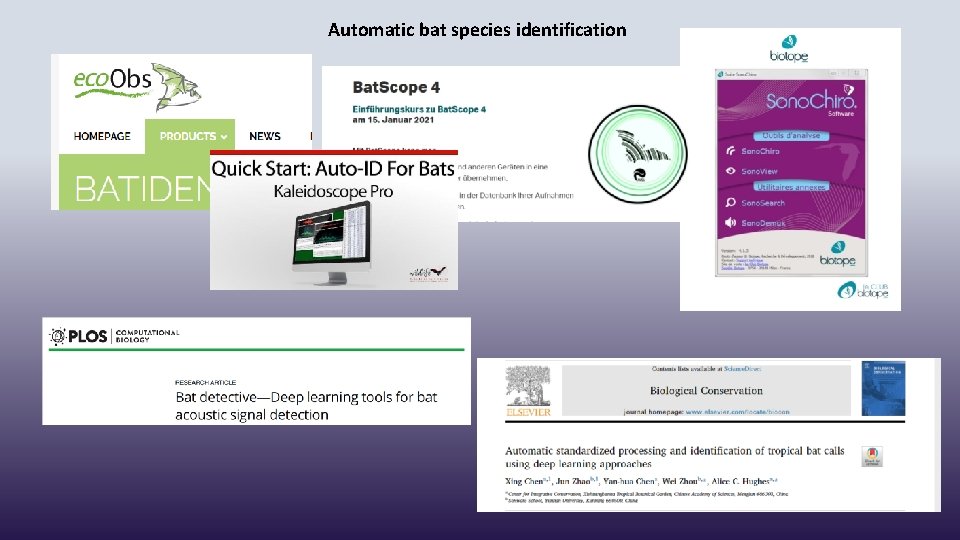
Automatic bat species identification
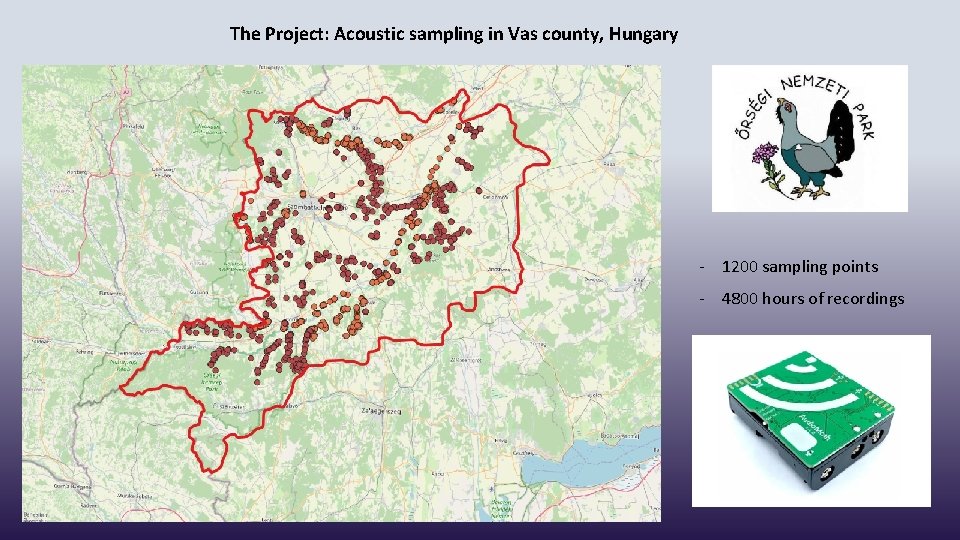
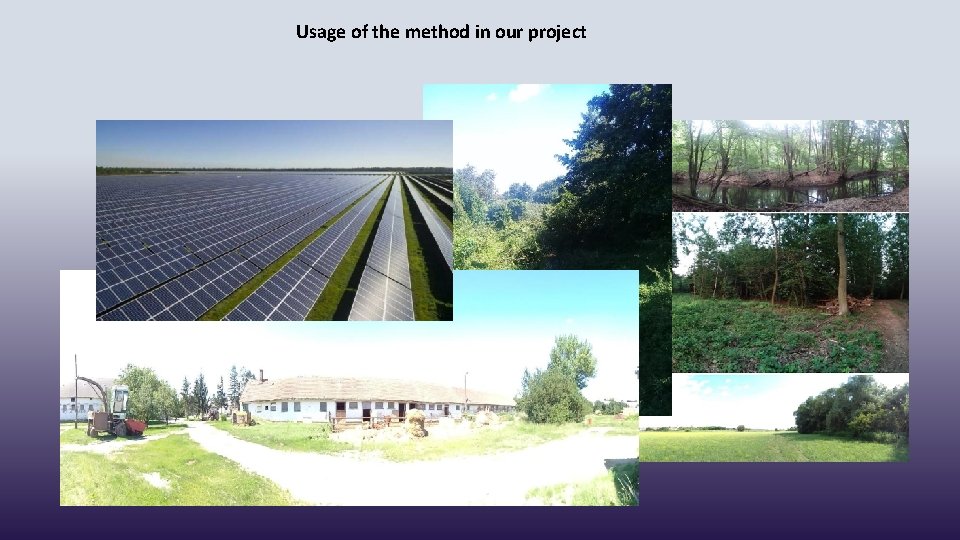
The Project: Acoustic sampling in Vas county, Hungary - 1200 sampling points - 4800 hours of recordings
Building automatic species identification model - bat sound library • 12 species: • Barbastella barbastellus • Myotis bechsteinii • Myotis emarginatus • Myotis myotis • Myotis daubentonii • Eptesicus serotinus • Nyctalus leisleri • Nyctalus noctula • Pipistrellus kuhlii • Pipistrellus nathusii • Pipistrellus pipistrellus • Pipistrellus pygmaeus • Manually identified sounds based on measurements • Recordings from identified individuals Σ: ~ 65. 000 samples (0. 1 sec)
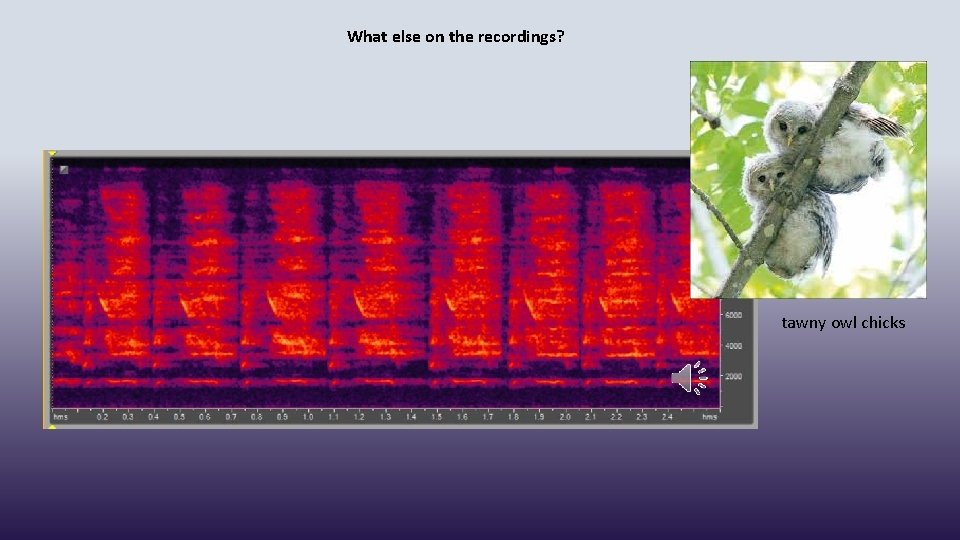
What else on the recordings? tawny owl chicks
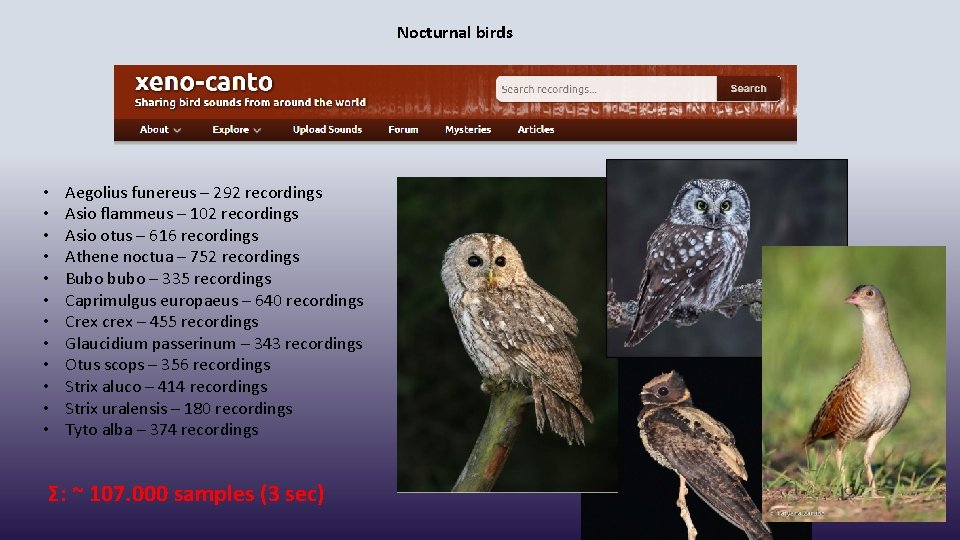
Nocturnal birds • • • Aegolius funereus – 292 recordings Asio flammeus – 102 recordings Asio otus – 616 recordings Athene noctua – 752 recordings Bubo bubo – 335 recordings Caprimulgus europaeus – 640 recordings Crex crex – 455 recordings Glaucidium passerinum – 343 recordings Otus scops – 356 recordings Strix aluco – 414 recordings Strix uralensis – 180 recordings Tyto alba – 374 recordings Σ: ~ 107. 000 samples (3 sec)
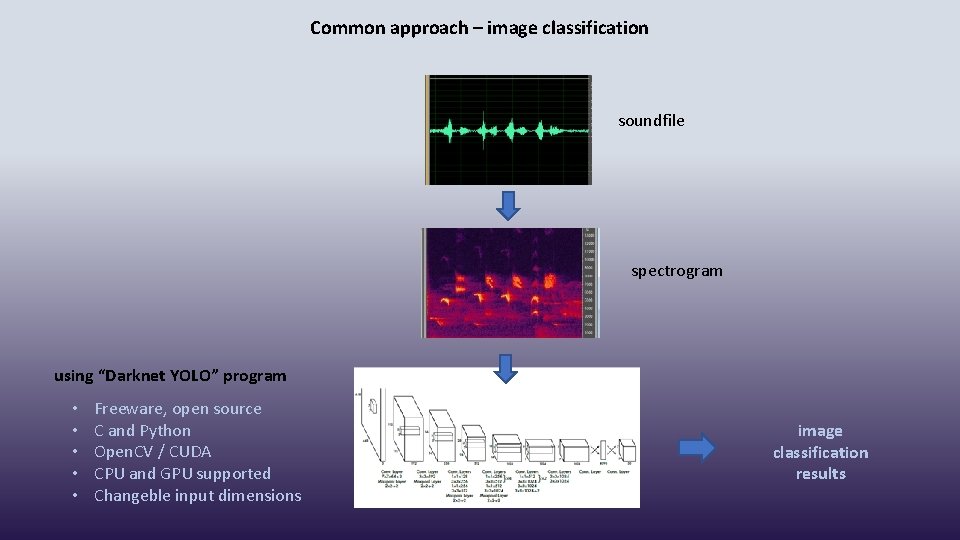
Common approach – image classification soundfile spectrogram using “Darknet YOLO” program • • • Freeware, open source C and Python Open. CV / CUDA CPU and GPU supported Changeble input dimensions image classification results
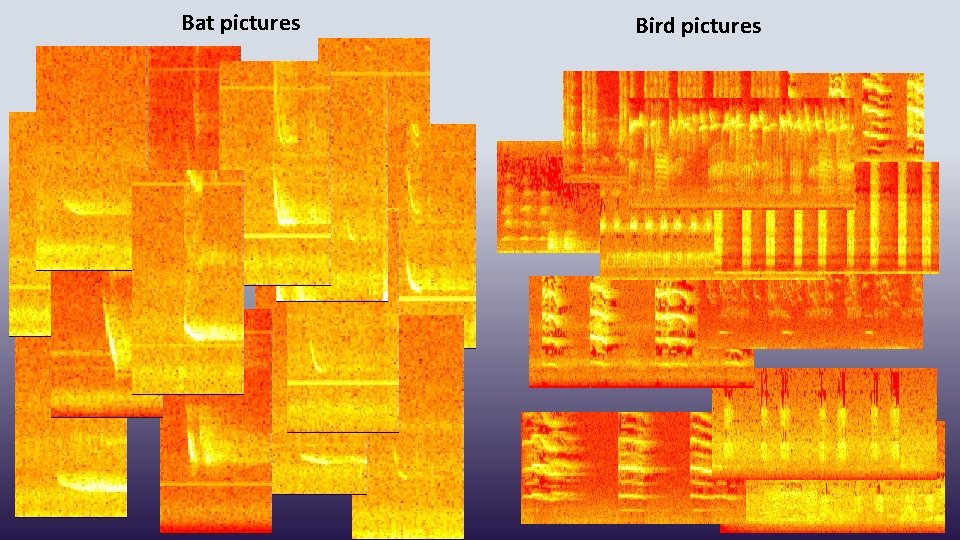
Bat pictures Bird pictures
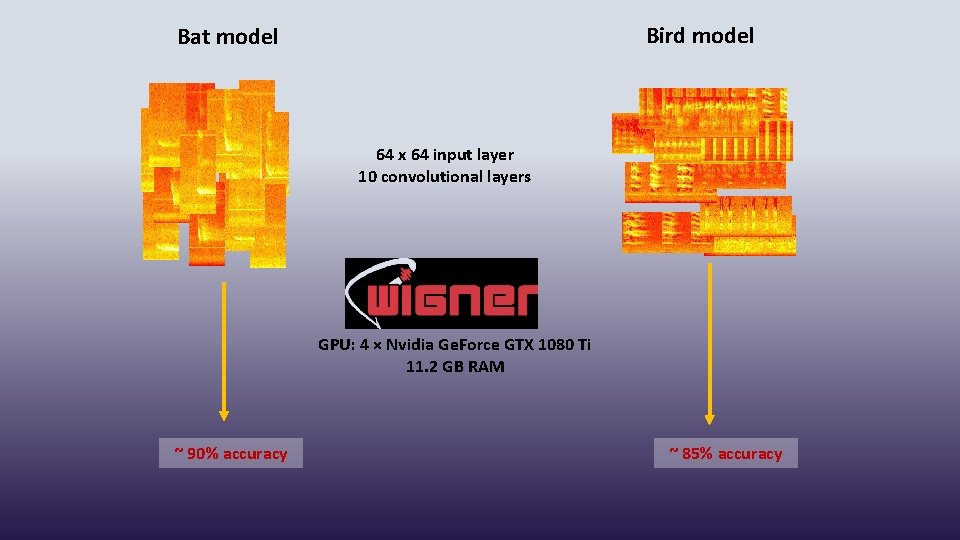
Bird model Bat model 64 x 64 input layer 10 convolutional layers GPU: 4 × Nvidia Ge. Force GTX 1080 Ti 11. 2 GB RAM ~ 90% accuracy ~ 85% accuracy
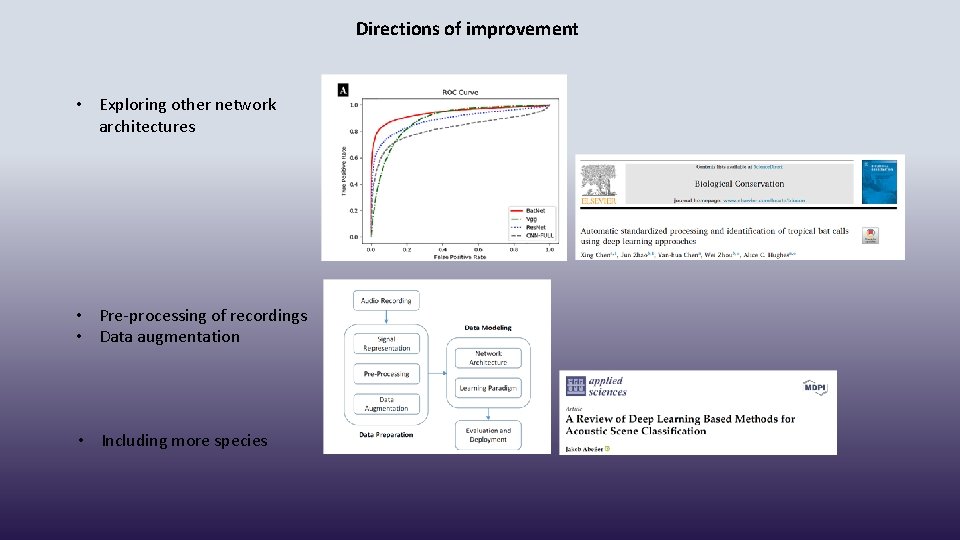
Directions of improvement • Exploring other network architectures • Pre-processing of recordings • Data augmentation • Including more species
Usage of the method in our project

Acknowledgements Kurali Anikó Varró Karolina Jandó Benedek
- Slides: 23