
Illinois State Board of Education Illinois Board of

Illinois State Board of Education Illinois Board of Higher Education Working Together to Prepare Illinois Educators for Student Success, Part V March 31, 2010 1
Today’s Presentation Ø School Leader Preparation: Where are we now? Ø Lessons Learned… Ø Where Do We Go Ø It’s Being Done Ø Teacher Preparation 2
Illinois Reviews School Leadership Matters! “Leadership is second only to classroom instruction among all school-related factors that contribute to what students learn at school. ” (Leithwood, Louis, Anderson & Wahlstrom. How Leadership Influences Student Learning)
No Small Process Commission on School Leader Preparation August 2005 -2006 HJR 66 School Leader Task Force July 2007 Working Together Conferences, Part I & II May/August 2008 5 School Leader Redesign Teams meetings Sept-Nov. 2008 Special Interest Groups meeting January 2009 Working Together Conference, Part III March 2009 School Leader Advisory Council meeting HJR 42 Working Together Conference Part IV Newly-Defined School Leader Preparation model is rolled out……
The Rollout: 2009 -2010 Presentations to Institutions of Higher Education, K-12 Administrators and Legislators March: June: July: Sept: Oct: Champaign/Vermillion ROE meeting Mc. Kendree College for ROE Area 5 Lombard for ROE Area 1 (K-12 Supt. and Business Mangers) Lombard for ROE Area 1 Rend Lake for ROE Area 6 Monmouth for ROE Area 3 IVCC for ROE Area 2 Rantoul for ROE Area 4 Normal for ROE Area 4 UIC for ROE Area 1 Oct: Nov: Conference Presentations State Superintendents Conference Presentation at Triple I Conference 5
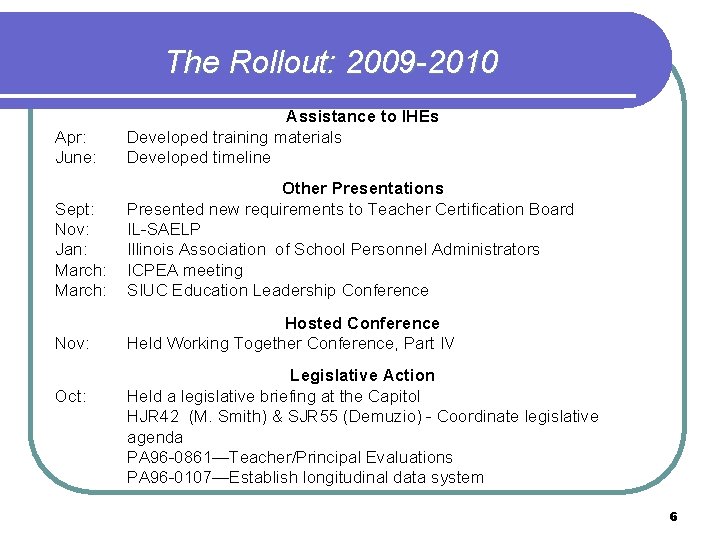
The Rollout: 2009 -2010 Apr: June: Assistance to IHEs Developed training materials Developed timeline Sept: Nov: Jan: March: Other Presentations Presented new requirements to Teacher Certification Board IL-SAELP Illinois Association of School Personnel Administrators ICPEA meeting SIUC Education Leadership Conference Nov: Hosted Conference Held Working Together Conference, Part IV Oct: Legislative Action Held a legislative briefing at the Capitol HJR 42 (M. Smith) & SJR 55 (Demuzio) - Coordinate legislative agenda PA 96 -0861—Teacher/Principal Evaluations PA 96 -0107—Establish longitudinal data system 6
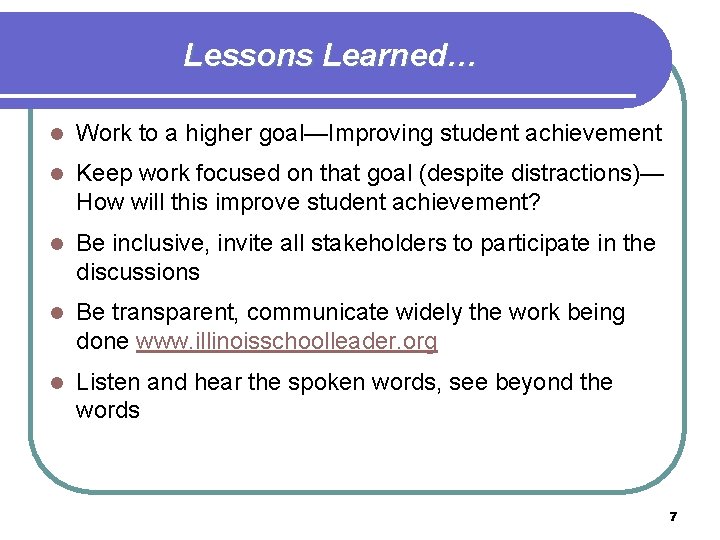
Lessons Learned… l Work to a higher goal—Improving student achievement l Keep work focused on that goal (despite distractions)— How will this improve student achievement? l Be inclusive, invite all stakeholders to participate in the discussions l Be transparent, communicate widely the work being done www. illinoisschoolleader. org l Listen and hear the spoken words, see beyond the words 7
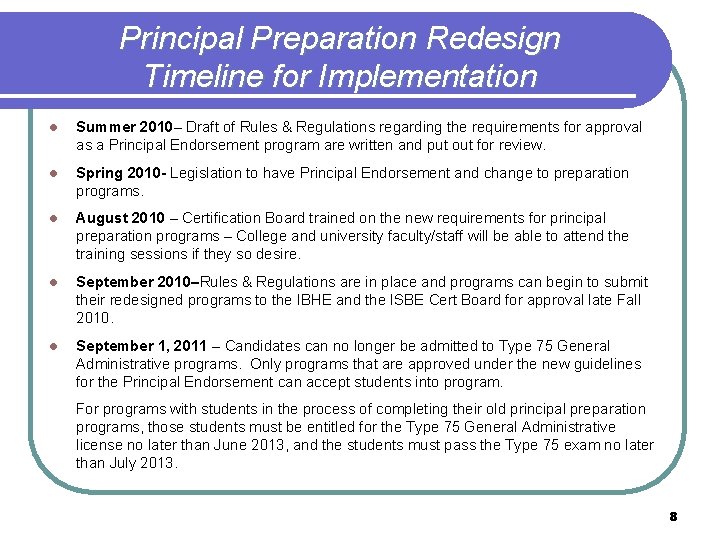
Principal Preparation Redesign Timeline for Implementation l Summer 2010– Draft of Rules & Regulations regarding the requirements for approval as a Principal Endorsement program are written and put out for review. l Spring 2010 - Legislation to have Principal Endorsement and change to preparation programs. l August 2010 – Certification Board trained on the new requirements for principal preparation programs – College and university faculty/staff will be able to attend the training sessions if they so desire. l September 2010–Rules & Regulations are in place and programs can begin to submit their redesigned programs to the IBHE and the ISBE Cert Board for approval late Fall 2010. l September 1, 2011 – Candidates can no longer be admitted to Type 75 General Administrative programs. Only programs that are approved under the new guidelines for the Principal Endorsement can accept students into program. For programs with students in the process of completing their old principal preparation programs, those students must be entitled for the Type 75 General Administrative license no later than June 2013, and the students must pass the Type 75 exam no later than July 2013. 8
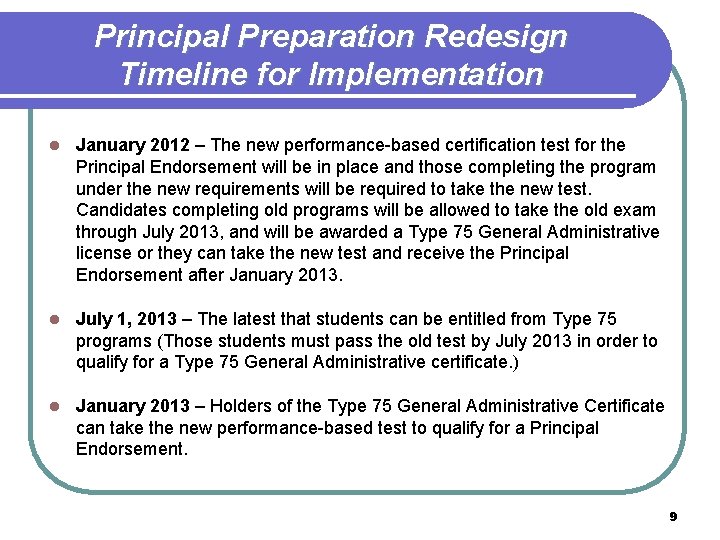
Principal Preparation Redesign Timeline for Implementation l January 2012 – The new performance-based certification test for the Principal Endorsement will be in place and those completing the program under the new requirements will be required to take the new test. Candidates completing old programs will be allowed to take the old exam through July 2013, and will be awarded a Type 75 General Administrative license or they can take the new test and receive the Principal Endorsement after January 2013. l July 1, 2013 – The latest that students can be entitled from Type 75 programs (Those students must pass the old test by July 2013 in order to qualify for a Type 75 General Administrative certificate. ) l January 2013 – Holders of the Type 75 General Administrative Certificate can take the new performance-based test to qualify for a Principal Endorsement. 9
What’s Next for School Leadership? l Stakeholder Group established to develop Illinois Educator “Code of Ethics” l l Rules will be written late spring, early summer Advance legislation l The Principal and Assistant Principal must hold the Principal Endorsement l l Principal Endorsement will serve PK-12 Strengthen Teacher Leader Endorsement l Teacher Leader can take the evaluation component and qualify to evaluate staff if the teacher chooses l Teacher Leader can qualify for Supervisory Endorsement 10
What’s Next for School Leadership? Higher Education l All programs must be resubmitted under new format, must align to ISLCC 2008 Revised Standards, and must meet all new requirements l All programs will be required to be approved by ISBE and IBHE l Programs not approved or not submitted will have an ending date Future Principals l Will be required to complete new programs and receive new endorsement (2013) l Will be required to pass new assessments l Programs will focus on instruction and school improvement 11
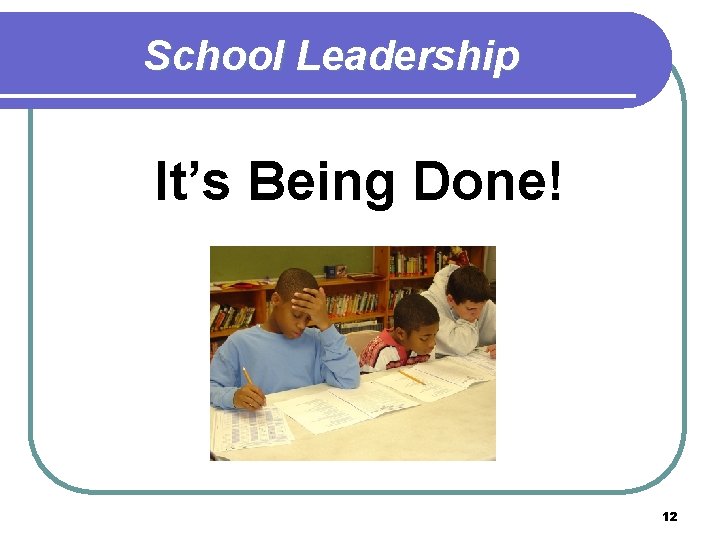
School Leadership It’s Being Done! 12
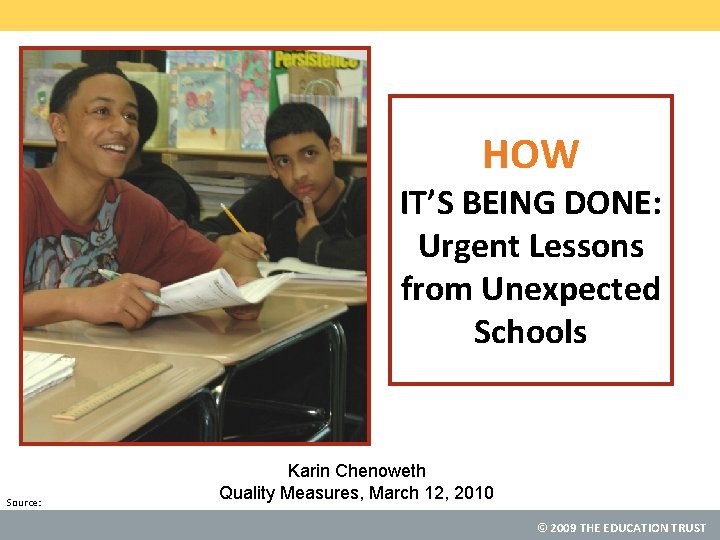
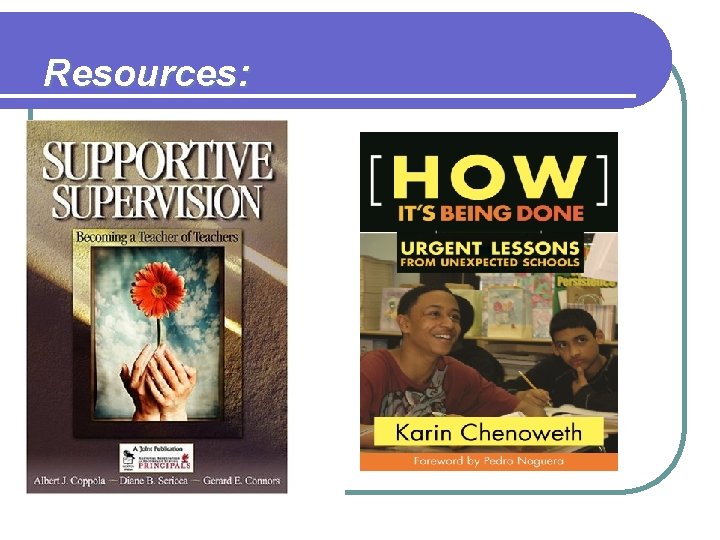
HOW IT’S BEING DONE: Urgent Lessons from Unexpected Schools Source: Karin Chenoweth Quality Measures, March 12, 2010 © 2009 THE EDUCATION TRUST
Here’s what Karin Chenoweth has to say: For the past year or so, I have been specifically looking at the question of leadership of these schools, and I’ve been asked to share some of what I’ve been learning I am only interested in schools with students that the education world generally considers to be “challenging. ” But I would argue that these are the schools the entire education world should be paying attention to. I call the schools I write about “It’s Being Done schools” to mark them as schools where the work of educating all children is being done. Source: © 2009 THE EDUCATION TRUST
What’s an “It’s Being Done” School? An “It’s Being Done” school is one that is either very high achieving or rapidly improving and has substantial enrollments of students from low-income families or students of color or both. These are schools that are, generally speaking, not expected to be high performing. But they are. Karin Chenoweth Source: © 2009 THE EDUCATION TRUST
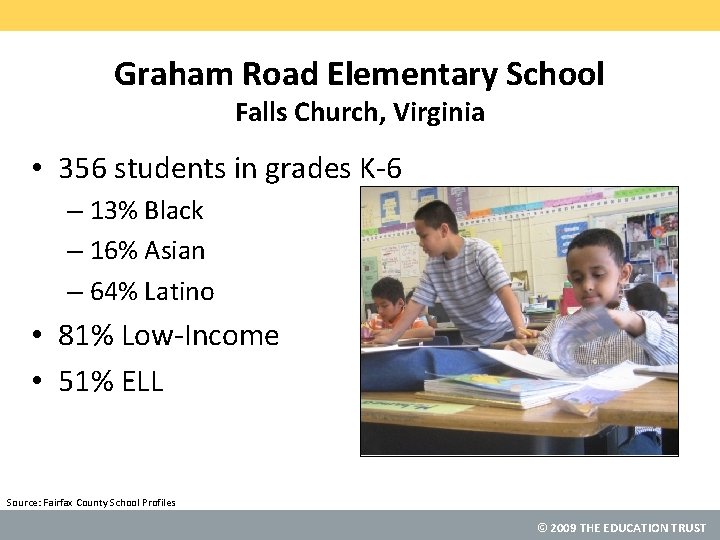
Graham Road Elementary School Falls Church, Virginia • 356 students in grades K-6 – 13% Black – 16% Asian – 64% Latino • 81% Low-Income • 51% ELL Source: Fairfax County School Profiles © 2009 THE EDUCATION TRUST
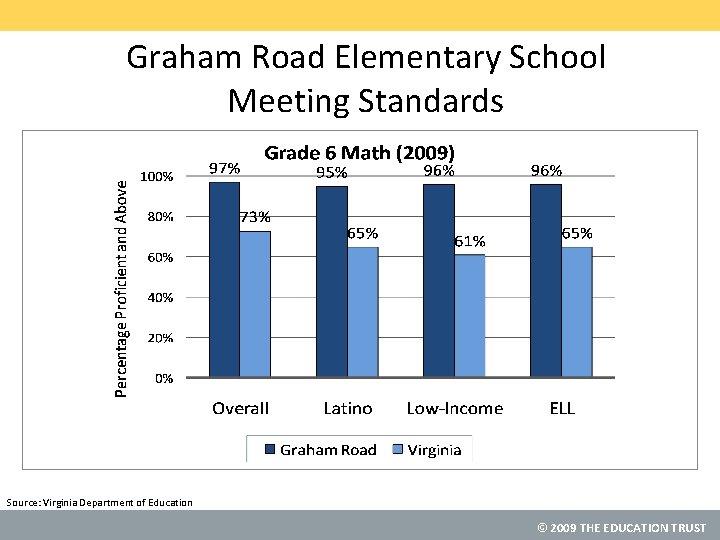
Graham Road Elementary School Meeting Standards Source: Virginia Department of Education © 2009 THE EDUCATION TRUST
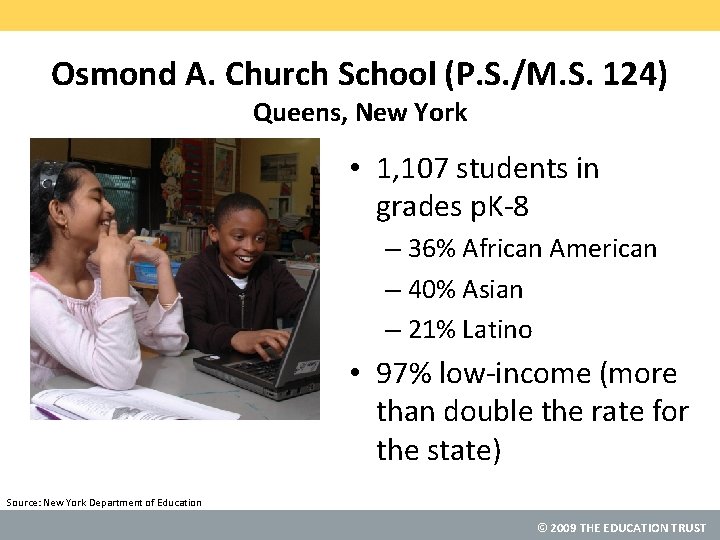
Osmond A. Church School (P. S. /M. S. 124) Queens, New York • 1, 107 students in grades p. K-8 – 36% African American – 40% Asian – 21% Latino • 97% low-income (more than double the rate for the state) Source: New York Department of Education © 2009 THE EDUCATION TRUST
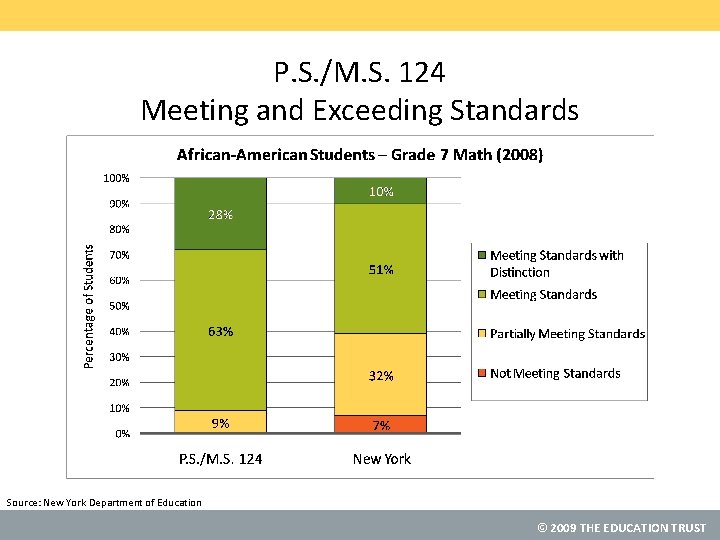
P. S. /M. S. 124 Meeting and Exceeding Standards Source: New York Department of Education © 2009 THE EDUCATION TRUST
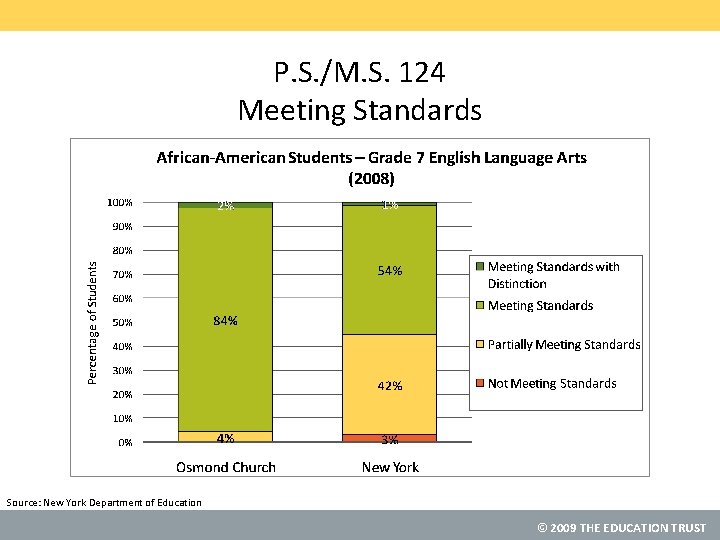
P. S. /M. S. 124 Meeting Standards Source: New York Department of Education © 2009 THE EDUCATION TRUST
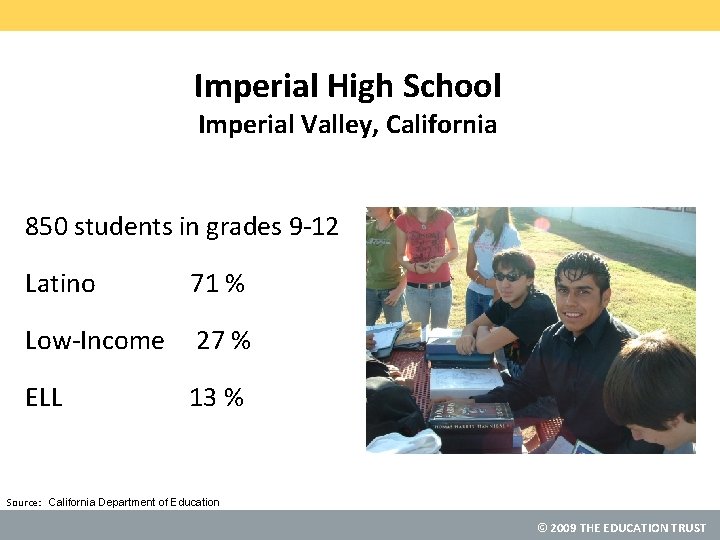
Imperial High School Imperial Valley, California 850 students in grades 9 -12 Latino 71 % Low-Income 27 % ELL 13 % Source: California Department of Education © 2009 THE EDUCATION TRUST
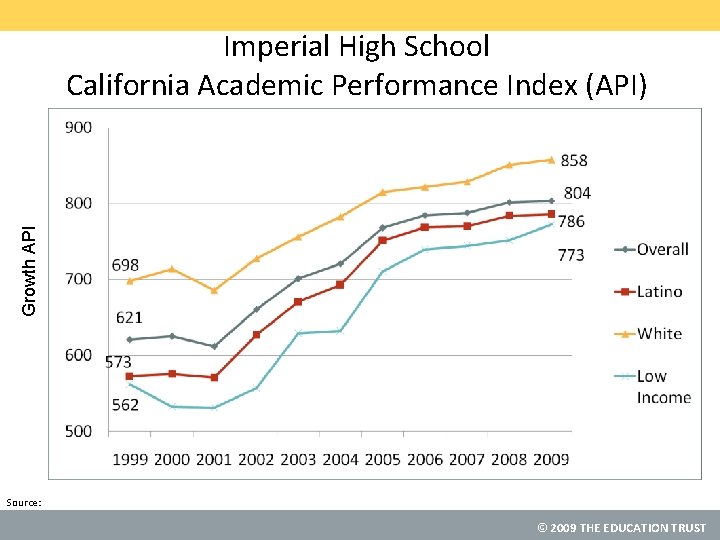
Growth API Imperial High School California Academic Performance Index (API) Source: © 2009 THE EDUCATION TRUST
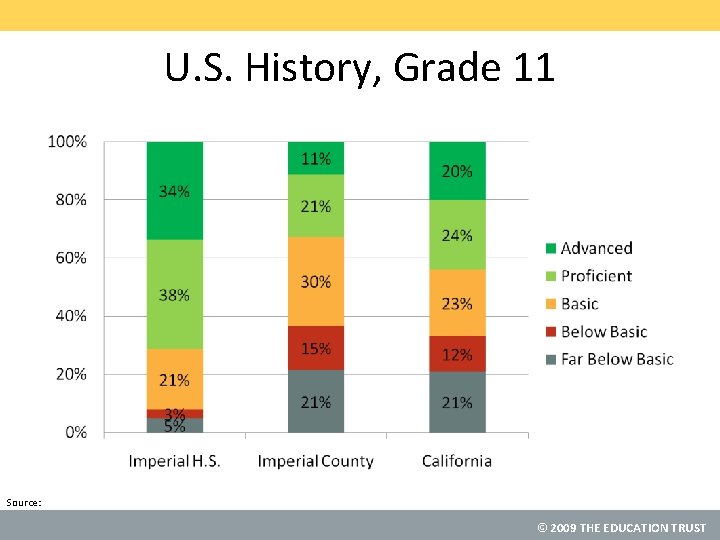
U. S. History, Grade 11 Source: © 2009 THE EDUCATION TRUST
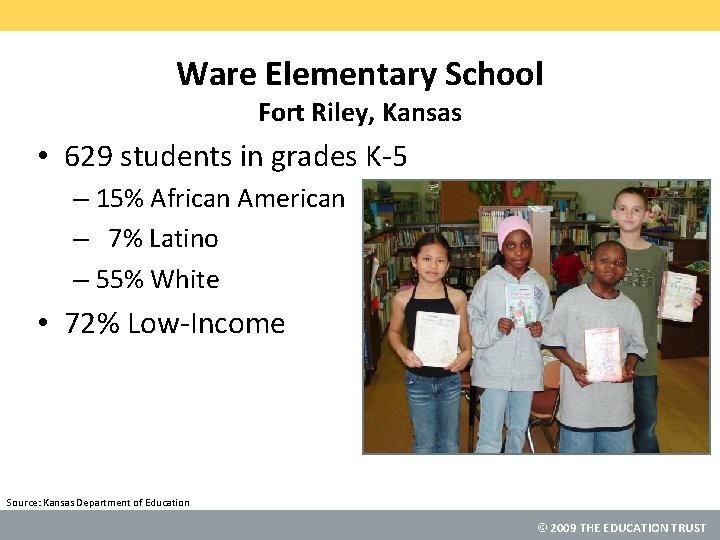
Ware Elementary School Fort Riley, Kansas • 629 students in grades K-5 – 15% African American – 7% Latino – 55% White • 72% Low-Income Source: Kansas Department of Education © 2009 THE EDUCATION TRUST
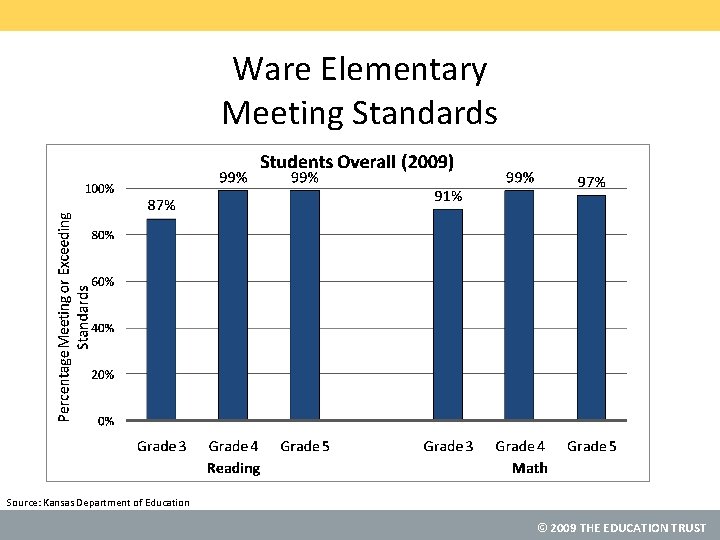
Ware Elementary Meeting Standards Source: Kansas Department of Education © 2009 THE EDUCATION TRUST
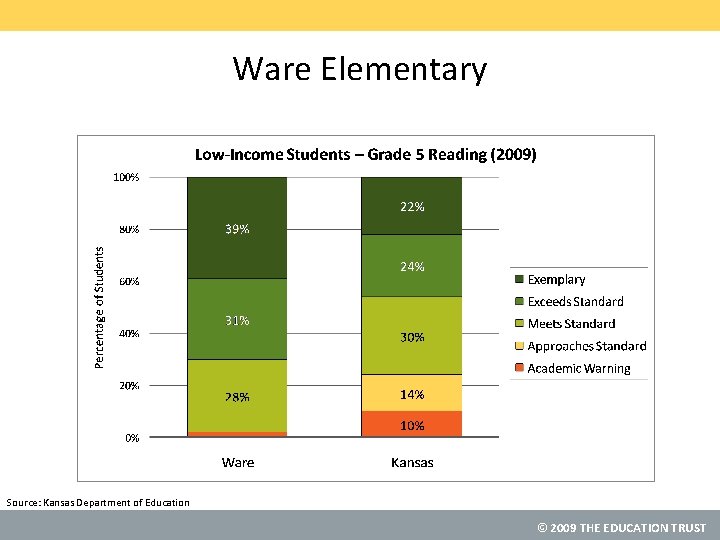
Ware Elementary Source: Kansas Department of Education © 2009 THE EDUCATION TRUST
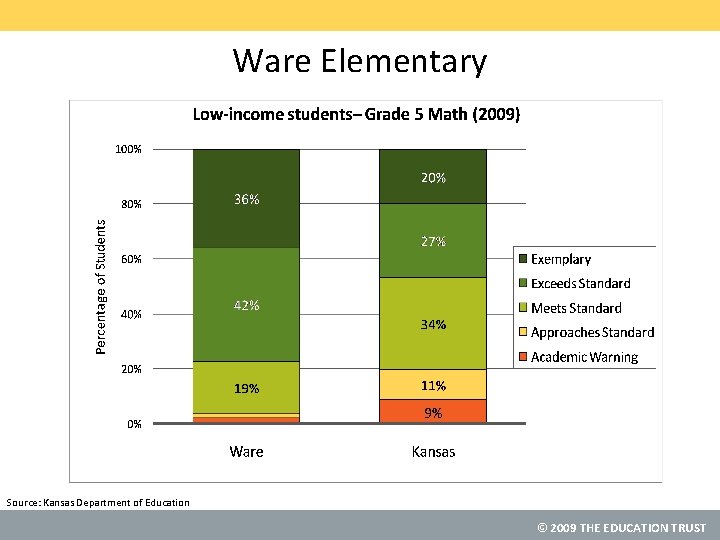
Ware Elementary Source: Kansas Department of Education © 2009 THE EDUCATION TRUST
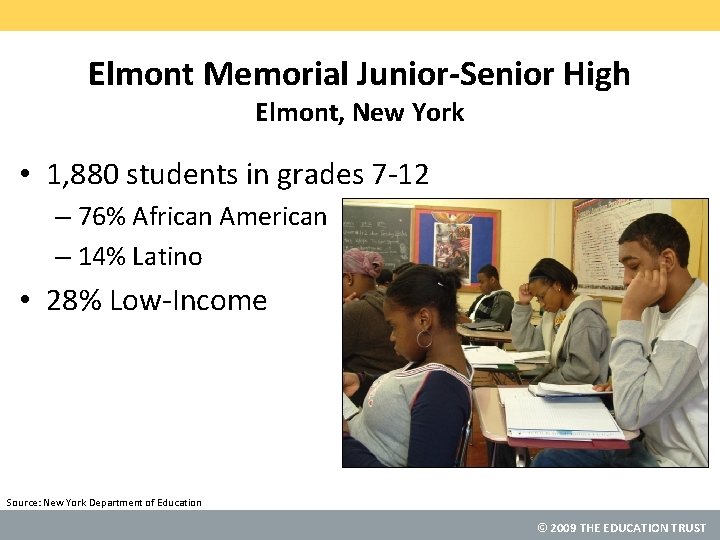
Elmont Memorial Junior-Senior High Elmont, New York • 1, 880 students in grades 7 -12 – 76% African American – 14% Latino • 28% Low-Income Source: New York Department of Education © 2009 THE EDUCATION TRUST
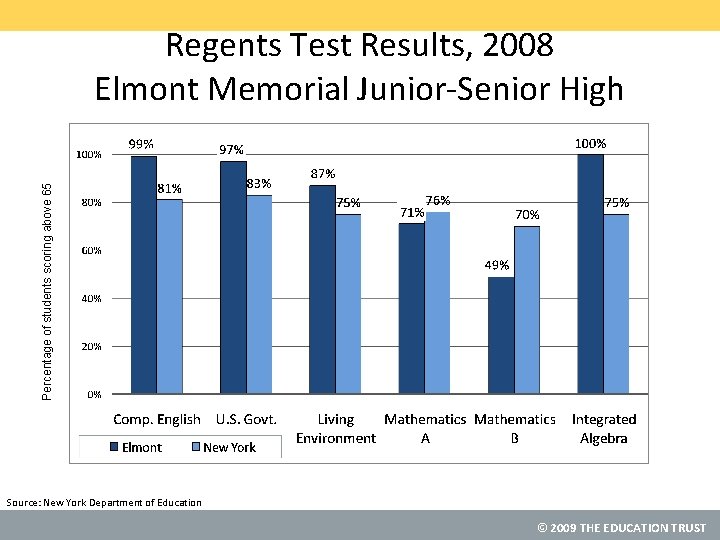
Percentage of students scoring above 65 Regents Test Results, 2008 Elmont Memorial Junior-Senior High Source: New York Department of Education © 2009 THE EDUCATION TRUST
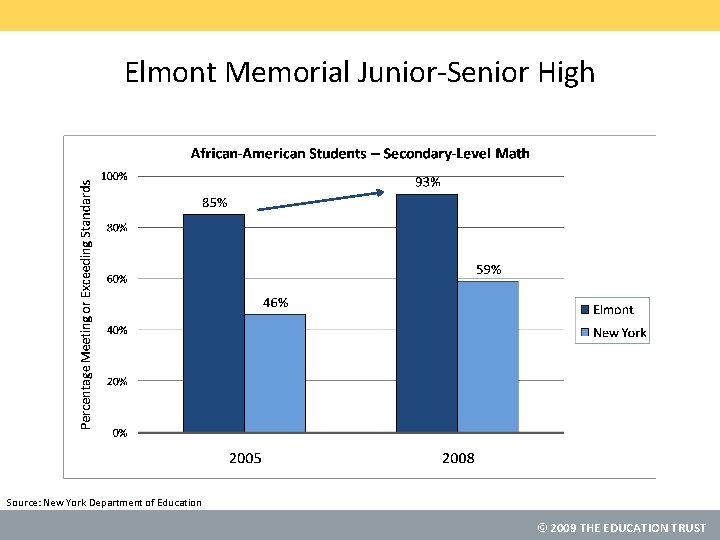
Elmont Memorial Junior-Senior High Source: New York Department of Education © 2009 THE EDUCATION TRUST
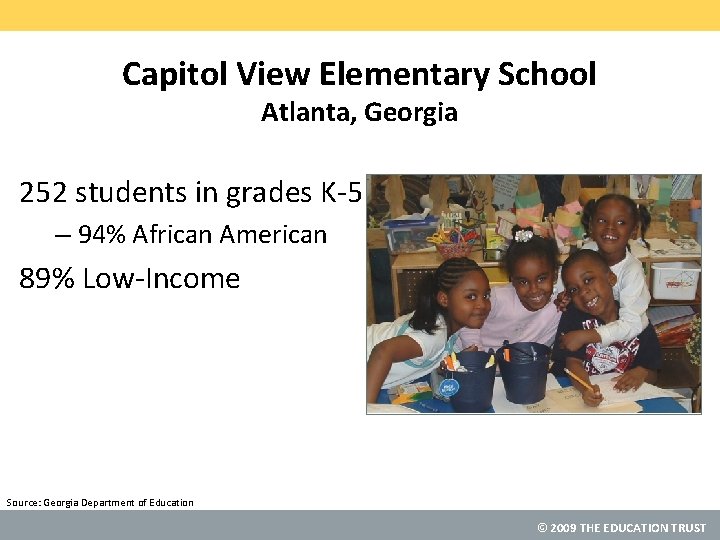
Capitol View Elementary School Atlanta, Georgia 252 students in grades K-5 – 94% African American 89% Low-Income Source: Georgia Department of Education © 2009 THE EDUCATION TRUST
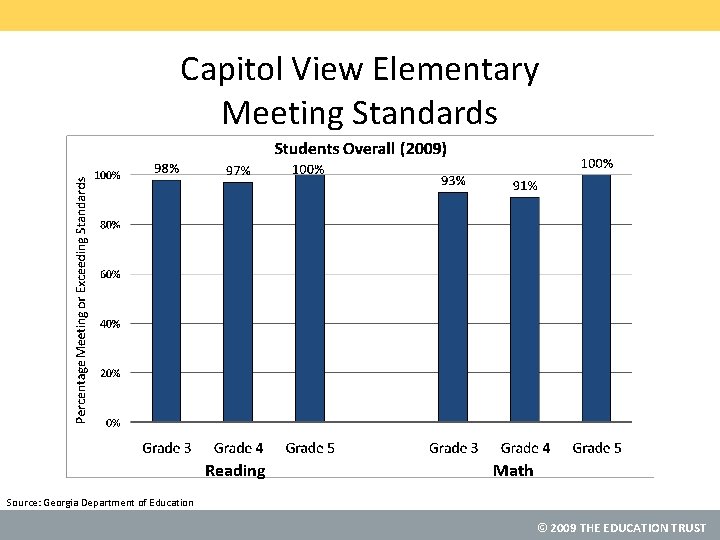
Capitol View Elementary Meeting Standards Reading Math Source: Georgia Department of Education © 2009 THE EDUCATION TRUST
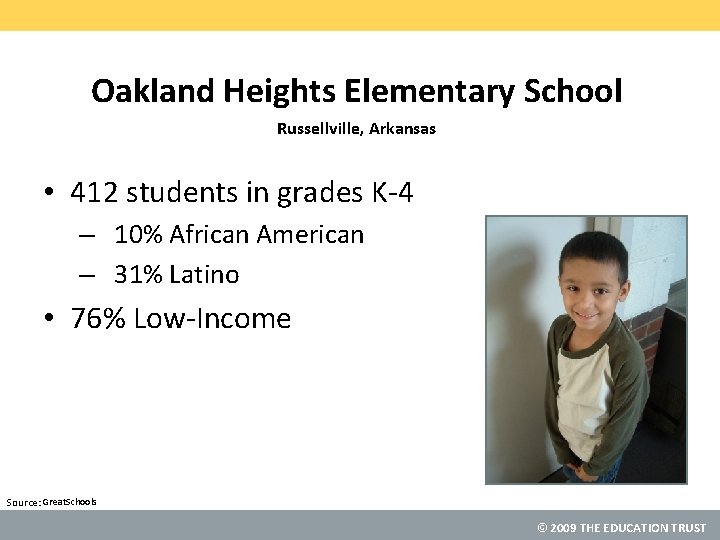
Oakland Heights Elementary School Russellville, Arkansas • 412 students in grades K-4 – 10% African American – 31% Latino • 76% Low-Income Source: Great. Schools © 2009 THE EDUCATION TRUST
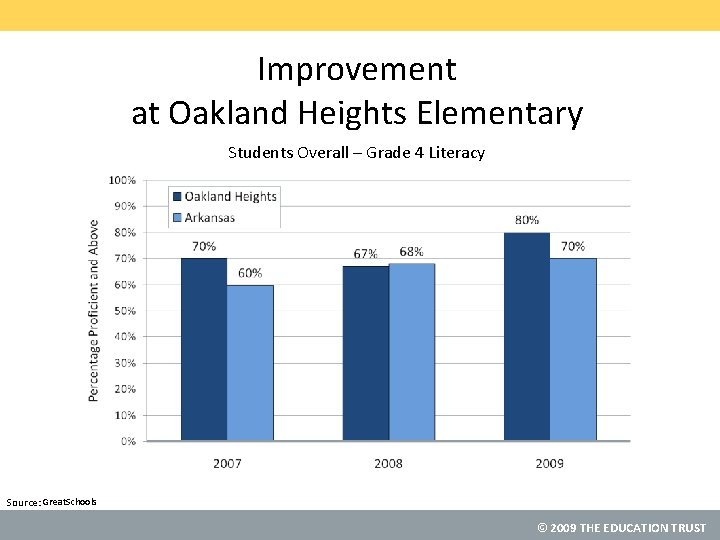
Improvement at Oakland Heights Elementary Students Overall – Grade 4 Literacy Source: Great. Schools © 2009 THE EDUCATION TRUST
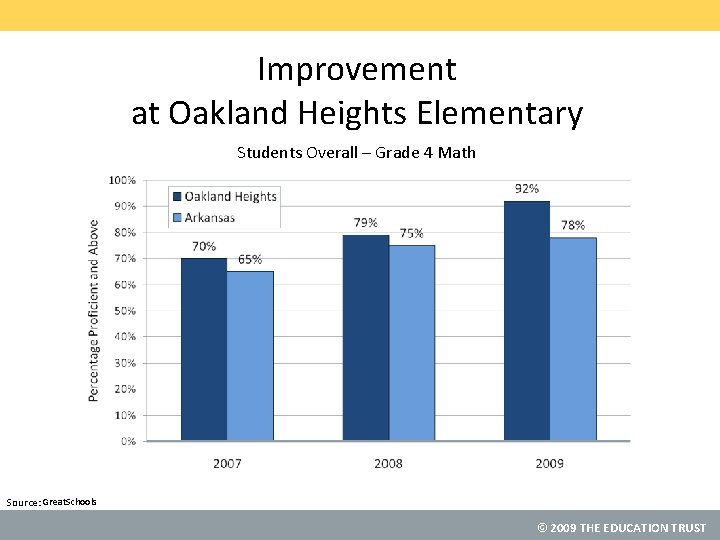
Improvement at Oakland Heights Elementary Students Overall – Grade 4 Math Source: Great. Schools © 2009 THE EDUCATION TRUST
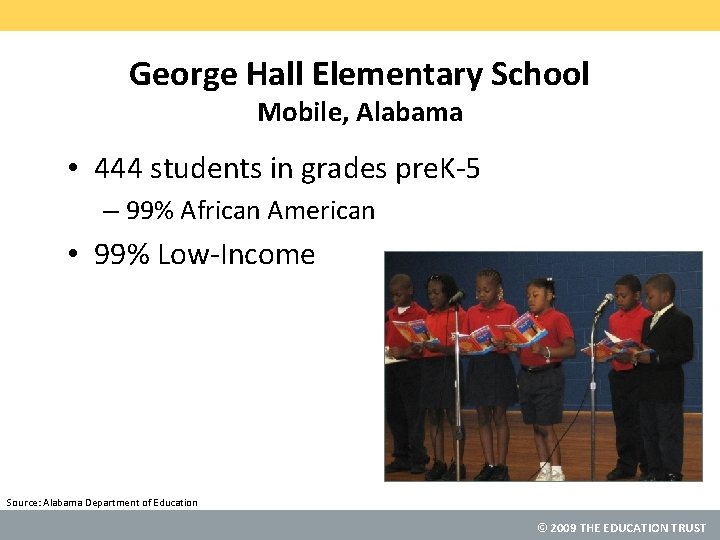
George Hall Elementary School Mobile, Alabama • 444 students in grades pre. K-5 – 99% African American • 99% Low-Income Source: Alabama Department of Education © 2009 THE EDUCATION TRUST
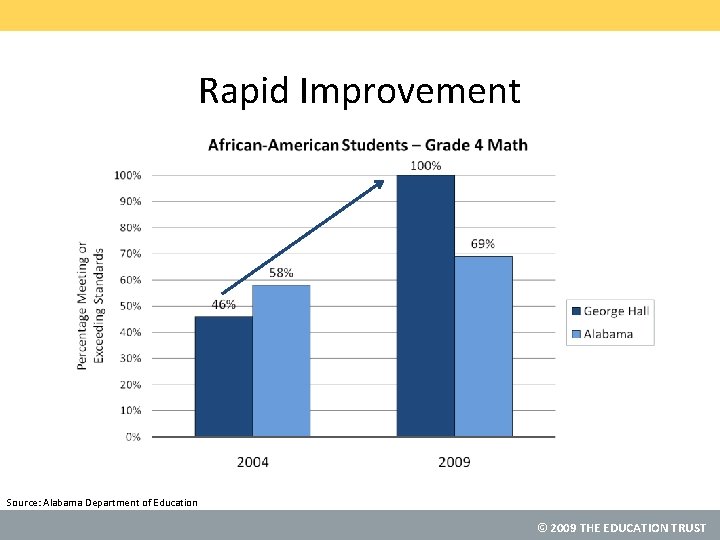
Rapid Improvement Source: Alabama Department of Education © 2009 THE EDUCATION TRUST
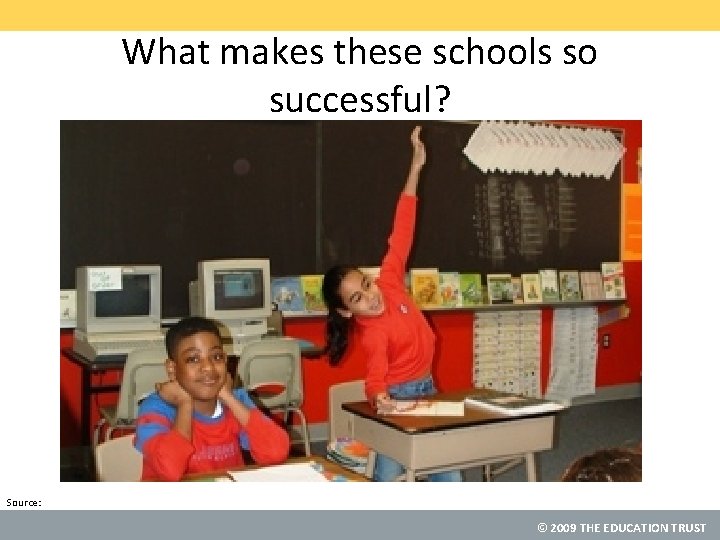
What makes these schools so successful? Source: © 2009 THE EDUCATION TRUST
In the words of Karin Chenoweth, In essence, principals in “It’s Being Done” schools set the expectation that every student will achieve—and then establish the conditions in which that can happen. Source: © 2009 THE EDUCATION TRUST
Principals focus teachers and staff on what they can change, rather than what they can’t. What they can’t change: Pre-natal care Low birth-weight Parental drug use Neighborhood Crime Rates Karin Chenoweth Source: © 2009 THE EDUCATION TRUST
What they can change: How they use time Quality of instruction School environment and atmosphere Source: © 2009 THE EDUCATION TRUST
Principals recognize and act on the critical importance of teachers: They hire carefully They assign carefully Help teachers improve Karin Chenoweth Source: © 2009 THE EDUCATION TRUST
Principals make sure teachers focus closely on instruction by: • Scheduling carefully to permit teacher collaboration and individual instruction. • Ensuring that curriculum is closely aligned to standards by reviewing lesson plans, assignments, and assessments. Karin Chenoweth Source: © 2009 THE EDUCATION TRUST
To sum up: The leaders in “It’s Being Done” schools expect their teachers to teach and their students to learn and they create the environment that supports teaching and learning. http: //www. edtrust. org/dc/prese on/how-its-being-done-urgent-lessons Karin Chenoweth Source: © 2009 THE EDUCATION TRUST
Recapping Newly Defined Principal Preparation Programs l New Certification Structure designating PK-12 Principal Endorsement l Programs must focus on instruction & school improvement l Must meet ISLLC Standards & Strands of Distinguished Principal l Rigorous admissions criteria l Strengthened content in programs l IHE Partnership with PK-12 school(s)/district(s) l Institution must commit sufficient resources for program l Strengthen internship/residency l Common assessments for internship/residency l Revised state assessments 45
Strengthening Content Understanding ü School Law ü Special Education Law ü Use of technology for administration, teaching, and learning ü Social Emotional Learning Standards ü Three-Tier Instruction and Intervention Model (curriculum, instruction, and assessment) Designing effective interventions for struggling students in (K-12), and through collaborative work develop and implement a successful system aimed at improved outcomes for all students ü Bullying and School Safety
Supervision and Assessment of Residency Demonstrate comprehensive performance in: l Data analysis l School Improvement l Conducting SIP Process l Conducting Teacher Hiring, Evaluation, Induction, Mentoring of New Teachers, and Professional Development for all Teachers l Conducting School-wide Management of Personnel and Resources
Going Beyond School Leadership is foremost in establishing a culture of teaching and learning in a school. Without it even the best teachers cannot function to their fullest potential. Now that Illinois has developed newly defined expectations for the preparation and ongoing career development of school leaders, it is time to look at how the State prepares its teachers. How can we prepare teachers who will address the needs of “each” child in order to optimize individual learning? 48
Looking at Teaching Standards Pre-Service Advisory Group (PSAG) l Revised the Illinois Professional Teaching Standards l Focused on “Each Child” rather than “All” Children l Focused on Literacy (Elementary and Secondary) l Focused on needs of Special Education, ELL/Bilingual, Gifted l Combined Language Arts, Technology and Illinois Professional Teacher Standards into one set of standards l Proposed rules will go to Illinois State Board of Education in March, 2010 49
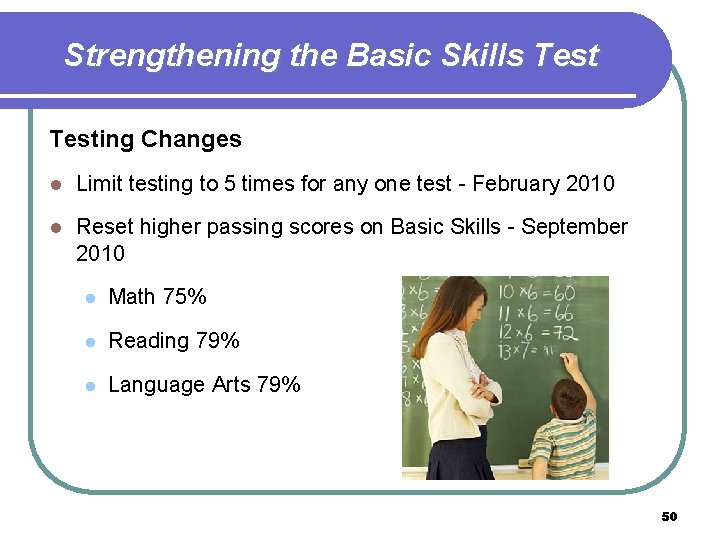
Strengthening the Basic Skills Testing Changes l Limit testing to 5 times for any one test - February 2010 l Reset higher passing scores on Basic Skills - September 2010 l Math 75% l Reading 79% l Language Arts 79% 50
Current Illinois Initiatives l Rule changes to strengthen content for Teachers l Rule changes for endorsements for elementary, middle, and high school teachers l Strengthen testing by reviewing Passing Scores on Content Tests l Redevelop new Assessment of Professional Teaching (APT) l Grade of “C” or above required for all course work for program and endorsements effective February 1, 2012 l Secondary Endorsements require 24 s. h. (12 s. h. of upper division) and pass the content test; except science and social studies which is 32 s. h. (12 s. h. in designation)and pass the testeffective February 1, 2012 51
Current Illinois Initiatives, cont. l Groups will be established to review: l Middle Level Certificates l Content Area Standards l Elementary Certification High School Content Areas-start with Math and Science and followed by others l Elementary Content Area Standards to be strengthened with emphasis on: l l Reading l Mathematics l Science 52
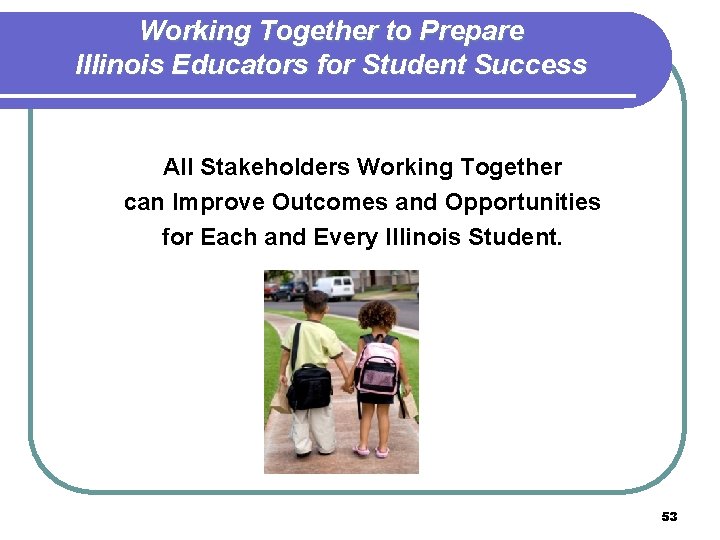
Working Together to Prepare Illinois Educators for Student Success All Stakeholders Working Together can Improve Outcomes and Opportunities for Each and Every Illinois Student. 53
Contact Information Linda Tomlinson Email: ltomlins@isbe. net Debbie Meisner-Bertauski Email: meisner-bertauski@ibhe. org 54
Resources:

Available at amazon. com and Harvard Education Press (www. hepg. org)
- Slides: 56