
IL FUTURO il futuro semplice Used to express

- Slides: 22
IL FUTURO
il futuro semplice Used to express an action that will take place in the future. Formed by adding the endings: -ò -ai -à -emo -ete -anno
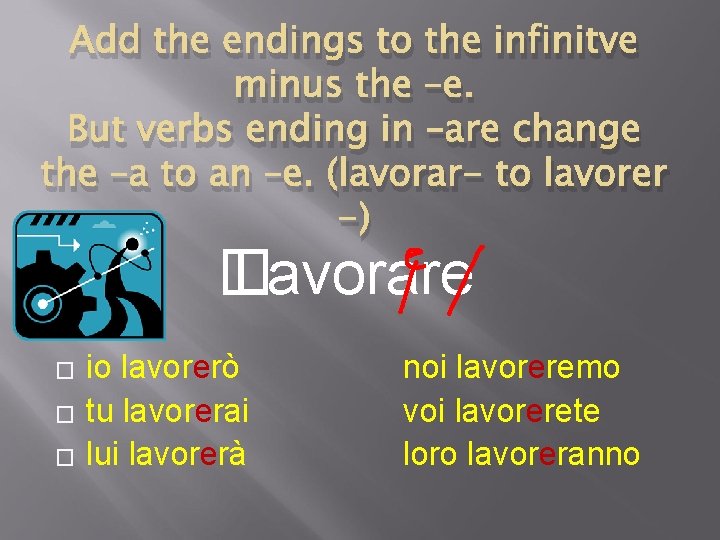
Add the endings to the infinitve minus the –e. But verbs ending in –are change the –a to an –e. (lavorar- to lavorer -) � Lavorare � � � io lavorerò tu lavorerai lui lavorerà noi lavoreremo voi lavorerete loro lavoreranno
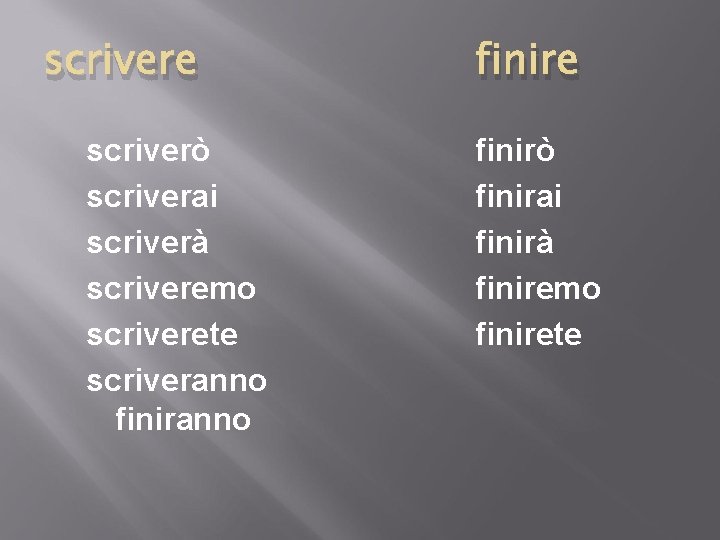
scrivere scriverò scriverai scriverà scriveremo scriverete scriveranno finire finirò finirai finirà finiremo finirete
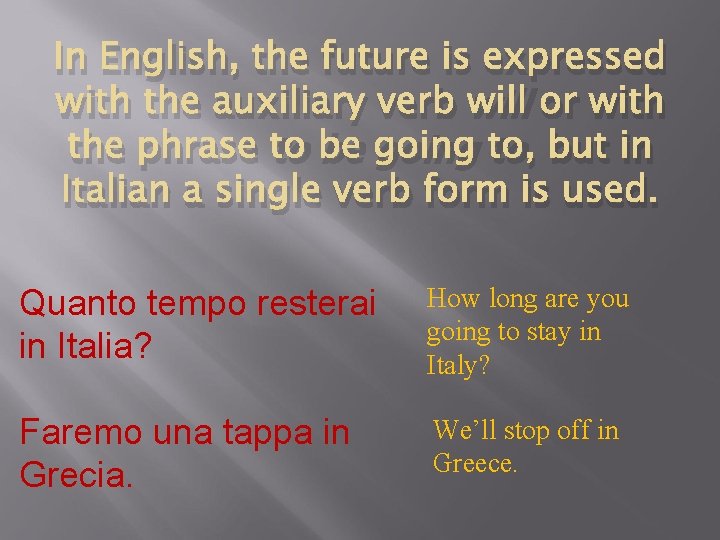
In English, the future is expressed with the auxiliary verb will or with the phrase to be going to, but in Italian a single verb form is used. Quanto tempo resterai in Italia? How long are you going to stay in Italy? Faremo una tappa in Grecia. We’ll stop off in Greece.
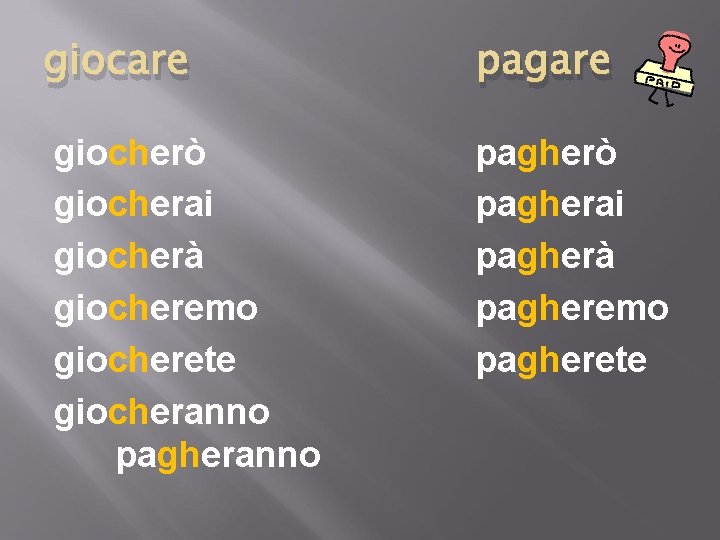
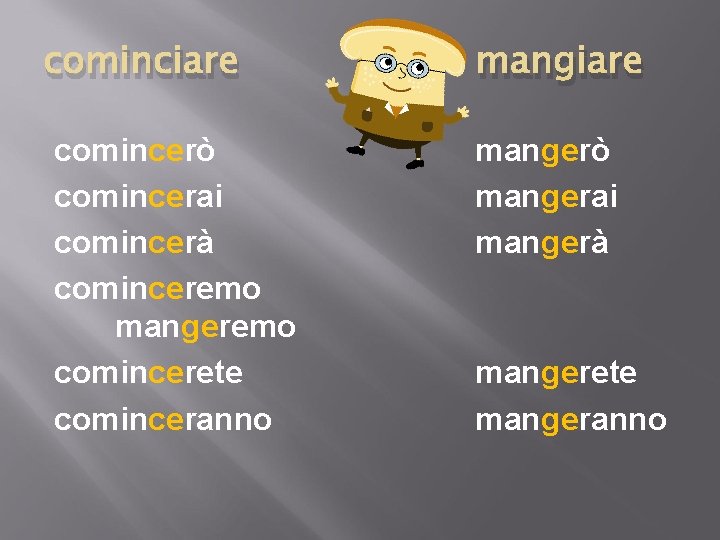
The spelling changes that you use in the present tense in verbs such as giocare, pagare, cominiciare, and mangiare apply to ALL persons in the future tense.
giocare pagare giocherò giocherai giocherà giocheremo giocherete giocheranno pagherò pagherai pagherà pagheremo pagherete
cominciare mangiare comincerò comincerai comincerà cominceremo mangeremo comincerete cominceranno mangerò mangerai mangerà mangerete mangeranno
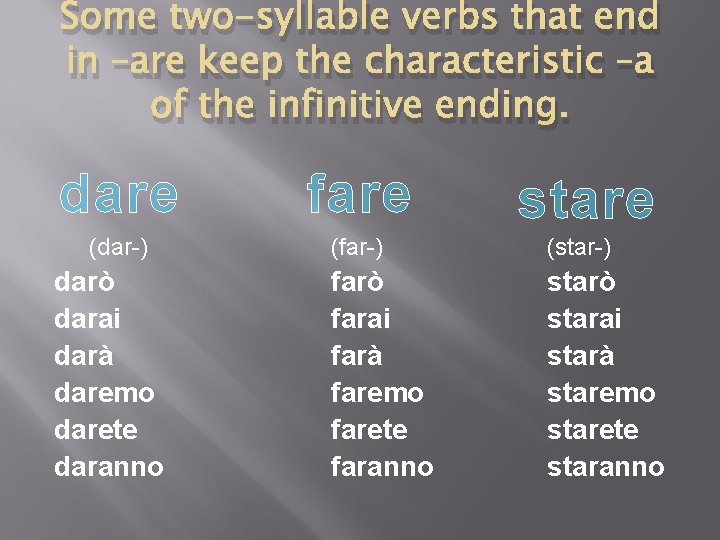
Some two-syllable verbs that end in –are keep the characteristic –a of the infinitive ending. dare fare stare (dar-) (far-) (star-) farò farai farà faremo farete faranno starò starai starà staremo starete staranno darò darai darà daremo darete daranno
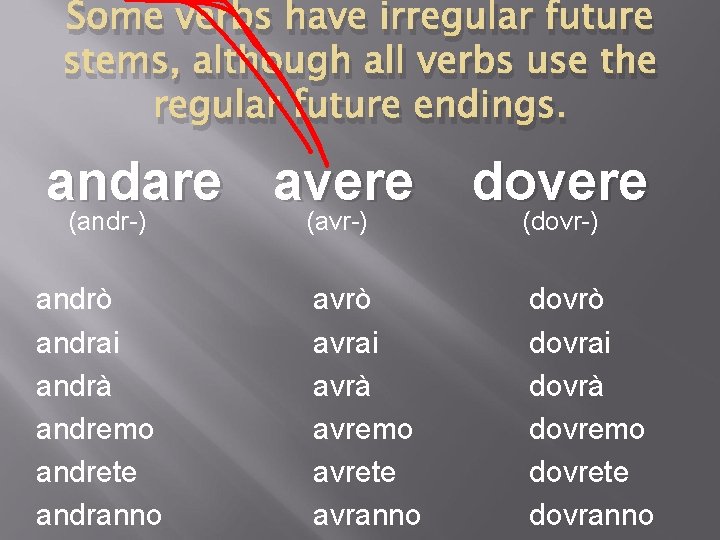
Some verbs have irregular future stems, although all verbs use the regular future endings. andare avere (andr-) andrò andrai andrà andremo andrete andranno (avr-) avrò avrai avrà avremo avrete avranno dovere (dovr-) dovrò dovrai dovrà dovremo dovrete dovranno
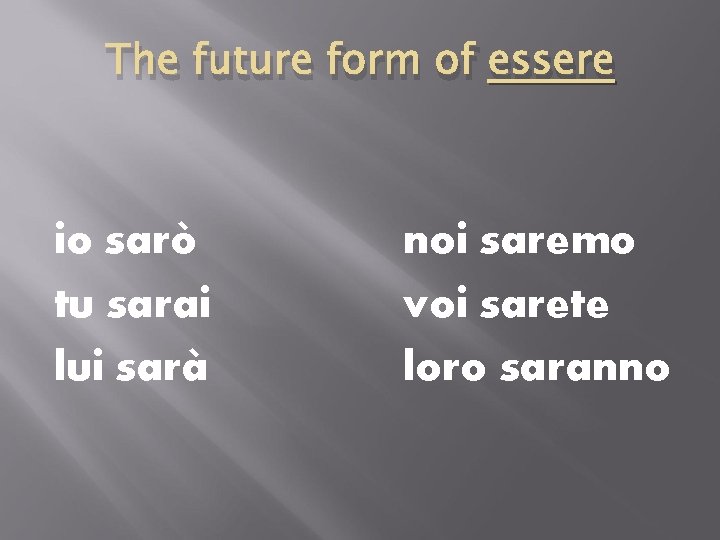
The future form of essere io sarò tu sarai lui sarà noi saremo voi sarete loro saranno
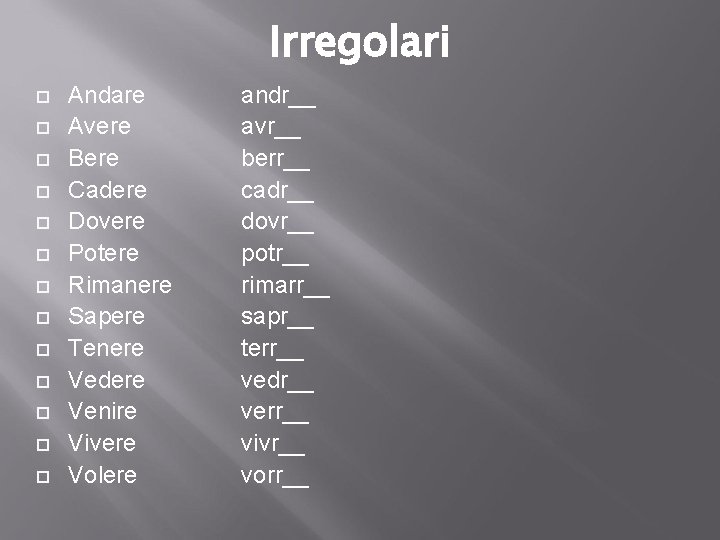
Irregolari Andare Avere Bere Cadere Dovere Potere Rimanere Sapere Tenere Vedere Venire Vivere Volere andr__ avr__ berr__ cadr__ dovr__ potr__ rimarr__ sapr__ terr__ vedr__ verr__ vivr__ vorr__
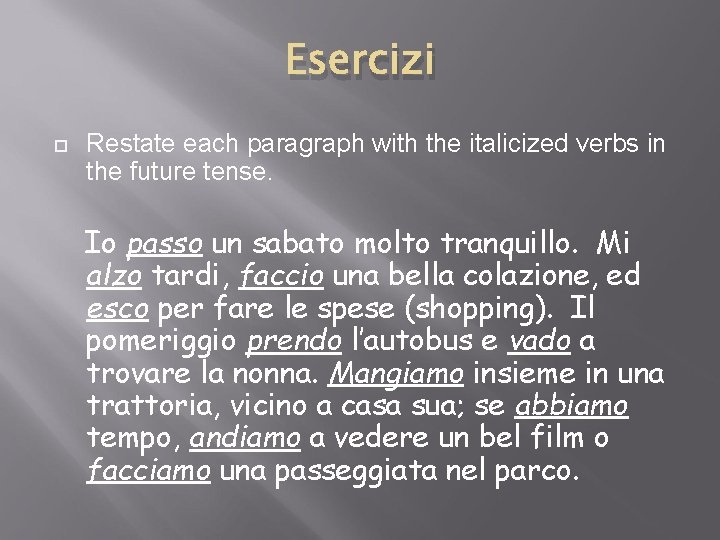
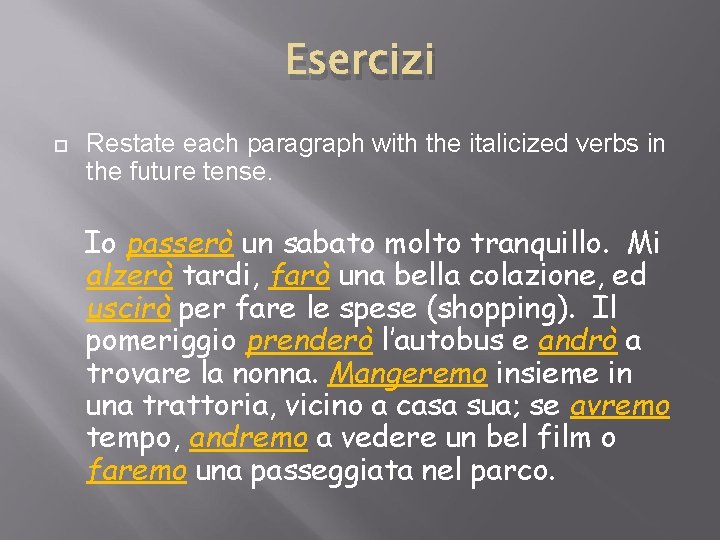
Esercizi Restate each paragraph with the italicized verbs in the future tense. Io passo un sabato molto tranquillo. Mi alzo tardi, faccio una bella colazione, ed esco per fare le spese (shopping). Il pomeriggio prendo l’autobus e vado a trovare la nonna. Mangiamo insieme in una trattoria, vicino a casa sua; se abbiamo tempo, andiamo a vedere un bel film o facciamo una passeggiata nel parco.
Esercizi Restate each paragraph with the italicized verbs in the future tense. Io passerò un sabato molto tranquillo. Mi alzerò tardi, farò una bella colazione, ed uscirò per fare le spese (shopping). Il pomeriggio prenderò l’autobus e andrò a trovare la nonna. Mangeremo insieme in una trattoria, vicino a casa sua; se avremo tempo, andremo a vedere un bel film o faremo una passeggiata nel parco.
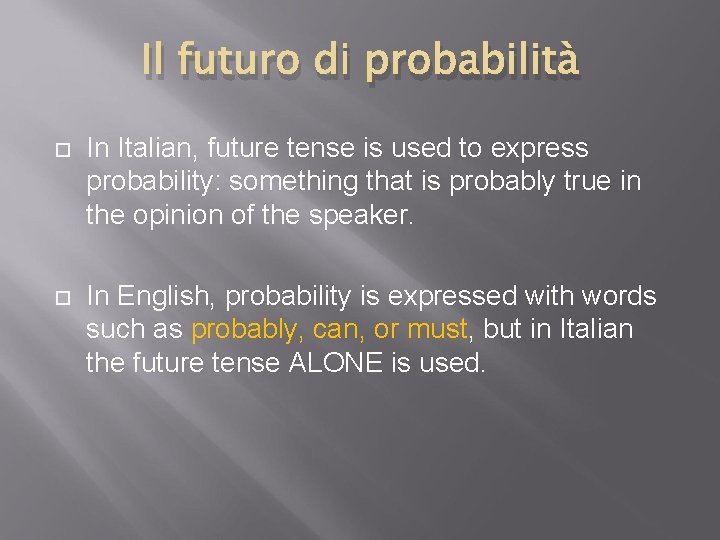
Il futuro di probabilità In Italian, future tense is used to express probability: something that is probably true in the opinion of the speaker. In English, probability is expressed with words such as probably, can, or must, but in Italian the future tense ALONE is used.
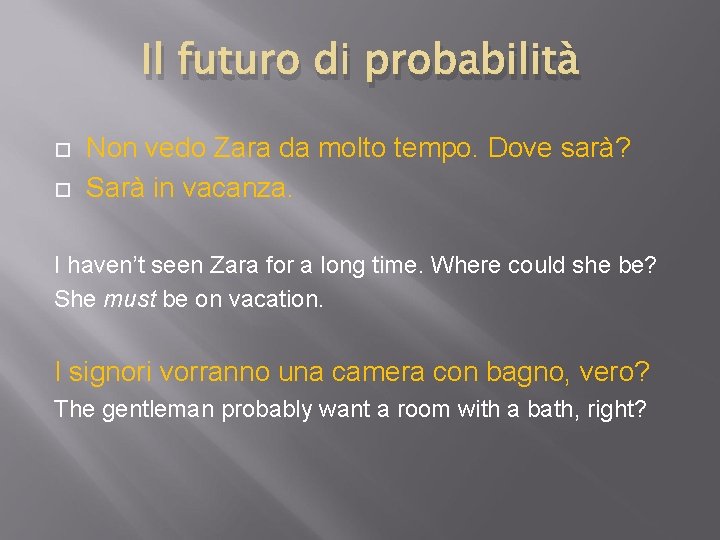
Il futuro di probabilità Non vedo Zara da molto tempo. Dove sarà? Sarà in vacanza. I haven’t seen Zara for a long time. Where could she be? She must be on vacation. I signori vorranno una camera con bagno, vero? The gentleman probably want a room with a bath, right?
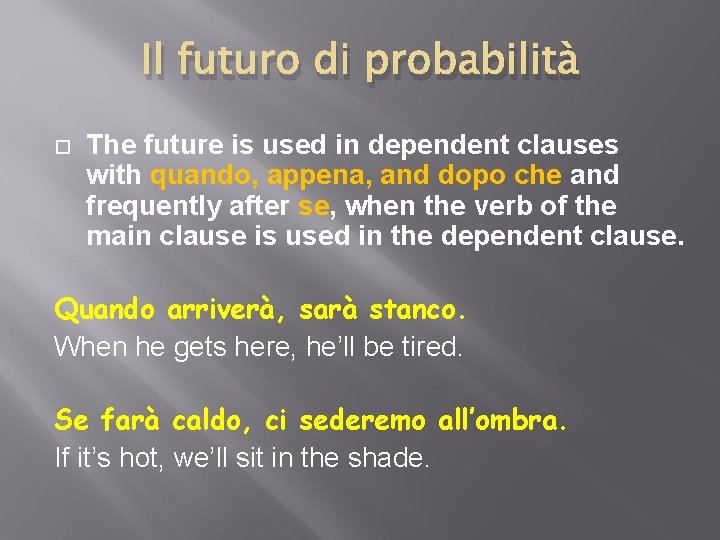
Il futuro di probabilità The future is used in dependent clauses with quando, appena, and dopo che and frequently after se, when the verb of the main clause is used in the dependent clause. Quando arriverà, sarà stanco. When he gets here, he’ll be tired. Se farà caldo, ci sederemo all’ombra. If it’s hot, we’ll sit in the shade.
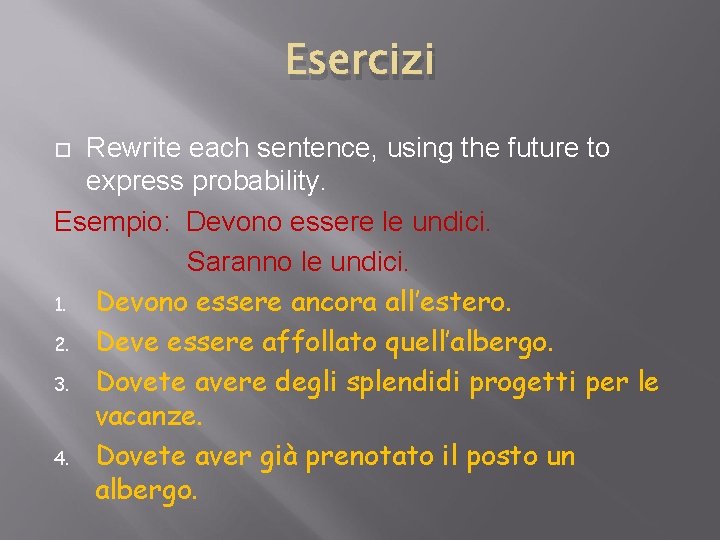
Esercizi Rewrite each sentence, using the future to express probability. Esempio: Devono essere le undici. Saranno le undici. 1. Devono essere ancora all’estero. 2. Deve essere affollato quell’albergo. 3. Dovete avere degli splendidi progetti per le vacanze. 4. Dovete aver già prenotato il posto un albergo.
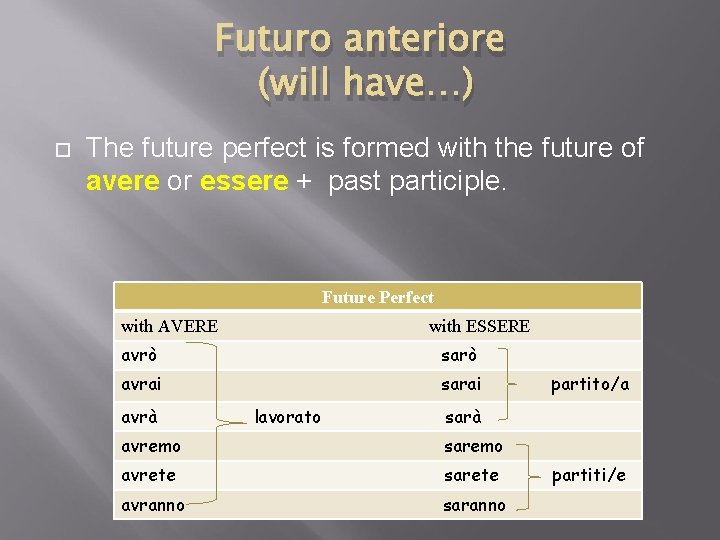
Futuro anteriore (will have…) The future perfect is formed with the future of avere or essere + past participle. Future Perfect with AVERE with ESSERE avrò sarò avrai sarai avrà lavorato partito/a sarà avremo saremo avrete sarete avranno saranno partiti/e
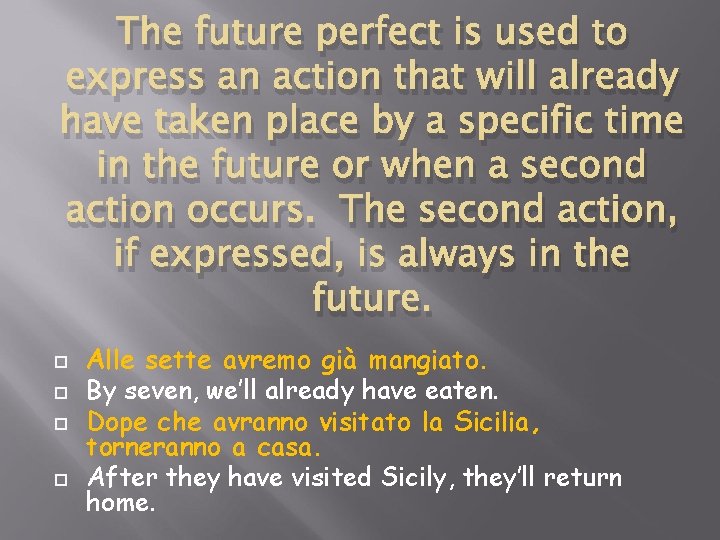
The future perfect is used to express an action that will already have taken place by a specific time in the future or when a second action occurs. The second action, if expressed, is always in the future. Alle sette avremo già mangiato. By seven, we’ll already have eaten. Dope che avranno visitato la Sicilia, torneranno a casa. After they have visited Sicily, they’ll return home.
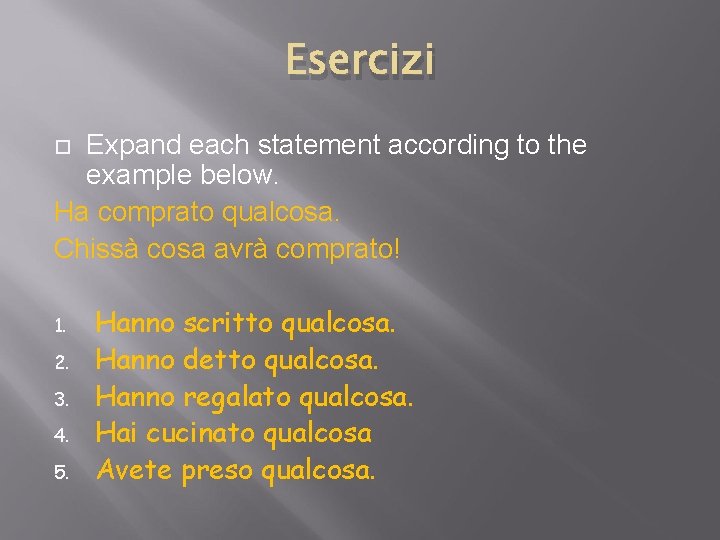
Esercizi Expand each statement according to the example below. Ha comprato qualcosa. Chissà cosa avrà comprato! 1. 2. 3. 4. 5. Hanno scritto qualcosa. Hanno detto qualcosa. Hanno regalato qualcosa. Hai cucinato qualcosa Avete preso qualcosa.
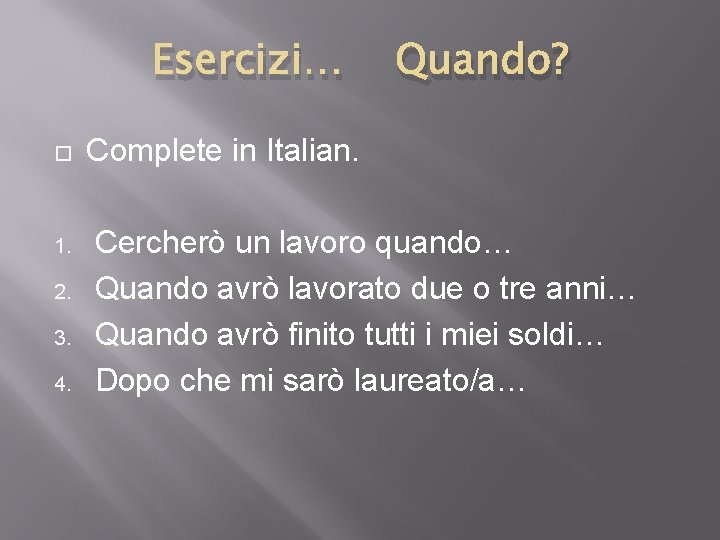
Esercizi… 1. 2. 3. 4. Quando? Complete in Italian. Cercherò un lavoro quando… Quando avrò lavorato due o tre anni… Quando avrò finito tutti i miei soldi… Dopo che mi sarò laureato/a…