
Il est all au parc Elle est partie



- Slides: 15
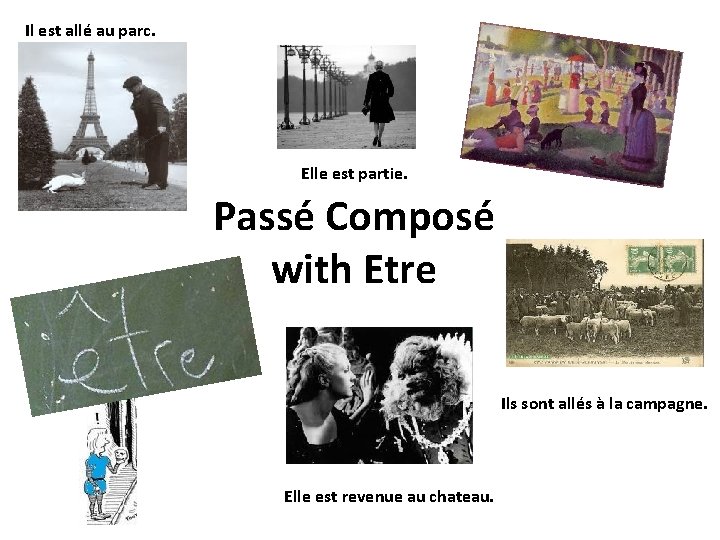
Il est allé au parc. Elle est partie. Passé Composé with Etre Ils sont allés à la campagne. Elle est revenue au chateau.
Who are Dr and Mrs Vandertramp? They are verbs that use être as a helping verb in passé composé
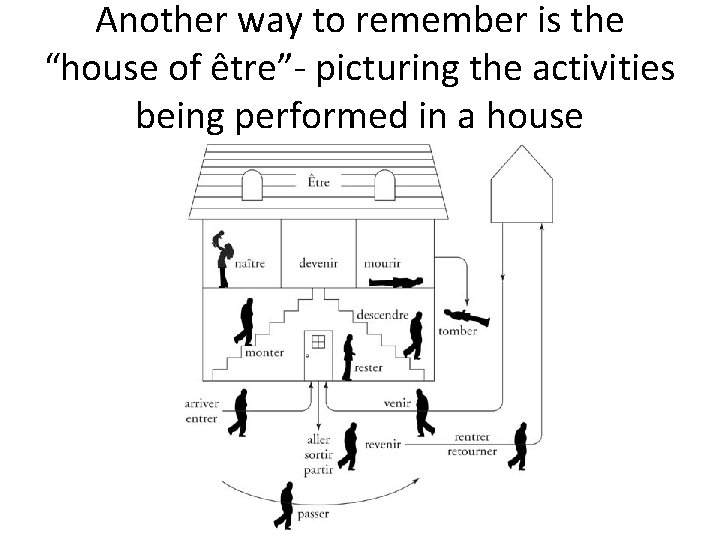
Tend to be verbs of arrival and departure Devenir- to become Revenir- to come back Mourir- to die Retourner- to return Sortir- to go out Venir- to come Aller- to go
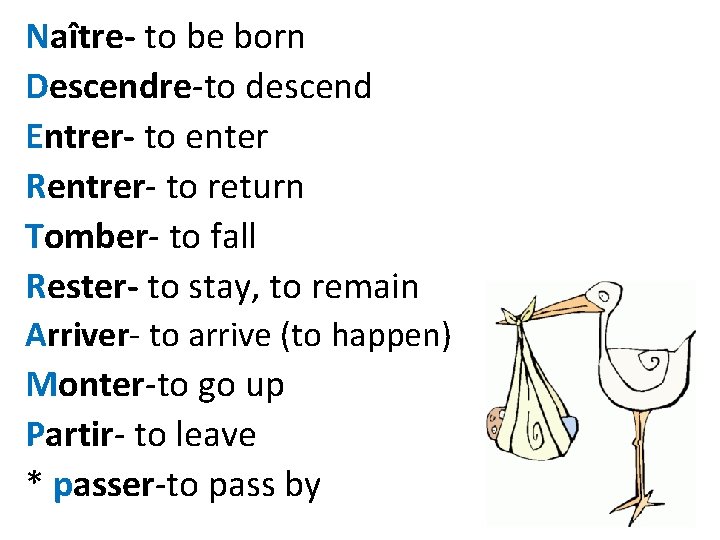
Naître- to be born Descendre-to descend Entrer- to enter Rentrer- to return Tomber- to fall Rester- to stay, to remain Arriver- to arrive (to happen) Monter-to go up Partir- to leave * passer-to pass by
What makes etre verbs different? • Instead of using avoir as a helping verb, you are going to use être. You still need to conjugate it to agree with the subject. Remember: Je suis Nous sommes Tu es Vous êtes Il, elle, on est ils, elles sont • You’ll still have your subject, then your conjugated helping verb, then a past participle • Unlike with avoir, the participle will change, it needs –e or -s endings to agree with the subject in gender and number
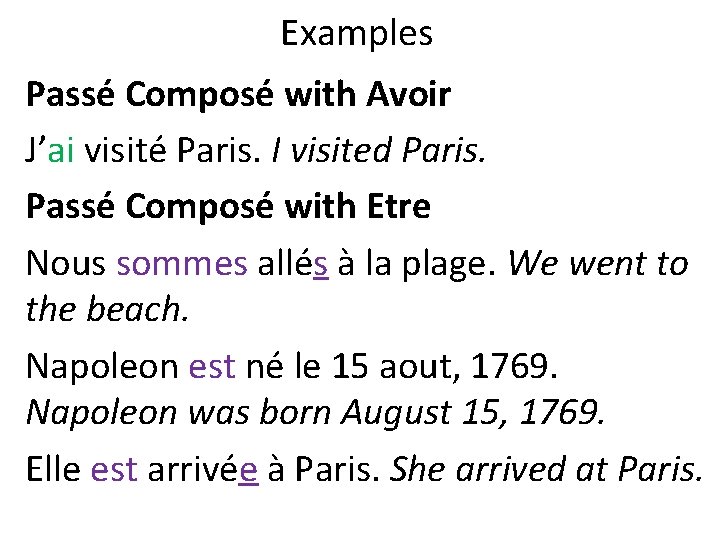
Examples Passé Composé with Avoir J’ai visité Paris. I visited Paris. Passé Composé with Etre Nous sommes allés à la plage. We went to the beach. Napoleon est né le 15 aout, 1769. Napoleon was born August 15, 1769. Elle est arrivée à Paris. She arrived at Paris.
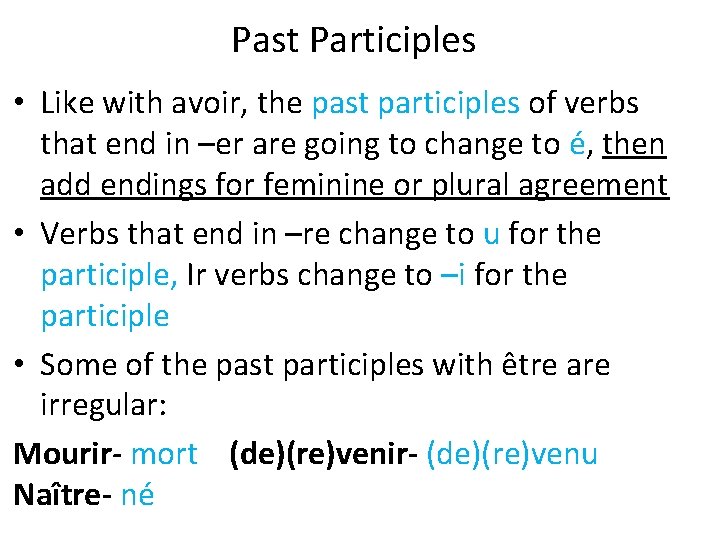
Past Participles • Like with avoir, the past participles of verbs that end in –er are going to change to é, then add endings for feminine or plural agreement • Verbs that end in –re change to u for the participle, Ir verbs change to –i for the participle • Some of the past participles with être are irregular: Mourir- mort (de)(re)venir- (de)(re)venu Naître- né
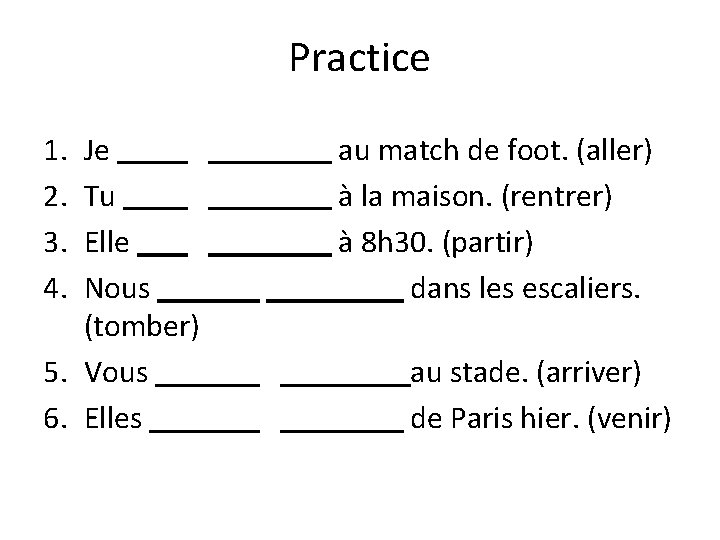
Practice 1. 2. 3. 4. Je Tu Elle Nous (tomber) 5. Vous 6. Elles au match de foot. (aller) à la maison. (rentrer) à 8 h 30. (partir) dans les escaliers. au stade. (arriver) de Paris hier. (venir)
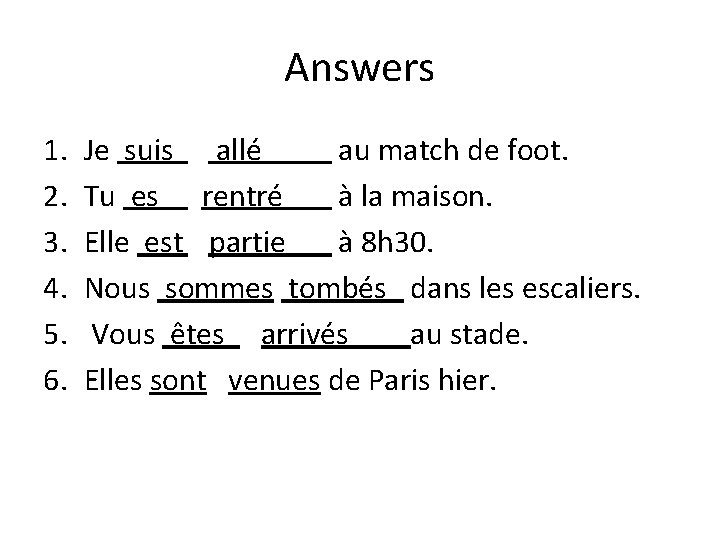
Answers 1. 2. 3. 4. 5. 6. Je suis allé au match de foot. Tu es rentré à la maison. Elle est partie à 8 h 30. Nous sommes tombés dans les escaliers. Vous êtes arrivés au stade. Elles sont venues de Paris hier.
How do I remember those verbs again? Revenir, mourir, …?
Another way to remember is the “house of être”- picturing the activities being performed in a house
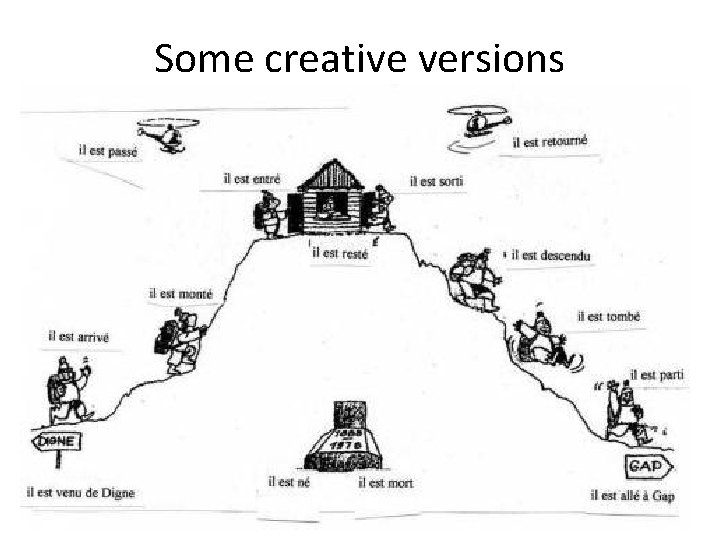
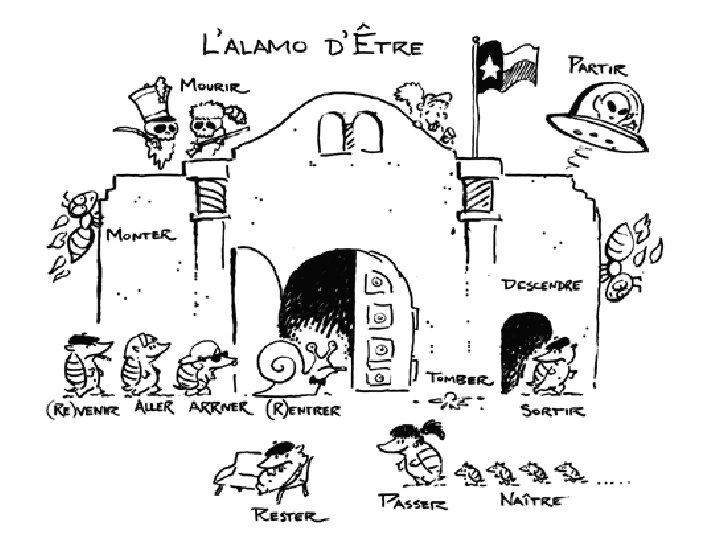
Some creative versions
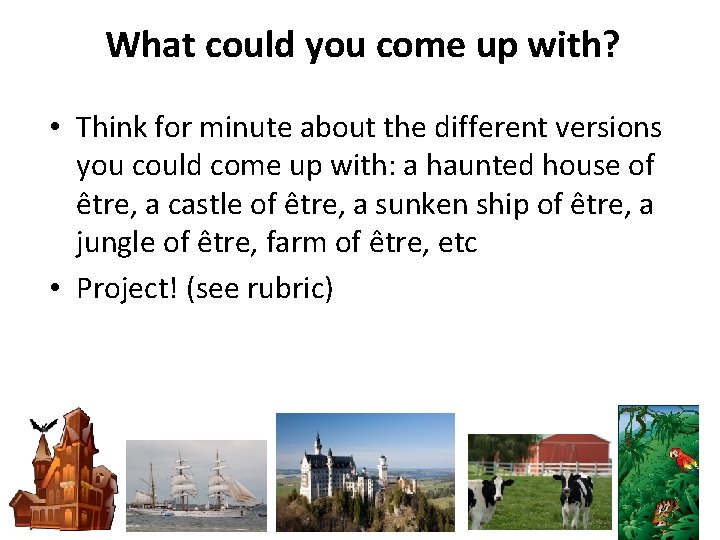
What could you come up with? • Think for minute about the different versions you could come up with: a haunted house of être, a castle of être, a sunken ship of être, a jungle of être, farm of être, etc • Project! (see rubric)