
Ikigai A reason for being What is Ikigai

Ikigai A reason for being
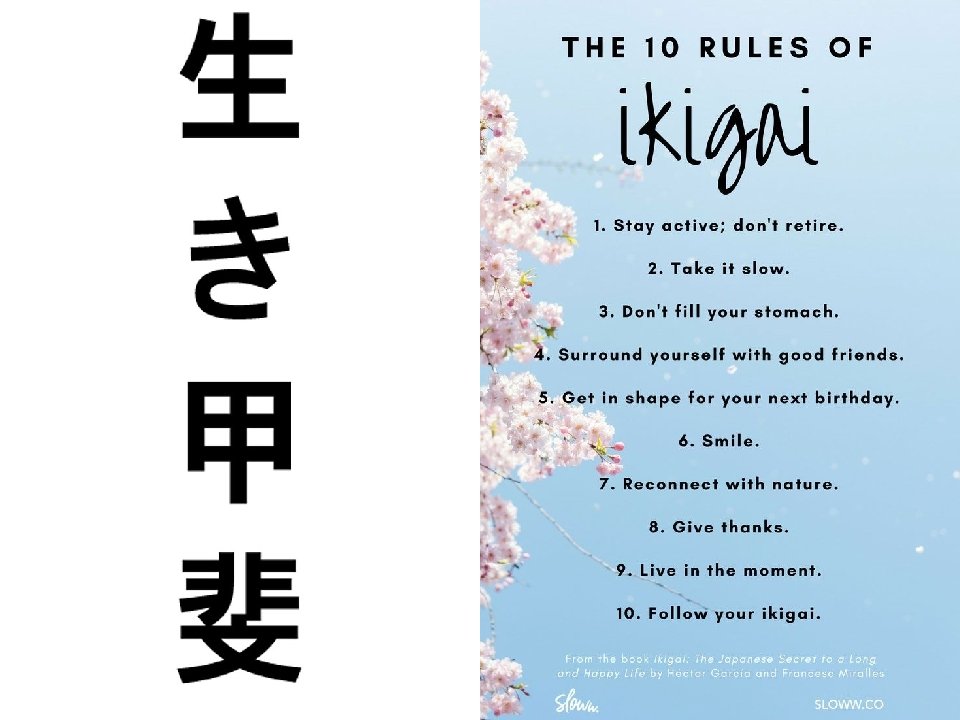
What is Ikigai • Pronounced as ee-ki-guy is a Japanese concept meaning reason for being i. e. what gets you out of bed in the morning. • Everyone has ikigai, the challenge is discover it - finding the reason or purpose for living. • The basis of ikigai is not only to enrich your life, but to also enhance the lives of others. • Ikigai is very useful in finding contentment in life, and in everyday tasks. • You can have as many ikigais as you like, throughout your life.
“The grand essentials to happiness in this life are something to do, something to love, and something to hope for. ” (Washington Burnap)
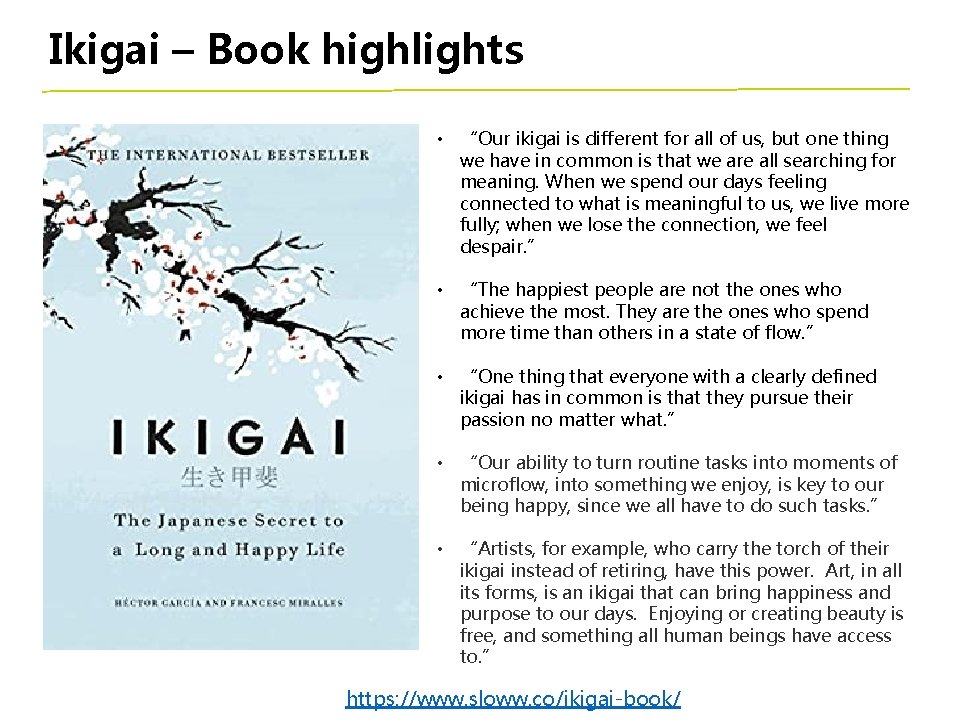
Ikigai – Book highlights • “Our ikigai is different for all of us, but one thing we have in common is that we are all searching for meaning. When we spend our days feeling connected to what is meaningful to us, we live more fully; when we lose the connection, we feel despair. ” • “The happiest people are not the ones who achieve the most. They are the ones who spend more time than others in a state of flow. ” • “One thing that everyone with a clearly defined ikigai has in common is that they pursue their passion no matter what. ” • “Our ability to turn routine tasks into moments of microflow, into something we enjoy, is key to our being happy, since we all have to do such tasks. ” • “Artists, for example, who carry the torch of their ikigai instead of retiring, have this power. Art, in all its forms, is an ikigai that can bring happiness and purpose to our days. Enjoying or creating beauty is free, and something all human beings have access to. ” https: //www. sloww. co/ikigai-book/
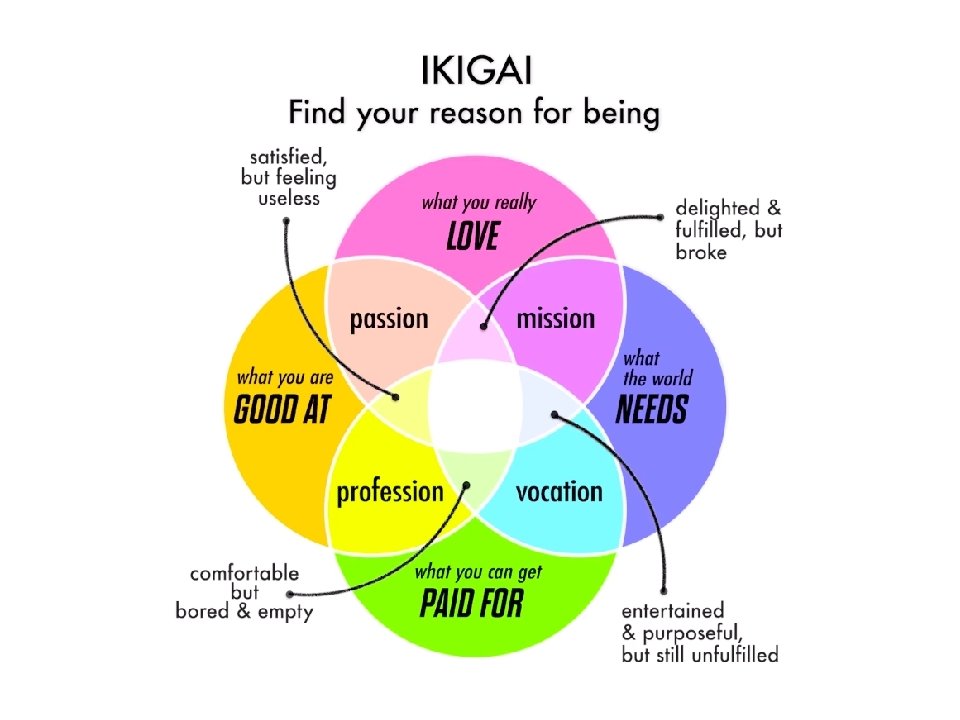
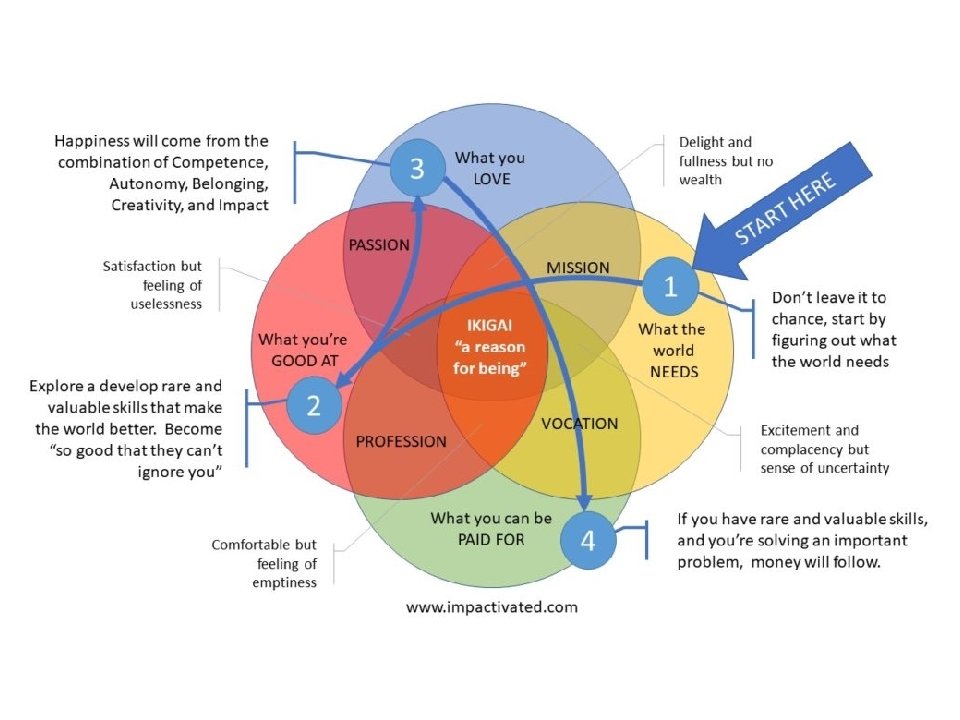
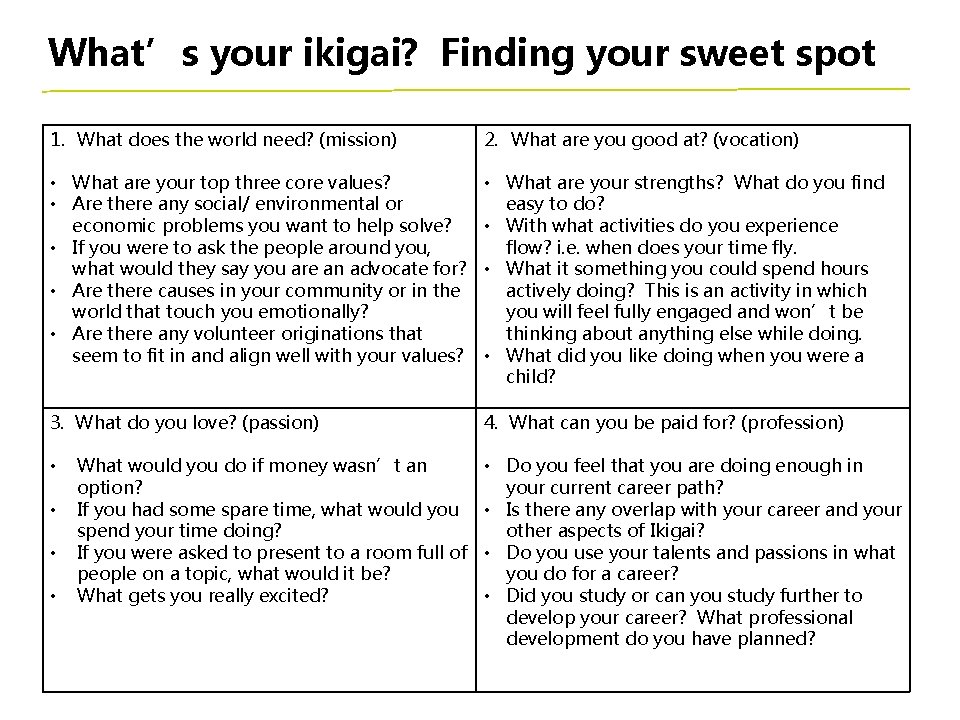
What’s your ikigai? Finding your sweet spot 1. What does the world need? (mission) 2. What are you good at? (vocation) • What are your top three core values? • Are there any social/ environmental or economic problems you want to help solve? • If you were to ask the people around you, what would they say you are an advocate for? • Are there causes in your community or in the world that touch you emotionally? • Are there any volunteer originations that seem to fit in and align well with your values? • What are your strengths? What do you find easy to do? • With what activities do you experience flow? i. e. when does your time fly. • What it something you could spend hours actively doing? This is an activity in which you will feel fully engaged and won’t be thinking about anything else while doing. • What did you like doing when you were a child? 3. What do you love? (passion) 4. What can you be paid for? (profession) • • What would you do if money wasn’t an option? If you had some spare time, what would you spend your time doing? If you were asked to present to a room full of people on a topic, what would it be? What gets you really excited? • Do you feel that you are doing enough in your current career path? • Is there any overlap with your career and your other aspects of Ikigai? • Do you use your talents and passions in what you do for a career? • Did you study or can you study further to develop your career? What professional development do you have planned?
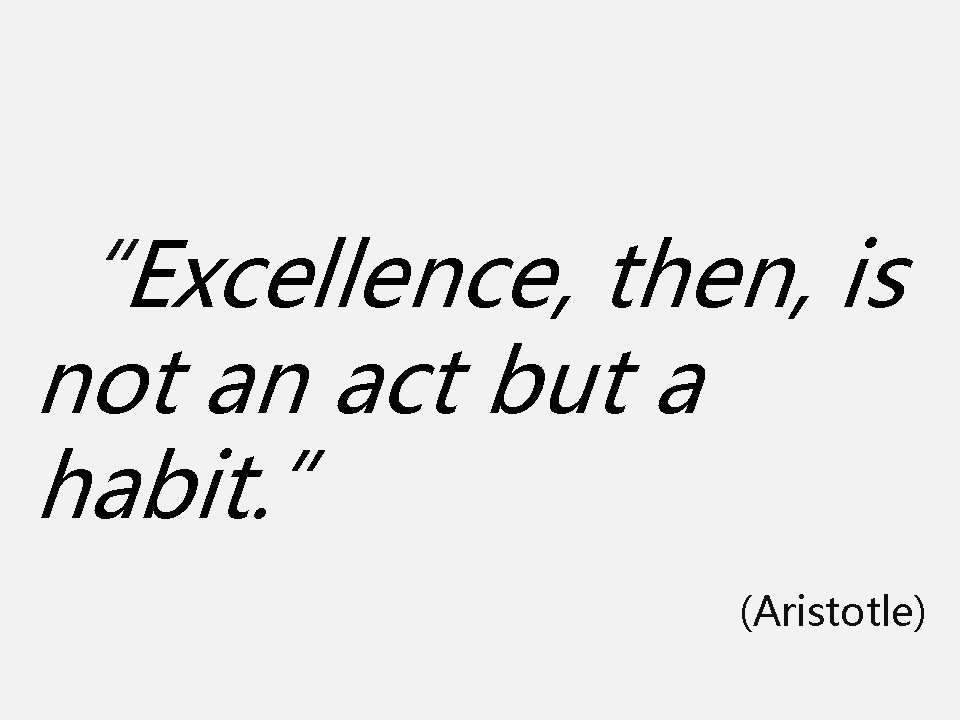
“Excellence, then, is not an act but a habit. ” (Aristotle)
- Slides: 10