
IKEA Purpose of Learning Interventions Johan Strmpfer J
- Slides: 19
IKEA Purpose of Learning Interventions Johan Strümpfer © J P Strümpfer 2005 -06
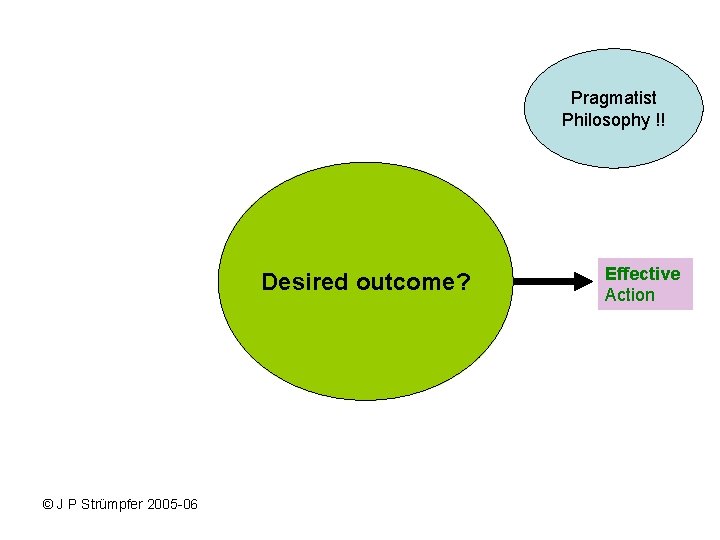
Pragmatist Philosophy !! Desired outcome? © J P Strümpfer 2005 -06 Effective Action
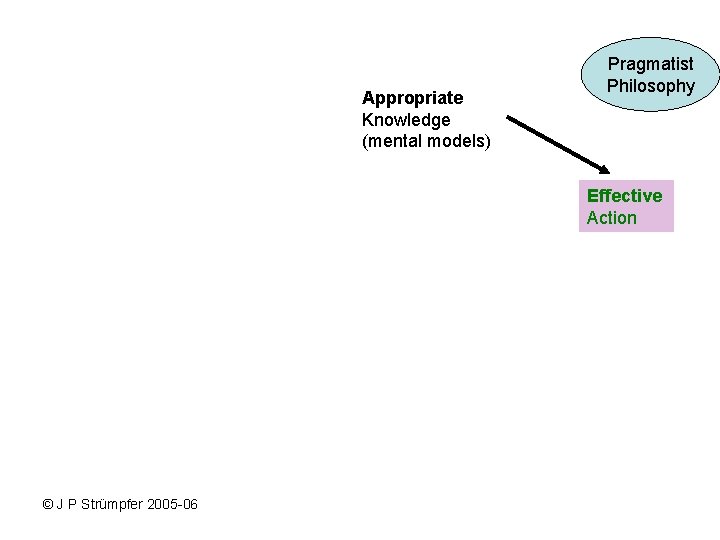
Appropriate Knowledge (mental models) Pragmatist Philosophy Effective Action © J P Strümpfer 2005 -06
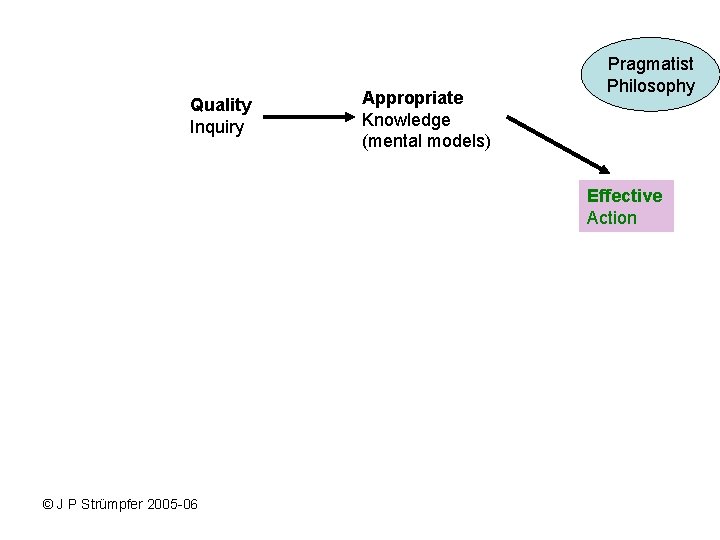
Quality Inquiry Appropriate Knowledge (mental models) Pragmatist Philosophy Effective Action © J P Strümpfer 2005 -06
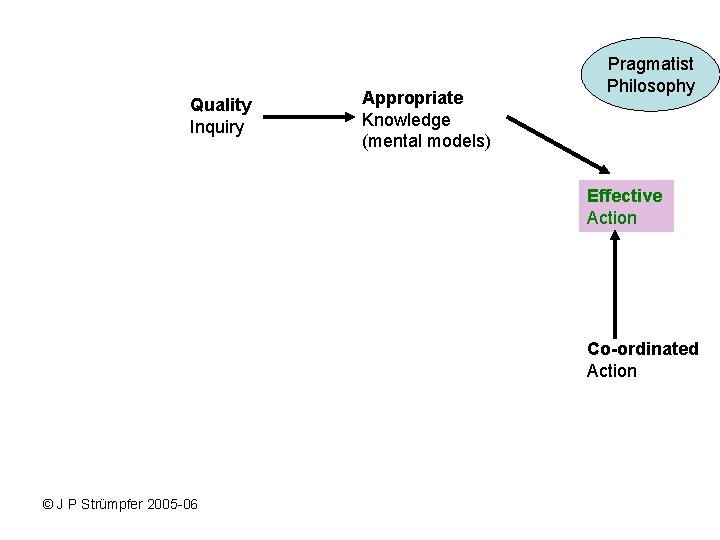
Quality Inquiry Appropriate Knowledge (mental models) Pragmatist Philosophy Effective Action Co-ordinated Action © J P Strümpfer 2005 -06
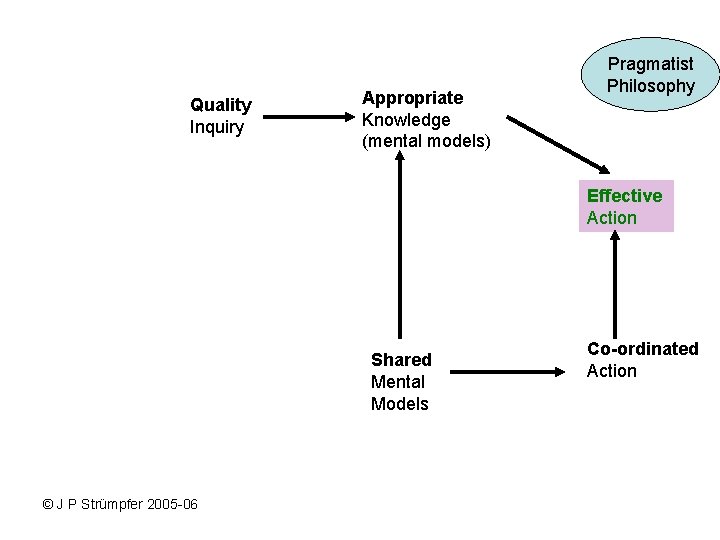
Quality Inquiry Appropriate Knowledge (mental models) Pragmatist Philosophy Effective Action Shared Mental Models © J P Strümpfer 2005 -06 Co-ordinated Action
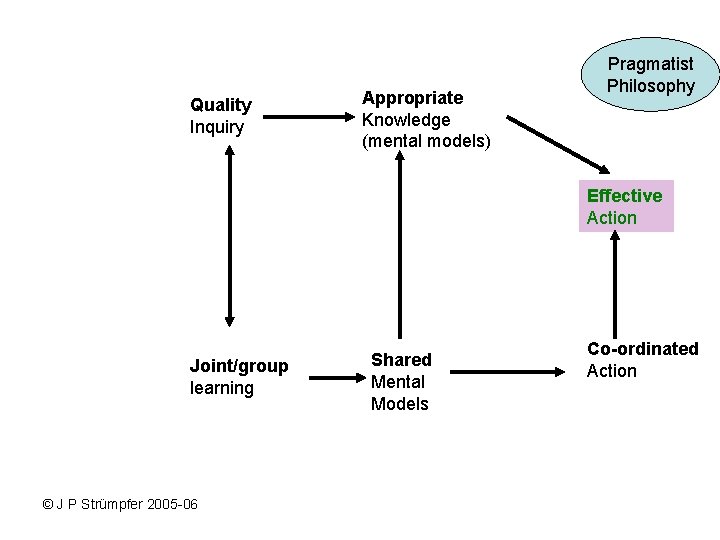
Quality Inquiry Appropriate Knowledge (mental models) Pragmatist Philosophy Effective Action Joint/group learning © J P Strümpfer 2005 -06 Shared Mental Models Co-ordinated Action
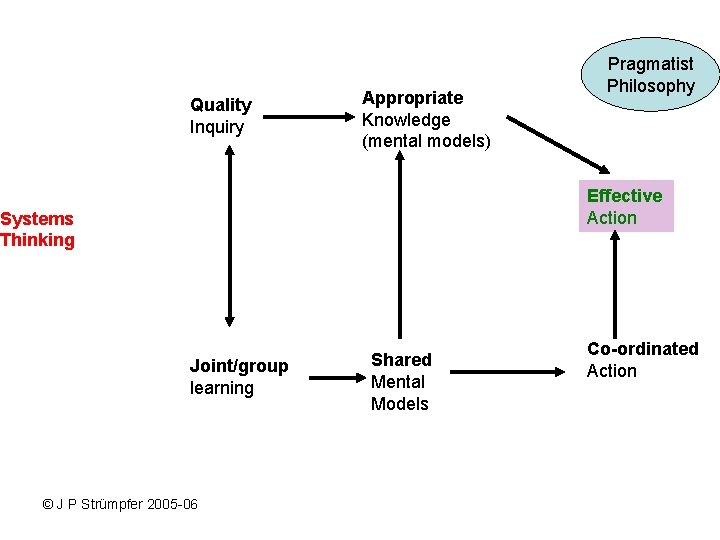
Quality Inquiry Appropriate Knowledge (mental models) Pragmatist Philosophy Effective Action Systems Thinking Joint/group learning © J P Strümpfer 2005 -06 Shared Mental Models Co-ordinated Action
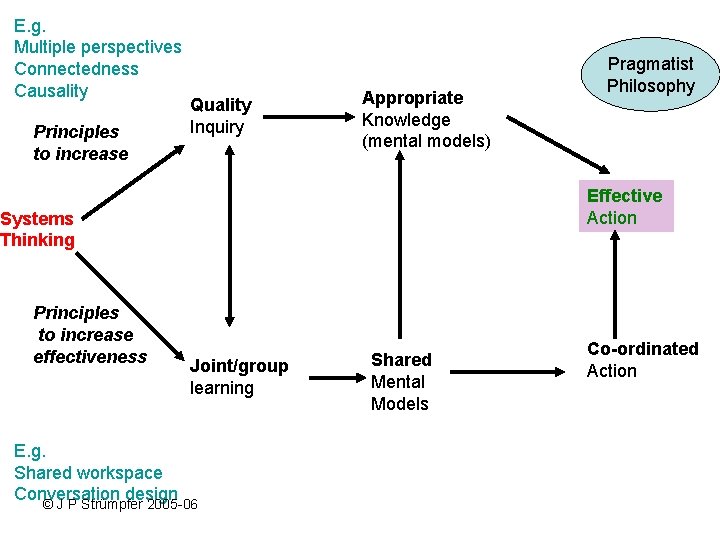
E. g. Multiple perspectives Connectedness Causality Principles to increase Quality Inquiry Appropriate Knowledge (mental models) Effective Action Systems Thinking Principles to increase effectiveness Pragmatist Philosophy Joint/group learning E. g. Shared workspace Conversation design © J P Strümpfer 2005 -06 Shared Mental Models Co-ordinated Action
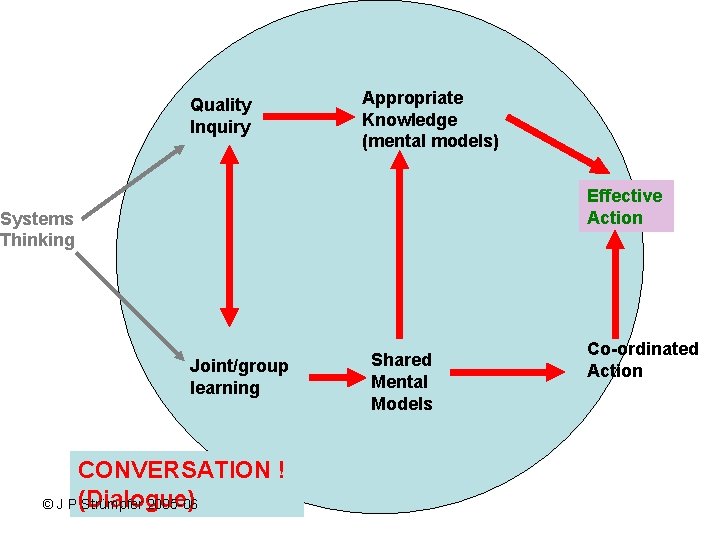
Quality Inquiry Appropriate Knowledge (mental models) Effective Action Systems Thinking Joint/group learning CONVERSATION ! © J P (Dialogue) Strümpfer 2005 -06 Shared Mental Models Co-ordinated Action
Learning Interventions: IKEA © J P Strümpfer 2005 -06
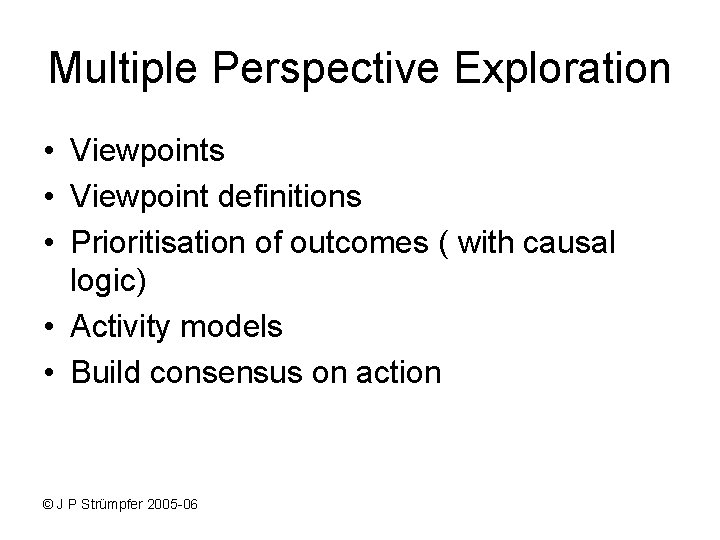
Multiple Perspective Exploration • Viewpoints • Viewpoint definitions • Prioritisation of outcomes ( with causal logic) • Activity models • Build consensus on action © J P Strümpfer 2005 -06
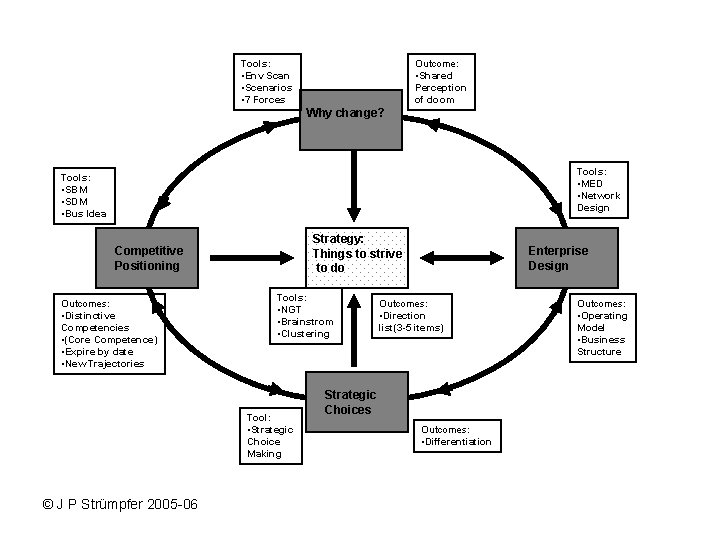
Tools: • Env Scan • Scenarios • 7 Forces Outcome: • Shared Perception of doom Why change? Tools: • MED • Network Design Tools: • SBM • SDM • Bus Idea Strategy: Things to strive to do Competitive Positioning Outcomes: • Distinctive Competencies • (Core Competence) • Expire by date • New Trajectories Tools: • NGT • Brainstrom • Clustering Tool: • Strategic Choice Making © J P Strümpfer 2005 -06 Enterprise Design Outcomes: • Direction list(3 -5 items) Strategic Choices Outcomes: • Differentiation Outcomes: • Operating Model • Business Structure
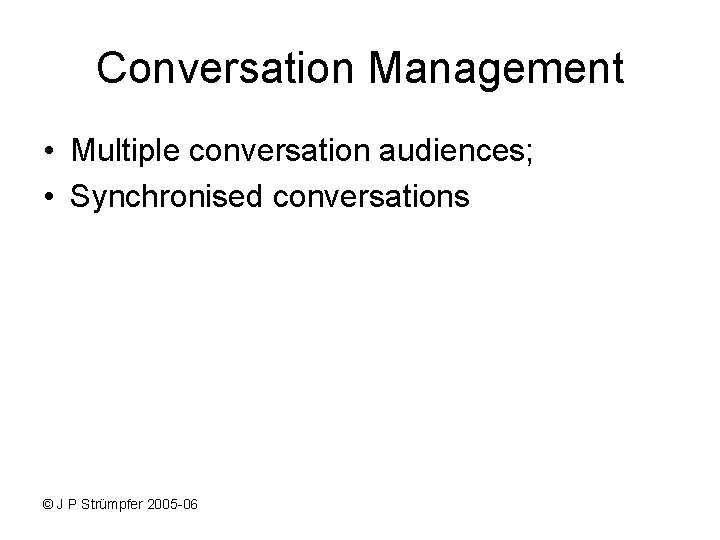
Conversation Management • Multiple conversation audiences; • Synchronised conversations © J P Strümpfer 2005 -06
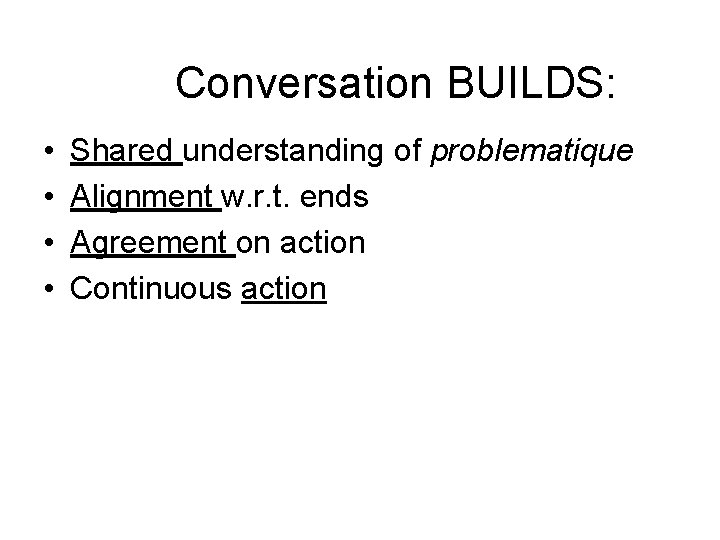
Conversation BUILDS: • • Shared understanding of problematique Alignment w. r. t. ends Agreement on action Continuous action
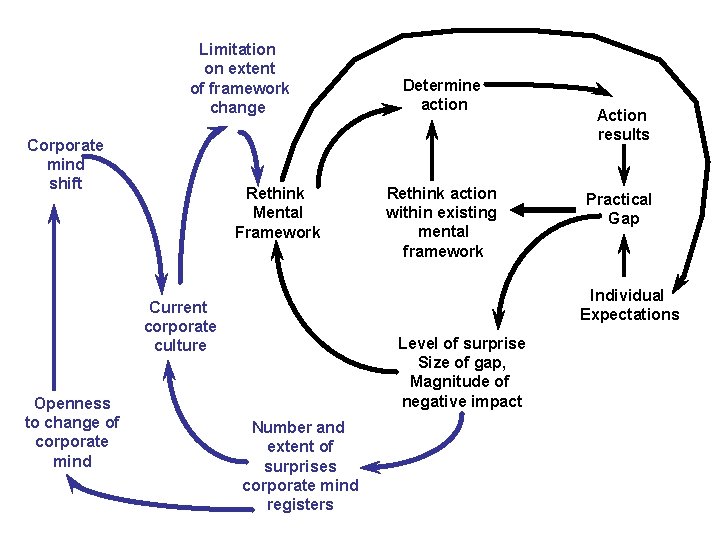
Limitation on extent of framework change Corporate mind shift Rethink Mental Framework Rethink action within existing mental framework Action results Practical Gap Individual Expectations Current corporate culture Openness to change of corporate mind Determine action Level of surprise Size of gap, Magnitude of negative impact Number and extent of surprises corporate mind registers
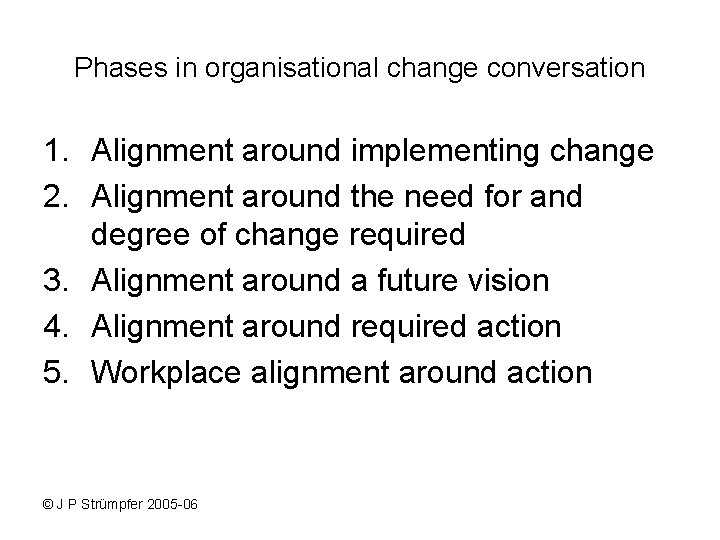
Phases in organisational change conversation 1. Alignment around implementing change 2. Alignment around the need for and degree of change required 3. Alignment around a future vision 4. Alignment around required action 5. Workplace alignment around action © J P Strümpfer 2005 -06
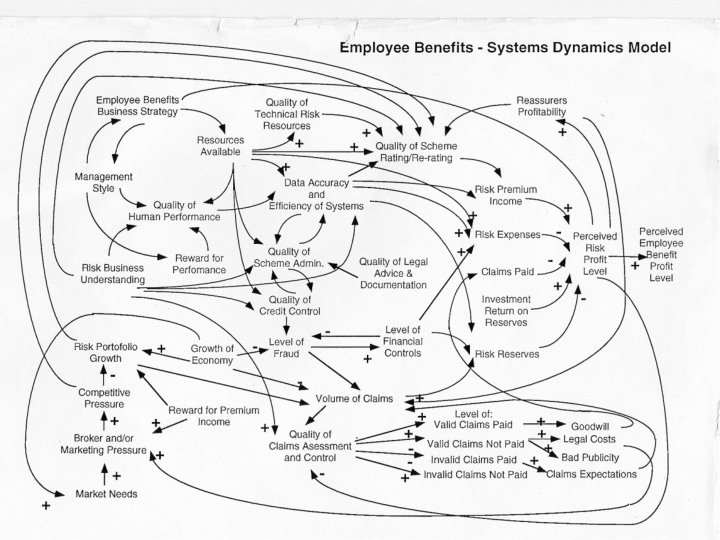
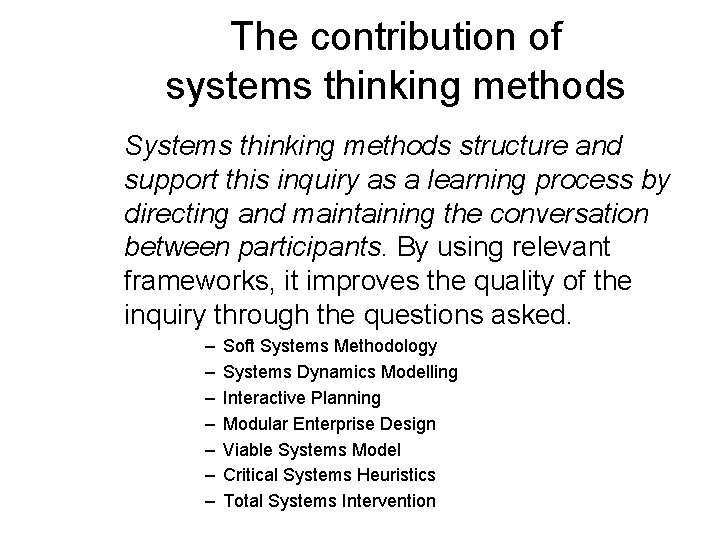
The contribution of systems thinking methods Systems thinking methods structure and support this inquiry as a learning process by directing and maintaining the conversation between participants. By using relevant frameworks, it improves the quality of the inquiry through the questions asked. – – – – Soft Systems Methodology Systems Dynamics Modelling Interactive Planning Modular Enterprise Design Viable Systems Model Critical Systems Heuristics Total Systems Intervention