
IIW Welder Module B Welded Joints in Plates

IIW Welder Module B Welded Joints in Plates 0
Best practice in design is not simply a matter of deciding on the appropriate weld size or component thickness capable of carrying the service loads; there are many aspects of designing a welded component that need to be considered in addition to calculating permissible stresses. Weldability and mechanical properties such as tensile strength, toughness and fatigue resistance. In addition to selecting the material and specifying weld sizes, the designer must bear in mind that the decisions that he/she makes will directly affect the cost, safety and serviceability of the structure or component. 1
It is therefore necessary for the designer to: - select the most appropriate material select the most cost effective design of welded joint design the component to be welded by the most cost effective process specify the smallest weld acceptable for both service and fabrication use the smallest number of welds ensure that there is adequate access for both welding and inspection ensure that realistic dimensional tolerances are specified and can be achieved 2
The topics mentioned above involve a range of specialised technologies and it is therefore essential for the designer to seek advice from other professions such as metallurgists and welding engineers and not to rely solely upon their own judgement. This must be done before the design process has proceeded beyond the point of no return; sadly this is often not the case. To begin let us look at some definitions. Firstly, the joint type or configuration of which there are five fundamental forms as shown in Fig. 1. Note that there are no welds associated with these joint types. 3
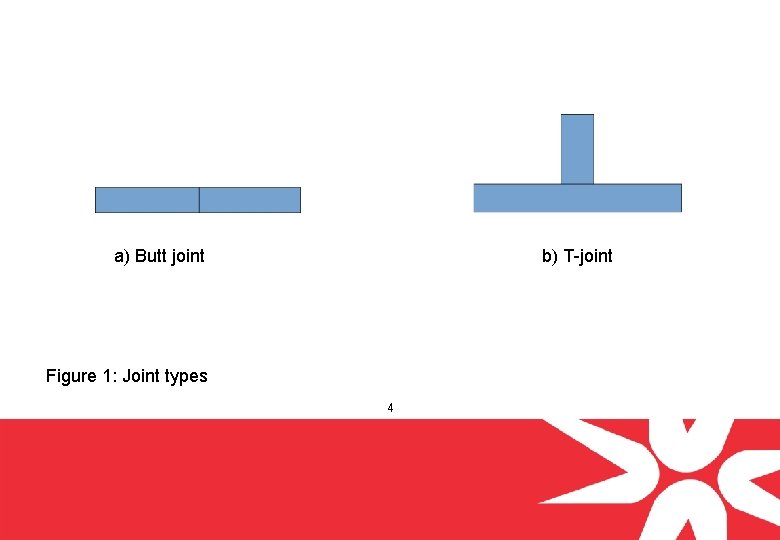
a) Butt joint b) T-joint Figure 1: Joint types 4
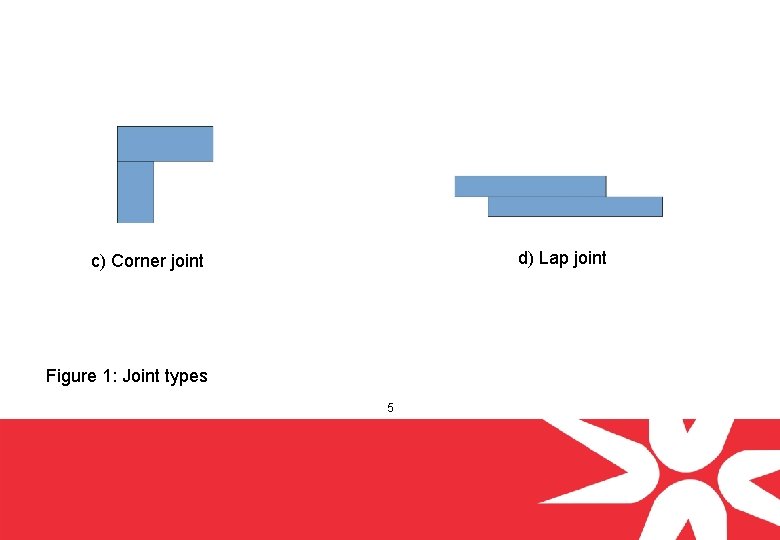
d) Lap joint c) Corner joint Figure 1: Joint types 5
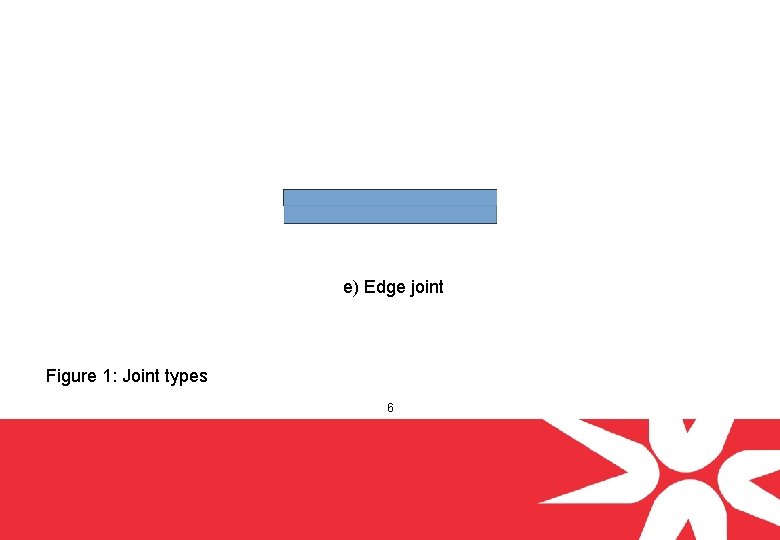
e) Edge joint Figure 1: Joint types 6
These various joint types may be joined by only two weld types. Firstly, the butt weld where the weld is within the plane of the components being joined and secondly, the fillet weld where the weld is completely or mostly outside the plane of the components. 7
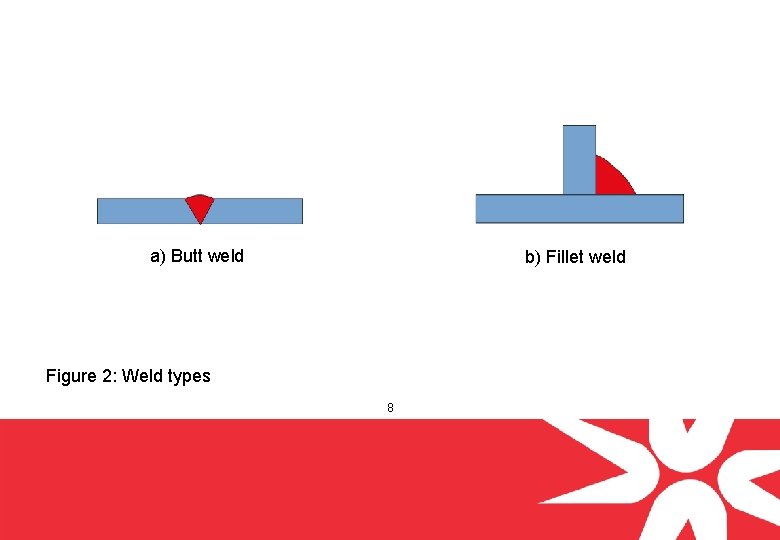
a) Butt weld b) Fillet weld Figure 2: Weld types 8
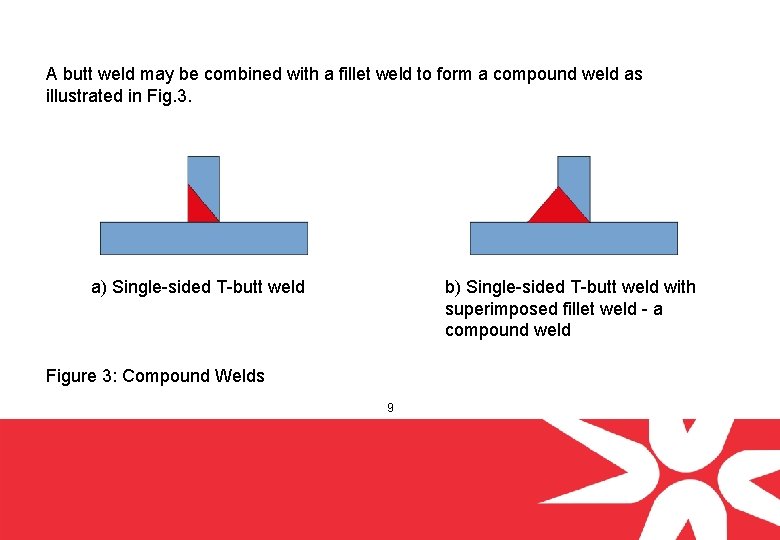
A butt weld may be combined with a fillet weld to form a compound weld as illustrated in Fig. 3. a) Single-sided T-butt weld b) Single-sided T-butt weld with superimposed fillet weld - a compound weld Figure 3: Compound Welds 9

Fillet welds are probably the most common type of weld, particularly in structural steelwork applications, so this first section will look at some of the design considerations of fillet welds. They may be used to make T, lap and corner joints (Fig. 4). b) Corner joint fillet weld a) T-joint fillet weld Figure 4: Single-sided fillet welded joint types 10
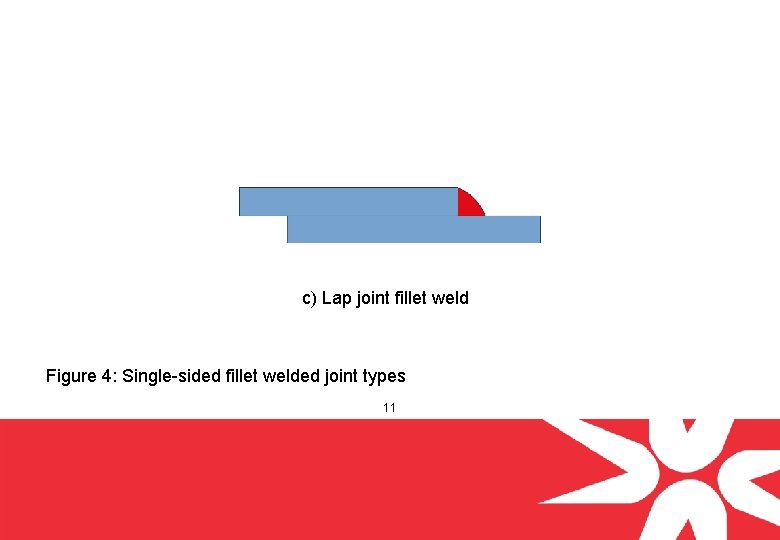
c) Lap joint fillet weld Figure 4: Single-sided fillet welded joint types 11

A fillet weld is approximately triangular in shape, the size being defined by the weld throat or leg length as shown in Fig. 5. Figure 5: Terms used to describe features of a fillet weld 12
Fillet welds sizes should be specified preferably by referring to the throat thickness 'a' although the leg length 'z' is often used and can be easier to measure during weld inspection. Conventionally, the leg lengths are regarded as being of equal dimensions, the weld forming an isosceles triangle in cross section. The convex fillet is generally undesirable for two main reasons. a) The junction of the weld metal with the parent metal at the weld toe can form a significant stress raiser and will adversely affect both fatigue life and brittle fracture resistance; b) the excess weld metal in the cap costs both time and money to deposit without contributing to joint strength. The concave fillet weld can be beneficial with respect to fatigue strength and, if required, the minimum throat thickness MUST be specified. 13
Fillet welds are less expensive to make than butt welds as there is no requirement to cut or machine a weld preparation. Although they are capable of carrying substantial loads they should not be used where the applied loads put the root of the weld in tension, particularly where the loading is dynamic - fatigue life in particular is drastically reduced. Where such loading is a possibility then a double sided T-joint should be made using two fillet welds ( Fig. 6). 14
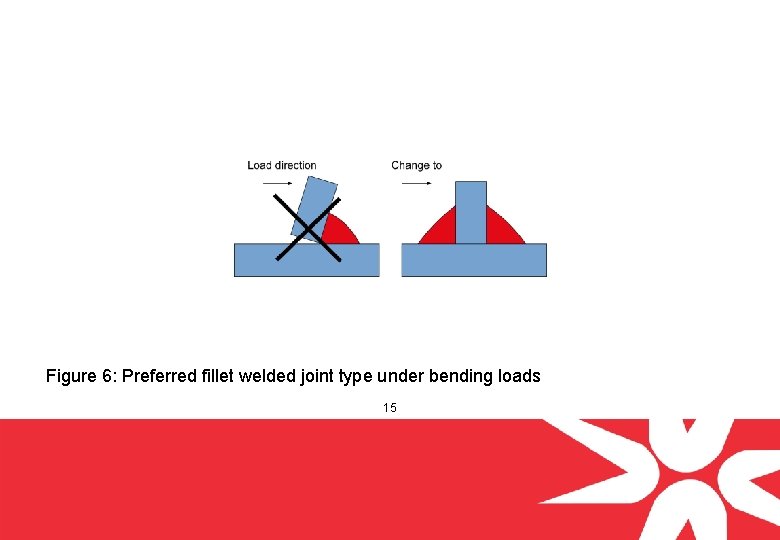
Figure 6: Preferred fillet welded joint type under bending loads 15
It is commonly thought that the fillet weld is an easier weld for the welder to make than a butt weld as the weld is deposited on solid metal. However, this is not necessarily the case when full fusion into the root of the weld is required. It is not unknown for highly skilled welders to fail a fillet weld qualification test where this is a design requirement. This is an important point and needs to be considered firstly by the designer asking if it is an essential requirement and secondly by the fabricator when pricing a contract. This also raises the point that the fillet weld is extremely difficult to volumetrically examine using non-destructive testing techniques to confirm its internal soundness. This applies particularly to the root region where it is not possible to measure, with any degree of precision, any lack of fusion, slag entrapment etc. Therefore the same reliance on joint integrity, and hence service performance, should not be placed on a fillet weld as may be placed on a fully inspected butt weld. 16
Cooling rates in a fillet weld are greater than in a similar thickness butt joint. There are three paths by which heat will be lost from the weld. This fact means that lack of fusion/cold start defects are more likely, particularly in high thermal conductivity metals such as aluminium and the risks of cold cracking are increased in carbon and low alloy steels. What may be acceptable in terms of heat input and/or preheat temperature for a butt weld may therefore not be acceptable with a fillet weld configuration. This point has sometimes been overlooked, particularly when welding on temporary attachments such as strongbacks, where quality control may be somewhat lax. This has led to major cracking problems for some fabricators. 17
Unlike a butt weld where the required weld throat is generally the thickness of the parent metal, the size of a fillet weld is determined by the loads that it is expected to carry. It can therefore be of any size that the designer specifies although there are practical limitations with respect to both minimum and maximum throat thickness. With the conventional arc welding processes it is difficult to deposit a fillet weld with a throat less than some 2 mm. This is in addition to the possibility of the lack of fusion/cold cracking mentioned above due to the rapid cooling rates experienced by small fillet welds. The maximum size of fillet weld is generally that of the thickness of the thinner of the two items being joined but very large fillet welds may cause unacceptable distortion and/or extremely high residual stresses. In addition, above a certain size it may be more economical to make a T-butt, rather than a fillet weld. 18
Although the throat thickness is regarded as being the most important dimension for design purposes it is a fact that mechanical failure of fillet welds is often along the fusion line or through the parent material itself. One reason for this in carbon or low alloy steels is that the weld metal is mostly substantially stronger than the parent metal. The throat is the shortest distance from the root to the face of the weld. To measure this dimension in a regular mitre or flat faced fillet weld is relatively simple. The shape is that of an isosceles triangle, the throat being 0. 7 of the leg length. Convex, concave and deep penetration welds, however have throat thicknesses as illustrated in Fig. 7. 19
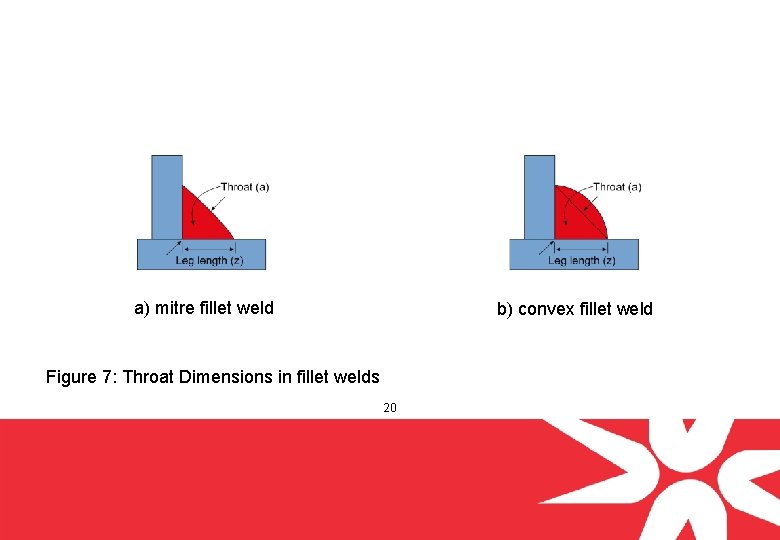
a) mitre fillet weld b) convex fillet weld Figure 7: Throat Dimensions in fillet welds 20

c) concave fillet weld d) deep penetration weld Figure 7: Throat Dimensions in fillet welds 21
It is apparent then, that measurement of either leg length or actual throat thickness alone is not reliable in determining the design throat thickness of a weld but that the weld shape must be taken into account. The excess weld metal of the convex weld gives no benefit with respect to design strength and, from a cost point of view, the fillet weld face should be a flat as possible. The deep penetration weld is a very cost effective way of increasing the joint strength as only a proportion of the weld metal is from deposited filler metal. 22
However, it is not possible to measure throat of a deep penetration weld. To guarantee that the minimum design throat has been achieved it is necessary to control welding parameters and fit-up within very tight tolerances. This type of weld is therefore generally made using an automated or mechanised welding process (submerged arc or spray transfer MIG/MAG) in order to achieve sufficient and consistent control of the welding parameters. When deciding on the size of a fillet weld it should be remembered that a small increase in throat thickness will result in a disproportionately large increase in deposited weld metal as the cross sectional area of a fillet weld is a function of the square of the leg length (area = z² /2). Increasing the throat from, say, 5 to 6 mm results in an increase of around 45%. This equates to almost 0. 1 kg extra weld metal per 1 metre length of weld. 23
There are thus substantial cost and weight penalties to be paid if the joint is either over-specified by the designer or over-welded by the welder. There are no hard and fast rules about the point at which it is more economical to change from a fillet weld to either a double sided fillet weld or a partial penetration butt weld. Areas quoted in Fig. 8 are worth bearing in mind when deciding on fillet weld sizes. 24
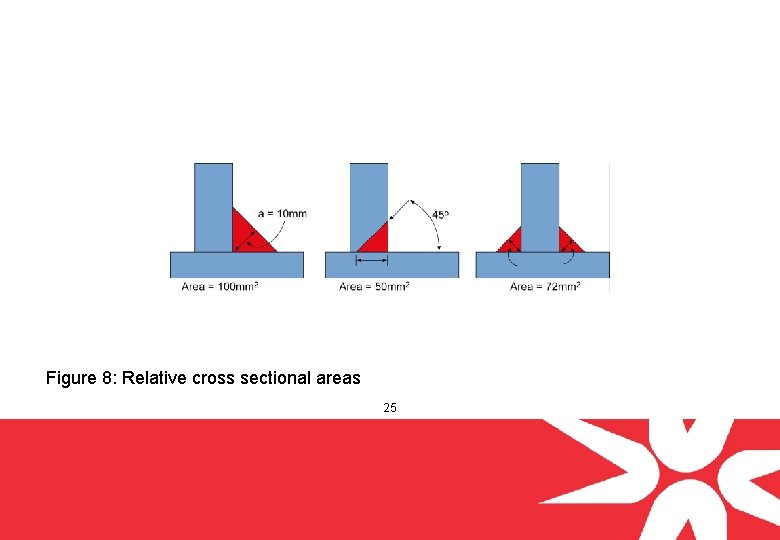
Figure 8: Relative cross sectional areas 25
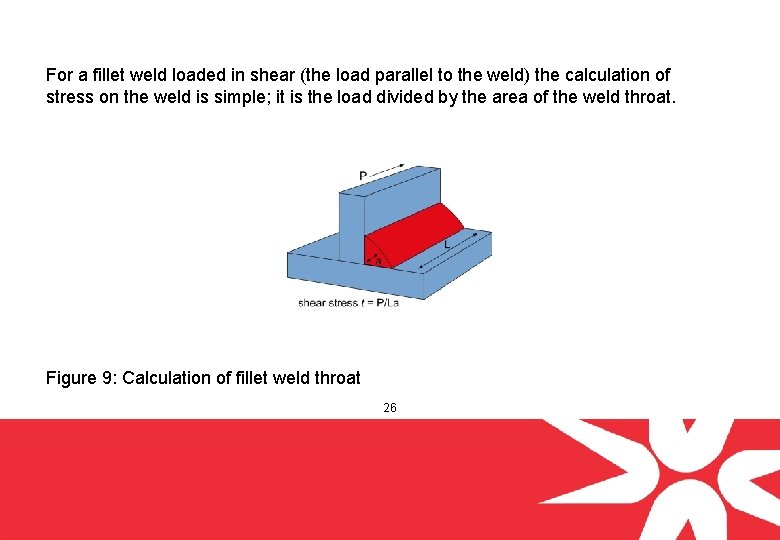
For a fillet weld loaded in shear (the load parallel to the weld) the calculation of stress on the weld is simple; it is the load divided by the area of the weld throat. Figure 9: Calculation of fillet weld throat 26
Fillet welds may be combined with full or partial penetration butt welds - a combination weld. The designer is therefore required to decide whether to use a Tbutt weld, a fillet weld or a combination of the two. In making this decision cost is a major factor. The fillet weld requires no weld preparation, is easy to deposit and is often regarded as the cheapest weld of all to make. However cross sectional area, and therefore cost, increases as a function of the square of the leg length. Assuming the same strength requirements from the fillet welds as for the T-butt welds it becomes more economical to use a double sided full penetration T-butt joint at a plate thickness of around 30 mm. The accuracy of this figure should be treated with caution as it is dependent on many factors such as the weld preparation costs and included angle. 27
Welding position is an additional factor. It may be more economical to deposit a butt weld in the flat position, where large diameter electrodes and high welding currents can be used, rather than a double sided fillet weld where one weld must be made in the overhead position ( Fig. 10). 28
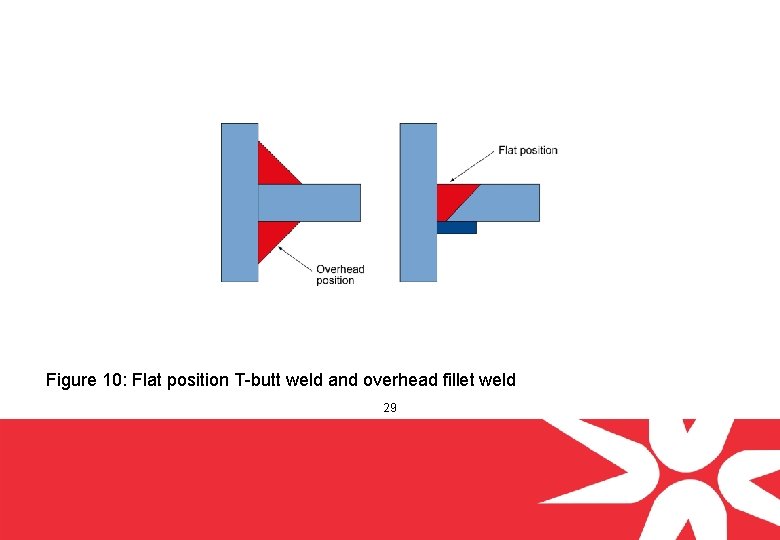
Figure 10: Flat position T-butt weld and overhead fillet weld 29
An additional benefit from using a T-butt weld is that this weld type provides a direct transfer of force through the joint, giving a better performance under fatigue loads. Many design specifications will also have lower allowable stresses for a fillet weld compared with a butt weld and this can have a significant effect on cost, particularly when designing to match the strength of thicker plates. It should be remembered that it is difficult, if not impossible, to examine a fillet weld volumetrically using radiographic or ultrasonic techniques and the internal weld quality is therefore entirely dependent on the skill and integrity of the welder. The comments on T-joints also apply to corner joints where two fillet welds may be more economical than one large fillet as shown in Fig. 11. However, remember that one weld may need to be made in the overhead position if the component cannot be turned. 30
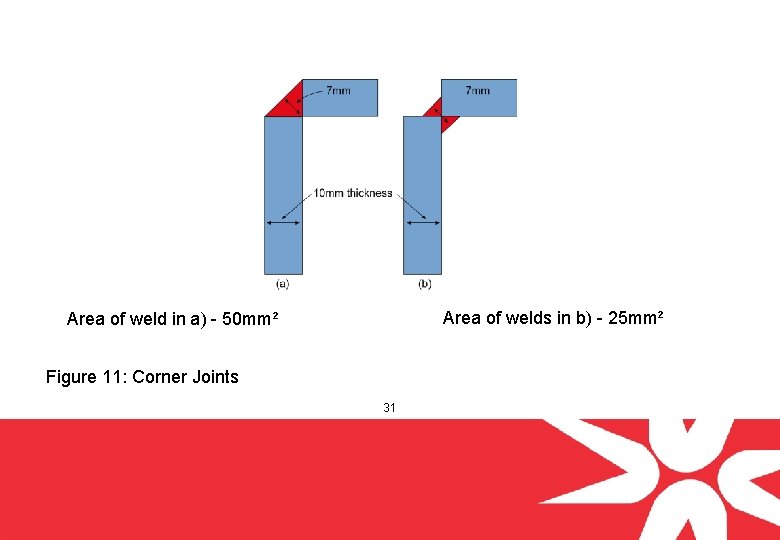
Area of welds in b) - 25 mm² Area of weld in a) - 50 mm² Figure 11: Corner Joints 31
From the foregoing it is obvious that the decision to use fillet welds, T-butt joints or combination welds is not as straightforward as it may first appear and there are numerous factors that must be taken into account. Butt joints are those welds where the weld metal is contained within the planes of the surfaces of the items being joined. The weld throat may be the full section thickness, a full penetration joint, or a proportion only - a partial penetration joint. Welds may be 'single sided joints', welded all from one side, or 'double sided', welded from both sides, ( Fig. 12). 32
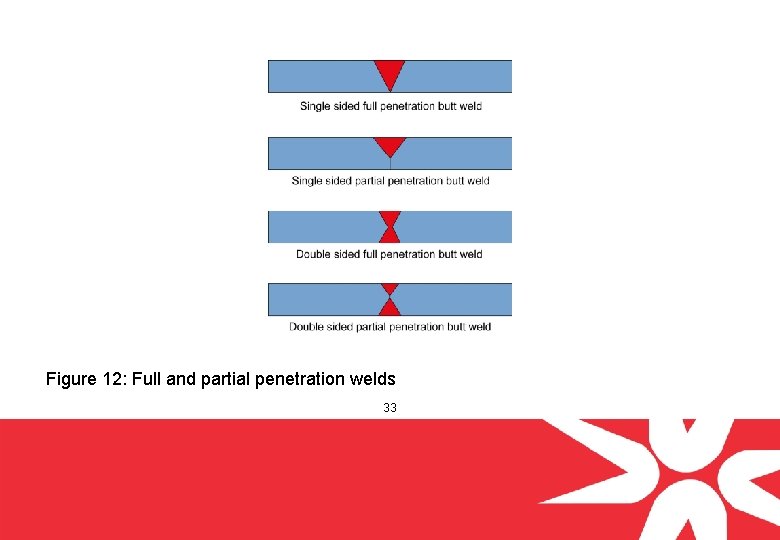
Figure 12: Full and partial penetration welds 33
Except for very thin plate, arc welded butt joints require a weld preparation to be flame cut or machined along the joint line. The conventional arc welding processes can penetrate into the base metal by only a limited amount. The maximum penetration in conventional TIG or manual metal arc (SMAW) welds is in the region of 3 mm, MAG (GMAW) welds around 6 mm and submerged arc (SAW) some 15 mm. In order to weld the full thickness of a plate and achieve the weld throat thickness required by design it is therefore necessary to cut away sufficient metal along the joint line so that the welding electrode has access to the root of the joint, enabling the root pass to be deposited and then the remainder filled to complete the joint. A weld preparation, the 'weld prep', is therefore formed along the joint line using flame cutting, plasma cutting or machining. Figure 13 identifies the key features of a 'single bevel' weld preparation and those of a 'single-V' joint. 34
The smaller the included angle, the less access this will give to the root and the greater is the risk of defects such as lack of side wall fusion. This reduced access may, however, be compensated for by an increase in the root gap. The bevel angles and the root gap will depend upon the processes) used to make the joint and the material thickness. A narrow included angle requires less weld metal and therefore is more economical as the thickness increases. A downside to this is that the narrower the angle the more difficult access becomes and the risk of welding defects as mentioned above. Too wide a root gap will result in a loss of control of the weld pool and melt through giving an irregular and excessive penetration bead. This may be overcome by using a backing strip if this is permitted by the service conditions. 35
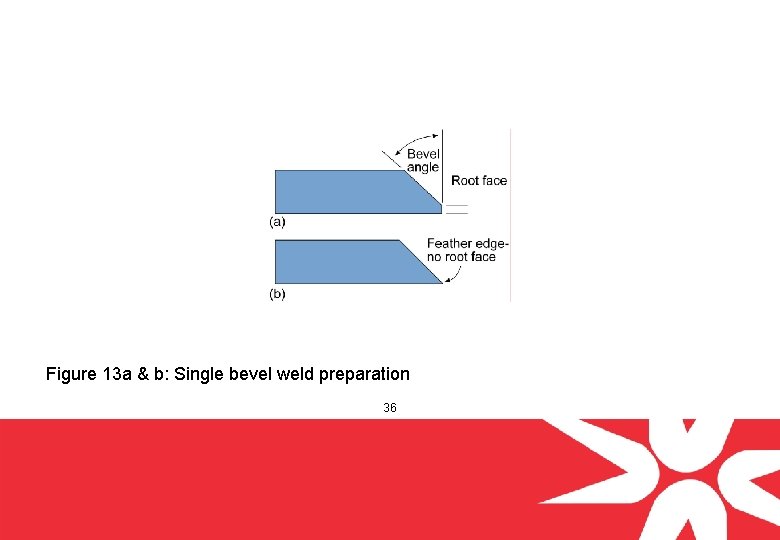
Figure 13 a & b: Single bevel weld preparation 36
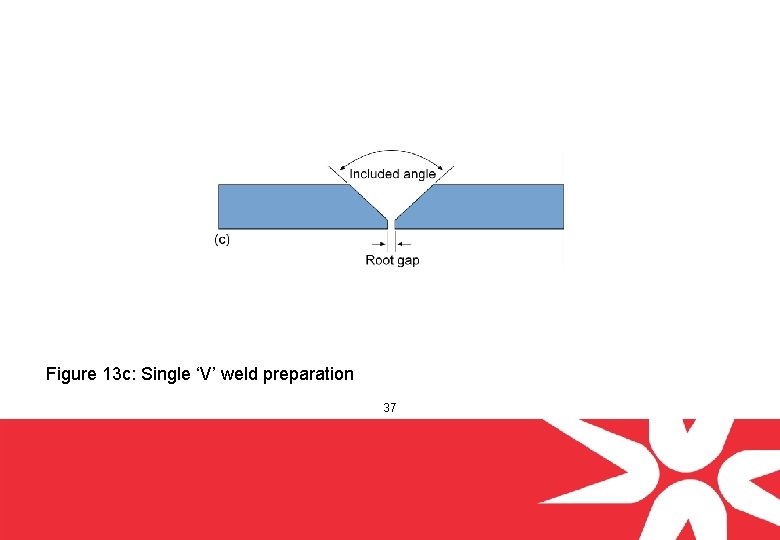
Figure 13 c: Single ‘V’ weld preparation 37
The choice of the weld preparation is therefore a compromise between maintaining adequate access and minimising the weld volume. If a high quality root bead is required and access is not available to the root side of the weld e. g. in a pipe carrying fluids or in high pressure service, then an acceptable condition can be achieved using the TIG process to make the root bead. A typical pipe butt weld set-up would be 60° included angle, 1 mm to 2 mm root gap and a zero to 1. 5 mm thick root face. 38
Where access to the reverse side of the joint is available, the condition of the penetration bead is less important as the root bead can be ground to sound metal and a sealing pass deposited. A reduction in weld volume can be achieved by the use of a ‘U' preparation as shown in Fig. 14. This preparation, unlike the straight chamfer of the 'V' preparation which can be flame cut, must be machined. 39
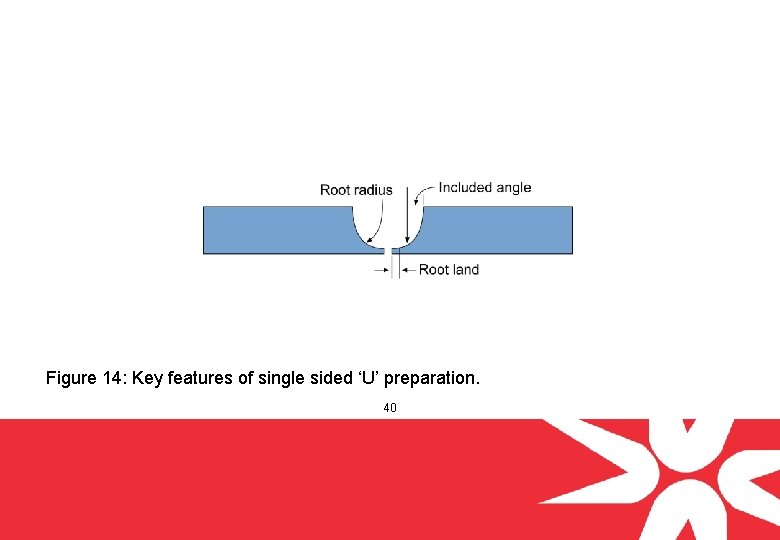
Figure 14: Key features of single sided ‘U’ preparation. 40
This can be an expensive operation, which is why this type of weld is used only on thick joints, where the saving in deposited weld metal outweighs the cost of machining, or where very high quality root beads are required. Machining of the weld preparation dictates that the dimensions, particularly that of the root face thickness, can be controlled far more closely than is possible with flame cutting and therefore a more accurate fit-up can be achieved. It is often used on orbitally TIG welded pipe butt joints where a machined joint enables the tolerances required by a fully automatic process to be achieved. 41
Bevelling the plate edges allows access to all parts of the joint, enabling good fusion throughout the weld to be achieved. The bevel can be on one or both edges of the items to be joined. What is important is the included angle which is dictated by the need both to achieve the correct torch/electrode angle and to maintain the required arc length and wire stick-out. as shown in Fig. 15. The angle on a single bevel joint, as in Fig. 15(c) obviously needs to be greater than that on a double bevel V-joint if access problems are not to be encountered. Experience has shown that a weld preparation angle of 45° on a single bevel joint is usually sufficient to allow adequate access. 42
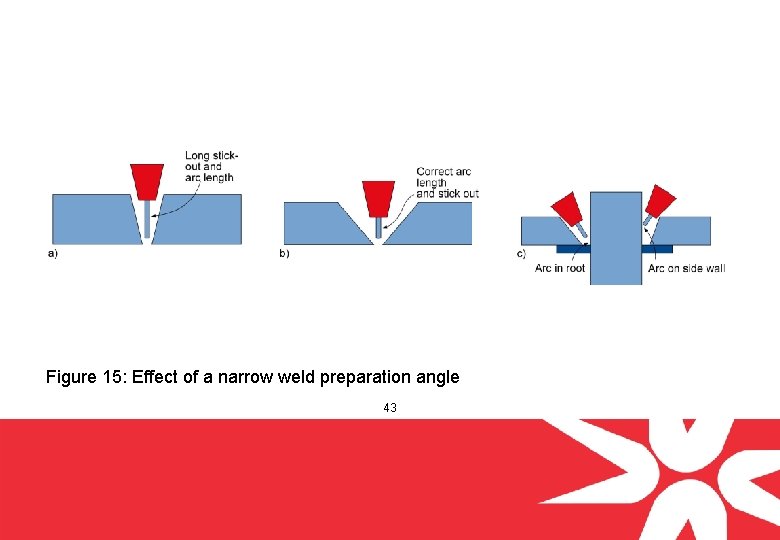
Figure 15: Effect of a narrow weld preparation angle 43
A similar effect is produced by too narrow a root gap where, as above, there is insufficient access to permit a correct arc length to be achieved and the arc cannot be placed in the correct position. Conversely, too wide a root gap on an unbacked weld will require a large, wide weld pool to bridge the gap, resulting in melt through, a loss of control of the pool and the formation of localised excess weld metal. As may be guessed from the above, the most problematic region in a weld is that of the root pass. Single sided joints require dimensionally accurate weld preparations good fit-up and skilled welders to ensure full penetration welds with an acceptable root contour. 44
The best root pass appearance using conventional arc welding processes will be achieved using the TIG process but acceptable root conditions can also be achieved with MMA, MIG/MAG and FCAW welding. When welding, it is obviously easier for the welder when there is a sound base on which to deposit the weld metal; hence the need for a very skilled welder when making full penetration single sided welds. Where access to the reverse side of a partial penetration weld is available, then the fabricator has the option of depositing a sealing pass. Remember, however, that most welding processes have only limited penetration and there is a real risk that not all of the unfused land will be melted away. 45
To be certain of removing the unfused land, 'back gouging' the root and filling the groove with sound weld metal is generally carried out. Backgouging, or removal of the unfused land, can be done by any of the conventional metal removal techniques; machining, arc air gouging, chipping, grinding etc (Fig. 16). Of these methods, arc air gouging is probably the most cost effective and can produce a smooth contoured U-shaped groove with an included angle of 50 to 60 degrees, allowing adequate access. The back gouging must be sufficiently deep that to ensure lack of penetration is removed. To confirm that this has been done it is good practice to perform magnetic particle or liquid penetrant inspection of the gouged groove. 46
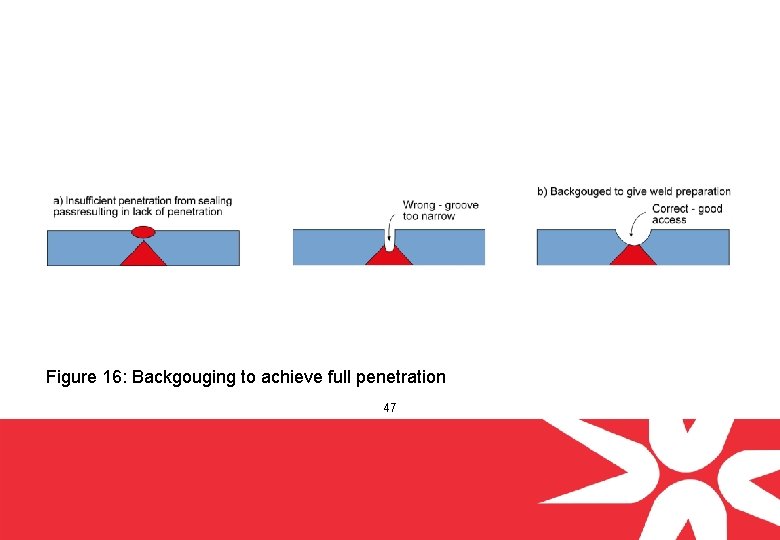
Figure 16: Backgouging to achieve full penetration 47
An alternative to backgouging, or when access to the reverse side is not available, is to use a backing strip which will provide support for a fully penetrated root pass. The backing strip may be permanent or temporary, (see Fig. 17 below). The permanent backing strip weld does not have as good a performance in fatigue loading as a single sided TIG root butt weld and the crevice is a site for preferential corrosion. Whether a permanent backing strip weld is acceptable for service is therefore a design decision. 48
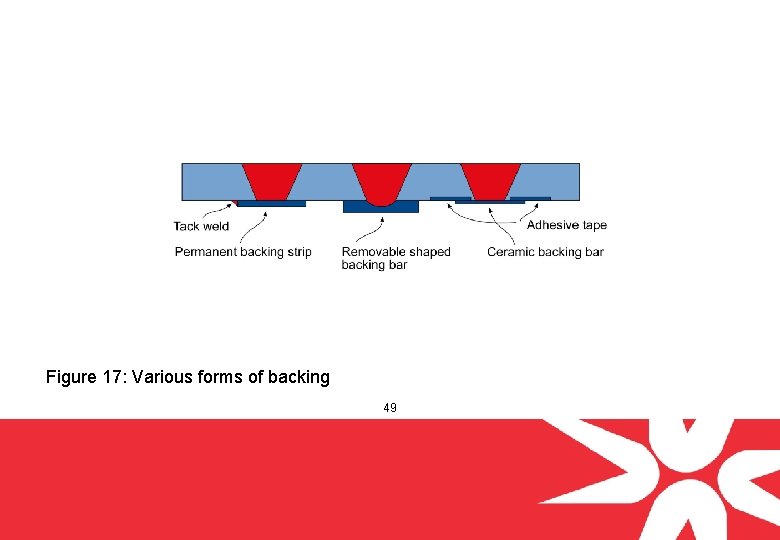
Figure 17: Various forms of backing 49
In addition to providing support for the root pass, a further major advantage of the backing strip weld is that fit-up tolerances may be relaxed as the strip acts as a locating feature. This is particularly so when pipe butt welding where the strip forms a spigot on which to centre the joining pipe. In addition root gap may be varied, the only real limitations being those of cost; the wider the root gap the greater the volume of weld metal and distortion. The strip must be compatible with the filler metal and the parent base metal. It must be correctly fitted, in close contact with both edges of the weld preparation and welded into position using intermittent tack welds. Any gap between the backing strip and the plate edges is a site for slag entrapment and results in a poor root profile. To ensure full fusion in the root of the weld it is advisable to use a feather edge and to direct the welding arc at the plate/pipe edges. 50
When a permanent backing strip cannot be used, then a temporary backing bar may be used (conventionally a permanent backing is known as a 'strip', a temporary backing as a 'bar'). As the name suggests this is a backing that is easily removed at the end of the welding operation; it has not become fused to the root pass. It may be made of a ceramic or of copper, chromium plated for use on stainless steel and nickel based alloys to prevent contamination. Austenitic stainless steel has also been used. The metal backing bars may be water cooled to aid heat loss and may be grooved to provide a mould for the molten weld metal. Welding conditions and fit-up must be carefully controlled to prevent the welding arc from impinging directly on the bar, otherwise there maybe melting of the bar and contamination of the weld pool. 51
Ceramic backing bars can be obtained in a variety of sizes with shaped grooves to form a weld pool mould. They may be rigid bars of ceramic or articulated such that they can be wrapped around the inside diameter of a pipe or tube. Ceramic tapes are also available, as illustrated above. These tapes have wide strips of adhesive either side of the ceramic tile to enable the tape to be held in place during welding and peeled off on completion. As with the permanent backing strip, care needs to be taken to ensure that the ceramic tile is in close contact with the metal surfaces otherwise slag and/or weld metal will run into the gap, giving an irregular weld root. 52
- Slides: 53