
III Population Growth change in size through time

- Slides: 33
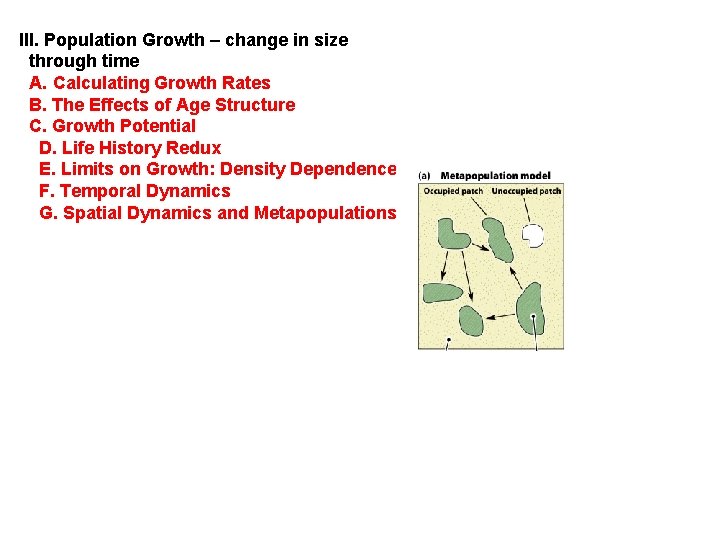
III. Population Growth – change in size through time A. Calculating Growth Rates B. The Effects of Age Structure C. Growth Potential D. Life History Redux E. Limits on Growth: Density Dependence F. Temporal Dynamics G. Spatial Dynamics and Metapopulations
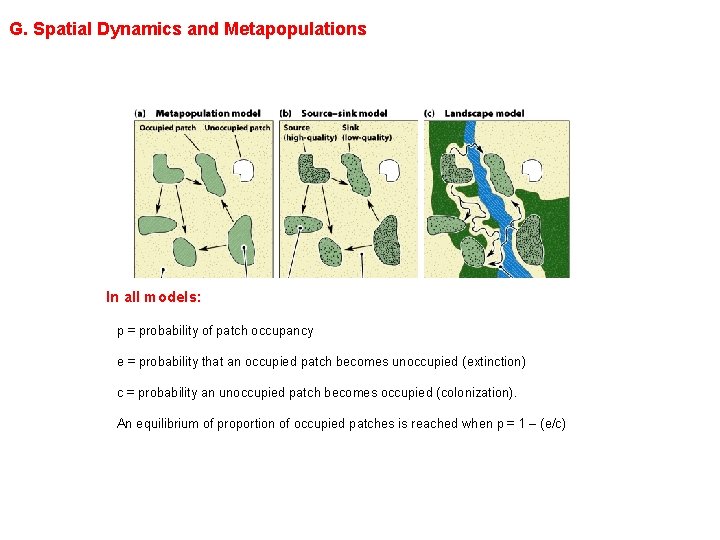
G. Spatial Dynamics and Metapopulations In all models: p = probability of patch occupancy e = probability that an occupied patch becomes unoccupied (extinction) c = probability an unoccupied patch becomes occupied (colonization). An equilibrium of proportion of occupied patches is reached when p = 1 – (e/c)
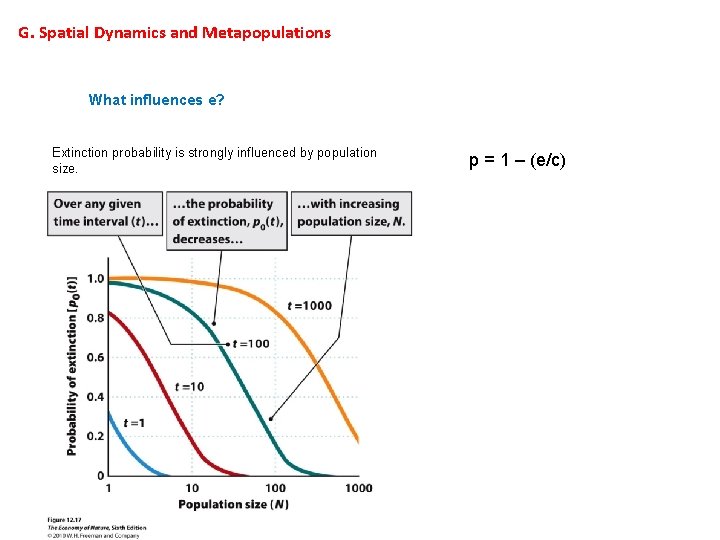
G. Spatial Dynamics and Metapopulations What influences e? Extinction probability is strongly influenced by population size. p = 1 – (e/c)
G. Spatial Dynamics and Metapopulations What influences c? Patch size (target) Patch isolation
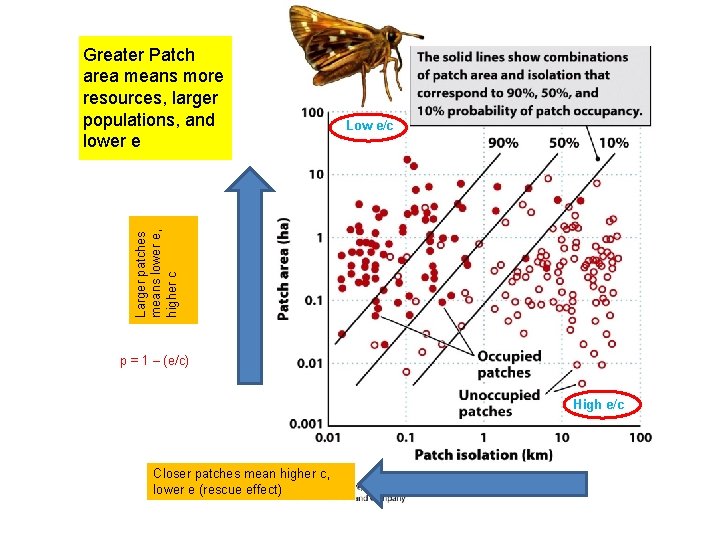
Low e/c Larger patches means lower e, higher c Greater Patch area means more resources, larger populations, and lower e p = 1 – (e/c) High e/c Closer patches mean higher c, lower e (rescue effect)
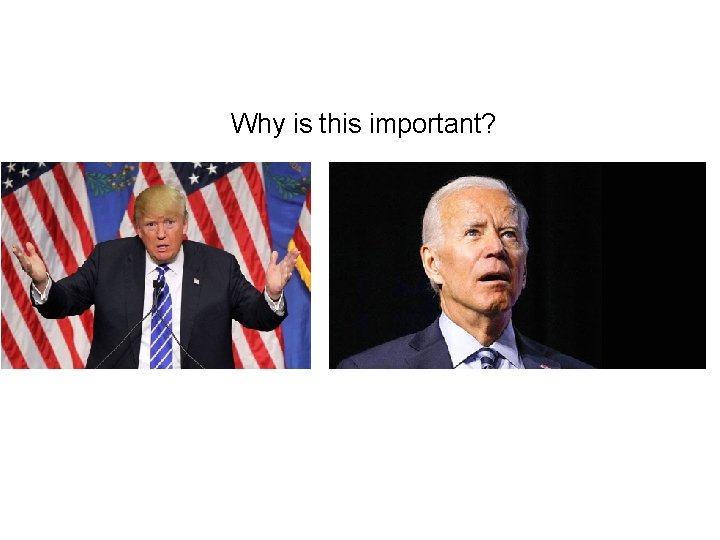
Why is this important?
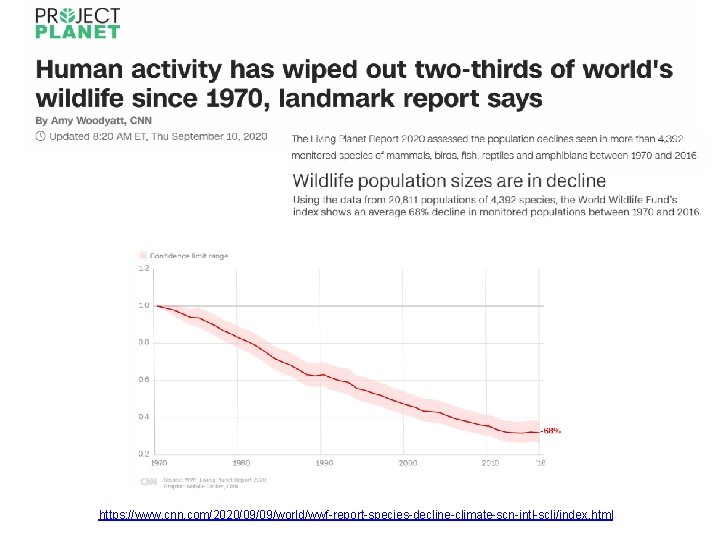
https: //www. cnn. com/2020/09/09/world/wwf-report-species-decline-climate-scn-intl-scli/index. html
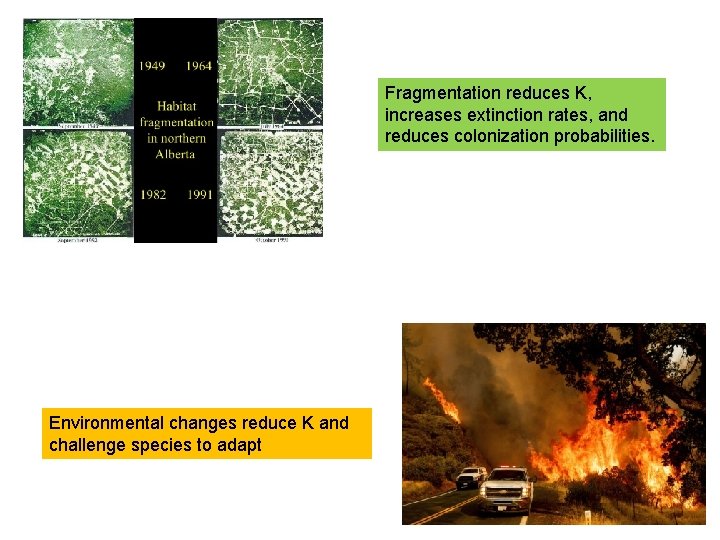
Fragmentation reduces K, increases extinction rates, and reduces colonization probabilities. Environmental changes reduce K and challenge species to adapt
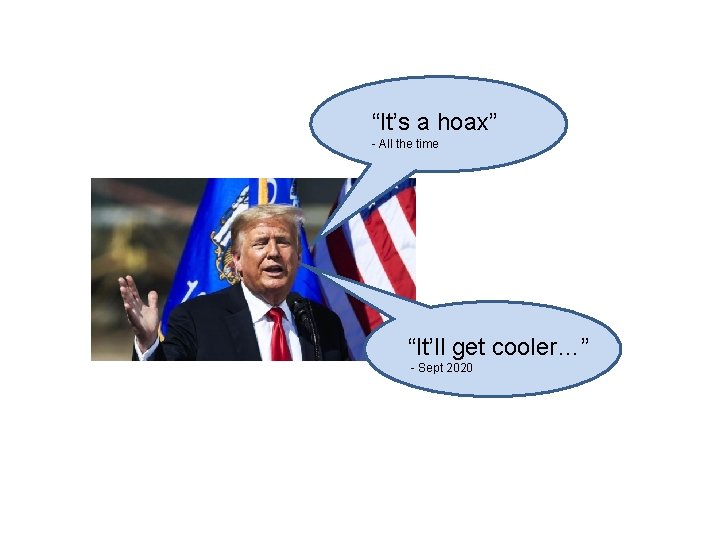
“It’s a hoax” - All the time “It’ll get cooler…” - Sept 2020
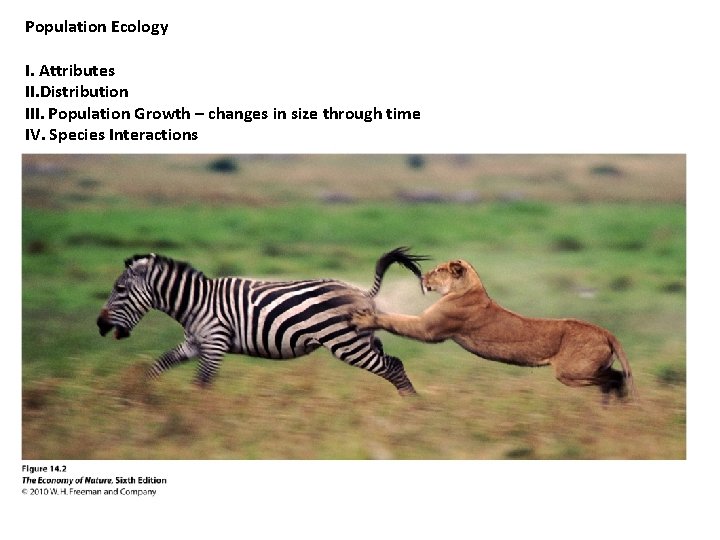
Population Ecology I. Attributes II. Distribution III. Population Growth – changes in size through time IV. Species Interactions
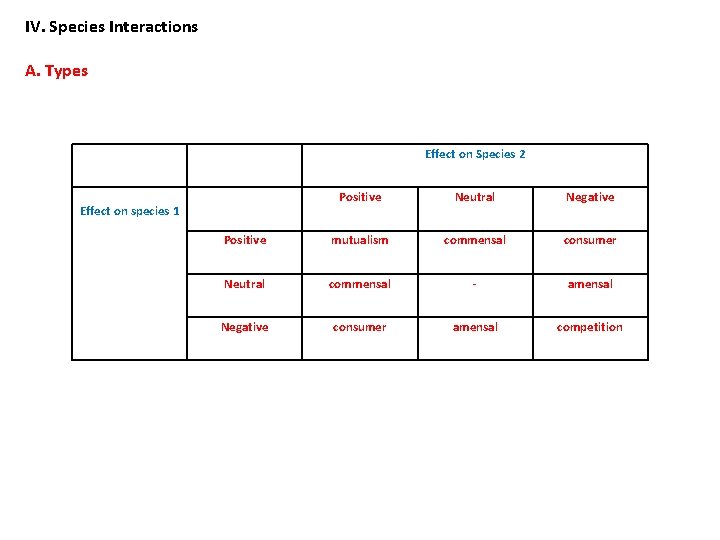
IV. Species Interactions A. Types Effect on Species 2 Positive Neutral Negative Positive mutualism commensal consumer Neutral commensal - amensal Negative consumer amensal competition Effect on species 1
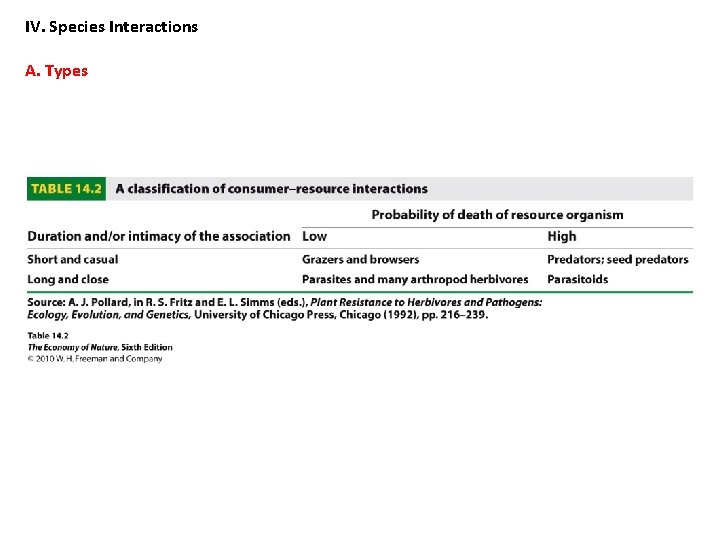
IV. Species Interactions A. Types
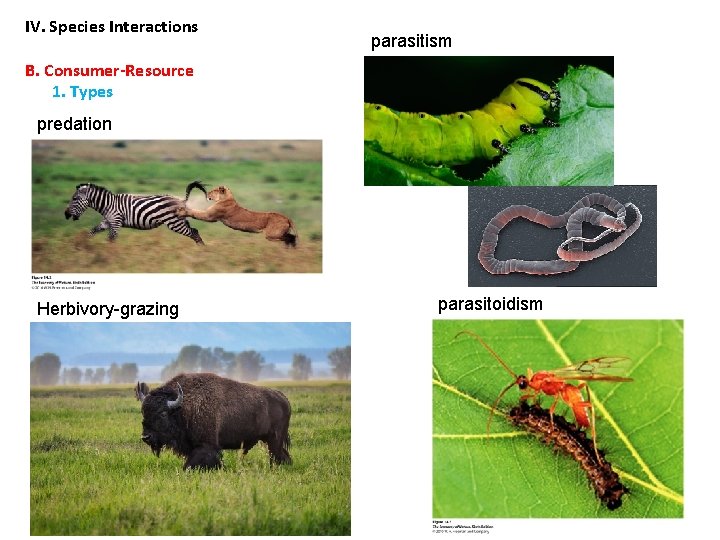
IV. Species Interactions parasitism B. Consumer-Resource 1. Types predation Herbivory-grazing parasitoidism
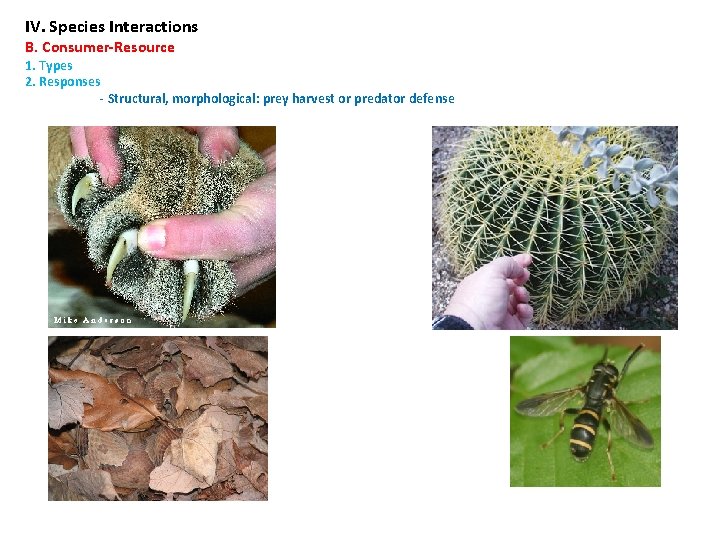
IV. Species Interactions B. Consumer-Resource 1. Types 2. Responses - Structural, morphological: prey harvest or predator defense
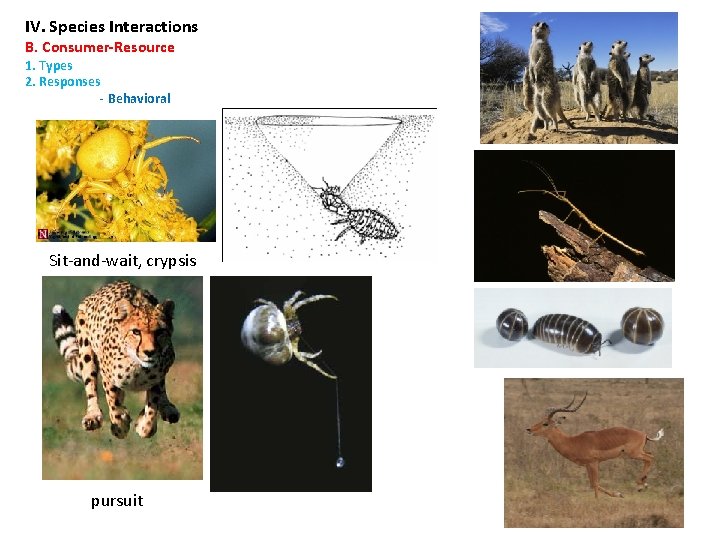
IV. Species Interactions B. Consumer-Resource 1. Types 2. Responses - Behavioral Sit-and-wait, crypsis pursuit
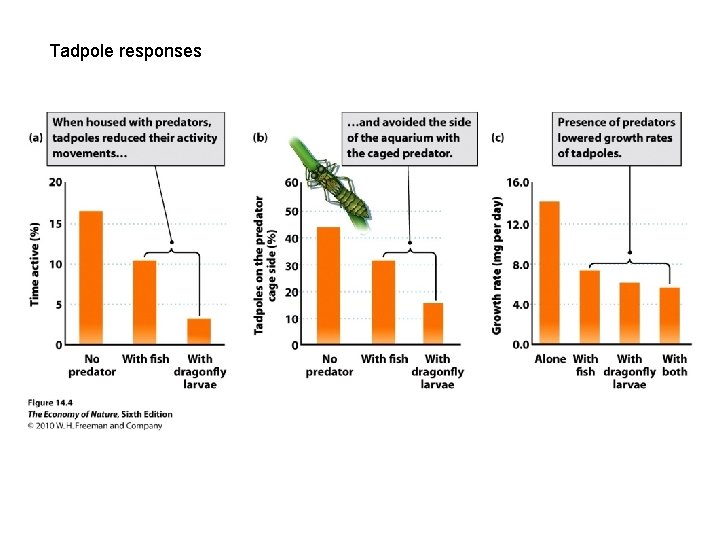
Tadpole responses
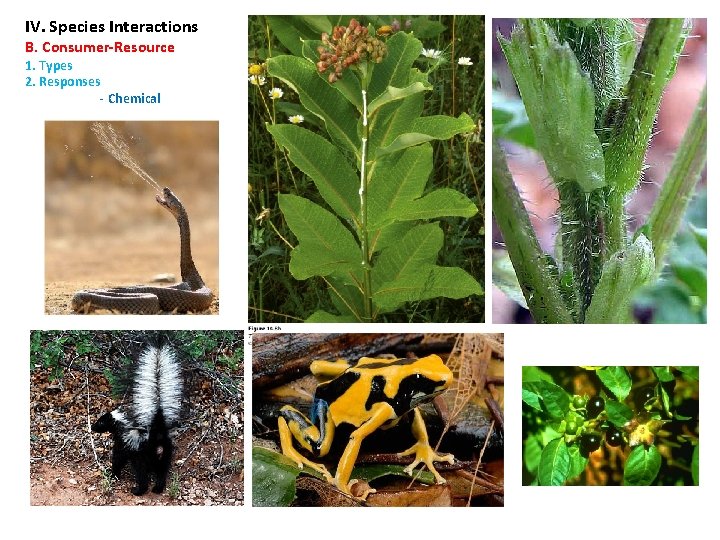
IV. Species Interactions B. Consumer-Resource 1. Types 2. Responses - Chemical
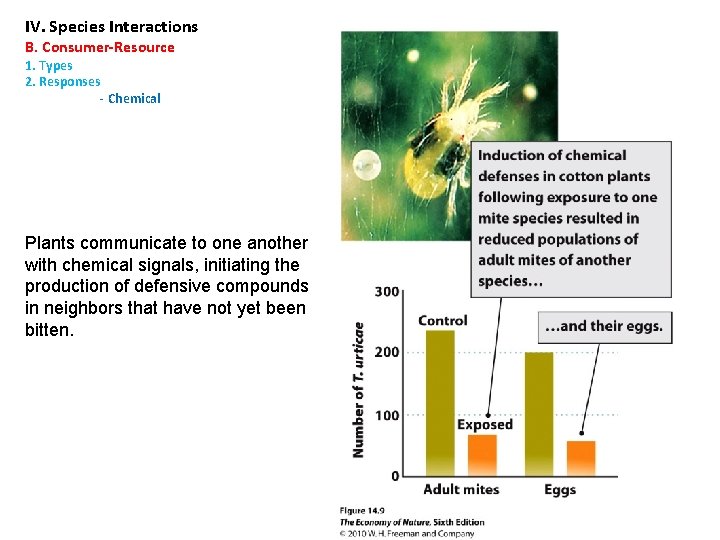
IV. Species Interactions B. Consumer-Resource 1. Types 2. Responses - Chemical Plants communicate to one another with chemical signals, initiating the production of defensive compounds in neighbors that have not yet been bitten.
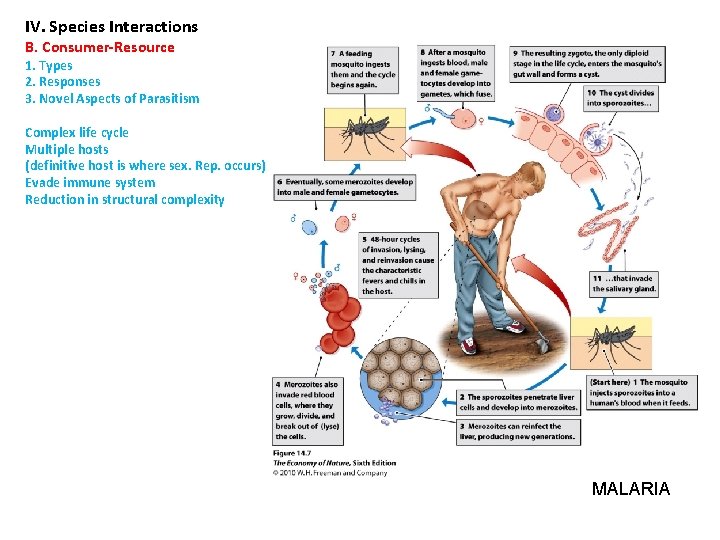
IV. Species Interactions B. Consumer-Resource 1. Types 2. Responses 3. Novel Aspects of Parasitism Complex life cycle Multiple hosts (definitive host is where sex. Rep. occurs) Evade immune system Reduction in structural complexity MALARIA
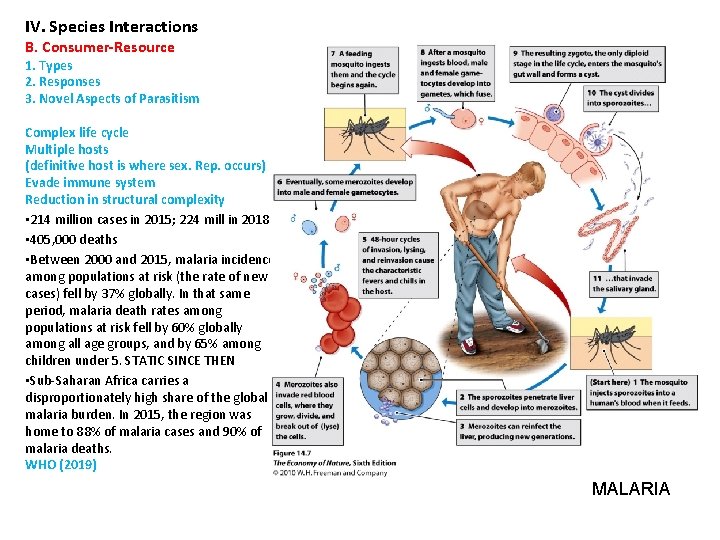
IV. Species Interactions B. Consumer-Resource 1. Types 2. Responses 3. Novel Aspects of Parasitism Complex life cycle Multiple hosts (definitive host is where sex. Rep. occurs) Evade immune system Reduction in structural complexity • 214 million cases in 2015; 224 mill in 2018 • 405, 000 deaths • Between 2000 and 2015, malaria incidence among populations at risk (the rate of new cases) fell by 37% globally. In that same period, malaria death rates among populations at risk fell by 60% globally among all age groups, and by 65% among children under 5. STATIC SINCE THEN • Sub-Saharan Africa carries a disproportionately high share of the global malaria burden. In 2015, the region was home to 88% of malaria cases and 90% of malaria deaths. WHO (2019) MALARIA
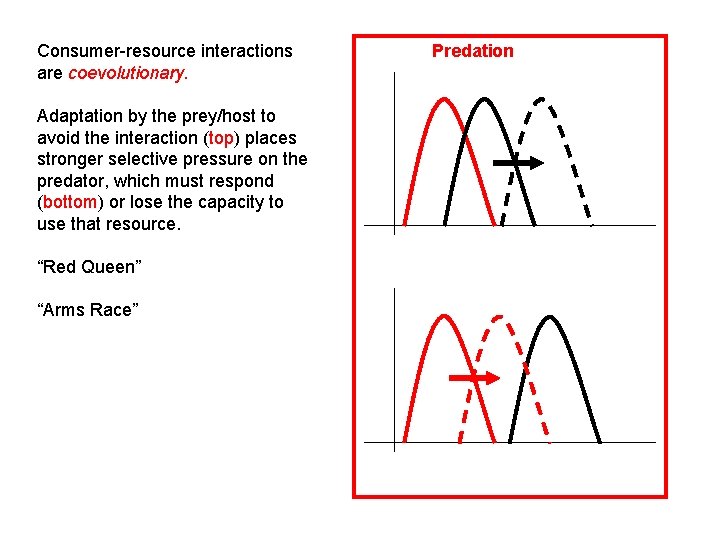
Consumer-resource interactions are coevolutionary. Adaptation by the prey/host to avoid the interaction (top) places stronger selective pressure on the predator, which must respond (bottom) or lose the capacity to use that resource. “Red Queen” “Arms Race” Predation
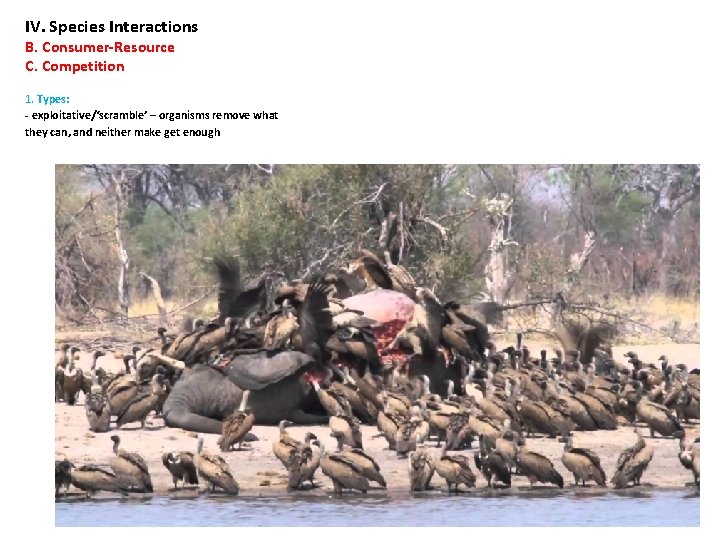
IV. Species Interactions B. Consumer-Resource C. Competition 1. Types: - exploitative/‘scramble’ – organisms remove what they can, and neither make get enough
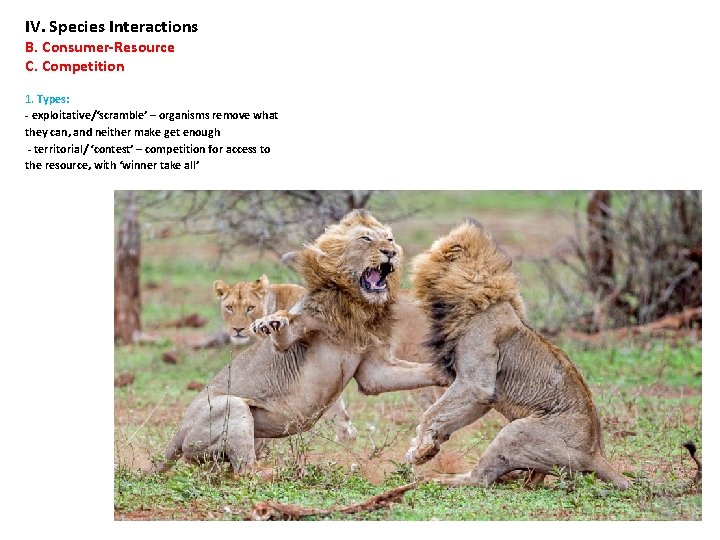
IV. Species Interactions B. Consumer-Resource C. Competition 1. Types: - exploitative/‘scramble’ – organisms remove what they can, and neither make get enough - territorial/ ‘contest’ – competition for access to the resource, with ‘winner take all’
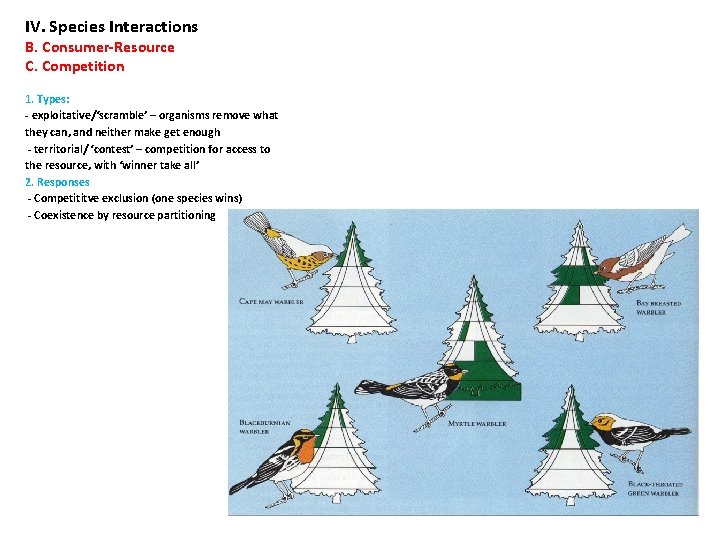
IV. Species Interactions B. Consumer-Resource C. Competition 1. Types: - exploitative/‘scramble’ – organisms remove what they can, and neither make get enough - territorial/ ‘contest’ – competition for access to the resource, with ‘winner take all’ 2. Responses - Competititve exclusion (one species wins) - Coexistence by resource partitioning
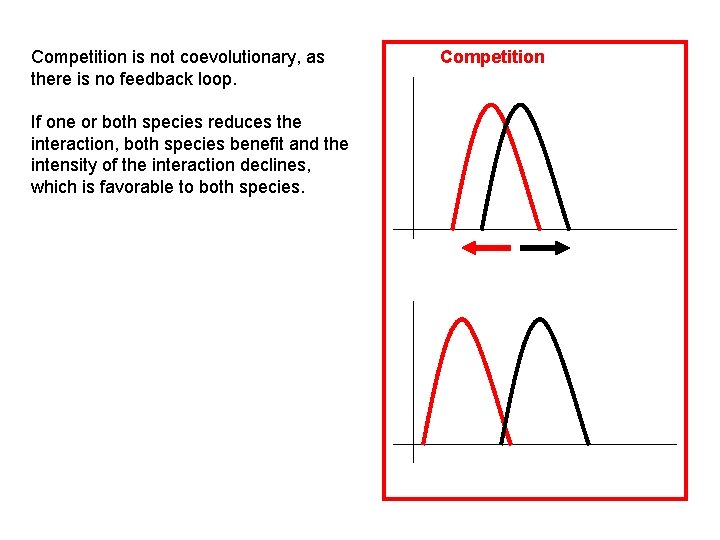
Competition is not coevolutionary, as there is no feedback loop. If one or both species reduces the interaction, both species benefit and the intensity of the interaction declines, which is favorable to both species. Competition
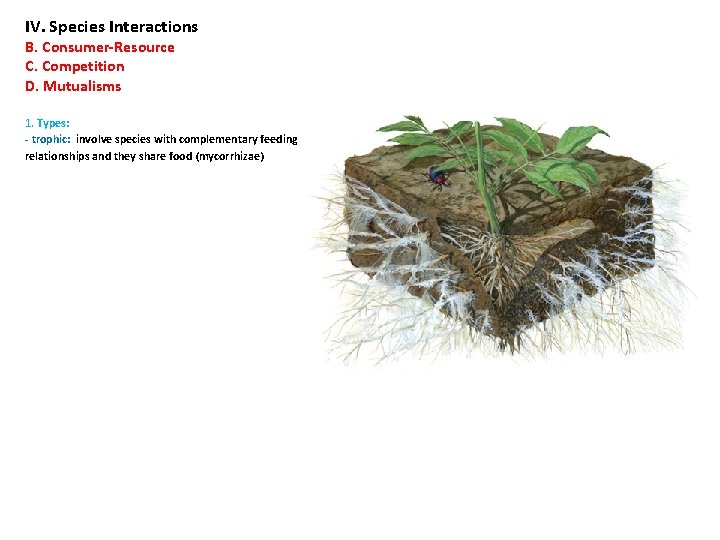
IV. Species Interactions B. Consumer-Resource C. Competition D. Mutualisms 1. Types: - trophic: involve species with complementary feeding relationships and they share food (mycorrhizae)
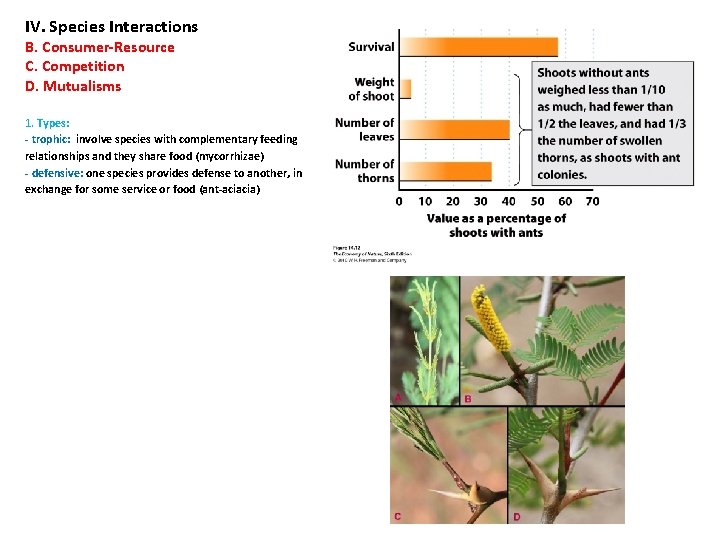
IV. Species Interactions B. Consumer-Resource C. Competition D. Mutualisms 1. Types: - trophic: involve species with complementary feeding relationships and they share food (mycorrhizae) - defensive: one species provides defense to another, in exchange for some service or food (ant-aciacia)
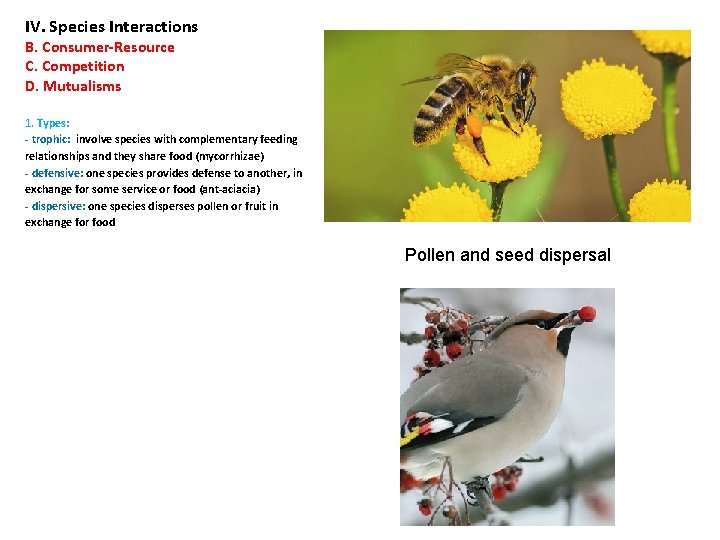
IV. Species Interactions B. Consumer-Resource C. Competition D. Mutualisms 1. Types: - trophic: involve species with complementary feeding relationships and they share food (mycorrhizae) - defensive: one species provides defense to another, in exchange for some service or food (ant-aciacia) - dispersive: one species disperses pollen or fruit in exchange for food Pollen and seed dispersal
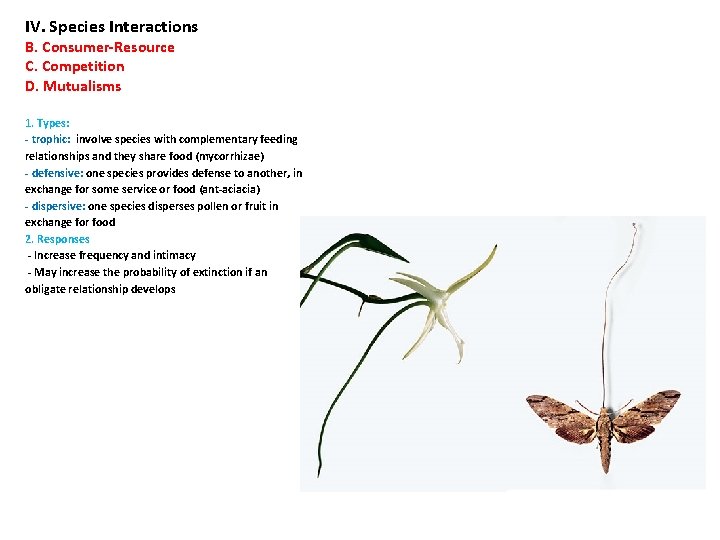
IV. Species Interactions B. Consumer-Resource C. Competition D. Mutualisms 1. Types: - trophic: involve species with complementary feeding relationships and they share food (mycorrhizae) - defensive: one species provides defense to another, in exchange for some service or food (ant-aciacia) - dispersive: one species disperses pollen or fruit in exchange for food 2. Responses - Increase frequency and intimacy - May increase the probability of extinction if an obligate relationship develops
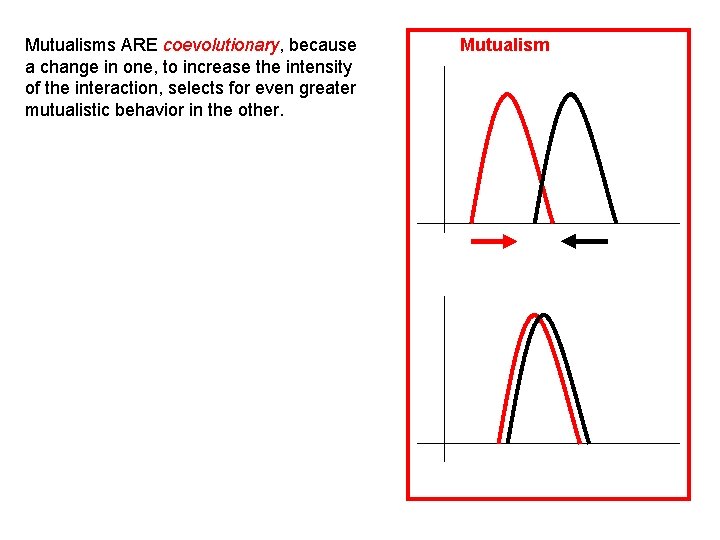
Mutualisms ARE coevolutionary, because a change in one, to increase the intensity of the interaction, selects for even greater mutualistic behavior in the other. Mutualism
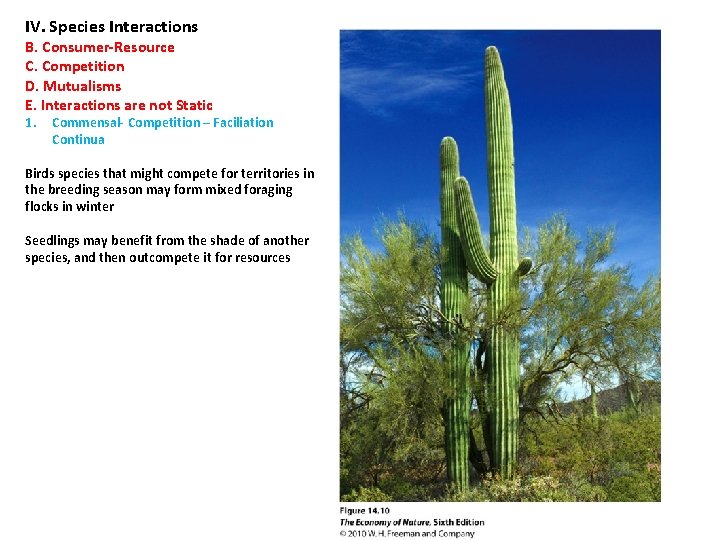
IV. Species Interactions B. Consumer-Resource C. Competition D. Mutualisms E. Interactions are not Static 1. Commensal- Competition – Faciliation Continua Birds species that might compete for territories in the breeding season may form mixed foraging flocks in winter Seedlings may benefit from the shade of another species, and then outcompete it for resources
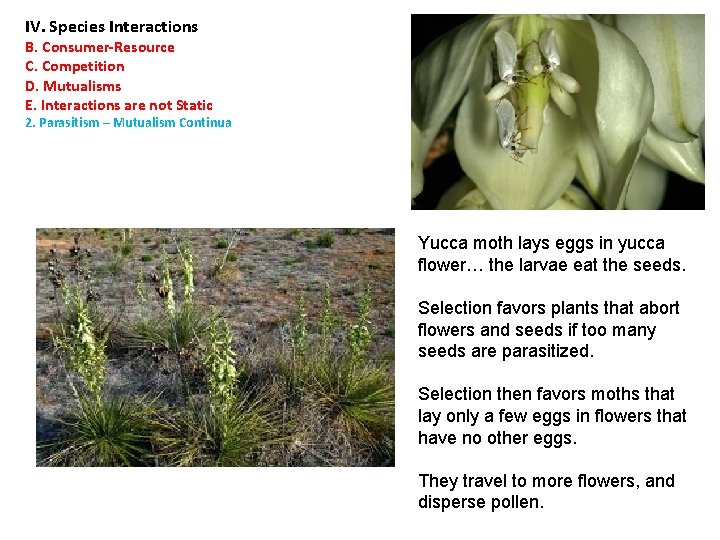
IV. Species Interactions B. Consumer-Resource C. Competition D. Mutualisms E. Interactions are not Static 2. Parasitism – Mutualism Continua Yucca moth lays eggs in yucca flower… the larvae eat the seeds. Selection favors plants that abort flowers and seeds if too many seeds are parasitized. Selection then favors moths that lay only a few eggs in flowers that have no other eggs. They travel to more flowers, and disperse pollen.
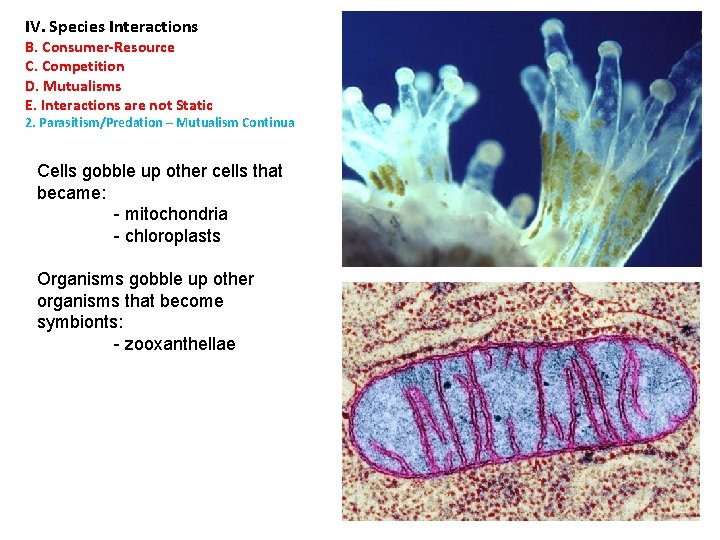
IV. Species Interactions B. Consumer-Resource C. Competition D. Mutualisms E. Interactions are not Static 2. Parasitism/Predation – Mutualism Continua Cells gobble up other cells that became: - mitochondria - chloroplasts Organisms gobble up other organisms that become symbionts: - zooxanthellae