
III GASTRIC MOTILITY 1 Major Function of Gastric
- Slides: 32
III GASTRIC MOTILITY 1
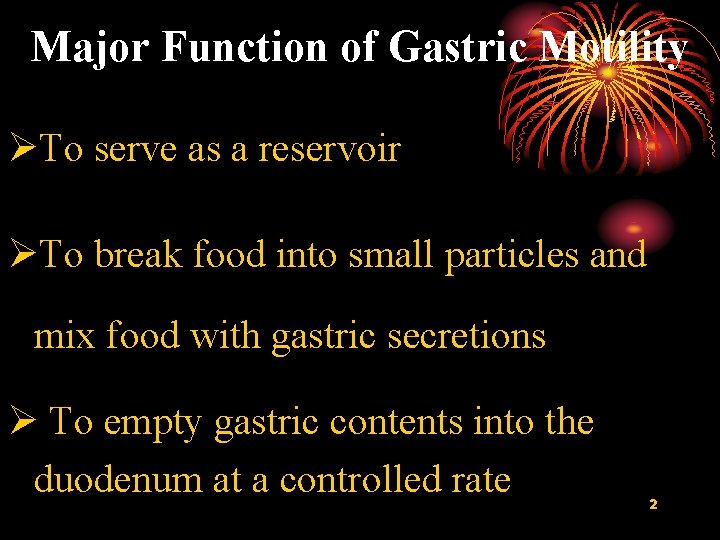
Major Function of Gastric Motility ØTo serve as a reservoir ØTo break food into small particles and mix food with gastric secretions Ø To empty gastric contents into the duodenum at a controlled rate 2
1. Anatomy and innervation of the Stomach 3
4
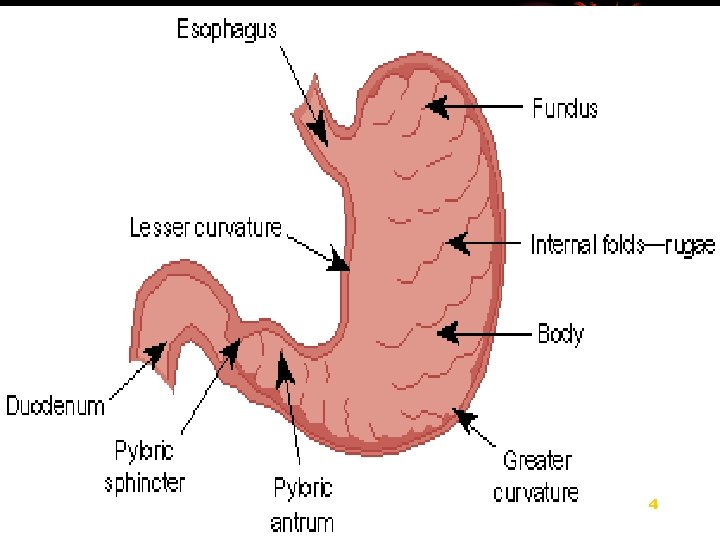
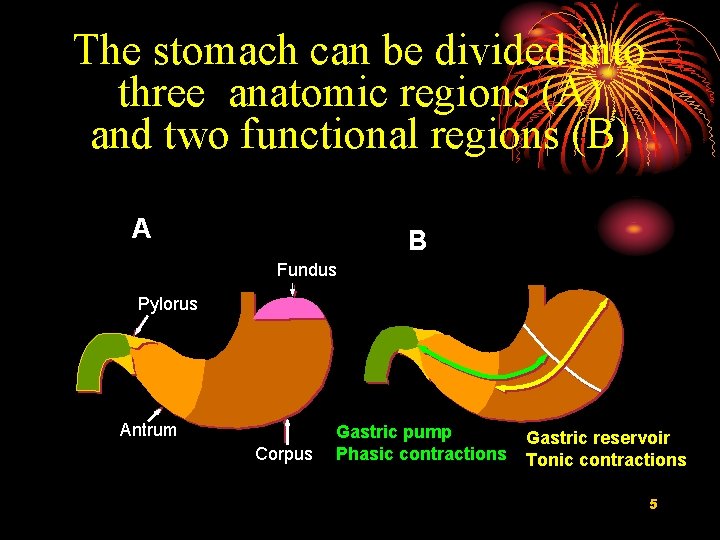
The stomach can be divided into three anatomic regions (A) and two functional regions (B) A B Fundus Pylorus Antrum Corpus Gastric pump Phasic contractions Gastric reservoir Tonic contractions 5
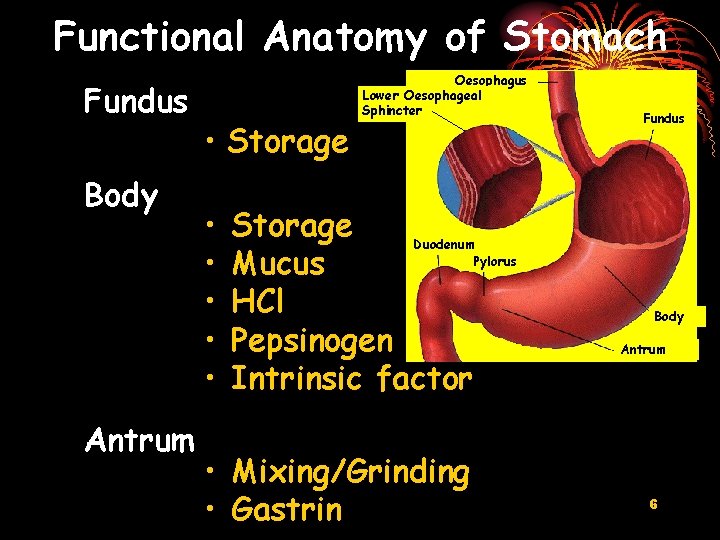
Functional Anatomy of Stomach Fundus Body Antrum • Storage • • • Oesophagus Lower Oesophageal Sphincter Storage Duodenum Pylorus Mucus HCl Pepsinogen Intrinsic factor • Mixing/Grinding • Gastrin Fundus Body Antrum 6
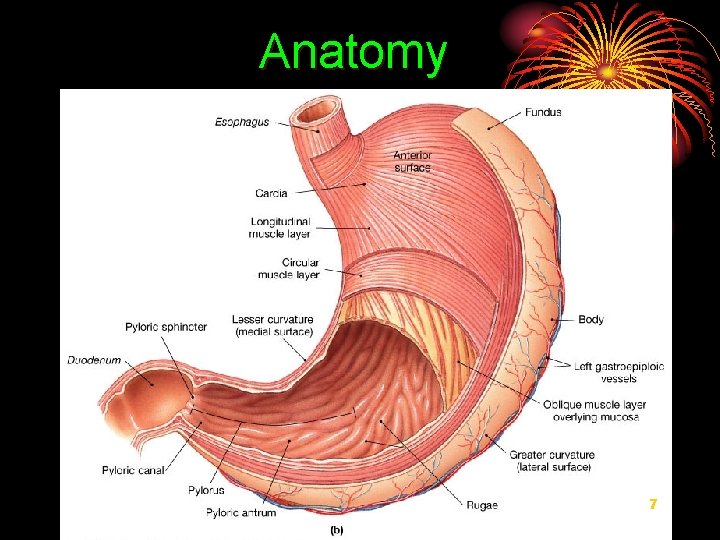
Anatomy 7
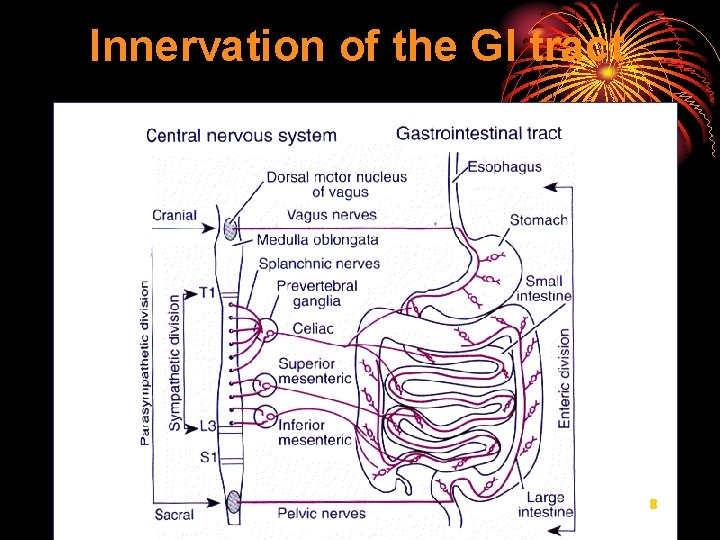
Innervation of the GI tract 8
2. Responses to Gastric Filling – Receptive Relaxation 9
Receptive relaxation During chewing and swallowing food, the stimulation of food to the receptors in mouth, pharynx, and esophagus reflexly causes the smooth muscle of the fundus and body of the stomach to relax, This process allows the stomach to accommodate a large amounts of food and fluid. 10
11
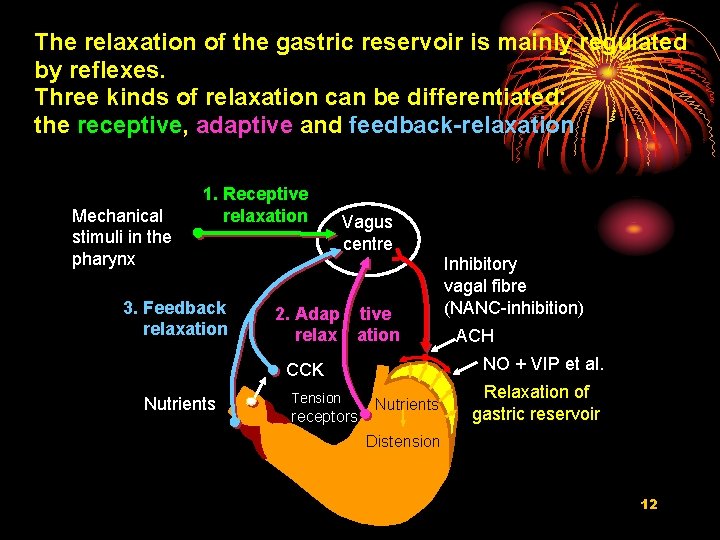
The relaxation of the gastric reservoir is mainly regulated by reflexes. Three kinds of relaxation can be differentiated: the receptive, adaptive and feedback-relaxation Mechanical stimuli in the pharynx 1. Receptive relaxation 3. Feedback relaxation Vagus centre 2. Adap tive relax ation Tension receptors ACH NO + VIP et al. CCK Nutrients Inhibitory vagal fibre (NANC-inhibition) Nutrients Relaxation of gastric reservoir Distension 12
3. Peristalsis of the Gut and Gastric Emptying 13
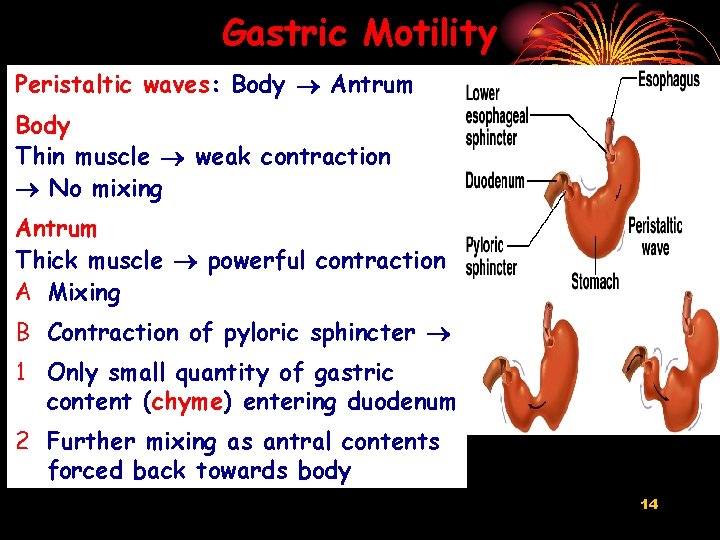
Gastric Motility Peristaltic waves: Body Antrum Body Thin muscle weak contraction No mixing Antrum Thick muscle powerful contraction A Mixing B Contraction of pyloric sphincter 1 Only small quantity of gastric content (chyme) entering duodenum 2 Further mixing as antral contents forced back towards body 14
15
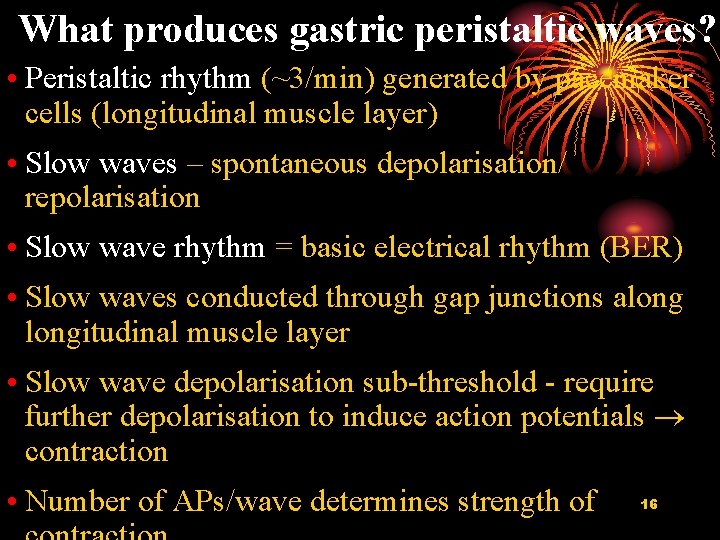
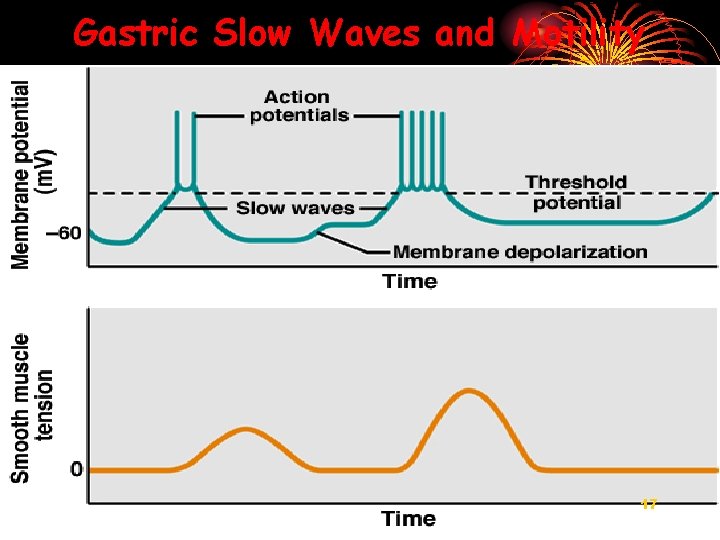
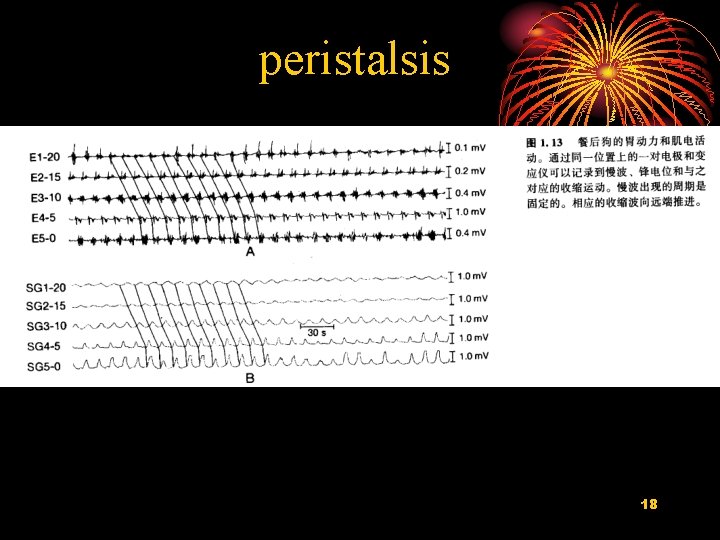
What produces gastric peristaltic waves? • Peristaltic rhythm (~3/min) generated by pacemaker cells (longitudinal muscle layer) • Slow waves – spontaneous depolarisation/ repolarisation • Slow wave rhythm = basic electrical rhythm (BER) • Slow waves conducted through gap junctions alongitudinal muscle layer • Slow wave depolarisation sub-threshold - require further depolarisation to induce action potentials contraction • Number of APs/wave determines strength of 16
Gastric Slow Waves and Motility 17
peristalsis 18
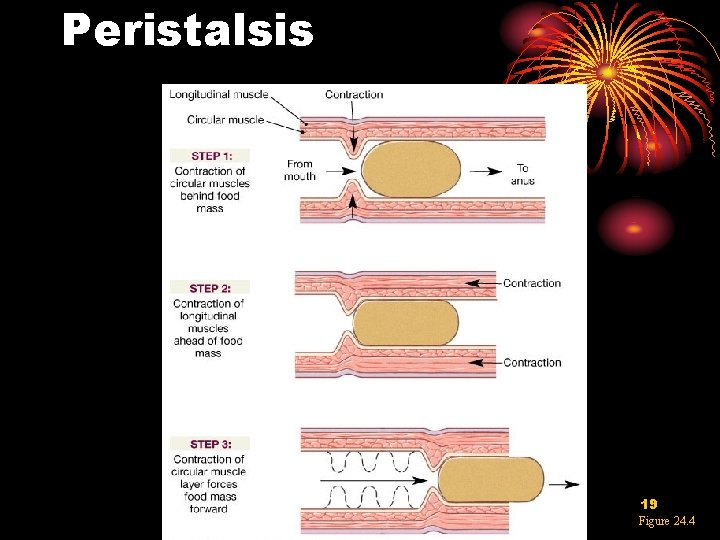
Peristalsis 19 Figure 24. 4
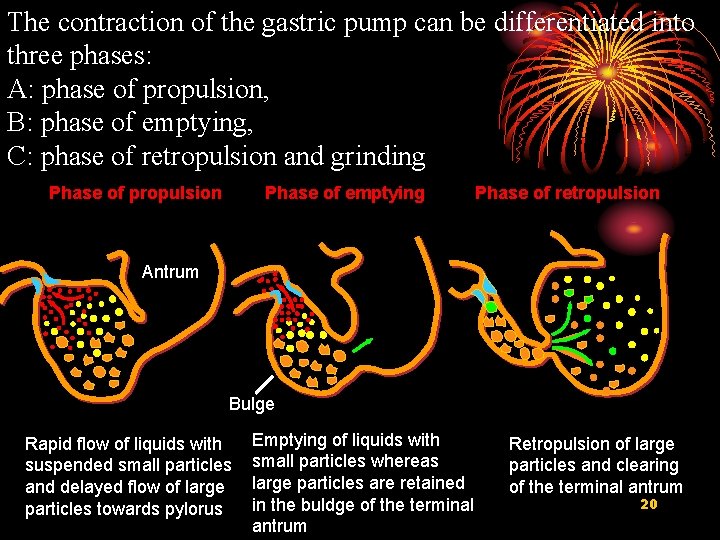
The contraction of the gastric pump can be differentiated into three phases: A: phase of propulsion, B: phase of emptying, C: phase of retropulsion and grinding Phase of propulsion Phase of emptying Phase of retropulsion Antrum Bulge Rapid flow of liquids with suspended small particles and delayed flow of large particles towards pylorus Emptying of liquids with small particles whereas large particles are retained in the buldge of the terminal antrum Retropulsion of large particles and clearing of the terminal antrum 20
21
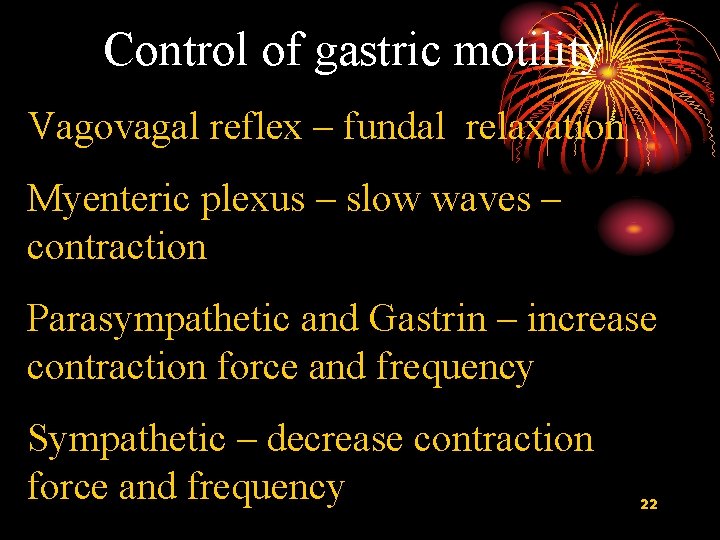
Control of gastric motility Vagovagal reflex – fundal relaxation Myenteric plexus – slow waves – contraction Parasympathetic and Gastrin – increase contraction force and frequency Sympathetic – decrease contraction force and frequency 22
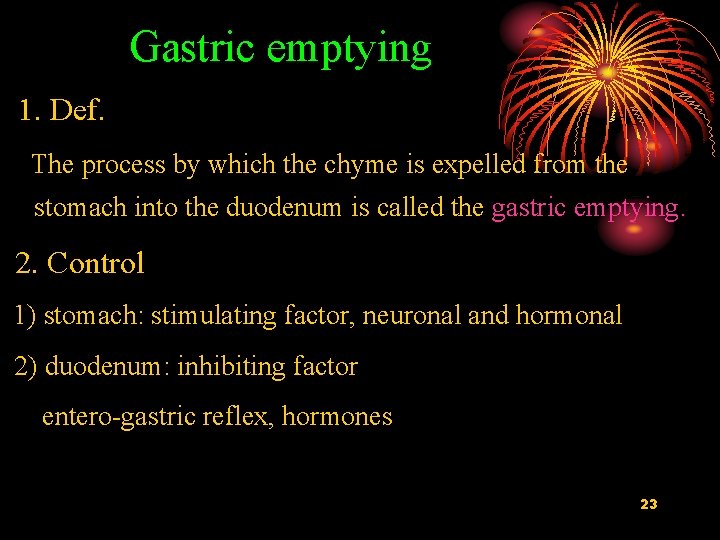
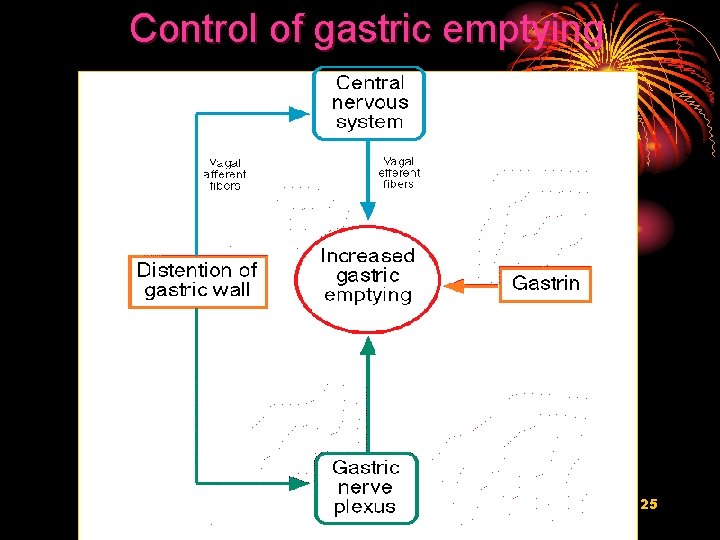
Gastric emptying 1. Def. The process by which the chyme is expelled from the stomach into the duodenum is called the gastric emptying. 2. Control 1) stomach: stimulating factor, neuronal and hormonal 2) duodenum: inhibiting factor entero-gastric reflex, hormones 23
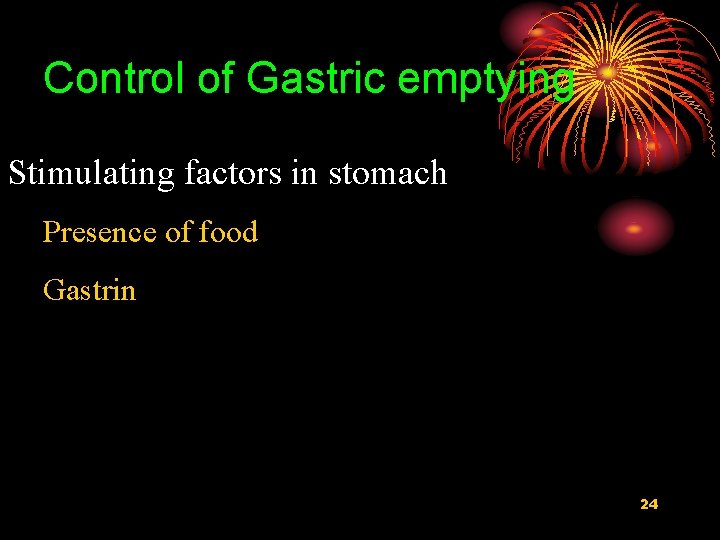
Control of Gastric emptying Stimulating factors in stomach Presence of food Gastrin 24
Control of gastric emptying 25
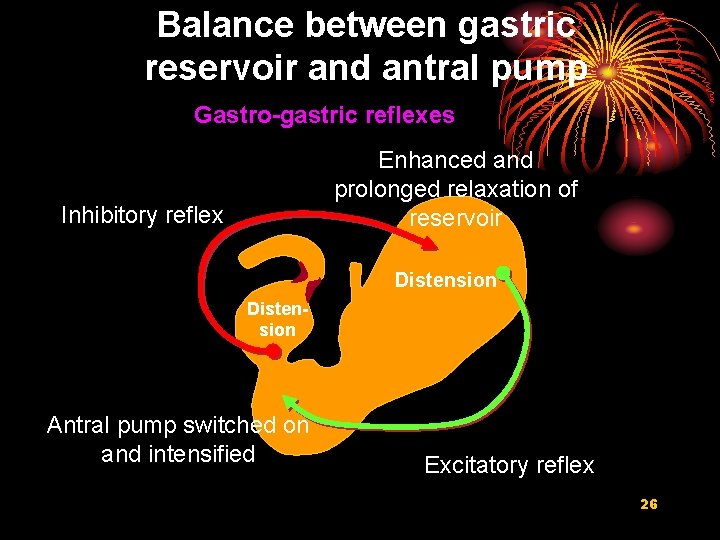
Balance between gastric reservoir and antral pump Gastro-gastric reflexes Enhanced and prolonged relaxation of reservoir Inhibitory reflex Distension Antral pump switched on and intensified Excitatory reflex 26
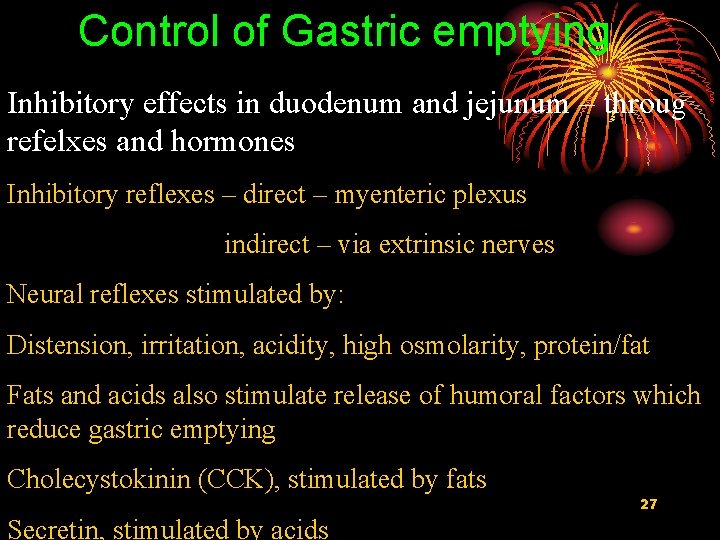
Control of Gastric emptying Inhibitory effects in duodenum and jejunum – throug refelxes and hormones Inhibitory reflexes – direct – myenteric plexus indirect – via extrinsic nerves Neural reflexes stimulated by: Distension, irritation, acidity, high osmolarity, protein/fat Fats and acids also stimulate release of humoral factors which reduce gastric emptying Cholecystokinin (CCK), stimulated by fats Secretin, stimulated by acids 27
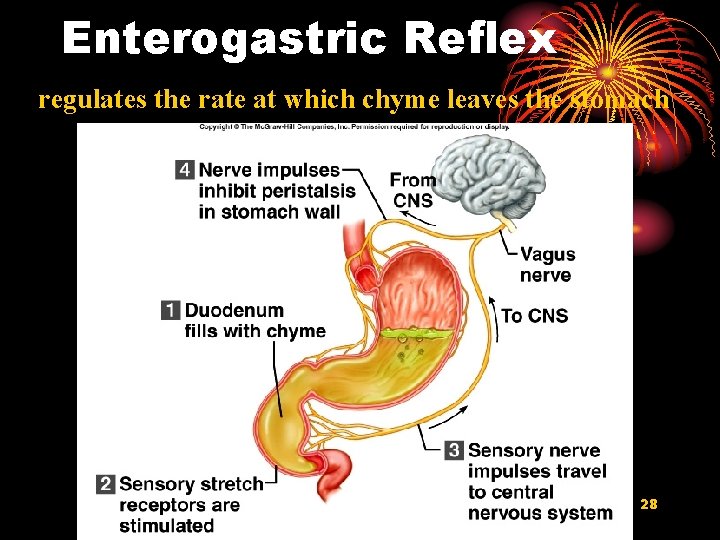
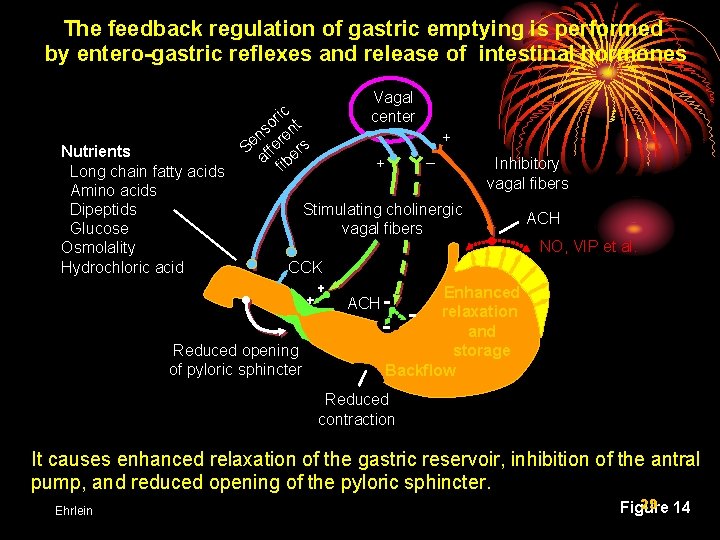
Enterogastric Reflex regulates the rate at which chyme leaves the stomach 28
The feedback regulation of gastric emptying is performed by entero-gastric reflexes and release of intestinal hormones Nutrients Long chain fatty acids Amino acids Dipeptids Glucose Osmolality Hydrochloric acid Vagal center ric t o ns ren e S ffe ers a ib f _ + + Inhibitory vagal fibers Stimulating cholinergic vagal fibers ACH NO, VIP et al. CCK ACH Reduced opening of pyloric sphincter Enhanced relaxation and storage Backflow Reduced contraction It causes enhanced relaxation of the gastric reservoir, inhibition of the antral pump, and reduced opening of the pyloric sphincter. Ehrlein 29 14 Figure
“Quality” of food regulates gastric emtying non-digestible spheres 30
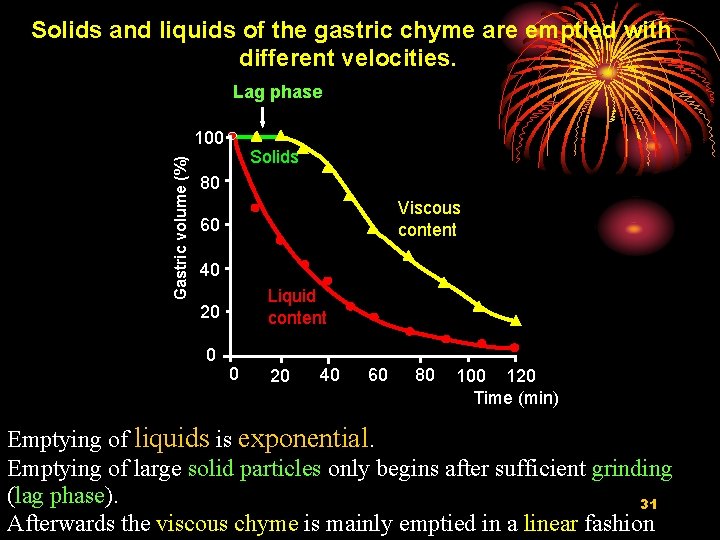
Solids and liquids of the gastric chyme are emptied with different velocities. Lag phase Gastric volume (%) 100 Solids 80 Viscous content 60 40 Liquid content 20 0 0 20 40 60 80 100 120 Time (min) Emptying of liquids is exponential. Emptying of large solid particles only begins after sufficient grinding (lag phase). 31 Afterwards the viscous chyme is mainly emptied in a linear fashion
4. Vomiting • Emesis • Stretching, toxins, alcohol, spicy foods, and drugs may stimulate this. • Emetic Center of the Medulla • Diaphragm and abdominal wall contract • Cardiac sphincter relaxes. • Soft palate rises 32