
II The Living Planet A The Earth System



- Slides: 60
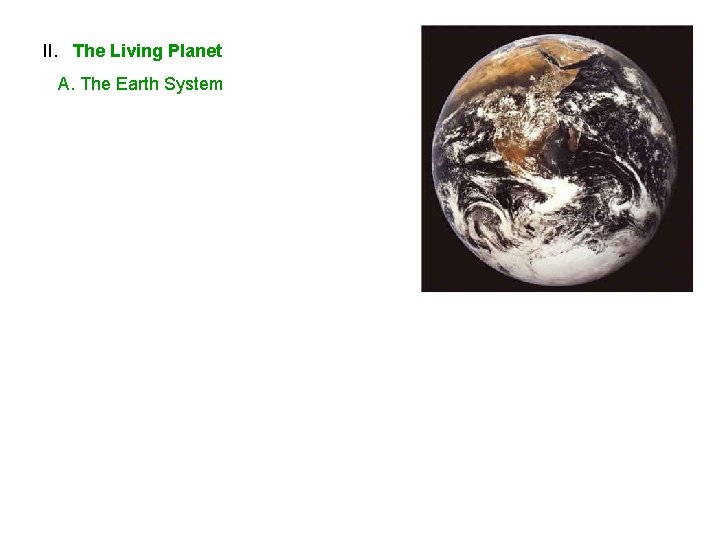
II. The Living Planet A. The Earth System
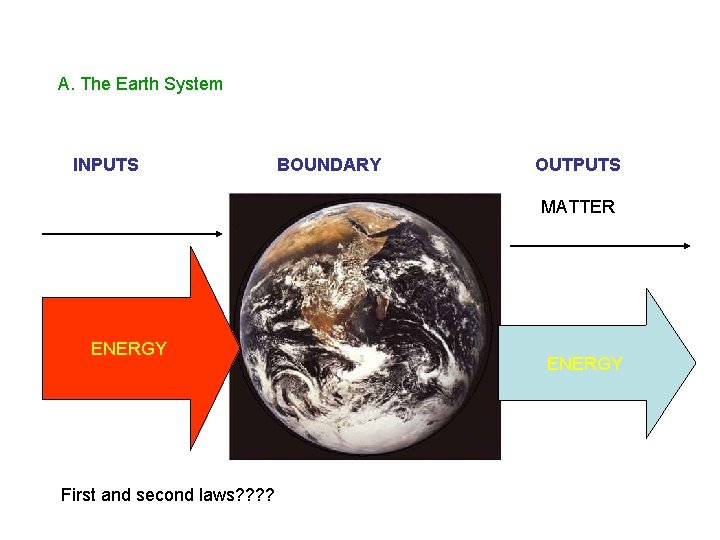
A. The Earth System INPUTS BOUNDARY OUTPUTS MATTER ENERGY First and second laws? ? ENERGY
WHAT PHILOSOPHICAL APPROACH MIGHT WE USE TO FIGURE OUT HOW THIS SYSTEM WORKS? ? ?
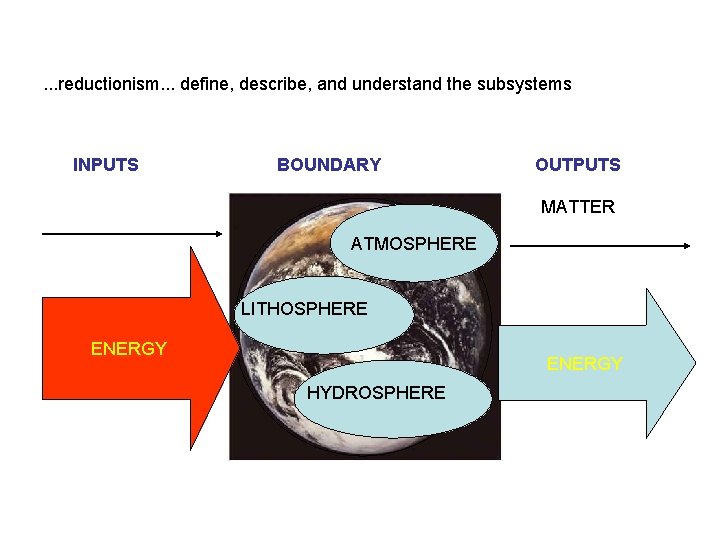
. . . reductionism. . . define, describe, and understand the subsystems INPUTS BOUNDARY OUTPUTS MATTER ATMOSPHERE LITHOSPHERE ENERGY HYDROSPHERE
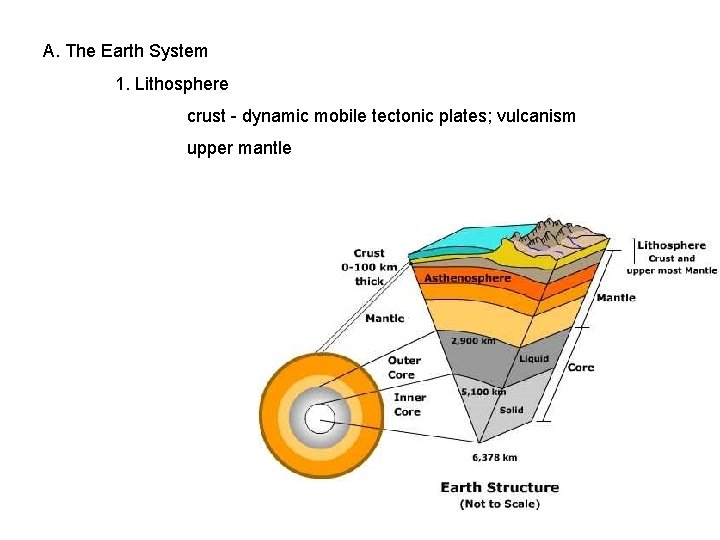
A. The Earth System 1. Lithosphere crust - dynamic mobile tectonic plates; vulcanism upper mantle
A. The Earth System 1. Lithosphere Why and how is the lithosphere important to life?
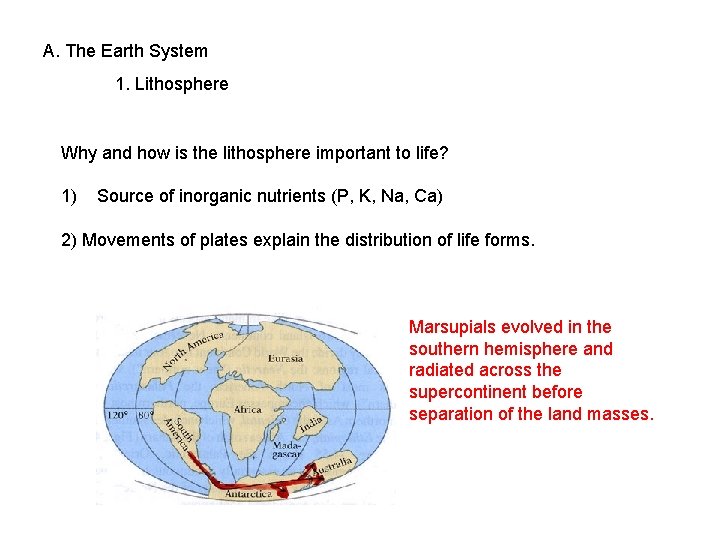
A. The Earth System 1. Lithosphere Why and how is the lithosphere important to life? 1) Source of inorganic nutrients (P, K, Na, Ca) 2) Movements of plates explain the distribution of life forms. Marsupials evolved in the southern hemisphere and radiated across the supercontinent before separation of the land masses.
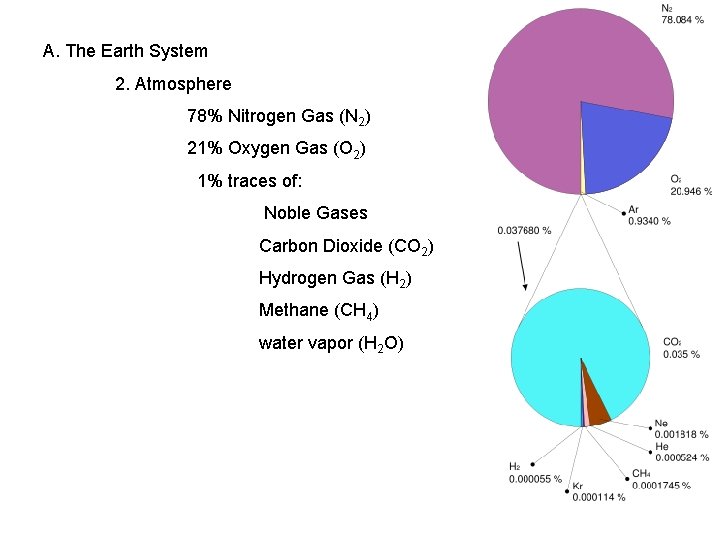
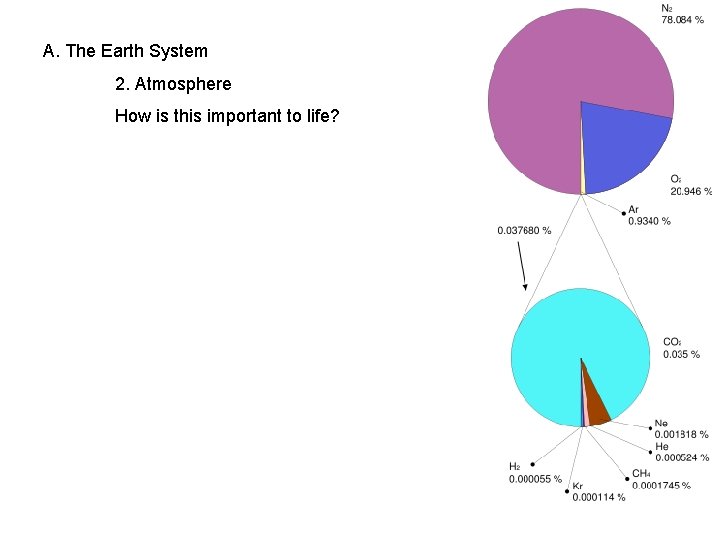
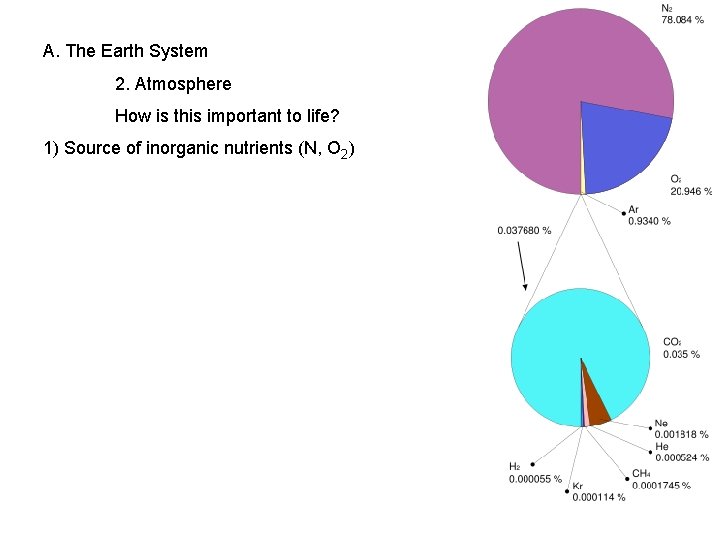
A. The Earth System 2. Atmosphere 78% Nitrogen Gas (N 2) 21% Oxygen Gas (O 2) 1% traces of: Noble Gases Carbon Dioxide (CO 2) Hydrogen Gas (H 2) Methane (CH 4) water vapor (H 2 O)
A. The Earth System 2. Atmosphere How is this important to life?
A. The Earth System 2. Atmosphere How is this important to life? 1) Source of inorganic nutrients (N, O 2)
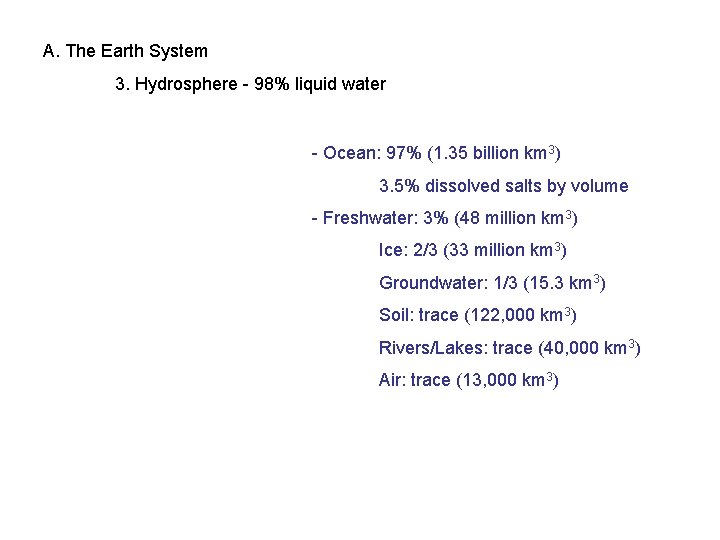
A. The Earth System 3. Hydrosphere - 98% liquid water - Ocean: 97% (1. 35 billion km 3) 3. 5% dissolved salts by volume - Freshwater: 3% (48 million km 3) Ice: 2/3 (33 million km 3) Groundwater: 1/3 (15. 3 km 3) Soil: trace (122, 000 km 3) Rivers/Lakes: trace (40, 000 km 3) Air: trace (13, 000 km 3)
A. The Earth System 3. Hydrosphere - 98% liquid water How is this important to life?
A. The Earth System 3. Hydrosphere - 98% liquid water How is this important to life? 1) It is the environment of life – reactions between soluble compounds occur readily in liquid water… and more in a moment.
WHAT OTHER PHILOSOPHICAL APPROACH COULD WE USE TO DETERMINE WHETHER THE EARTH SYSTEM IS "TYPICAL"?
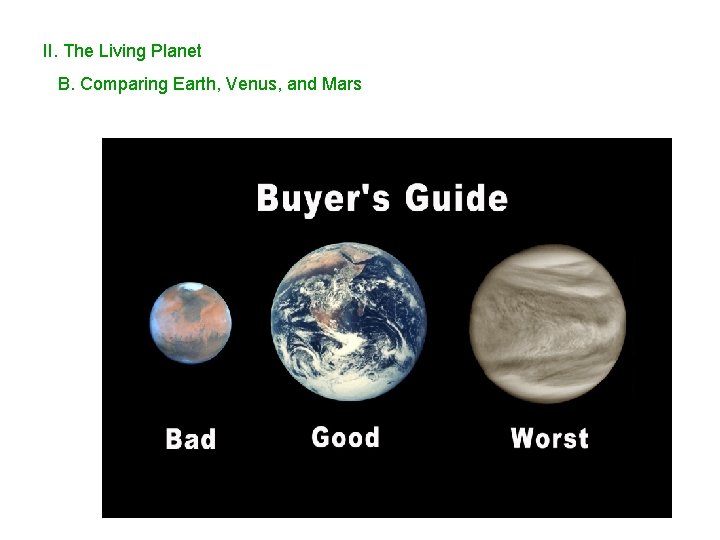
II. The Living Planet B. Comparing Earth, Venus, and Mars
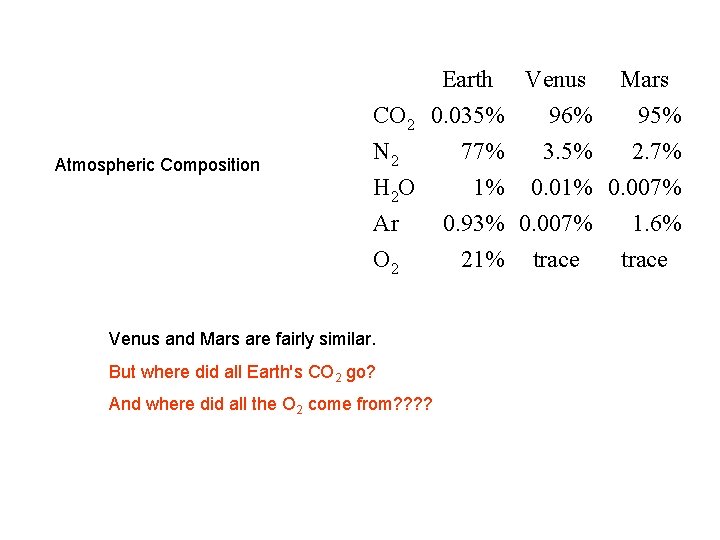
Earth Atmospheric Composition CO 2 0. 035% N 2 77% H 2 O 1% Ar O 2 Venus and Mars are fairly similar. But where did all Earth's CO 2 go? And where did all the O 2 come from? ? Venus Mars 96% 95% 3. 5% 2. 7% 0. 01% 0. 007% 0. 93% 0. 007% 21% trace 1. 6% trace
II. The Living Planet B. Comparing Earth, Venus, and Mars 1. Liquid water has changed our planet: - takes CO 2 out of atmosphere (dissolution) - erodes lithosphere the two things put carbon and mineral nutrients into solution, where they can react with one another, and be taken up by. .
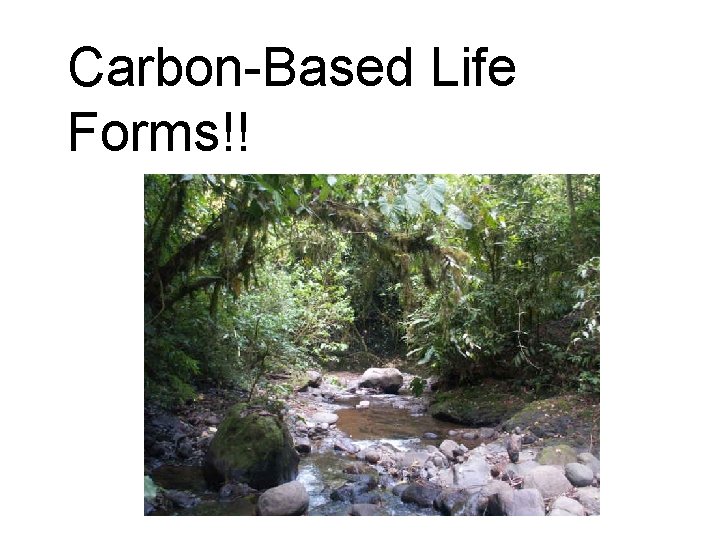
Carbon-Based Life Forms!!
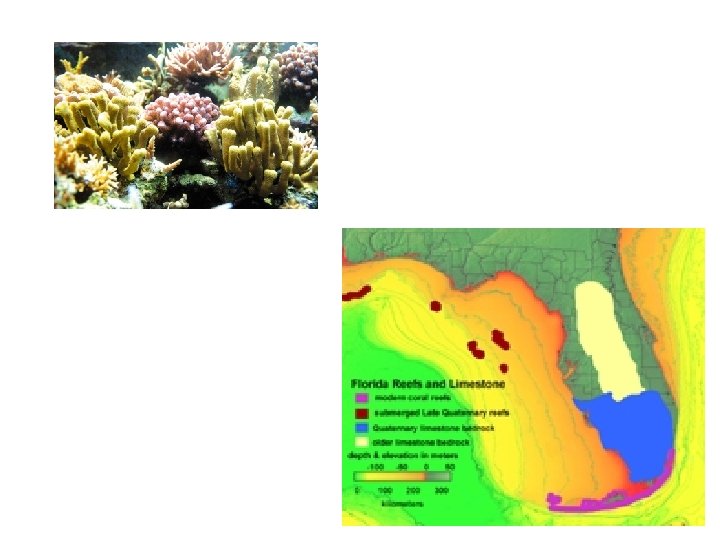
II. The Living Planet B. Comparing Earth, Venus, and Mars 2. LIFE CHANGES OUR PLANET - increases rates of flux between other subsystems (evapotranspiration, nutrient uptake, respiration) - Changes the composition of subsystems - Life transports CO 2 from the atmosphere to living tissues or its products (Calcium Carbonate shells), which settle in sedimentary strata of carbonaceous rocks (limestone and derivatives) and fossil deposits (oil, gas).
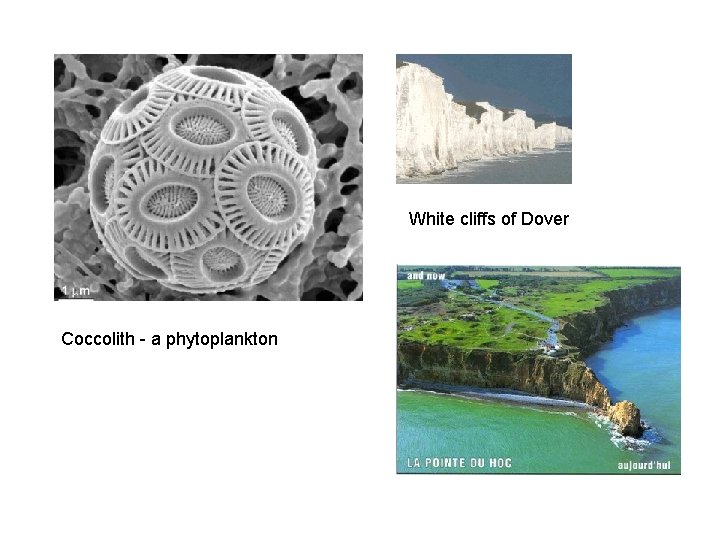
White cliffs of Dover Coccolith - a phytoplankton
II. The Living Planet B. Comparing Earth, Venus, and Mars 2. LIFE CHANGES OUR PLANET - increases rates of flux between other subsystems (evapotranspiration, nutrient uptake, respiration) - Changes the composition of subsystems - Life transports CO 2 from the atmosphere to living tissue or its products (shells), which settles in sedimentary strata of carbonaceous rocks (limestone and derivatives) and fossil deposits (oil, gas). - Photosynthesis releases O 2. That is where ALL of the Earth's oxygen gas has come from.
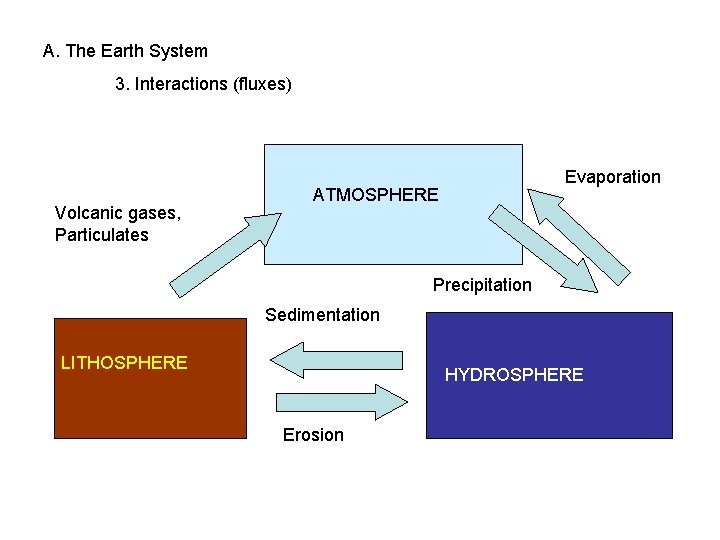
A. The Earth System 3. Interactions (fluxes) Volcanic gases, Particulates Evaporation ATMOSPHERE Precipitation Sedimentation LITHOSPHERE HYDROSPHERE Erosion
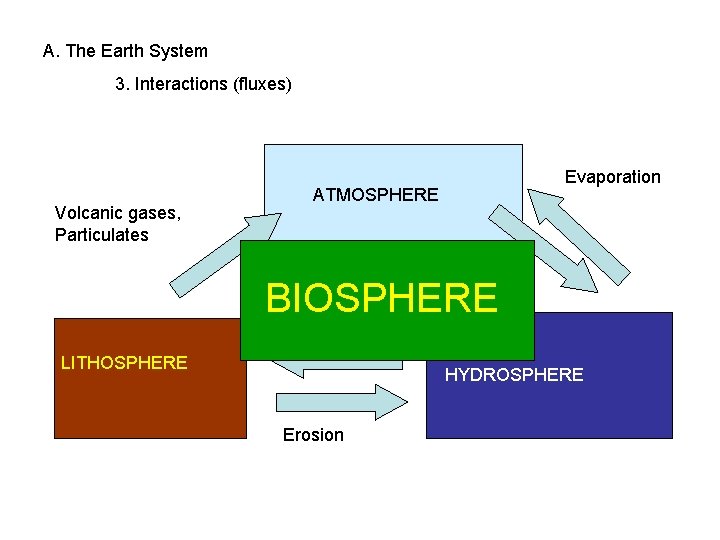
A. The Earth System 3. Interactions (fluxes) Volcanic gases, Particulates Evaporation ATMOSPHERE Precipitation BIOSPHERE Sedimentation LITHOSPHERE HYDROSPHERE Erosion
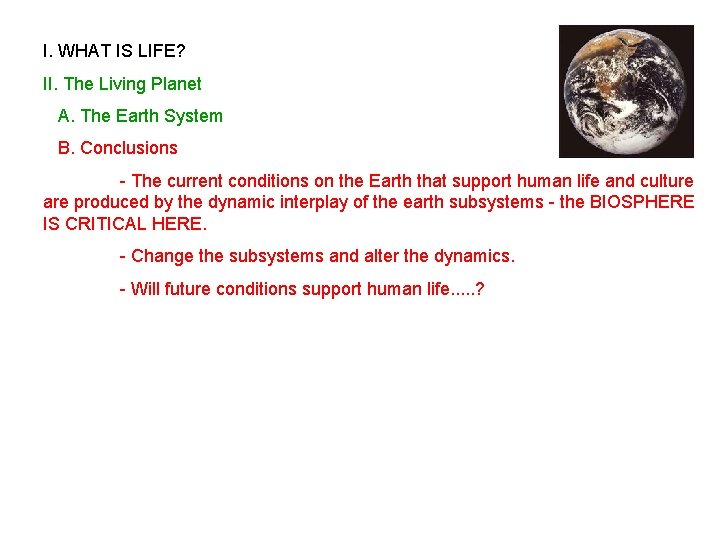
I. WHAT IS LIFE? II. The Living Planet A. The Earth System B. Conclusions - The current conditions on the Earth that support human life and culture are produced by the dynamic interplay of the earth subsystems - the BIOSPHERE IS CRITICAL HERE. - Change the subsystems and alter the dynamics. - Will future conditions support human life. . . ?
III. What is Ecology? A. Definitions:
III. What is Ecology? A. Definitions: Ricklefs - “The study of the interactions of organisms with one another and with their environment”
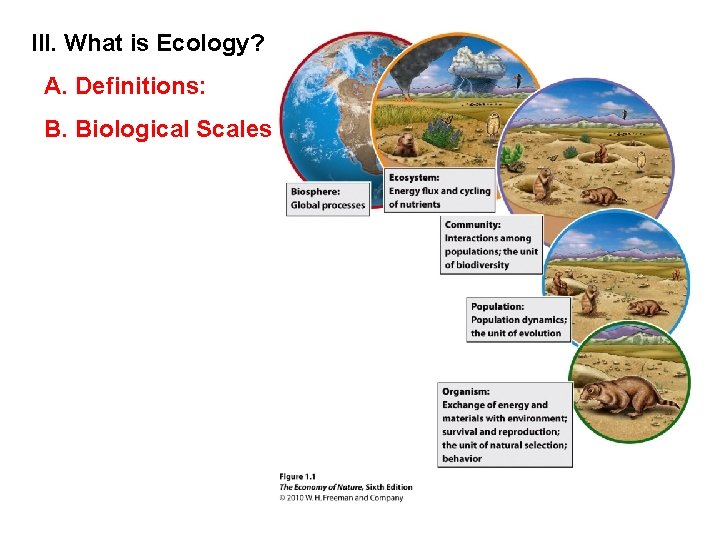
III. What is Ecology? A. Definitions: B. Biological Scales
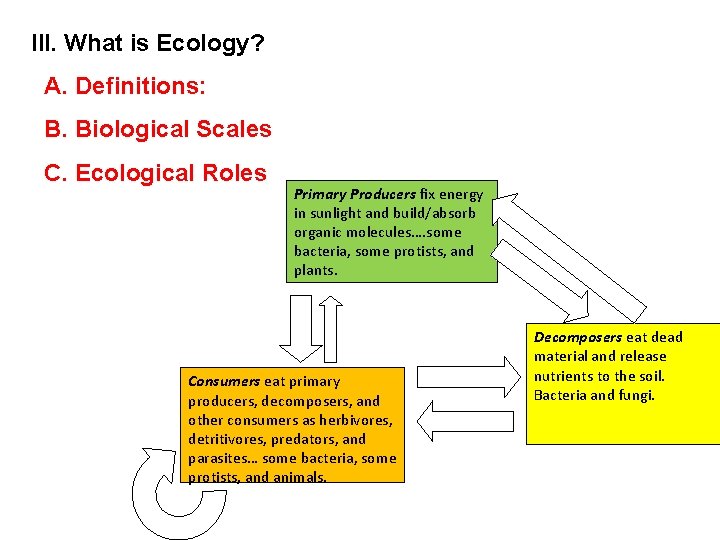
III. What is Ecology? A. Definitions: B. Biological Scales C. Ecological Roles Primary Producers fix energy in sunlight and build/absorb organic molecules…. some bacteria, some protists, and plants. Consumers eat primary producers, decomposers, and other consumers as herbivores, detritivores, predators, and parasites… some bacteria, some protists, and animals. Decomposers eat dead material and release nutrients to the soil. Bacteria and fungi.
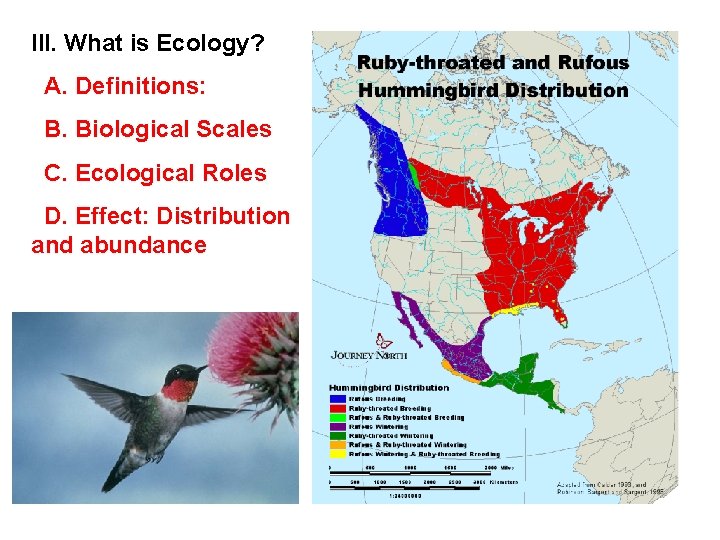
III. What is Ecology? A. Definitions: B. Biological Scales C. Ecological Roles D. Effect: Distribution and abundance
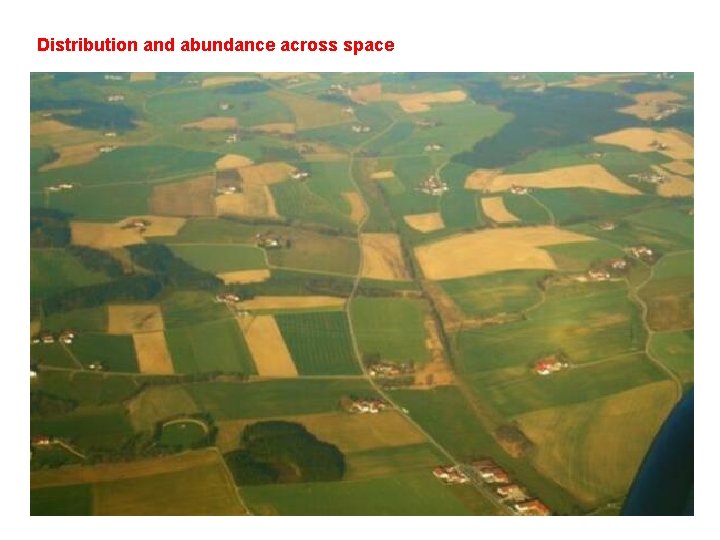
Distribution and abundance across space
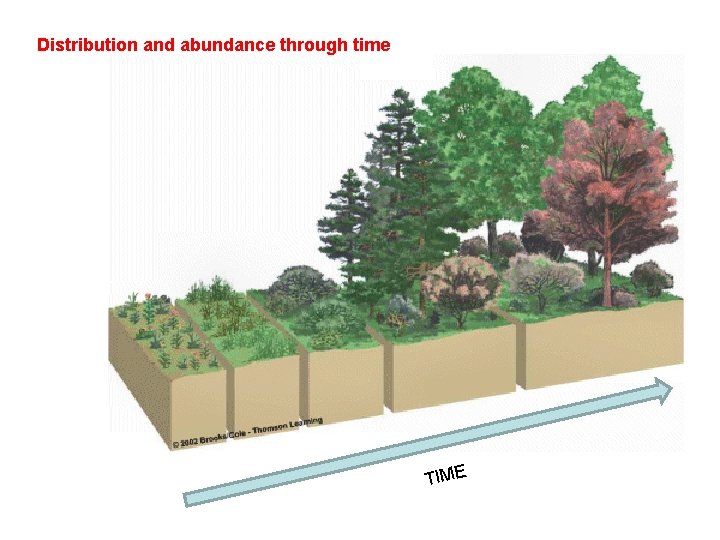
Distribution and abundance through time TIME
IV. Why is it Important?
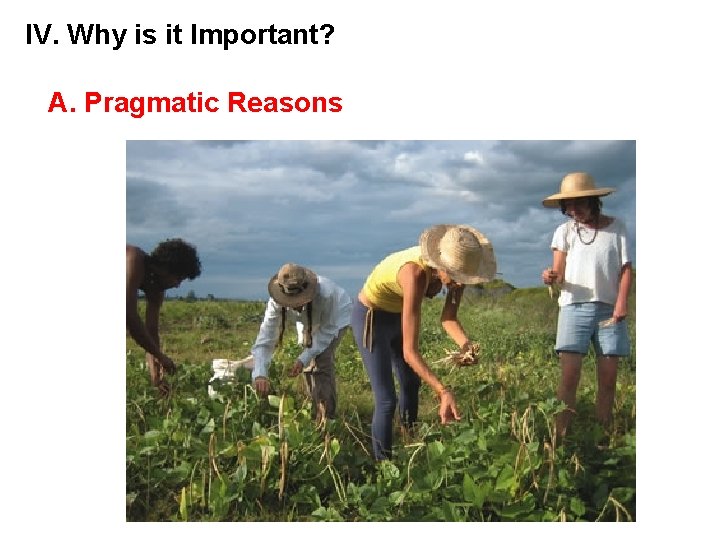
IV. Why is it Important? A. Pragmatic Reasons
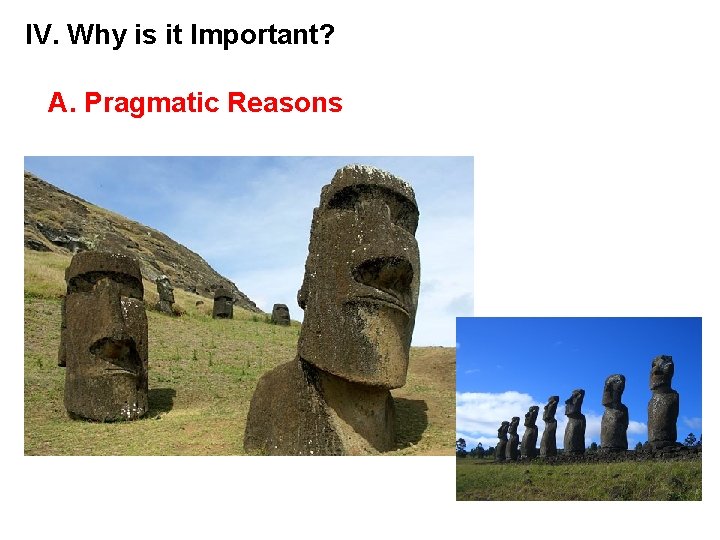
IV. Why is it Important? A. Pragmatic Reasons
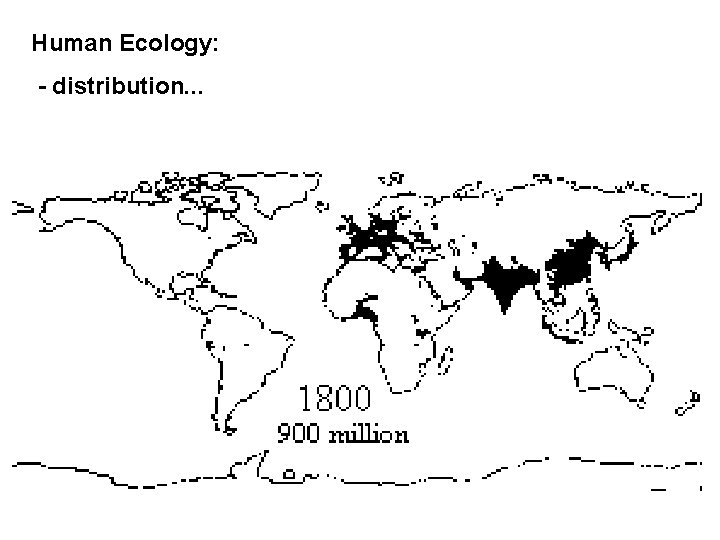
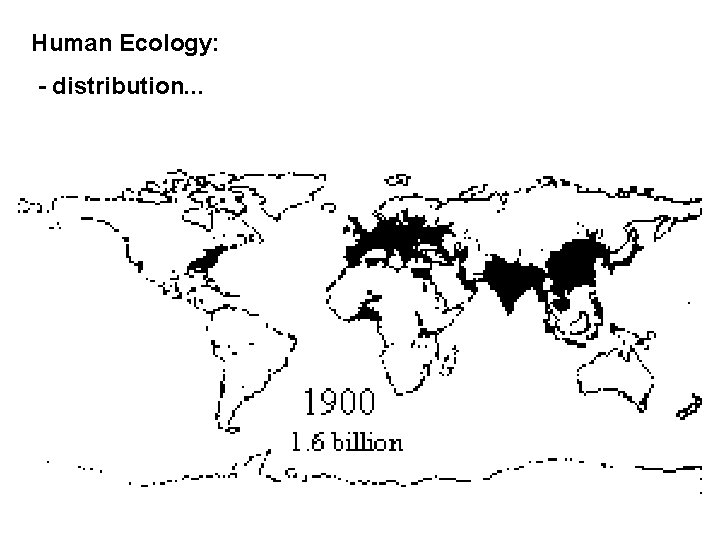
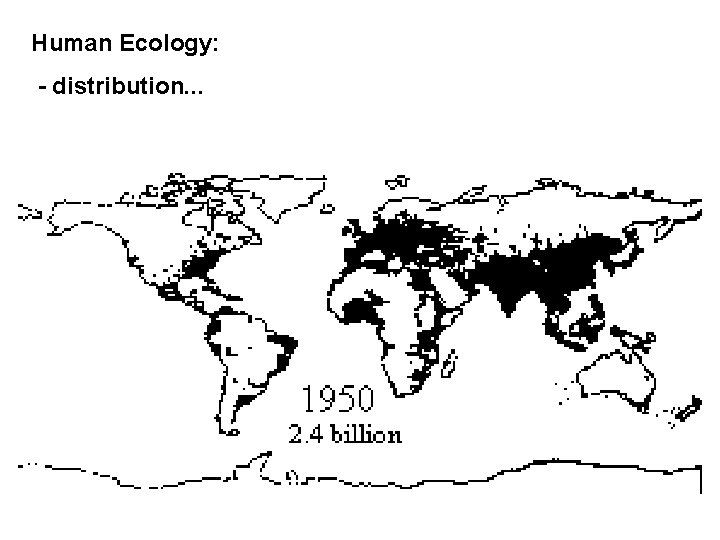
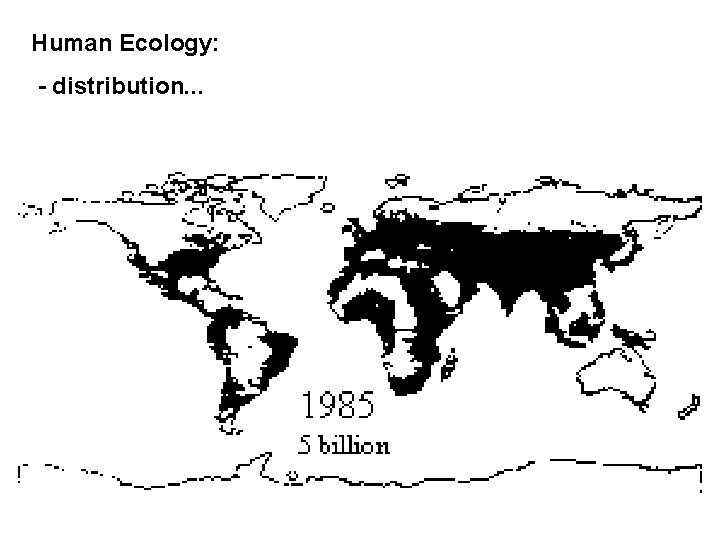
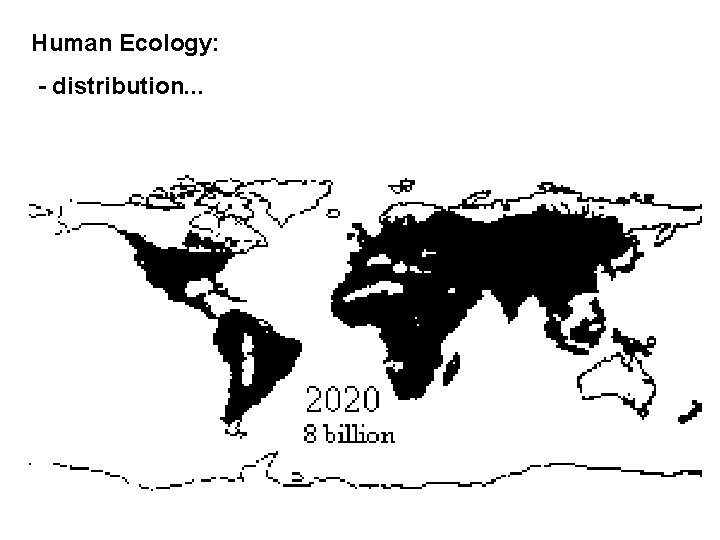
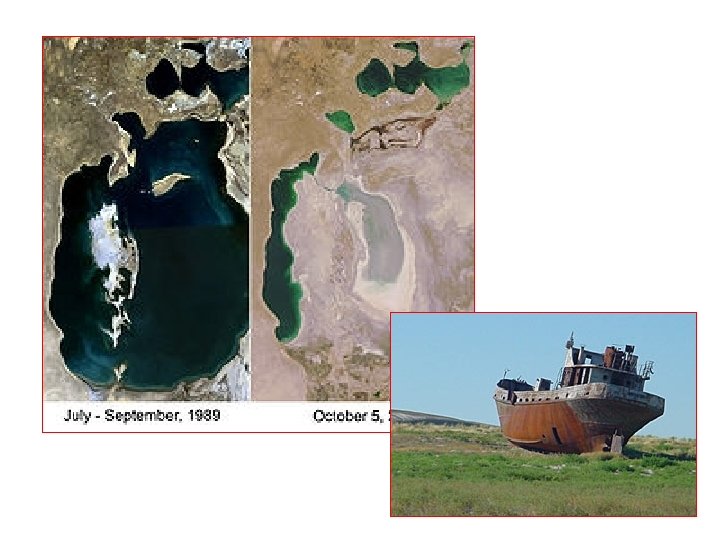
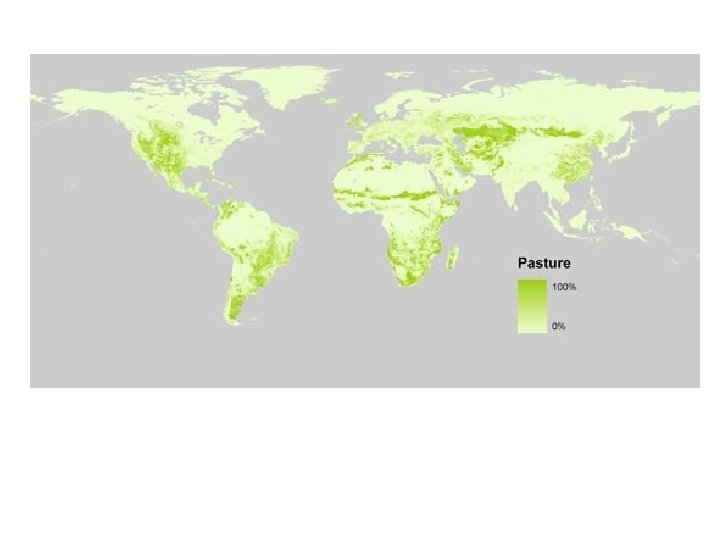
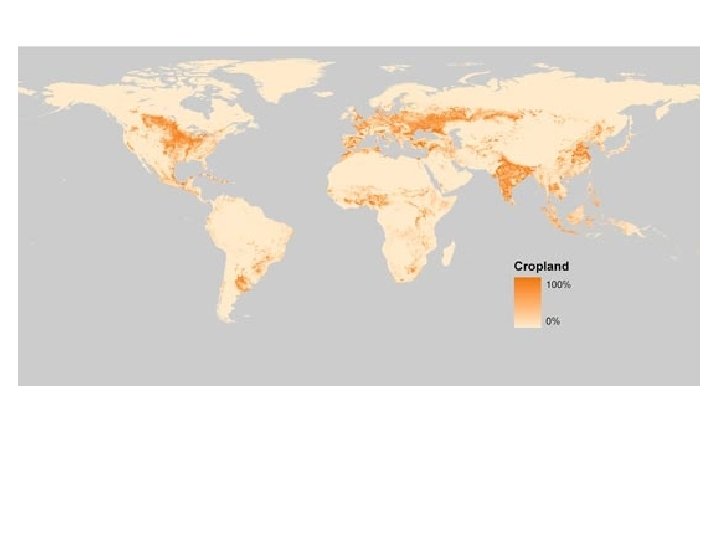
Human Ecology: - distribution. . .
Human Ecology: - distribution. . .
Human Ecology: - distribution. . .
Human Ecology: - distribution. . .
Human Ecology: - distribution. . .
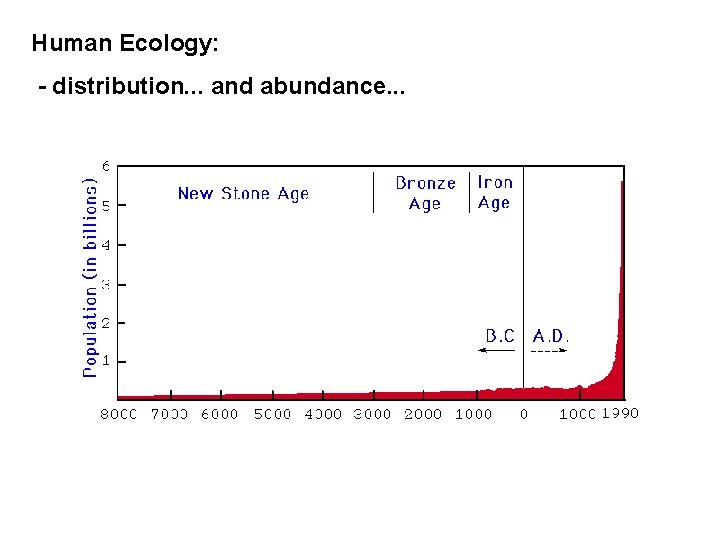
Human Ecology: - distribution. . . and abundance. . .
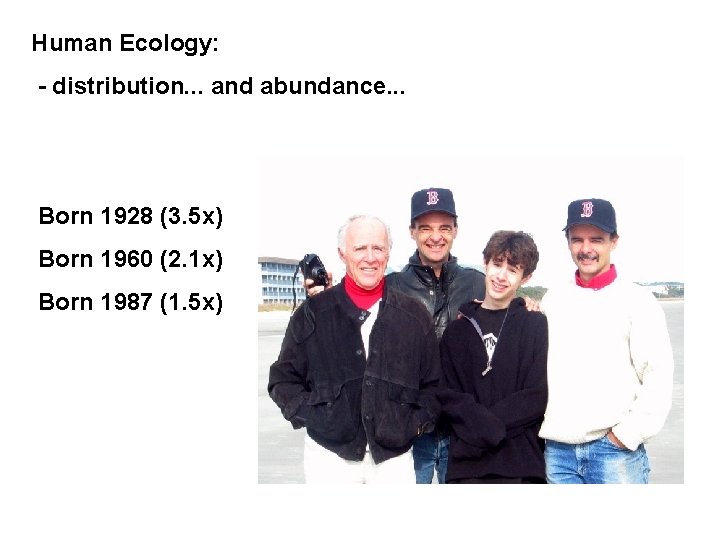
Human Ecology: - distribution. . . and abundance. . . Born 1928 (3. 5 x) Born 1960 (2. 1 x) Born 1987 (1. 5 x)
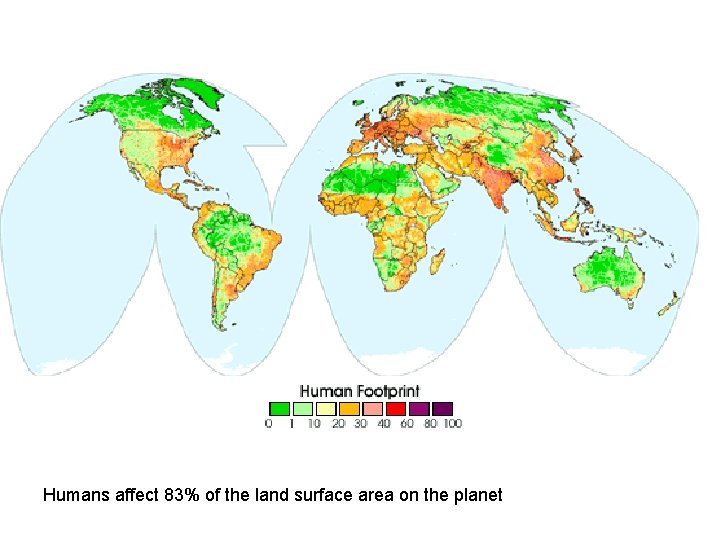
Humans affect 83% of the land surface area on the planet
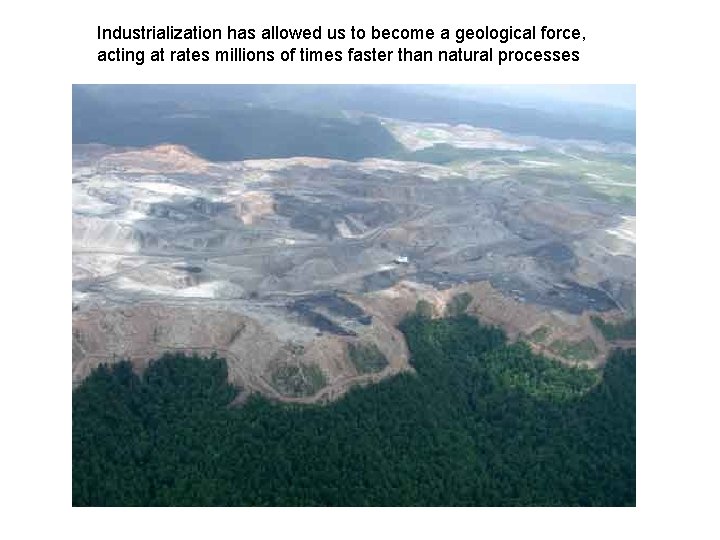
Industrialization has allowed us to become a geological force, acting at rates millions of times faster than natural processes
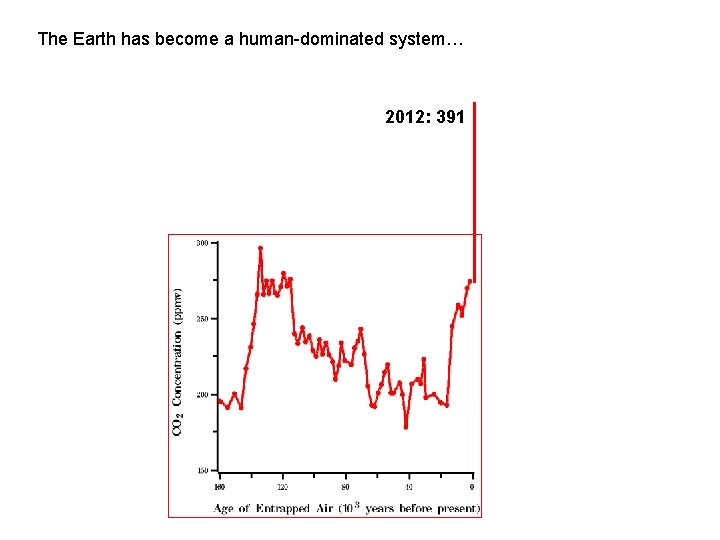
The Earth has become a human-dominated system… 2012: 391
IV. Why is it Important? A. Pragmatic Reasons B. Sustainability
IV. Why is it Important? A. Pragmatic Reasons B. Sustainability Sustainable development is development that meets the needs of the present without compromising the ability of future generations to meet their own needs.
IV. Why is it Important? A. Pragmatic Reasons B. Sustainability Sustainable development is development that meets the needs of the present without compromising the ability of future generations to meet their own needs. How?
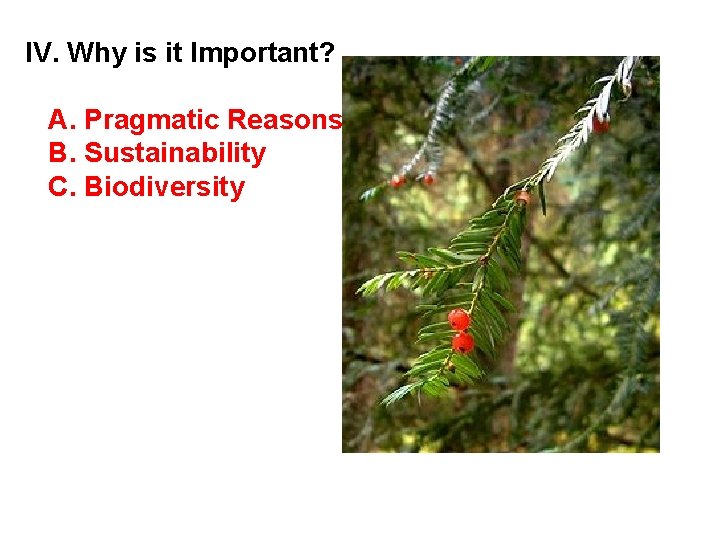
IV. Why is it Important? A. Pragmatic Reasons B. Sustainability C. Biodiversity
And that’s why all FU students must take a Humans and the Natural Environment class…