
II Methodological issues Environment Migration Qualitative approaches Migrants
- Slides: 21
II. Methodological issues Environment & Migration
Qualitative approaches
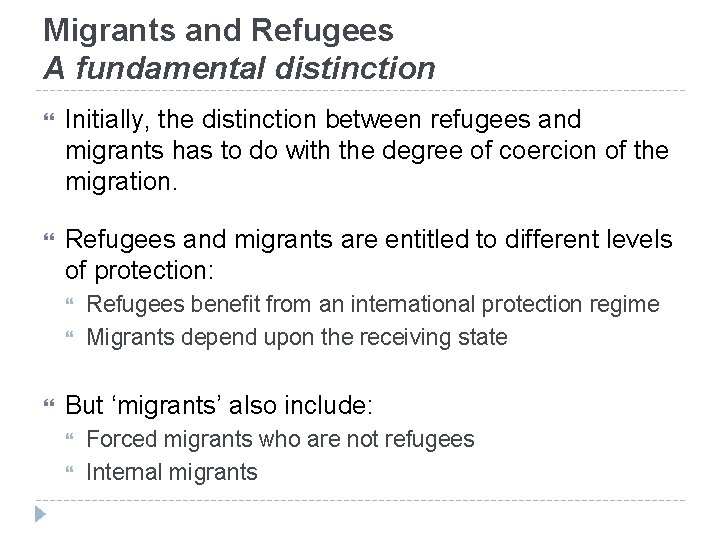
Migrants and Refugees A fundamental distinction Initially, the distinction between refugees and migrants has to do with the degree of coercion of the migration. Refugees and migrants are entitled to different levels of protection: Refugees benefit from an international protection regime Migrants depend upon the receiving state But ‘migrants’ also include: Forced migrants who are not refugees Internal migrants
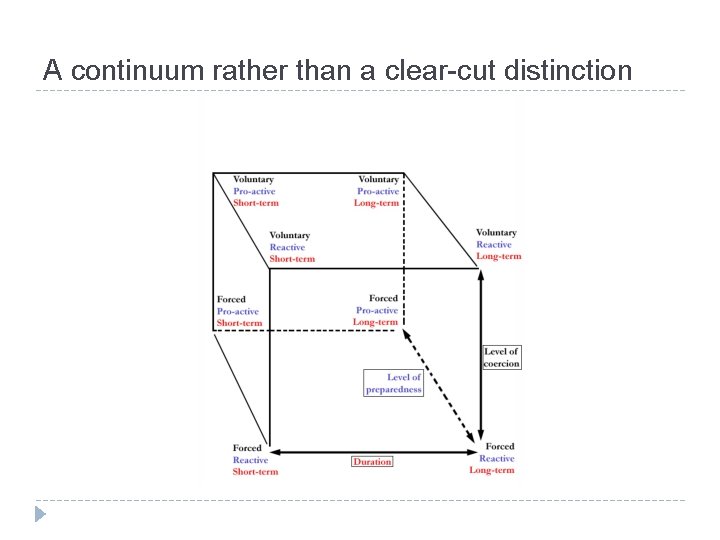
A continuum rather than a clear-cut distinction
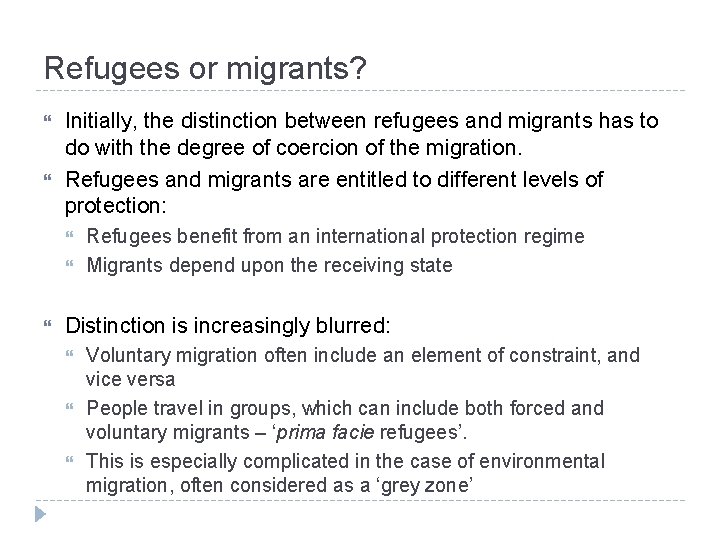
Refugees or migrants? Initially, the distinction between refugees and migrants has to do with the degree of coercion of the migration. Refugees and migrants are entitled to different levels of protection: Refugees benefit from an international protection regime Migrants depend upon the receiving state Distinction is increasingly blurred: Voluntary migration often include an element of constraint, and vice versa People travel in groups, which can include both forced and voluntary migrants – ‘prima facie refugees’. This is especially complicated in the case of environmental migration, often considered as a ‘grey zone’
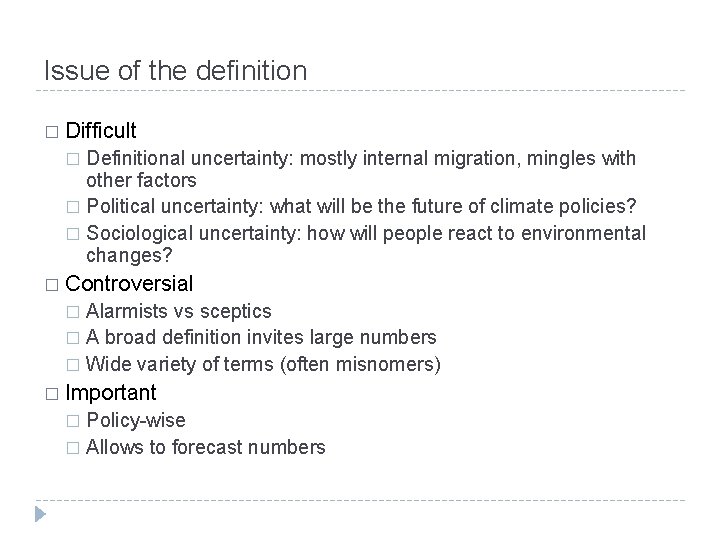
Issue of the definition � Difficult Definitional uncertainty: mostly internal migration, mingles with other factors � Political uncertainty: what will be the future of climate policies? � Sociological uncertainty: how will people react to environmental changes? � � Controversial Alarmists vs sceptics � A broad definition invites large numbers � Wide variety of terms (often misnomers) � � Important Policy-wise � Allows to forecast numbers �
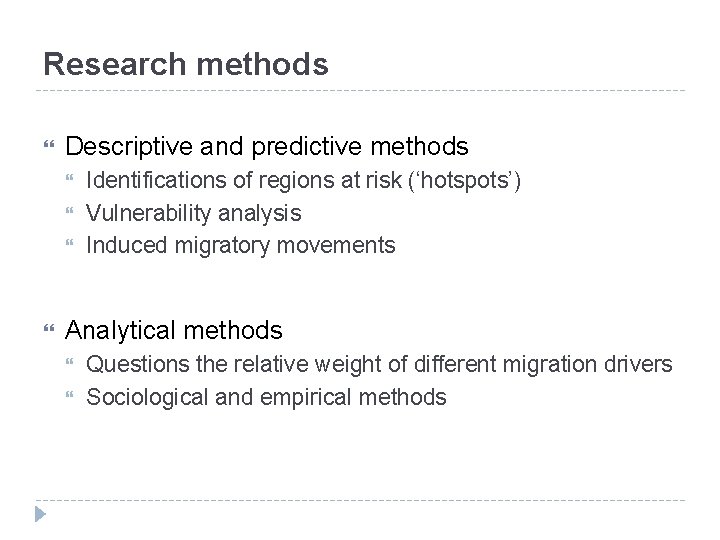
Research methods Descriptive and predictive methods Identifications of regions at risk (‘hotspots’) Vulnerability analysis Induced migratory movements Analytical methods Questions the relative weight of different migration drivers Sociological and empirical methods
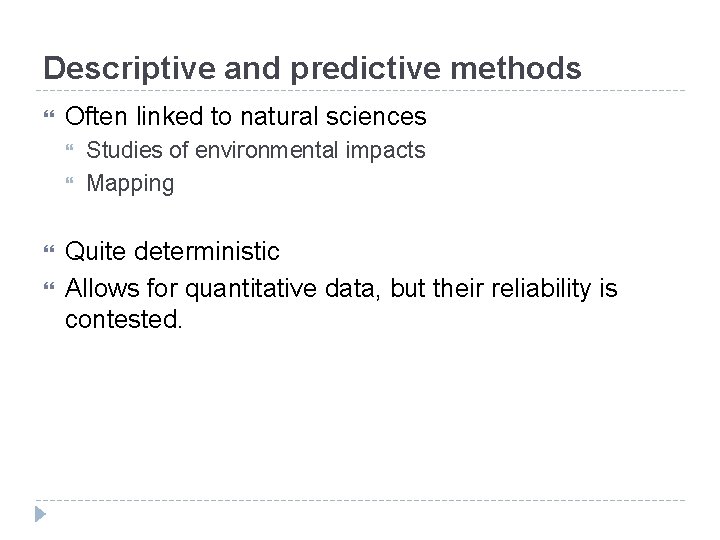
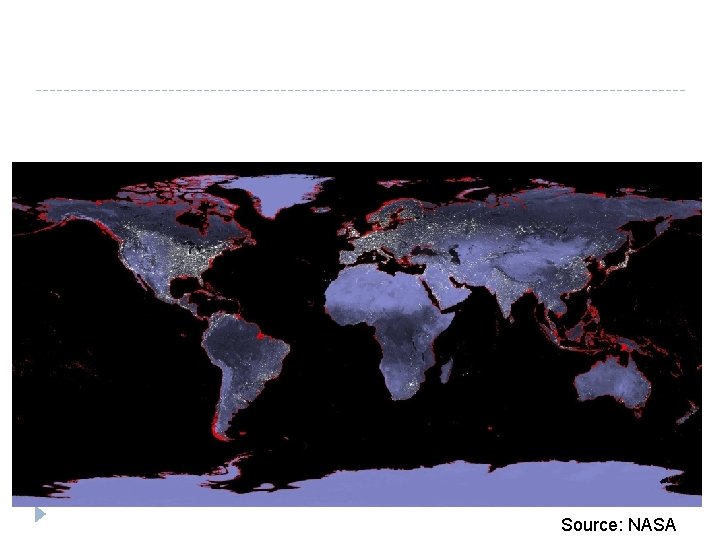
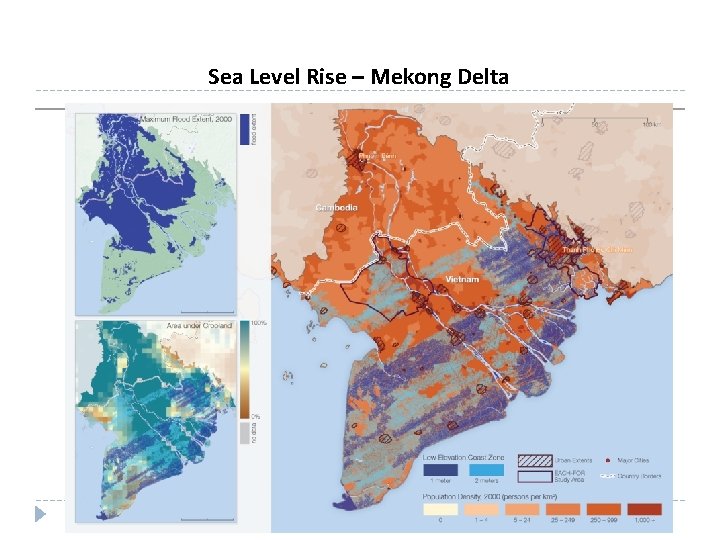
Descriptive and predictive methods Often linked to natural sciences Studies of environmental impacts Mapping Quite deterministic Allows for quantitative data, but their reliability is contested.
Source: NASA
Sea Level Rise – Mekong Delta
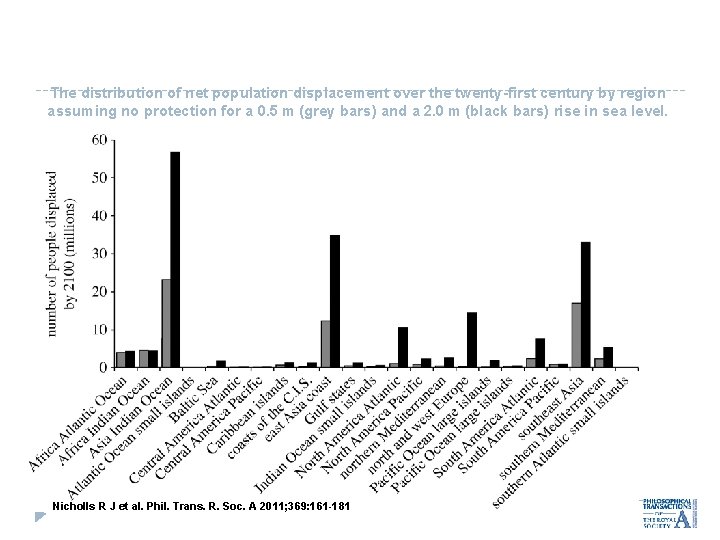
The distribution of net population displacement over the twenty-first century by region assuming no protection for a 0. 5 m (grey bars) and a 2. 0 m (black bars) rise in sea level. Nicholls R J et al. Phil. Trans. R. Soc. A 2011; 369: 161 -181
Analytical methods Usually revolves around the same questions: Why did people migrate ? Relative weight of different migration drivers.
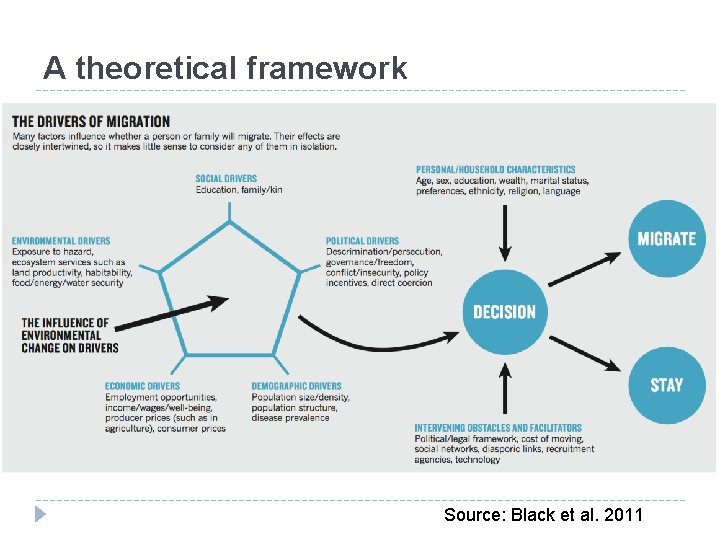
A theoretical framework Source: Black et al. 2011
1. Ecological inference Seeks to reproduce individual behaviours on the basis of collective observations. Relies on the idea that there is a correlation between a region’s environmental patterns and migratory patterns. Multi-variable analysis, but two issues: Which variables to consider? Inference limits
2. Household surveys Surveys need to administered to large samples Can also yield quantitative data Issues: Surveys don’t allow for a refined understanding of the problems. Capture the situation at a specific time, but little historical perspective. Perceptions of the environment are very different from one individual to the other.
3. Time series Similar to ecological inference, but devotes more attention to the time dimension, at the expense of the space dimension. Depends on statistical data on migration, which are often scarce and/or incomplete. Which control variables?
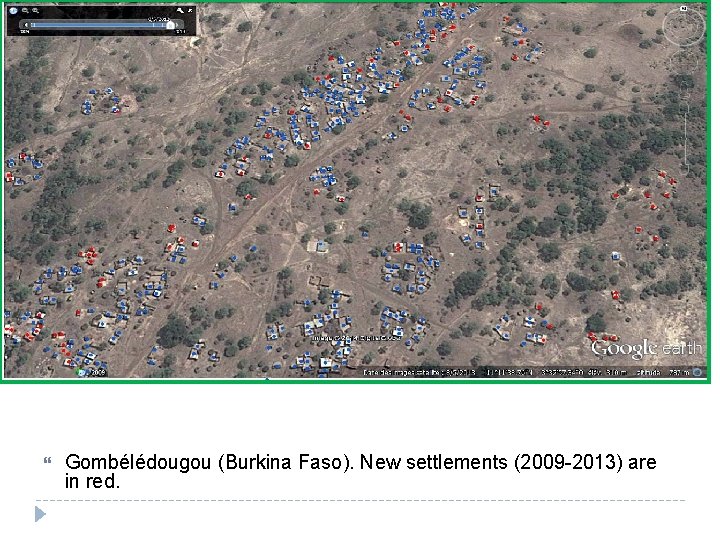
Gombélédougou (Burkina Faso). En rouge les nouvelles habitations (20092013) Gombélédougou (Burkina Faso). New settlements (2009 -2013) are in red.
4. Multi-level analyses Combine : Environmental data Household surveys Time series Practical issues: Difficult to conduct (just one so far, in Burkina Faso) Different conceptions and divisions of space
5. Ethnographic methods Most frequently used (ex: EACH-FOR) Use qualitative interviews with migrants and experts Allow for a refined understanding of the ongoing processes, but do not allow for Realistic predictions Quantitative data
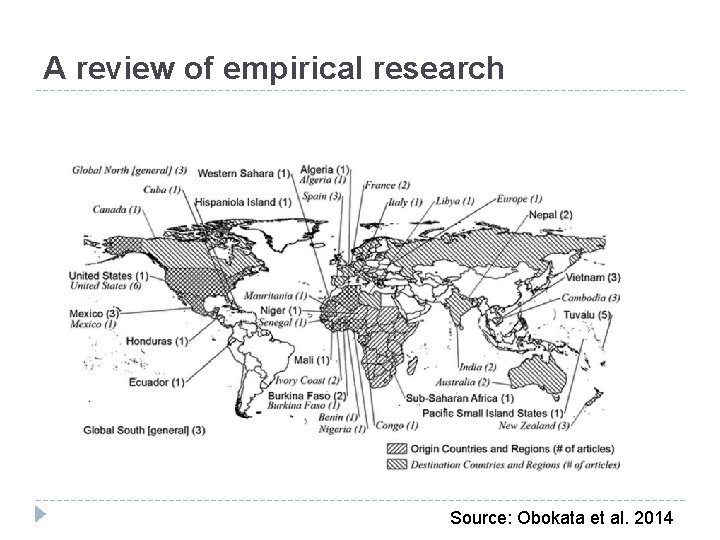
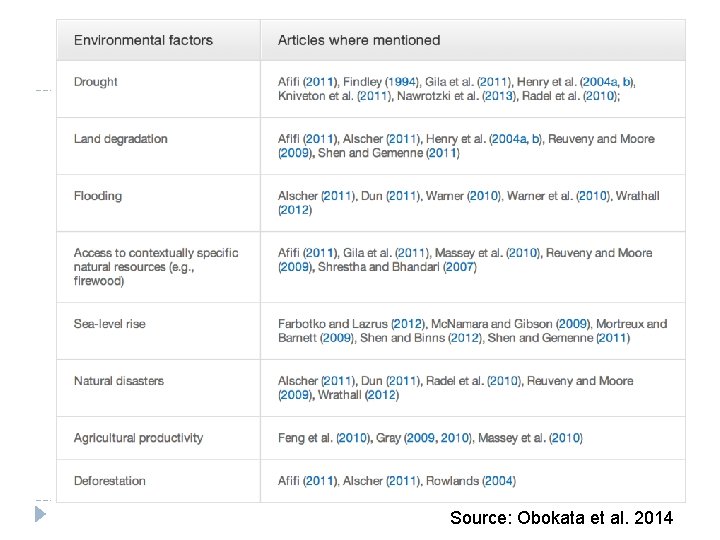
A review of empirical research Source: Obokata et al. 2014
Source: Obokata et al. 2014