
II Membrane Transport Two types Passive Active A
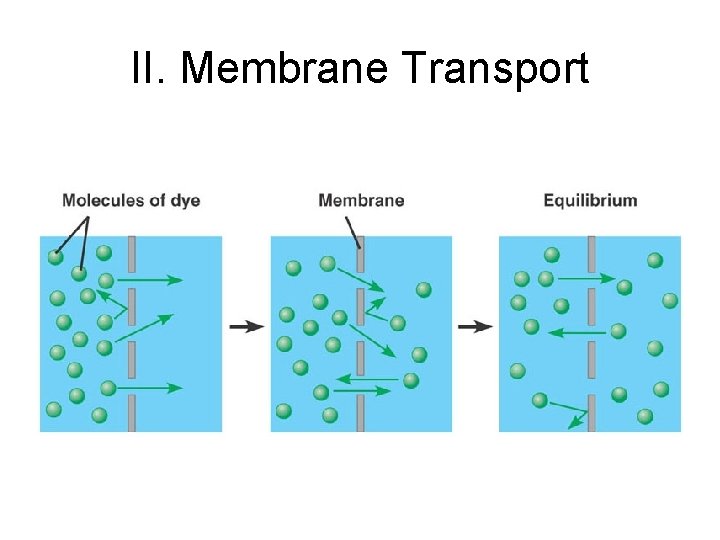
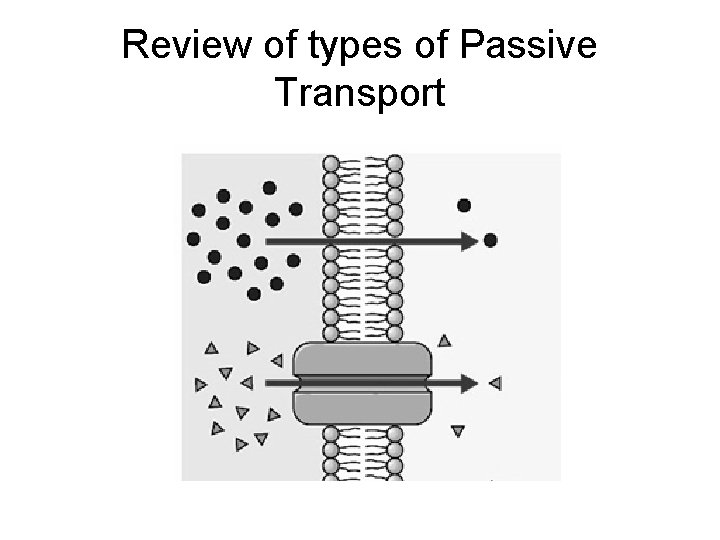
II. Membrane Transport • Two types: Passive & Active A. Passive Transport - does not require energy 1. Diffusion - process where molecules move from an area where they are more concentrated to an area where they are less concentrated
II. Membrane Transport
II. Membrane Transport 2. Osmosis - the diffusion (high to low concentration) of water through a selectively permeable membrane
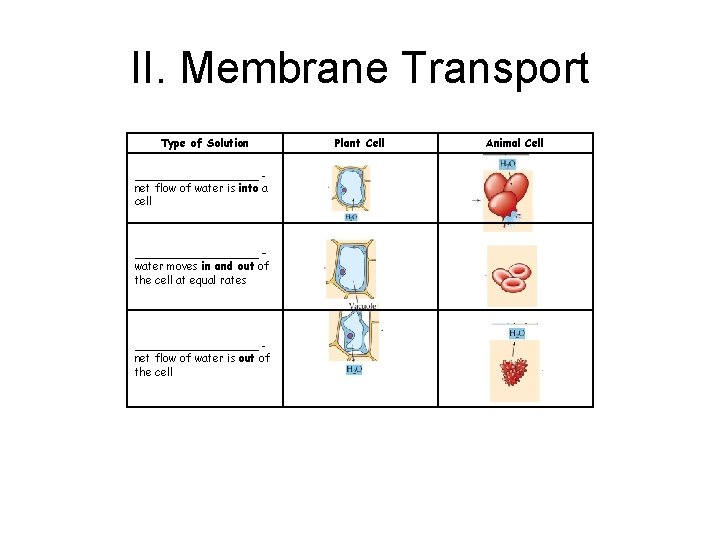
II. Membrane Transport Type of Solution _________ net flow of water is into a cell _________ – water moves in and out of the cell at equal rates _________ net flow of water is out of the cell Plant Cell Animal Cell
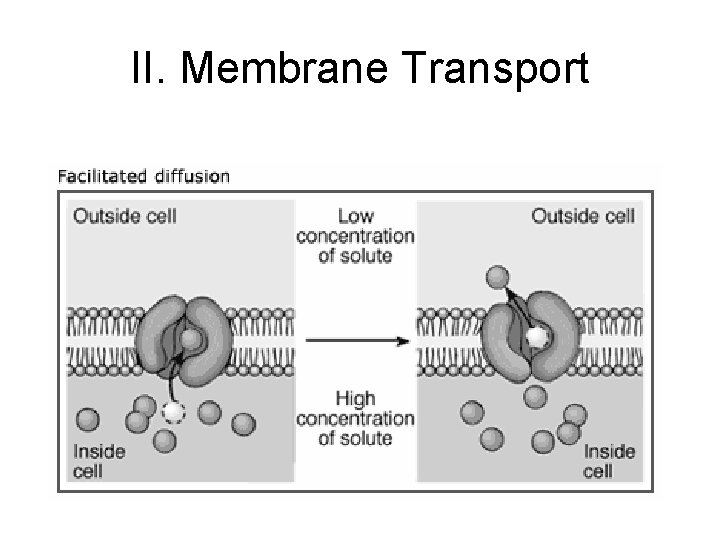
II. Membrane Transport 3. Facilitated Diffusion – When a carrier molecule transports solute molecules across the membrane – Speed up diffusion – Carry large molecules that can’t diffuse quickly across cell membrane
II. Membrane Transport
Review of types of Passive Transport
II. Membrane Transport B. Active Transport – the movement of any substance across a cell membrane with the use of chemical energy – Requires energy & a carrier protein – Against the concentration gradient – moving low to high (paddling up a river)
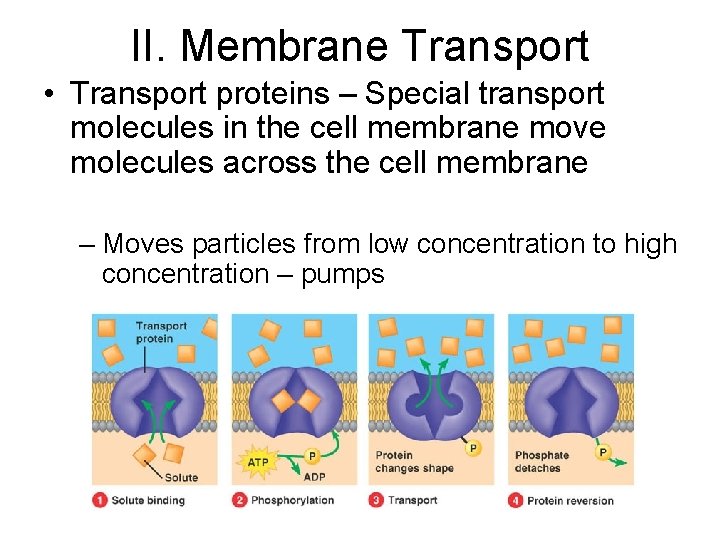
II. Membrane Transport • Transport proteins – Special transport molecules in the cell membrane move molecules across the cell membrane – Moves particles from low concentration to high concentration – pumps
II. Membrane Transport Endocytosis – bringing large particles into the cell • Pinocytosis – Movement of solutes or fluids into the cell. “Cell drinking” • Phagocytosis – Movement of large food particle or whole microorganisms into the cell. “Cell eating”
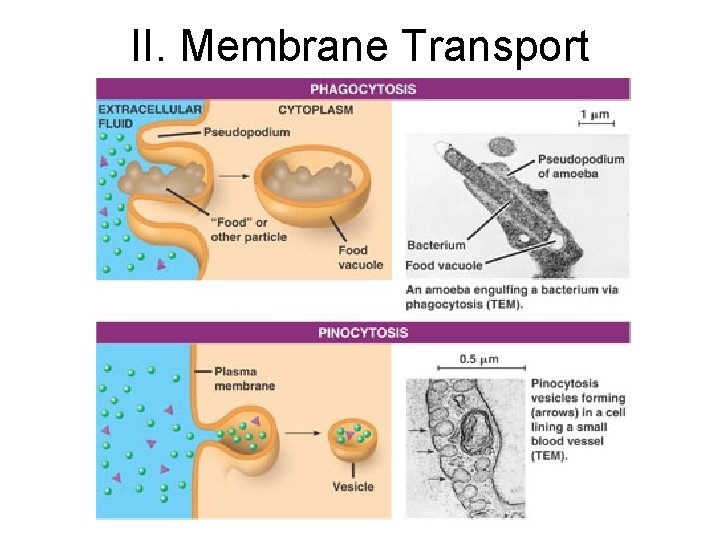
II. Membrane Transport
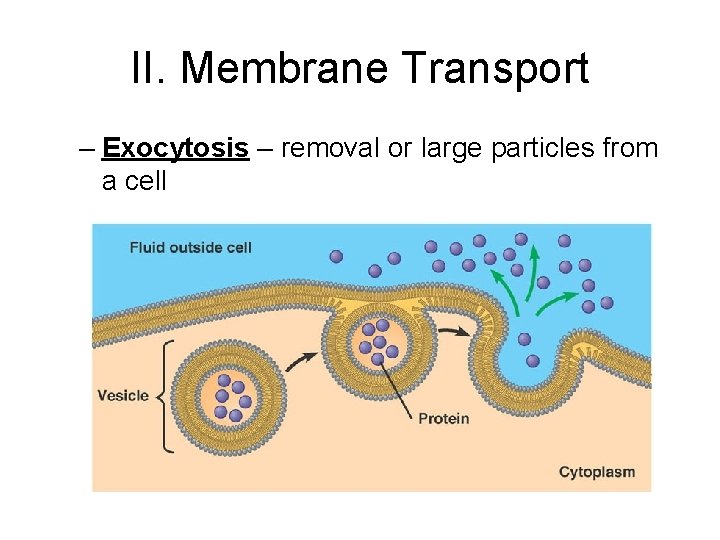
II. Membrane Transport – Exocytosis – removal or large particles from a cell
- Slides: 12