
II Industrialization 1870 1900 Transportation Revolution James Watt


- Slides: 34
II. Industrialization (1870 -1900)
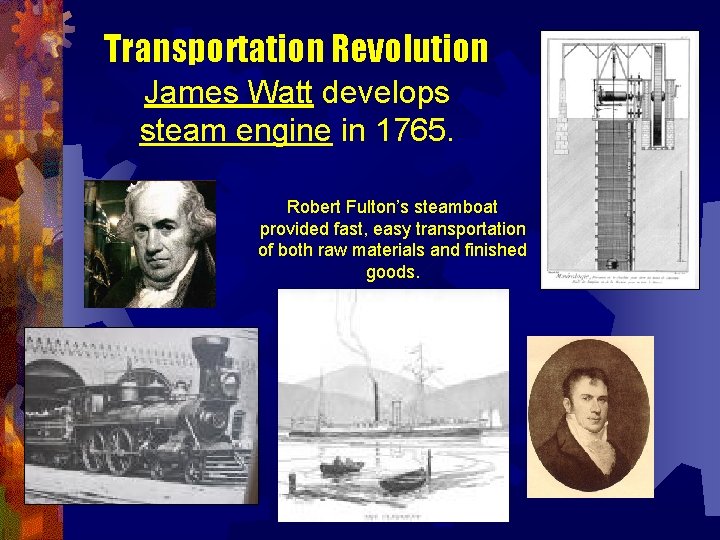
Transportation Revolution James Watt develops steam engine in 1765. Robert Fulton’s steamboat provided fast, easy transportation of both raw materials and finished goods.
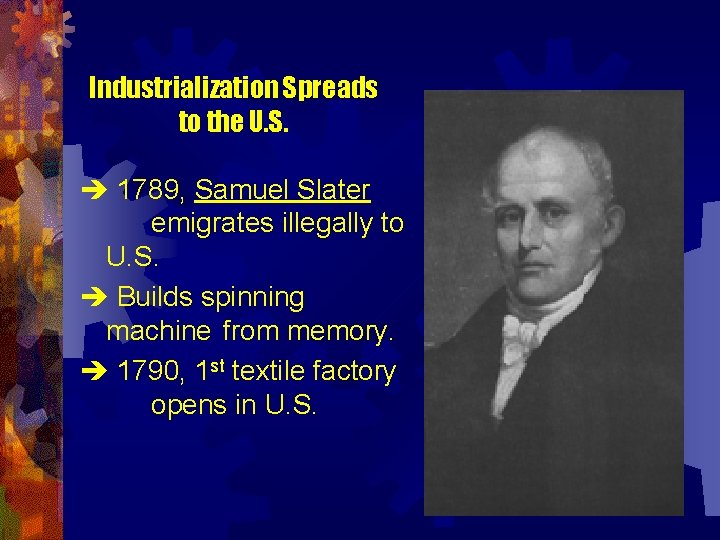
Industrialization Spreads to the U. S. 1789, Samuel Slater emigrates illegally to U. S. Builds spinning machine from memory. 1790, 1 st textile factory opens in U. S.
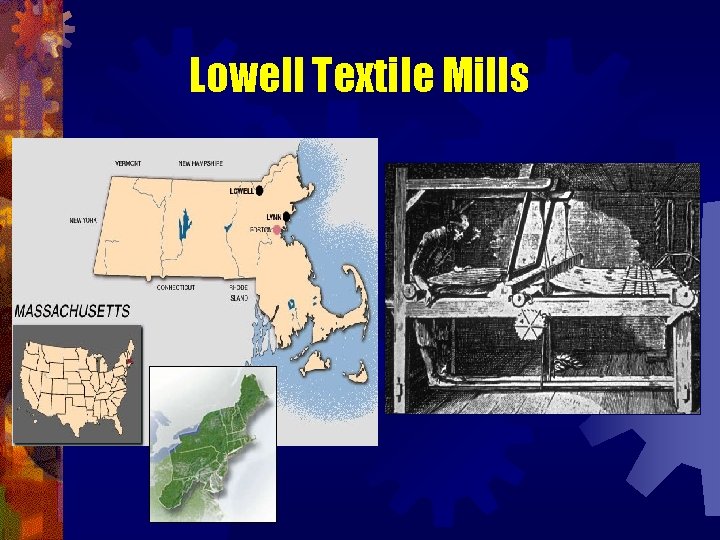
Lowell Textile Mills
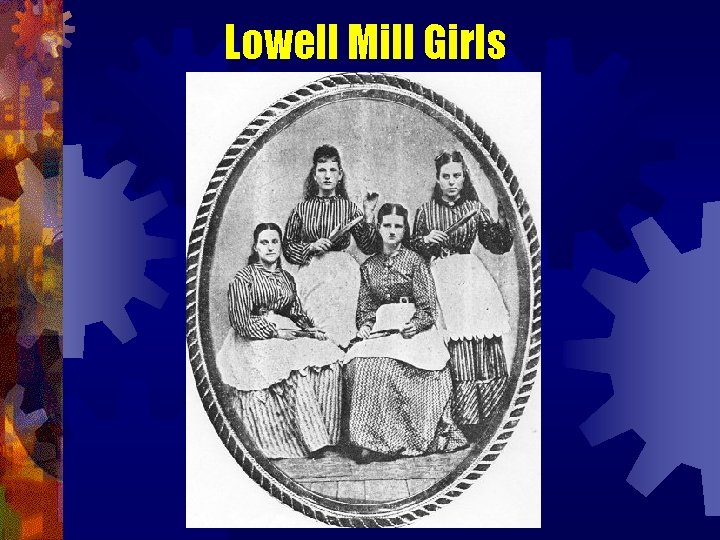
Lowell Mill Girls
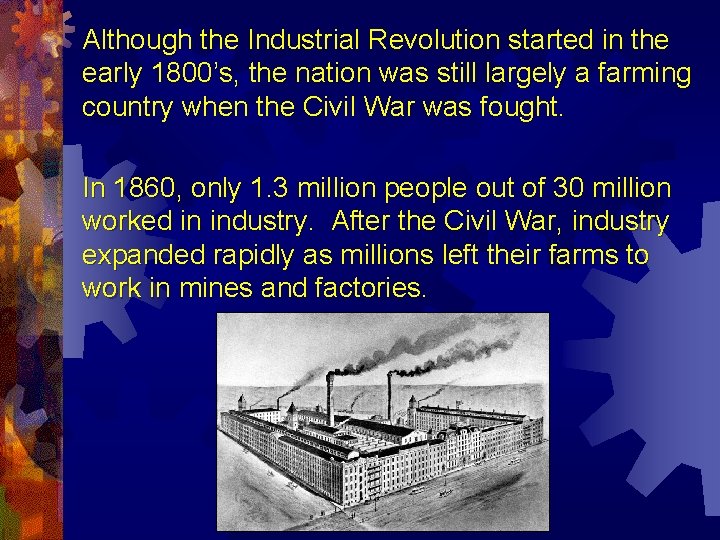
Although the Industrial Revolution started in the early 1800’s, the nation was still largely a farming country when the Civil War was fought. In 1860, only 1. 3 million people out of 30 million worked in industry. After the Civil War, industry expanded rapidly as millions left their farms to work in mines and factories.
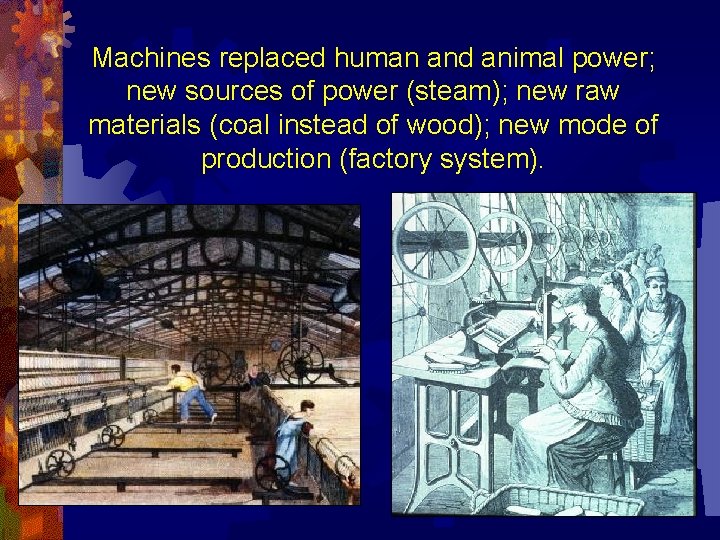
Machines replaced human and animal power; new sources of power (steam); new raw materials (coal instead of wood); new mode of production (factory system).
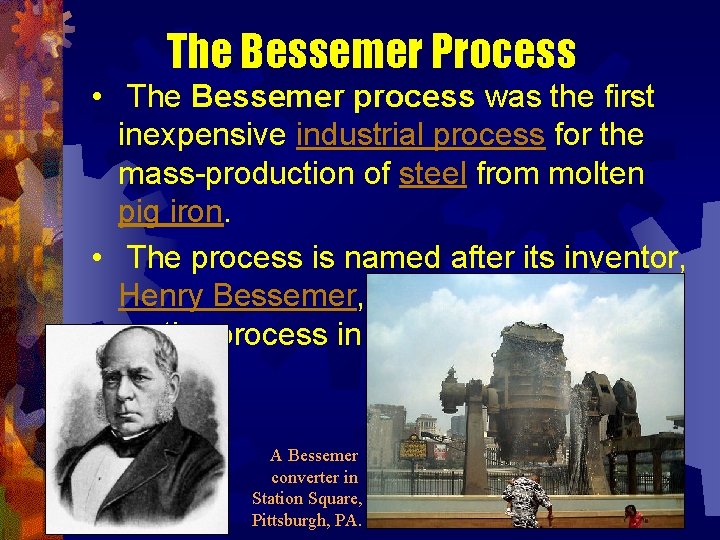
The Bessemer Process • The Bessemer process was the first inexpensive industrial process for the mass-production of steel from molten pig iron. • The process is named after its inventor, Henry Bessemer, who took out a patent on the process in 1855. A Bessemer converter in Station Square, Pittsburgh, PA.
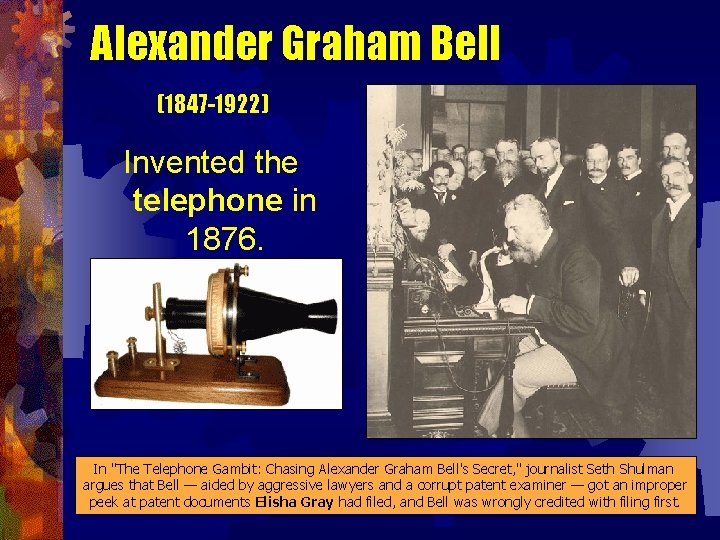
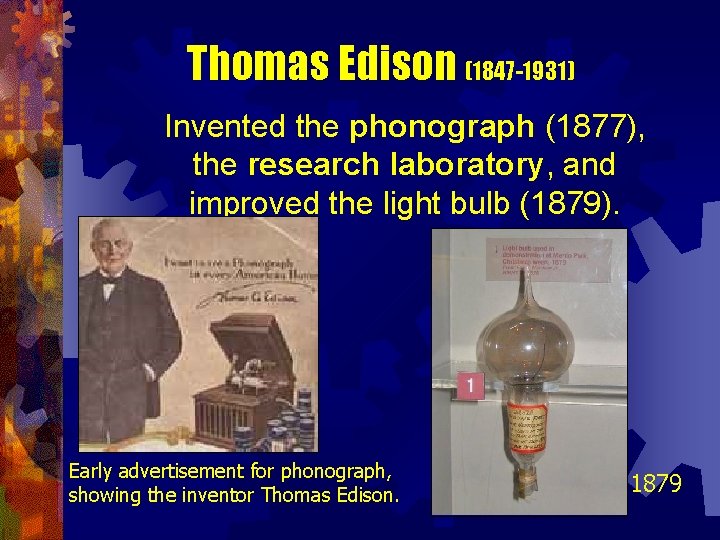
A. Inventions – helped ↑ productivity, transportation, & communication. 1. Alexander Graham Bell – 1876, invented telephone; revolutionized communications. 2. Thomas Edison – 1877, invented the phonograph; 1879, perfected the light bulb & electric generator. 1877, Bell and others formed the Bell Telephone Co. , which became AT&T. 1882, Edison Electric Illuminating Co. began supplying electric power to NYC; Edison’s Company later merged to become today’s GE.
Alexander Graham Bell (1847 -1922) Invented the telephone in 1876. In "The Telephone Gambit: Chasing Alexander Graham Bell's Secret, " journalist Seth Shulman argues that Bell — aided by aggressive lawyers and a corrupt patent examiner — got an improper peek at patent documents Elisha Gray had filed, and Bell was wrongly credited with filing first.
Thomas Edison (1847 -1931) Invented the phonograph (1877), the research laboratory, and improved the light bulb (1879). Early advertisement for phonograph, showing the inventor Thomas Edison. 1879
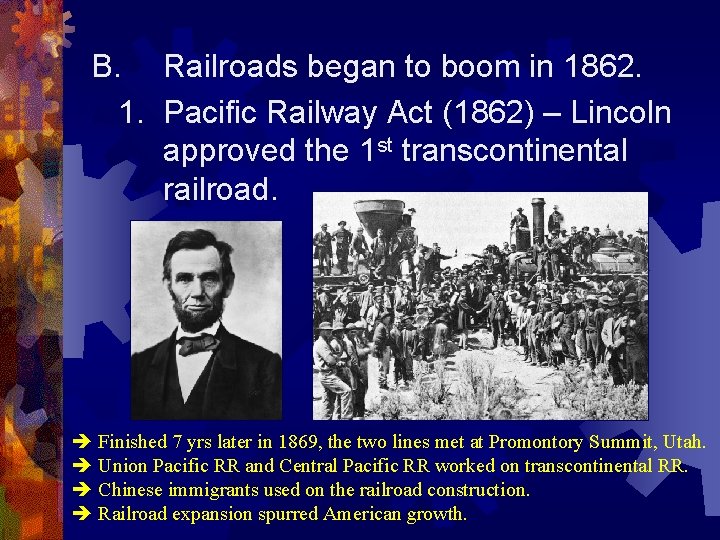
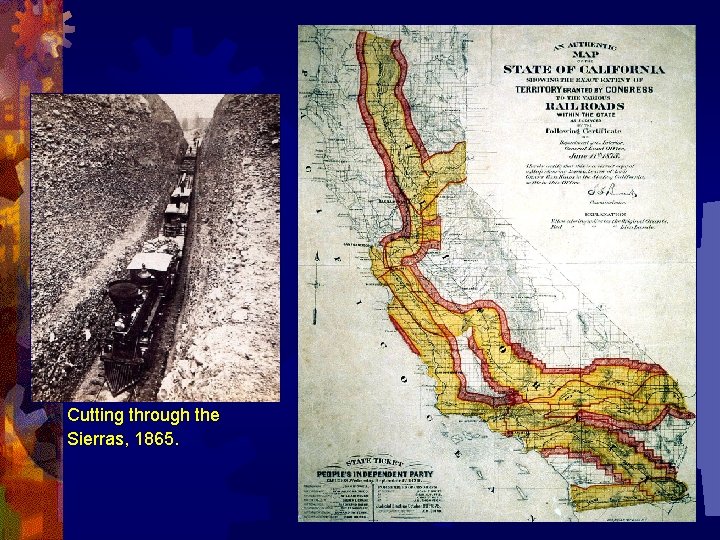
B. Railroads began to boom in 1862. 1. Pacific Railway Act (1862) – Lincoln approved the 1 st transcontinental railroad. Finished 7 yrs later in 1869, the two lines met at Promontory Summit, Utah. Union Pacific RR and Central Pacific RR worked on transcontinental RR. Chinese immigrants used on the railroad construction. Railroad expansion spurred American growth.
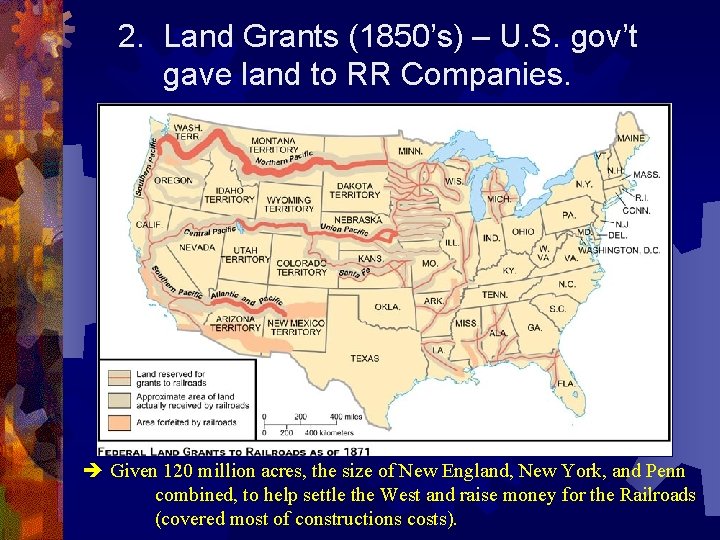
2. Land Grants (1850’s) – U. S. gov’t gave land to RR Companies. Given 120 million acres, the size of New England, New York, and Penn combined, to help settle the West and raise money for the Railroads (covered most of constructions costs).
Cutting through the Sierras, 1865.
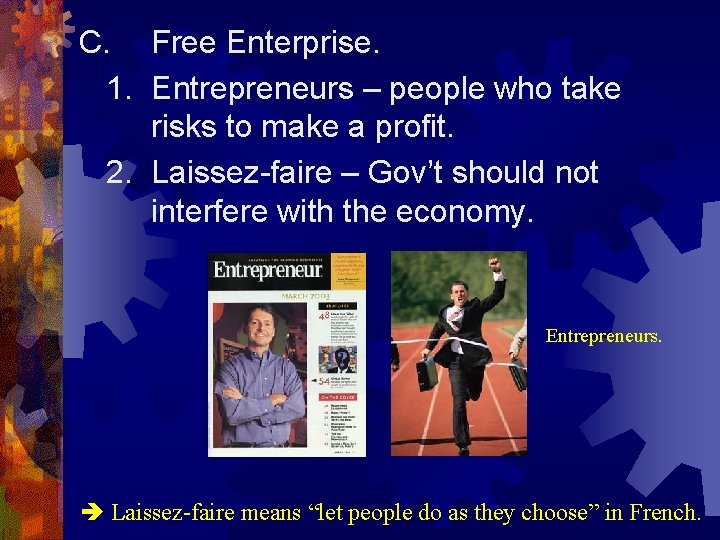
C. Free Enterprise. 1. Entrepreneurs – people who take risks to make a profit. 2. Laissez-faire – Gov’t should not interfere with the economy. Entrepreneurs. Laissez-faire means “let people do as they choose” in French.
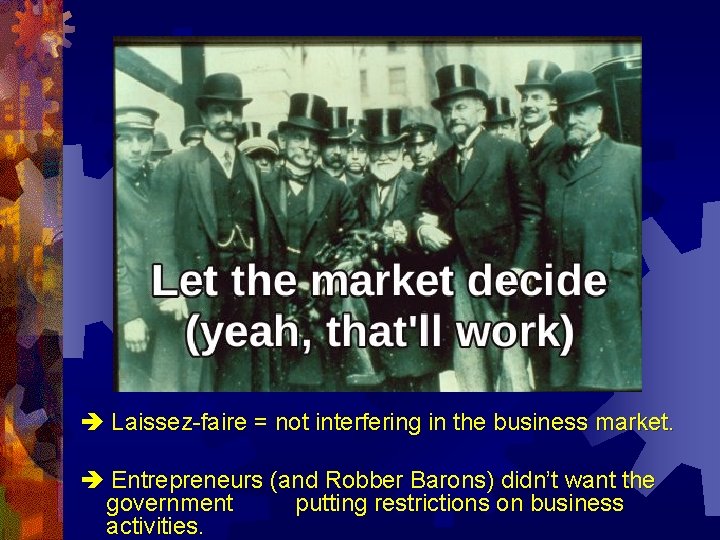
Laissez-faire = not interfering in the business market. Entrepreneurs (and Robber Barons) didn’t want the government putting restrictions on business activities.
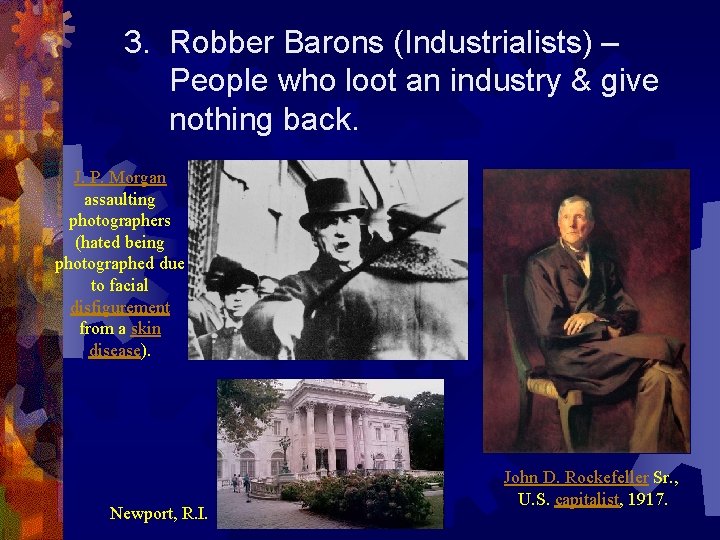
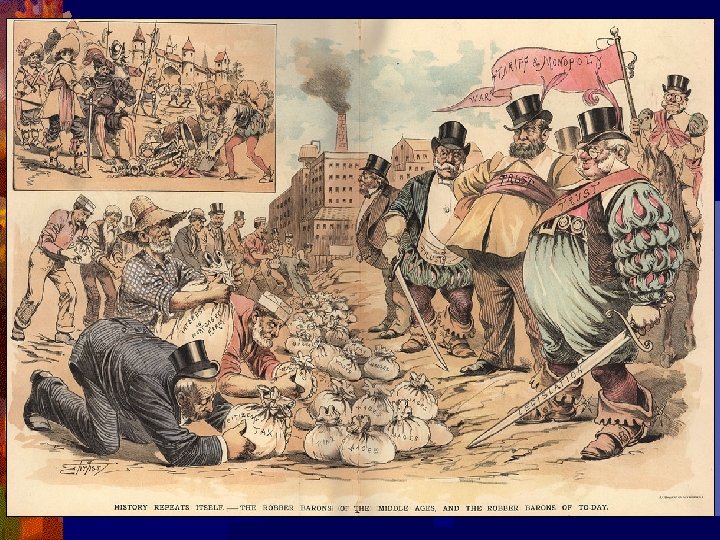
3. Robber Barons (Industrialists) – People who loot an industry & give nothing back. J. P. Morgan assaulting photographers (hated being photographed due to facial disfigurement from a skin disease). Newport, R. I. John D. Rockefeller Sr. , U. S. capitalist, 1917.
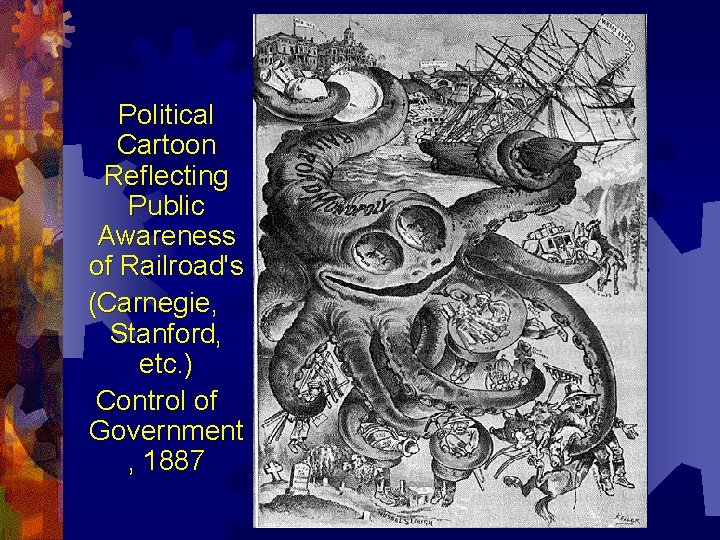
Political Cartoon Reflecting Public Awareness of Railroad's (Carnegie, Stanford, etc. ) Control of Government , 1887
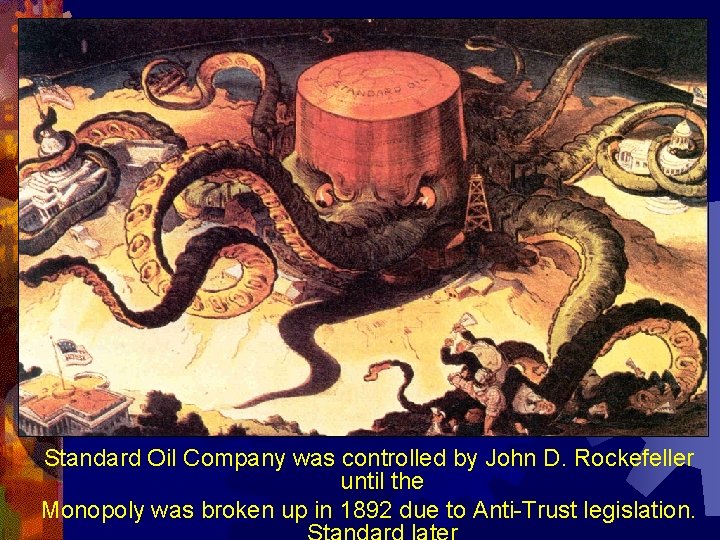
Standard Oil Company was controlled by John D. Rockefeller until the Monopoly was broken up in 1892 due to Anti-Trust legislation.
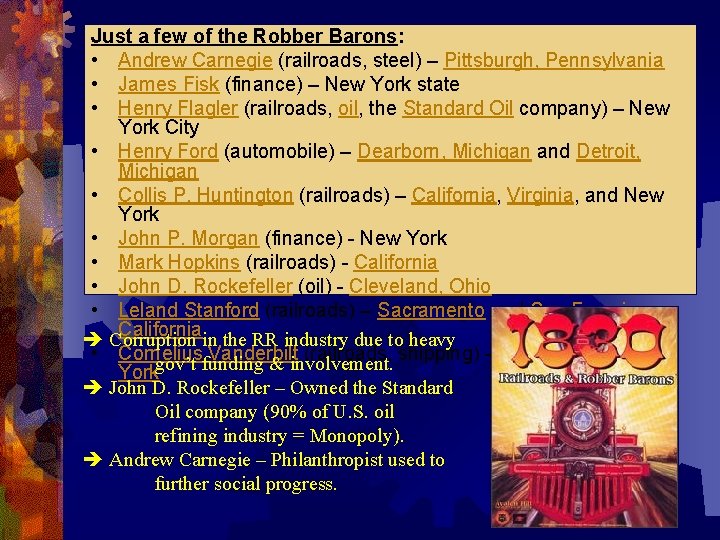
Just a few of the Robber Barons: • Andrew Carnegie (railroads, steel) – Pittsburgh, Pennsylvania • James Fisk (finance) – New York state • Henry Flagler (railroads, oil, the Standard Oil company) – New York City • Henry Ford (automobile) – Dearborn, Michigan and Detroit, Michigan • Collis P. Huntington (railroads) – California, Virginia, and New York • John P. Morgan (finance) - New York • Mark Hopkins (railroads) - California • John D. Rockefeller (oil) - Cleveland, Ohio • Leland Stanford (railroads) – Sacramento and San Francisco, Californiain the RR industry due to heavy Corruption • Cornelius Vanderbilt (railroads, shipping) - New York City, New gov’t funding & involvement. York John D. Rockefeller – Owned the Standard Oil company (90% of U. S. oil refining industry = Monopoly). Andrew Carnegie – Philanthropist used to further social progress.
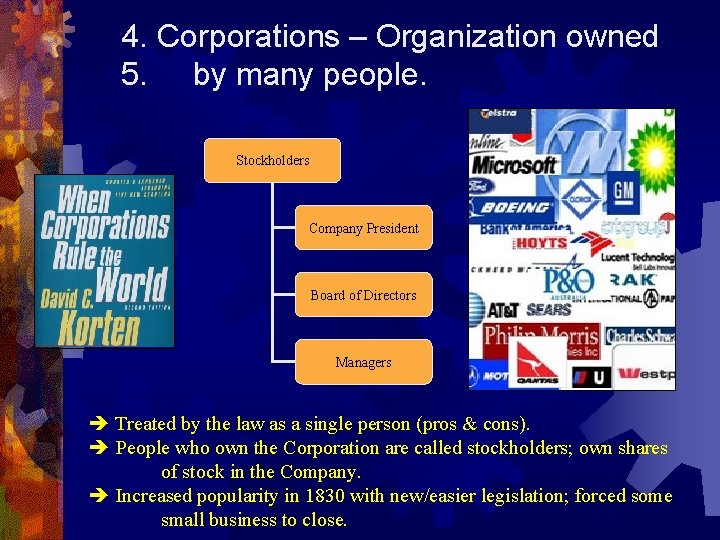
4. Corporations – Organization owned 5. by many people. Stockholders Company President Board of Directors Managers Treated by the law as a single person (pros & cons). People who own the Corporation are called stockholders; own shares of stock in the Company. Increased popularity in 1830 with new/easier legislation; forced some small business to close.
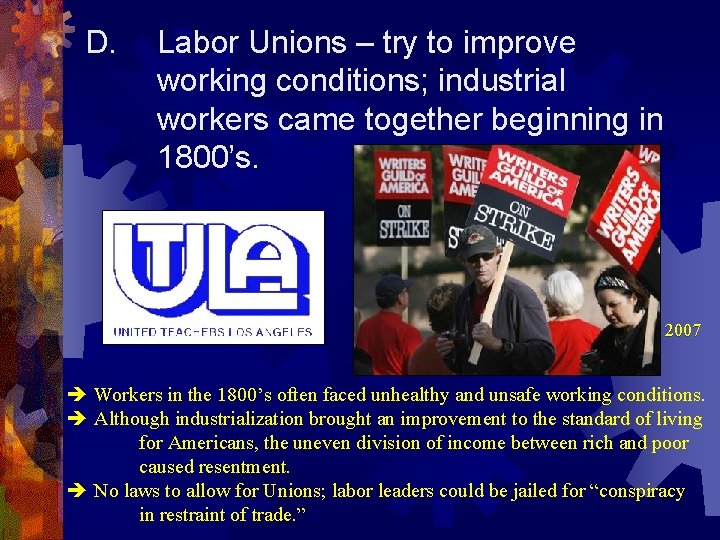
D. Labor Unions – try to improve working conditions; industrial workers came together beginning in 1800’s. 2007 Workers in the 1800’s often faced unhealthy and unsafe working conditions. Although industrialization brought an improvement to the standard of living for Americans, the uneven division of income between rich and poor caused resentment. No laws to allow for Unions; labor leaders could be jailed for “conspiracy in restraint of trade. ”
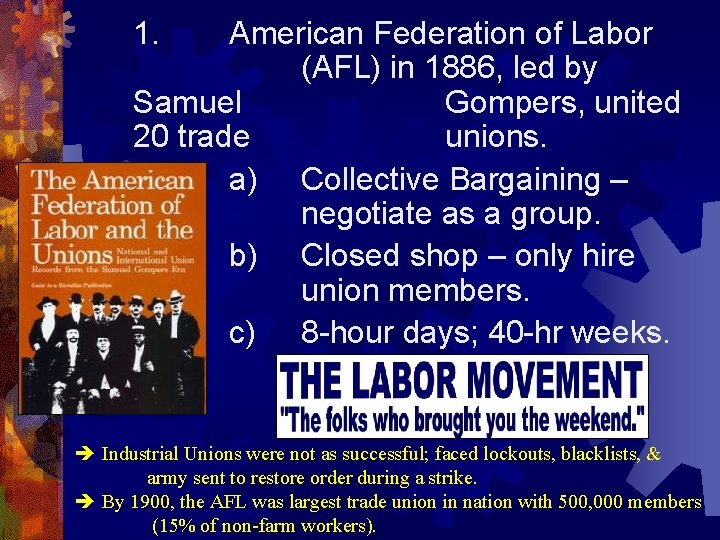
1. American Federation of Labor (AFL) in 1886, led by Samuel Gompers, united 20 trade unions. a) Collective Bargaining – negotiate as a group. b) Closed shop – only hire union members. c) 8 -hour days; 40 -hr weeks. Industrial Unions were not as successful; faced lockouts, blacklists, & army sent to restore order during a strike. By 1900, the AFL was largest trade union in nation with 500, 000 members (15% of non-farm workers).
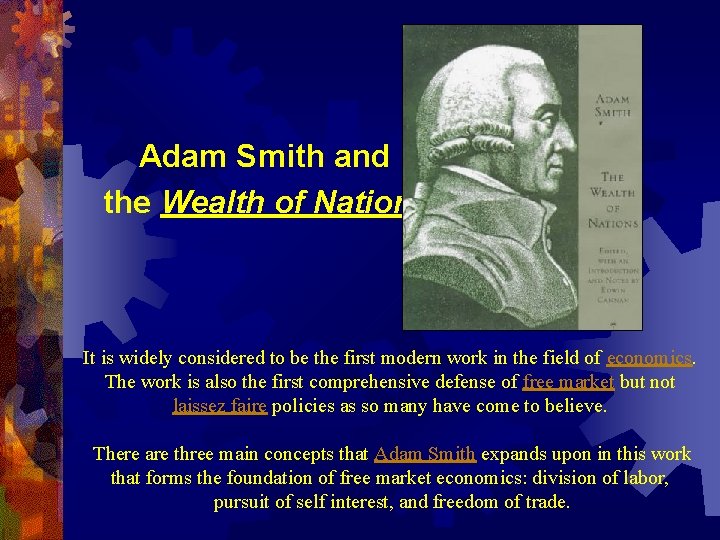
Adam Smith and the Wealth of Nations It is widely considered to be the first modern work in the field of economics. The work is also the first comprehensive defense of free market but not laissez faire policies as so many have come to believe. There are three main concepts that Adam Smith expands upon in this work that forms the foundation of free market economics: division of labor, pursuit of self interest, and freedom of trade.
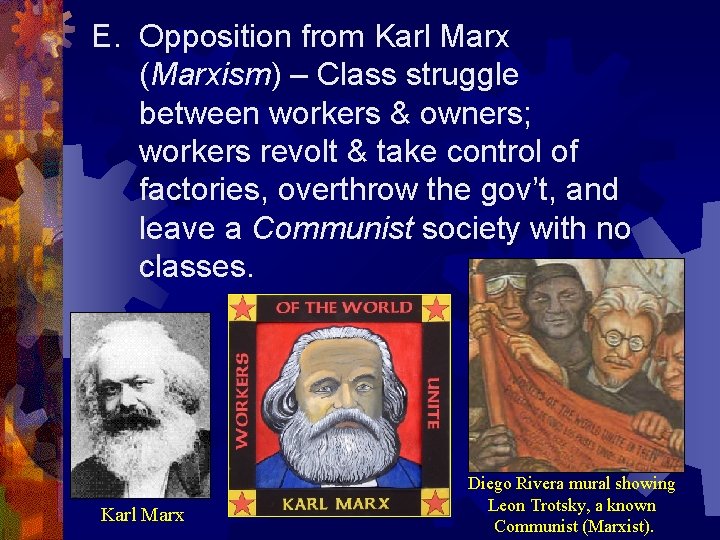
E. Opposition from Karl Marx (Marxism) – Class struggle between workers & owners; workers revolt & take control of factories, overthrow the gov’t, and leave a Communist society with no classes. Karl Marx Diego Rivera mural showing Leon Trotsky, a known Communist (Marxist).
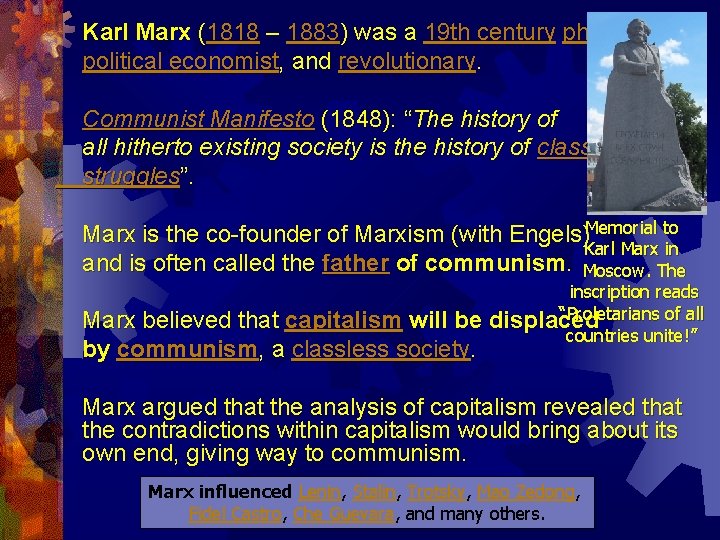
Karl Marx (1818 – 1883) was a 19 th century philosopher, political economist, and revolutionary. Communist Manifesto (1848): “The history of all hitherto existing society is the history of class struggles”. Marx is the co-founder of Marxism (with Engels)Memorial to Karl Marx in and is often called the father of communism. Moscow. The Marx believed that capitalism will be by communism, a classless society. inscription reads “Proletarians of all displaced countries unite!” Marx argued that the analysis of capitalism revealed that the contradictions within capitalism would bring about its own end, giving way to communism. Marx influenced Lenin, Stalin, Trotsky, Mao Zedong, Fidel Castro, Che Guevara, and many others.
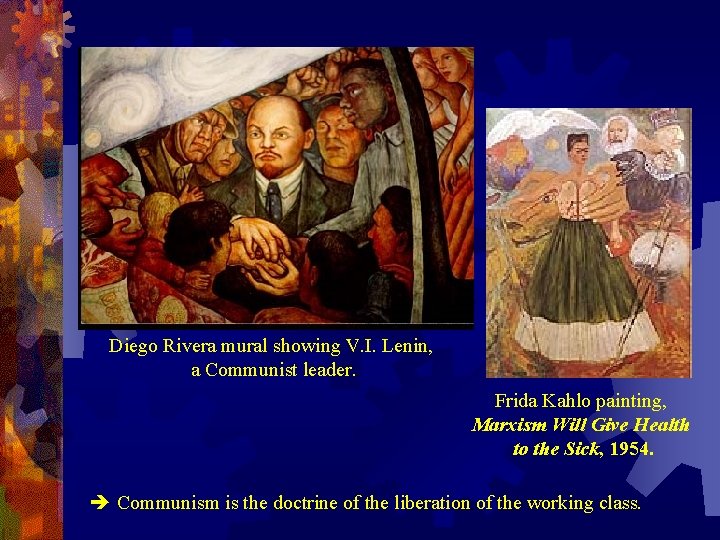
Diego Rivera mural showing V. I. Lenin, a Communist leader. Frida Kahlo painting, Marxism Will Give Health to the Sick, 1954. Communism is the doctrine of the liberation of the working class.
Diego Rivera mural showing the struggle of the classes. Palacio National, Mexico City.
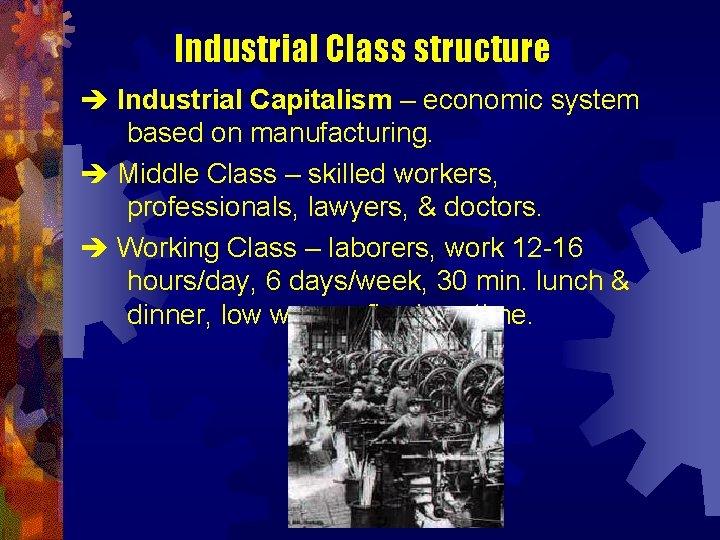
Industrial Class structure Industrial Capitalism – economic system based on manufacturing. Middle Class – skilled workers, professionals, lawyers, & doctors. Working Class – laborers, work 12 -16 hours/day, 6 days/week, 30 min. lunch & dinner, low wages, fired anytime.
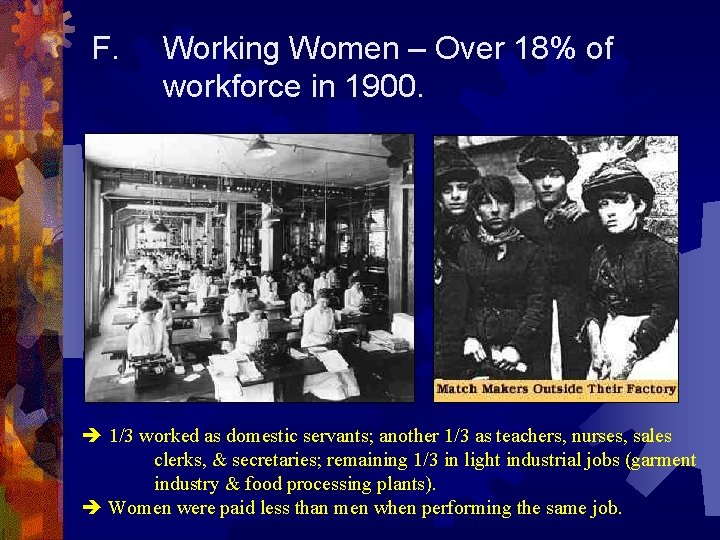
F. Working Women – Over 18% of workforce in 1900. 1/3 worked as domestic servants; another 1/3 as teachers, nurses, sales clerks, & secretaries; remaining 1/3 in light industrial jobs (garment industry & food processing plants). Women were paid less than men when performing the same job.
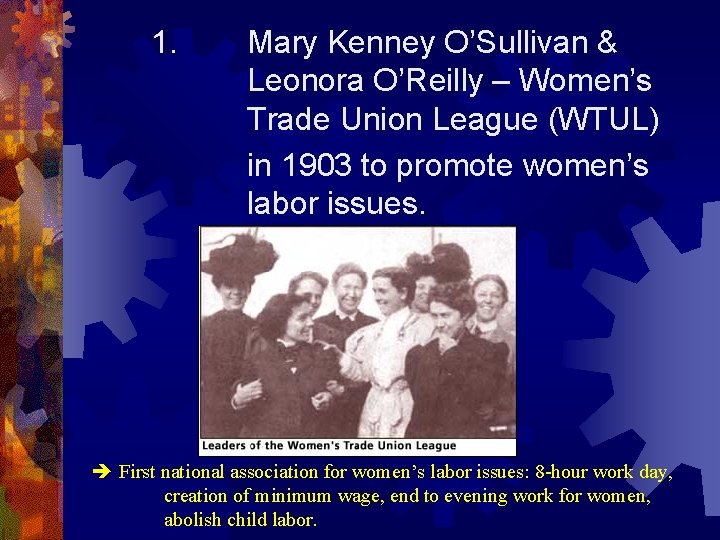
1. Mary Kenney O’Sullivan & Leonora O’Reilly – Women’s Trade Union League (WTUL) in 1903 to promote women’s labor issues. First national association for women’s labor issues: 8 -hour work day, creation of minimum wage, end to evening work for women, abolish child labor.
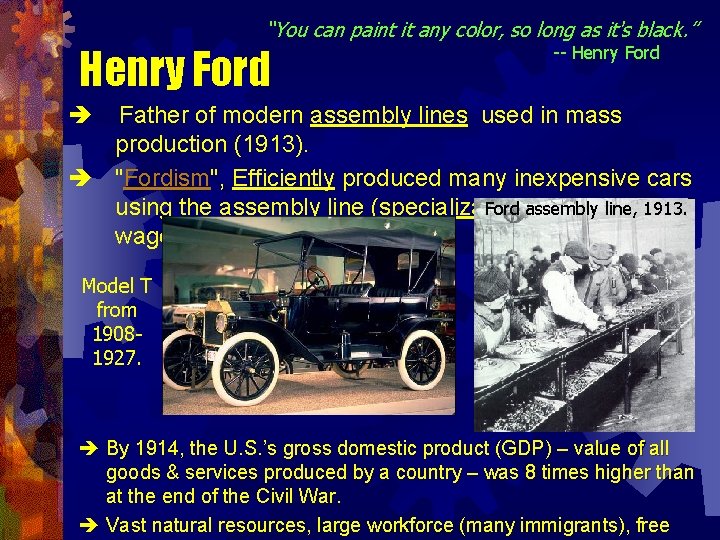
“You can paint it any color, so long as it's black. ” Henry Ford -- Henry Ford Father of modern assembly lines used in mass production (1913). "Fordism", Efficiently produced many inexpensive cars Ford assembly line, 1913. using the assembly line (specialization); paid high wages ($5/day in 1914). Model T from 19081927. By 1914, the U. S. ’s gross domestic product (GDP) – value of all goods & services produced by a country – was 8 times higher than at the end of the Civil War. Vast natural resources, large workforce (many immigrants), free
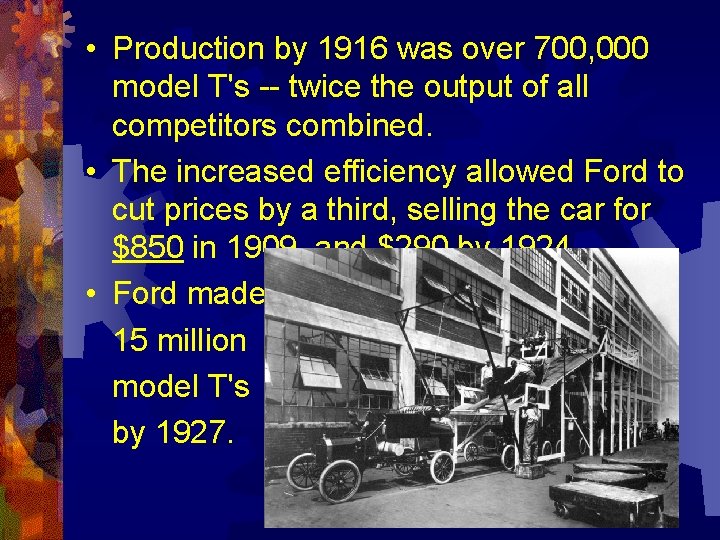
• Production by 1916 was over 700, 000 model T's -- twice the output of all competitors combined. • The increased efficiency allowed Ford to cut prices by a third, selling the car for $850 in 1909, and $290 by 1924. • Ford made 15 million model T's by 1927.