
II CELLULAR RESPIRATION A OVERVIEW why do cells
- Slides: 31
II CELLULAR RESPIRATION
A. OVERVIEW why do cells do this?
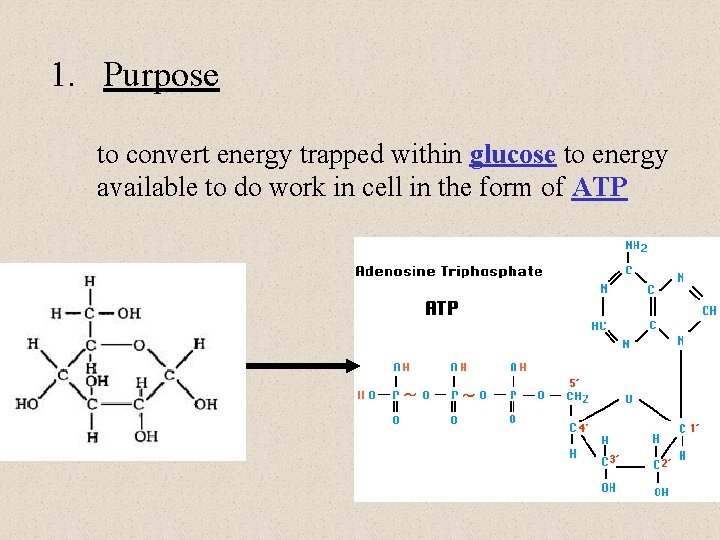
1. Purpose to convert energy trapped within glucose to energy available to do work in cell in the form of ATP
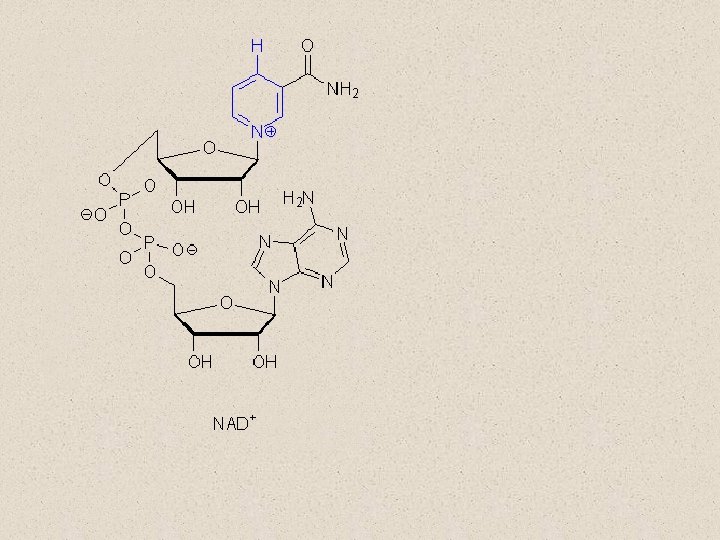
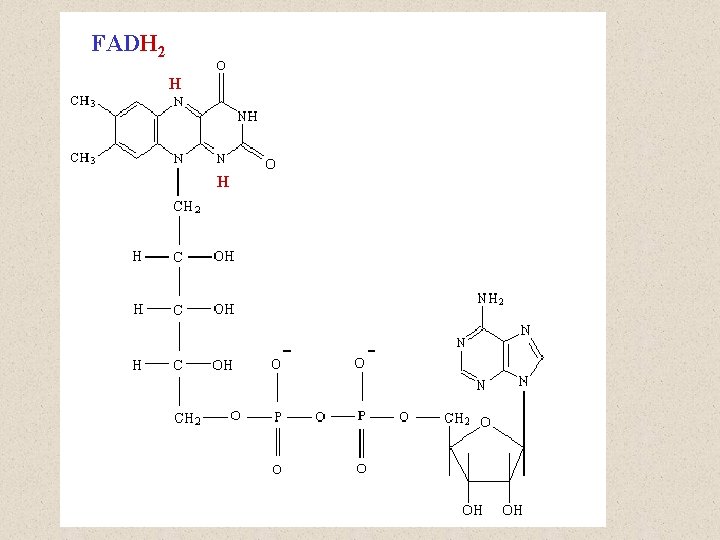
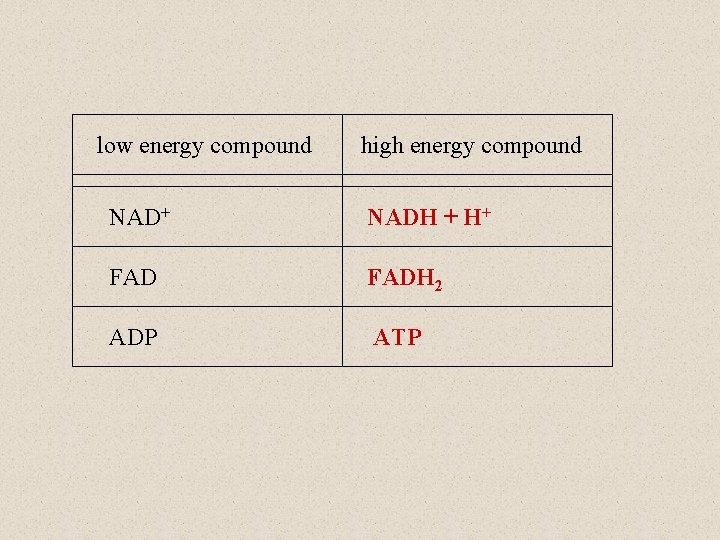
2. High energy compounds -although the ultimate goal is to produce ATP -high energy intermediates such as NADH + H+ and FADH 2 may be produced along the way -NADH + H+ and FADH 2 actually contain more energy than ATP, but this energy is not directly available to the cell
FADH 2 H H
low energy compound high energy compound NAD+ NADH + H+ FADH 2 ADP ATP
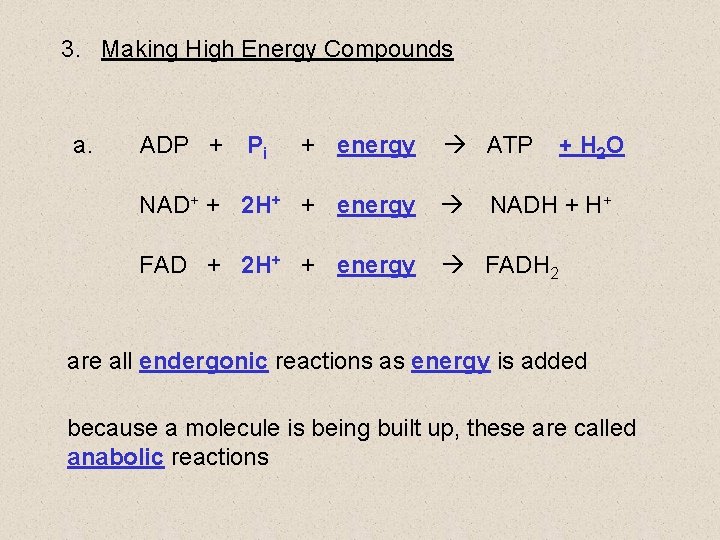
3. Making High Energy Compounds a. ADP + Pi + energy ATP NAD+ + 2 H+ + energy FAD + 2 H+ + energy FADH 2 + H 2 O NADH + H+ are all endergonic reactions as energy is added because a molecule is being built up, these are called anabolic reactions
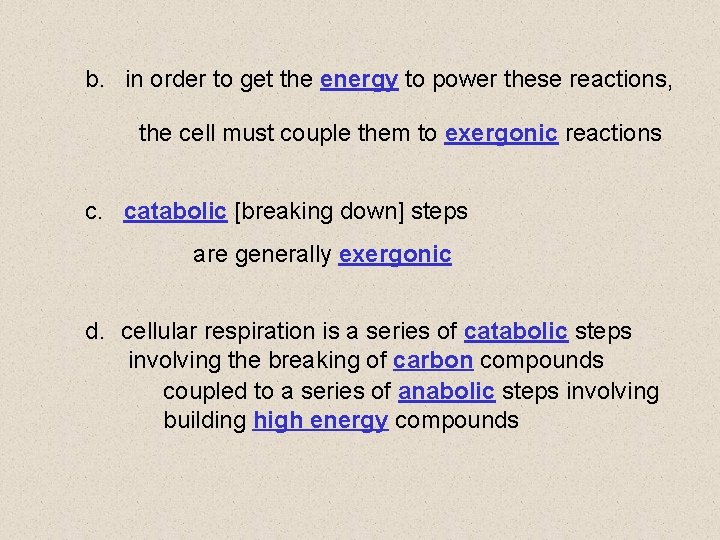
b. in order to get the energy to power these reactions, the cell must couple them to exergonic reactions c. catabolic [breaking down] steps are generally exergonic d. cellular respiration is a series of catabolic steps involving the breaking of carbon compounds coupled to a series of anabolic steps involving building high energy compounds
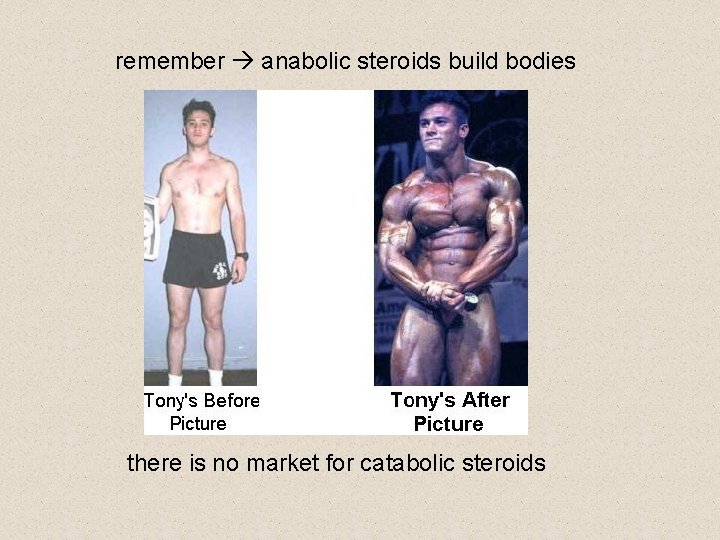
remember anabolic steroids build bodies there is no market for catabolic steroids
B. GLYCOLYSIS
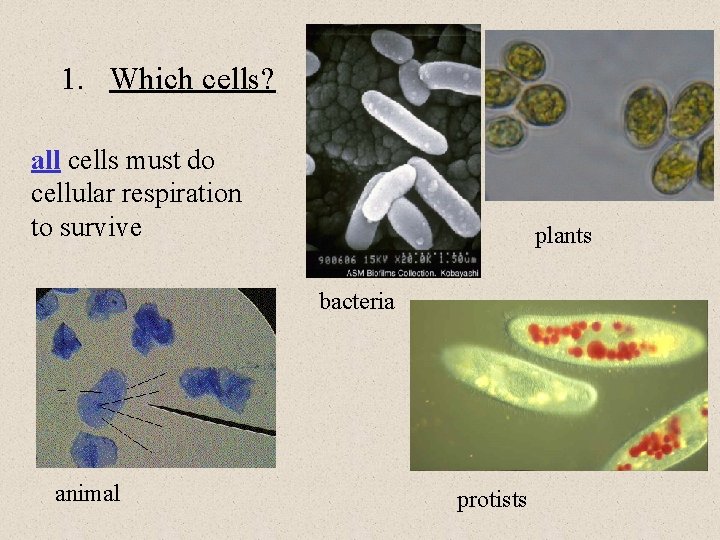
1. Which cells? all cells must do cellular respiration to survive plants bacteria animal protists
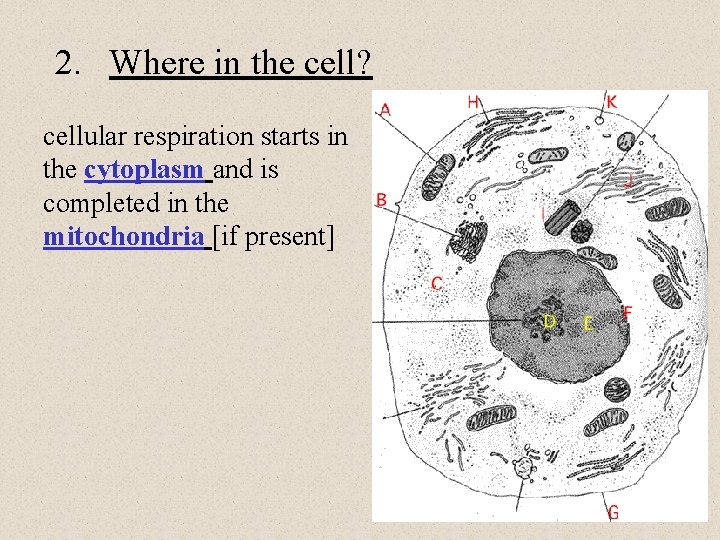
2. Where in the cell? cellular respiration starts in the cytoplasm and is completed in the mitochondria [if present]
3. Purpose a. to convert the energy stored in bonds with-in the glucose molecule to more readily available energy stored in bonds within ATP b. ATP will only be made directly if there is the right amount of energy released when bonds are broken c. if too little energy is released to make an ATP, that energy is simply lost d. if more energy is released than needed to make one ATP then an NADH + H+ or other very high energy product will be made this will later be converted into more than one ATP
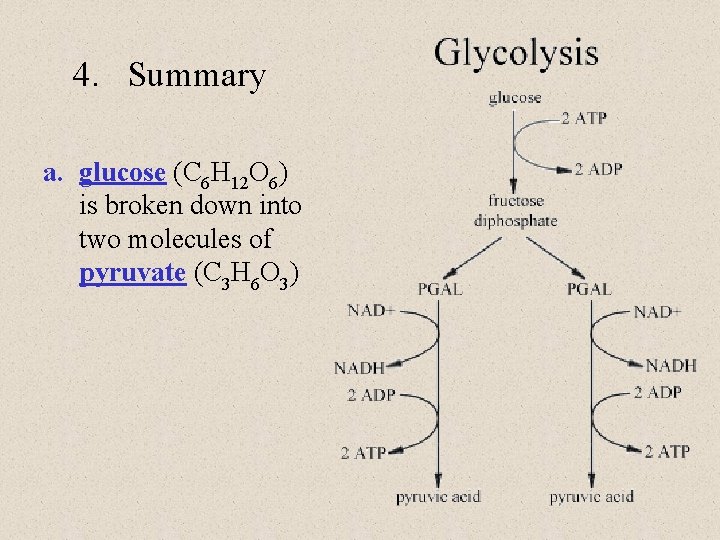
4. Summary a. glucose (C 6 H 12 O 6) is broken down into two molecules of pyruvate (C 3 H 6 O 3)
b. in order to break glucose, it must first be destabilized by the addition of 2 ATP c. once the destabilized molecule breaks in half, it releases enough energy to replace the 2 ATP and make an additional 2 ATP d. in addition to the ATP, the high energy c compound, 2 NADH + H+ are also produced
4. Details GLYCOLYSIS: PART 1 Breaking the glucose down
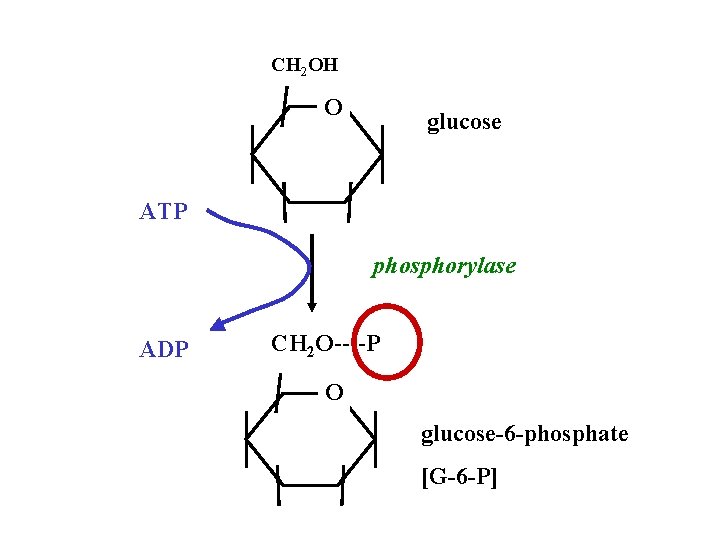
CH 2 OH O glucose ATP phosphorylase ADP CH 2 O----P O glucose-6 -phosphate [G-6 -P]
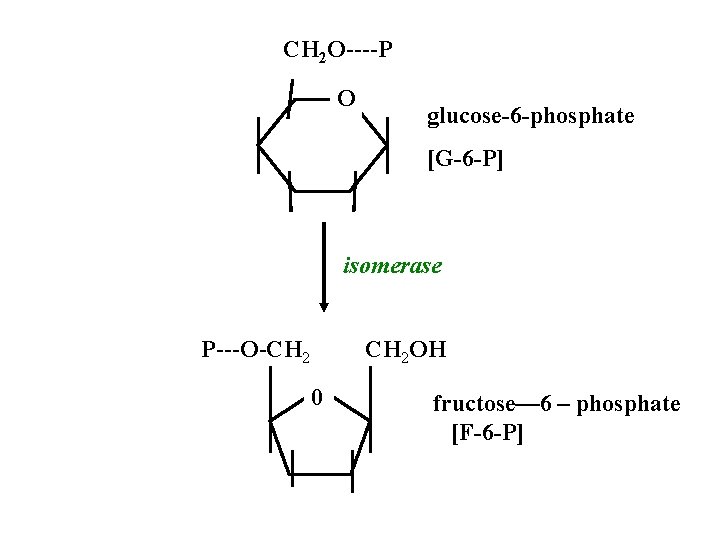
CH 2 O----P O glucose-6 -phosphate [G-6 -P] isomerase P---O-CH 2 OH 0 fructose— 6 – phosphate [F-6 -P]
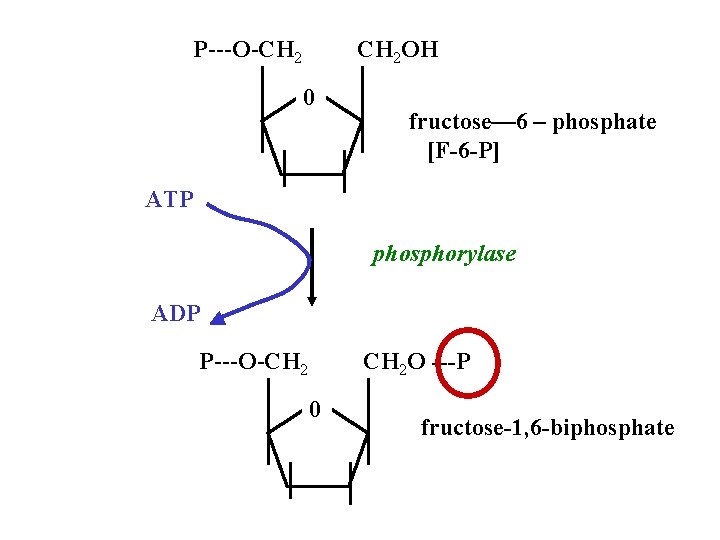
P---O-CH 2 OH 0 fructose— 6 – phosphate [F-6 -P] ATP phosphorylase ADP P---O-CH 2 O ---P 0 fructose-1, 6 -biphosphate
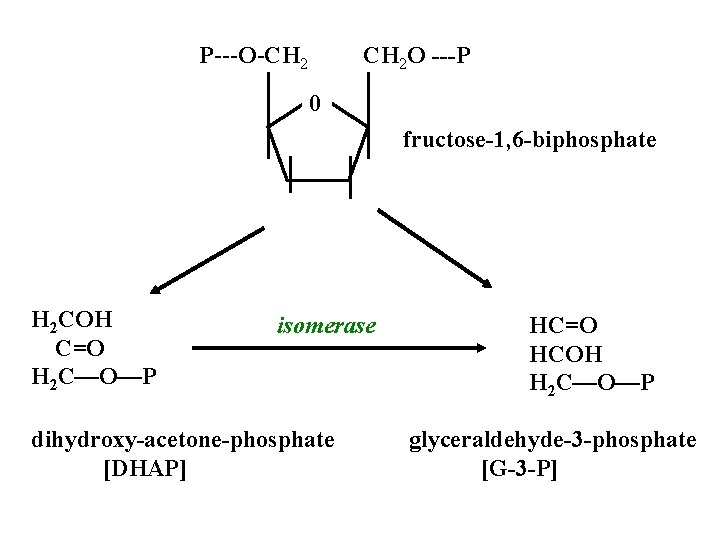
P---O-CH 2 O ---P 0 fructose-1, 6 -biphosphate H 2 COH C=O H 2 C—O—P isomerase dihydroxy-acetone-phosphate [DHAP] HC=O HCOH H 2 C—O—P glyceraldehyde-3 -phosphate [G-3 -P]
GLYCOLYSIS: PART 2 Rearranging the 3 -carbon molecule On your sheet this happens twice
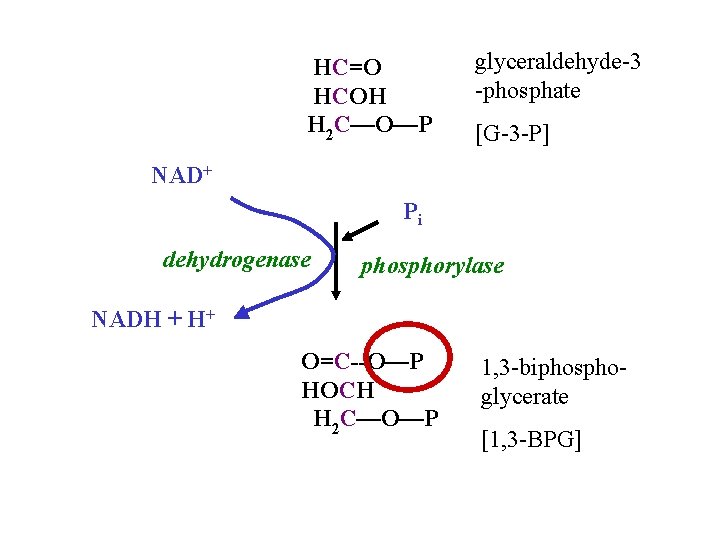
HC=O HCOH H 2 C—O—P glyceraldehyde-3 -phosphate [G-3 -P] NAD+ Pi dehydrogenase phosphorylase NADH + H+ O=C--O—P HOCH H 2 C—O—P 1, 3 -biphosphoglycerate [1, 3 -BPG]
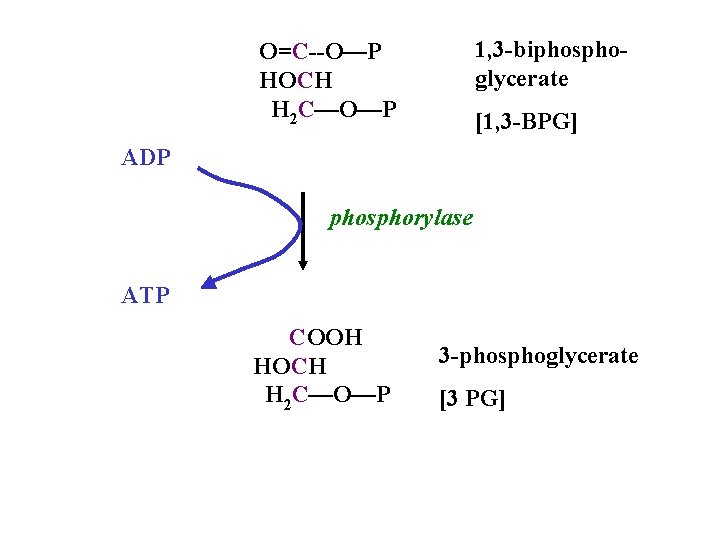
1, 3 -biphosphoglycerate O=C--O—P HOCH H 2 C—O—P [1, 3 -BPG] ADP phosphorylase ATP COOH HOCH H 2 C—O—P 3 -phosphoglycerate [3 PG]
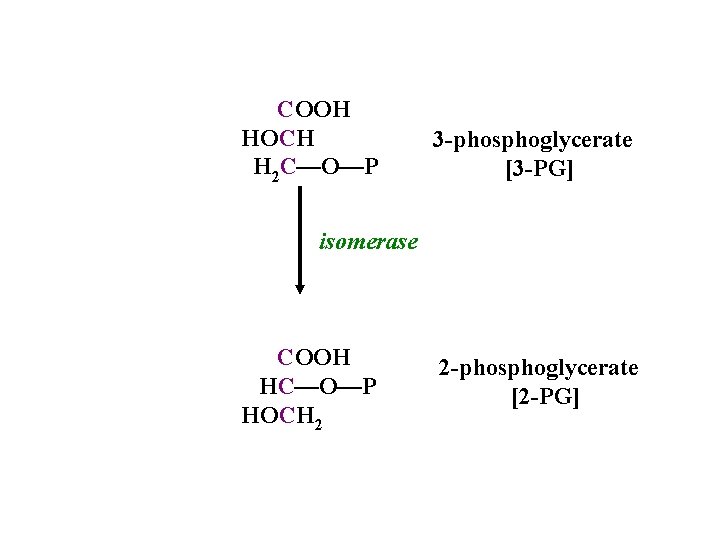
COOH HOCH H 2 C—O—P 3 -phosphoglycerate [3 -PG] isomerase COOH HC—O—P HOCH 2 2 -phosphoglycerate [2 -PG]
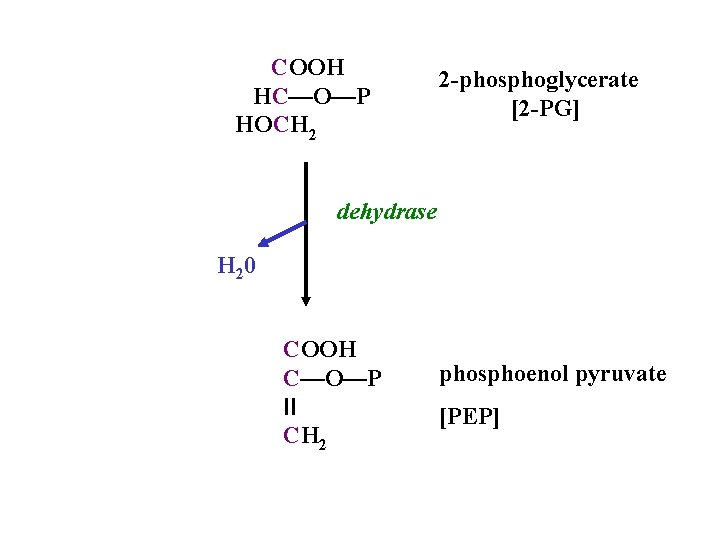
COOH HC—O—P HOCH 2 2 -phosphoglycerate [2 -PG] dehydrase H 20 COOH C—O—P II CH 2 phosphoenol pyruvate [PEP]
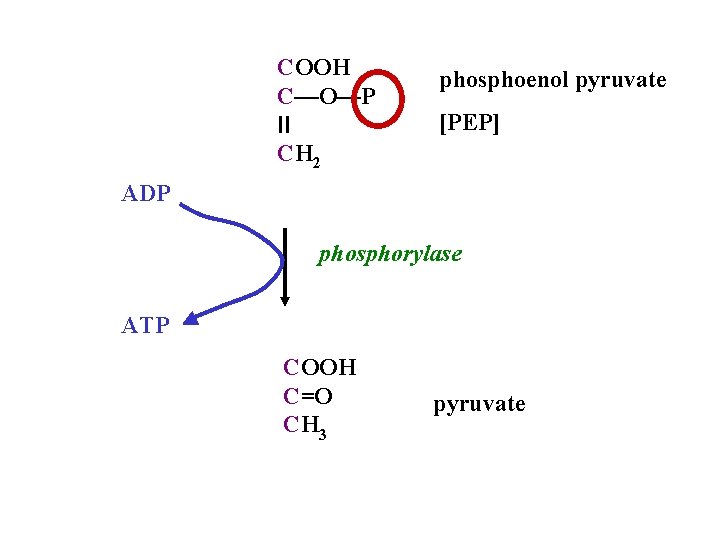
COOH C—O—P II CH 2 phosphoenol pyruvate [PEP] ADP phosphorylase ATP COOH C=O CH 3 pyruvate
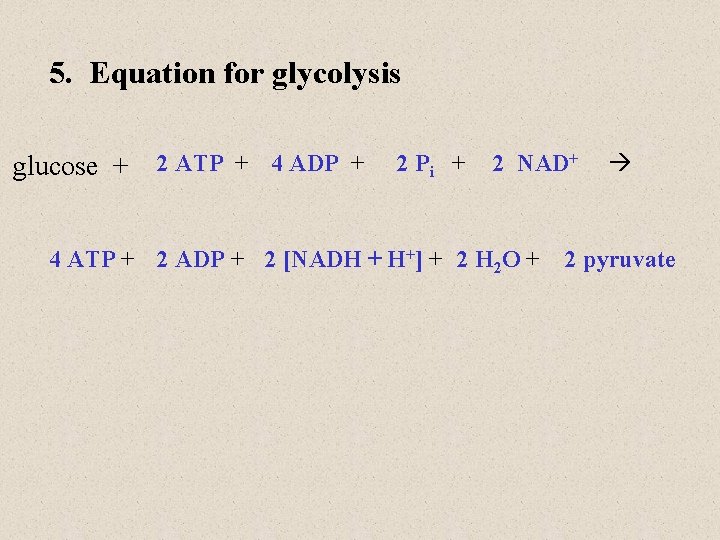
5. Equation for glycolysis glucose + 2 ATP + 4 ADP + 2 Pi + 2 NAD+ 4 ATP + 2 ADP + 2 [NADH + H+] + 2 H 2 O + 2 pyruvate
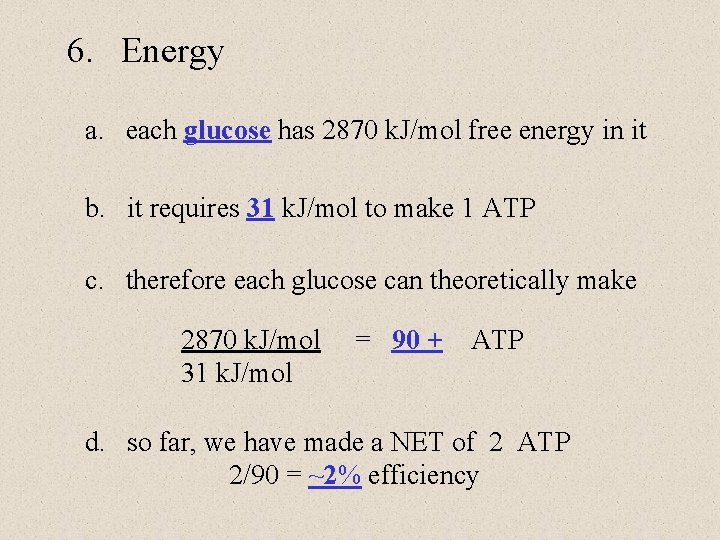
6. Energy a. each glucose has 2870 k. J/mol free energy in it b. it requires 31 k. J/mol to make 1 ATP c. therefore each glucose can theoretically make 2870 k. J/mol 31 k. J/mol = 90 + ATP d. so far, we have made a NET of 2 ATP 2/90 = ~2% efficiency
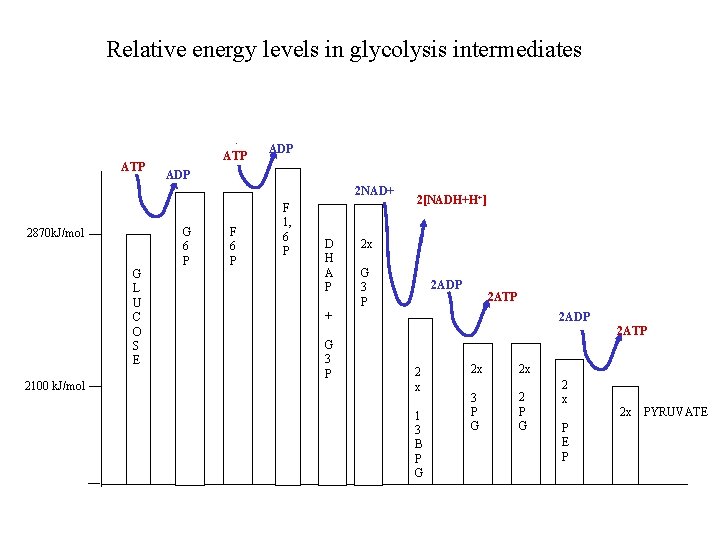
Relative energy levels in glycolysis intermediates ATP ADP 2 NAD+ 2870 k. J/mol G L U C O S E 2100 k. J/mol G 6 P F 1, 6 P D H A P 2[NADH+H+] 2 x G 3 P 2 ADP 2 ATP + 2 ADP 2 ATP G 3 P 2 x 1 3 B P G 2 x 2 x 3 P G 2 x P E P 2 x PYRUVATE
7. Next step there is still lots of energy left in pyruvate that the cell can use to make more ATP