
II Animal Diversity a Lophotrochozoans 3 Spiralians wormy
- Slides: 72
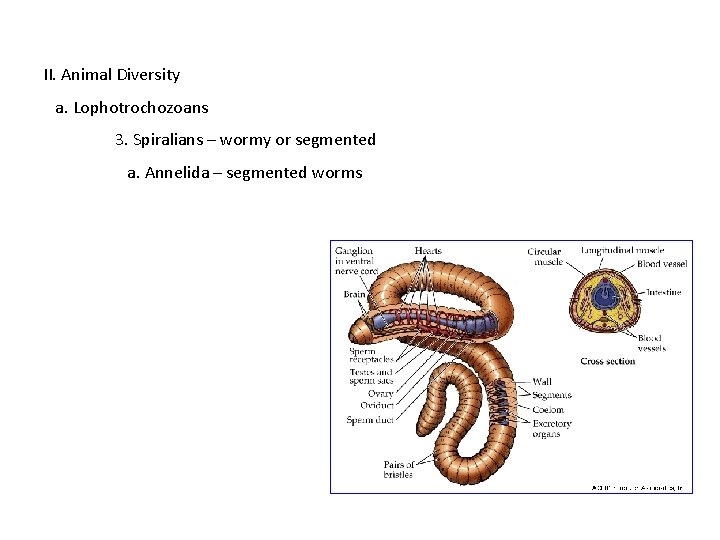
II. Animal Diversity a. Lophotrochozoans 3. Spiralians – wormy or segmented a. Annelida – segmented worms
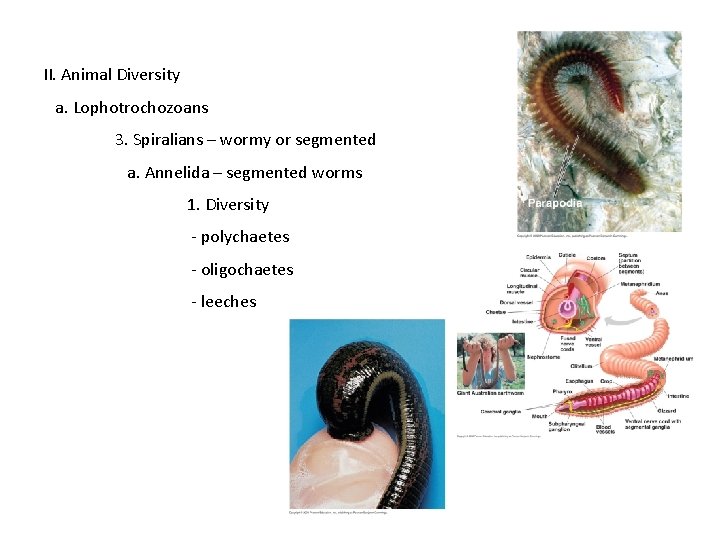
II. Animal Diversity a. Lophotrochozoans 3. Spiralians – wormy or segmented a. Annelida – segmented worms 1. Diversity - polychaetes - oligochaetes - leeches
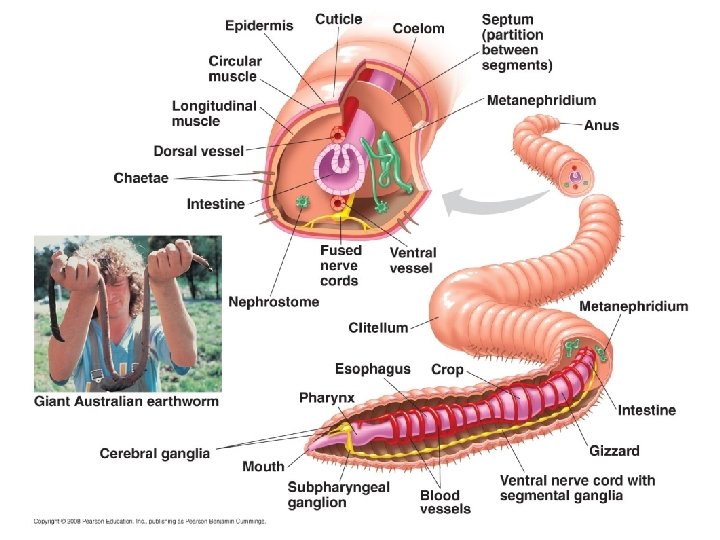
II. Animal Diversity a. Lophotrochozoans 3. Spiralians – wormy or segmented a. Annelida – segmented worms 2. Body Plan - coelomate: true body cavity - segmentation – allows for specialization of body parts and refined locomotion; the first step in our process of “duplication, specialization, and fusion” - complete gut allows for specialization: Mouth – pharynx – esophagus - crop – gizzard - intestine
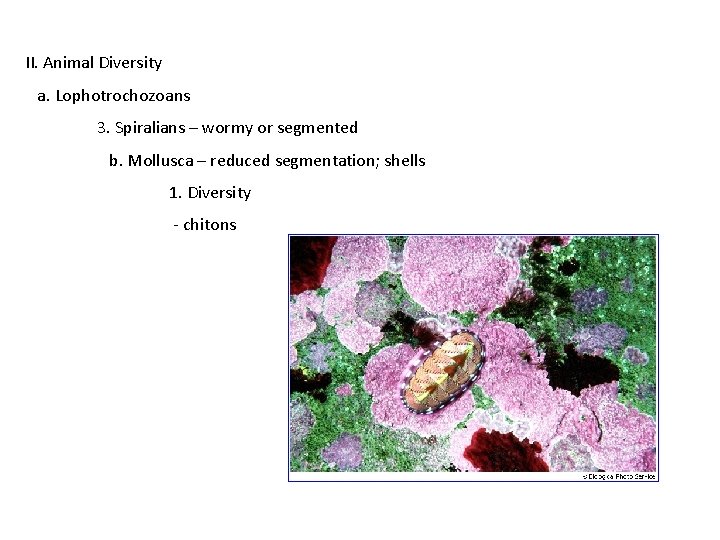
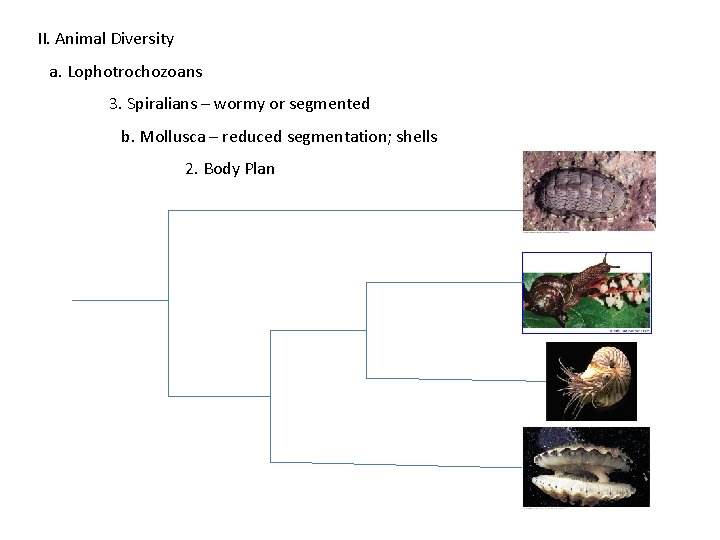
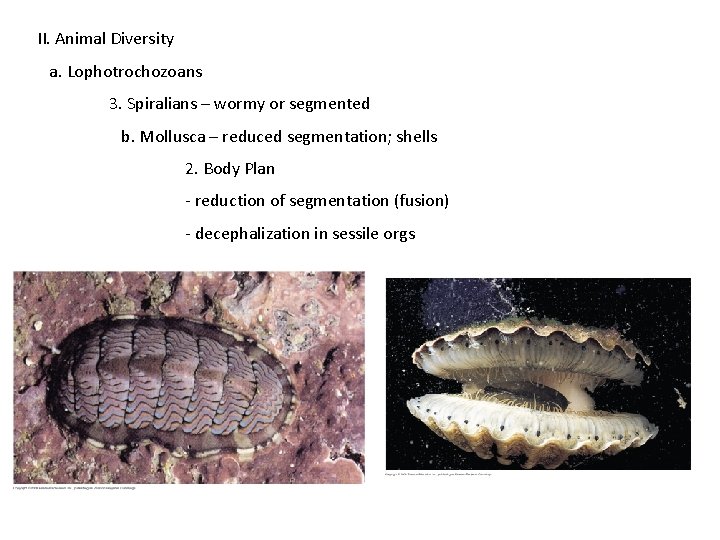
II. Animal Diversity a. Lophotrochozoans 3. Spiralians – wormy or segmented b. Mollusca – reduced segmentation; shells 1. Diversity - chitons
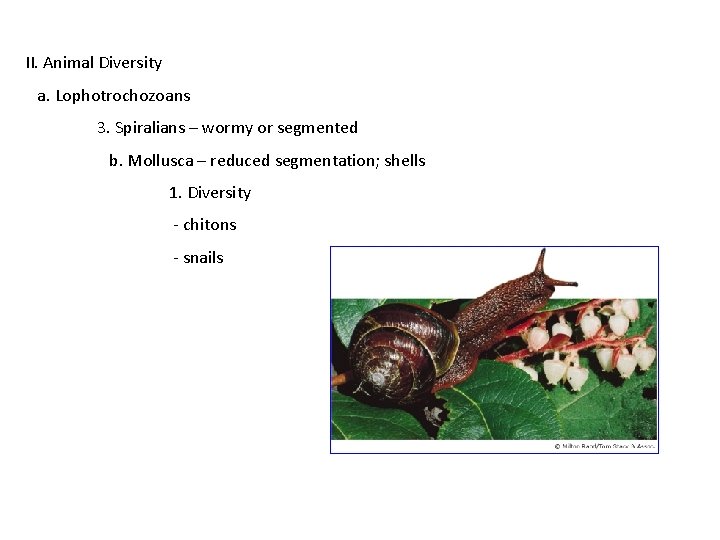
II. Animal Diversity a. Lophotrochozoans 3. Spiralians – wormy or segmented b. Mollusca – reduced segmentation; shells 1. Diversity - chitons - snails
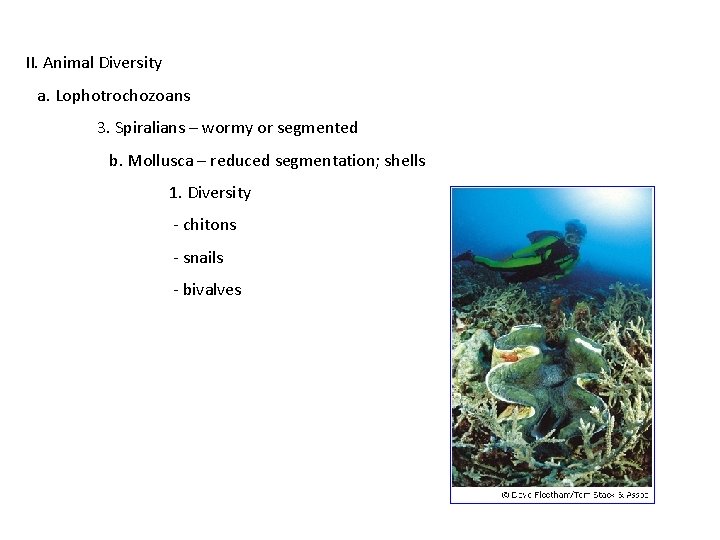
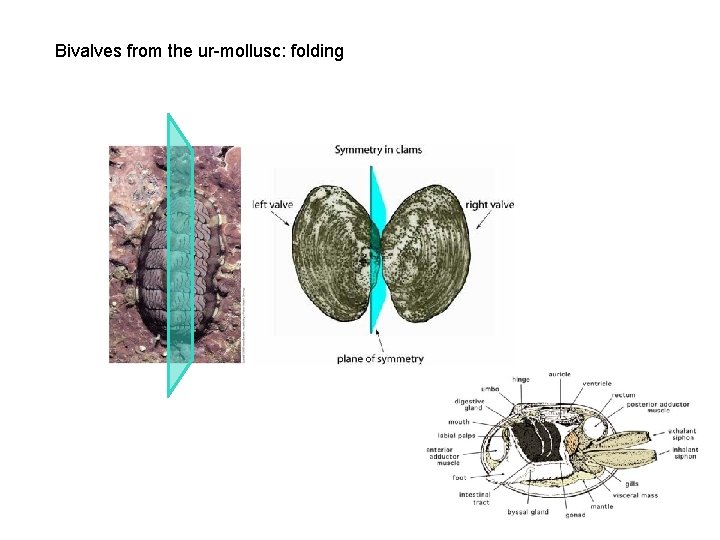
II. Animal Diversity a. Lophotrochozoans 3. Spiralians – wormy or segmented b. Mollusca – reduced segmentation; shells 1. Diversity - chitons - snails - bivalves
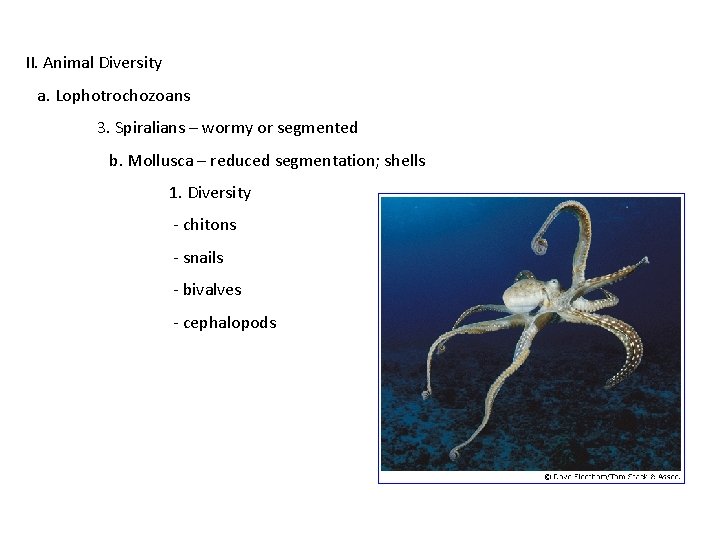
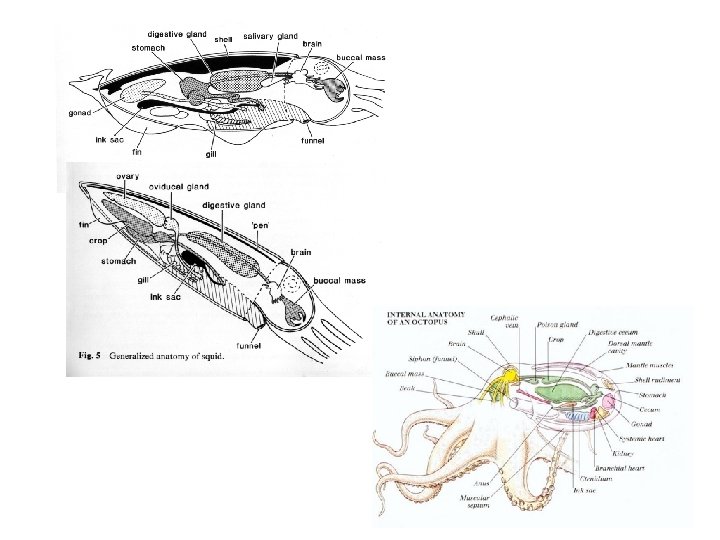
II. Animal Diversity a. Lophotrochozoans 3. Spiralians – wormy or segmented b. Mollusca – reduced segmentation; shells 1. Diversity - chitons - snails - bivalves - cephalopods
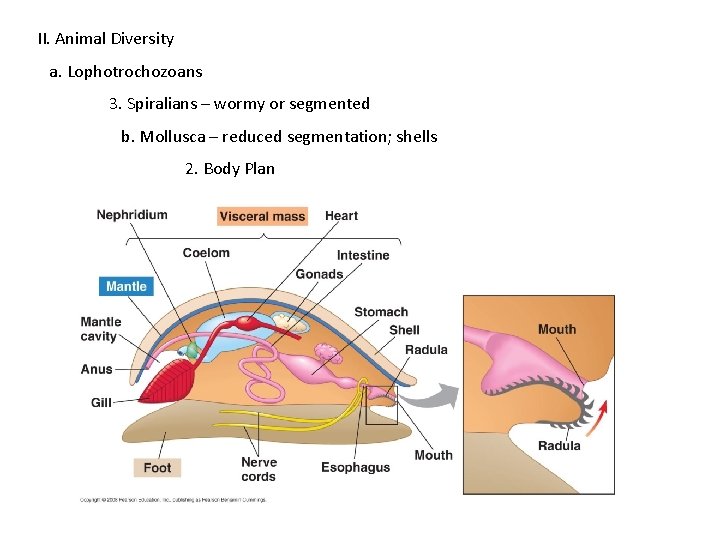
II. Animal Diversity a. Lophotrochozoans 3. Spiralians – wormy or segmented b. Mollusca – reduced segmentation; shells 2. Body Plan
II. Animal Diversity a. Lophotrochozoans 3. Spiralians – wormy or segmented b. Mollusca – reduced segmentation; shells 2. Body Plan
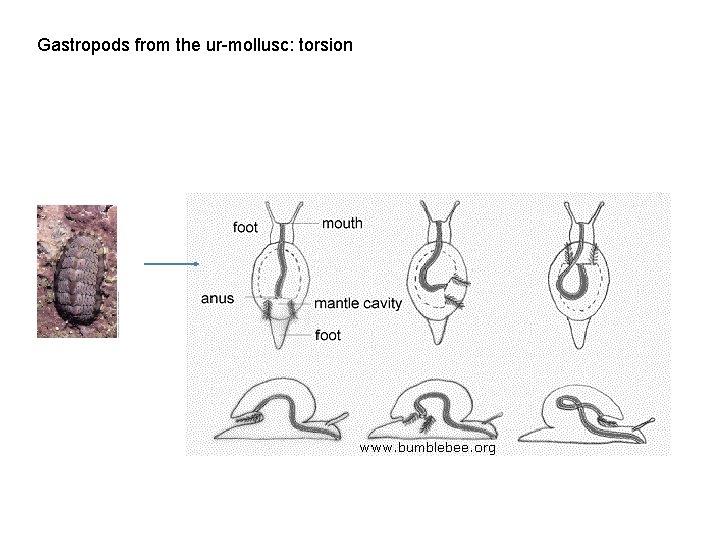
Gastropods from the ur-mollusc: torsion
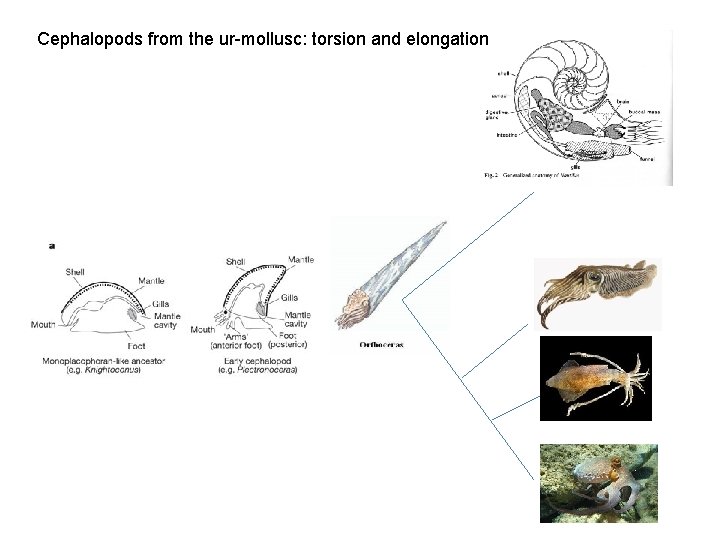
Cephalopods from the ur-mollusc: torsion and elongation
Bivalves from the ur-mollusc: folding
II. Animal Diversity a. Lophotrochozoans 3. Spiralians – wormy or segmented b. Mollusca – reduced segmentation; shells 2. Body Plan - reduction of segmentation (fusion) - decephalization in sessile orgs
II. Animal Diversity b. Ecdysozoans - exoskeleton that must be shed for growth; either a thin flexible CUTICLE, or a more rigid exoskeleton with chitin.
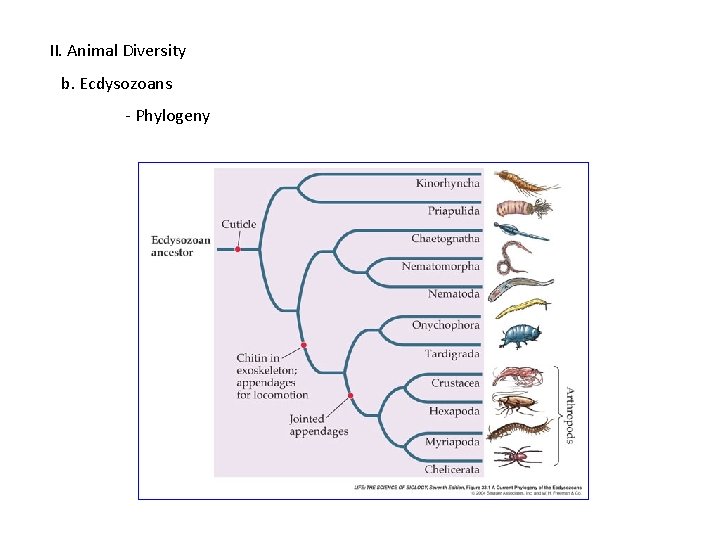
II. Animal Diversity b. Ecdysozoans - Phylogeny
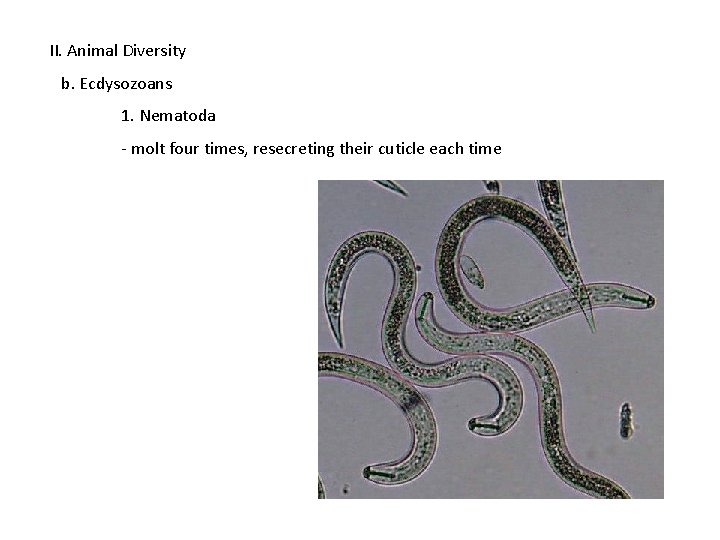
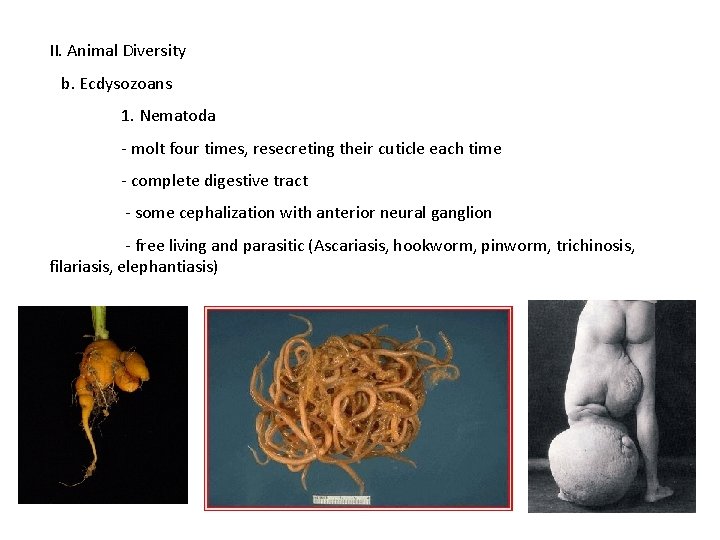
II. Animal Diversity b. Ecdysozoans 1. Nematoda - molt four times, resecreting their cuticle each time
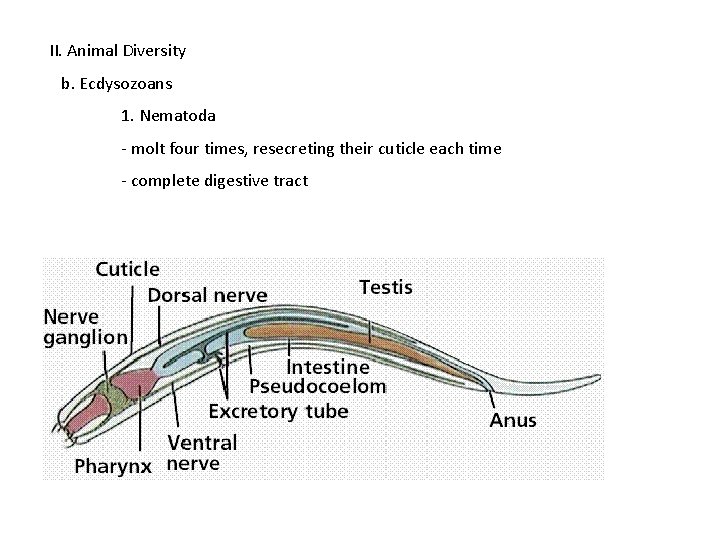
II. Animal Diversity b. Ecdysozoans 1. Nematoda - molt four times, resecreting their cuticle each time - complete digestive tract
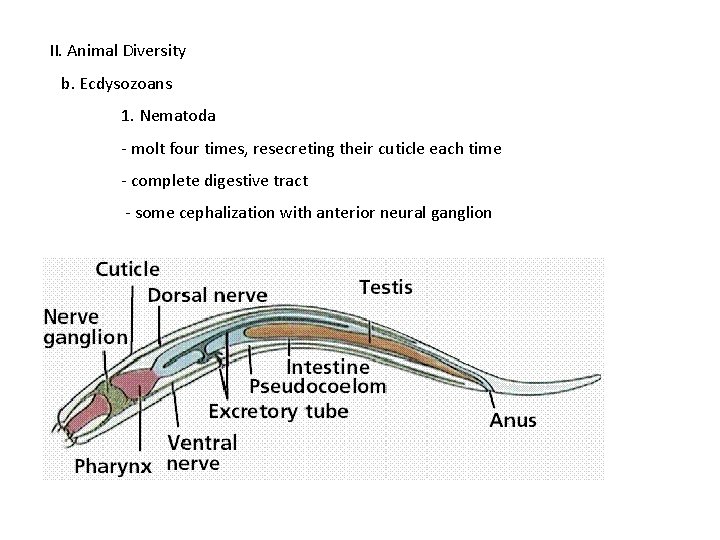
II. Animal Diversity b. Ecdysozoans 1. Nematoda - molt four times, resecreting their cuticle each time - complete digestive tract - some cephalization with anterior neural ganglion
II. Animal Diversity b. Ecdysozoans 1. Nematoda - molt four times, resecreting their cuticle each time - complete digestive tract - some cephalization with anterior neural ganglion - free living and parasitic (Ascariasis, hookworm, pinworm, trichinosis, filariasis, elephantiasis)
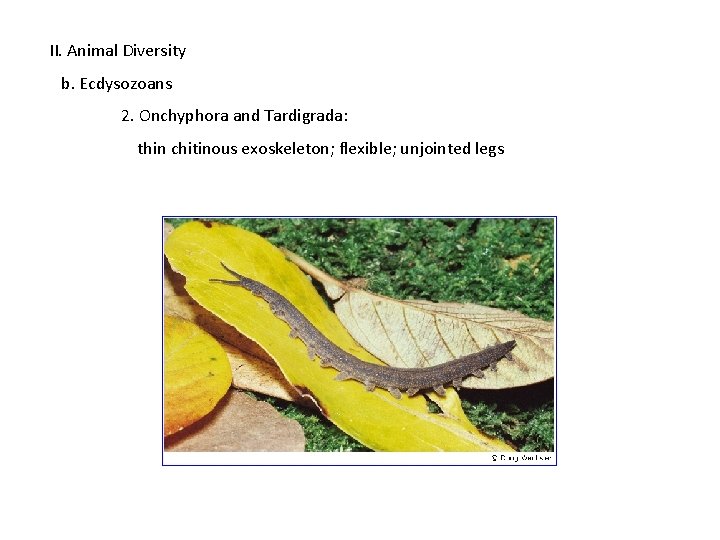
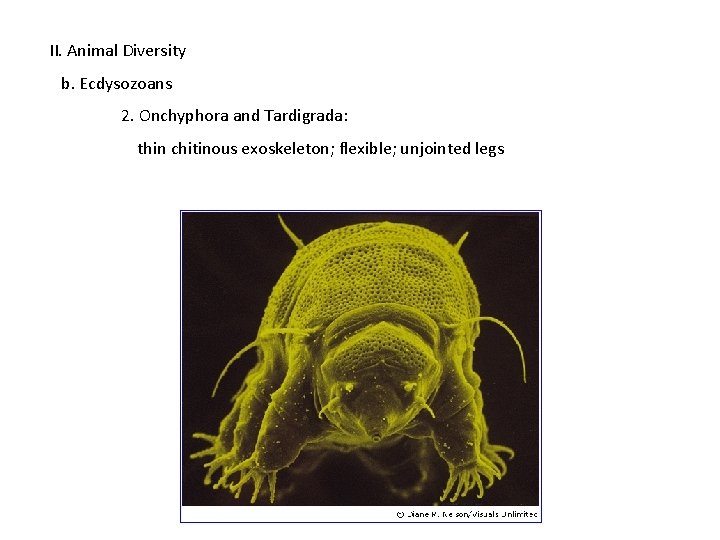
II. Animal Diversity b. Ecdysozoans 2. Onchyphora and Tardigrada: thin chitinous exoskeleton; flexible; unjointed legs
II. Animal Diversity b. Ecdysozoans 2. Onchyphora and Tardigrada: thin chitinous exoskeleton; flexible; unjointed legs
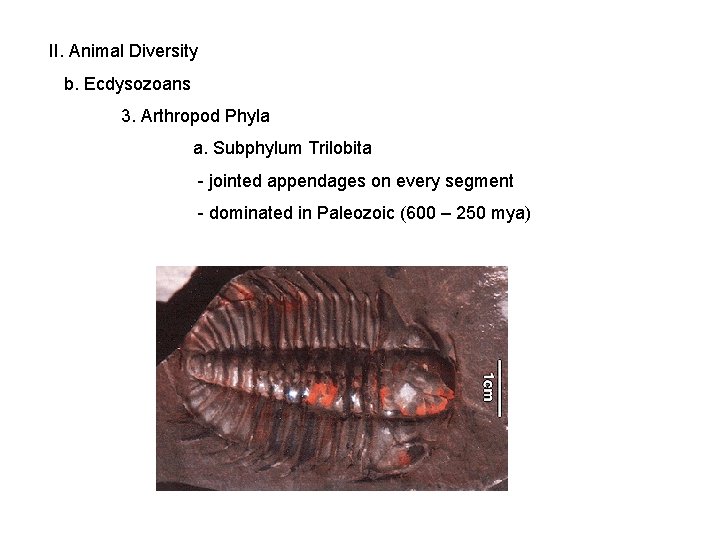
II. Animal Diversity b. Ecdysozoans 3. Arthropod Phyla a. Subphylum Trilobita - jointed appendages on every segment - dominated in Paleozoic (600 – 250 mya)
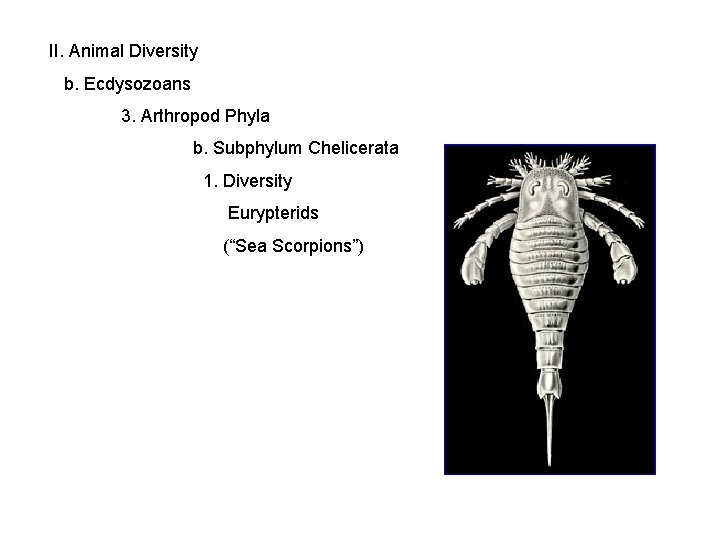
II. Animal Diversity b. Ecdysozoans 3. Arthropod Phyla b. Subphylum Chelicerata 1. Diversity Eurypterids (“Sea Scorpions”)
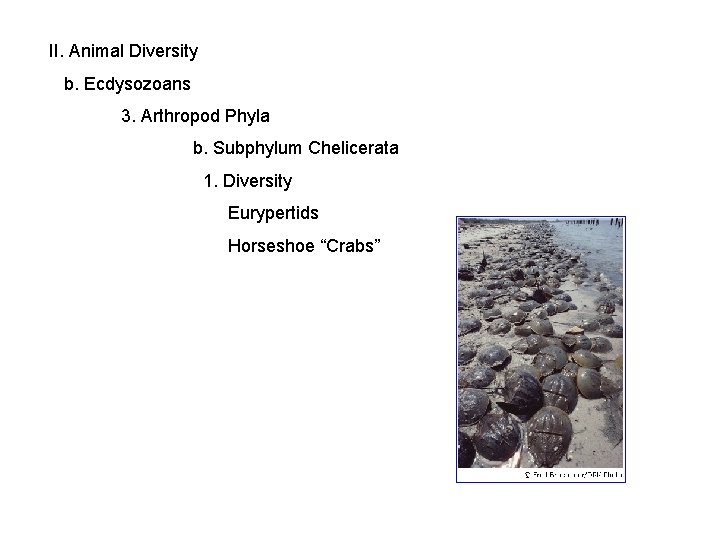
II. Animal Diversity b. Ecdysozoans 3. Arthropod Phyla b. Subphylum Chelicerata 1. Diversity Eurypertids Horseshoe “Crabs”
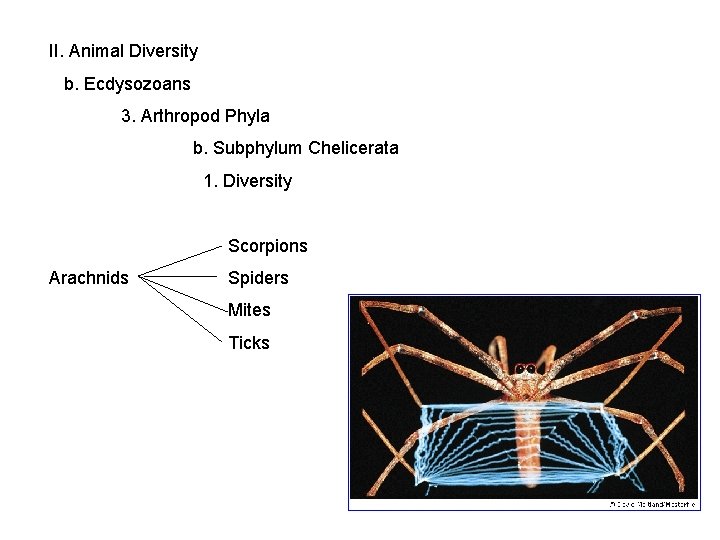
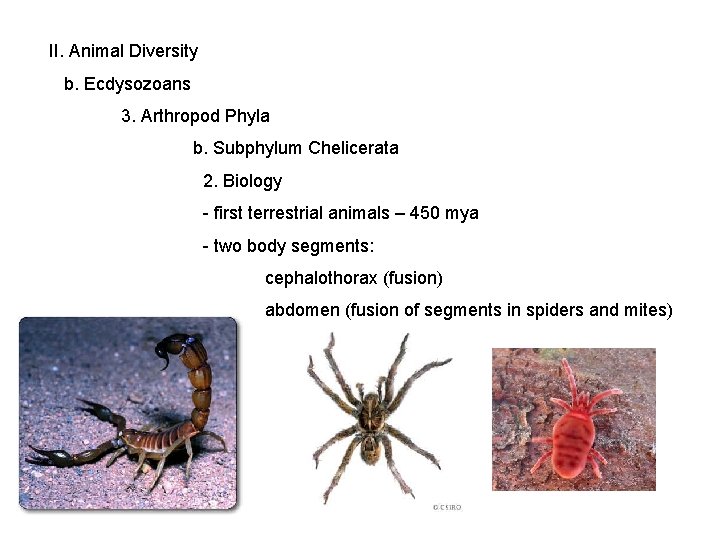
II. Animal Diversity b. Ecdysozoans 3. Arthropod Phyla b. Subphylum Chelicerata 1. Diversity Scorpions Arachnids Spiders Mites Ticks
II. Animal Diversity b. Ecdysozoans 3. Arthropod Phyla b. Subphylum Chelicerata 2. Biology - first terrestrial animals – 450 mya (scorpion-like)
II. Animal Diversity b. Ecdysozoans 3. Arthropod Phyla b. Subphylum Chelicerata 2. Biology - first terrestrial animals – 450 mya - two body segments: cephalothorax (fusion) abdomen (fusion of segments in spiders and mites)
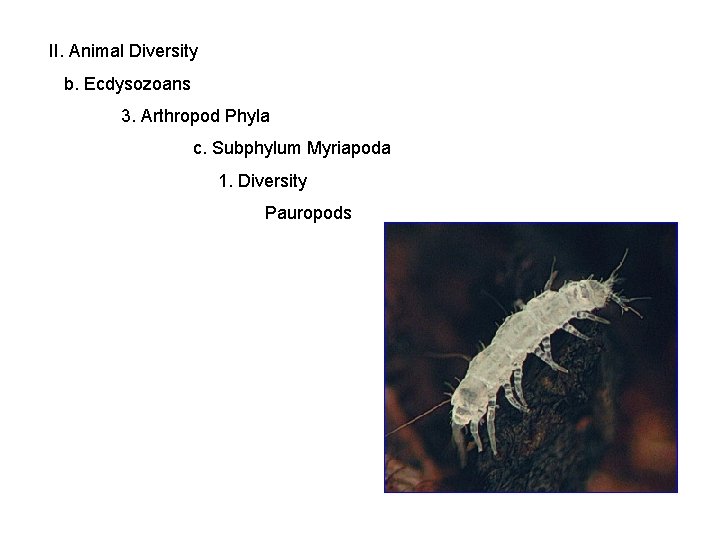
II. Animal Diversity b. Ecdysozoans 3. Arthropod Phyla c. Subphylum Myriapoda 1. Diversity Pauropods
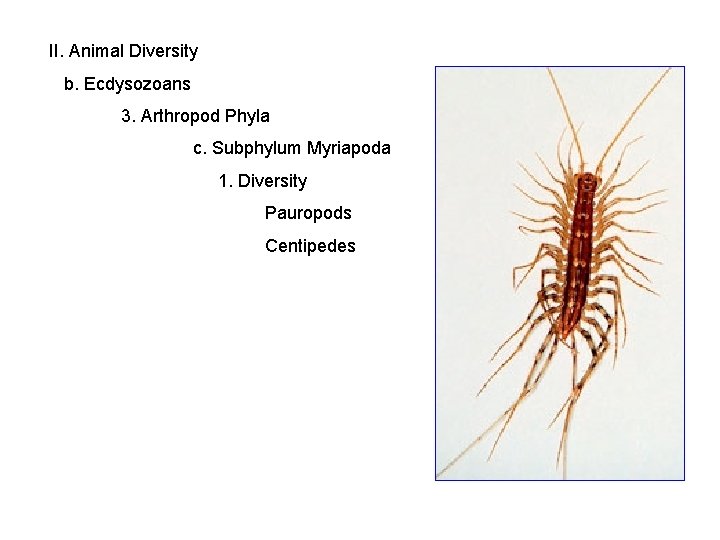
II. Animal Diversity b. Ecdysozoans 3. Arthropod Phyla c. Subphylum Myriapoda 1. Diversity Pauropods Centipedes
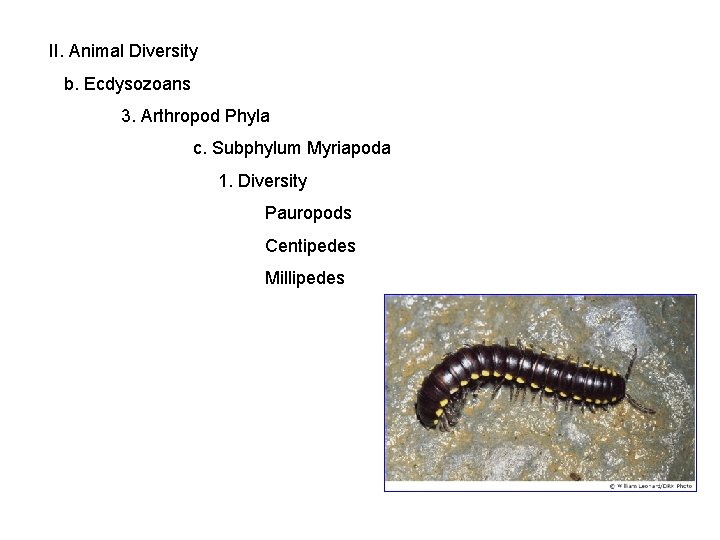
II. Animal Diversity b. Ecdysozoans 3. Arthropod Phyla c. Subphylum Myriapoda 1. Diversity Pauropods Centipedes Millipedes
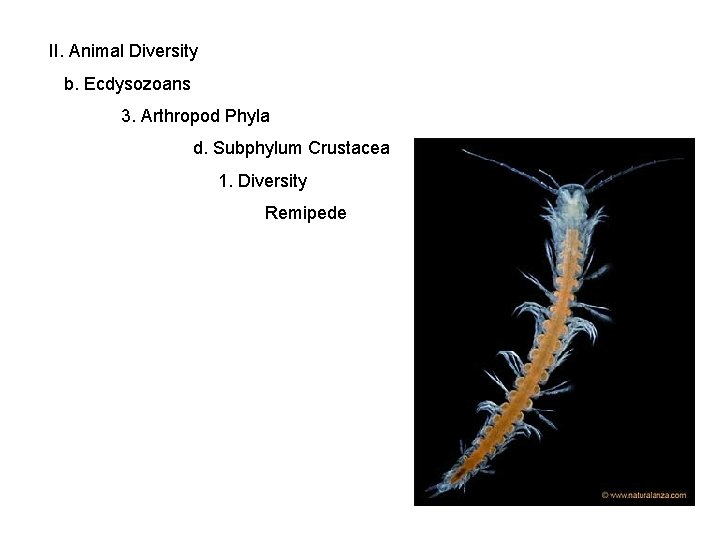
II. Animal Diversity b. Ecdysozoans 3. Arthropod Phyla d. Subphylum Crustacea 1. Diversity Remipede
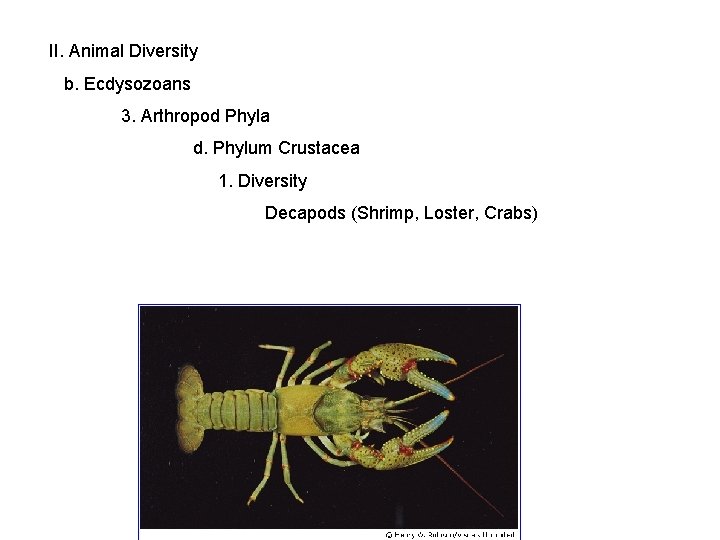
II. Animal Diversity b. Ecdysozoans 3. Arthropod Phyla d. Phylum Crustacea 1. Diversity Decapods (Shrimp, Loster, Crabs)
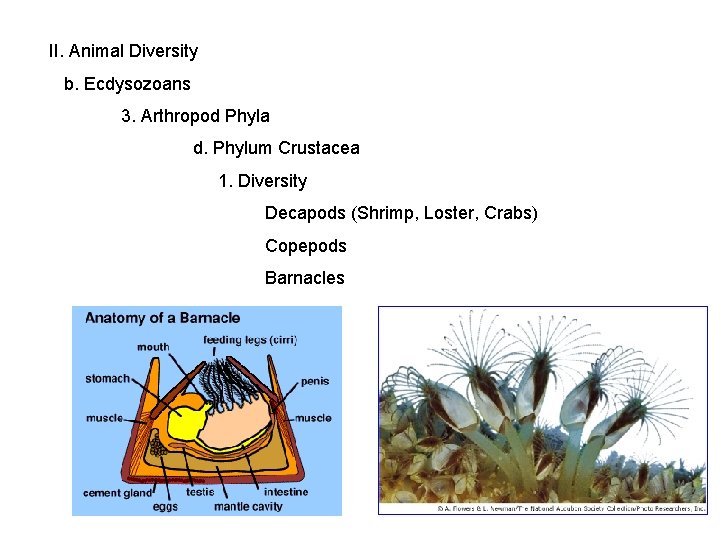
II. Animal Diversity b. Ecdysozoans 3. Arthropod Phyla d. Phylum Crustacea 1. Diversity Decapods (Shrimp, Loster, Crabs) Copepods Barnacles
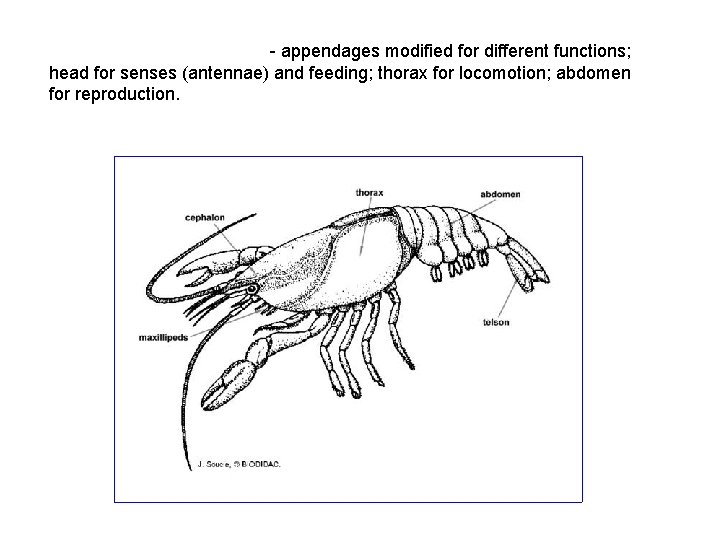
II. Animal Diversity b. Ecdysozoans 3. Arthropod Phyla d. Phylum Crustacea 2. Biology - three body regions - appendages modified for different functions; head for senses (antennae) and feeding; thorax for locomotion; abdomen for reproduction.
- appendages modified for different functions; head for senses (antennae) and feeding; thorax for locomotion; abdomen for reproduction.
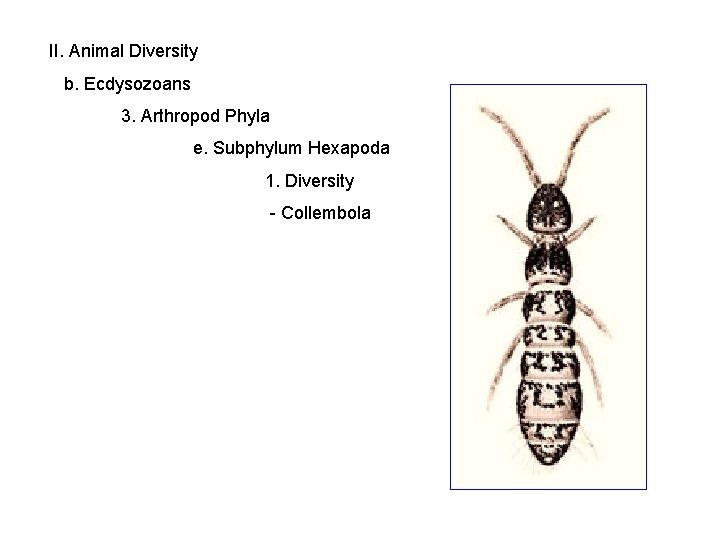
II. Animal Diversity b. Ecdysozoans 3. Arthropod Phyla e. Subphylum Hexapoda 1. Diversity - Collembola
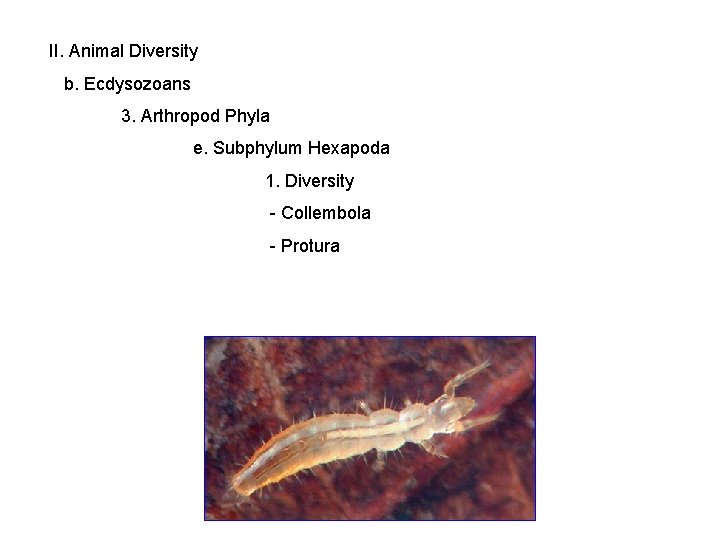
II. Animal Diversity b. Ecdysozoans 3. Arthropod Phyla e. Subphylum Hexapoda 1. Diversity - Collembola - Protura
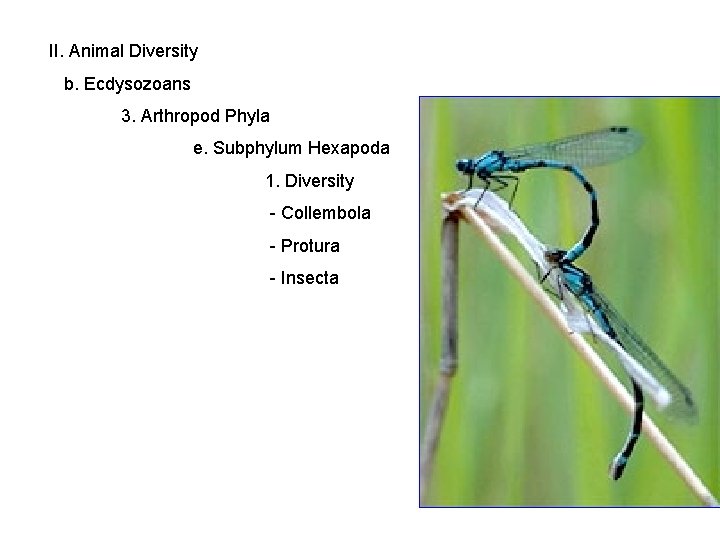
II. Animal Diversity b. Ecdysozoans 3. Arthropod Phyla e. Subphylum Hexapoda 1. Diversity - Collembola - Protura - Insecta
II. Animal Diversity b. Ecdysozoans 3. Arthropod Phyla e. Subphylum Hexapoda 2. Biology - Fusion of segments into three regions: head, thorax, abdomen
II. Animal Diversity b. Ecdysozoans 3. Arthropod Phyla e. Subphylum Hexapoda 2. Biology - Fusion of segments into three regions: head, thorax, abdomen - Flight in insects
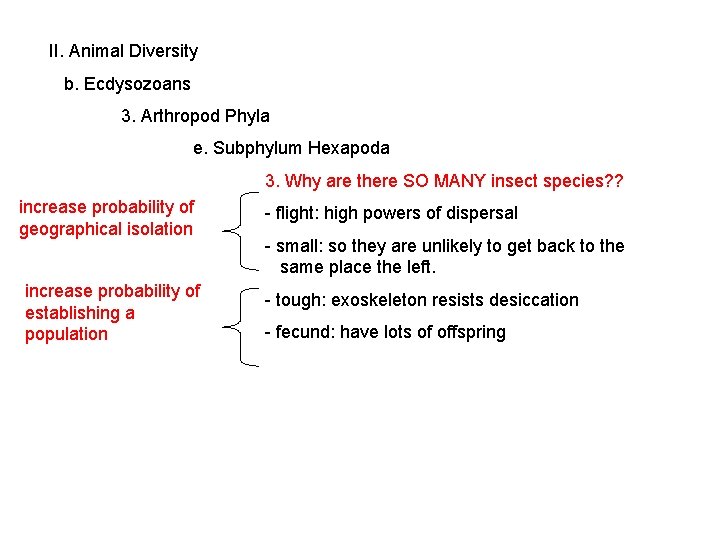
II. Animal Diversity b. Ecdysozoans 3. Arthropod Phyla e. Subphylum Hexapoda 3. Why are there SO MANY insect species? ? increase probability of geographical isolation increase probability of establishing a population - flight: high powers of dispersal - small: so they are unlikely to get back to the same place the left. - tough: exoskeleton resists desiccation - fecund: have lots of offspring
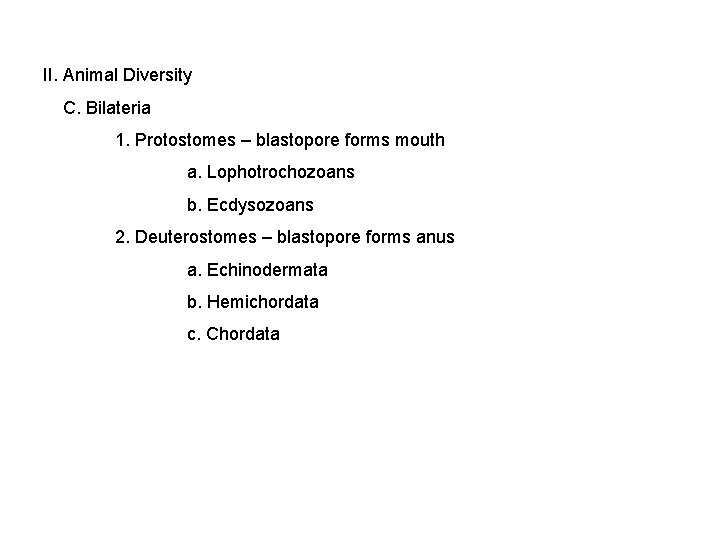
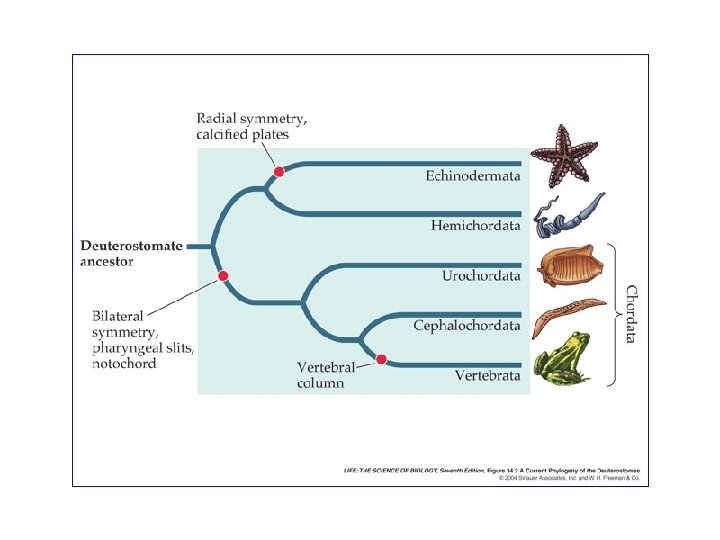
II. Animal Diversity C. Bilateria 1. Protostomes – blastopore forms mouth a. Lophotrochozoans b. Ecdysozoans 2. Deuterostomes – blastopore forms anus a. Echinodermata b. Hemichordata c. Chordata
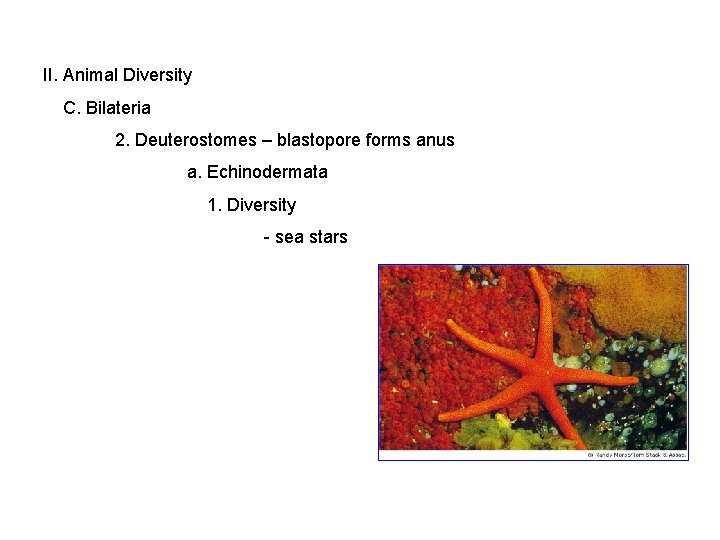
II. Animal Diversity C. Bilateria 2. Deuterostomes – blastopore forms anus a. Echinodermata 1. Diversity - sea stars
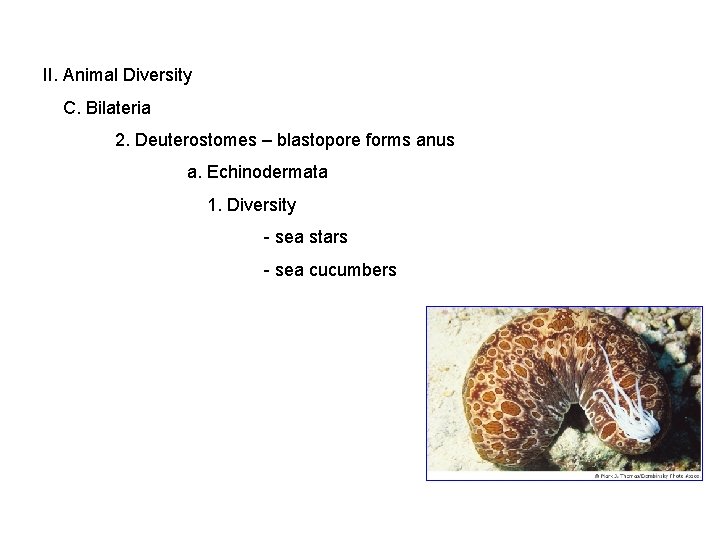
II. Animal Diversity C. Bilateria 2. Deuterostomes – blastopore forms anus a. Echinodermata 1. Diversity - sea stars - sea cucumbers
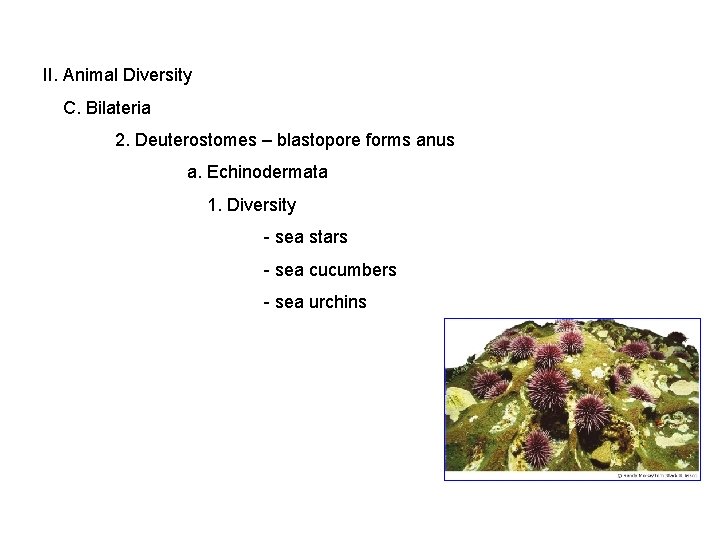
II. Animal Diversity C. Bilateria 2. Deuterostomes – blastopore forms anus a. Echinodermata 1. Diversity - sea stars - sea cucumbers - sea urchins
II. Animal Diversity C. Bilateria 2. Deuterostomes – blastopore forms anus a. Echinodermata 2. Biology - “biradial symmetry”
II. Animal Diversity C. Bilateria 2. Deuterostomes – blastopore forms anus a. Echinodermata 2. Biology - “biradial symmetry” - internal skeleton – calcified plates
II. Animal Diversity C. Bilateria 2. Deuterostomes – blastopore forms anus a. Echinodermata 2. Biology - “biradial symmetry” - internal skeleton – calcified plates - filter feeders (Sea Lily), herbivores (sea urchins), predators (sea stars).
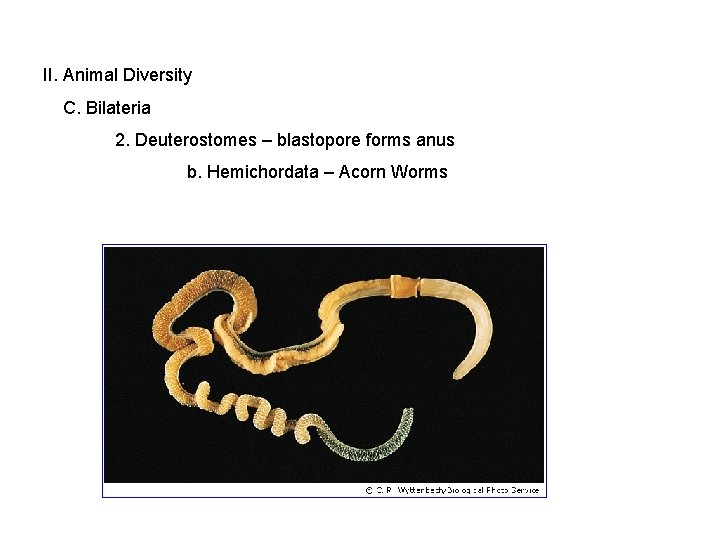
II. Animal Diversity C. Bilateria 2. Deuterostomes – blastopore forms anus b. Hemichordata – Acorn Worms
II. Animal Diversity C. Bilateria 2. Deuterostomes – blastopore forms anus b. Hemichordata – Acorn Worms - pharyngeal gill slits - hollow dorsal nerve tube
II. Animal Diversity C. Bilateria 2. Deuterostomes – blastopore forms anus c. Chordata: Four Key Characters
II. Animal Diversity C. Bilateria 2. Deuterostomes – blastopore forms anus c. Chordata: Four Key Characters - Pharyngeal Gill Slits
II. Animal Diversity C. Bilateria 2. Deuterostomes – blastopore forms anus c. Chordata: Four Key Characters - Pharyngeal Gill Slits - Hollow Dorsal Nerve Tube
II. Animal Diversity C. Bilateria 2. Deuterostomes – blastopore forms anus c. Chordata: Four Key Characters - Pharyngeal Gill Slits - Hollow Dorsal Nerve Tube - Post-anal tail
II. Animal Diversity C. Bilateria 2. Deuterostomes – blastopore forms anus c. Chordata: Four Key Characters - Pharyngeal Gill Slits - Hollow Dorsal Nerve Tube - Post-anal tail - notochord – a rigid supporting rod
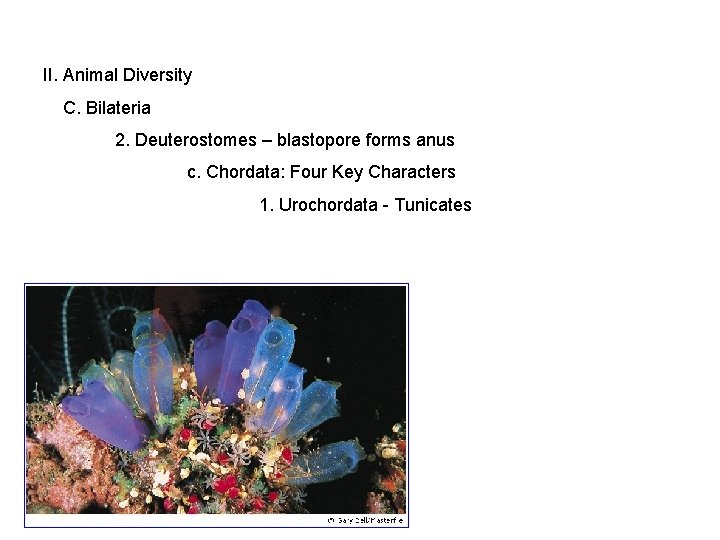
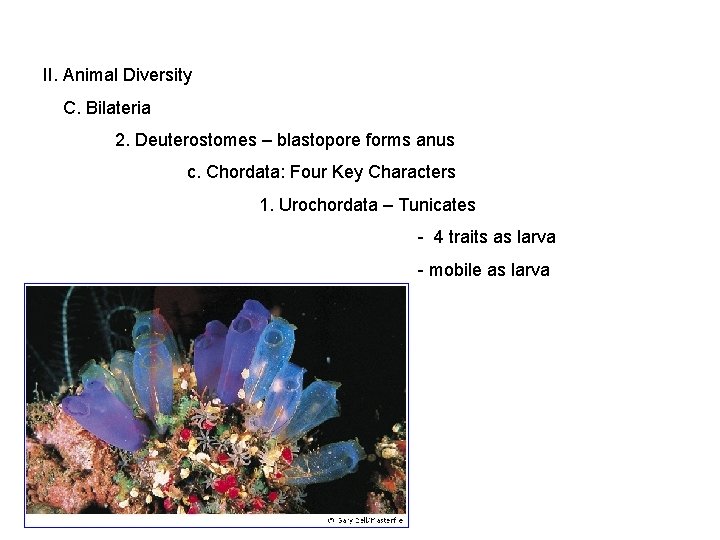
II. Animal Diversity C. Bilateria 2. Deuterostomes – blastopore forms anus c. Chordata: Four Key Characters 1. Urochordata - Tunicates
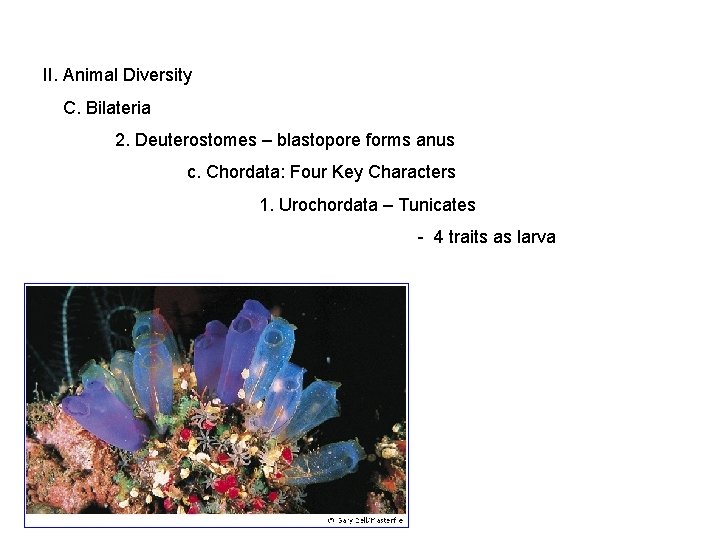
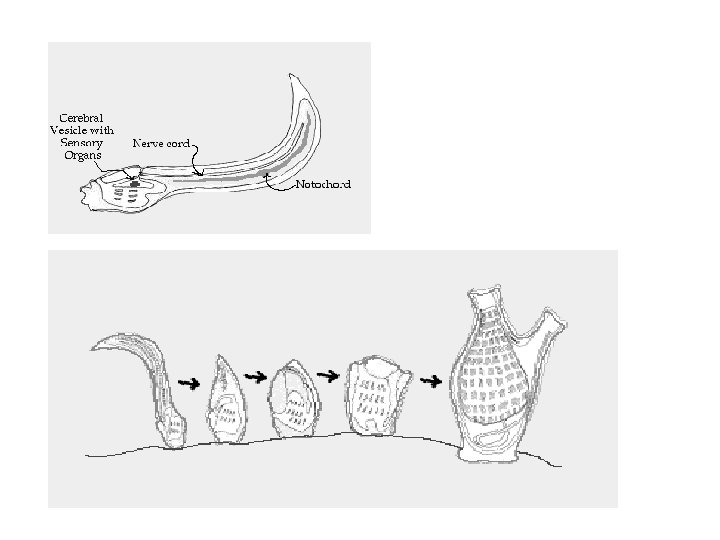
II. Animal Diversity C. Bilateria 2. Deuterostomes – blastopore forms anus c. Chordata: Four Key Characters 1. Urochordata – Tunicates - 4 traits as larva
II. Animal Diversity C. Bilateria 2. Deuterostomes – blastopore forms anus c. Chordata: Four Key Characters 1. Urochordata – Tunicates - 4 traits as larva - mobile as larva
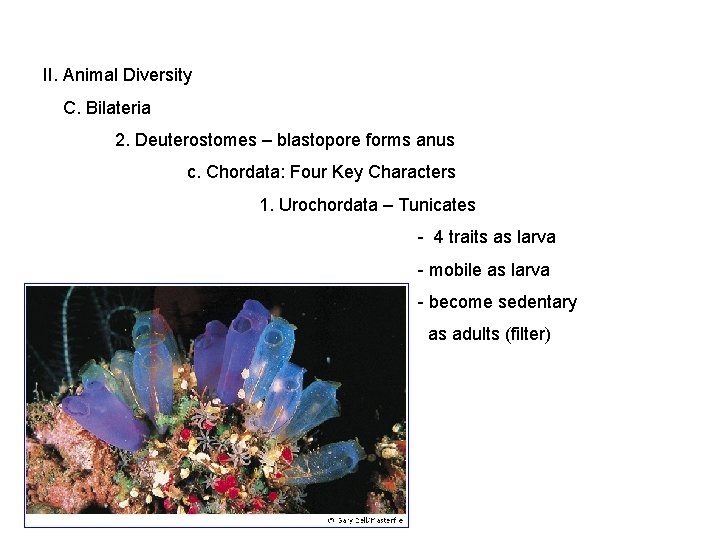
II. Animal Diversity C. Bilateria 2. Deuterostomes – blastopore forms anus c. Chordata: Four Key Characters 1. Urochordata – Tunicates - 4 traits as larva - mobile as larva - become sedentary as adults (filter)
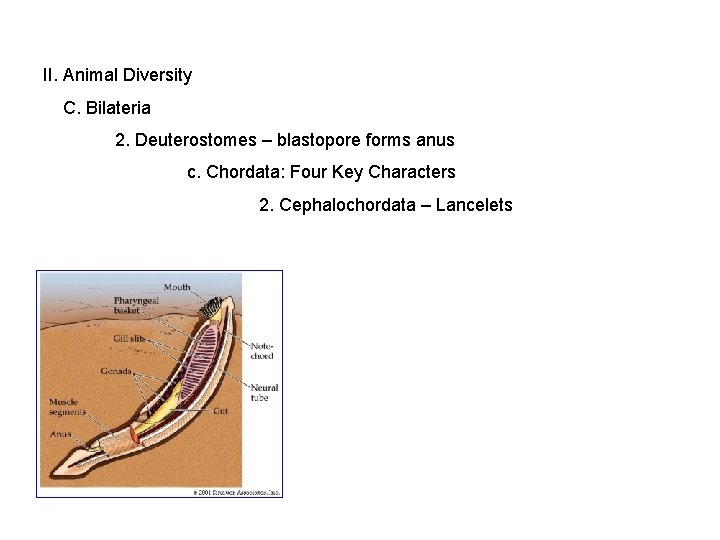
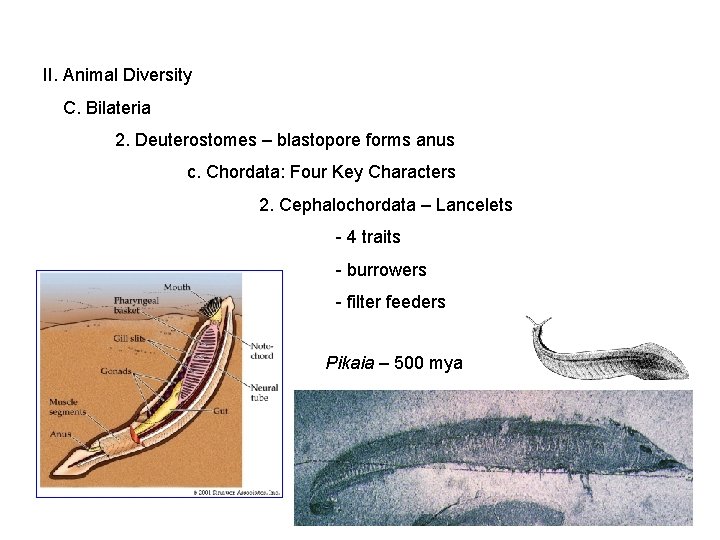
II. Animal Diversity C. Bilateria 2. Deuterostomes – blastopore forms anus c. Chordata: Four Key Characters 2. Cephalochordata – Lancelets
II. Animal Diversity C. Bilateria 2. Deuterostomes – blastopore forms anus c. Chordata: Four Key Characters 2. Cephalochordata – Lancelets - 4 traits - burrowers - filter feeders Pikaia – 500 mya
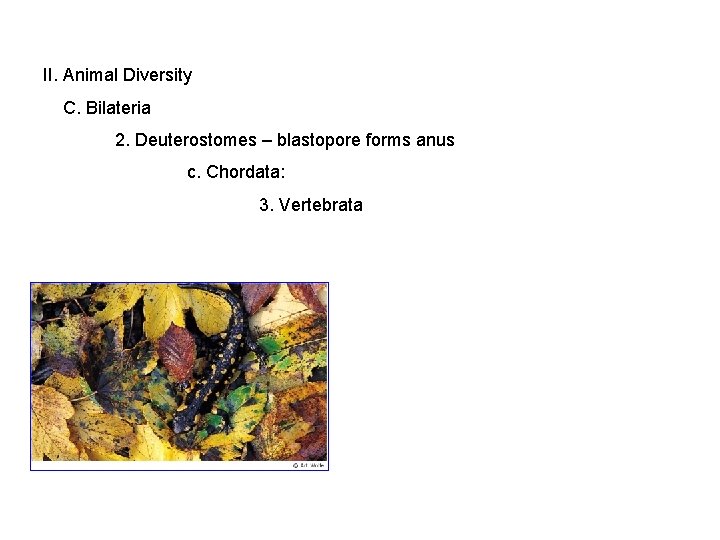
II. Animal Diversity C. Bilateria 2. Deuterostomes – blastopore forms anus c. Chordata: 3. Vertebrata
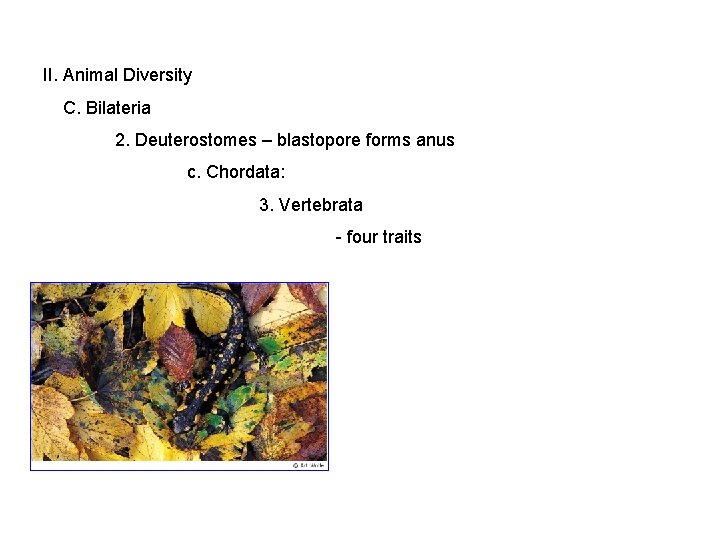
II. Animal Diversity C. Bilateria 2. Deuterostomes – blastopore forms anus c. Chordata: 3. Vertebrata - four traits
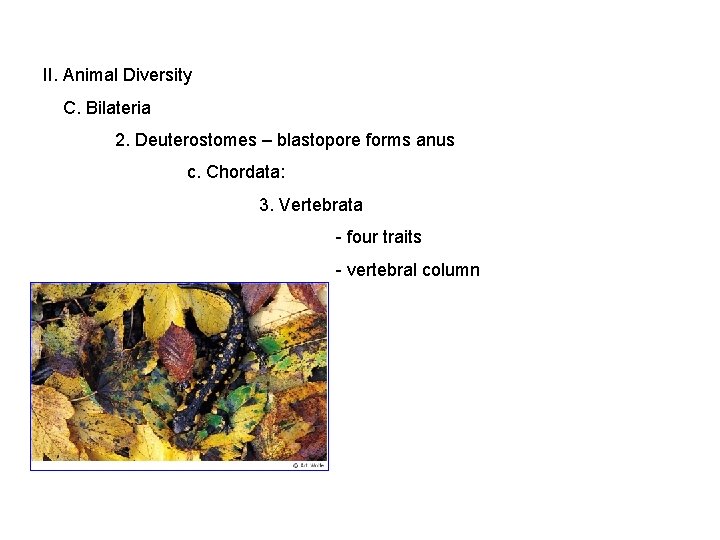
II. Animal Diversity C. Bilateria 2. Deuterostomes – blastopore forms anus c. Chordata: 3. Vertebrata - four traits - vertebral column
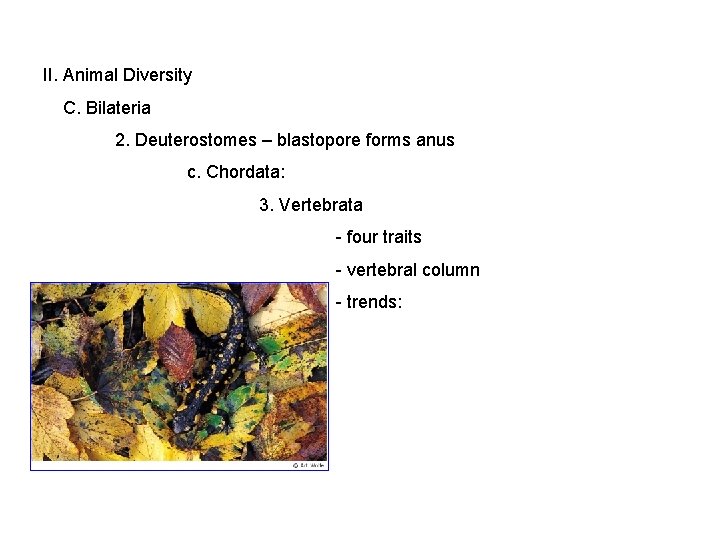
II. Animal Diversity C. Bilateria 2. Deuterostomes – blastopore forms anus c. Chordata: 3. Vertebrata - four traits - vertebral column - trends:
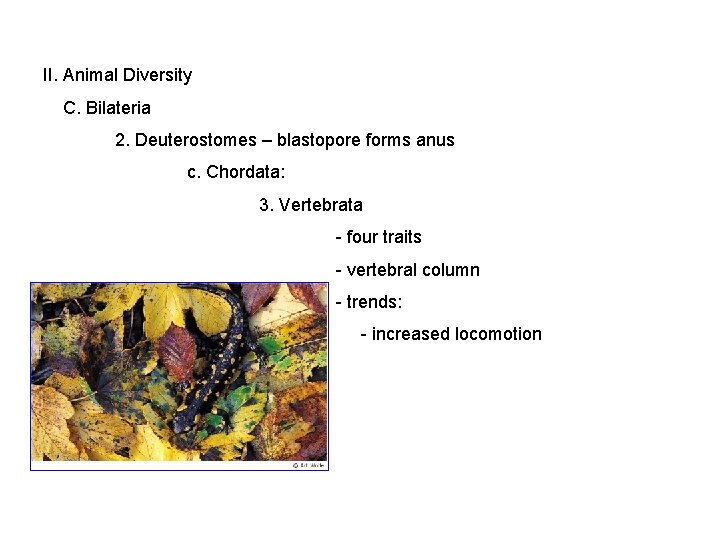
II. Animal Diversity C. Bilateria 2. Deuterostomes – blastopore forms anus c. Chordata: 3. Vertebrata - four traits - vertebral column - trends: - increased locomotion
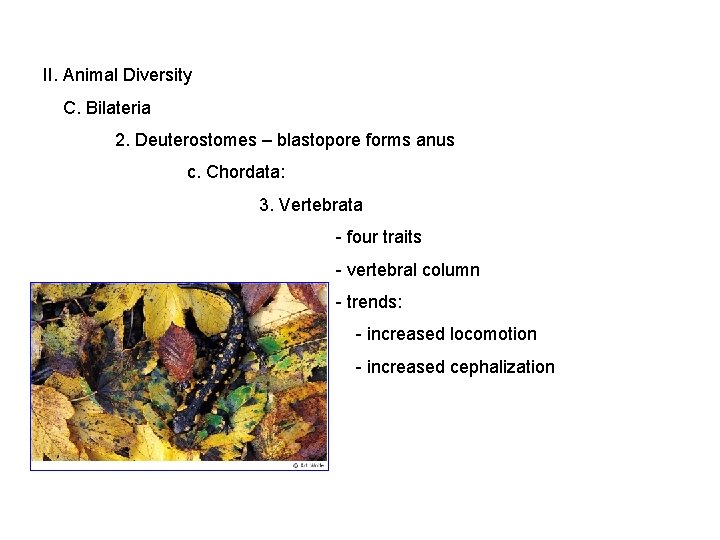
II. Animal Diversity C. Bilateria 2. Deuterostomes – blastopore forms anus c. Chordata: 3. Vertebrata - four traits - vertebral column - trends: - increased locomotion - increased cephalization
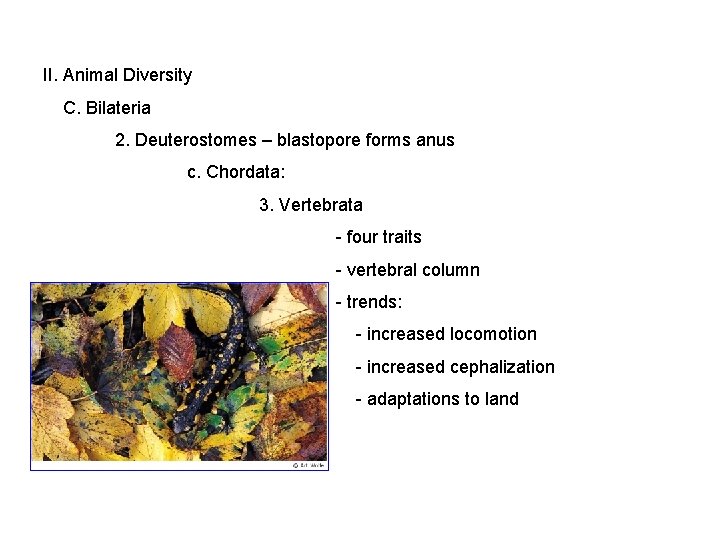
II. Animal Diversity C. Bilateria 2. Deuterostomes – blastopore forms anus c. Chordata: 3. Vertebrata - four traits - vertebral column - trends: - increased locomotion - increased cephalization - adaptations to land