
Igor Lukyanchuk Amiens University Quantum Oscillations and Magnetic
- Slides: 54
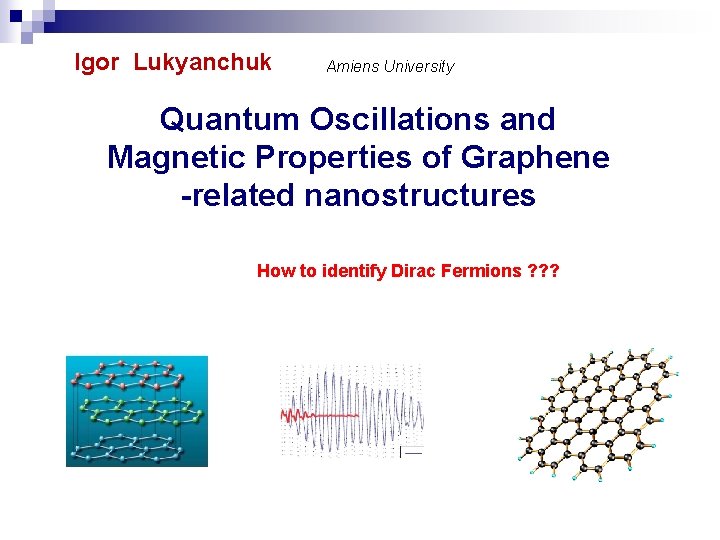
Igor Lukyanchuk Amiens University Quantum Oscillations and Magnetic Properties of Graphene -related nanostructures How to identify Dirac Fermions ? ? ?
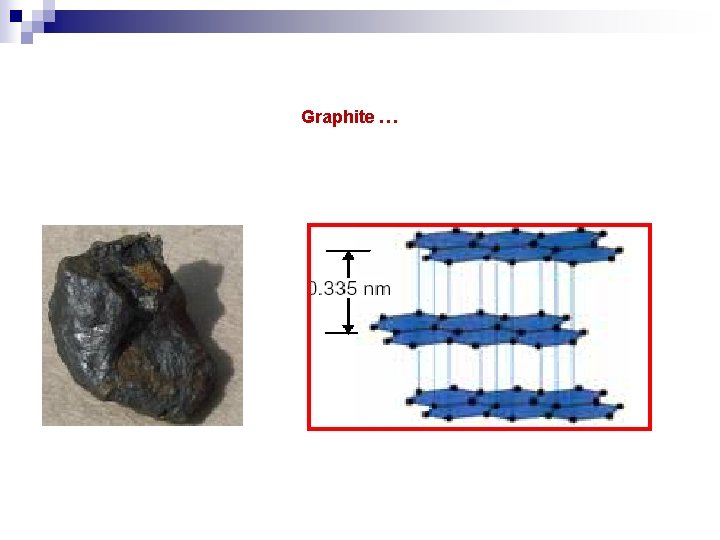
Graphite …
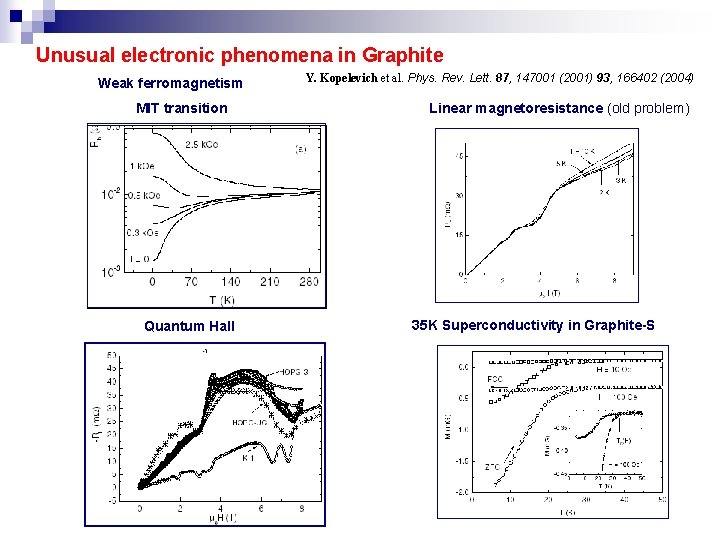
Unusual electronic phenomena in Graphite Weak ferromagnetism MIT transition Quantum Hall Y. Kopelevich et al. Phys. Rev. Lett. 87, 147001 (2001) 93, 166402 (2004) Linear magnetoresistance (old problem) 35 K Superconductivity in Graphite-S
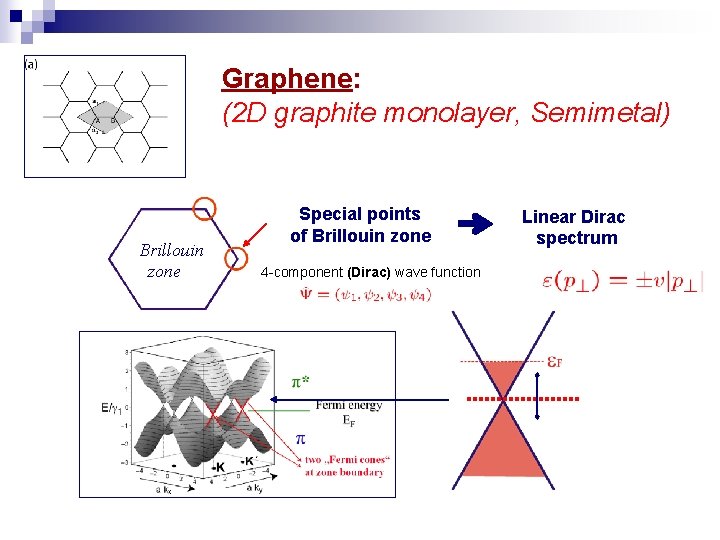
Graphene: (2 D graphite monolayer, Semimetal) Brillouin zone Special points of Brillouin zone 4 -component (Dirac) wave function Linear Dirac spectrum
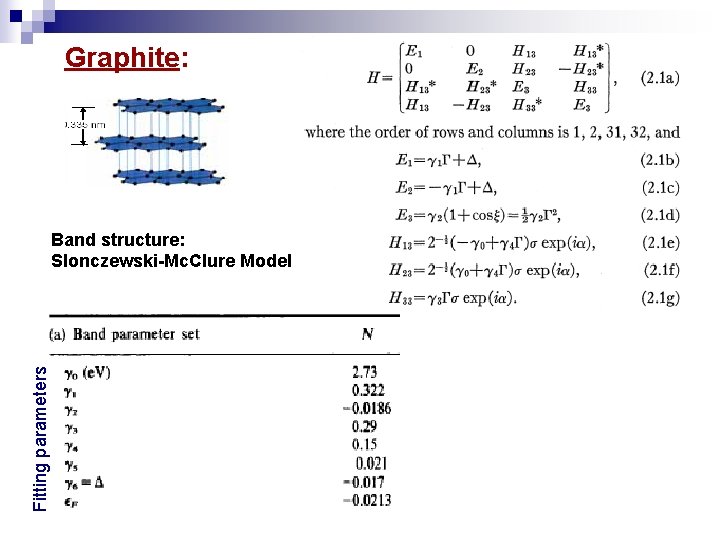
Graphite: Fitting parameters Band structure: Slonczewski-Mc. Clure Model
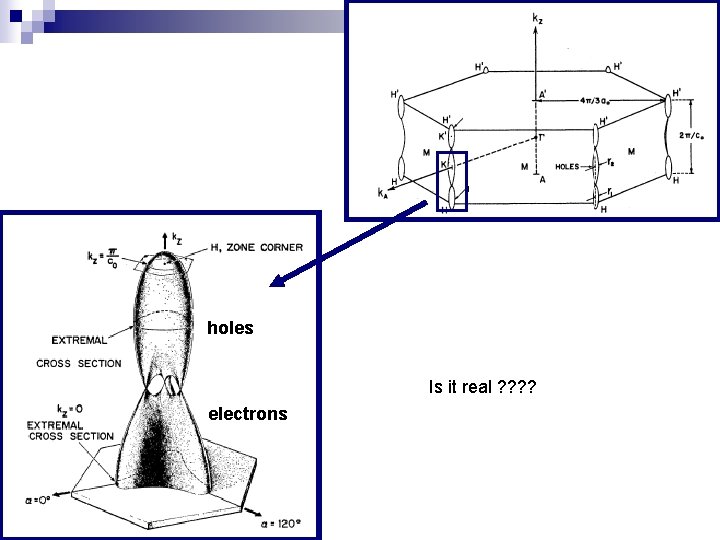
holes Is it real ? ? electrons
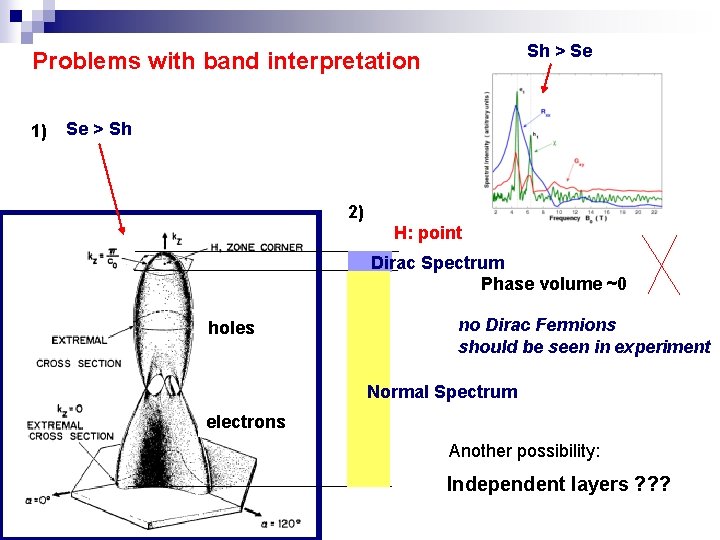
Sh > Se Problems with band interpretation 1) Se > Sh 2) H: point Dirac Spectrum Phase volume ~0 holes no Dirac Fermions should be seen in experiment Normal Spectrum electrons Another possibility: Independent layers ? ? ?
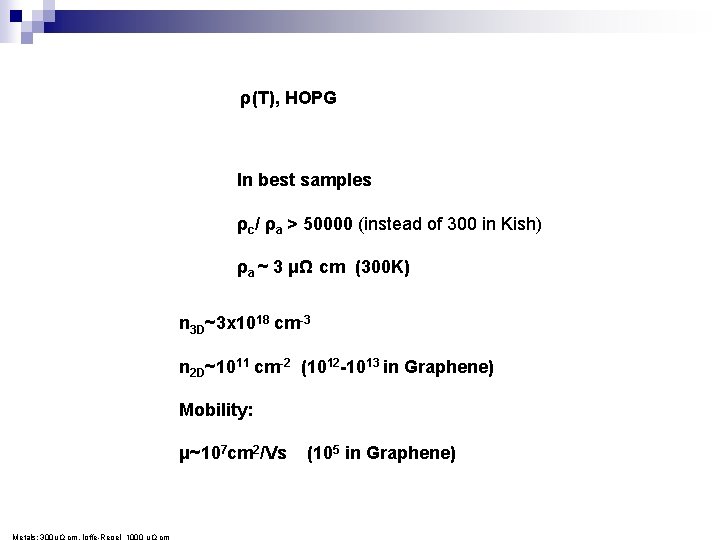
ρ(T), HOPG In best samples ρc/ ρa > 50000 (instead of 300 in Kish) ρa ~ 3 μΩ cm (300 K) n 3 D~3 x 1018 cm-3 n 2 D~1011 cm-2 (1012 -1013 in Graphene) Mobility: μ~107 cm 2/Vs (105 in Graphene)
Graphite: 2 D vs 3 D ? Dirac Fermions vs Normal Carriers ? Tools: Quantum oscillations I. Lukyanchuk, Y. Kopelevich et al. - Phys. Rev. Lett. 93, 166402 (2004) - Phys. Rev. Lett. 97, 256801 (2006)
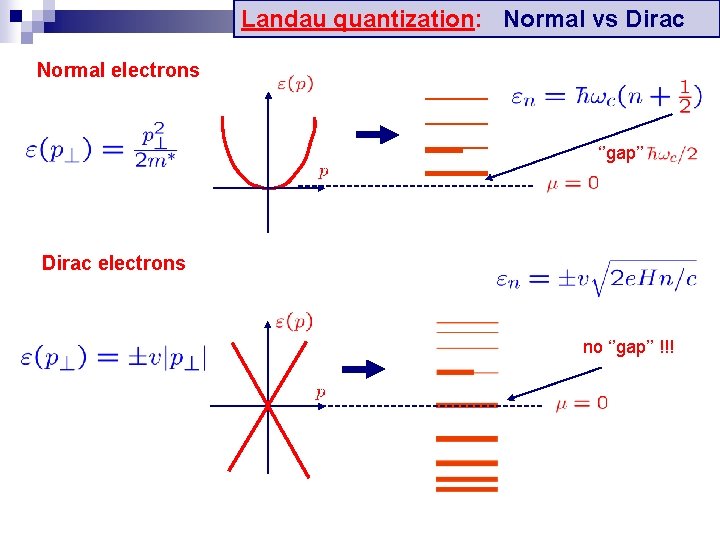
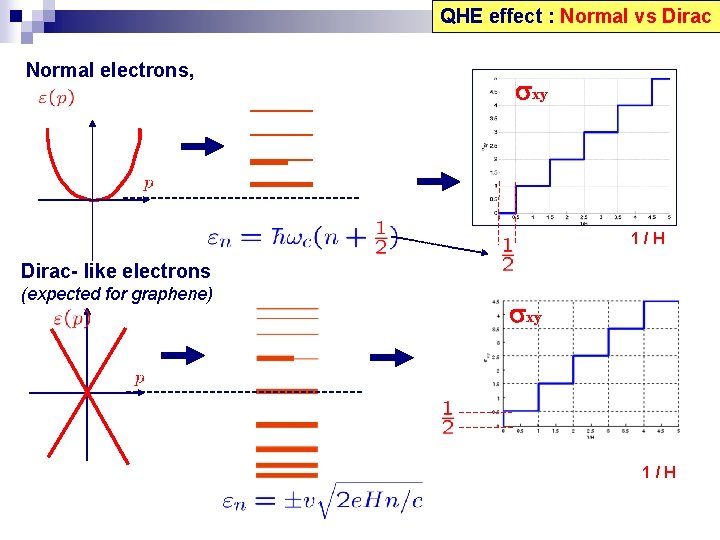
Landau quantization: Normal vs Dirac Normal electrons ‘’gap’’ Dirac electrons no ‘’gap’’ !!!
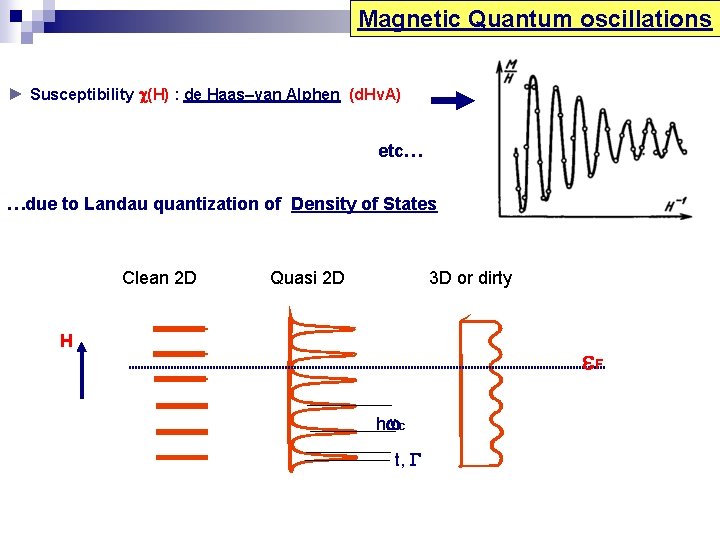
Magnetic Quantum oscillations ► Susceptibility (H) : de Haas–van Alphen (d. Hv. A) etc… …due to Landau quantization of Density of States Clean 2 D Quasi 2 D 3 D or dirty H F h c t,
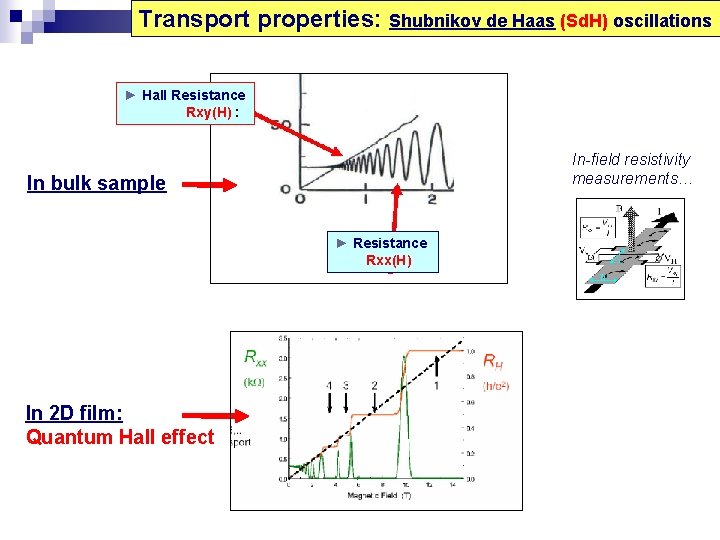
Transport properties: Shubnikov de Haas (Sd. H) oscillations ► Hall Resistance Rxy(H) : In-field resistivity measurements… In bulk sample ► Resistance Rxx(H) In 2 D film: Quantum Hall effect
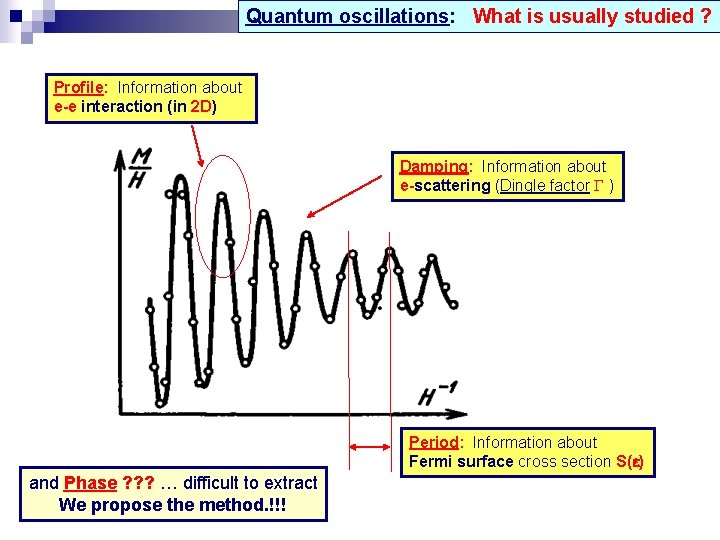
Quantum oscillations: What is usually studied ? Profile: Information about e-e interaction (in 2 D) Damping: Information about e-scattering (Dingle factor G ) Period: Information about Fermi surface cross section S( ) and Phase ? ? ? … difficult to extract We propose the method. !!!
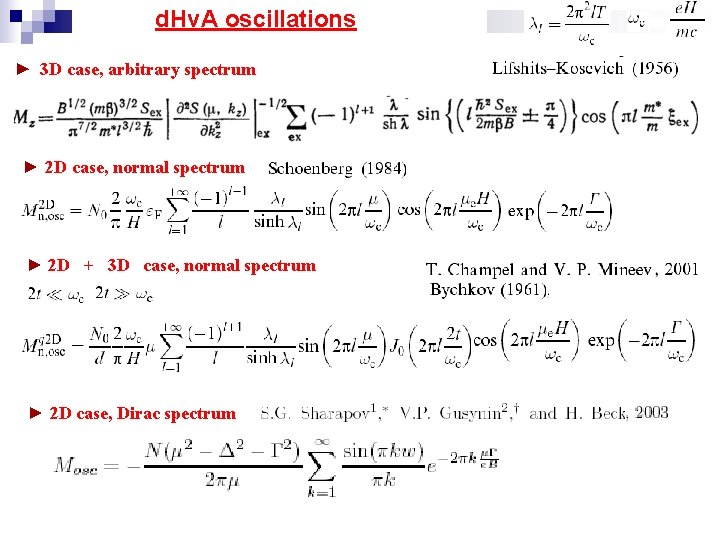
d. Hv. A oscillations ► 3 D case, arbitrary spectrum ► 2 D case, normal spectrum ► 2 D + 3 D case, normal spectrum ► 2 D case, Dirac spectrum
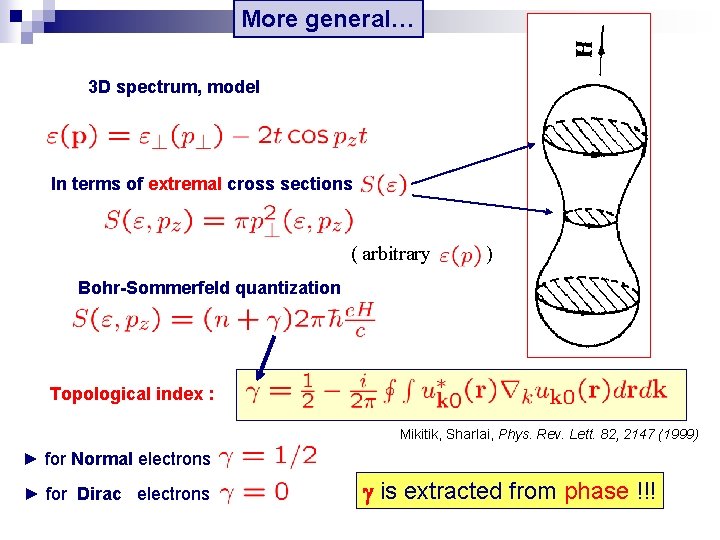
More general… 3 D spectrum, model In terms of extremal cross sections ( arbitrary ) Bohr-Sommerfeld quantization Topological index : Mikitik, Sharlai, Phys. Rev. Lett. 82, 2147 (1999) ► for Normal electrons ► for Dirac electrons is extracted from phase !!!
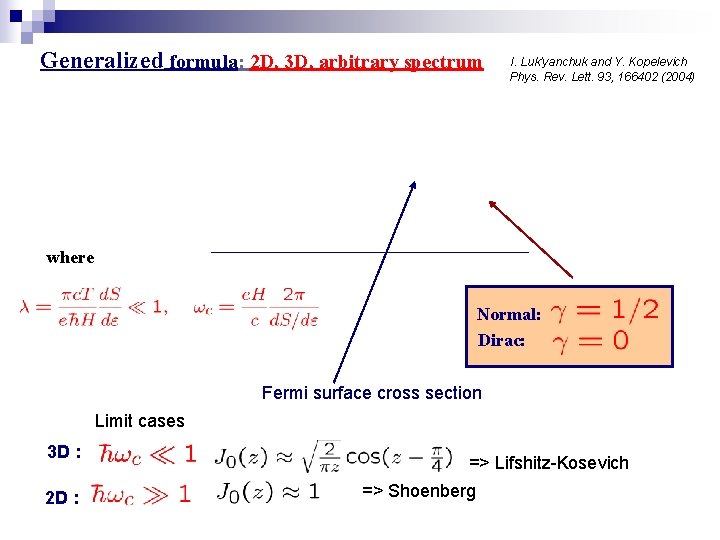
Generalized formula: 2 D, 3 D, arbitrary spectrum I. Luk’yanchuk and Y. Kopelevich Phys. Rev. Lett. 93, 166402 (2004) where Normal: Dirac: Fermi surface cross section Limit cases 3 D : 2 D : => Lifshitz-Kosevich => Shoenberg
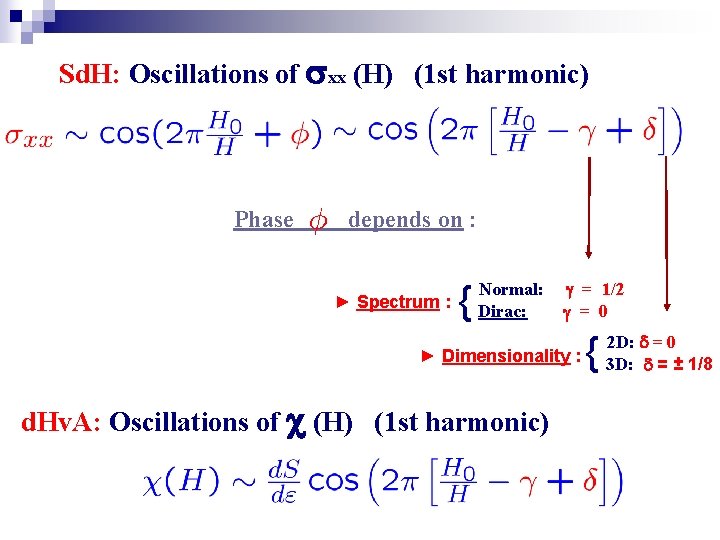
Sd. H: Oscillations of xx (H) (1 st harmonic) Phase depends on : ► Spectrum : { Normal: Dirac: = 1/2 = 0 ► Dimensionality : d. Hv. A: Oscillations of (H) (1 st harmonic) { 2 D: = 0 3 D: = ± 1/8
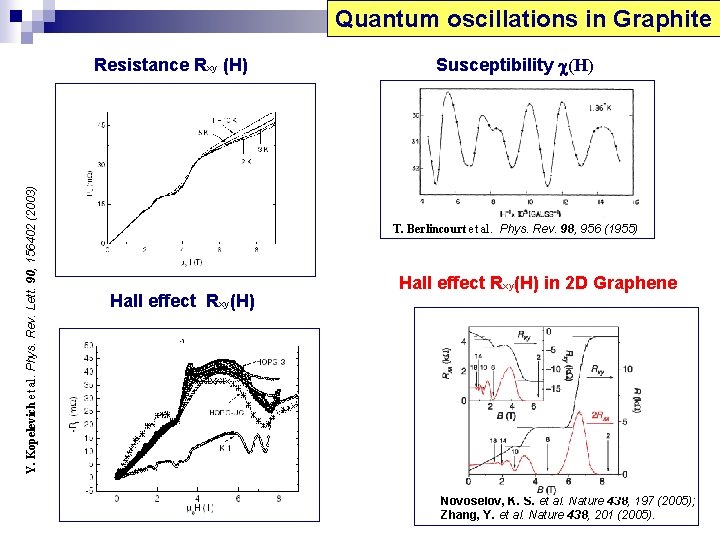
Quantum oscillations in Graphite Y. Kopelevich et al. Phys. Rev. Lett. 90, 156402 (2003) Resistance Rxy (H) Susceptibility (H) T. Berlincourt et al. Phys. Rev. 98, 956 (1955) Hall effect Rxy(H) in 2 D Graphene Novoselov, K. S. et al. Nature 438, 197 (2005); Zhang, Y. et al. Nature 438, 201 (2005).
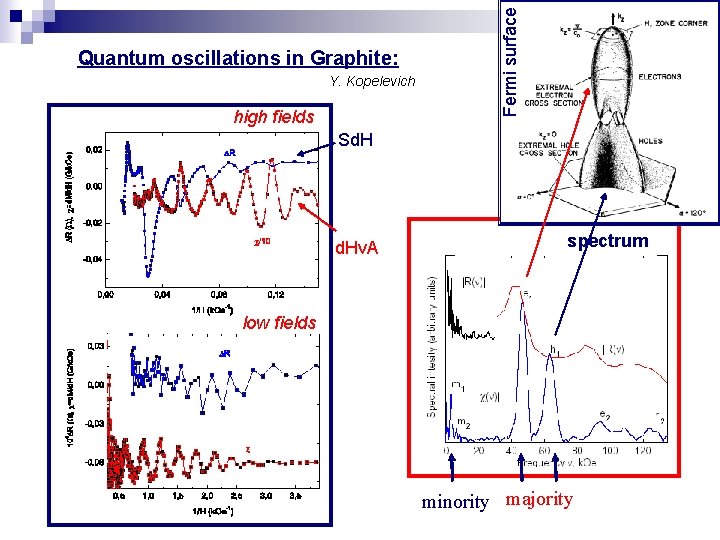
Y. Kopelevich high fields Fermi surface Quantum oscillations in Graphite: Sd. Hv. A spectrum low fields minority majority
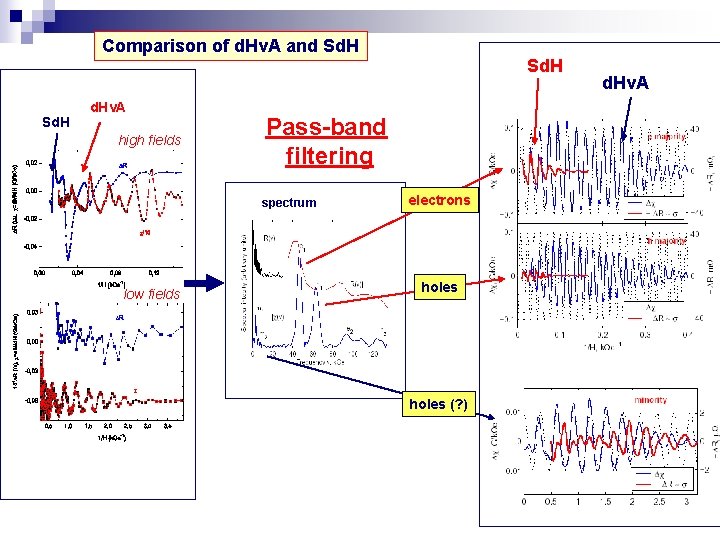
Comparison of d. Hv. A and Sd. Hv. A high fields Pass-band filtering spectrum low fields Sd. H electrons holes (? ) d. Hv. A
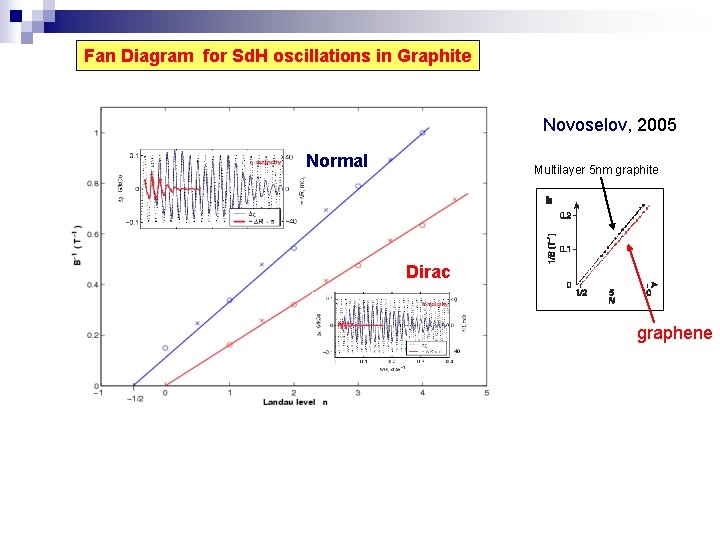
Fan Diagram for Sd. H oscillations in Graphite Novoselov, 2005 Normal Multilayer 5 nm graphite Dirac graphene
QHE and DF
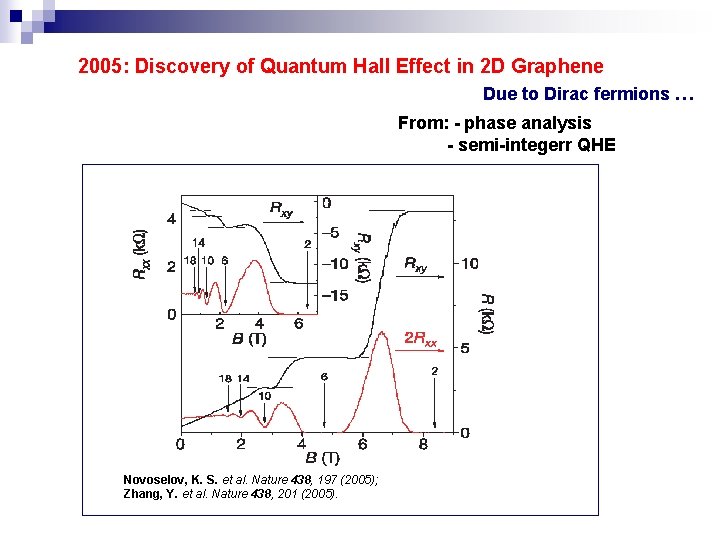
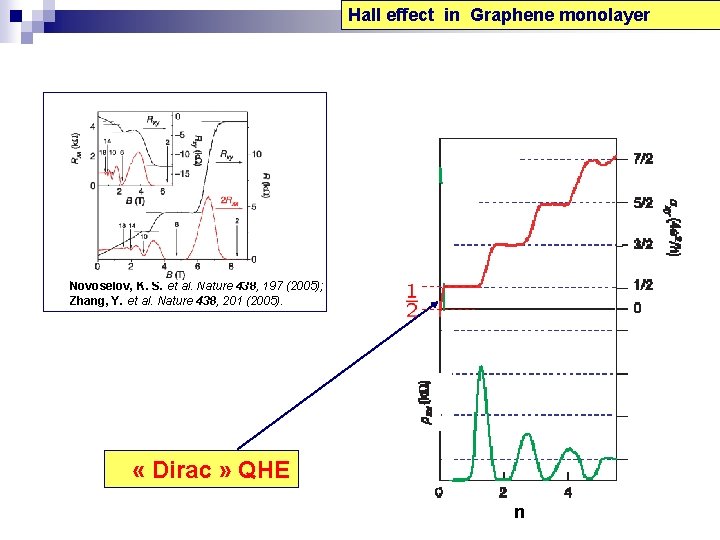
2005: Discovery of Quantum Hall Effect in 2 D Graphene Due to Dirac fermions … From: - phase analysis - semi-integerr QHE Novoselov, K. S. et al. Nature 438, 197 (2005); Zhang, Y. et al. Nature 438, 201 (2005).
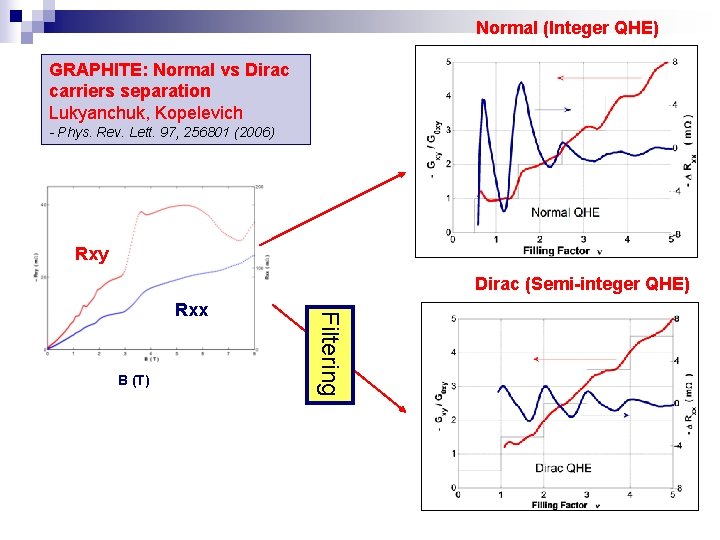
QHE effect : Normal vs Dirac Normal electrons, xy 1/H Dirac- like electrons (expected for graphene) xy 1/H
Hall effect in Graphene monolayer Novoselov, K. S. et al. Nature 438, 197 (2005); Zhang, Y. et al. Nature 438, 201 (2005). « Dirac » QHE n
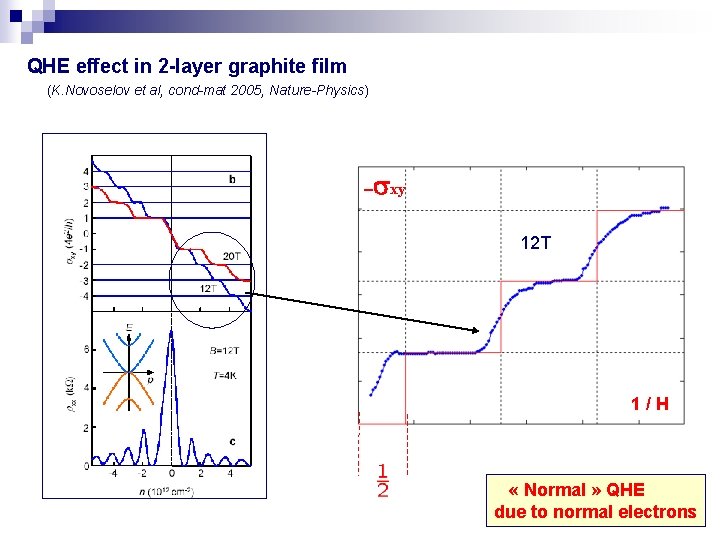
QHE effect in 2 -layer graphite film (K. Novoselov et al, cond-mat 2005, Nature-Physics) - xy 12 T 1/H « Normal » QHE due to normal electrons
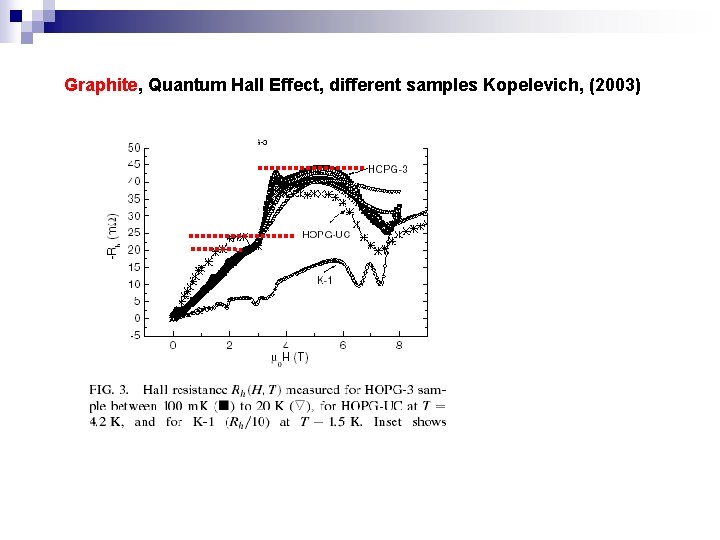
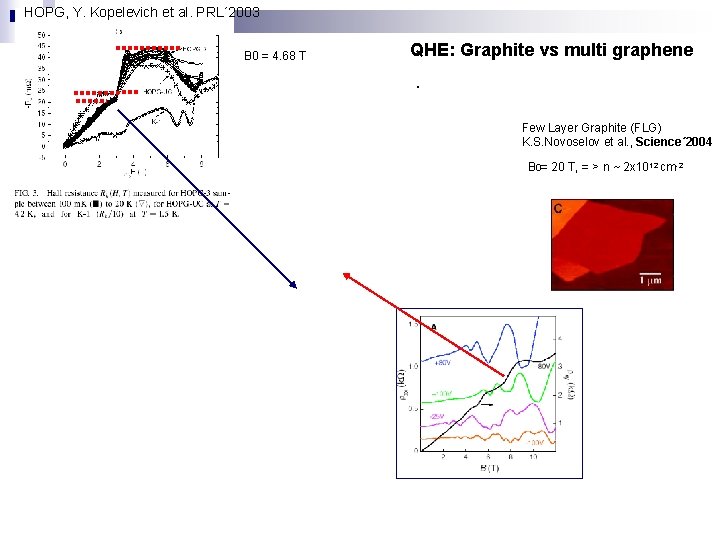
Graphite, Quantum Hall Effect, different samples Kopelevich, (2003)
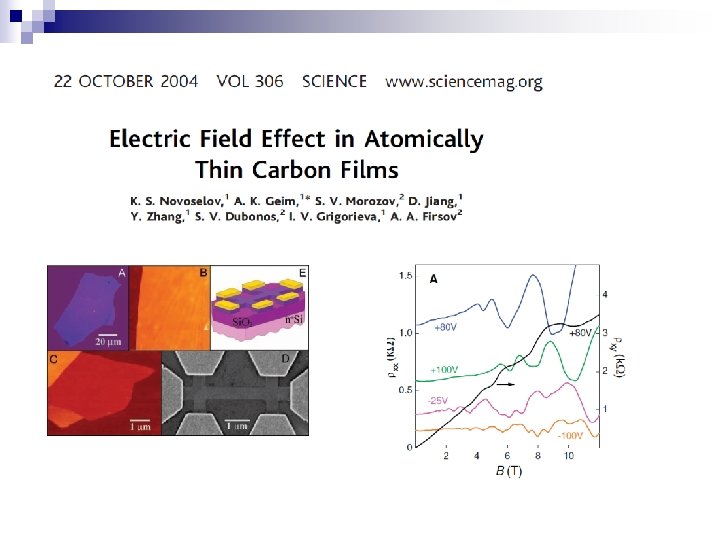
HOPG, Y. Kopelevich et al. PRL´ 2003 B 0 = 4. 68 T QHE: Graphite vs multi graphene. Few Layer Graphite (FLG) K. S. Novoselov et al. , Science´ 2004 B 0= 20 T, = > n ~ 2 x 1012 cm-2
Normal (Integer QHE) GRAPHITE: Normal vs Dirac carriers separation Lukyanchuk, Kopelevich - Phys. Rev. Lett. 97, 256801 (2006) Rxy Dirac (Semi-integer QHE) B (T) Filtering Rxx
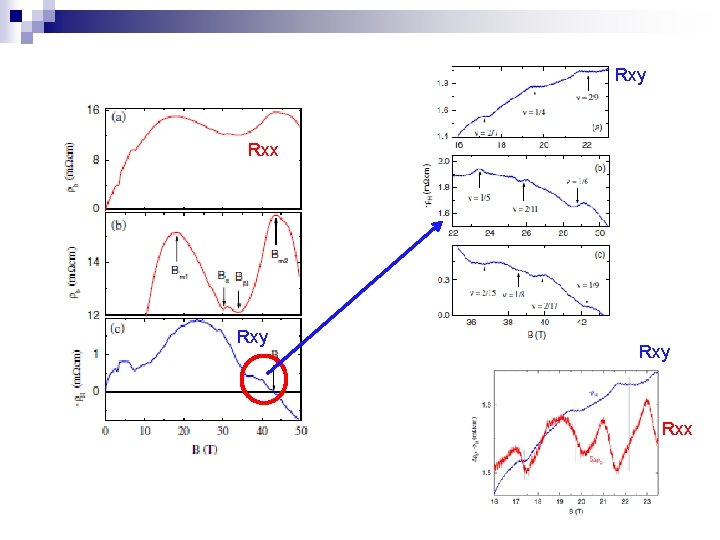
FQHE in Graphite
Rxy Rxx
Another manifestations of DF in Graphite
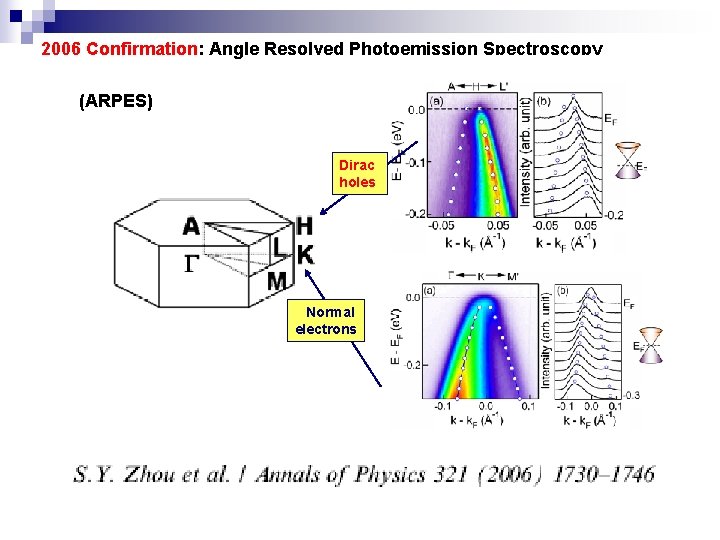
2006 Confirmation: Angle Resolved Photoemission Spectroscopy (ARPES) Dirac holes Normal electrons
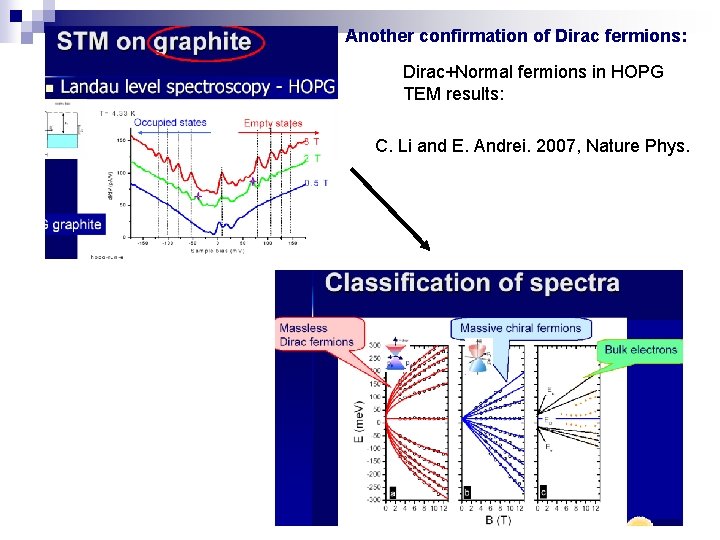
Another confirmation of Dirac fermions: Dirac+Normal fermions in HOPG TEM results: C. Li and E. Andrei. 2007, Nature Phys.
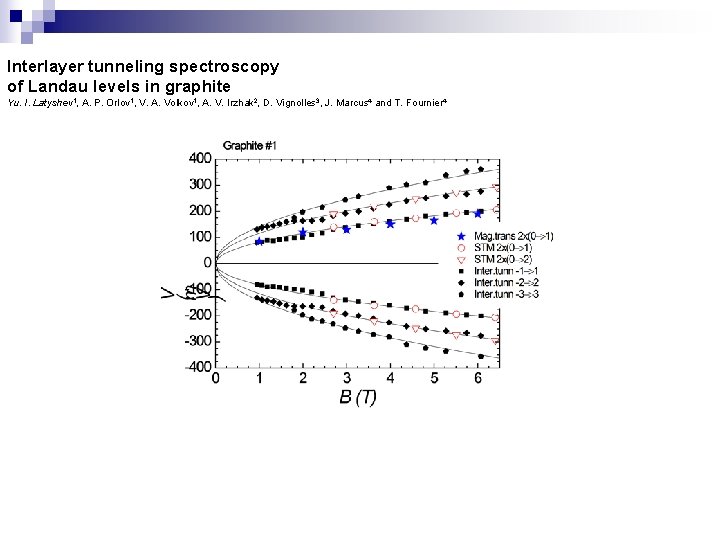
Interlayer tunneling spectroscopy of Landau levels in graphite Yu. I. Latyshev 1, A. P. Orlov 1, V. A. Volkov 1, A. V. Irzhak 2, D. Vignolles 3, J. Marcus 4 and T. Fournier 4
INFRARED SPECTROSCOPY
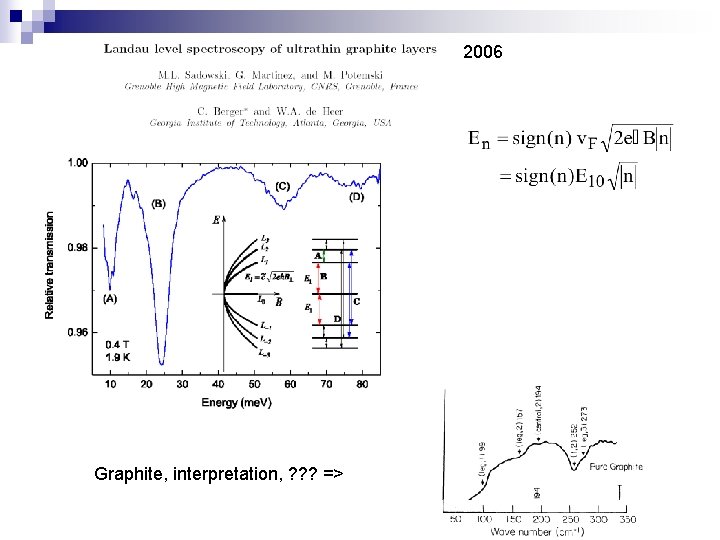
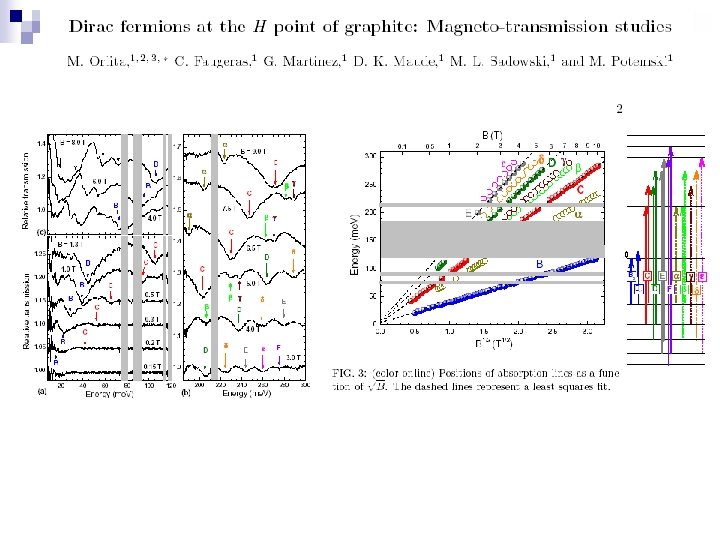
2006 Graphite, interpretation, ? ? ? =>
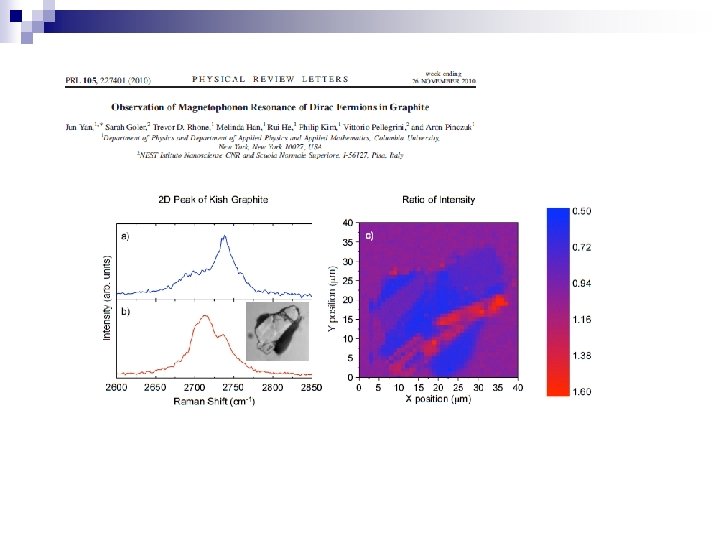
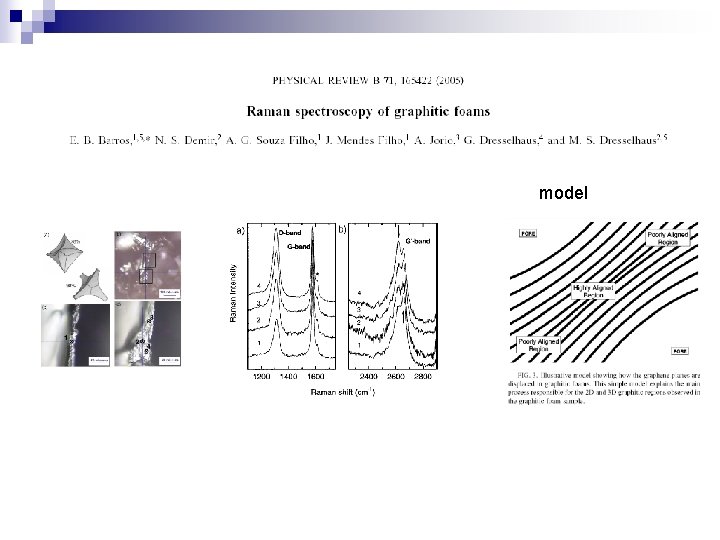
RAMAN SPECTROSCOPY
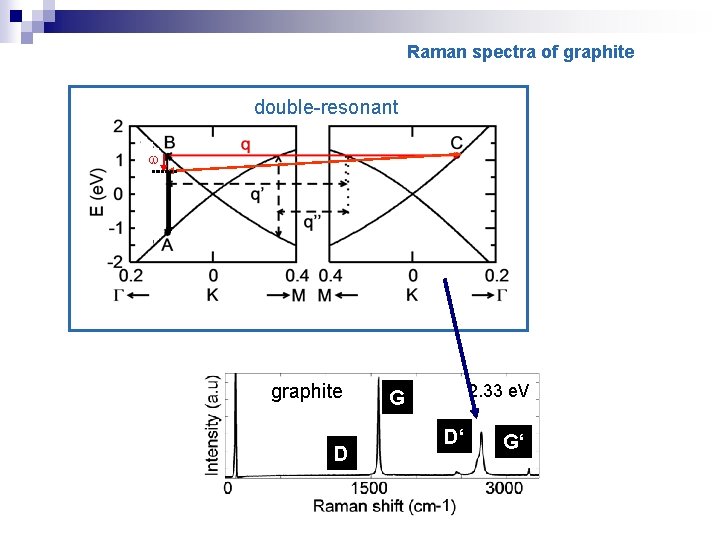
Raman spectra of graphite double-resonant graphite D 2. 33 e. V G D‘ G‘
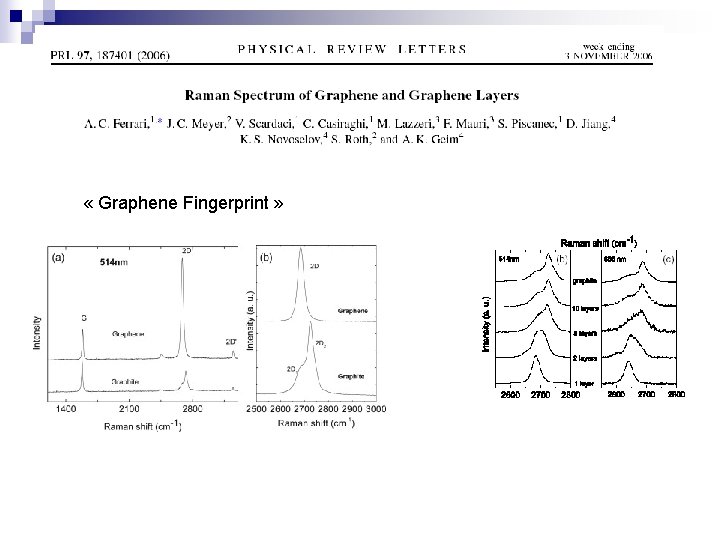
RAMAN SPECTROSCOPY « Graphene Fingerprint »
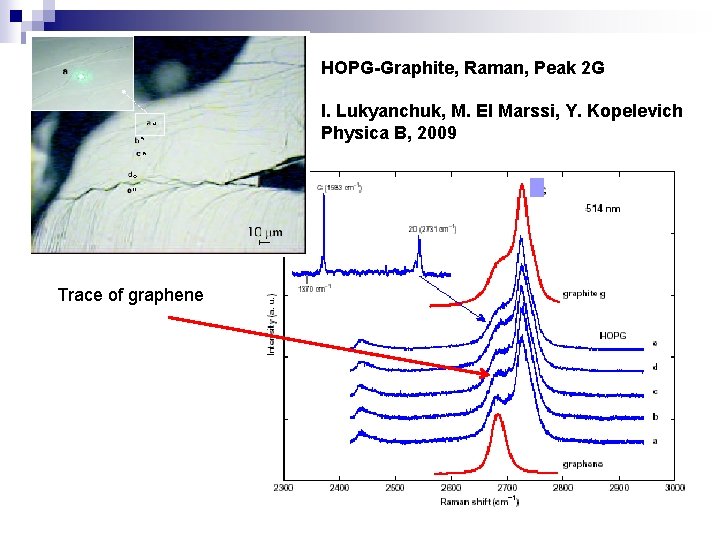
HOPG-Graphite, Raman, Peak 2 G I. Lukyanchuk, M. El Marssi, Y. Kopelevich Physica B, 2009 Trace of graphene
model
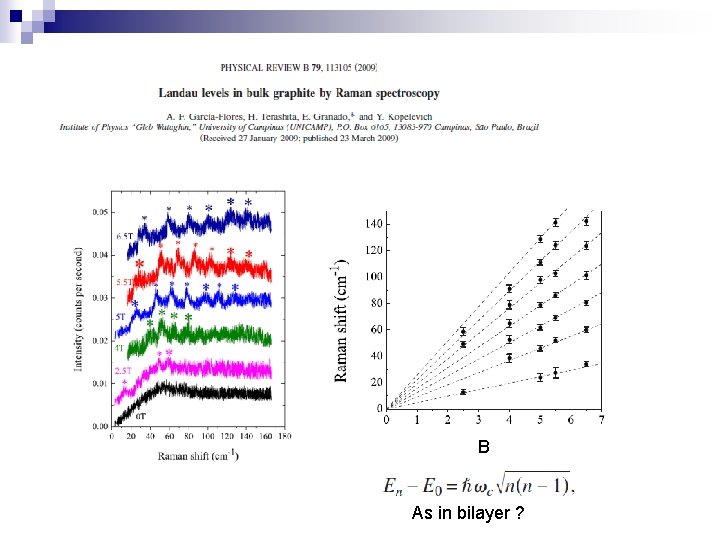
B As in bilayer ?
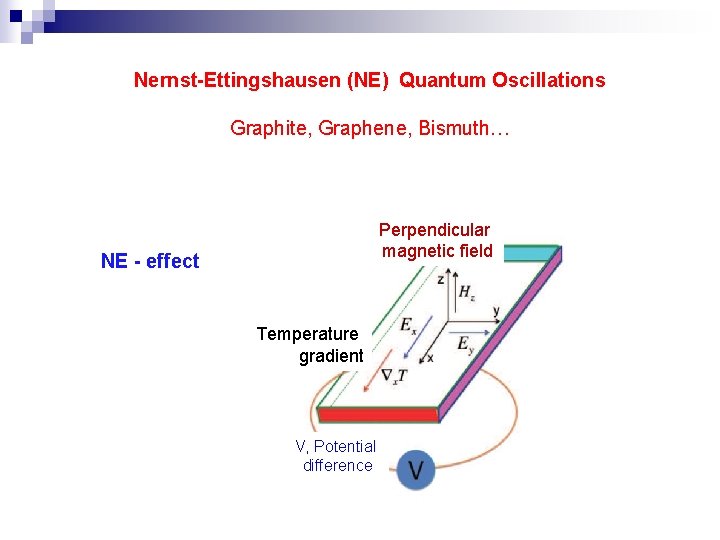
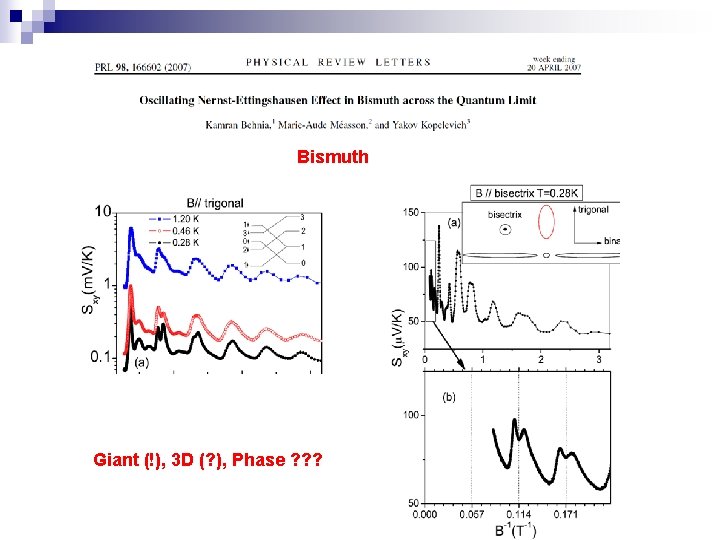
Nernst-Ettingshausen (NE) Quantum Oscillations Graphite, Graphene, Bismuth… Perpendicular magnetic field NE - effect Temperature gradient V, Potential difference
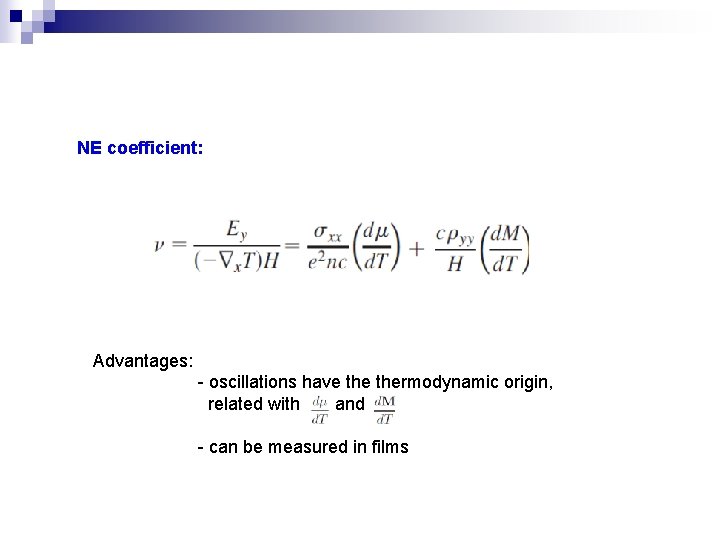
NE coefficient: Advantages: - oscillations have thermodynamic origin, related with and - can be measured in films
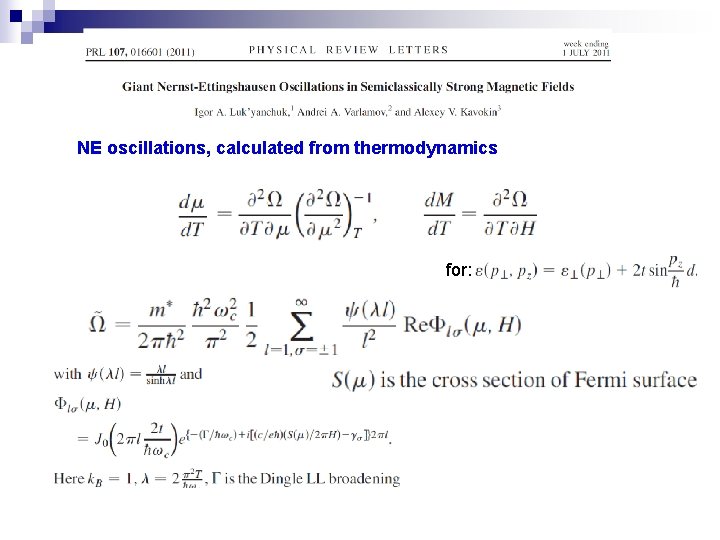
NE oscillations, calculated from thermodynamics for:
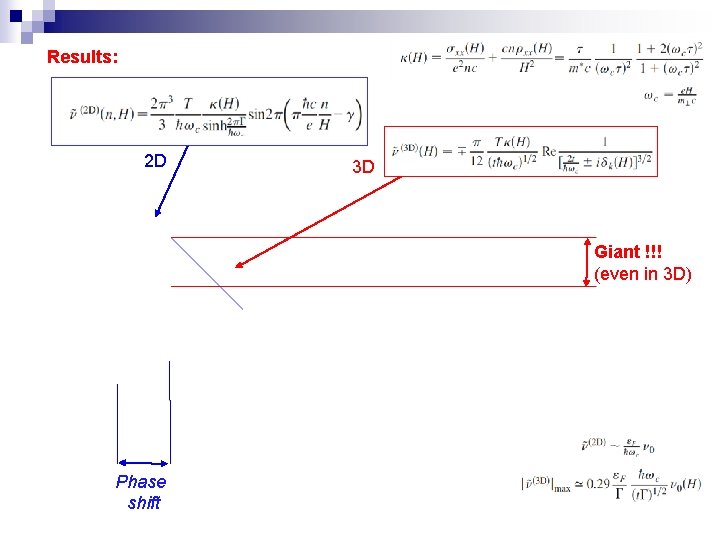
Results: 2 D 3 D Giant !!! (even in 3 D) Phase shift
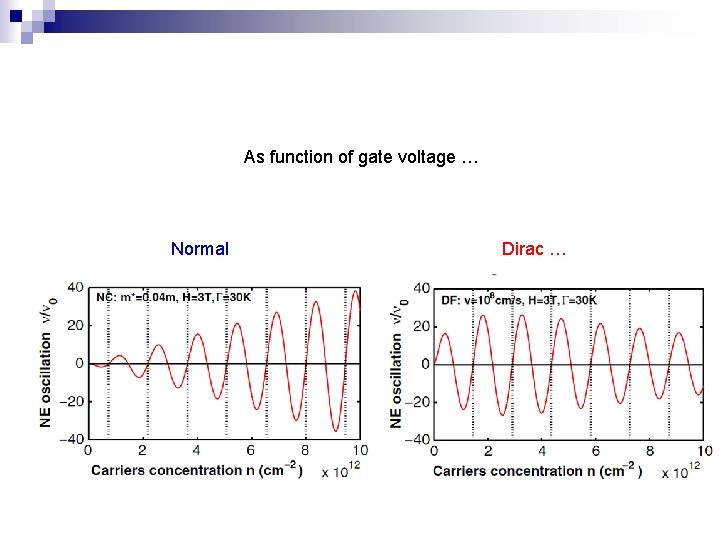
As function of gate voltage … Normal Dirac …
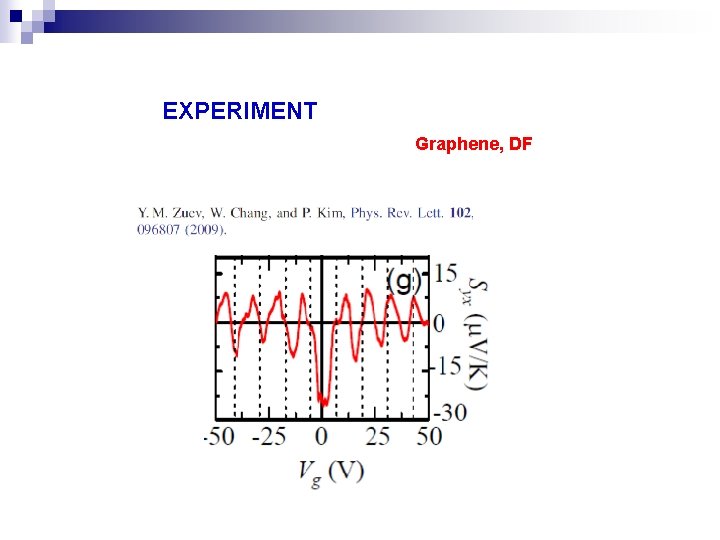
EXPERIMENT Graphene, DF
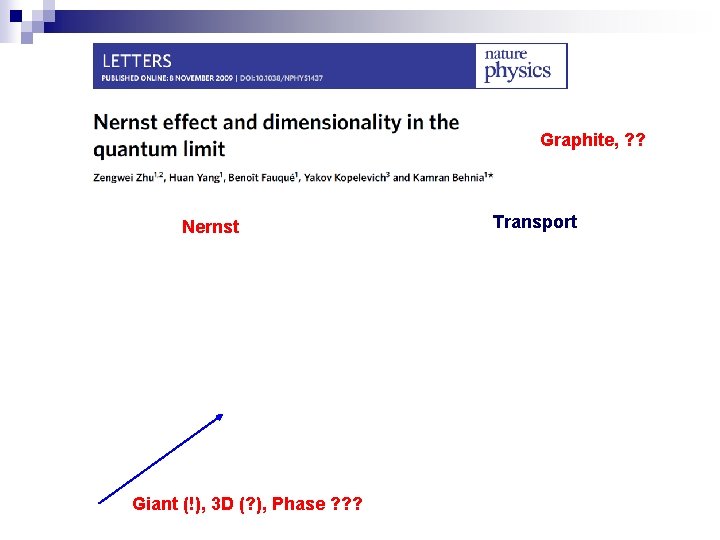
Graphite, ? ? Nernst Giant (!), 3 D (? ), Phase ? ? ? Transport
Bismuth Giant (!), 3 D (? ), Phase ? ? ?