
Ignition Systems Fuel Understand the types of fuels
- Slides: 11
Ignition Systems Fuel
�Understand the types of fuels �Understand emission ratings Objectives
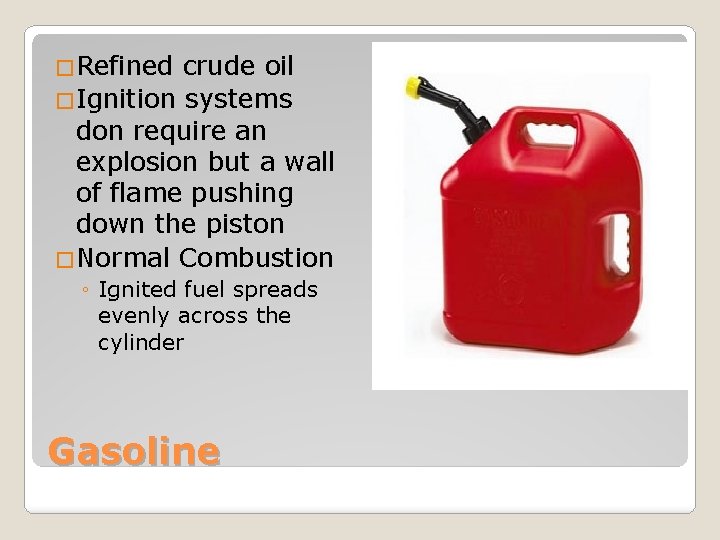
�Refined crude oil �Ignition systems don require an explosion but a wall of flame pushing down the piston �Normal Combustion ◦ Ignited fuel spreads evenly across the cylinder Gasoline
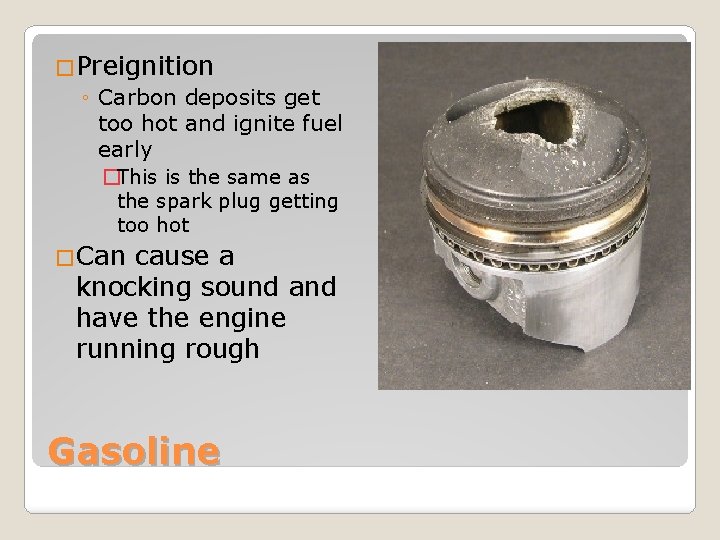
�Preignition ◦ Carbon deposits get too hot and ignite fuel early �This is the same as the spark plug getting too hot �Can cause a knocking sound and have the engine running rough Gasoline
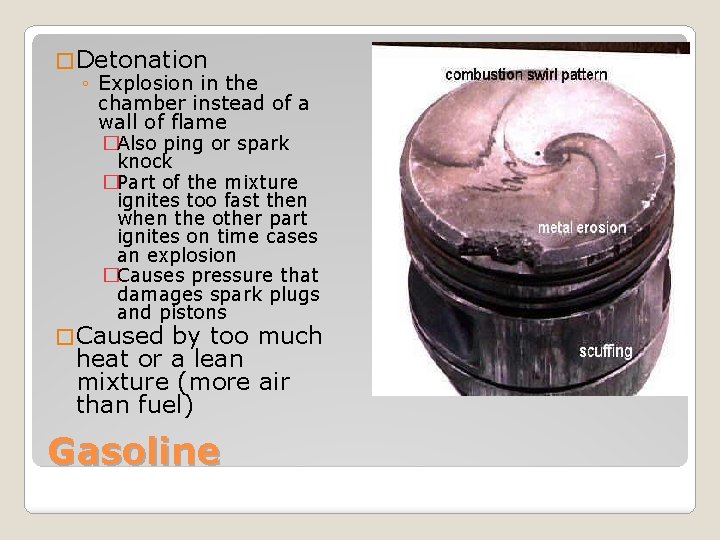
� Detonation ◦ Explosion in the chamber instead of a wall of flame �Also ping or spark knock �Part of the mixture ignites too fast then when the other part ignites on time cases an explosion �Causes pressure that damages spark plugs and pistons � Caused by too much heat or a lean mixture (more air than fuel) Gasoline
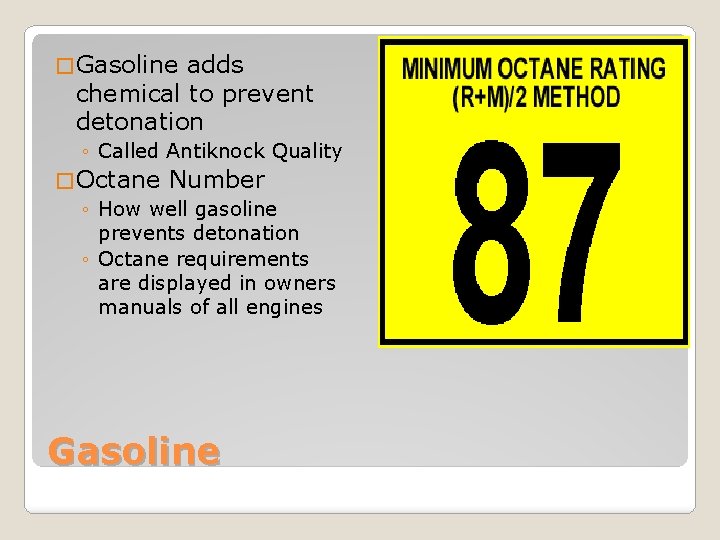
� Gasoline adds chemical to prevent detonation ◦ Called Antiknock Quality � Octane Number ◦ How well gasoline prevents detonation ◦ Octane requirements are displayed in owners manuals of all engines Gasoline
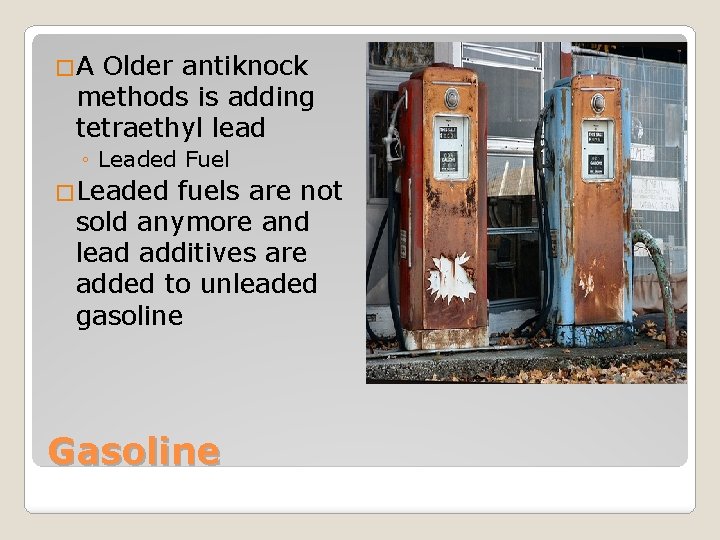
�A Older antiknock methods is adding tetraethyl lead ◦ Leaded Fuel �Leaded fuels are not sold anymore and lead additives are added to unleaded gasoline Gasoline
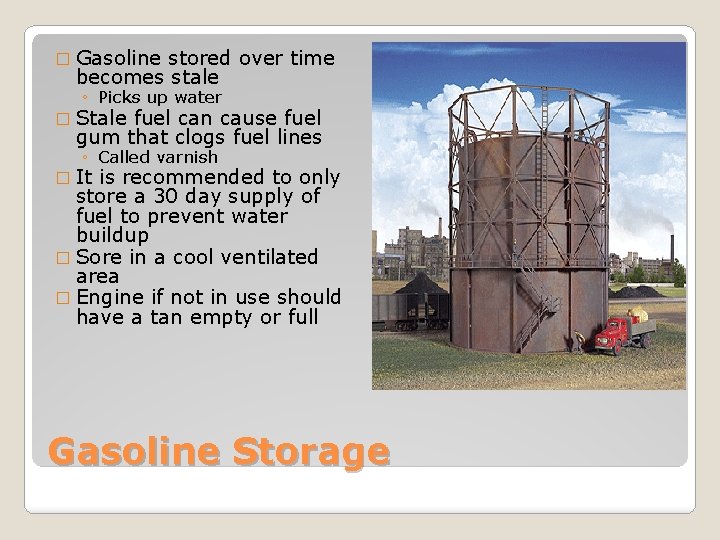
� Gasoline stored over time becomes stale ◦ Picks up water � Stale fuel can cause fuel gum that clogs fuel lines ◦ Called varnish � It is recommended to only store a 30 day supply of fuel to prevent water buildup � Sore in a cool ventilated area � Engine if not in use should have a tan empty or full Gasoline Storage
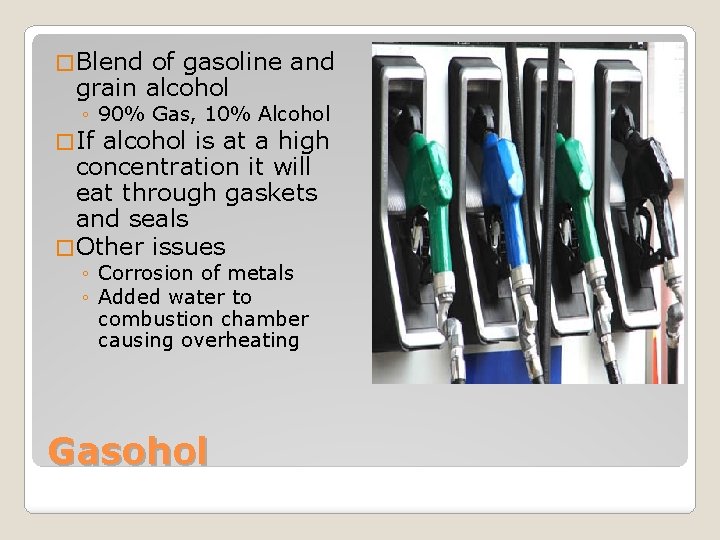
� Blend of gasoline and grain alcohol ◦ 90% Gas, 10% Alcohol � If alcohol is at a high concentration it will eat through gaskets and seals � Other issues ◦ Corrosion of metals ◦ Added water to combustion chamber causing overheating Gasohol
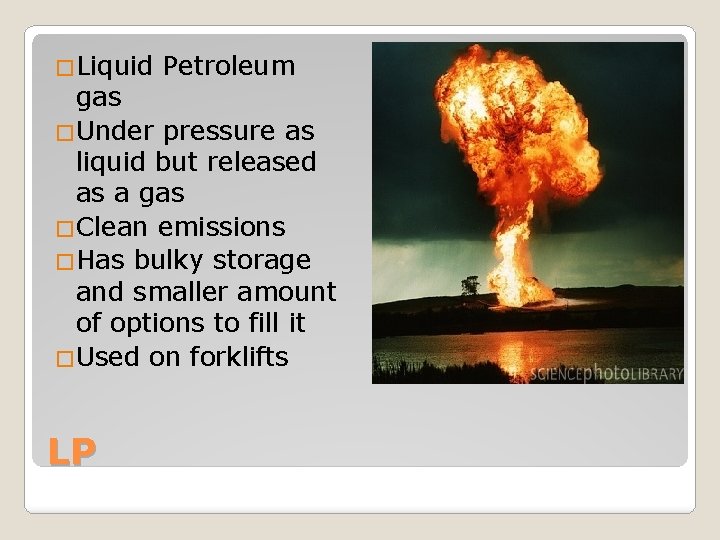
�Liquid Petroleum gas �Under pressure as liquid but released as a gas �Clean emissions �Has bulky storage and smaller amount of options to fill it �Used on forklifts LP
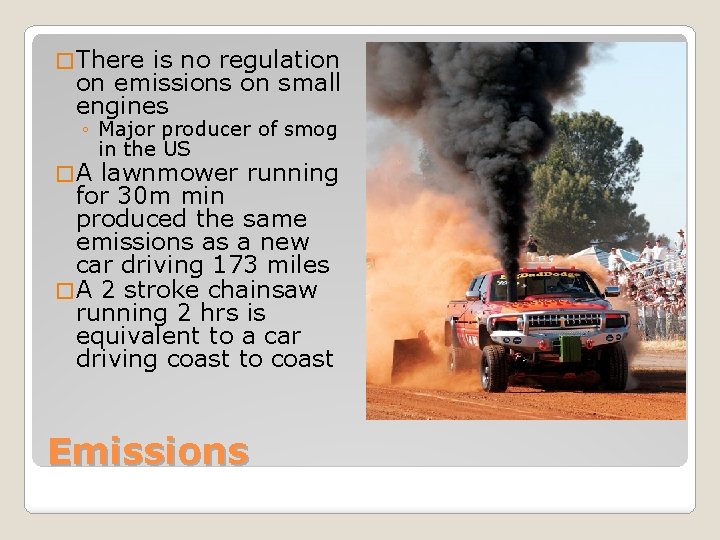
� There is no regulation on emissions on small engines ◦ Major producer of smog in the US �A lawnmower running for 30 m min produced the same emissions as a new car driving 173 miles � A 2 stroke chainsaw running 2 hrs is equivalent to a car driving coast to coast Emissions