
Igneous Rocks What are they and how do






- Slides: 15
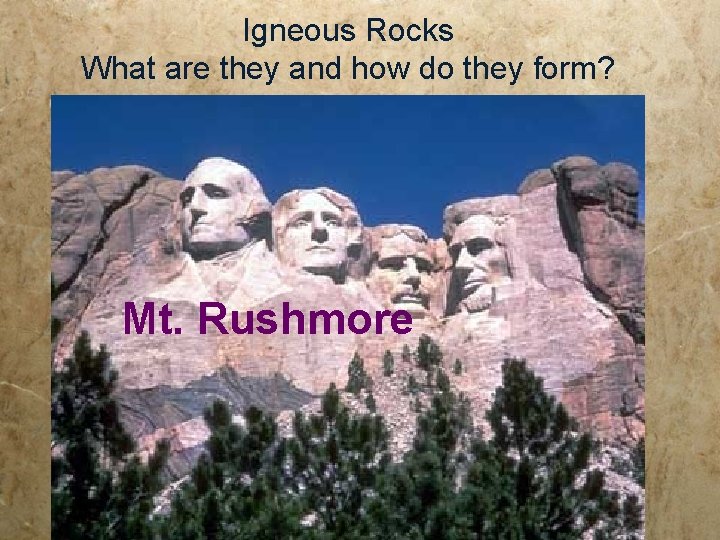
Igneous Rocks What are they and how do they form? Mt. Rushmore
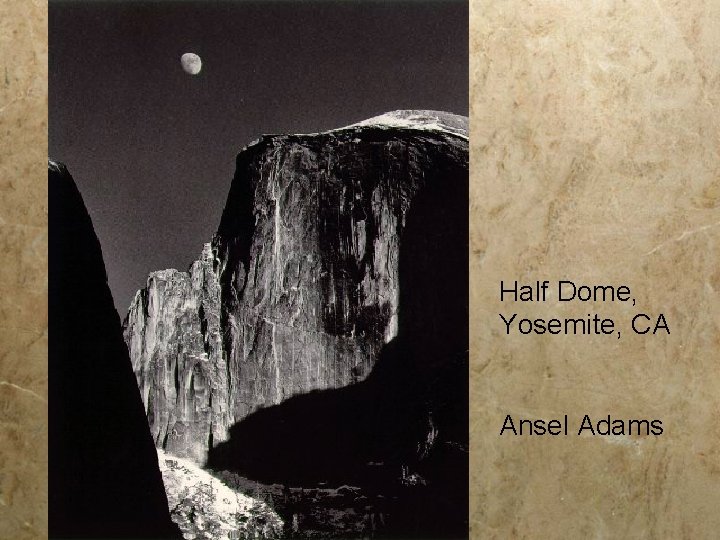
Half Dome, Yosemite, CA Ansel Adams
IGNEOUS ROCKS Some igneous rocks form from cooled lava that has exited Earth’s crust Hawaii
Some Igneous rocks cool from magma inside Earth and later become exposed through pressure, uplift, and erosion!!! Half Dome, Yosemite, California
Igneous § Think of “ignite” ignite § To light a fire § Igneous rock comes from the heat within Earth: Earth Geothermal
How are Igneous Rocks Classified? Igneous rocks are classified by: § 1. Mineral Composition § 2. Crystal Size (Texture)
Igneous Rock Formation Most Igneous rocks form directly from Magma which is hot, molten rock § Granite is the most common igneous rock, it cooled from magma Igneous rocks can also form from lava
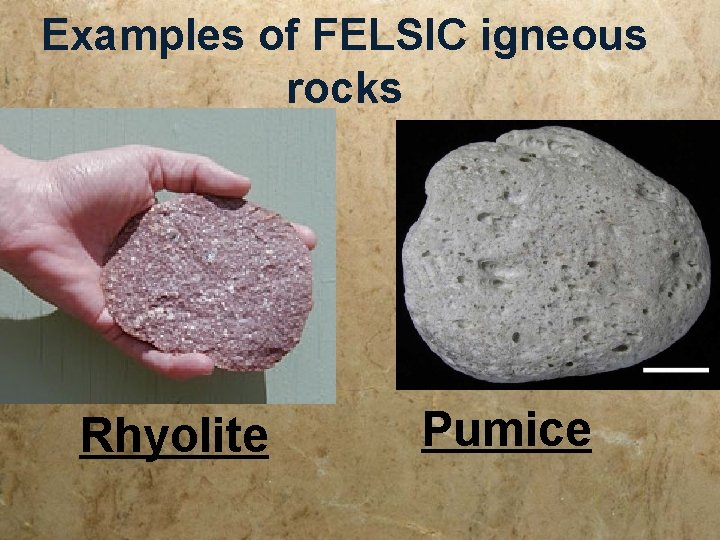
3. First Classification of Magma: Felsic § Is rich in Silica (Si. O 2) § Small amounts of Ca, Fe, Mg (Calcium, Iron, & Magnesium) § Slow-moving, thick= HIGH VISCOSITY (resistance to flowing) § Crystallizes to light-colored minerals § Resulting rocks have relatively low density § Felsic rocks make up the continents
Examples of FELSIC igneous rocks Rhyolite Pumice
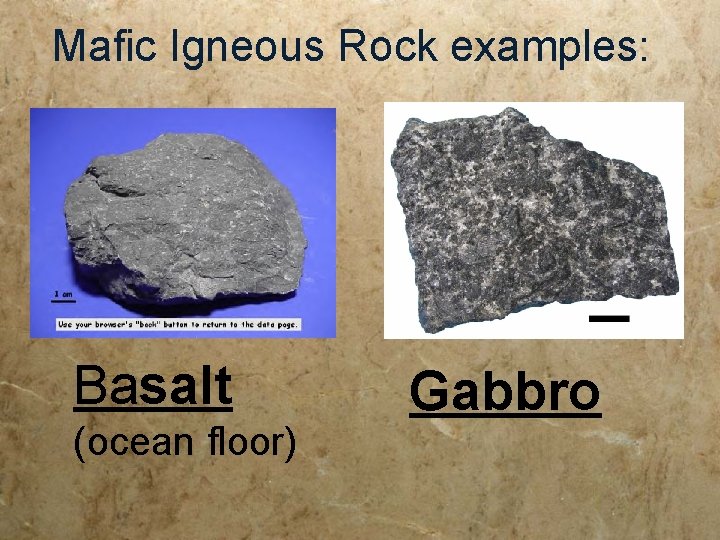
4. Second Classification of Magma: Mafic § Low amounts of Silica (Si. O 2) § Fe and Mg rich (Iron and Magnesium) § Fast-moving, thinner= LOW Viscosity: Fast less resistance to flowing, more fluid § Crystallize to dark-colored minerals § Resulting rocks have relatively high density § Mafic rocks make up the ocean floors
Mafic Igneous Rock examples: Basalt (ocean floor) Gabbro
5. Crystal Size § It takes time to grow crystals § As magma cools, it crystallizes § If magma cools slowly, slowly what size crystals will form? Large Crystals If Magma cools quickly, small crystals will form because they have little time to grow.
Igneous Rock Obsidian cools so fast that no crystals have time to form A. K. A. Volcanic glass Obsidian is dark in color due to iron oxides.
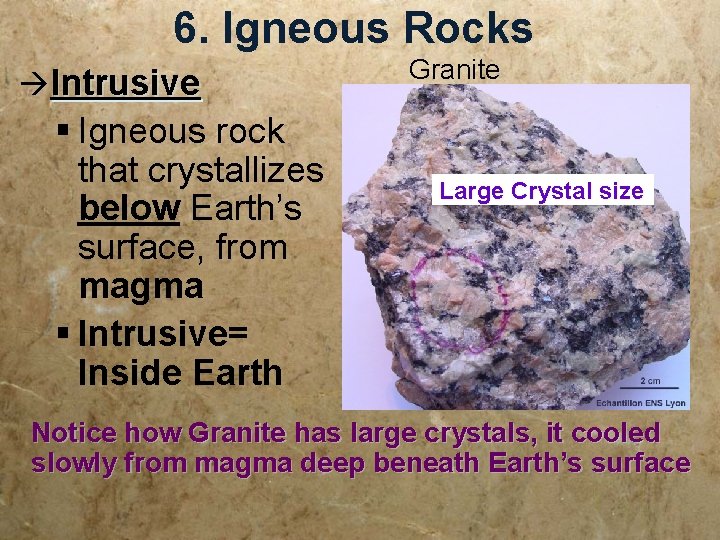
6. Igneous Rocks Intrusive § Igneous rock that crystallizes below Earth’s surface, from magma § Intrusive= Inside Earth Granite Large Crystal size Notice how Granite has large crystals, it cooled slowly from magma deep beneath Earth’s surface
Igneous Rocks Extrusive § Igneous rock that crystallizes or forms at Earth’s surface, from lava § Extrusive= exited Earth Basalt Small Crystal size Notice how basalt has small crystals, it cooled quickly at Earth’s surface