
Igneous Rocks Rock A group of minerals bound

Igneous Rocks
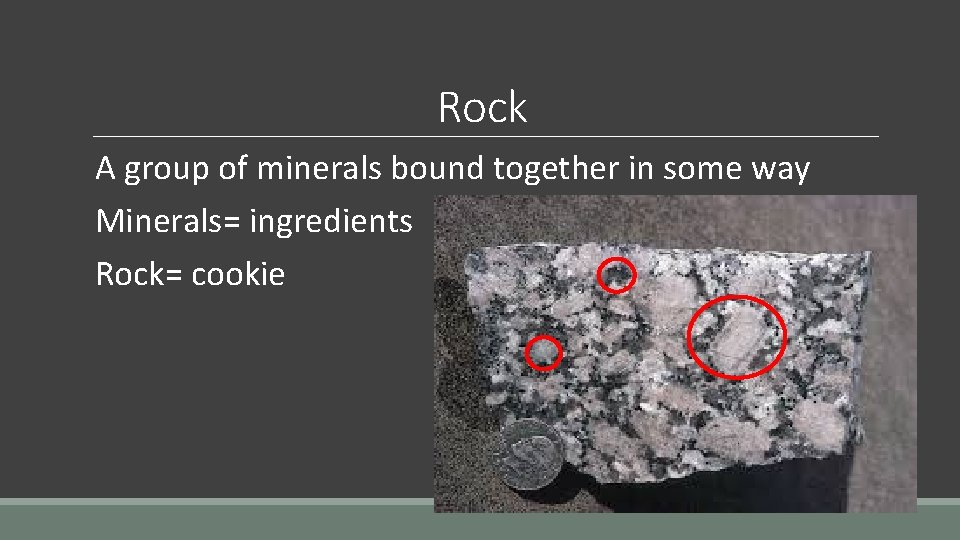
Rock A group of minerals bound together in some way Minerals= ingredients Rock= cookie
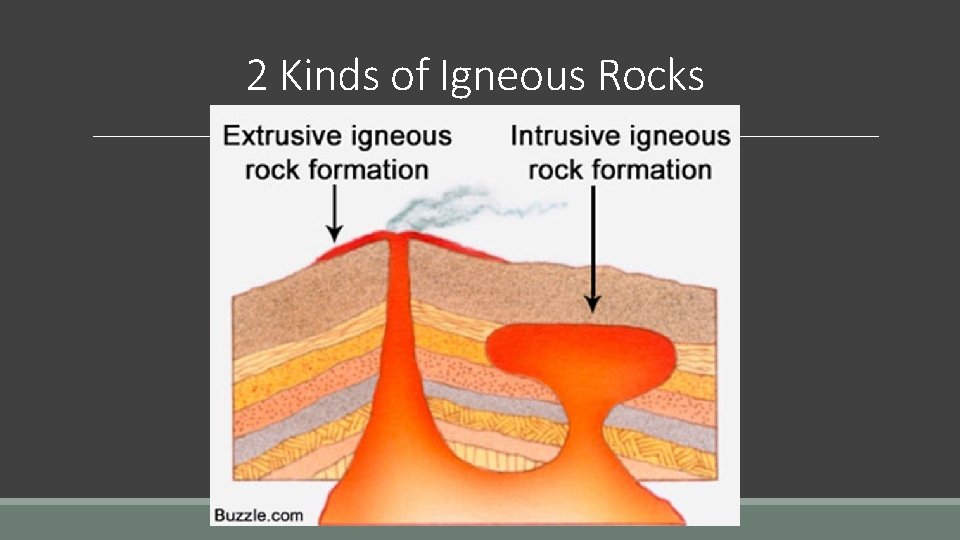
2 Kinds of Igneous Rocks

2 Kinds of Igneous Rocks Intrusive/ Plutonic (within): Formed underground from magma Usually coarse-grained texture Large crystals Slow cooling process Extrusive/ Volcanic (outward/exit): Formed on surface from lava, dust, ash Usually fine-grained texture Small crystals Rapid cooling process
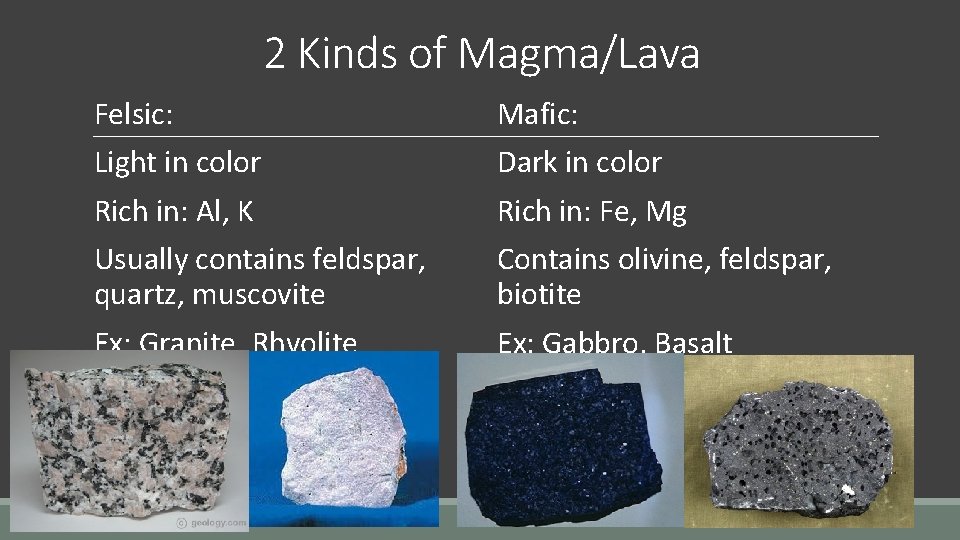
2 Kinds of Magma/Lava Felsic: Mafic: Light in color Dark in color Rich in: Al, K Rich in: Fe, Mg Usually contains feldspar, quartz, muscovite Contains olivine, feldspar, biotite Ex: Granite, Rhyolite Ex: Gabbro, Basalt

Texture Coarse-grained: Fine-grained: Crystals big enough to see with eyes Crystals are small, instruments are needed to see them *DRAW IN NB* Magma/lava cools rapidly on Magma cools slowly surface Crystals have no time to underground Crystals have grow (less time = smaller crystals) time to grow (more time = larger crystals)
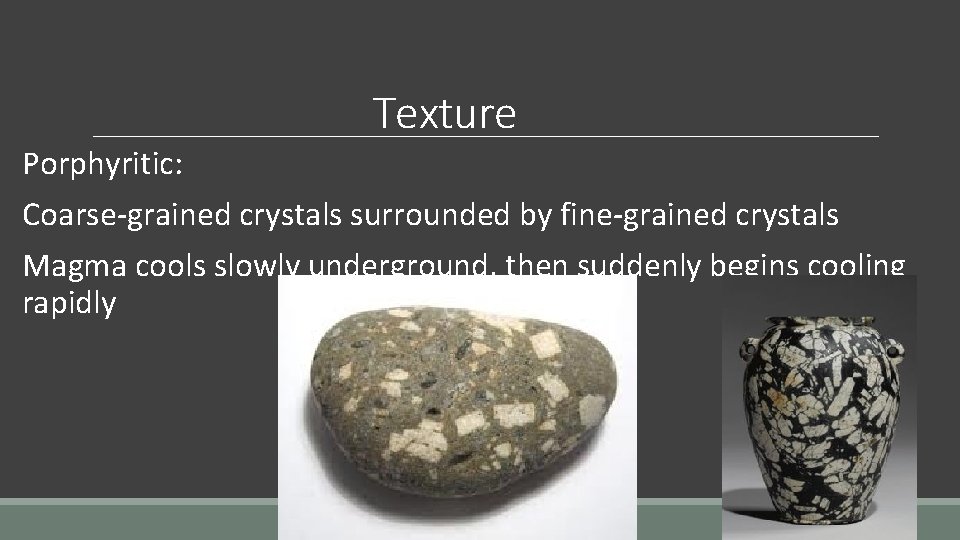
Texture Porphyritic: Coarse-grained crystals surrounded by fine-grained crystals Magma cools slowly underground, then suddenly begins cooling rapidly

Summary 1. What are the two types of igneous rocks 2. How do you know an igneous sample is mafic or felsic? 3. What does the texture of an igneous rock tell you?
- Slides: 8