
Igneous Rocks An igneous rock is formed when
- Slides: 40
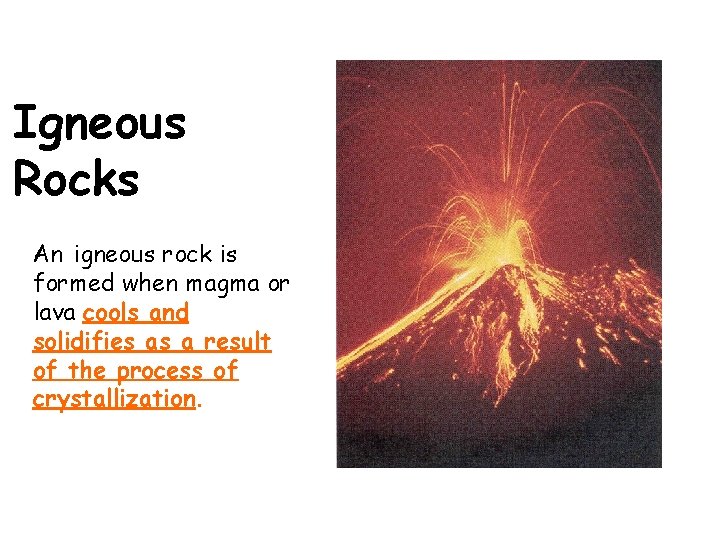
Igneous Rocks An igneous rock is formed when magma or lava cools and solidifies as a result of the process of crystallization.
Remember: Definition of a Rock 1) Is a solid 2) Contains a mixture of one or more minerals 3) Occurs naturally as part of our planet
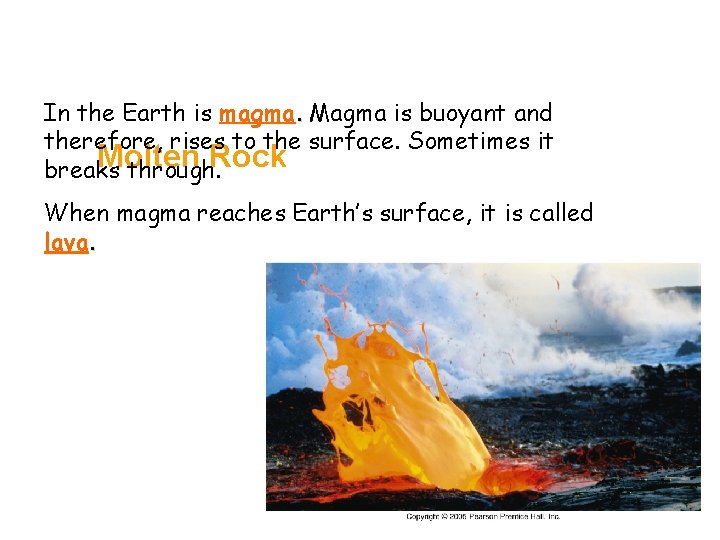
In the Earth is magma. Magma is buoyant and therefore, rises to the surface. Sometimes it Molten Rock breaks through. When magma reaches Earth’s surface, it is called lava.
u Igneous rocks make up the bulk of Earth’s crust. Why Should We Care? u Earth’s mantle is basically one huge igneous rock. u Igneous rocks are important economically. u Creates and provides striking landscape features.
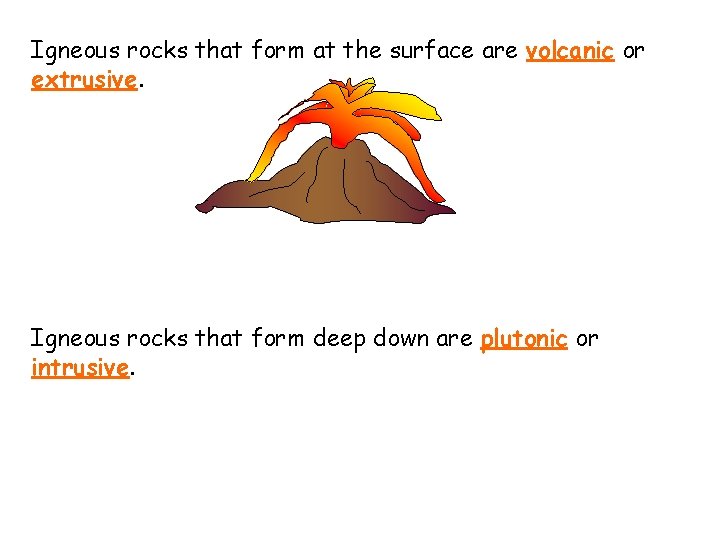
Igneous rocks that form at the surface are volcanic or extrusive. Igneous rocks that form deep down are plutonic or intrusive.
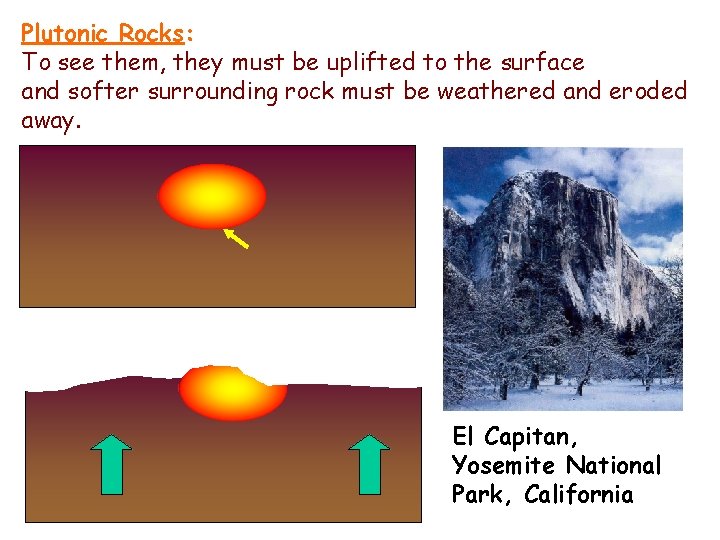
Plutonic Rocks: To see them, they must be uplifted to the surface and softer surrounding rock must be weathered and eroded away. El Capitan, Yosemite National Park, California
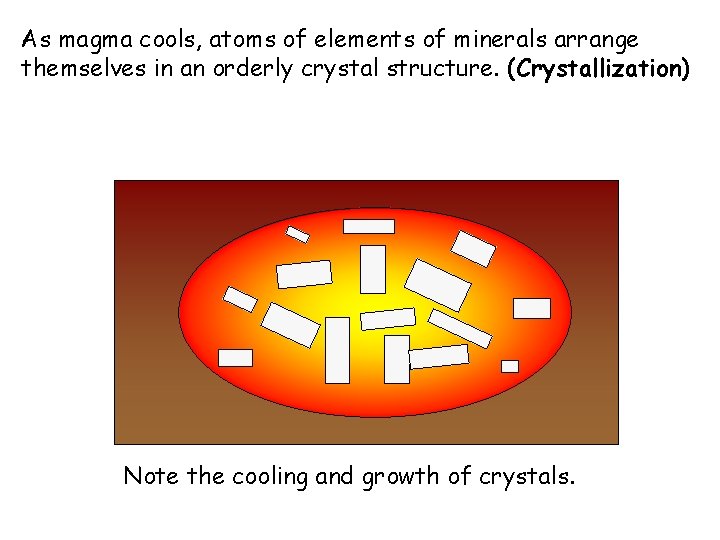
As magma cools, atoms of elements of minerals arrange themselves in an orderly crystal structure. (Crystallization) Note the cooling and growth of crystals.
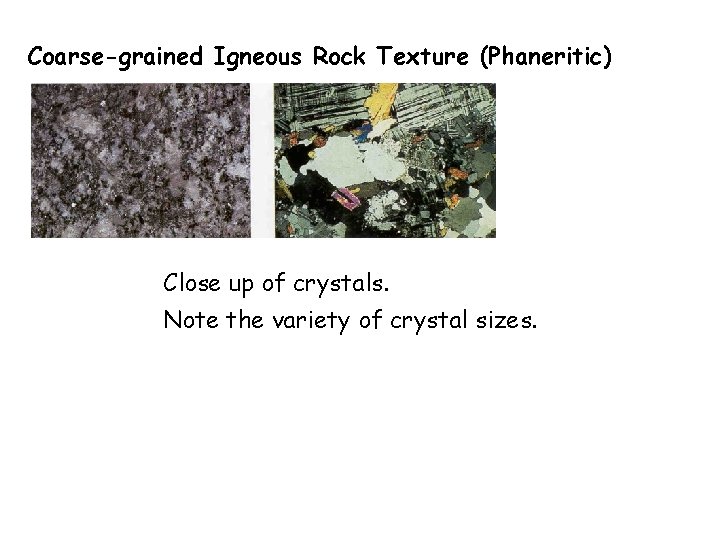
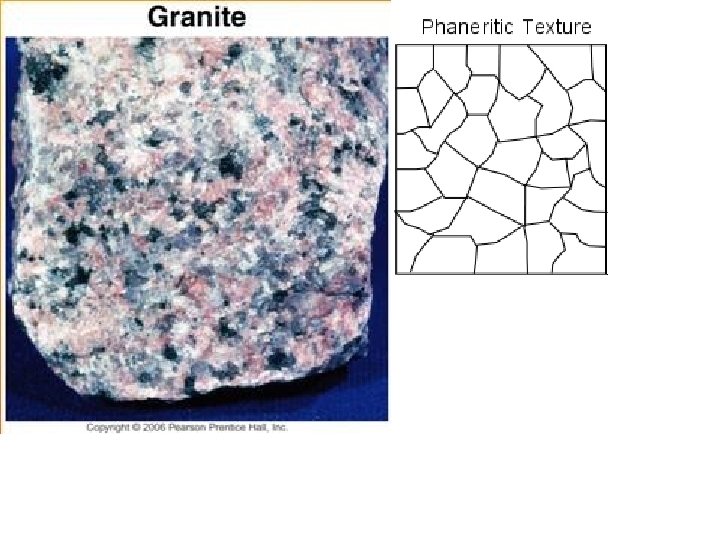
Coarse-grained Igneous Rock Texture (Phaneritic) Close up of crystals. Note the variety of crystal sizes.
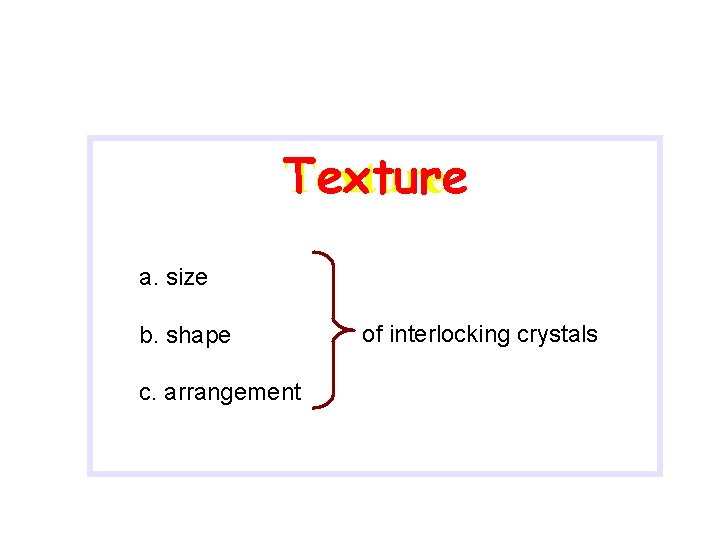
Texture a. size b. shape c. arrangement of interlocking crystals
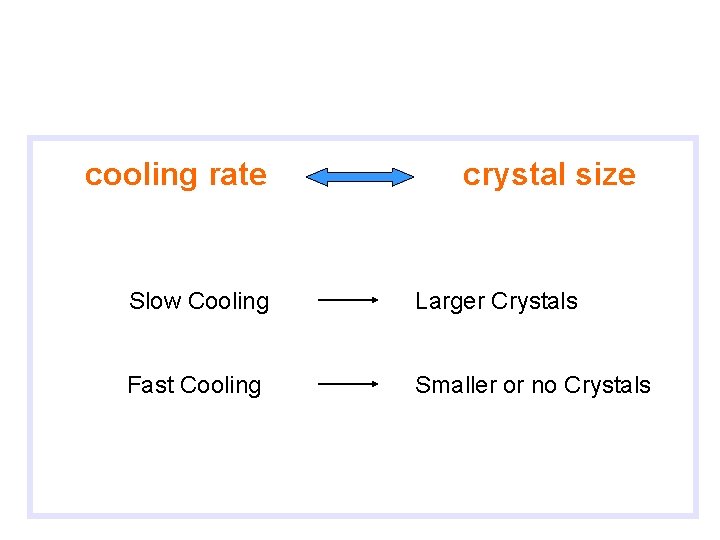
cooling rate crystal size Slow Cooling Larger Crystals Fast Cooling Smaller or no Crystals
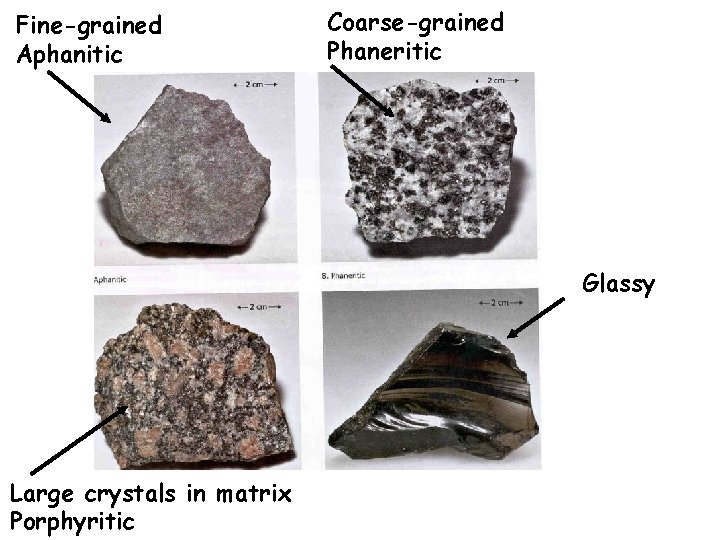
Fine-grained Aphanitic Coarse-grained Phaneritic Glassy Large crystals in matrix Porphyritic
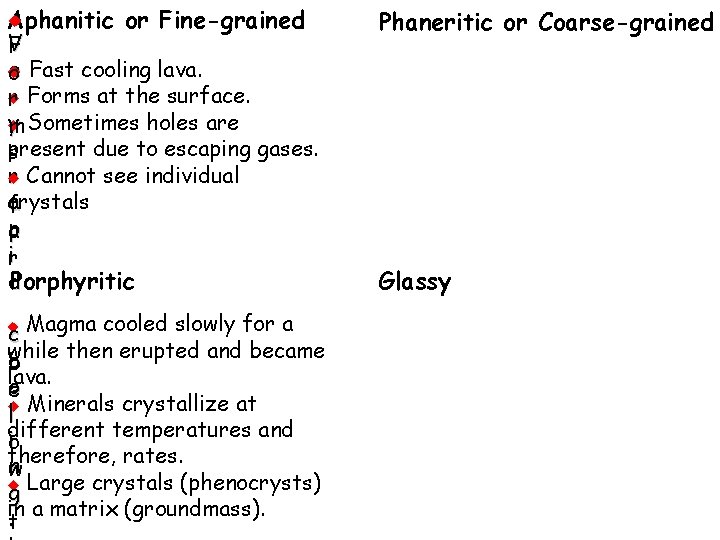
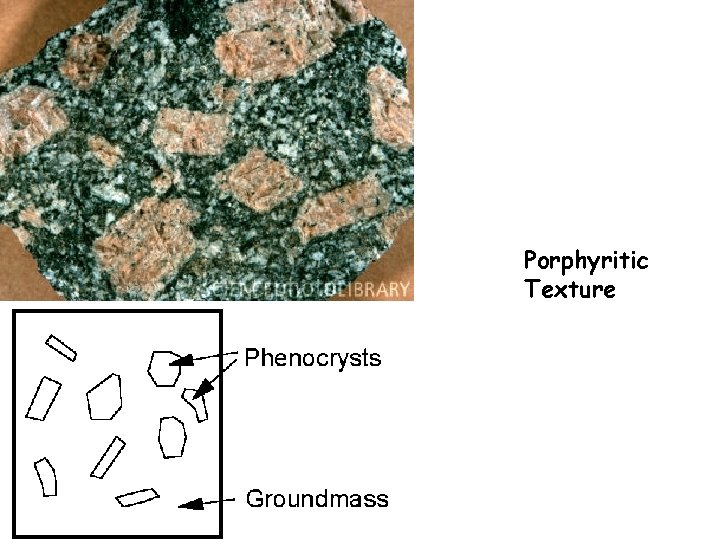
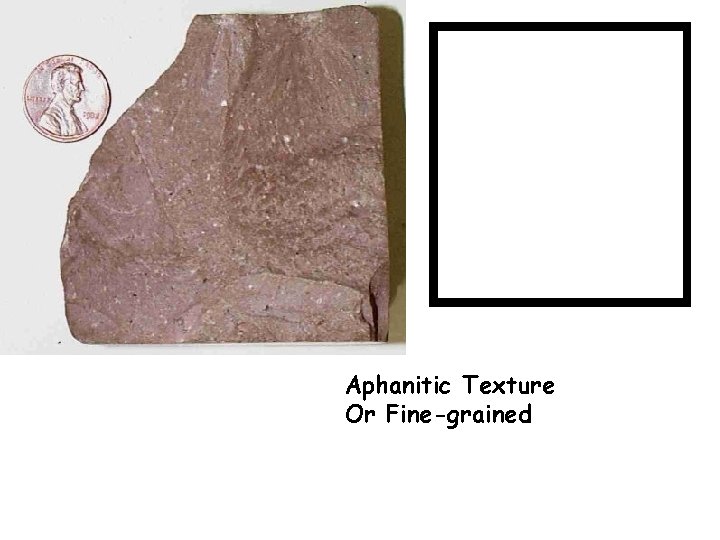
u Aphanitic or Fine-grained V F u e Fast cooling lava. o u r Forms at the surface. u y m Sometimes holes are present due to escaping gases. s u r Cannot see individual crystals a f p a ir d. Porphyritic c Magma cooled slowly for a while then erupted and became o b lava. o e u Minerals crystallize at l different temperatures and io therefore, rates. n w u Large crystals (phenocrysts) g in. t a matrix (groundmass). u Phaneritic or Coarse-grained Glassy
Porphyritic Texture
Aphanitic Texture Or Fine-grained
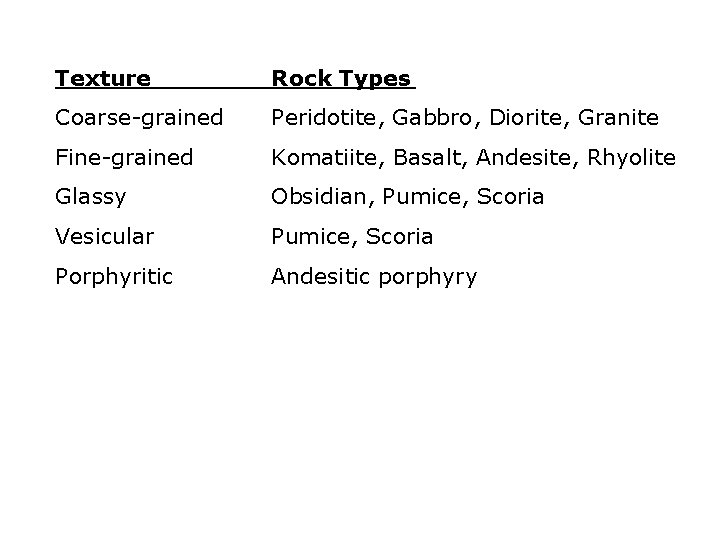
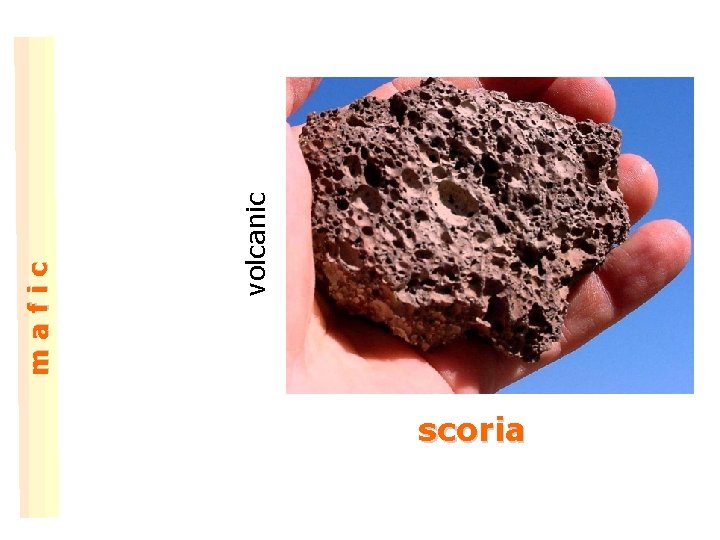
Texture Rock Types Coarse-grained Peridotite, Gabbro, Diorite, Granite Fine-grained Komatiite, Basalt, Andesite, Rhyolite Glassy Obsidian, Pumice, Scoria Vesicular Pumice, Scoria Porphyritic Andesitic porphyry
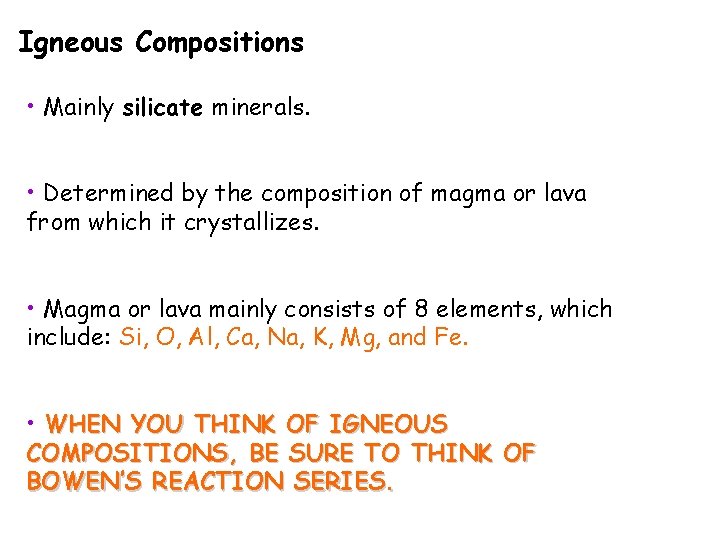
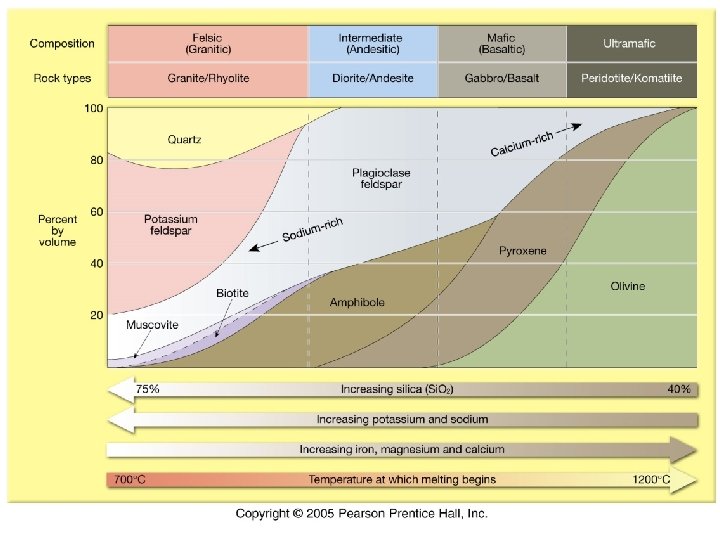
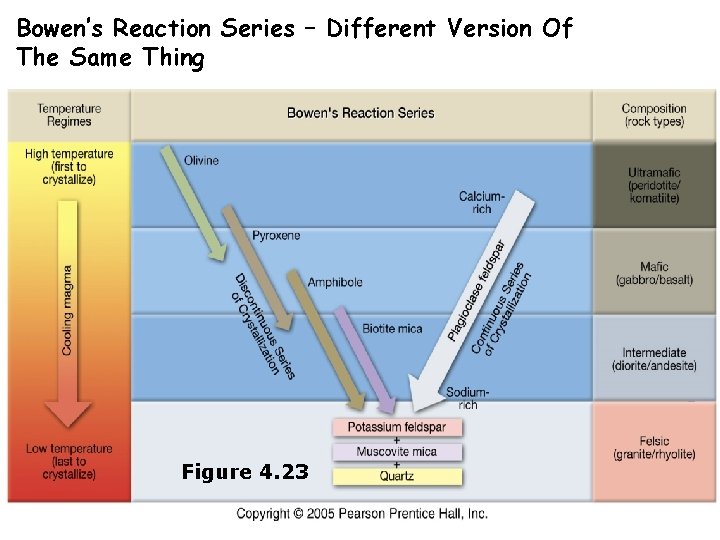
Igneous Compositions • Mainly silicate minerals. • Determined by the composition of magma or lava from which it crystallizes. • Magma or lava mainly consists of 8 elements, which include: Si, O, Al, Ca, Na, K, Mg, and Fe. • WHEN YOU THINK OF IGNEOUS COMPOSITIONS, BE SURE TO THINK OF BOWEN’S REACTION SERIES.
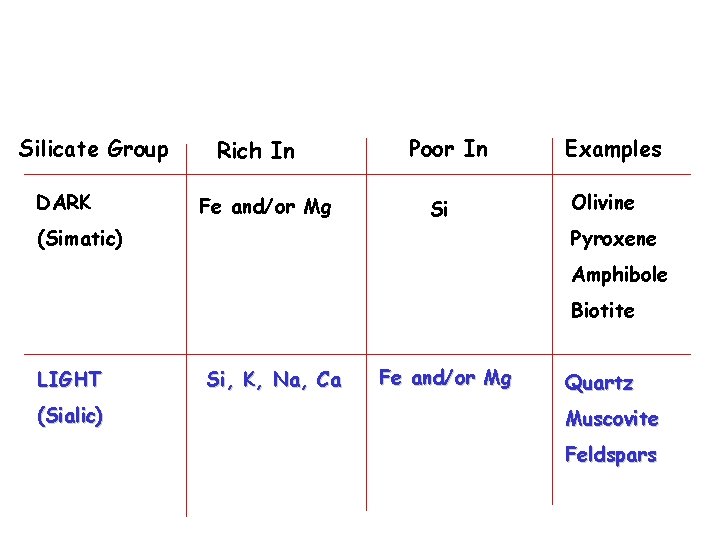
Igneous Compositions Magma cools slowly. Lava cools fastly. Solidification occurs due to the process of crystallization. Silicate minerals form and there are two groups, which include: dark and light.
Silicate Group DARK Rich In Fe and/or Mg Poor In Si (Simatic) Examples Olivine Pyroxene Amphibole Biotite LIGHT (Sialic) Si, K, Na, Ca Fe and/or Mg Quartz Muscovite Feldspars
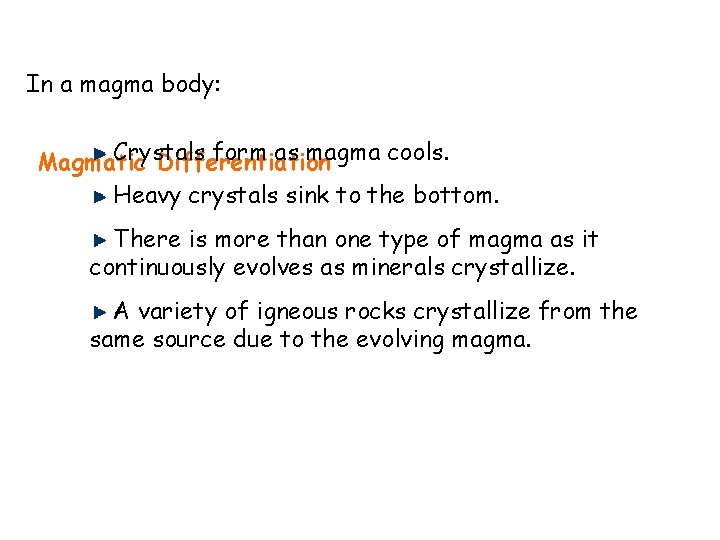
In a magma body: Crystals form as magma cools. Magmatic Differentiation Heavy crystals sink to the bottom. There is more than one type of magma as it continuously evolves as minerals crystallize. A variety of igneous rocks crystallize from the same source due to the evolving magma.
Bowen’s Reaction Series – Different Version Of The Same Thing Figure 4. 23
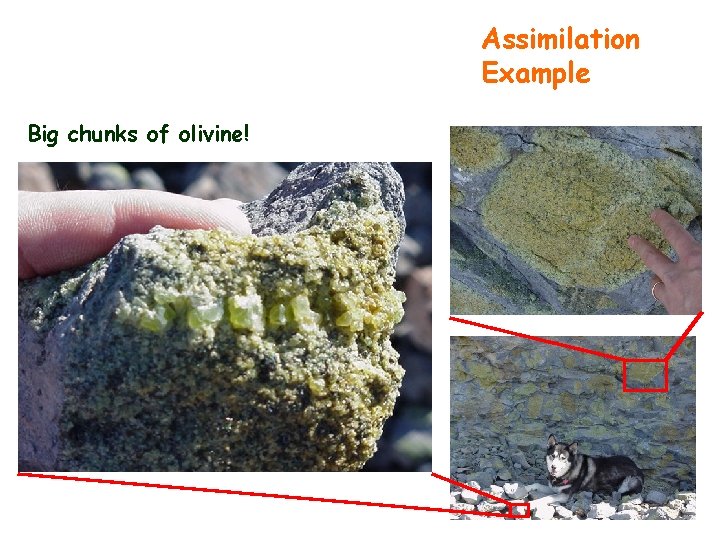
Igneous Compositions As. Assimilation magmas migrate upwards, they may incorporate surrounding host rock. Magma Mixing Magma bodies could collide with other magma bodies and mixing could therefore occur.
Assimilation Example Big chunks of olivine!
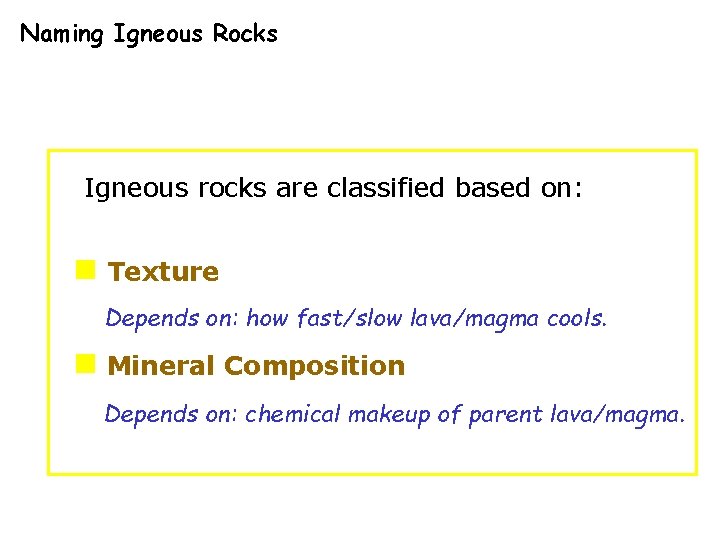
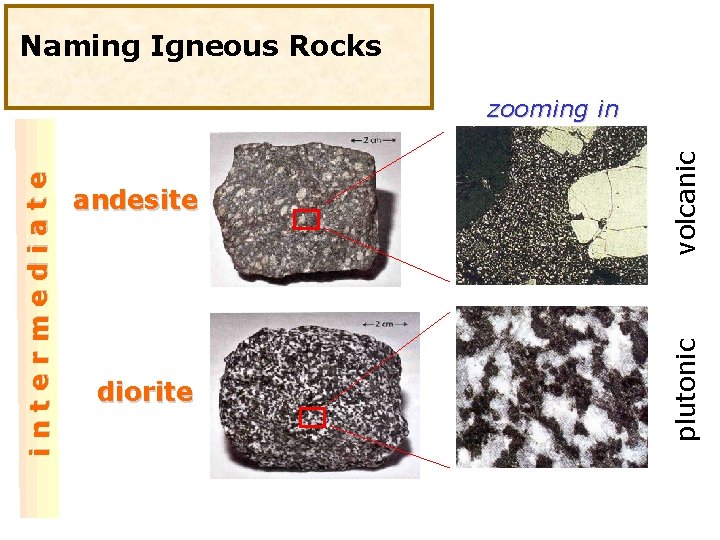
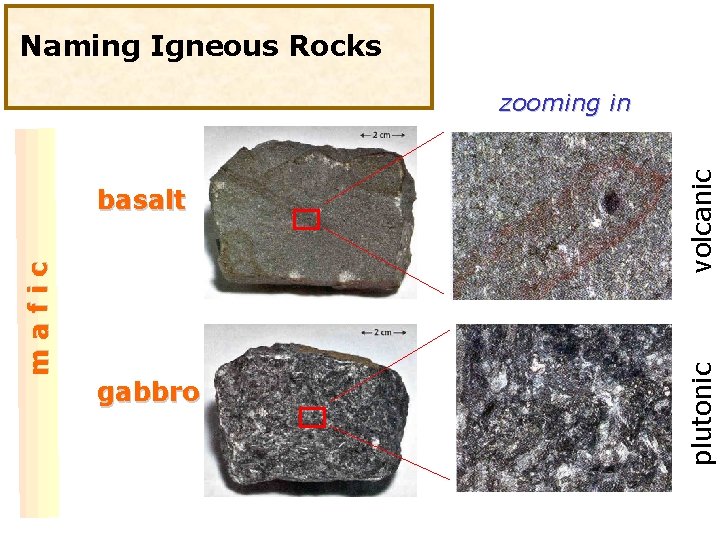
Naming Igneous Rocks Igneous rocks are classified based on: n Texture Depends on: how fast/slow lava/magma cools. n Mineral Composition Depends on: chemical makeup of parent lava/magma.
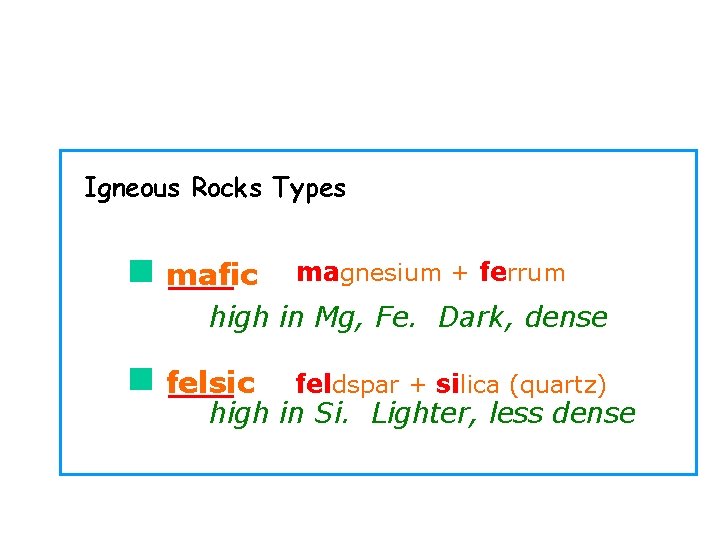
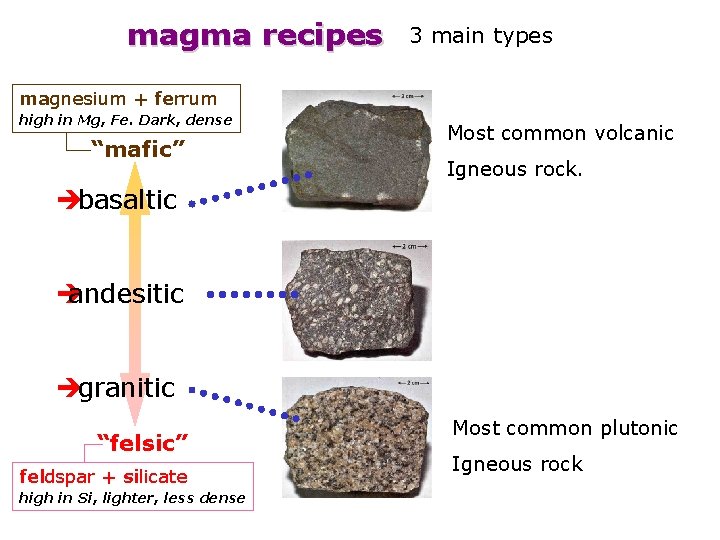
Igneous Rocks Types n mafic magnesium + ferrum high in Mg, Fe. Dark, dense n felsic feldspar + silica (quartz) high in Si. Lighter, less dense
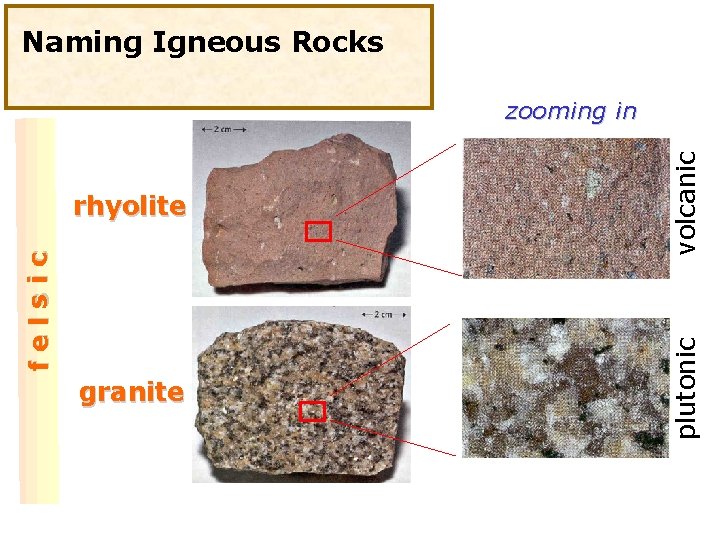
Naming Igneous Rocks volcanic granite felsic rhyolite plutonic zooming in
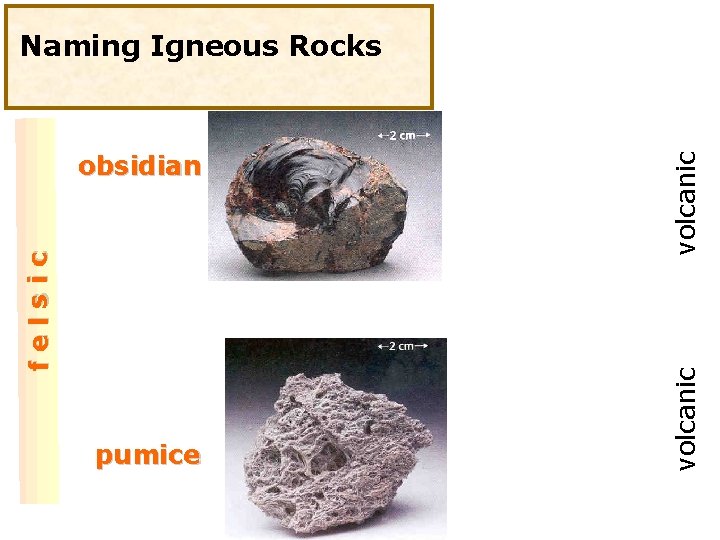
pumice volcanic felsic obsidian volcanic Naming Igneous Rocks
Naming Igneous Rocks andesite volcanic diorite plutonic intermediate zooming in
Naming Igneous Rocks gabbro plutonic mafic basalt volcanic zooming in
scoria volcanic mafic
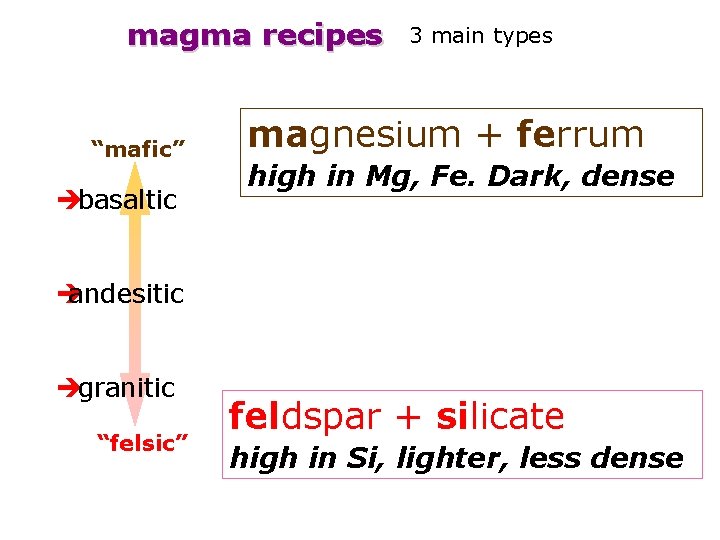
magma recipes “mafic” èbasaltic 3 main types magnesium + ferrum high in Mg, Fe. Dark, dense è andesitic ègranitic “felsic” feldspar + silicate high in Si, lighter, less dense
magma recipes 3 main types magnesium + ferrum high in Mg, Fe. Dark, dense “mafic” Most common volcanic Igneous rock. èbasaltic è andesitic ègranitic “felsic” feldspar + silicate high in Si, lighter, less dense Most common plutonic Igneous rock
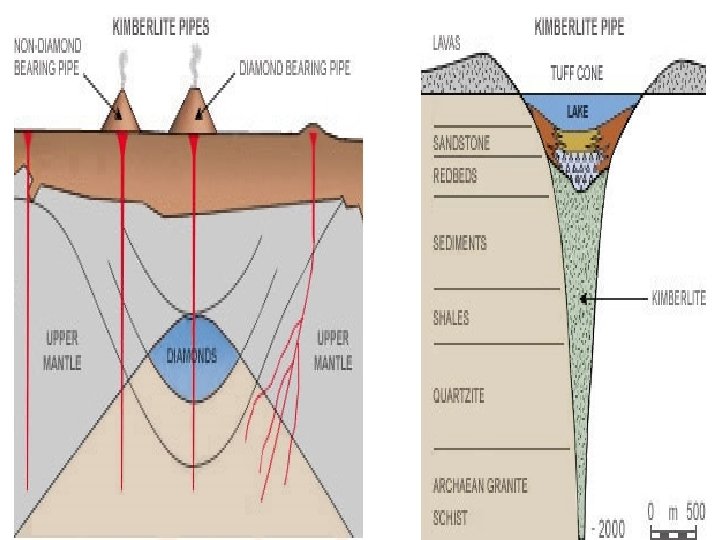
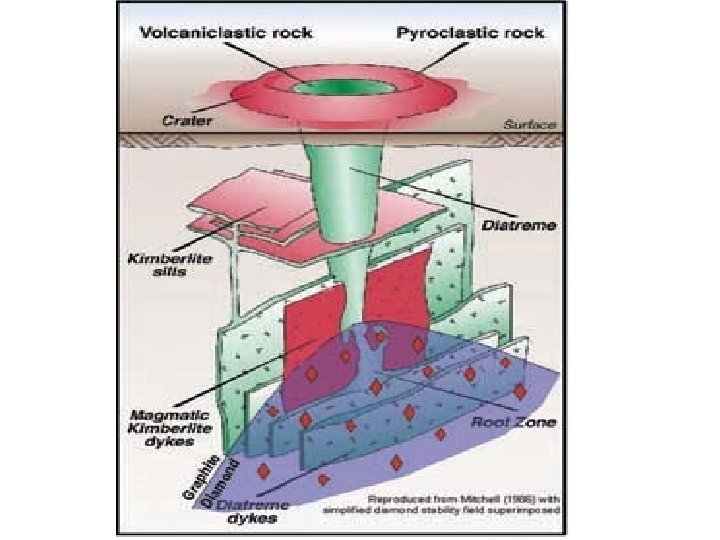
Kimberlite is a volatile-rich, potassic, ultramafic, igneous rock that occurs as small volcanic pipes, dykes, and sills. Kimberlite commonly contains inclusions of upper mantle-derived ultramafic rocks (due to formation and upward travel through the mantle). Minerals associated with kimberlite include: olivine, ilmenite, pyrope, almandine-pyrope, diopside, phlogopite, enstatite, and chromite.
The general consensus reached on kimberlites is that they are formed deep within the mantle, between 150 and 450 kilometers deep, from anomalously enriched exotic mantle compositions, and are erupted rapidly and violently, often with considerable carbon dioxide and volatile components. It is this depth of melting and generation that makes kimberlites prone to hosting diamonds.
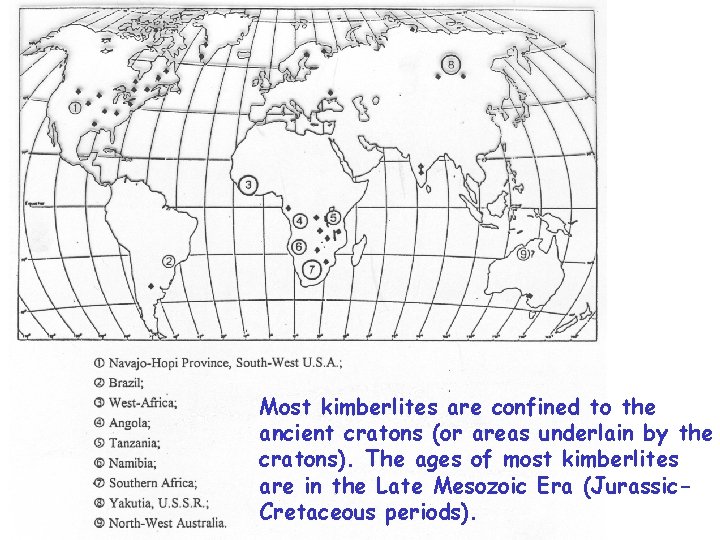
Most kimberlites are confined to the ancient cratons (or areas underlain by the cratons). The ages of most kimberlites are in the Late Mesozoic Era (Jurassic. Cretaceous periods).
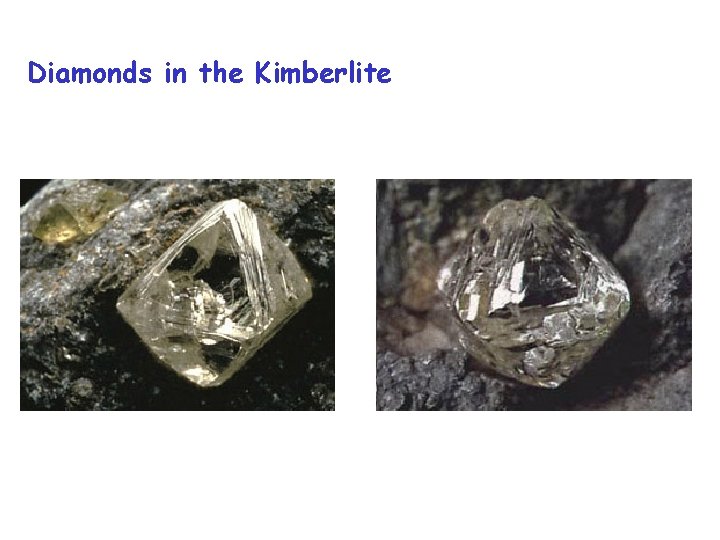
Diamonds in the Kimberlite
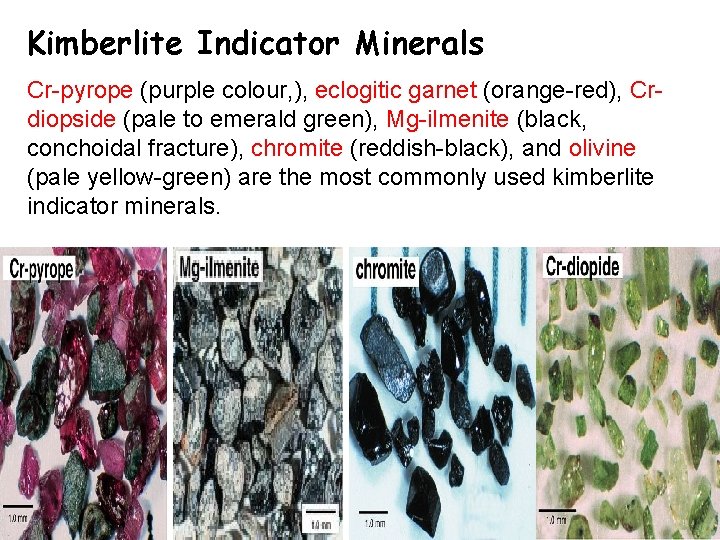
Kimberlite Indicator Minerals Cr-pyrope (purple colour, ), eclogitic garnet (orange-red), Crdiopside (pale to emerald green), Mg-ilmenite (black, conchoidal fracture), chromite (reddish-black), and olivine (pale yellow-green) are the most commonly used kimberlite indicator minerals.