
Igneous Rock How do these form Answer Hot

- Slides: 13
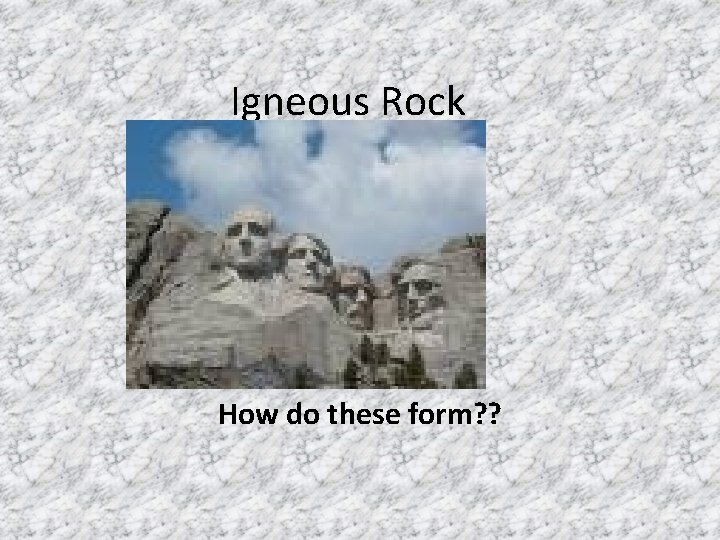
Igneous Rock How do these form? ?
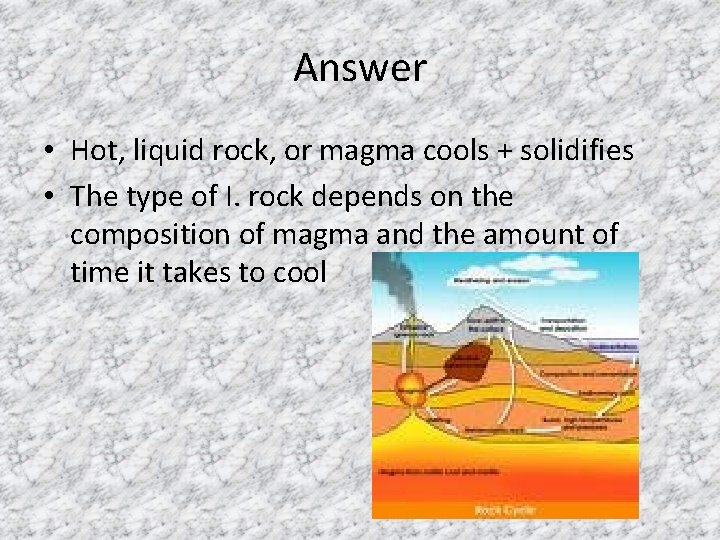
Answer • Hot, liquid rock, or magma cools + solidifies • The type of I. rock depends on the composition of magma and the amount of time it takes to cool
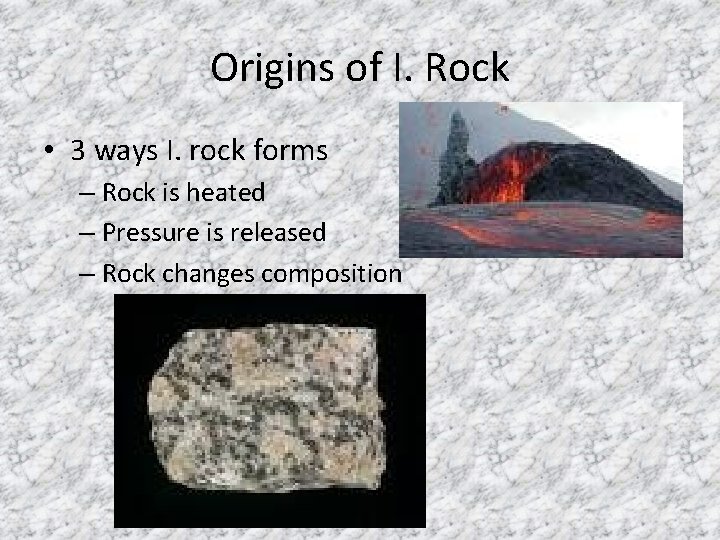
Origins of I. Rock • 3 ways I. rock forms – Rock is heated – Pressure is released – Rock changes composition
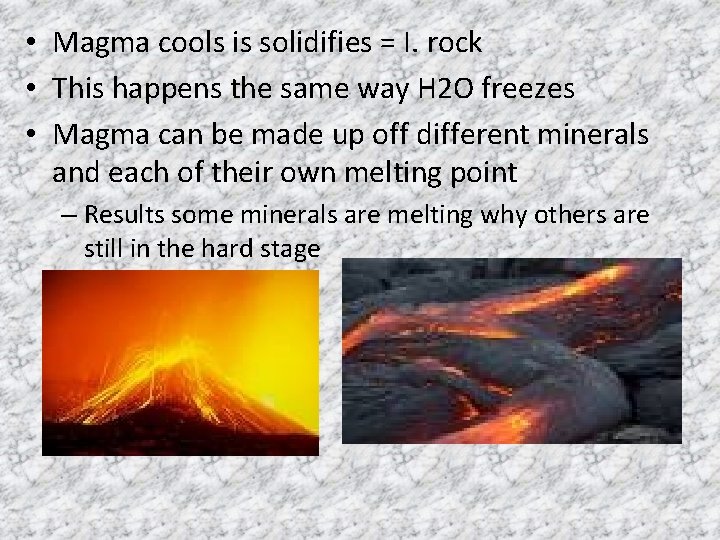
• Magma cools is solidifies = I. rock • This happens the same way H 2 O freezes • Magma can be made up off different minerals and each of their own melting point – Results some minerals are melting why others are still in the hard stage
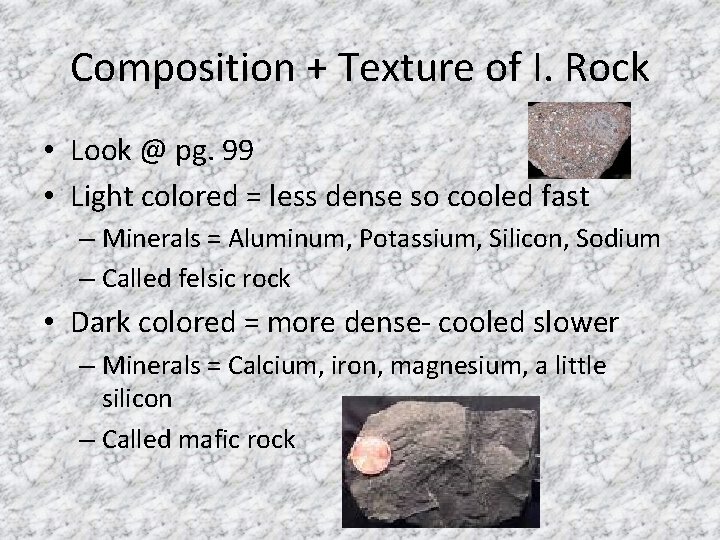
Composition + Texture of I. Rock • Look @ pg. 99 • Light colored = less dense so cooled fast – Minerals = Aluminum, Potassium, Silicon, Sodium – Called felsic rock • Dark colored = more dense- cooled slower – Minerals = Calcium, iron, magnesium, a little silicon – Called mafic rock
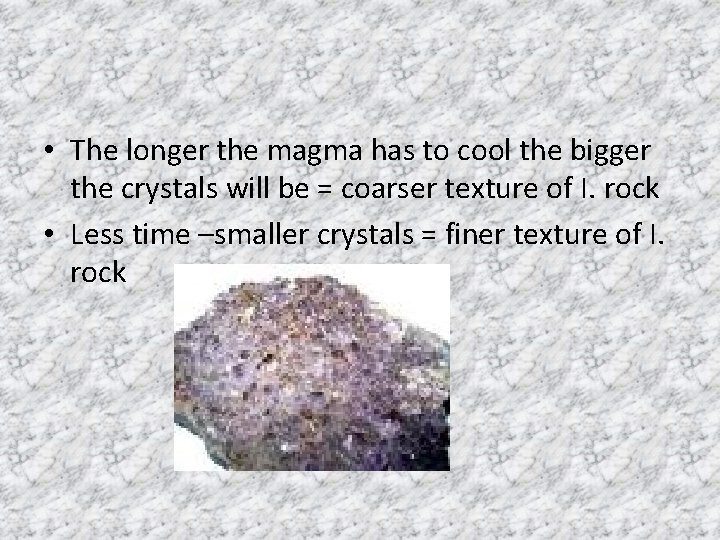
• The longer the magma has to cool the bigger the crystals will be = coarser texture of I. rock • Less time –smaller crystals = finer texture of I. rock
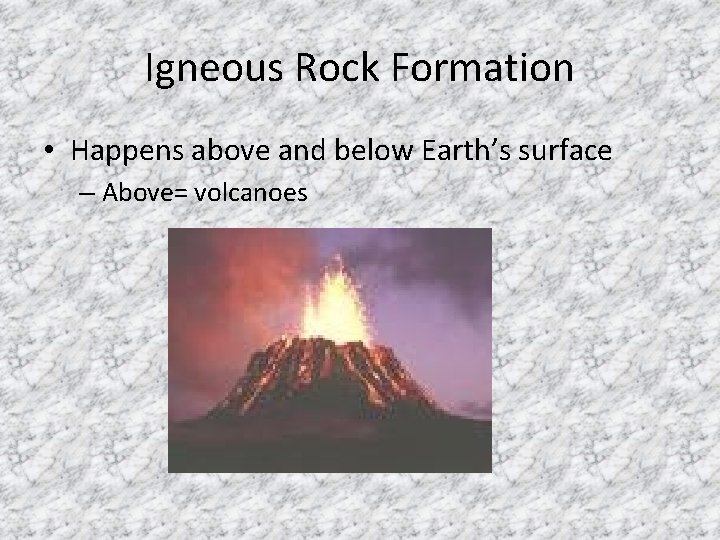
Igneous Rock Formation • Happens above and below Earth’s surface – Above= volcanoes
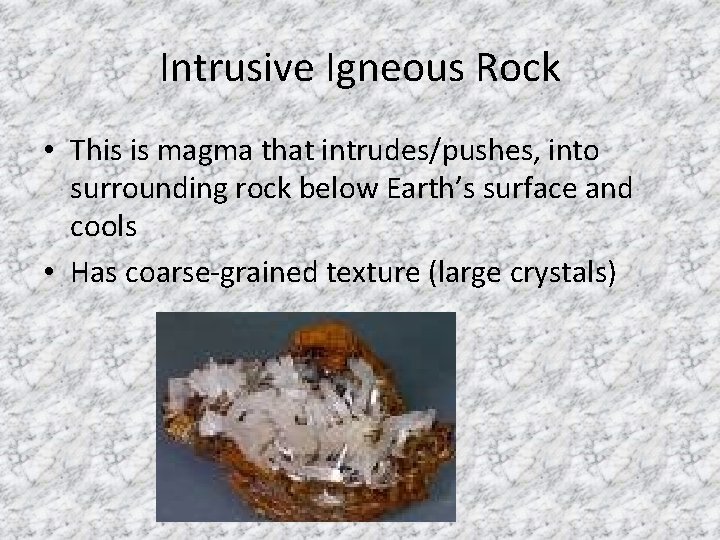
Intrusive Igneous Rock • This is magma that intrudes/pushes, into surrounding rock below Earth’s surface and cools • Has coarse-grained texture (large crystals)
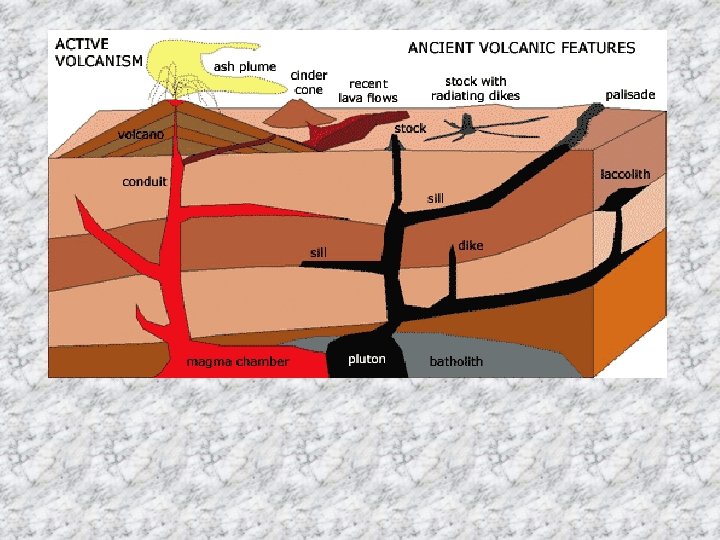
• Plutons-large, irregular shaped intrusive bodies – Batholiths- large igneous intrusive-under round – Stocks-intrusive areas that are over smaller underground areas – Dikes- cut across other rocks –can be above ground – Sills-sheet-like intrusions that run parallelunderground
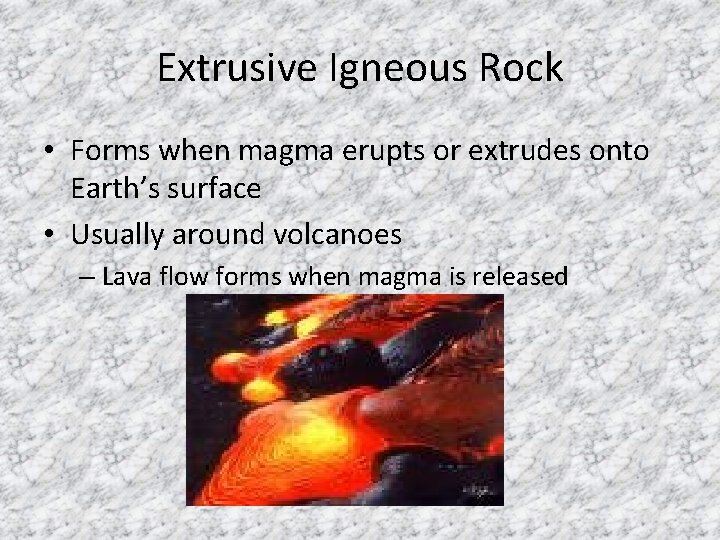
Extrusive Igneous Rock • Forms when magma erupts or extrudes onto Earth’s surface • Usually around volcanoes – Lava flow forms when magma is released
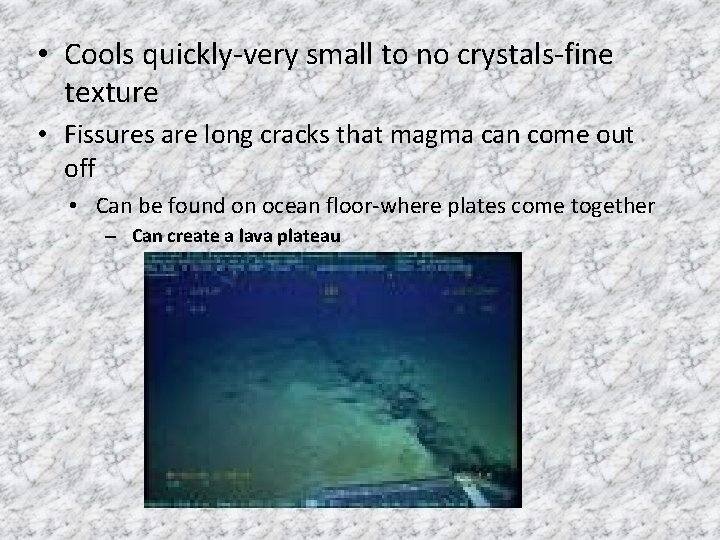
• Cools quickly-very small to no crystals-fine texture • Fissures are long cracks that magma can come out off • Can be found on ocean floor-where plates come together – Can create a lava plateau