
Igneous Intrusion Eric Angat Teacher Mafic Felsic Igneous



- Slides: 14
Igneous Intrusion Eric Angat Teacher
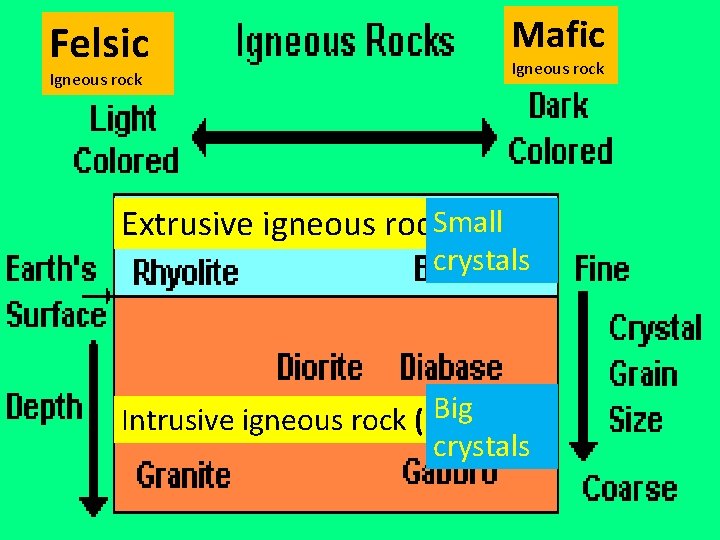
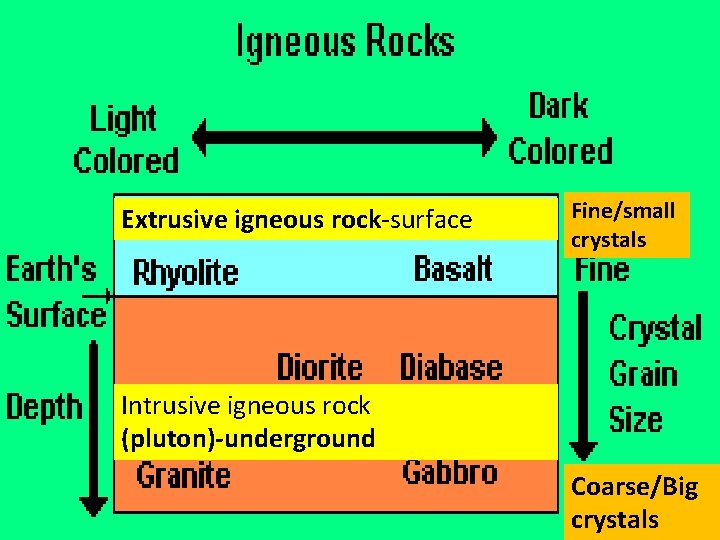
Mafic Felsic Igneous rock Extrusive igneous rock. Small crystals Big Intrusive igneous rock (pluton) crystals
Extrusive igneous rock-surface Fine/small crystals Intrusive igneous rock (pluton)-underground Coarse/Big crystals
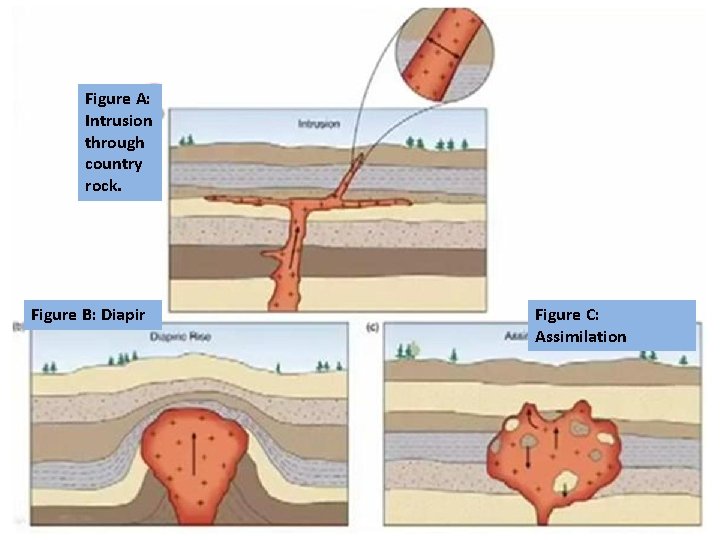
Figure A: Intrusion through country rock. Figure B: Diapir Figure C: Assimilation
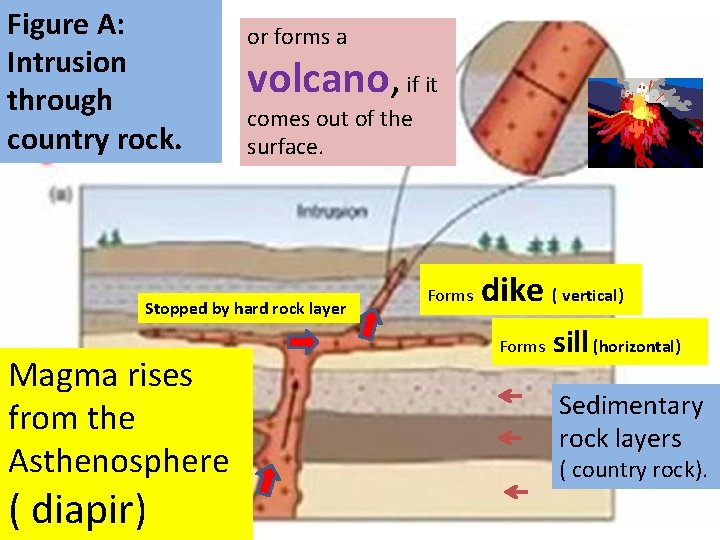
Figure A: Intrusion through country rock. or forms a volcano, if it comes out of the surface. Stopped by hard rock layer Magma rises from the Asthenosphere ( diapir) Forms dike ( vertical) Forms sill (horizontal) Sedimentary rock layers ( country rock).
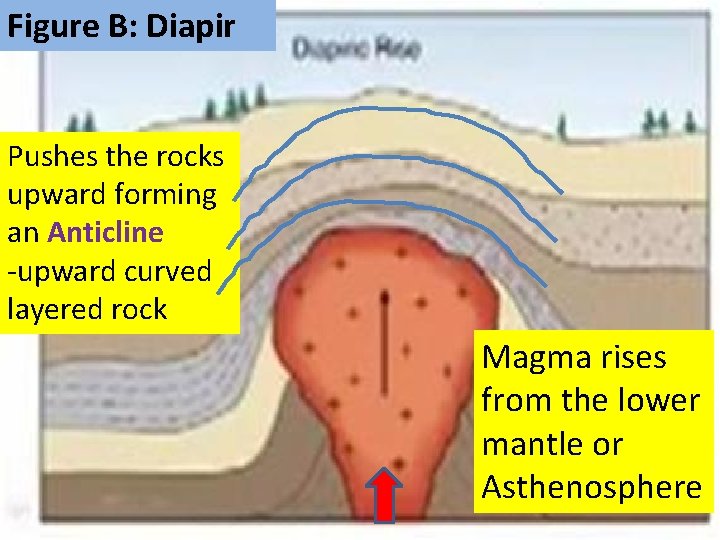
Figure B: Diapir Pushes the rocks upward forming an Anticline -upward curved layered rock Magma rises from the lower mantle or Asthenosphere
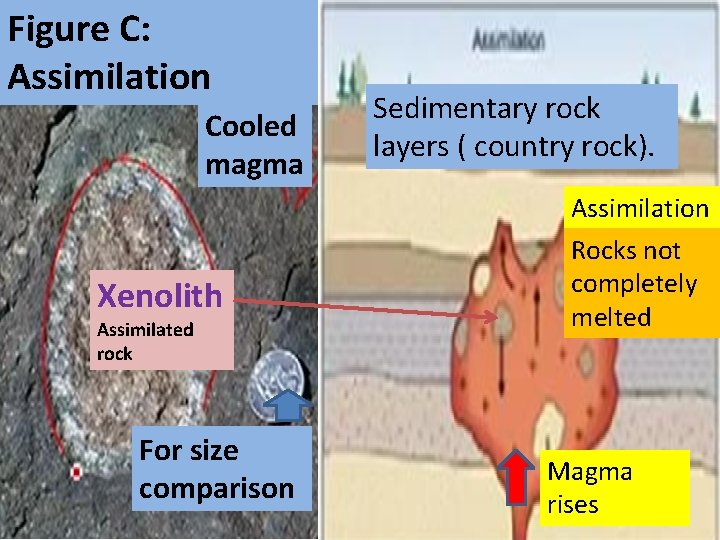
Figure C: Assimilation Cooled magma Xenolith Assimilated rock For size comparison Sedimentary rock layers ( country rock). Assimilation Rocks not completely melted Magma rises
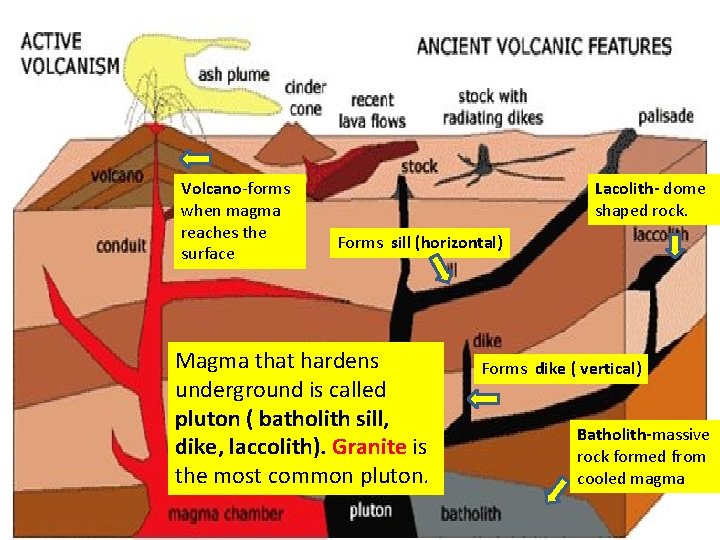
Volcano-forms when magma reaches the surface Lacolith- dome shaped rock. Forms sill (horizontal) Magma that hardens underground is called pluton ( batholith sill, dike, laccolith). Granite is the most common pluton. Forms dike ( vertical) Batholith-massive rock formed from cooled magma
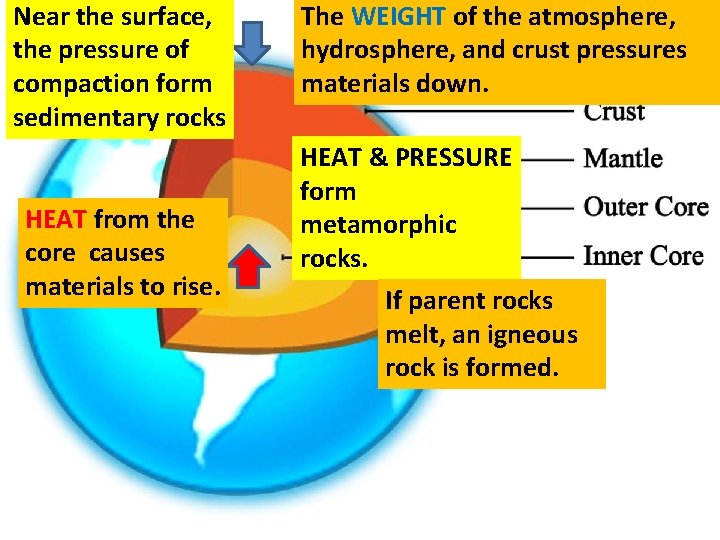
Near the surface, the pressure of compaction form sedimentary rocks HEAT from the core causes materials to rise. The WEIGHT of the atmosphere, hydrosphere, and crust pressures materials down. HEAT & PRESSURE form metamorphic rocks. If parent rocks melt, an igneous rock is formed.
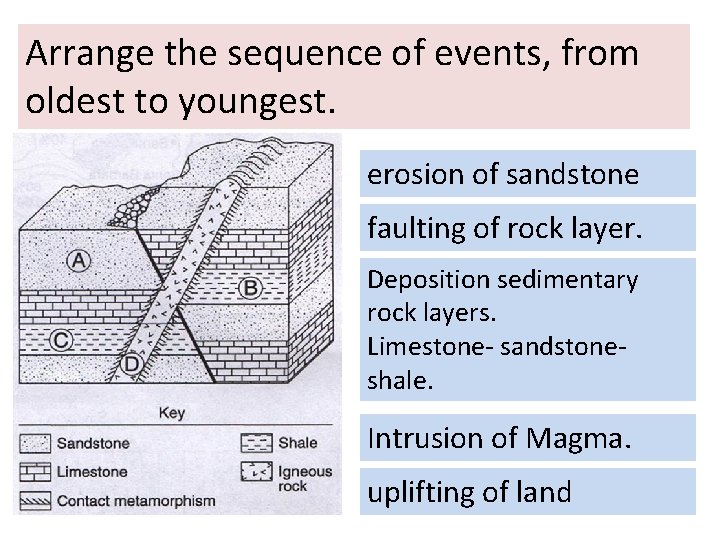
Arrange the sequence of events, from oldest to youngest. erosion of sandstone faulting of rock layer. Deposition sedimentary rock layers. Limestone- sandstoneshale. Intrusion of Magma. uplifting of land
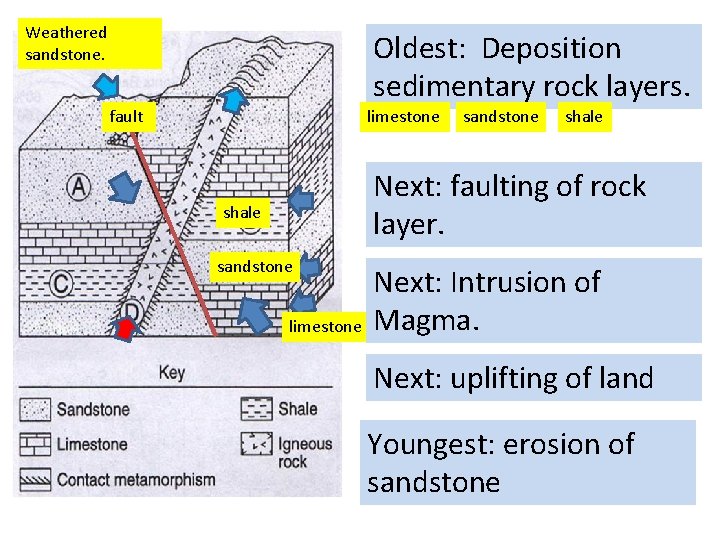
Weathered sandstone. Oldest: Deposition sedimentary rock layers. fault limestone sandstone shale Next: faulting of rock layer. shale sandstone limestone Next: Intrusion of Magma. Next: uplifting of land Youngest: erosion of sandstone
Answer the questions on your activity paper. http: //www. youtube. com/watch? v=A 5 Ld. ZJi. Ks. Vk
Figure A: Intrusion through country rock. Or forms a volcano, if it comes out of the surface. Forms dike ( vertical) Forms sill (horizontal) Sedimentary rock layers ( country rock). Magma rises Figure B: Diapir Forms Anticline -curved layered rock Figure C: Assimilation Magma eats up the rock. Magma rises Forming xenolith
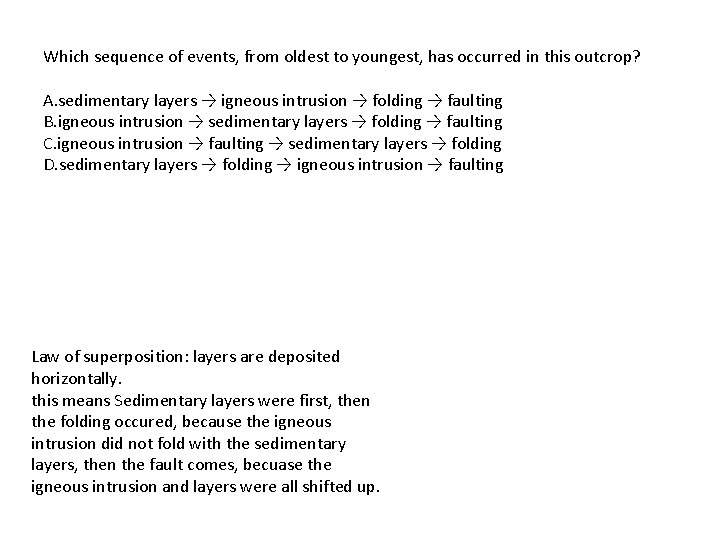
Which sequence of events, from oldest to youngest, has occurred in this outcrop? A. sedimentary layers → igneous intrusion → folding → faulting B. igneous intrusion → sedimentary layers → folding → faulting C. igneous intrusion → faulting → sedimentary layers → folding D. sedimentary layers → folding → igneous intrusion → faulting Law of superposition: layers are deposited horizontally. this means Sedimentary layers were first, then the folding occured, because the igneous intrusion did not fold with the sedimentary layers, then the fault comes, becuase the igneous intrusion and layers were all shifted up.