
IFS 410 UML Models Week 11 UML Overview
- Slides: 13
IFS 410: UML Models Week 11: UML Overview Spring 2007
UML • UML (Unified Modeling Language). – UML is a language for specifying, visualizing, constructing, and documenting the artifacts of software systems. – UML provides the precise notation that we need when modeling software systems. 3/20/2007
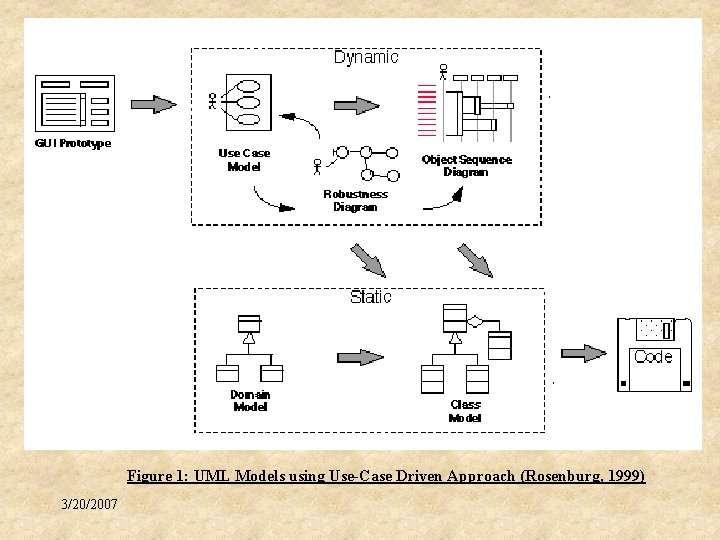
Figure 1: UML Models using Use-Case Driven Approach (Rosenburg, 1999) 3/20/2007
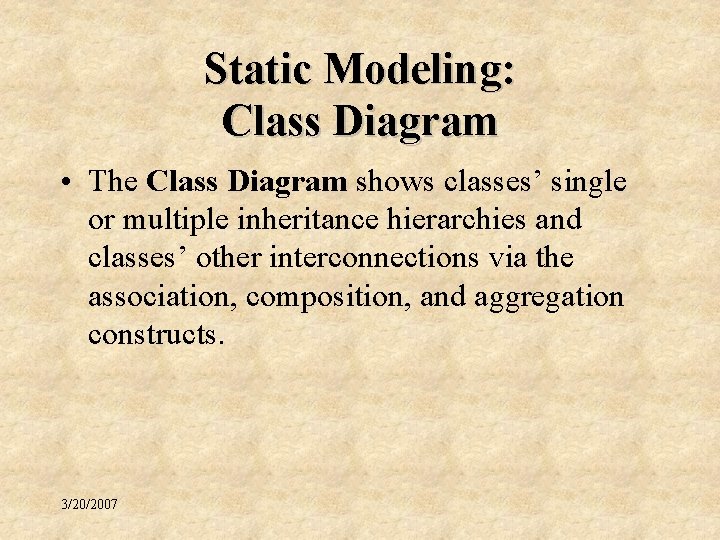
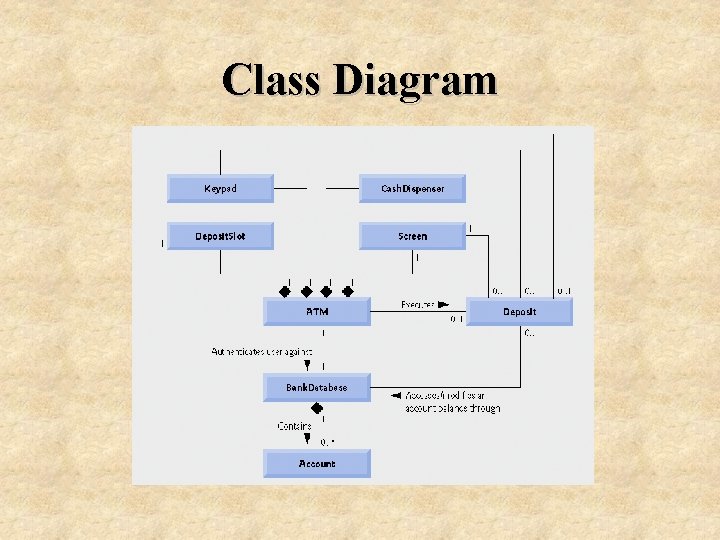
Static Modeling: Class Diagram • The Class Diagram shows classes’ single or multiple inheritance hierarchies and classes’ other interconnections via the association, composition, and aggregation constructs. 3/20/2007
Class Diagram
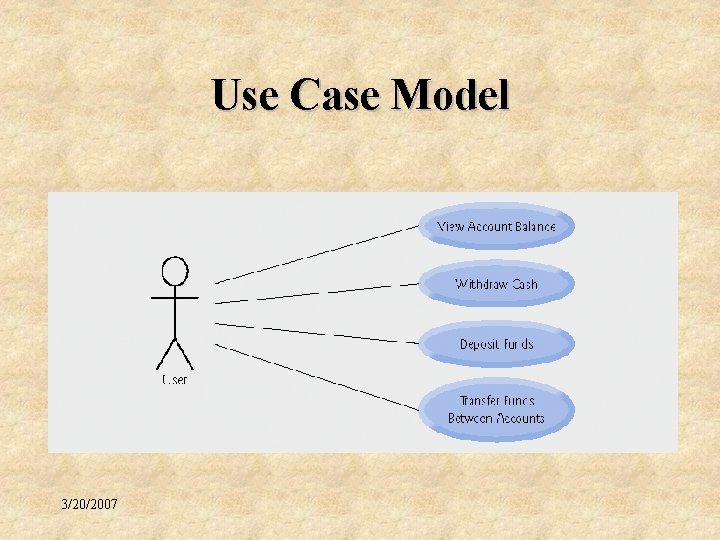
Dynamic Modeling: Use Case Model • Use case modeling breaks down the entire scope of system functionality into many smaller statements of system functionality called use cases or business events. – A use case: a behaviorally related sequence of steps (a scenario), both automated and manual for the purpose of completing a single business task. 3/20/2007
Use Case Model 3/20/2007
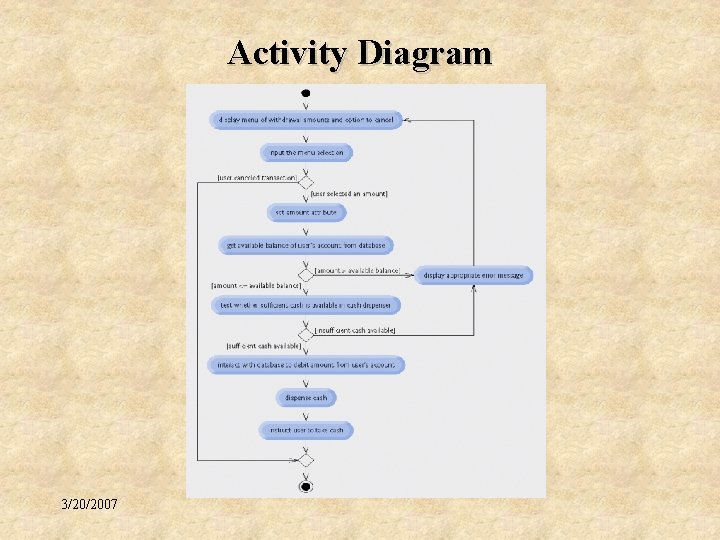
Activity Diagrams • Shows the conditional logic for the sequence of system activities needed to accomplish a business process • Clearly shows parallel and alternative behaviors • Can be used to show the logic of a use case 3/20/2007
Activity Diagram 3/20/2007
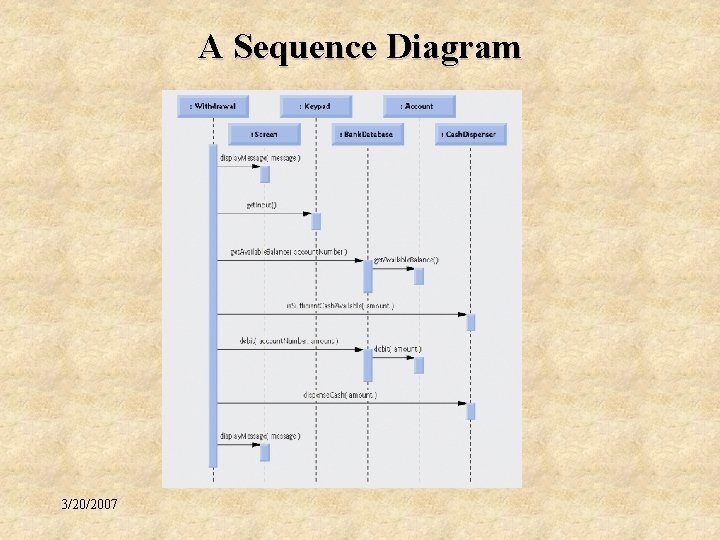
Interaction Diagrams • Interaction diagrams are models that describe how a group of objects collaborate in some behavior - typically a single usecase. • Interaction diagrams come in two forms, both present in the UML: Sequence diagram and communication (collaboration) diagram 3/20/2007
A Sequence Diagram 3/20/2007
Other Types of Diagrams in UML • • • Object Models/Domain Models Robustness Diagram (Not UML 2) State (Chart) Diagram Component Diagram Deployment Diagram 3/20/2007
UML Project (Spring 2007) • The project will be similar to a real-world development project. However, with limitation in schedule, the following models should be created (in order): 1. Use case diagram 2. Initial class diagram 3. Activity diagram 4. Sequence diagram 5. Refined class diagram 3/20/2007