
IFC Performance Standards in Practice A methodology for









- Slides: 22
IFC Performance Standards in Practice: A methodology for integrating social and environmental effects for the assessment of a mining project in Argentina Andrew Burwood, Sean Cullen, Gillian Davidson, Pierre Pelletier Rescan Environmental Services IAIA Conference, Seoul, 6 June 2007
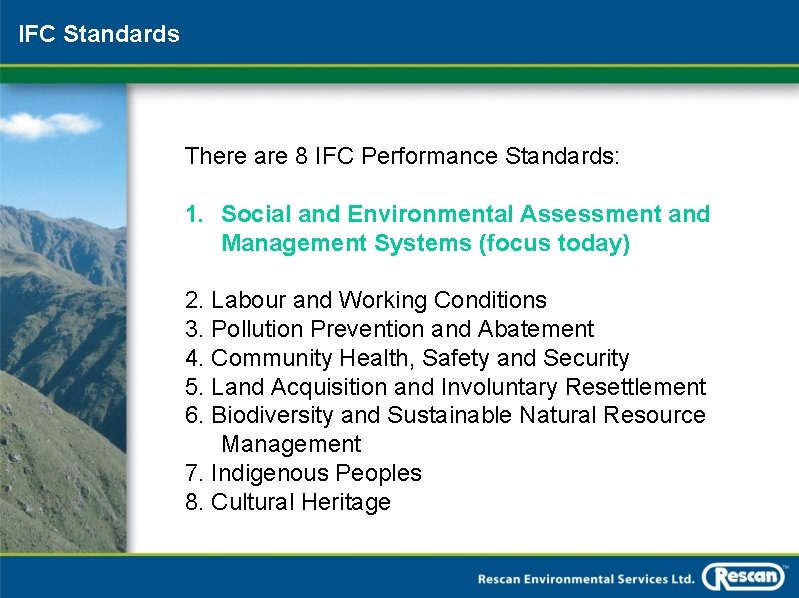
IFC Standards There are 8 IFC Performance Standards: 1. Social and Environmental Assessment and Management Systems (focus today) 2. Labour and Working Conditions 3. Pollution Prevention and Abatement 4. Community Health, Safety and Security 5. Land Acquisition and Involuntary Resettlement 6. Biodiversity and Sustainable Natural Resource Management 7. Indigenous Peoples 8. Cultural Heritage
IFC Standards • Some key differences between the old and new standards include: • New and expanded standards for: – Integrated assessment and management systems – Labour rights and standards – Community (not just workers) health and safety – Prevention and abatement of pollution • New outcomes-based approach – Business centered and management systems driven – Actions tailored to specific risks – Adaptable means to strong outcomes
IFC Applied What do the changes mean in practice? : • Demand for methodological advancement • Increased focus on accountability and transparency • Internal audit and development of management systems • Secure social license to operate • Focus on specific consequences
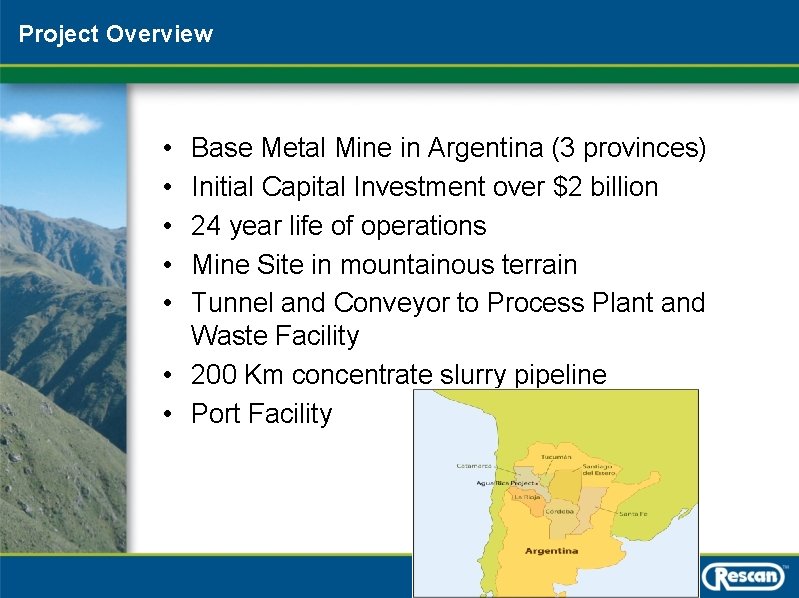
Project Overview • • • Base Metal Mine in Argentina (3 provinces) Initial Capital Investment over $2 billion 24 year life of operations Mine Site in mountainous terrain Tunnel and Conveyor to Process Plant and Waste Facility • 200 Km concentrate slurry pipeline • Port Facility
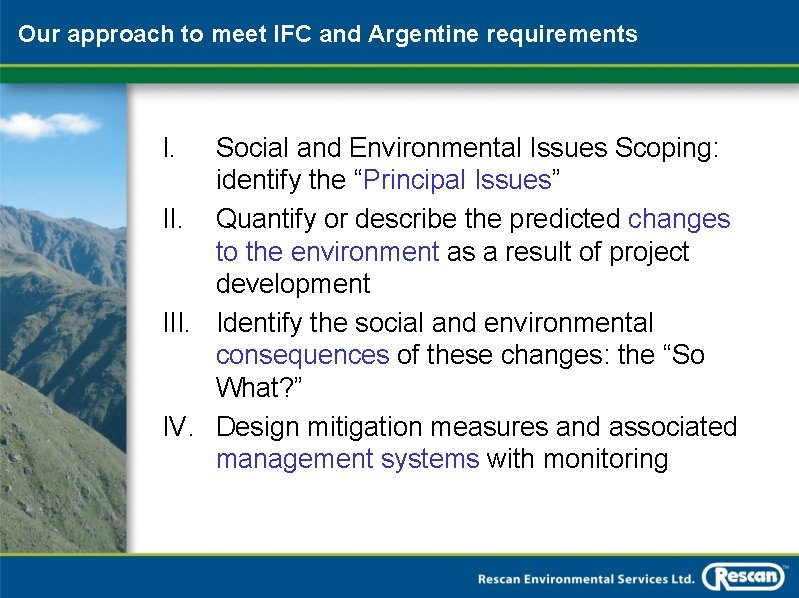
Our approach to meet IFC and Argentine requirements I. Social and Environmental Issues Scoping: identify the “Principal Issues” II. Quantify or describe the predicted changes to the environment as a result of project development III. Identify the social and environmental consequences of these changes: the “So What? ” IV. Design mitigation measures and associated management systems with monitoring
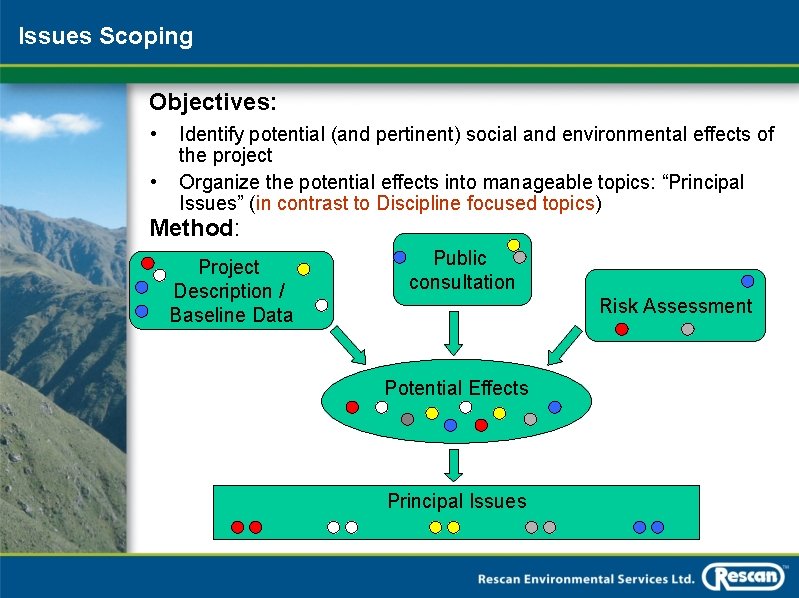
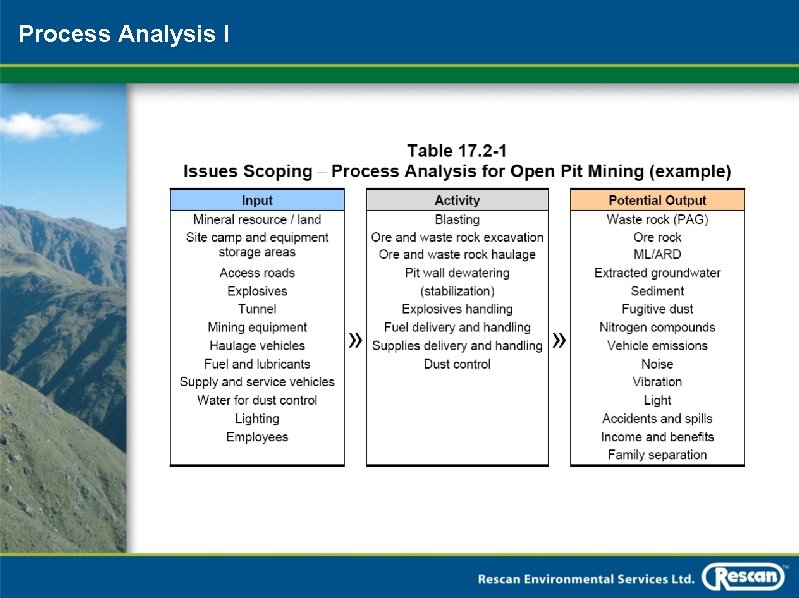
Issues Scoping Objectives: • • Identify potential (and pertinent) social and environmental effects of the project Organize the potential effects into manageable topics: “Principal Issues” (in contrast to Discipline focused topics) Method: Project Description / Baseline Data Public consultation Risk Assessment Potential Effects Principal Issues
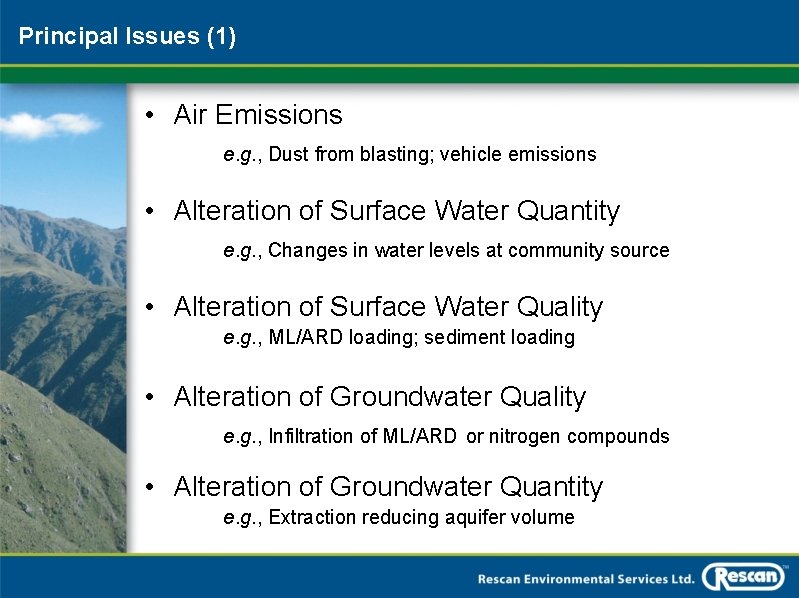
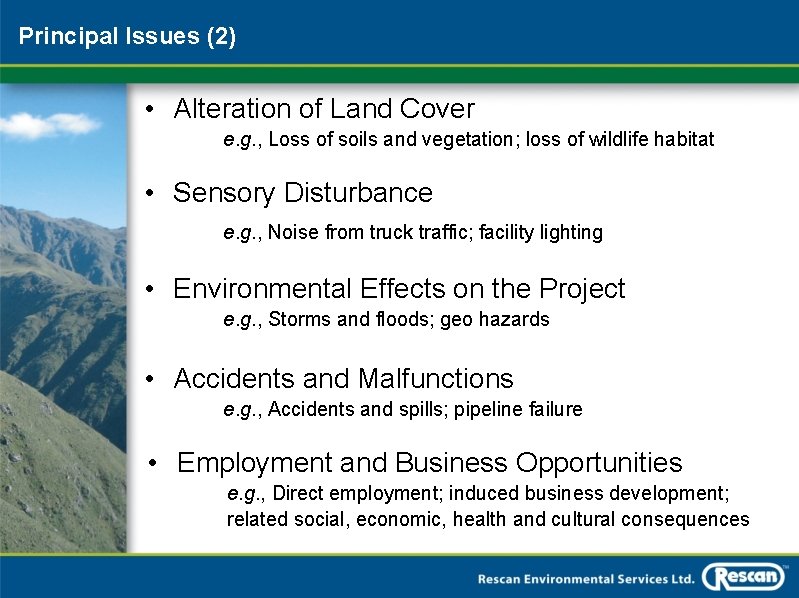
Principle Issues 1. Air Emissions 2. Alteration of Surface Water Quality 3. Alteration of Surface Water Quantity 4. Alteration of Groundwater Quality 5. Alteration Groundwater Quantity 6. Alteration of Land Cover 7. Sensory Distribution 8. Environmental Effects on the Project 9. Accidents and Malfunctions 10. Employment and Business Opportunities
Process Analysis I
Process Analysis II
Principal Issues (1) • Air Emissions e. g. , Dust from blasting; vehicle emissions • Alteration of Surface Water Quantity e. g. , Changes in water levels at community source • Alteration of Surface Water Quality e. g. , ML/ARD loading; sediment loading • Alteration of Groundwater Quality e. g. , Infiltration of ML/ARD or nitrogen compounds • Alteration of Groundwater Quantity e. g. , Extraction reducing aquifer volume
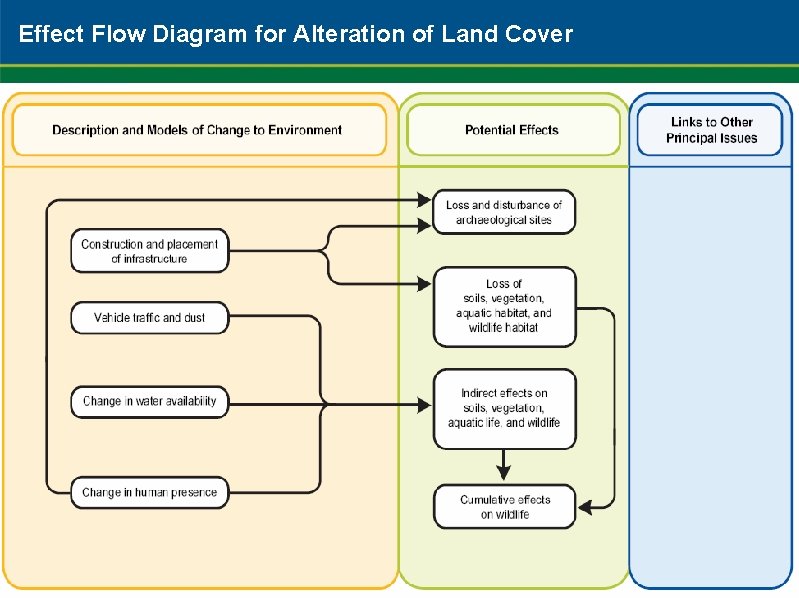
Principal Issues (2) • Alteration of Land Cover e. g. , Loss of soils and vegetation; loss of wildlife habitat • Sensory Disturbance e. g. , Noise from truck traffic; facility lighting • Environmental Effects on the Project e. g. , Storms and floods; geo hazards • Accidents and Malfunctions e. g. , Accidents and spills; pipeline failure • Employment and Business Opportunities e. g. , Direct employment; induced business development; related social, economic, health and cultural consequences
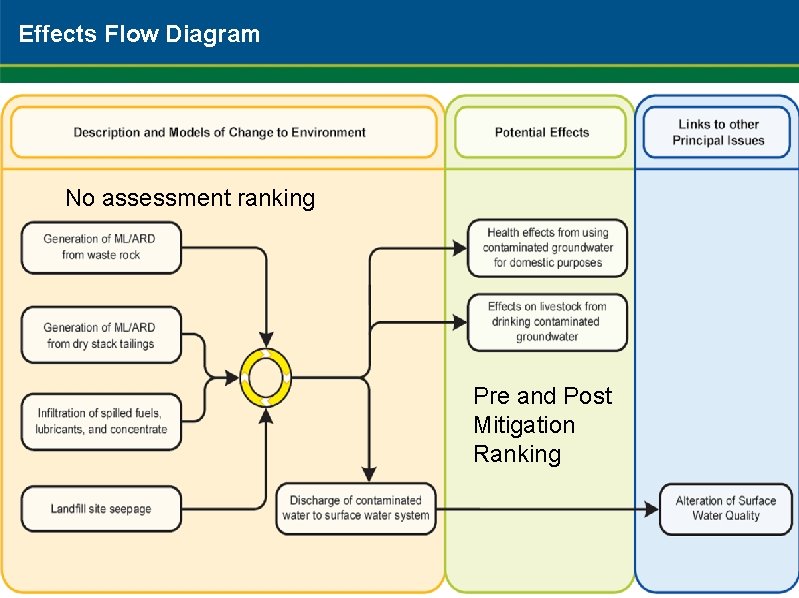
Effects assessment • Each Principal Issue forms a chapter in document and is assessed by an interdisciplinary team 1. Description and models of change to environment (physical scientists) 2. Identified Effects are assessed by discipline specialists Pre-Mitigation (“genes rule” 3. Describe explicit mitigation, management enhancements and monitoring 4. Effect is re-assessed Post mitigation
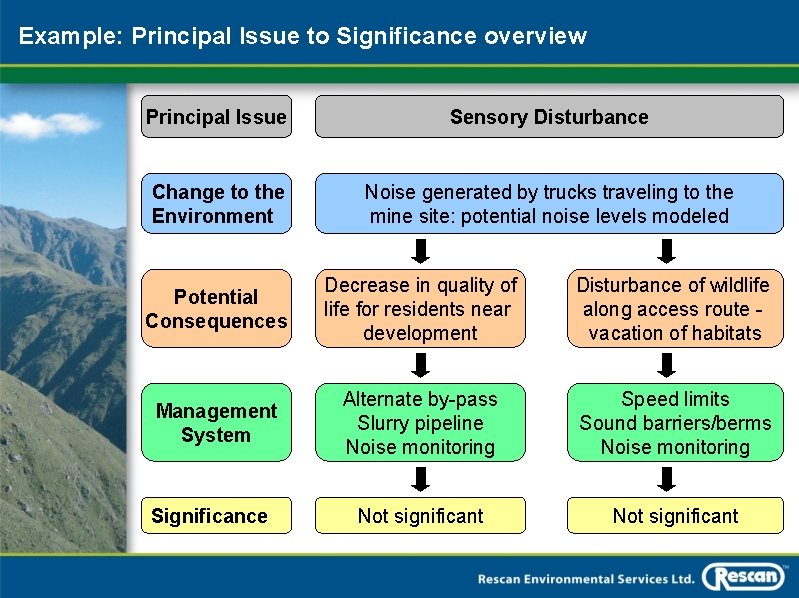
Example: Principal Issue to Significance overview Principal Issue Sensory Disturbance Change to the Environment Noise generated by trucks traveling to the mine site: potential noise levels modeled Potential Consequences Decrease in quality of life for residents near development Disturbance of wildlife along access route vacation of habitats Management System Alternate by-pass Slurry pipeline Noise monitoring Speed limits Sound barriers/berms Noise monitoring Not significant Significance
Effects Flow Diagram No assessment ranking Pre and Post Mitigation Ranking
Focus on Mitigation and Enhancement Pre mitigation Mitigation and Enhancement Post mitigation
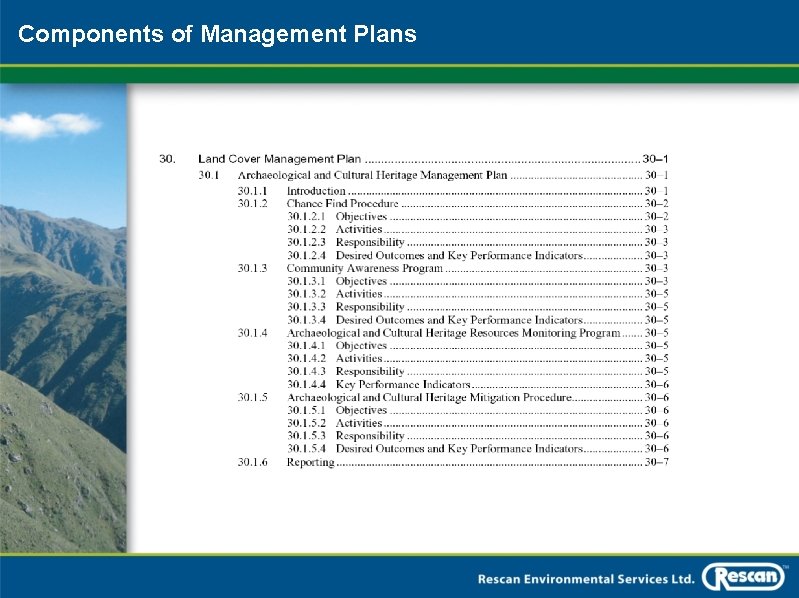
Components of Management Plans
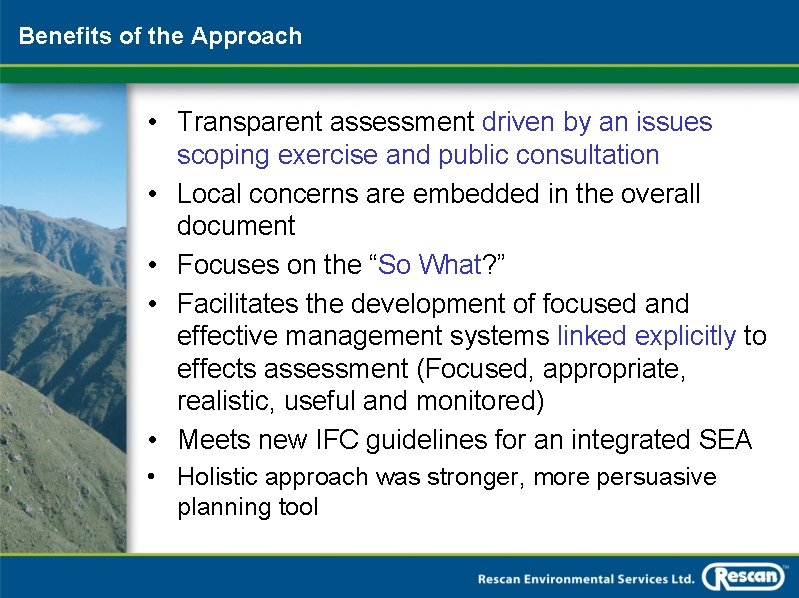
Benefits of the Approach • Transparent assessment driven by an issues scoping exercise and public consultation • Local concerns are embedded in the overall document • Focuses on the “So What? ” • Facilitates the development of focused and effective management systems linked explicitly to effects assessment (Focused, appropriate, realistic, useful and monitored) • Meets new IFC guidelines for an integrated SEA • Holistic approach was stronger, more persuasive planning tool
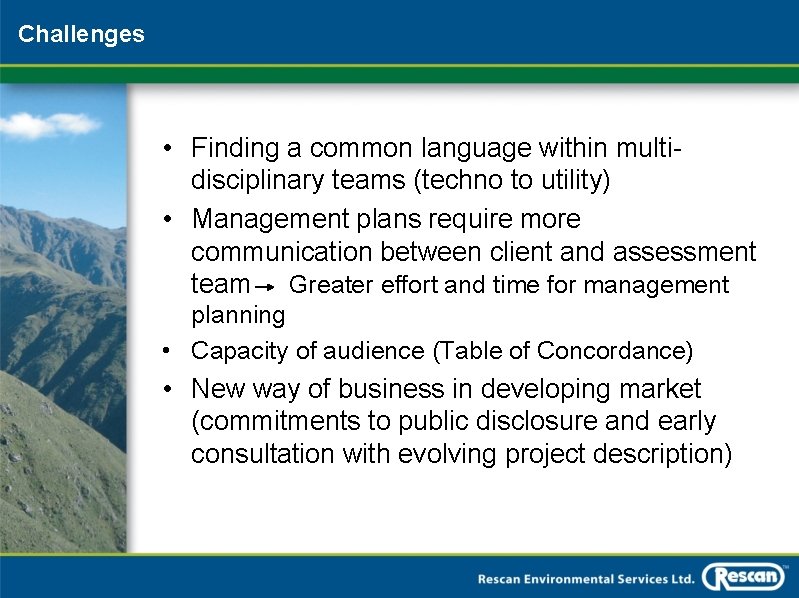
Challenges • Finding a common language within multidisciplinary teams (techno to utility) • Management plans require more communication between client and assessment team Greater effort and time for management planning • Capacity of audience (Table of Concordance) • New way of business in developing market (commitments to public disclosure and early consultation with evolving project description)
Thank you! Questions? Comments?
Effects Flow Diagram for Air Emissions in document
Effect Flow Diagram for Alteration of Land Cover