
IES Research Grants Demystifying the Process Or does

- Slides: 19
IES Research Grants: Demystifying the Process Or, does anyone ever win an award? Thomas Brock Director and Research Professor Community College Research Center Teachers College
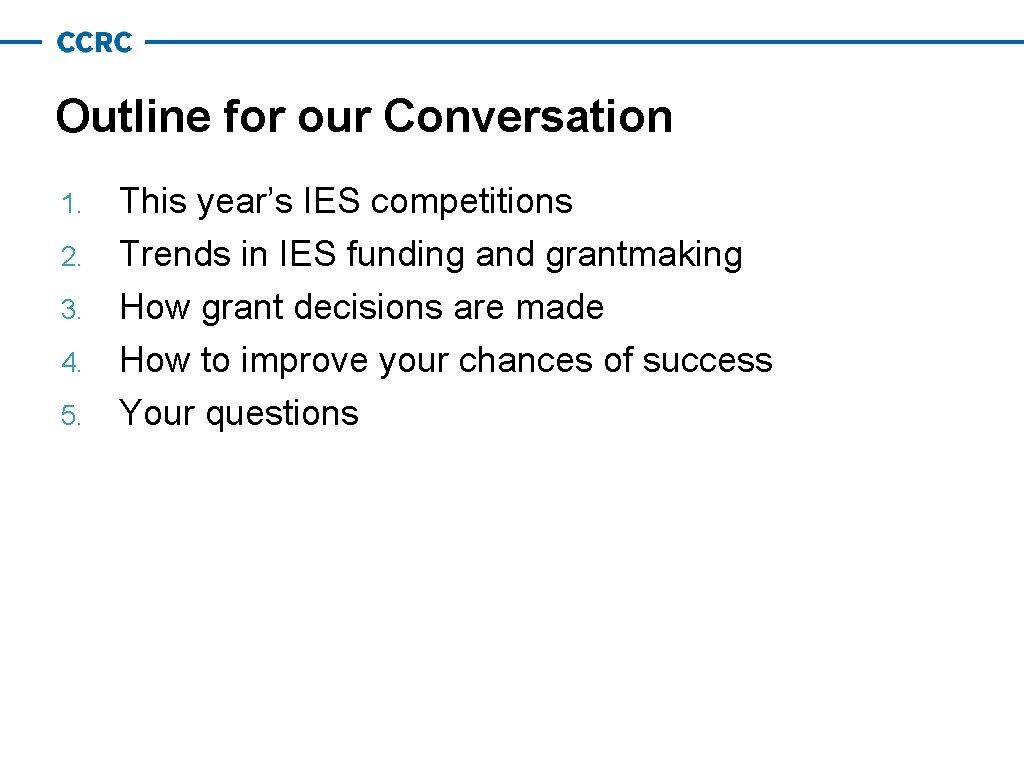
Outline for our Conversation 1. 2. 3. 4. 5. This year’s IES competitions Trends in IES funding and grantmaking How grant decisions are made How to improve your chances of success Your questions
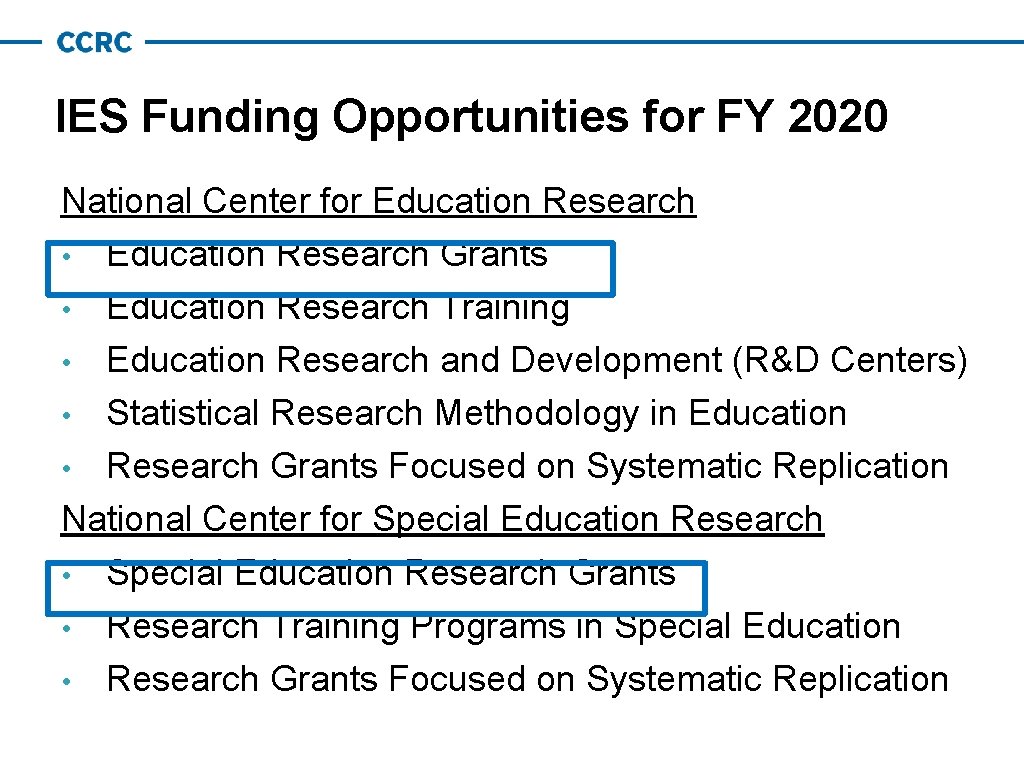
IES Funding Opportunities for FY 2020 National Center for Education Research • Education Research Grants • Education Research Training • Education Research and Development (R&D Centers) • Statistical Research Methodology in Education • Research Grants Focused on Systematic Replication National Center for Special Education Research • Special Education Research Grants • Research Training Programs in Special Education • Research Grants Focused on Systematic Replication
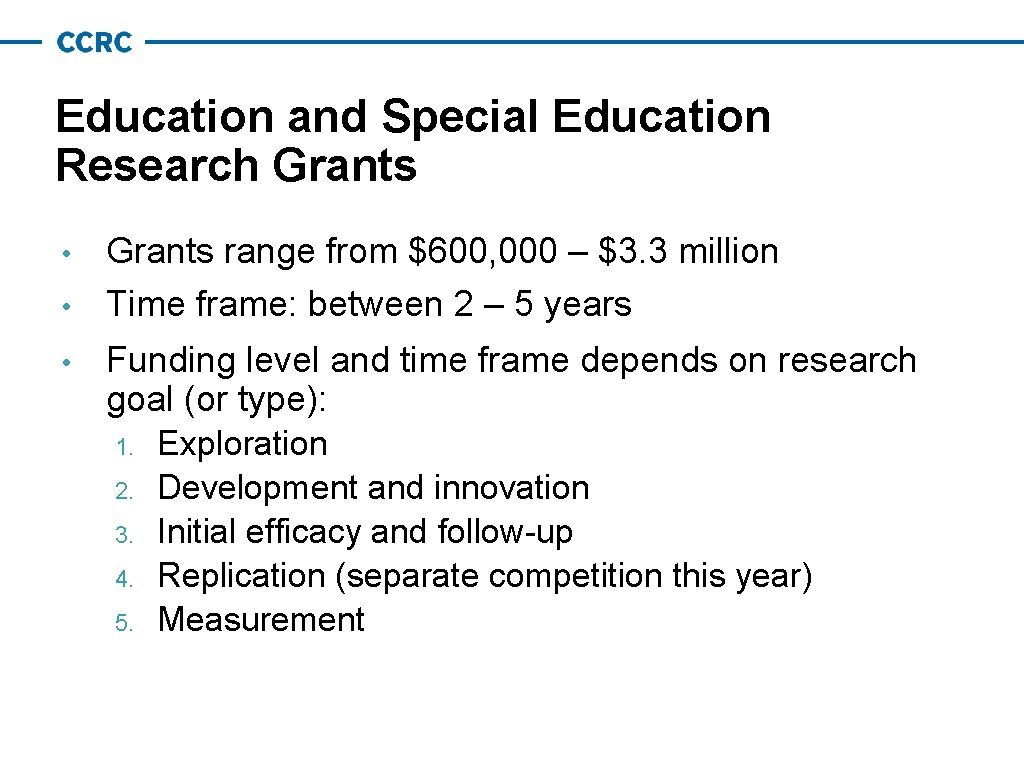
Education and Special Education Research Grants • • • Grants range from $600, 000 – $3. 3 million Time frame: between 2 – 5 years Funding level and time frame depends on research goal (or type): 1. 2. 3. 4. 5. Exploration Development and innovation Initial efficacy and follow-up Replication (separate competition this year) Measurement
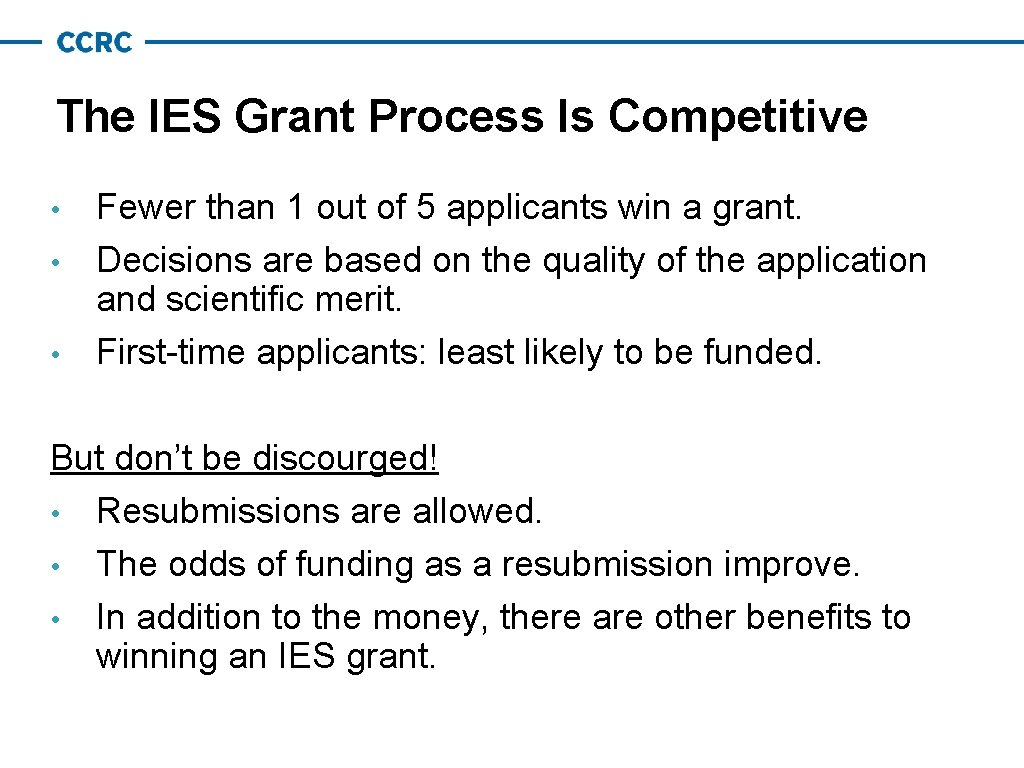
The IES Grant Process Is Competitive • • • Fewer than 1 out of 5 applicants win a grant. Decisions are based on the quality of the application and scientific merit. First-time applicants: least likely to be funded. But don’t be discourged! • Resubmissions are allowed. • The odds of funding as a resubmission improve. • In addition to the money, there are other benefits to winning an IES grant.
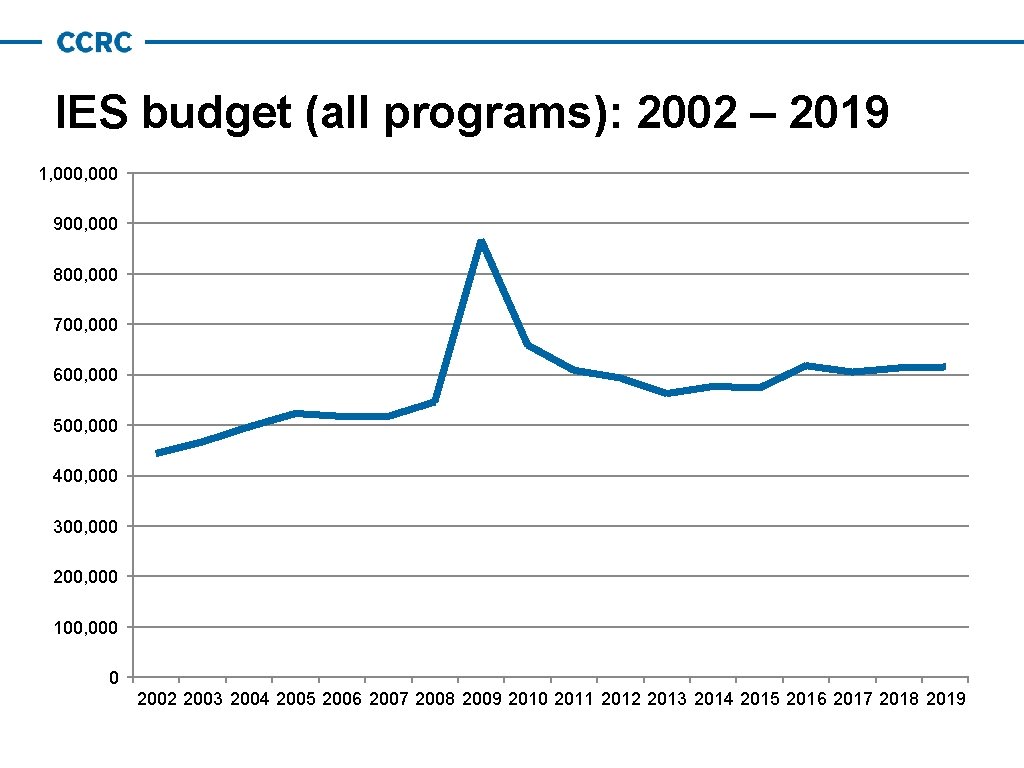
IES budget (all programs): 2002 – 2019 1, 000 900, 000 800, 000 700, 000 600, 000 500, 000 400, 000 300, 000 200, 000 100, 000 0 2002 2003 2004 2005 2006 2007 2008 2009 2010 2011 2012 2013 2014 2015 2016 2017 2018 2019
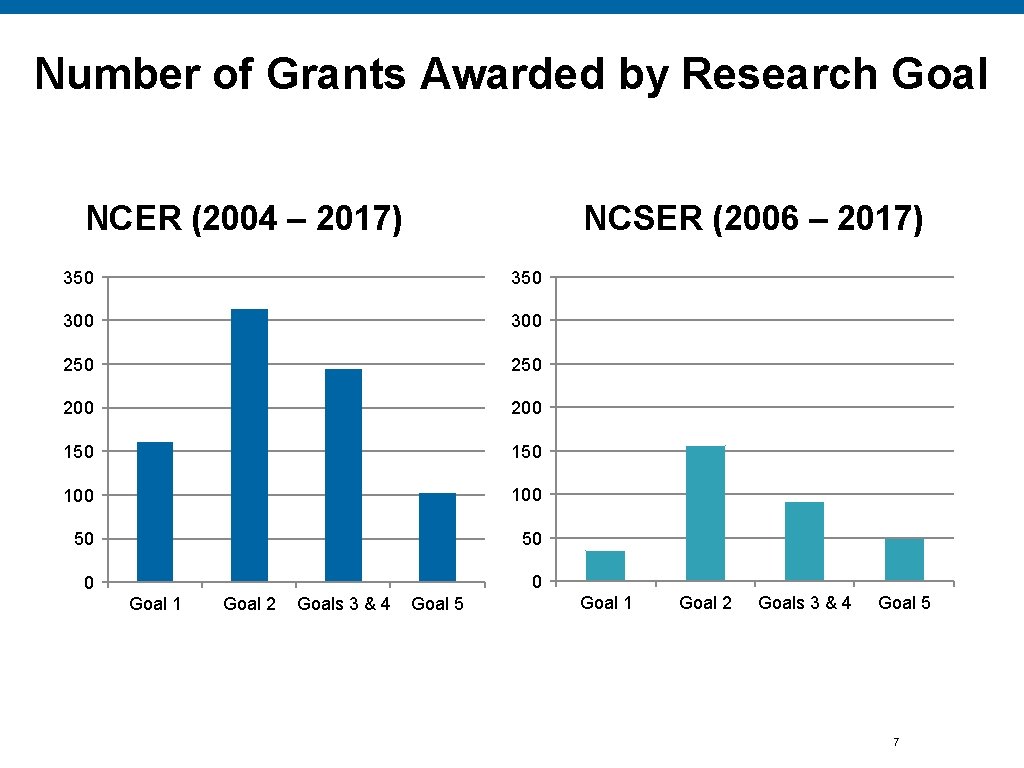
Number of Grants Awarded by Research Goal NCER (2004 – 2017) NCSER (2006 – 2017) 350 300 250 200 150 100 50 50 0 0 Goal 1 Goal 2 Goals 3 & 4 Goal 5 7
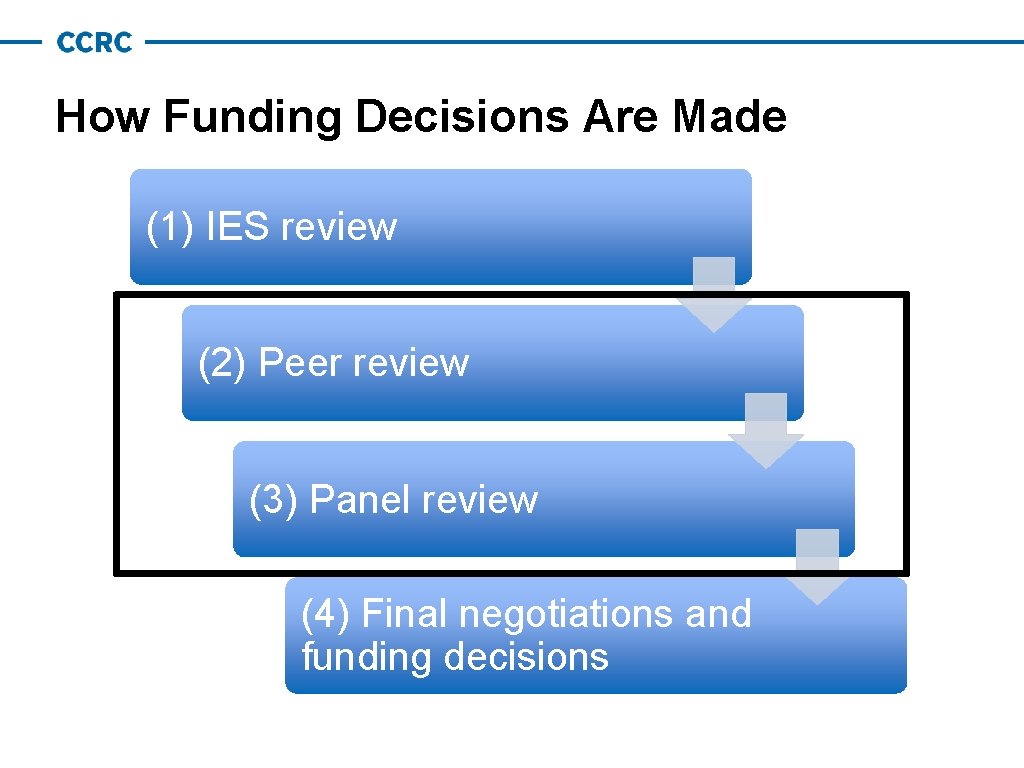
How Funding Decisions Are Made (1) IES review (2) Peer review (3) Panel review (4) Final negotiations and funding decisions
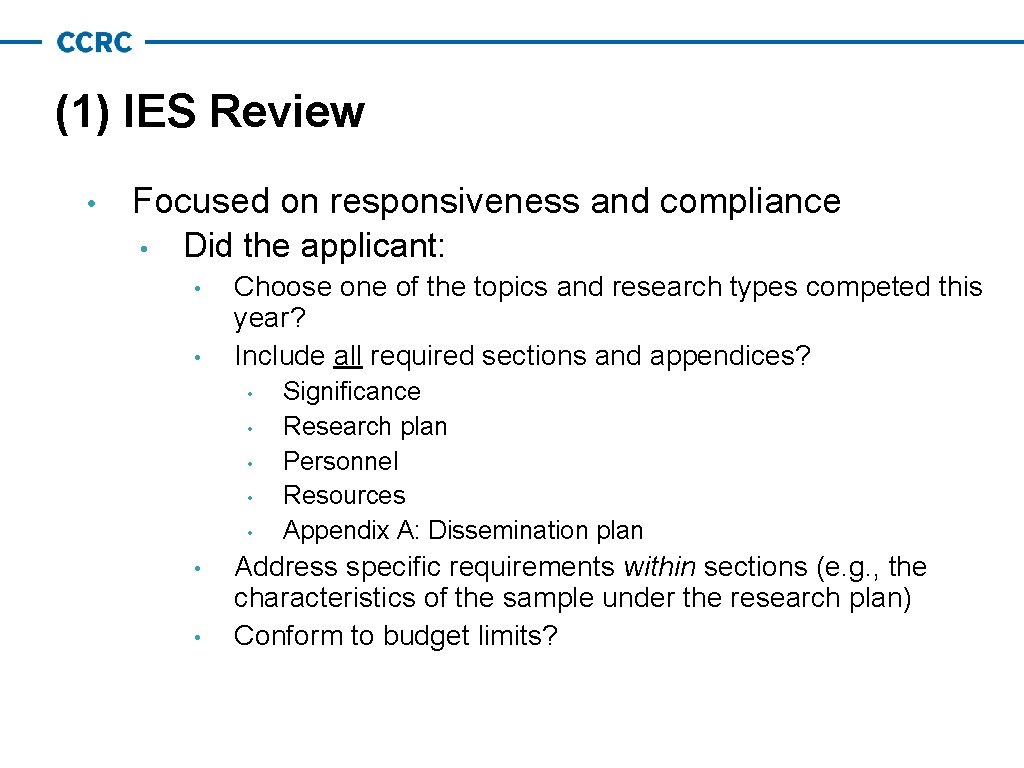
(1) IES Review • Focused on responsiveness and compliance • Did the applicant: • • Choose one of the topics and research types competed this year? Include all required sections and appendices? • • Significance Research plan Personnel Resources Appendix A: Dissemination plan Address specific requirements within sections (e. g. , the characteristics of the sample under the research plan) Conform to budget limits?
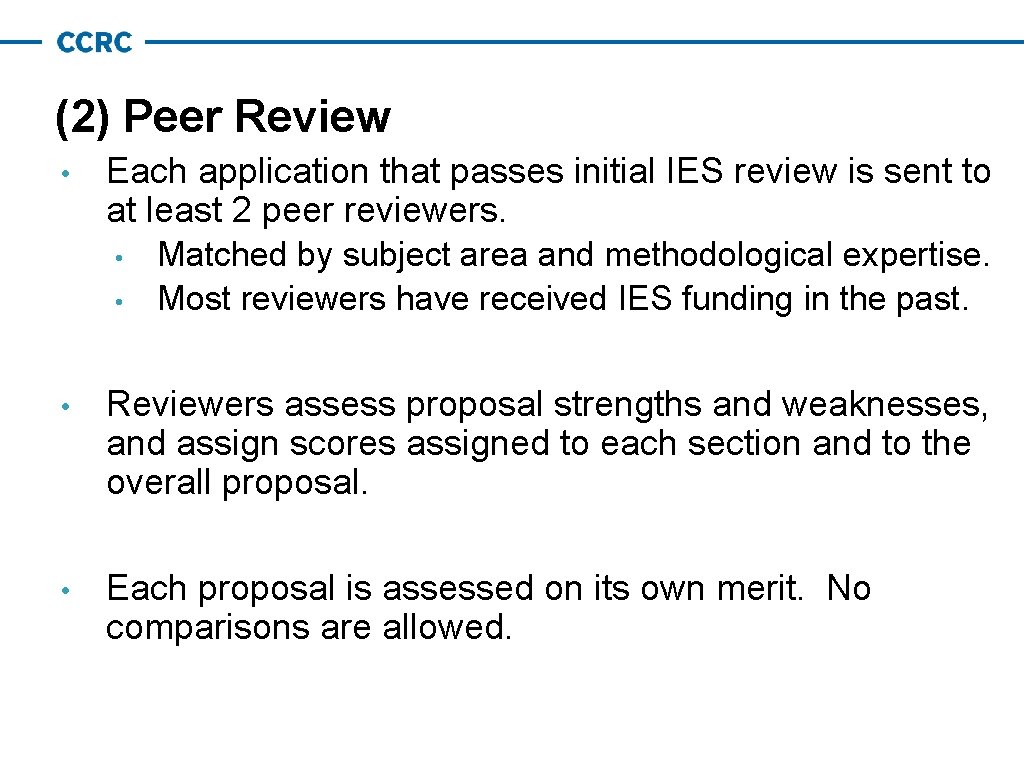
(2) Peer Review • Each application that passes initial IES review is sent to at least 2 peer reviewers. • • Matched by subject area and methodological expertise. Most reviewers have received IES funding in the past. • Reviewers assess proposal strengths and weaknesses, and assign scores assigned to each section and to the overall proposal. • Each proposal is assessed on its own merit. No comparisons are allowed.
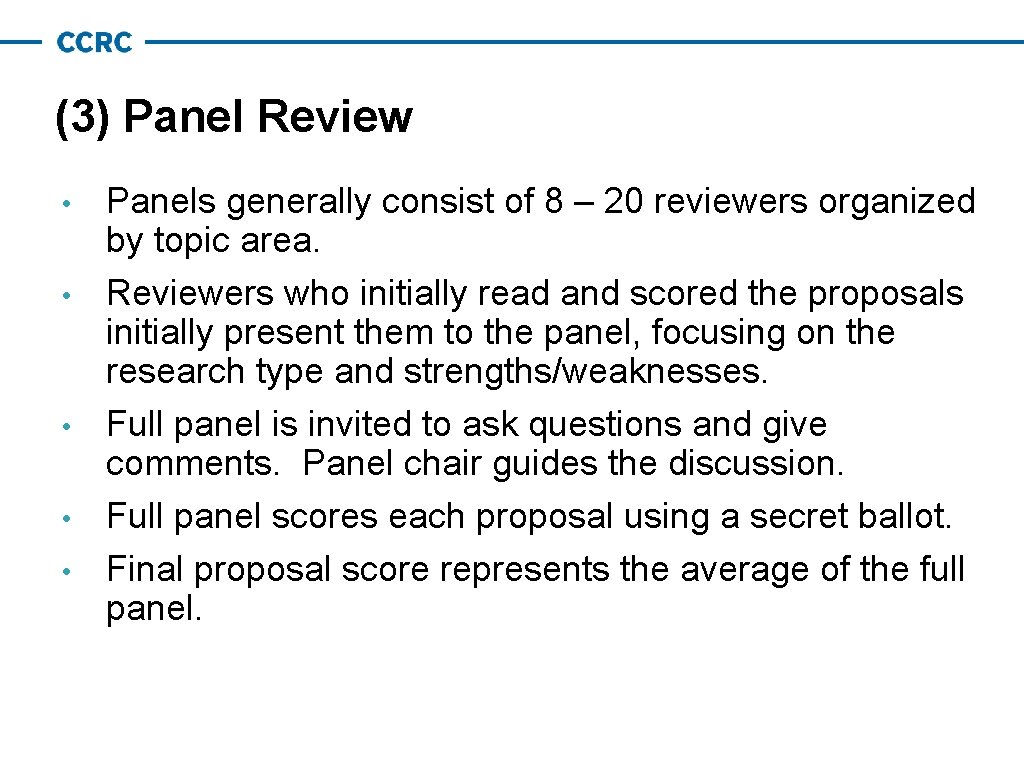
(3) Panel Review • • • Panels generally consist of 8 – 20 reviewers organized by topic area. Reviewers who initially read and scored the proposals initially present them to the panel, focusing on the research type and strengths/weaknesses. Full panel is invited to ask questions and give comments. Panel chair guides the discussion. Full panel scores each proposal using a secret ballot. Final proposal score represents the average of the full panel.
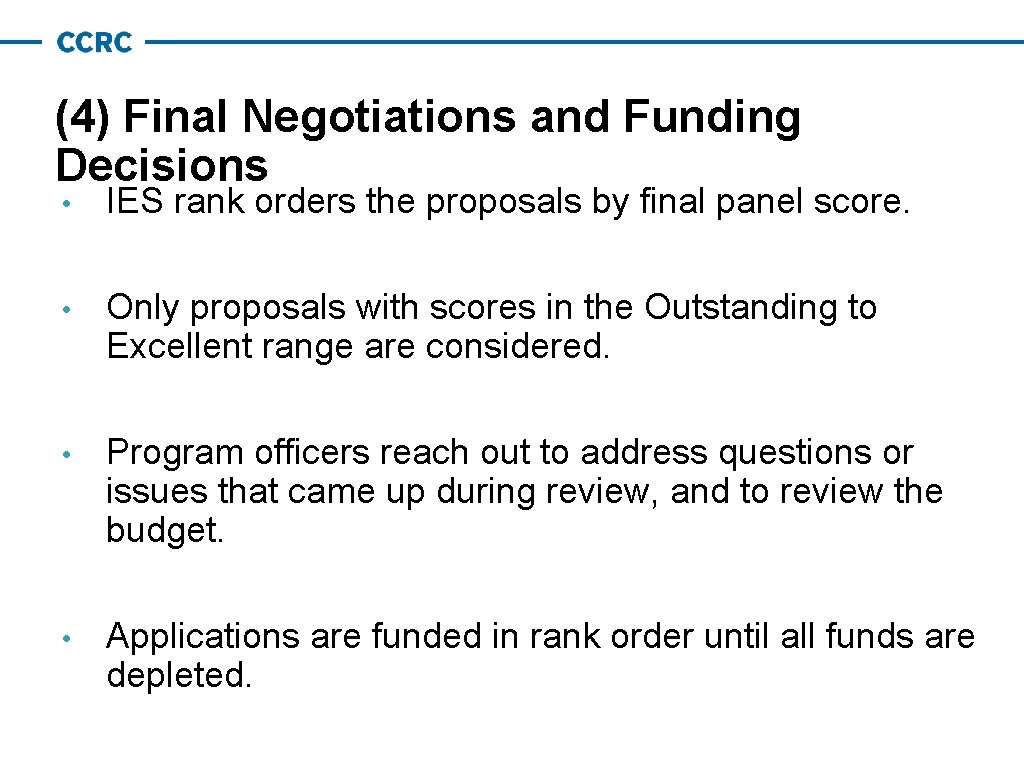
(4) Final Negotiations and Funding Decisions • IES rank orders the proposals by final panel score. • Only proposals with scores in the Outstanding to Excellent range are considered. • Program officers reach out to address questions or issues that came up during review, and to review the budget. • Applications are funded in rank order until all funds are depleted.
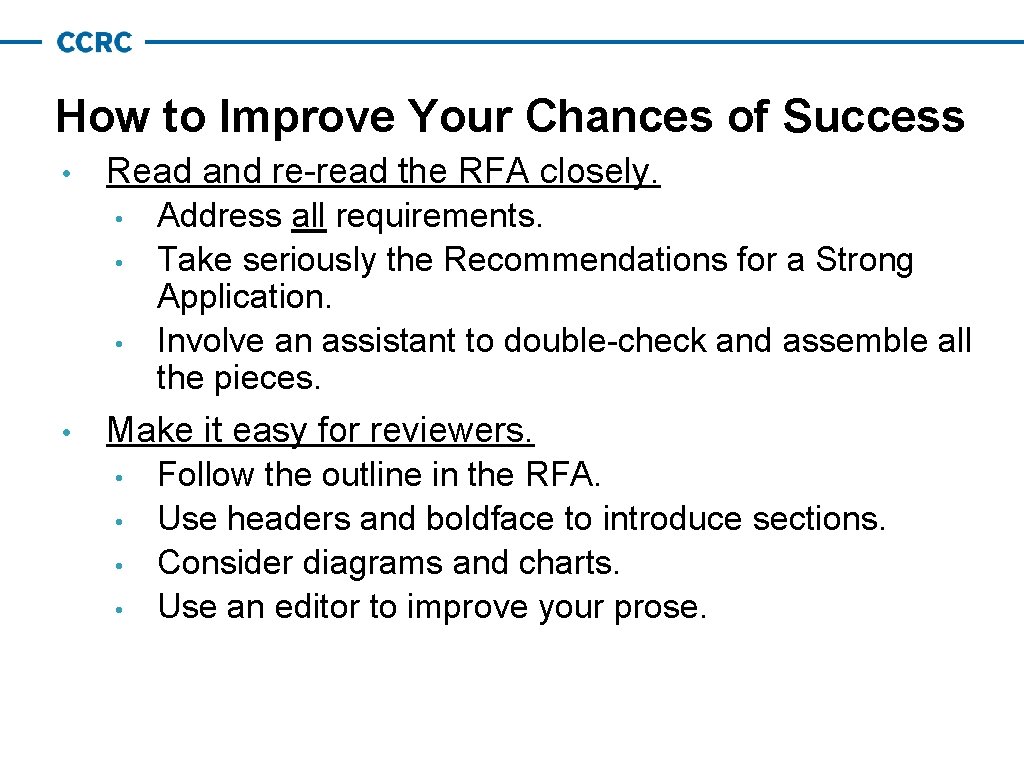
How to Improve Your Chances of Success • Read and re-read the RFA closely. • • Address all requirements. Take seriously the Recommendations for a Strong Application. Involve an assistant to double-check and assemble all the pieces. Make it easy for reviewers. • • Follow the outline in the RFA. Use headers and boldface to introduce sections. Consider diagrams and charts. Use an editor to improve your prose.
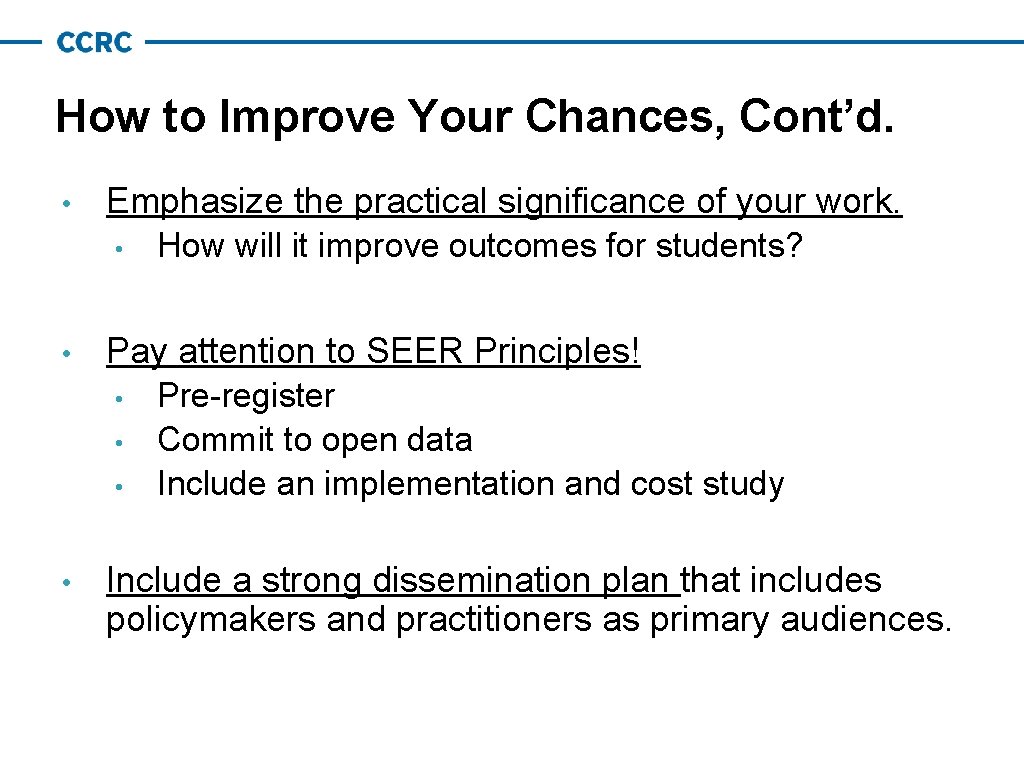
How to Improve Your Chances, Cont’d. • Emphasize the practical significance of your work. • • Pay attention to SEER Principles! • • How will it improve outcomes for students? Pre-register Commit to open data Include an implementation and cost study Include a strong dissemination plan that includes policymakers and practitioners as primary audiences.
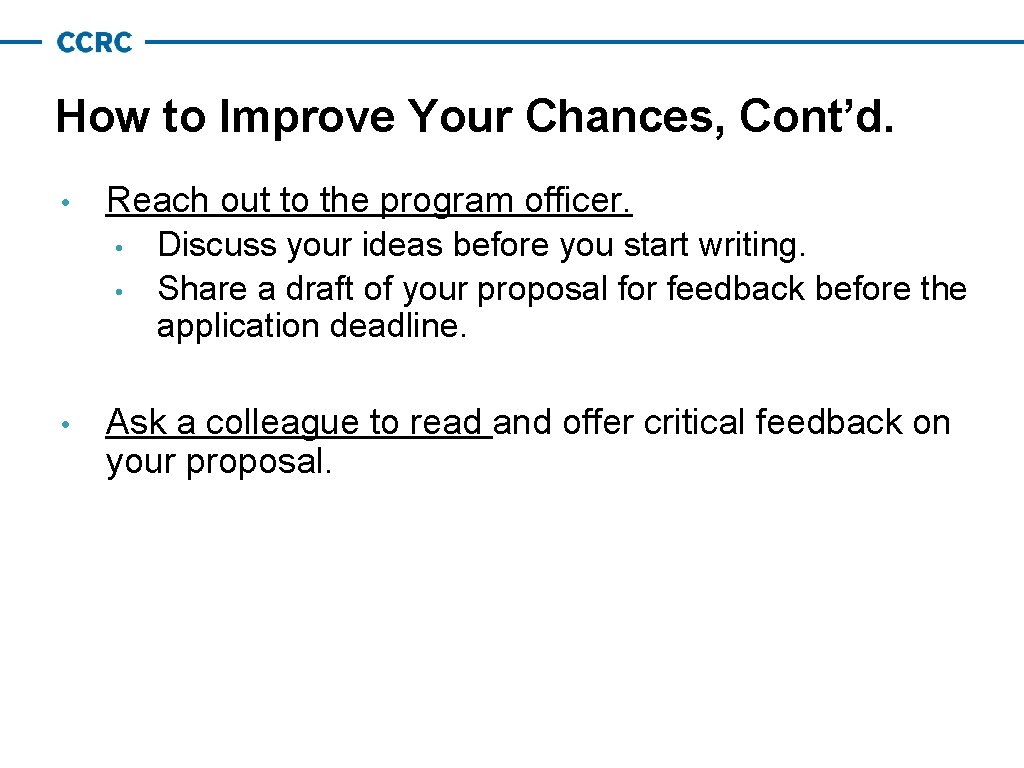
How to Improve Your Chances, Cont’d. • Reach out to the program officer. • • • Discuss your ideas before you start writing. Share a draft of your proposal for feedback before the application deadline. Ask a colleague to read and offer critical feedback on your proposal.
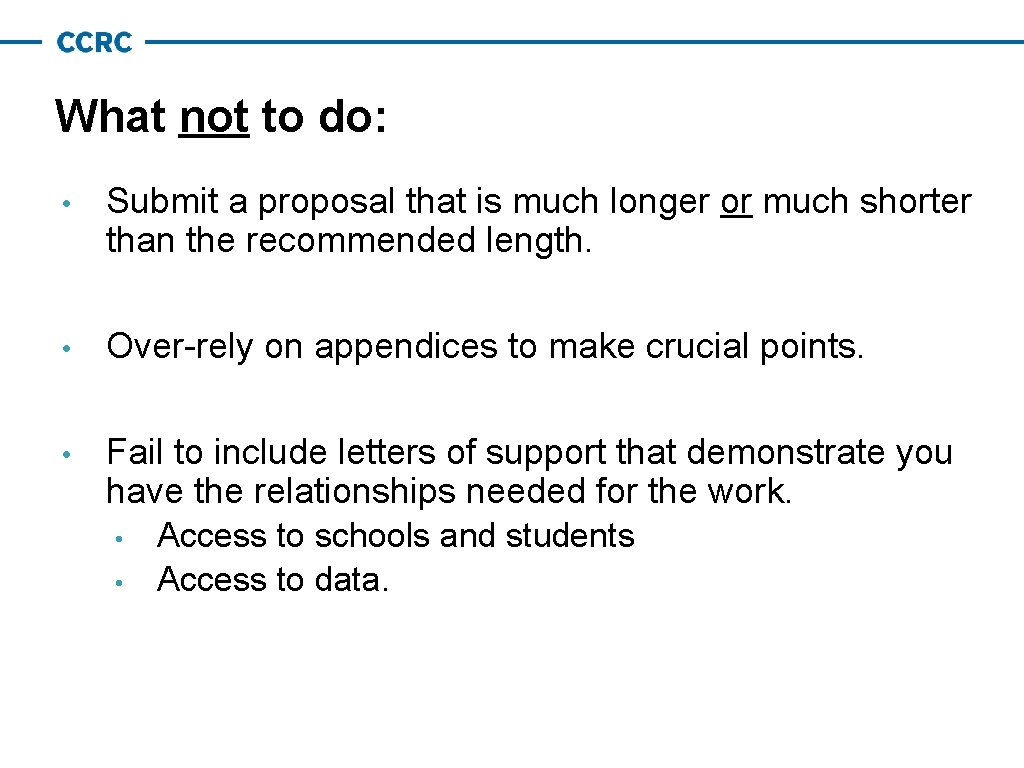
What not to do: • Submit a proposal that is much longer or much shorter than the recommended length. • Over-rely on appendices to make crucial points. • Fail to include letters of support that demonstrate you have the relationships needed for the work. • • Access to schools and students Access to data.
Other tips: • Watch the IES webinars for new applicants • Request copies of recently-funded proposals in your area through the Freedom of Information Act • • Enter search: “FOIA U. S. Department of Education” Ask to be an IES reviewer • Anne Riccuiti, Deputy Director for Science: anne. riccuiti@ed. gov
Thank you!