
IENE 6 Contemporary large migration waves into Europe
- Slides: 48
IENE 6 - Contemporary large migration waves into Europe: Enabling health workers to provide psychological support to migrants and refugees and develop strategies for dealing with their own emotional needs. ERASMUS+ Programme –Key Action 2: Strategic partnerships PSYCHOLOGICAL FIRST AID QUIDE FOR FIELD WORKERS A CASE STUDY Elena Nikolaidou, Christiana Kouta, Elena Rousou
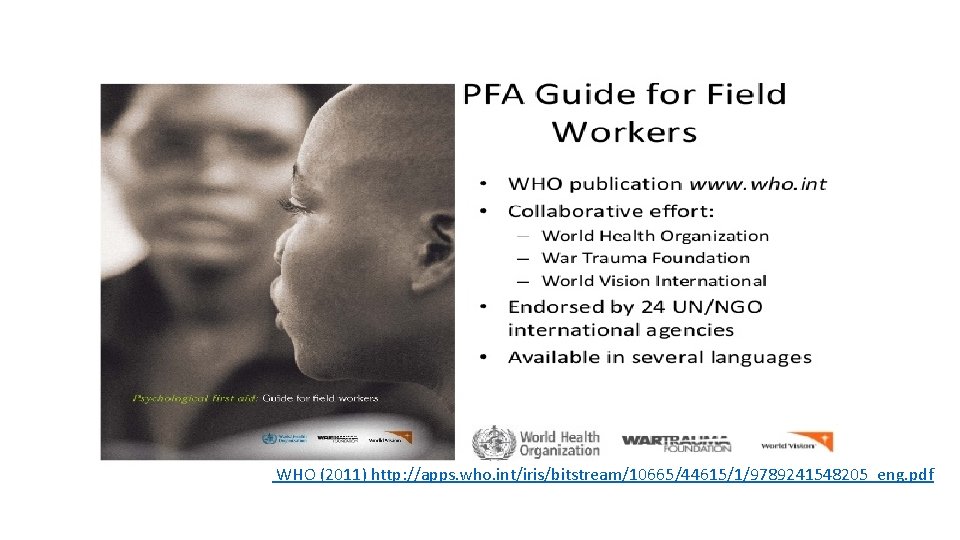
WHO (2011) http: //apps. who. int/iris/bitstream/10665/44615/1/9789241548205_eng. pdf
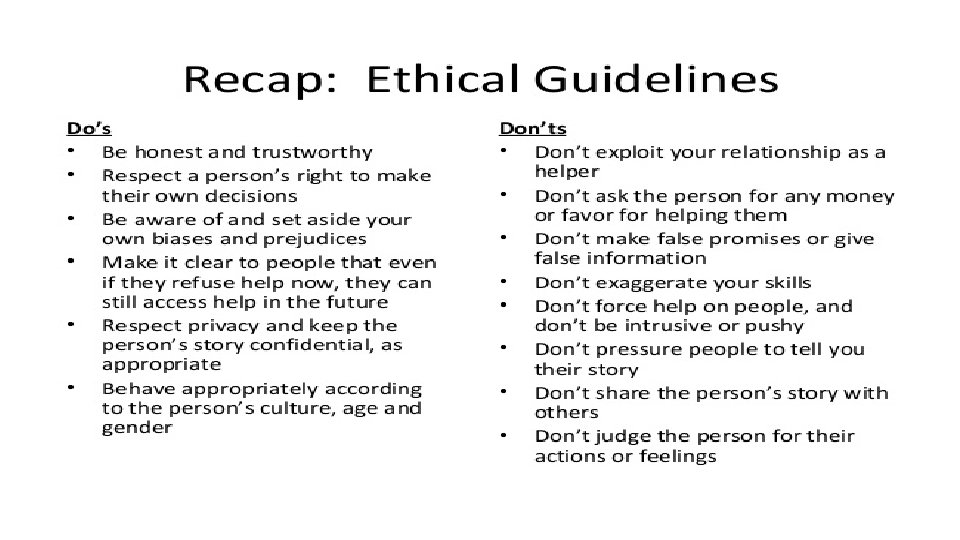
Psychological First Aid: Guide for Field Workers • This guide covers psychological first aid which involves humane, supportive and practical help to fellow human beings suffering serious crisis events • It is written for people in a position to help others who have experienced an extremely distressing event • It gives a framework for supporting people in ways that respect their dignity, culture and abilities • It covers both social and psychological support • However, not everyone who experiences a crisis event will need or want PFA • Do not force help on people who do not want it, but make yourself easily available to those who may want support. http: //apps. who. int/iris/bitstream/10665/44615/1/9789241548205_eng. pdf
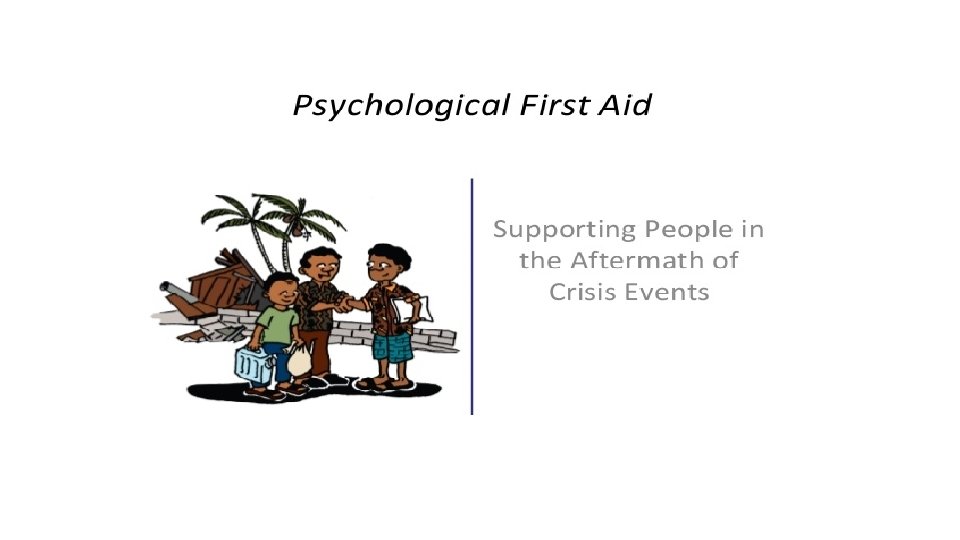
Psychological First Aid (PFA) • It is an alternative to psychological debriefing • Psychological first aid, rather than psychological debriefing, should be offered to people in severe distress after being recently exposed to a traumatic event (WHO, 2009) • “Psychological first aid (PFA) describes a humane, supportive response to a fellow human being who is suffering and who may need support” Sphere (2011), IASC (2007)
WHAT PFA IS NOT • It is not something that only professionals can do. • It is not professional counselling. • It is not “psychological debriefing” in that PFA does not necessarily involve a detailed discussion of the event that caused the distress. • It is not asking someone to analyse what happened to them or to put time and events in order • Although PFA involves being available to listen to people’s stories, it is not about pressuring people to tell you their feelings and reactions to an event.
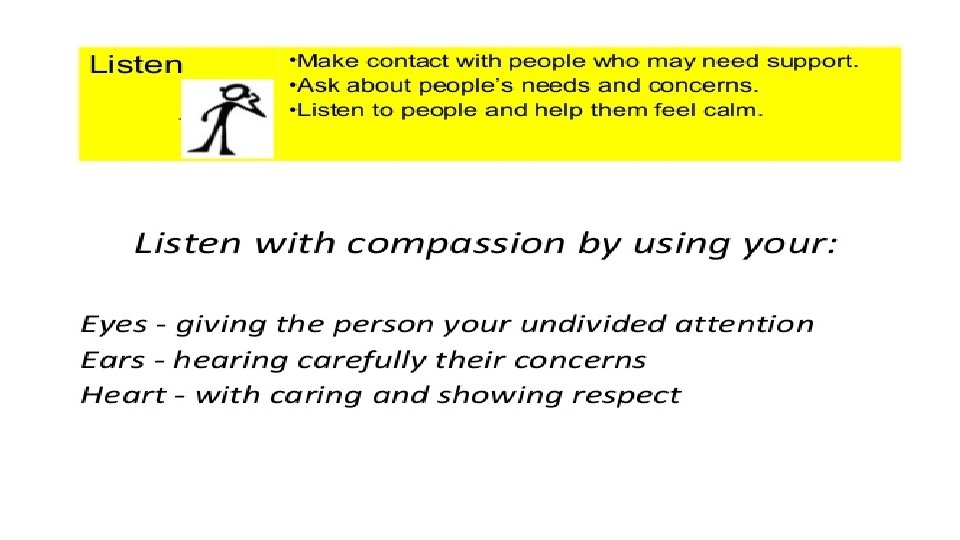
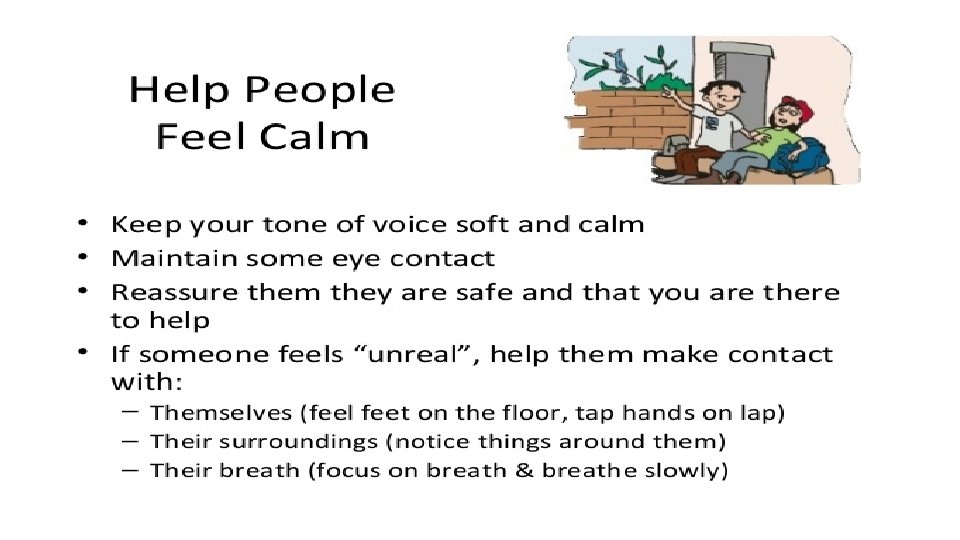
PFA involves the following themes • Providing practical care and support, which does not intrude • Assessing needs and concerns • Helping people to address basic needs (for example, food and water, information) • Listening to people, but not pressuring them to talk • Comforting people and helping them to feel calm • Helping people connect to information, services and social supports • Protecting people from further harm
PFA: WHEN? • After a recently crisis event • At the first contact with very distressed people, usually during or immediately after an event • However, it may sometimes be days or weeks after, depending on how long the event lasted and how severe it was.
CRISIS EVENTS • War • Natural disasters • Accidents • Fires • Interpersonal violence, for example, sexual violence • Individuals, families or entire communities may be affected. • People may lose their homes or loved ones, be separated from family and community, or may witness violence, destruction or death
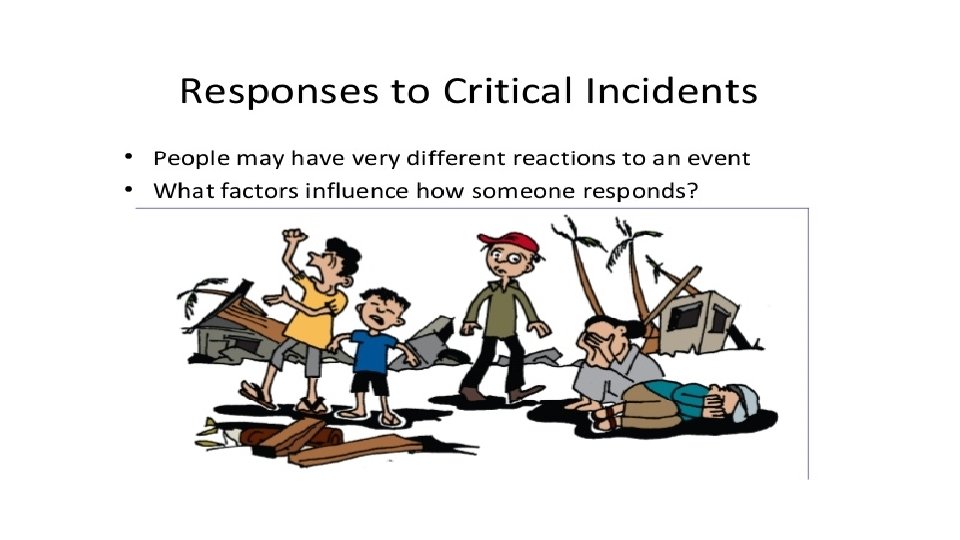
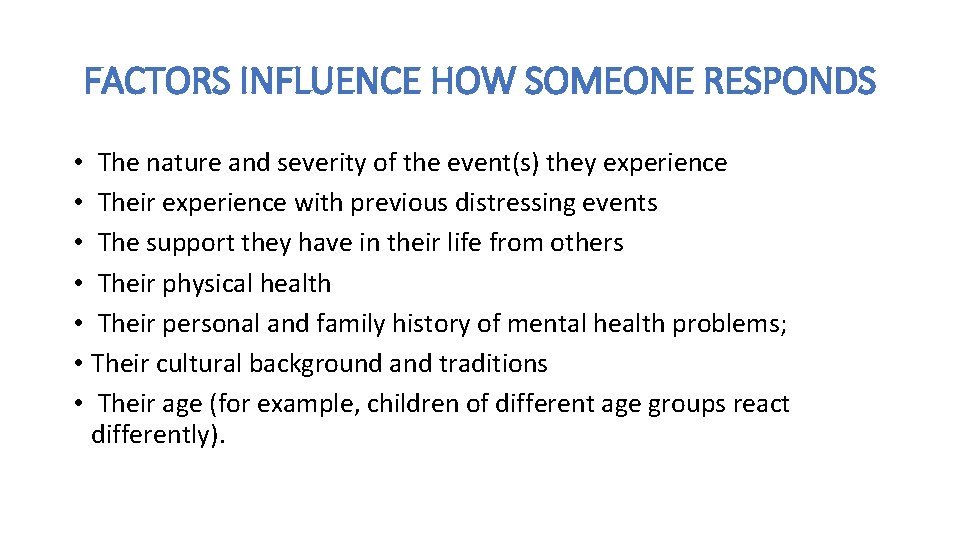
FACTORS INFLUENCE HOW SOMEONE RESPONDS • The nature and severity of the event(s) they experience • Their experience with previous distressing events • The support they have in their life from others • Their physical health • Their personal and family history of mental health problems; • Their cultural background and traditions • Their age (for example, children of different age groups react differently).
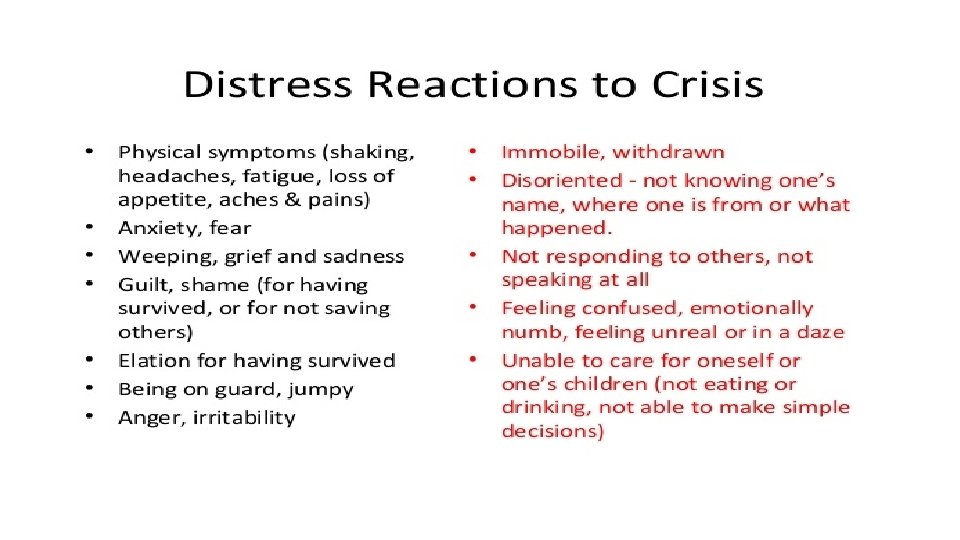
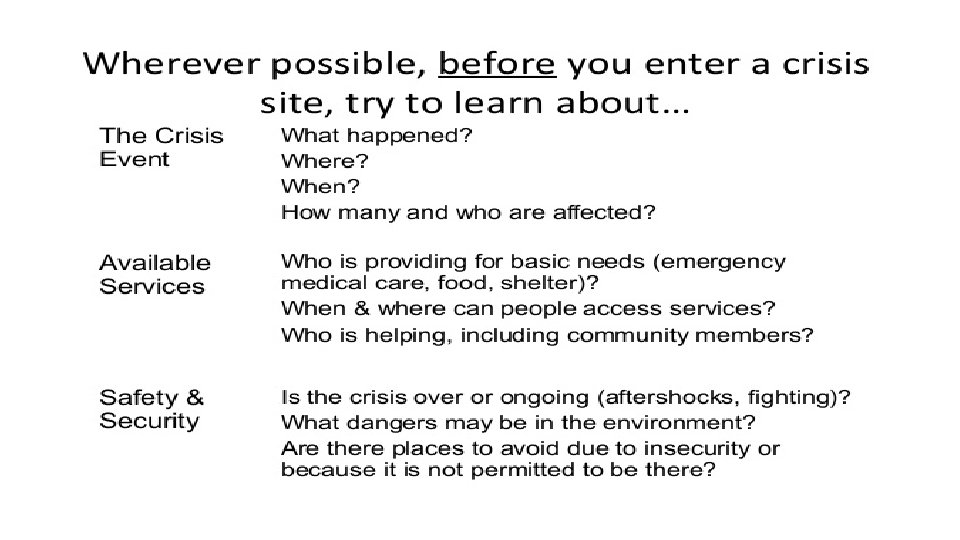
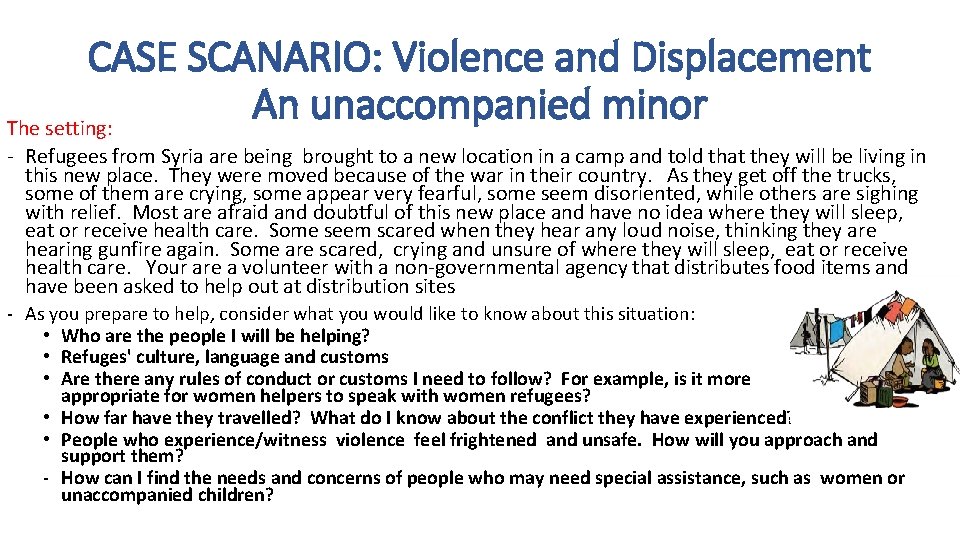
CASE SCANARIO: Violence and Displacement An unaccompanied minor The setting: - Refugees from Syria are being brought to a new location in a camp and told that they will be living in this new place. They were moved because of the war in their country. As they get off the trucks, some of them are crying, some appear very fearful, some seem disoriented, while others are sighing with relief. Most are afraid and doubtful of this new place and have no idea where they will sleep, eat or receive health care. Some seem scared when they hear any loud noise, thinking they are hearing gunfire again. Some are scared, crying and unsure of where they will sleep, eat or receive health care. Your are a volunteer with a non-governmental agency that distributes food items and have been asked to help out at distribution sites - As you prepare to help, consider what you would like to know about this situation: • Who are the people I will be helping? • Refuges' culture, language and customs • Are there any rules of conduct or customs I need to follow? For example, is it more appropriate for women helpers to speak with women refugees? • How far have they travelled? What do I know about the conflict they have experienced? • People who experience/witness violence feel frightened and unsafe. How will you approach and support them? - How can I find the needs and concerns of people who may need special assistance, such as women or unaccompanied children?
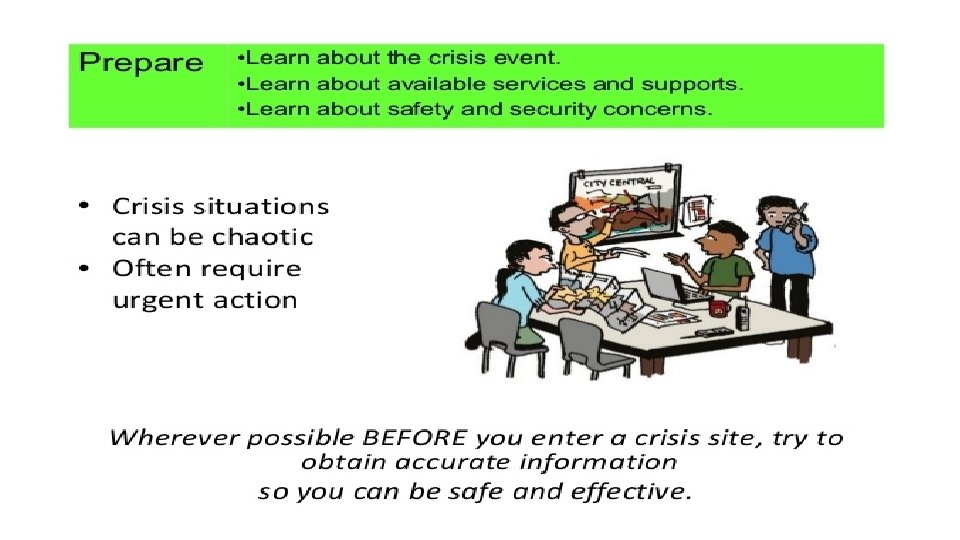
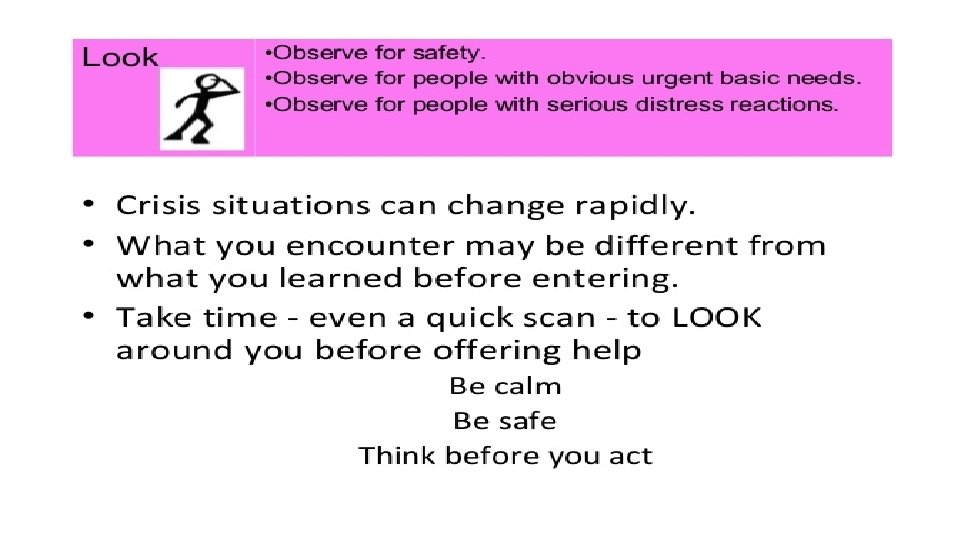
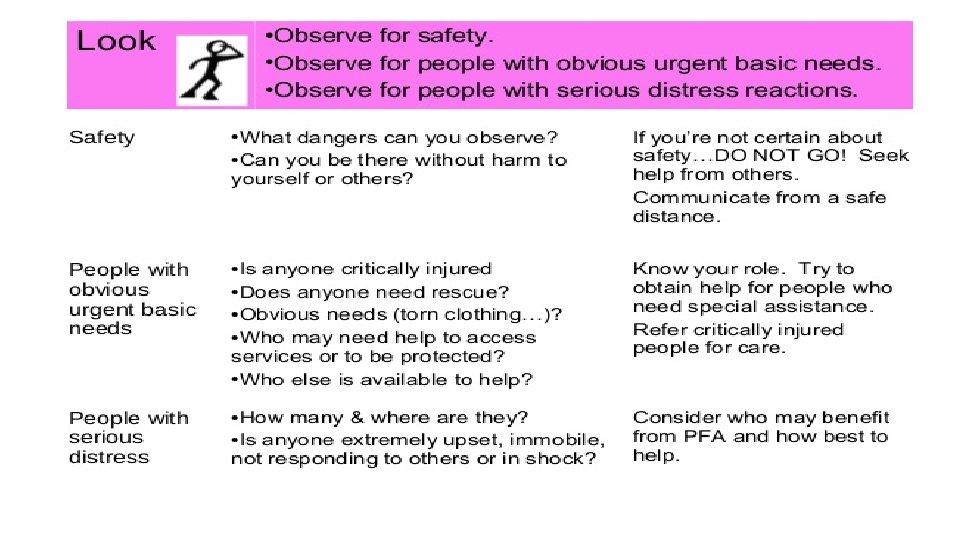
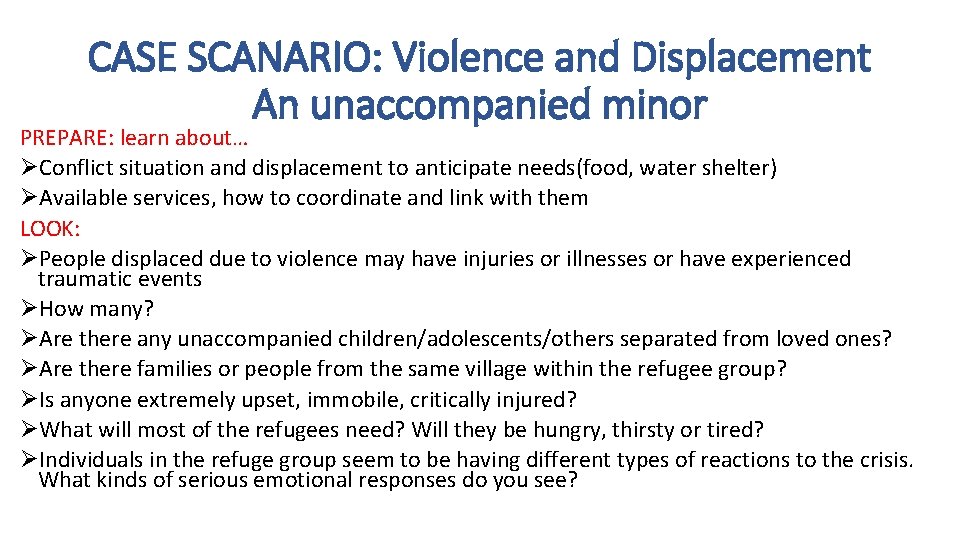
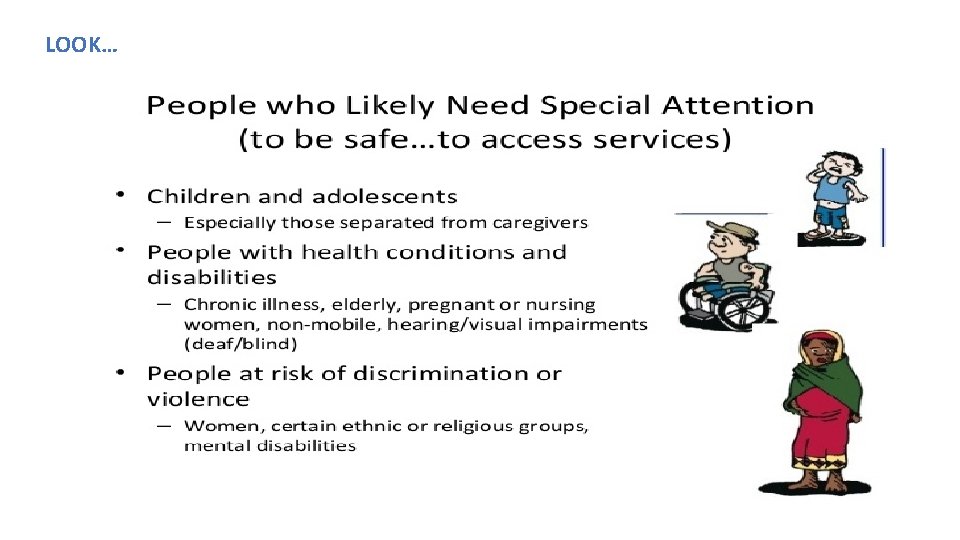
CASE SCANARIO: Violence and Displacement An unaccompanied minor PREPARE: learn about… ØConflict situation and displacement to anticipate needs(food, water shelter) ØAvailable services, how to coordinate and link with them LOOK: ØPeople displaced due to violence may have injuries or illnesses or have experienced traumatic events ØHow many? ØAre there any unaccompanied children/adolescents/others separated from loved ones? ØAre there families or people from the same village within the refugee group? ØIs anyone extremely upset, immobile, critically injured? ØWhat will most of the refugees need? Will they be hungry, thirsty or tired? ØIndividuals in the refuge group seem to be having different types of reactions to the crisis. What kinds of serious emotional responses do you see?
LOOK…
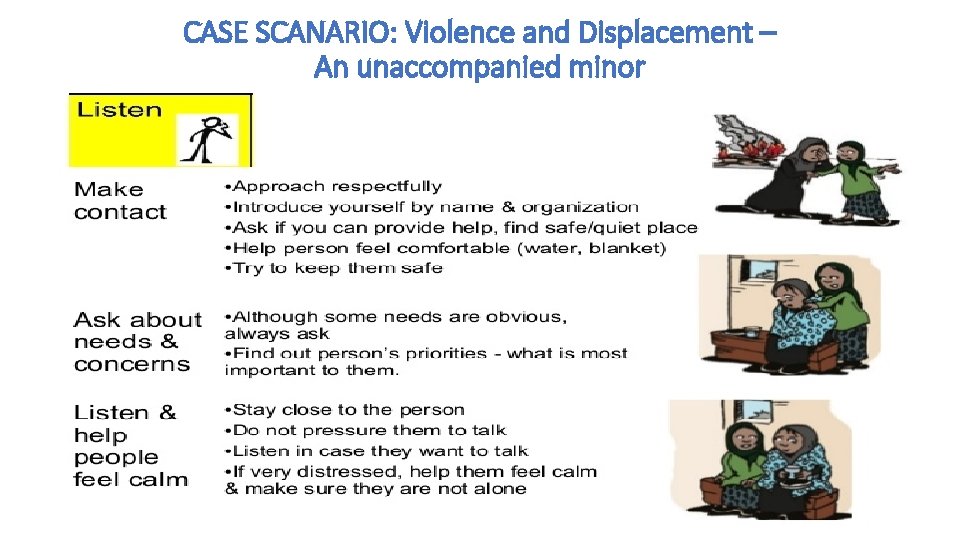
CASE SCANARIO: Violence and Displacement – An unaccompanied minor
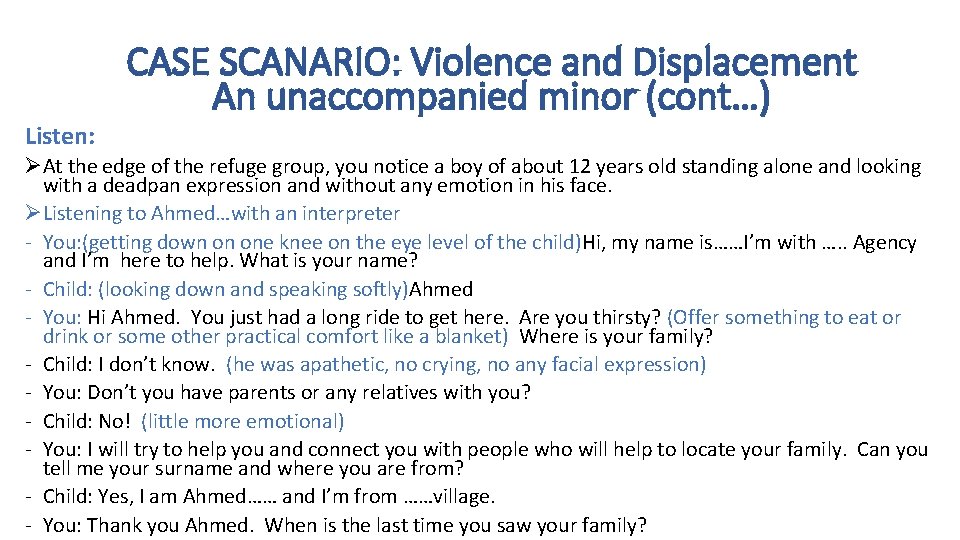
Listen: CASE SCANARIO: Violence and Displacement An unaccompanied minor (cont…) ØAt the edge of the refuge group, you notice a boy of about 12 years old standing alone and looking with a deadpan expression and without any emotion in his face. ØListening to Ahmed…with an interpreter - You: (getting down on one knee on the eye level of the child)Hi, my name is……I’m with …. . Agency and I’m here to help. What is your name? - Child: (looking down and speaking softly)Ahmed - You: Hi Ahmed. You just had a long ride to get here. Are you thirsty? (Offer something to eat or drink or some other practical comfort like a blanket) Where is your family? - Child: I don’t know. (he was apathetic, no crying, no any facial expression) - You: Don’t you have parents or any relatives with you? - Child: No! (little more emotional) - You: I will try to help you and connect you with people who will help to locate your family. Can you tell me your surname and where you are from? - Child: Yes, I am Ahmed…… and I’m from ……village. - You: Thank you Ahmed. When is the last time you saw your family?
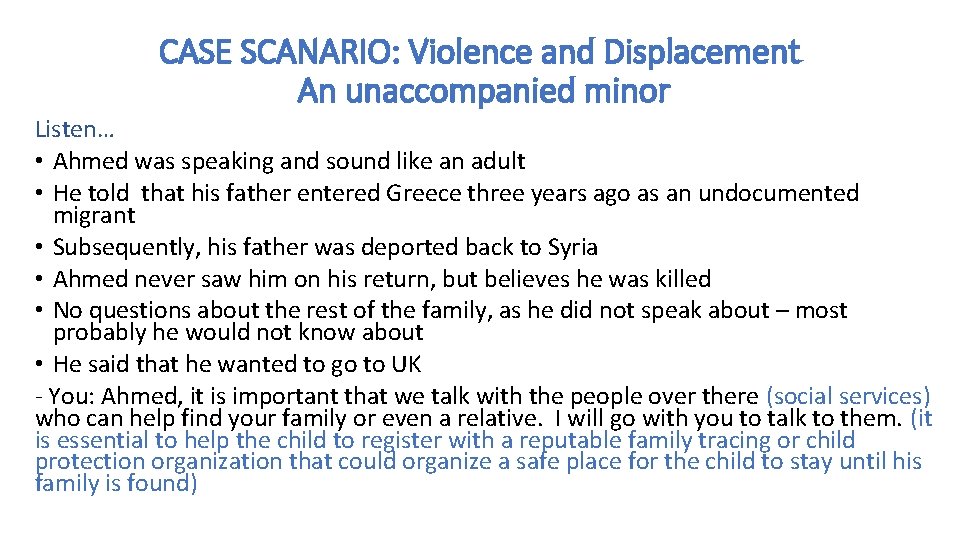
CASE SCANARIO: Violence and Displacement An unaccompanied minor Listen… • Ahmed was speaking and sound like an adult • He told that his father entered Greece three years ago as an undocumented migrant • Subsequently, his father was deported back to Syria • Ahmed never saw him on his return, but believes he was killed • No questions about the rest of the family, as he did not speak about – most probably he would not know about • He said that he wanted to go to UK - You: Ahmed, it is important that we talk with the people over there (social services) who can help find your family or even a relative. I will go with you to talk to them. (it is essential to help the child to register with a reputable family tracing or child protection organization that could organize a safe place for the child to stay until his family is found)
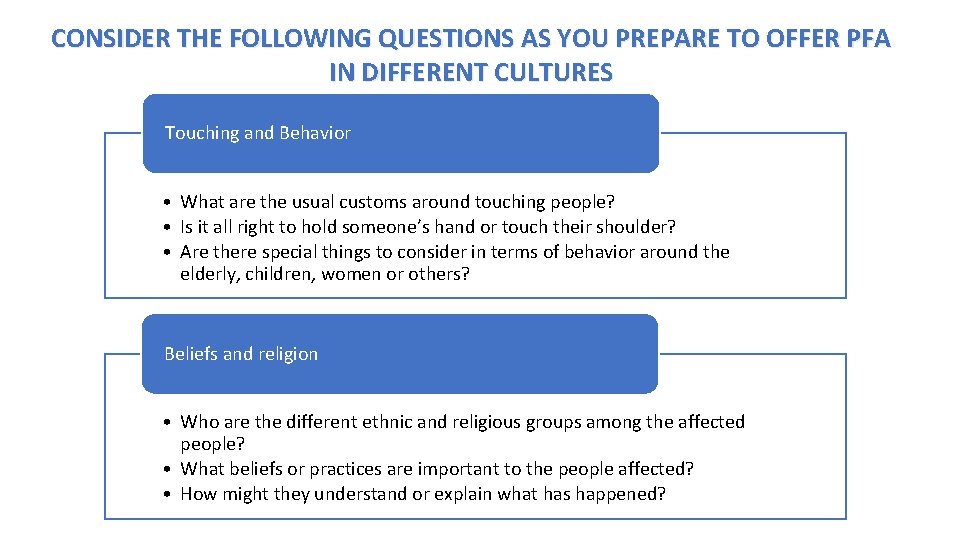
CONSIDER THE FOLLOWING QUESTIONS AS YOU PREPARE TO OFFER PFA IN DIFFERENT CULTURES Touching and Behavior • What are the usual customs around touching people? • Is it all right to hold someone’s hand or touch their shoulder? • Are there special things to consider in terms of behavior around the elderly, children, women or others? Beliefs and religion • Who are the different ethnic and religious groups among the affected people? • What beliefs or practices are important to the people affected? • How might they understand or explain what has happened?
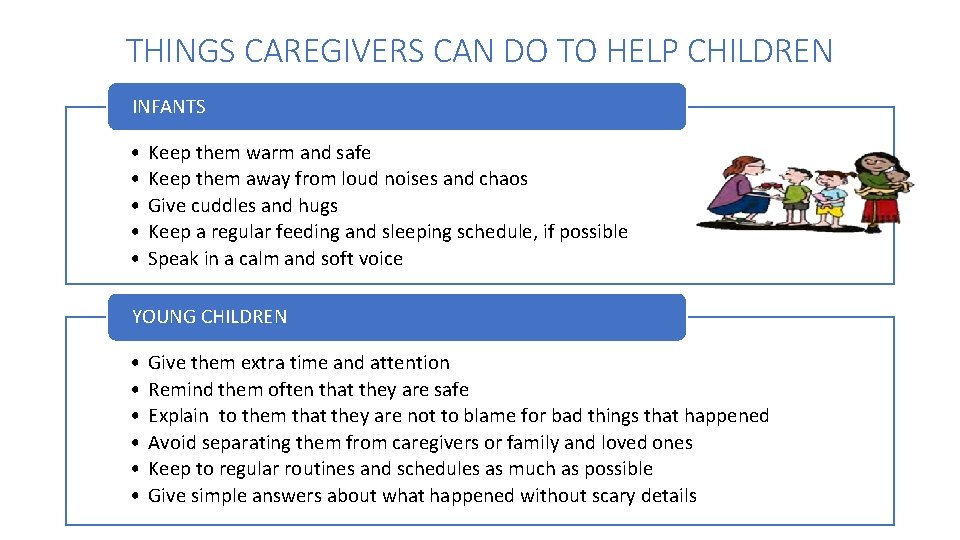
THINGS CAREGIVERS CAN DO TO HELP CHILDREN INFANTS • • • Keep them warm and safe Keep them away from loud noises and chaos Give cuddles and hugs Keep a regular feeding and sleeping schedule, if possible Speak in a calm and soft voice YOUNG CHILDREN • • • Give them extra time and attention Remind them often that they are safe Explain to them that they are not to blame for bad things that happened Avoid separating them from caregivers or family and loved ones Keep to regular routines and schedules as much as possible Give simple answers about what happened without scary details
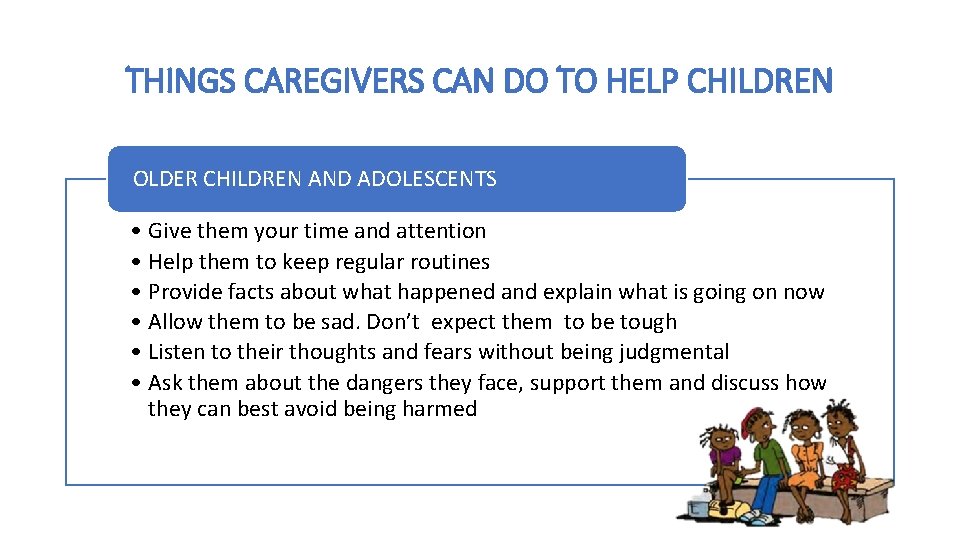
THINGS CAREGIVERS CAN DO TO HELP CHILDREN OLDER CHILDREN AND ADOLESCENTS • Give them your time and attention • Help them to keep regular routines • Provide facts about what happened and explain what is going on now • Allow them to be sad. Don’t expect them to be tough • Listen to their thoughts and fears without being judgmental • Ask them about the dangers they face, support them and discuss how they can best avoid being harmed
THINGS TO SAY AND DO FOR CHILDREN Keep together with loved ones Keep safe • Keep them together with their caregivers and family whenever possible. Try not to let them separated • When unaccompanied, link them with a trustworthy child protection network or agency • Don’t leave the child unattended • If no child protection agency is available, take steps yourself to find their caregivers or to contact other family who can care for them • Protect them from being exposed to any gruesome scenes like injured people or terrible destruction • Protect them from hearing upsetting stories about the event • Protect them from the media or from people who want to interview them who are not part of the emergency responses
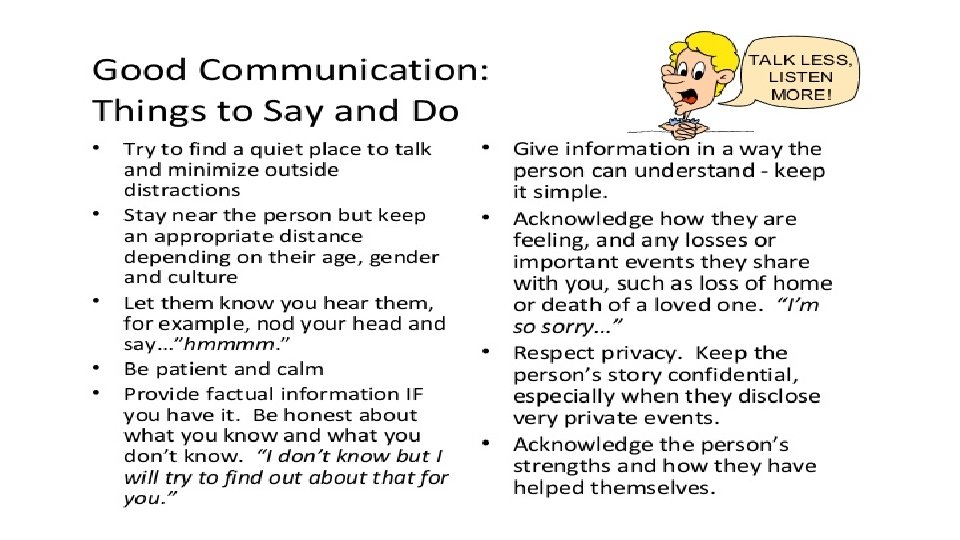
THINGS TO SAY AND DO FOR CHILDREN Listen, talk and play • Be calm, talk softly and be kind • Listen to children’s views on their situation • Try to talk with them on their eye level and use words and explanations they can understand • Introduce yourself by name and let them know you are there to help • Find out their name, where they are from and any information you can in order to help find their caregivers and other family members • When the are with their caregivers, support the caregivers in taking care of their own children • If passing time with children, try to involve them to play activities or simple conversation about their interests according to their age
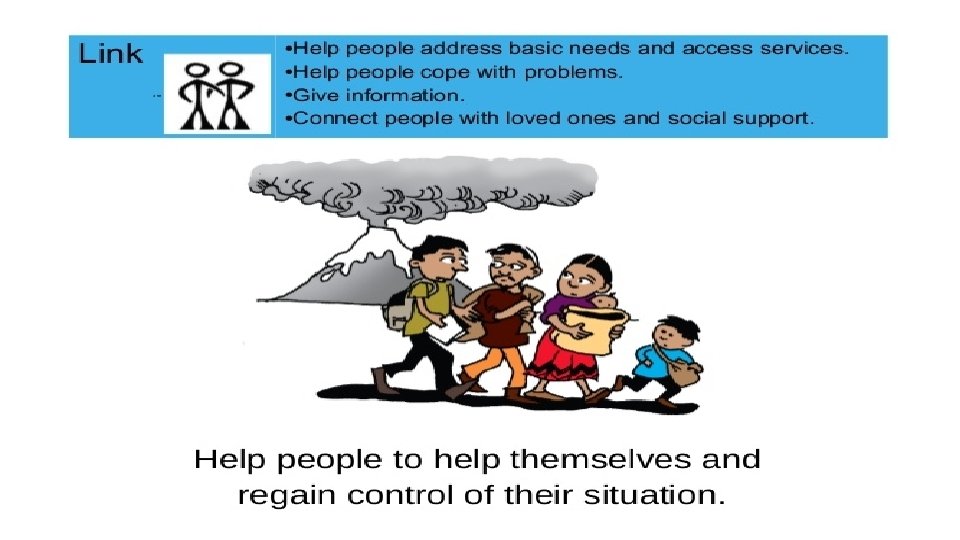
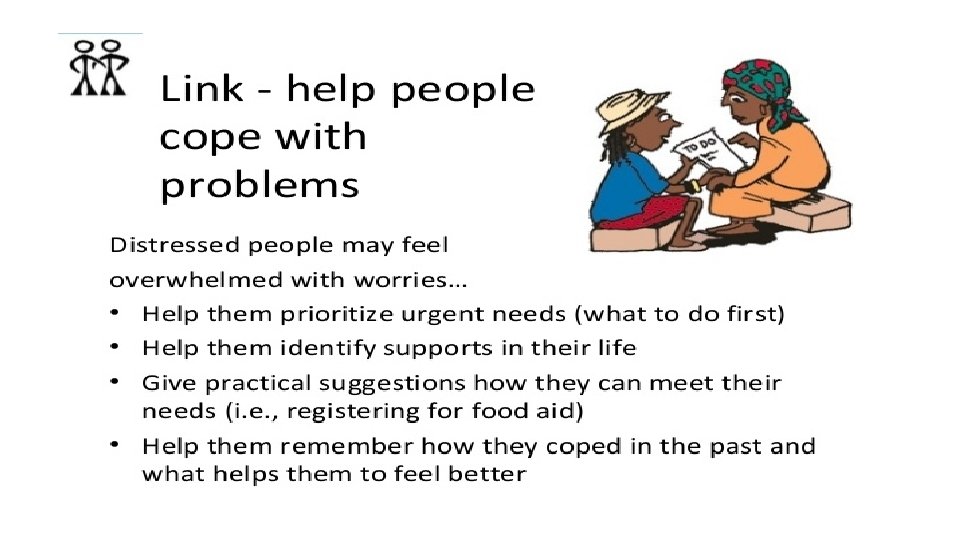
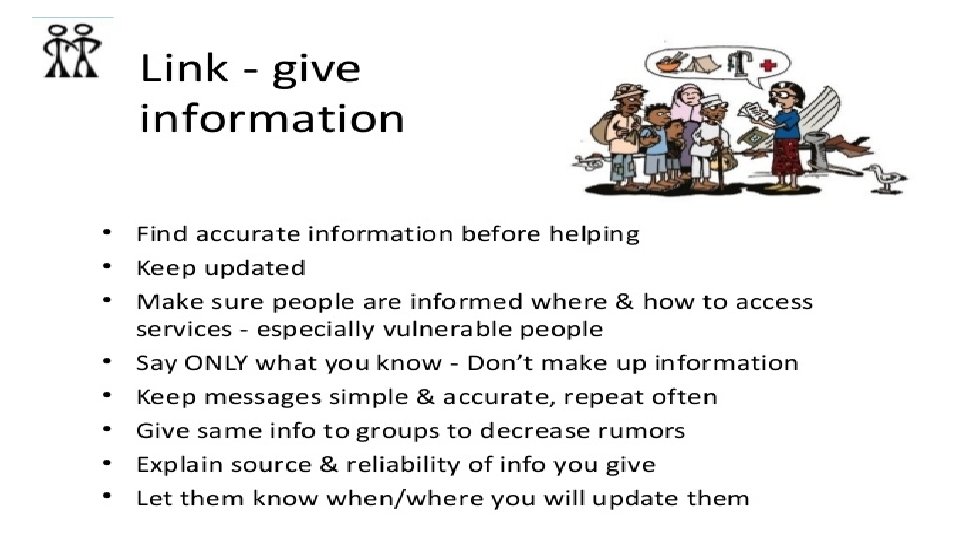
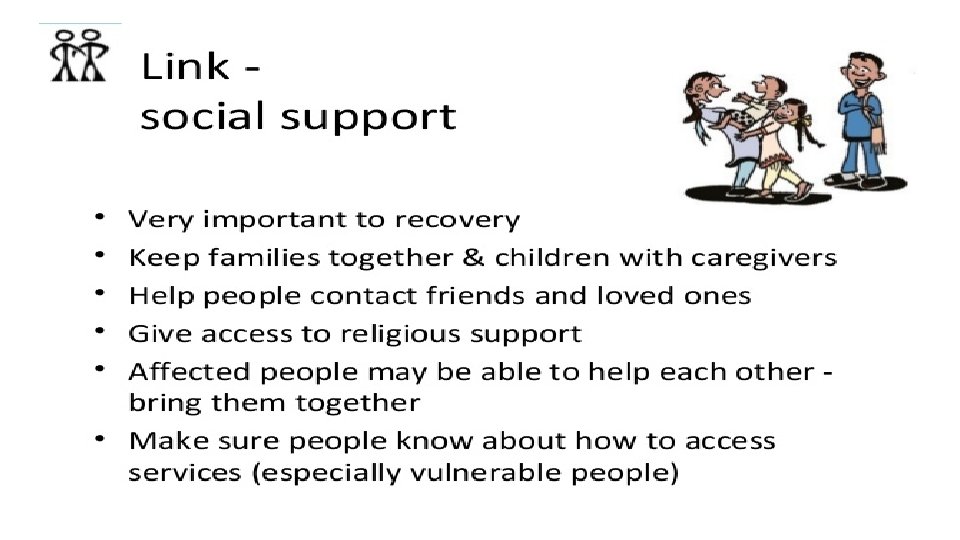
CASE SCANARIO: Violence and Displacement An unaccompanied minor Link… • It was important to satisfy the basic needs of Ahmed such as shelter, protection, food and water • What can I do to protect the child from further harm? How can I help link with loved ones and services? • It has been shown that people who feel they had good social support after a crisis cope better than those who feel they were not well supported. Because of this, linking people with loved ones and social support is an important part of PFA • Social and Welfare services were available in that campus, so they should arrange a safe shelter for the child, until he could find his relatives • Help him to contact friends and relatives so they can get support; for example, provide a way for them to call loved ones • Use of social media, other non-governmental agencies
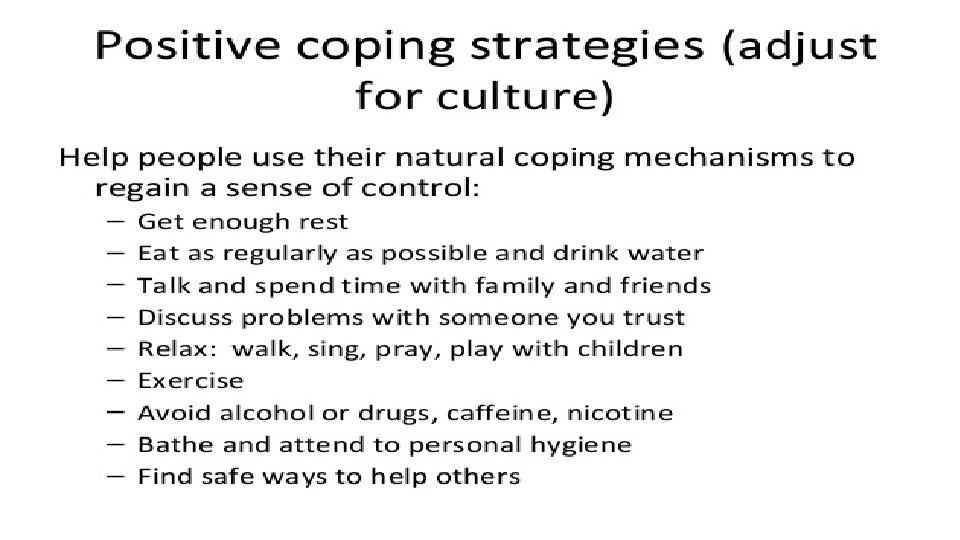
CASE SCANARIO: Violence and Displacement An unaccompanied minor Link: • If a person lets you know that prayer, religious practice or support from religious leaders might be helpful for them, try to connect them with their spiritual community • Help bring affected people together to help each other. For example, ask people to help care for the elderly, or link individuals without family to other community members. • Ask the person, what generally helps them to feel better. Encourage them to do things that help them to cope, including spiritual routines if they mention these. • Listen respectfully, and without judgment, to spiritual beliefs or questions the person may have • Children and adolescents are particular vulnerable in a crisis situation. • Children who are affected by crisis may be at risk of sexual violence, abuse and exploitation • How children react to a crisis depends on their age and developmental stage, and on the ways their caregivers and other adults interact with them. In general children cope better when they have a stable, calm adult around them.
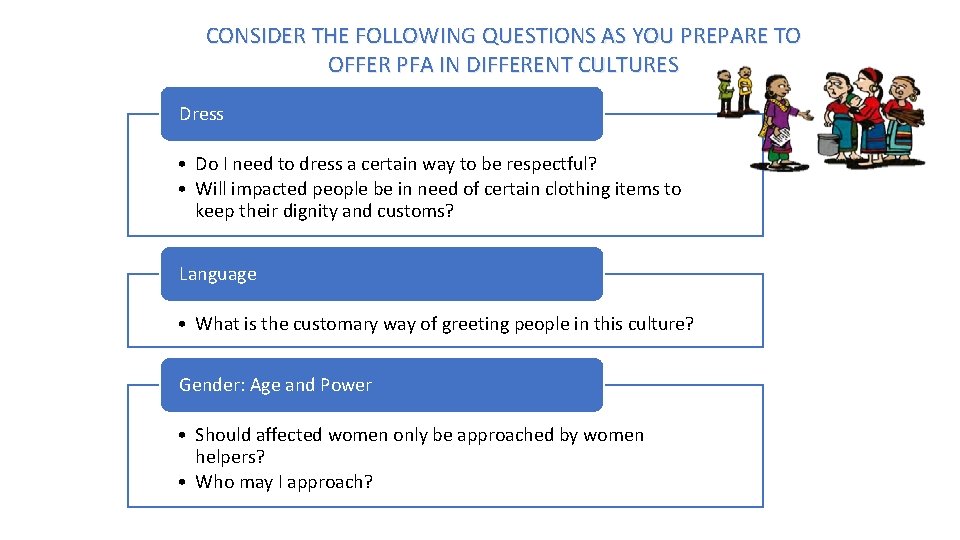
CONSIDER THE FOLLOWING QUESTIONS AS YOU PREPARE TO OFFER PFA IN DIFFERENT CULTURES Dress • Do I need to dress a certain way to be respectful? • Will impacted people be in need of certain clothing items to keep their dignity and customs? Language • What is the customary way of greeting people in this culture? Gender: Age and Power • Should affected women only be approached by women helpers? • Who may I approach?
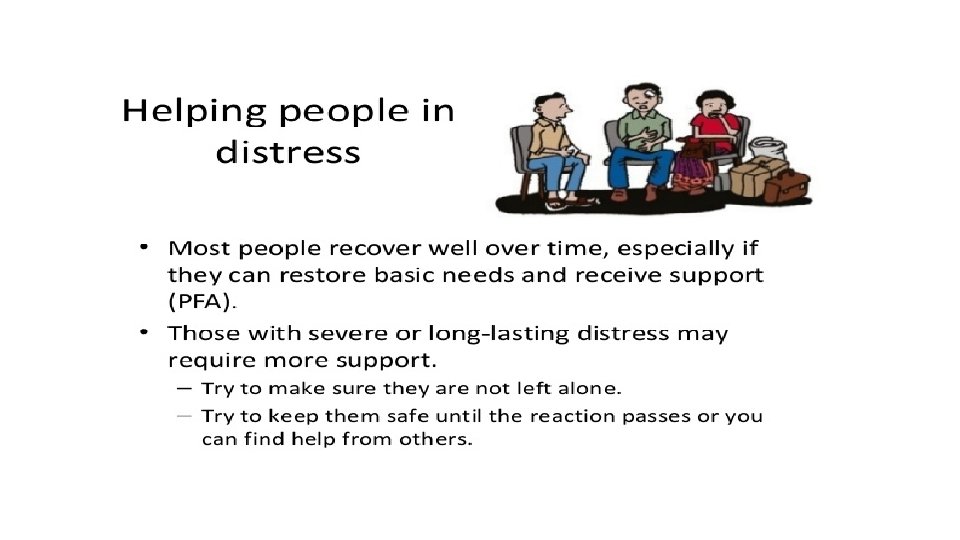
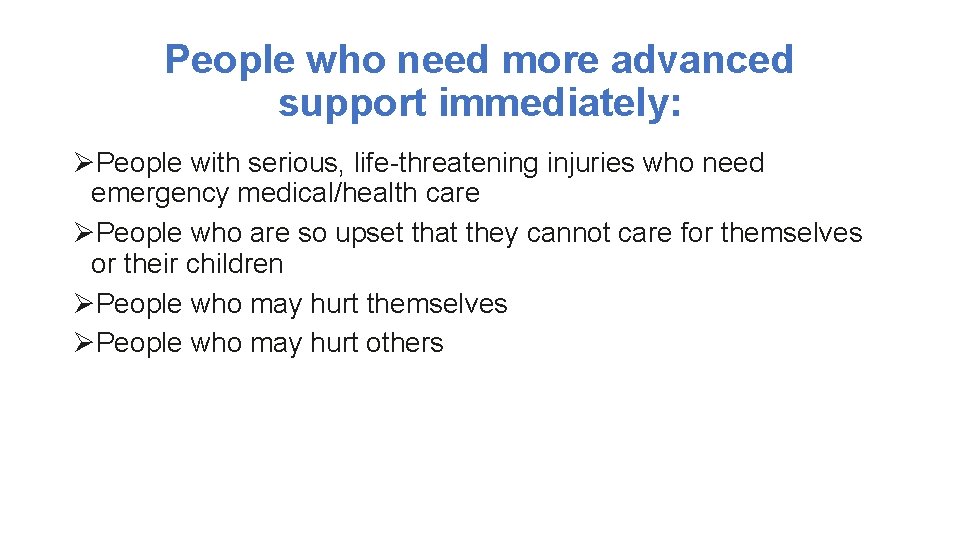
People who need more advanced support immediately: ØPeople with serious, life-threatening injuries who need emergency medical/health care ØPeople who are so upset that they cannot care for themselves or their children ØPeople who may hurt themselves ØPeople who may hurt others
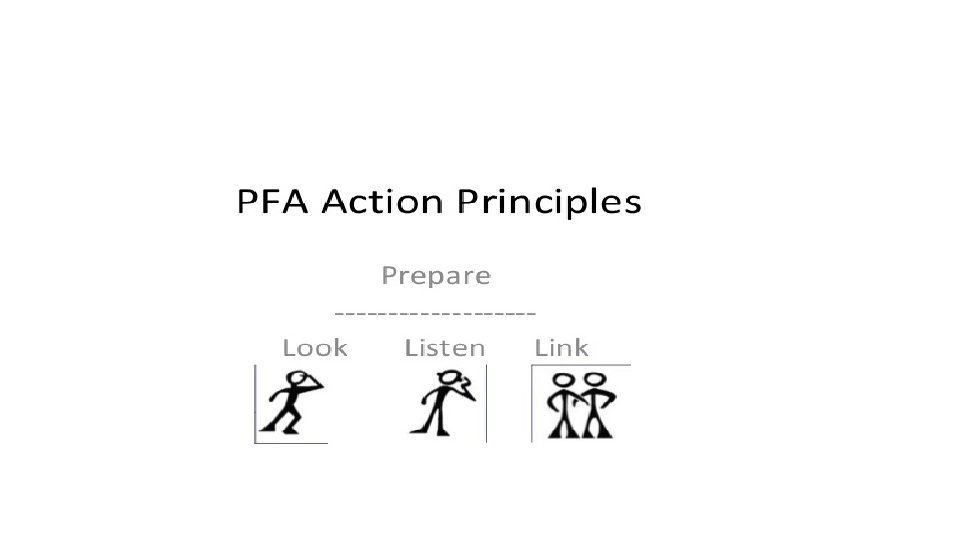
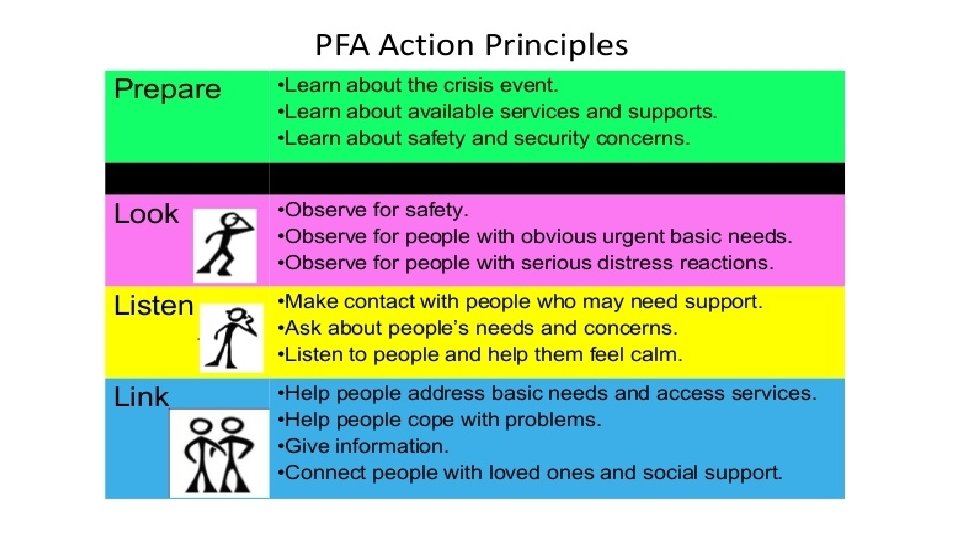
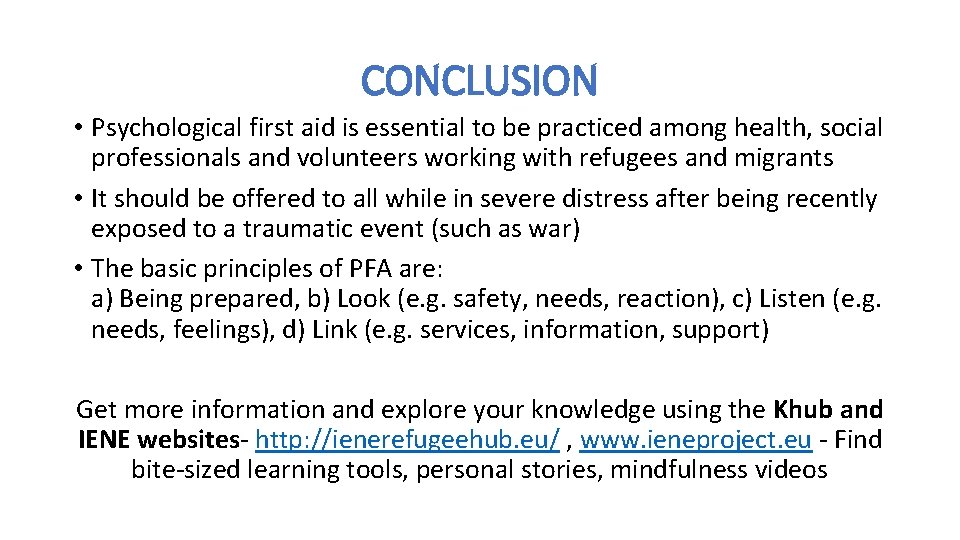
CONCLUSION • Psychological first aid is essential to be practiced among health, social professionals and volunteers working with refugees and migrants • It should be offered to all while in severe distress after being recently exposed to a traumatic event (such as war) • The basic principles of PFA are: a) Being prepared, b) Look (e. g. safety, needs, reaction), c) Listen (e. g. needs, feelings), d) Link (e. g. services, information, support) Get more information and explore your knowledge using the Khub and IENE websites- http: //ienerefugeehub. eu/ , www. ieneproject. eu - Find bite-sized learning tools, personal stories, mindfulness videos