
IEEE INFOCOM 2011 Miniconference Asynchronous Channel Hopping for
- Slides: 20
IEEE INFOCOM 2011 Mini-conference Asynchronous Channel Hopping for Establishing Rendezvous in Cognitive Radio Networks Kaigui Bian and Jung-Min “Jerry” Park Department of Electrical and Computer Engineering Virginia Tech {kgbian, jungmin}@vt. edu April 11, 2011 Shanghai, China 1
2 Outline n Cognitive Radio (CR) Networks n The Rendezvous Problem in CR Networks n Rendezvous Protocol using Asynchronous Channel Hopping (ACH) n Performance Evaluation n Conclusion ECE 5560, Fall 2006
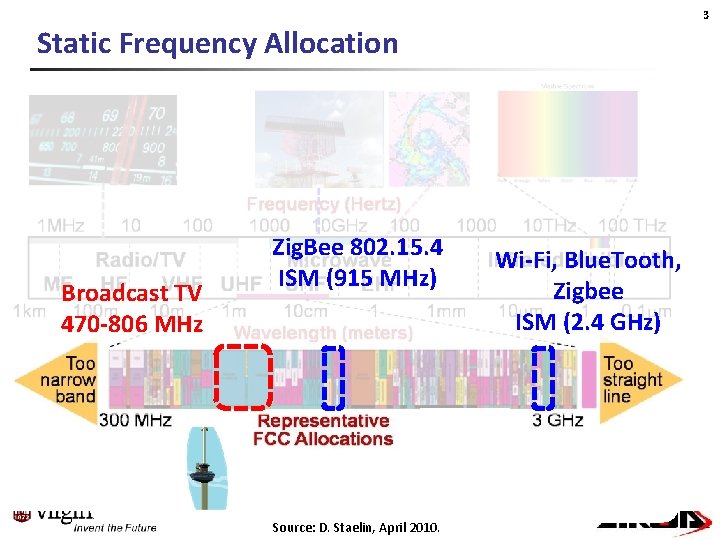
3 Static Frequency Allocation Broadcast TV 470 -806 MHz Zig. Bee 802. 15. 4 ISM (915 MHz) 5560, Fall Source: ECE D. Staelin, April 2006 2010. Wi-Fi, Blue. Tooth, Zigbee ISM (2. 4 GHz)
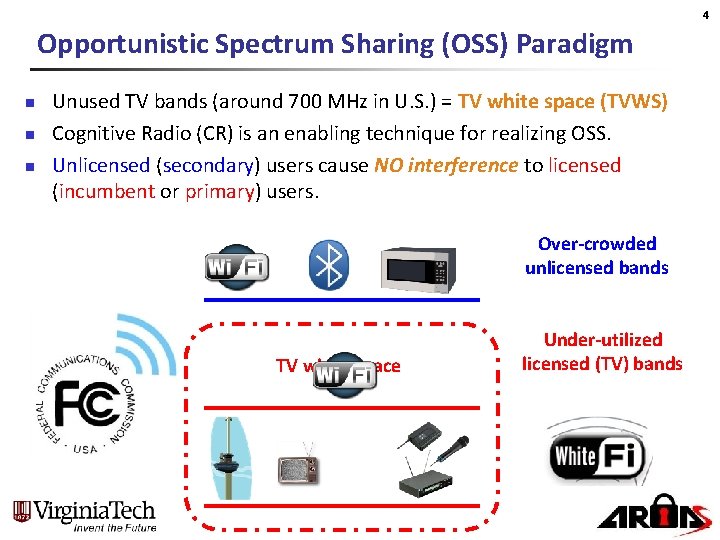
4 Opportunistic Spectrum Sharing (OSS) Paradigm n n n Unused TV bands (around 700 MHz in U. S. ) = TV white space (TVWS) Cognitive Radio (CR) is an enabling technique for realizing OSS. Unlicensed (secondary) users cause NO interference to licensed (incumbent or primary) users. Over-crowded unlicensed bands TV white space ECE 5560, Fall 2006 Under-utilized licensed (TV) bands
5 Outline n Cognitive Radio (CR) Networks n The Rendezvous Problem in CR Networks n Rendezvous Protocol using Asynchronous Channel Hopping (ACH) n Performance Evaluation n Conclusion ECE 5560, Fall 2006
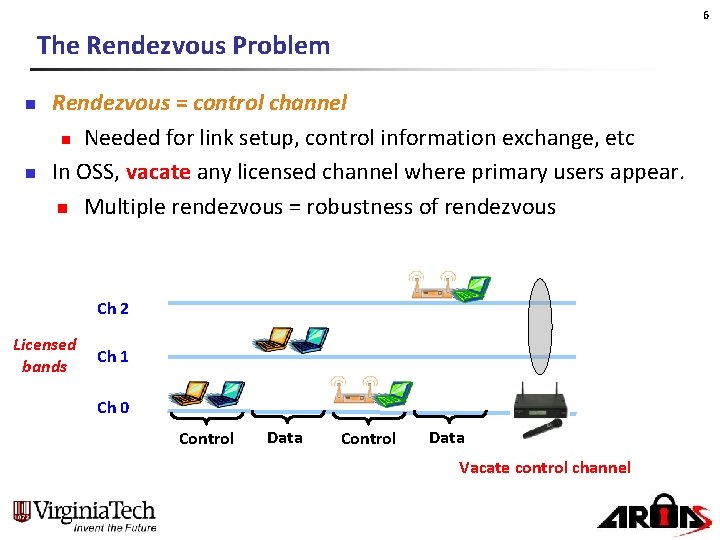
6 The Rendezvous Problem n n Rendezvous = control channel n Needed for link setup, control information exchange, etc In OSS, vacate any licensed channel where primary users appear. n Multiple rendezvous = robustness of rendezvous Ch 2 Licensed bands Ch 1 Ch 0 Control Data Vacate control channel ECE 5560, Fall 2006
7 Outline n Cognitive Radio (CR) Networks n The Rendezvous Problem in CR Networks n Rendezvous Protocol using Asynchronous Channel Hopping (ACH) n Performance Evaluation n Conclusion ECE 5560, Fall 2006
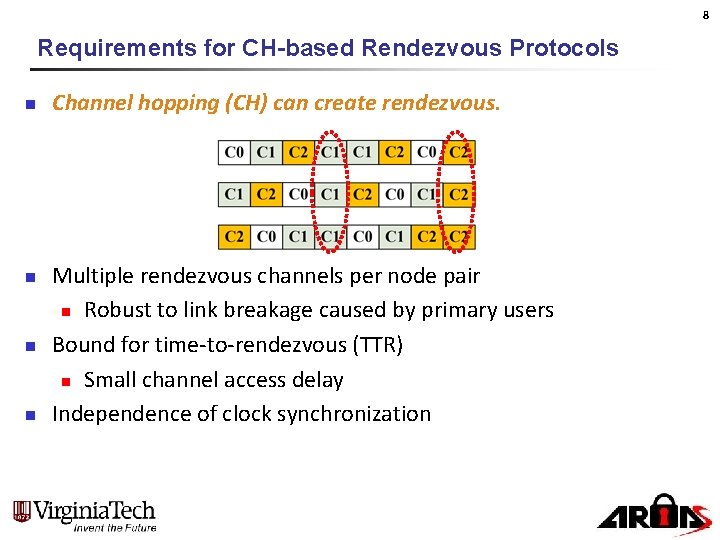
8 Requirements for CH-based Rendezvous Protocols n n Channel hopping (CH) can create rendezvous. Multiple rendezvous channels per node pair n Robust to link breakage caused by primary users Bound for time-to-rendezvous (TTR) n Small channel access delay Independence of clock synchronization ECE 5560, Fall 2006
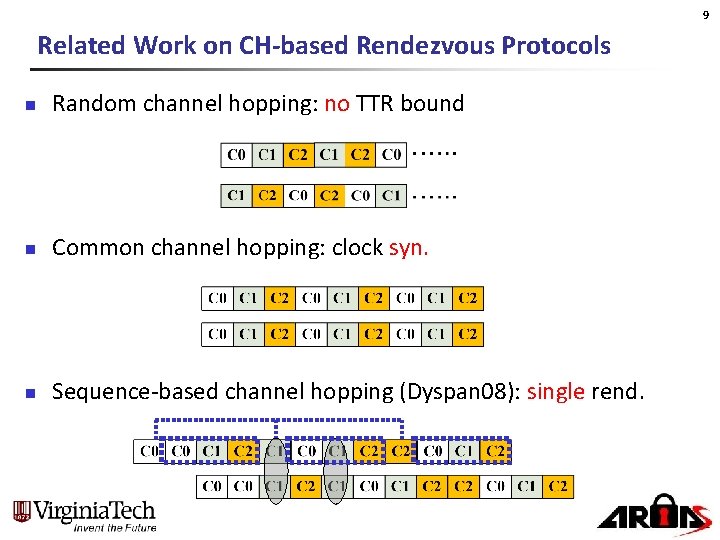
9 Related Work on CH-based Rendezvous Protocols n Random channel hopping: no TTR bound n Common channel hopping: clock syn. n Sequence-based channel hopping (Dyspan 08): single rend. ECE 5560, Fall 2006
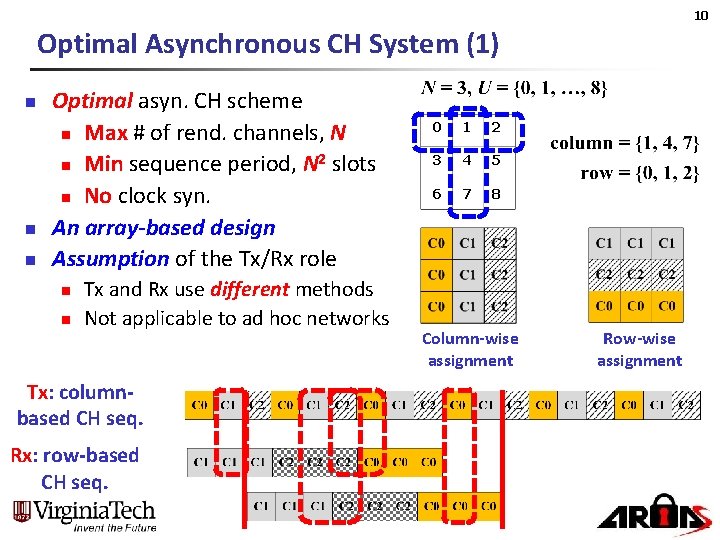
10 Optimal Asynchronous CH System (1) n n n Optimal asyn. CH scheme n Max # of rend. channels, N 2 n Min sequence period, N slots n No clock syn. An array-based design Assumption of the Tx/Rx role n n Tx and Rx use different methods Not applicable to ad hoc networks 0 1 2 3 4 5 6 7 8 Column-wise assignment Tx: columnbased CH seq. Rx: row-based CH seq. ECE 5560, Fall 2006 Row-wise assignment
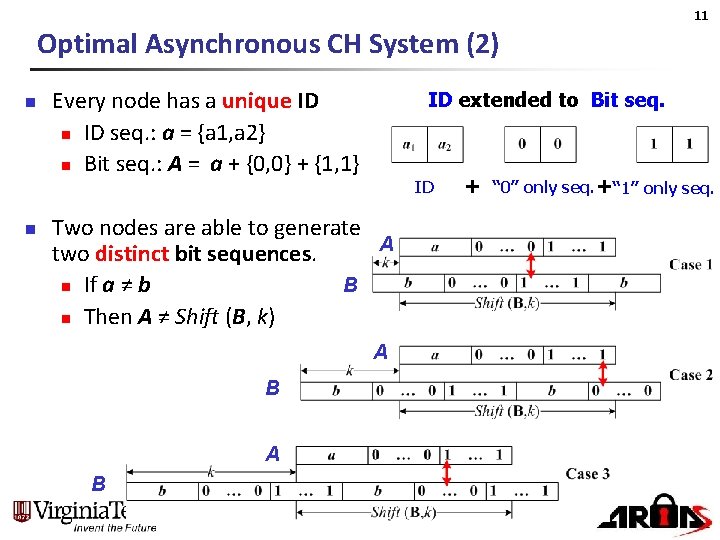
11 Optimal Asynchronous CH System (2) n n Every node has a unique ID n ID seq. : a = {a 1, a 2} n Bit seq. : A = a + {0, 0} + {1, 1} ID extended to Bit seq. ID Two nodes are able to generate A two distinct bit sequences. B n If a ≠ b n Then A ≠ Shift (B, k) A B ECE 5560, Fall 2006 + “ 0” only seq. +“ 1” only seq.
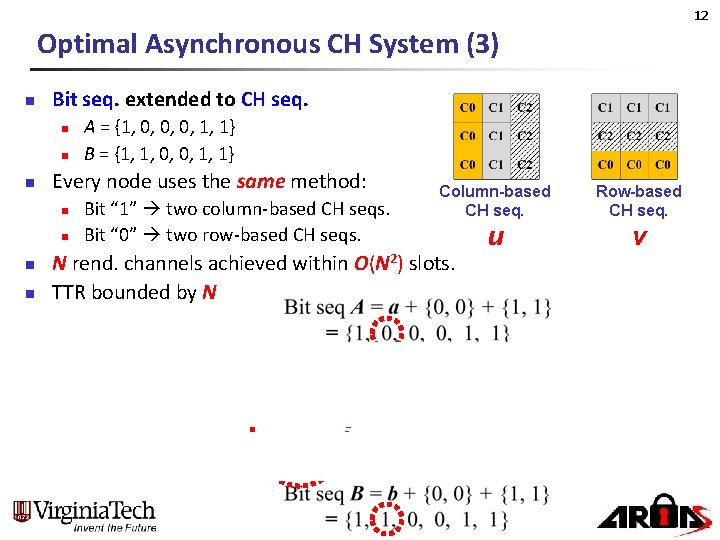
12 Optimal Asynchronous CH System (3) n Bit seq. extended to CH seq. n n n Every node uses the same method: n n A = {1, 0, 0, 0, 1, 1} B = {1, 1, 0, 0, 1, 1} Bit “ 1” two column-based CH seqs. Bit “ 0” two row-based CH seqs. Column-based CH seq. Row-based CH seq. u v N rend. channels achieved within O(N 2) slots. TTR bounded by N A Node 1’s CH seq. B Node 2’s CH seq. ECE 5560, Fall 2006
13 Outline n Cognitive Radio (CR) Networks n The Rendezvous Problem in CR Networks n Rendezvous Protocol using Asynchronous Channel Hopping (ACH) n Performance Evaluation n Conclusion ECE 5560, Fall 2006
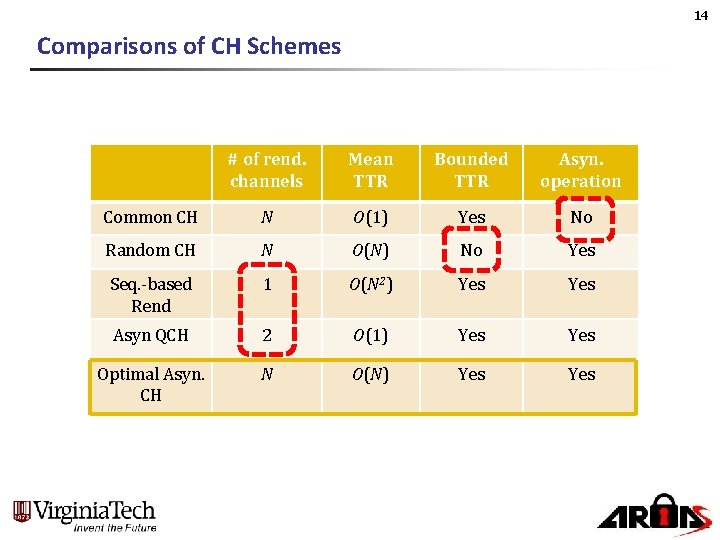
14 Comparisons of CH Schemes # of rend. channels Mean TTR Bounded TTR Asyn. operation Common CH N O(1) Yes No Random CH N O(N) No Yes Seq. -based Rend 1 O(N 2) Yes Asyn QCH 2 O(1) Yes Optimal Asyn. CH N O(N) Yes ECE 5560, Fall 2006
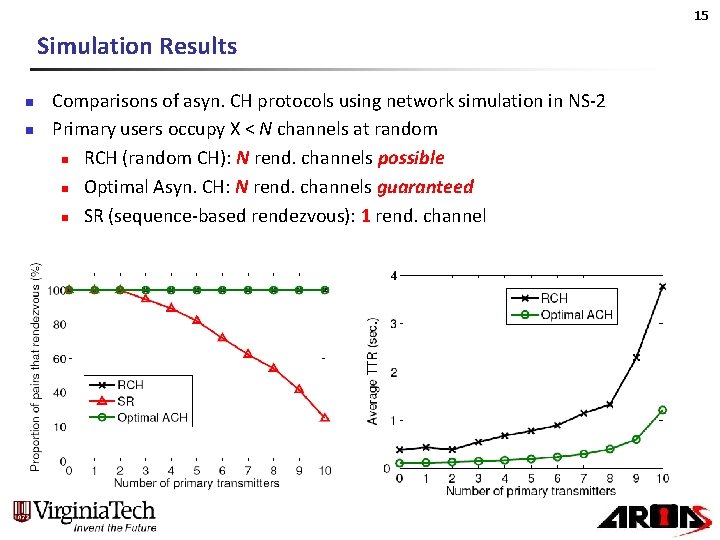
15 Simulation Results n n Comparisons of asyn. CH protocols using network simulation in NS-2 Primary users occupy X < N channels at random n RCH (random CH): N rend. channels possible n Optimal Asyn. CH: N rend. channels guaranteed n SR (sequence-based rendezvous): 1 rend. channel ECE 5560, Fall 2006
16 Outline n Cognitive Radio (CR) Networks n The Rendezvous Problem in CR Networks n Rendezvous Protocol using Asynchronous Channel Hopping (ACH) n Performance Evaluation n Conclusion ECE 5560, Fall 2006
17 Conclusion n n Addressed the rendezvous problem in MAC protocol design for CR networks An array-based CH systems for rendezvous (control channel) establishment n Robustness: max number of rend. channels n Bounded time-to-rendezvous (TTR) n Asynchronous rendezvous Questions? Thank you ECE 5560, Fall 2006
18 Backup Slides ECE 5560, Fall 2006
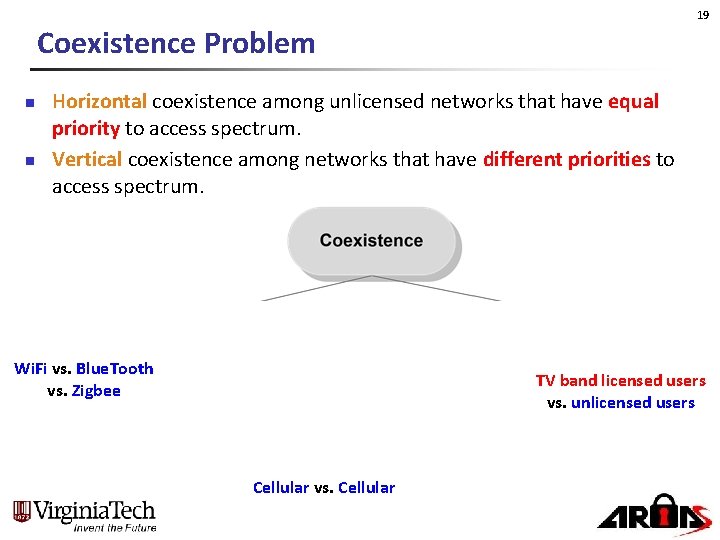
19 Coexistence Problem n n Horizontal coexistence among unlicensed networks that have equal priority to access spectrum. Vertical coexistence among networks that have different priorities to access spectrum. Wi. Fi vs. Blue. Tooth vs. Zigbee TV band licensed users vs. unlicensed users Cellular vs. Cellular ECE 5560, Fall 2006
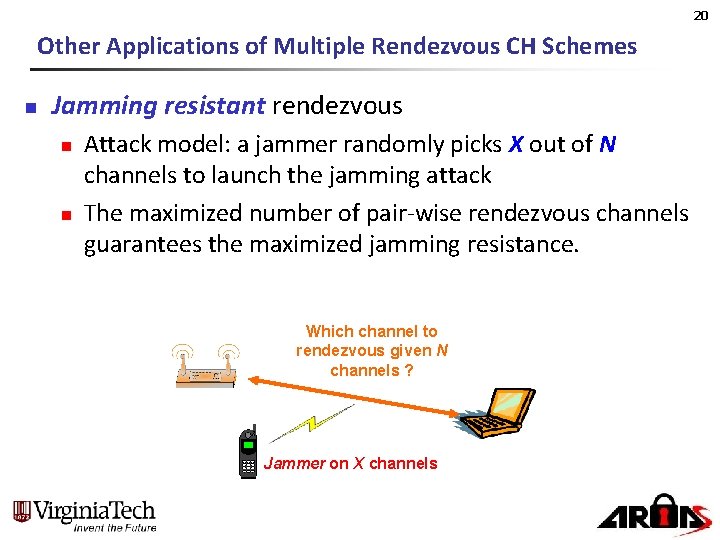
20 Other Applications of Multiple Rendezvous CH Schemes n Jamming resistant rendezvous n n Attack model: a jammer randomly picks X out of N channels to launch the jamming attack The maximized number of pair-wise rendezvous channels guarantees the maximized jamming resistance. Which channel to rendezvous given N channels ? Jammer on X channels ECE 5560, Fall 2006