
IEEE 802 15 2 DRAFT RECOMMENDED PRACTICE Clause
- Slides: 31
IEEE 802. 15. 2 DRAFT RECOMMENDED PRACTICE Clause 14: Collaborative Coexistence Mechanism – IEEE 802. 11 and 802. 15. 1 Steve Shellhammer (Symbol Technologies) Jim Lansford, Adrian P Stephens (Mobilian Corporation)
Outline n n Introduction (5) Collaborative Mechanism (14) (MAC Layer Solution) n n n Simulation Result (4) Conclusion Reference
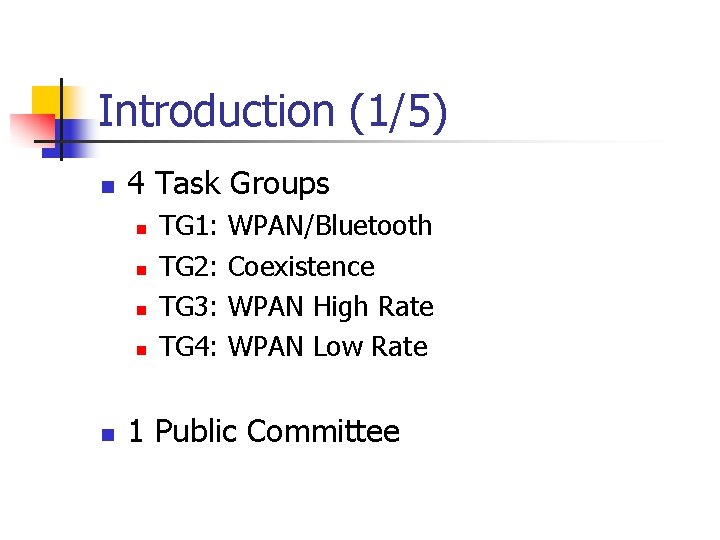
Introduction (1/5) n 4 Task Groups n n n TG 1: TG 2: TG 3: TG 4: WPAN/Bluetooth Coexistence WPAN High Rate WPAN Low Rate 1 Public Committee
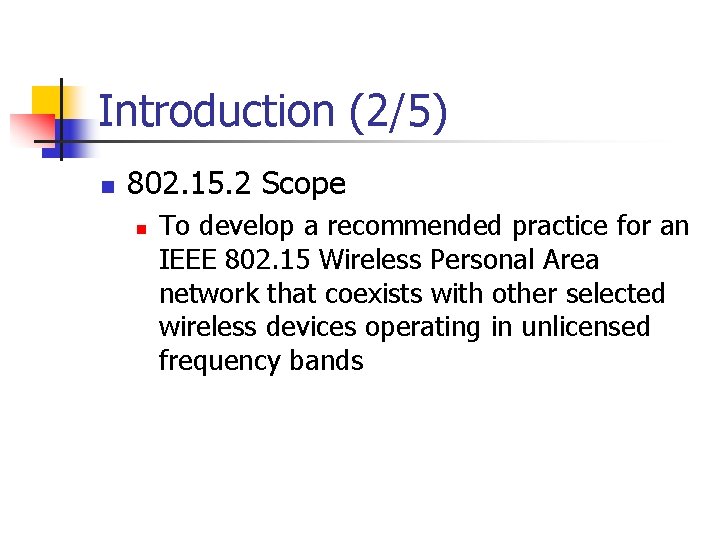
Introduction (2/5) n 802. 15. 2 Scope n To develop a recommended practice for an IEEE 802. 15 Wireless Personal Area network that coexists with other selected wireless devices operating in unlicensed frequency bands
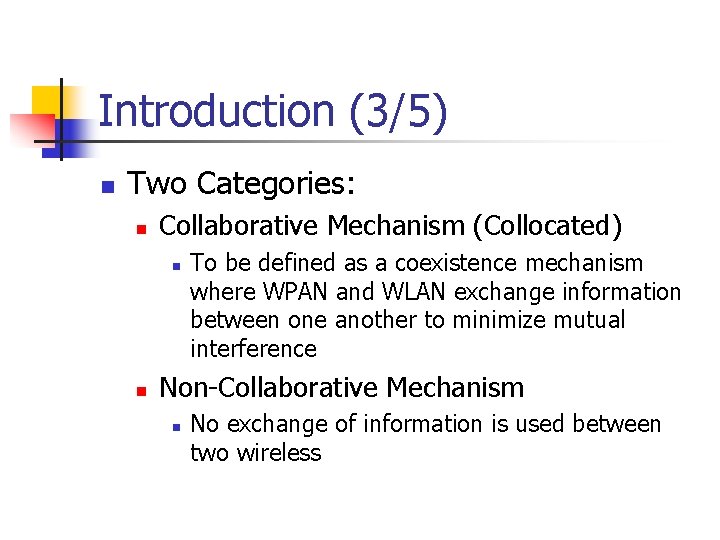
Introduction (3/5) n Two Categories: n Collaborative Mechanism (Collocated) n n To be defined as a coexistence mechanism where WPAN and WLAN exchange information between one another to minimize mutual interference Non-Collaborative Mechanism n No exchange of information is used between two wireless
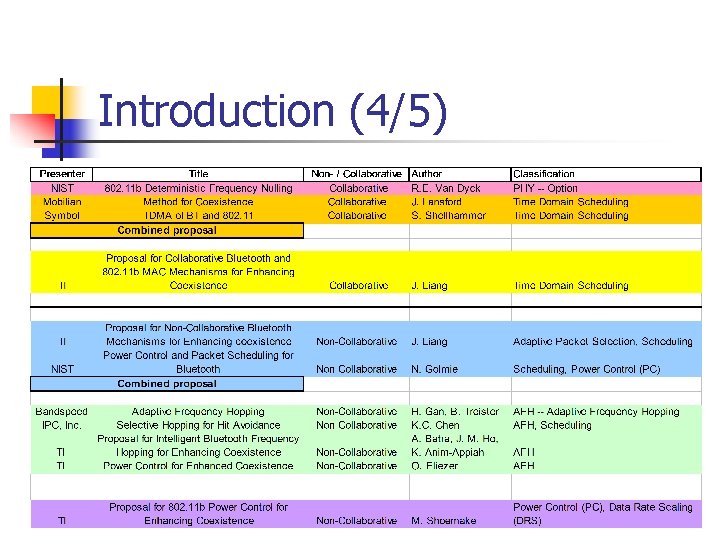
Introduction (4/5)
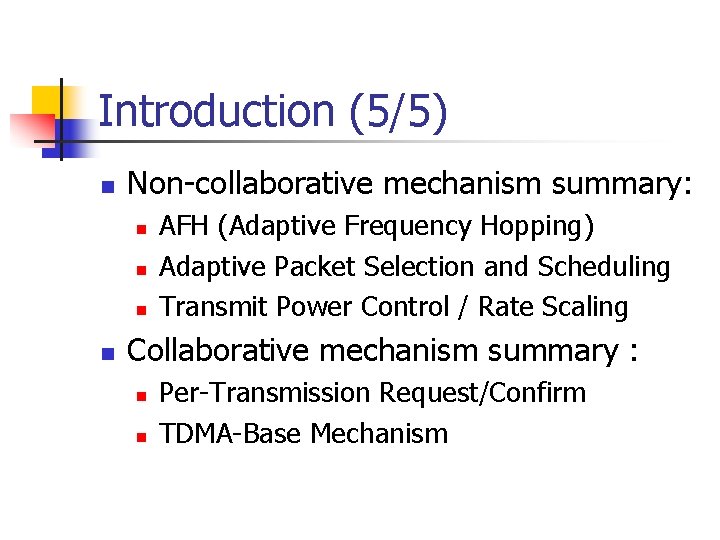
Introduction (5/5) n Non-collaborative mechanism summary: n n AFH (Adaptive Frequency Hopping) Adaptive Packet Selection and Scheduling Transmit Power Control / Rate Scaling Collaborative mechanism summary : n n Per-Transmission Request/Confirm TDMA-Base Mechanism
Collaborative Mechanism n n Introduction Collaborative Mechanism (14) (MAC Layer Solution) n n n Simulation Result Conclusion Reference
Collaborative Mechanism (1/14) n n n By sharing information between collocated 802. 11 and 802. 15. 1 stacks and locally controlling transmissions to avoid interference No new on-air signaling is required Be interoperable with devices that do not include it
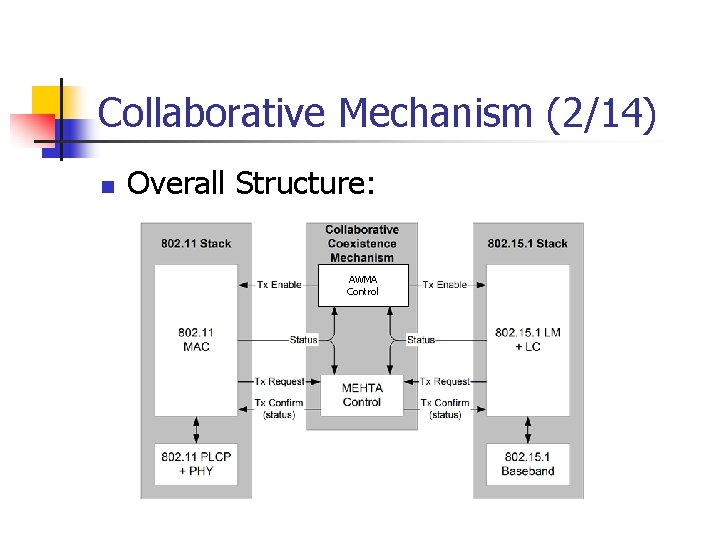
Collaborative Mechanism (2/14) n Overall Structure: AWMA Control
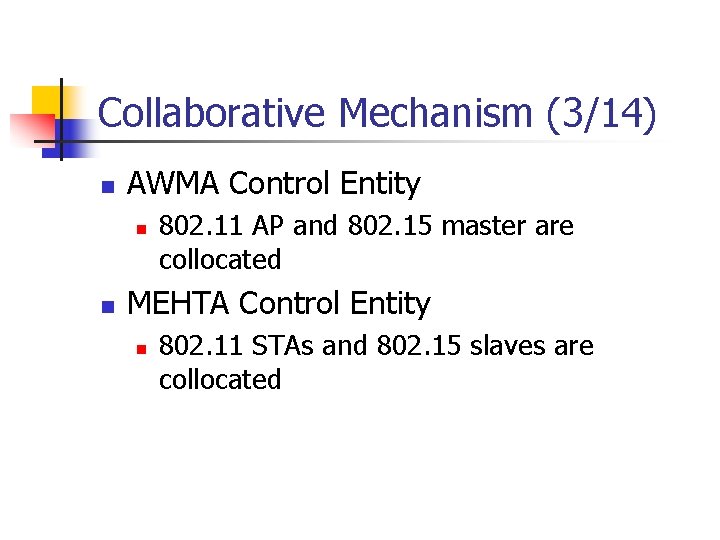
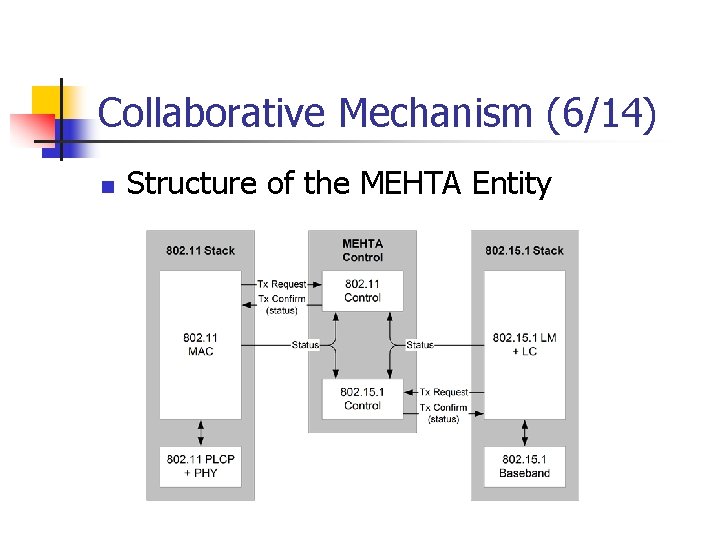
Collaborative Mechanism (3/14) n AWMA Control Entity n n 802. 11 AP and 802. 15 master are collocated MEHTA Control Entity n 802. 11 STAs and 802. 15 slaves are collocated
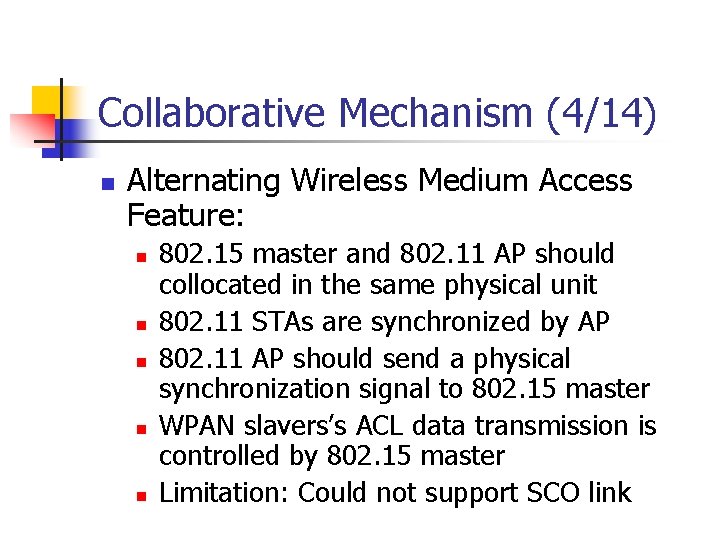
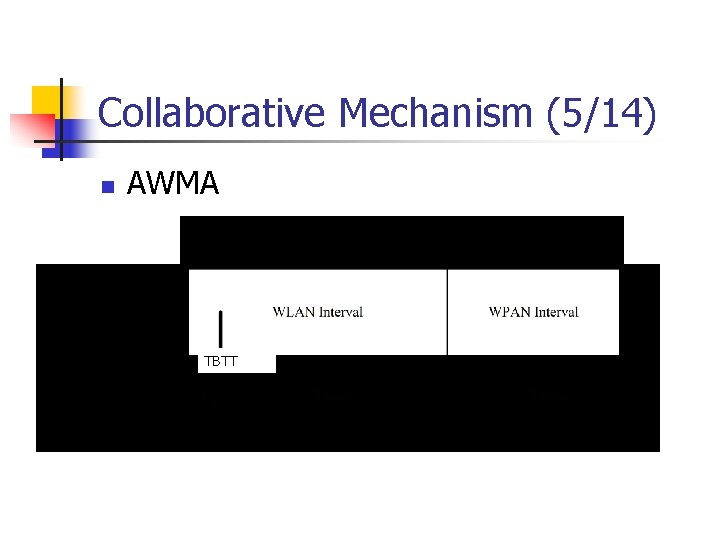
Collaborative Mechanism (4/14) n Alternating Wireless Medium Access Feature: n n n 802. 15 master and 802. 11 AP should collocated in the same physical unit 802. 11 STAs are synchronized by AP 802. 11 AP should send a physical synchronization signal to 802. 15 master WPAN slavers’s ACL data transmission is controlled by 802. 15 master Limitation: Could not support SCO link
Collaborative Mechanism (5/14) n AWMA TBTT
Collaborative Mechanism (6/14) n Structure of the MEHTA Entity
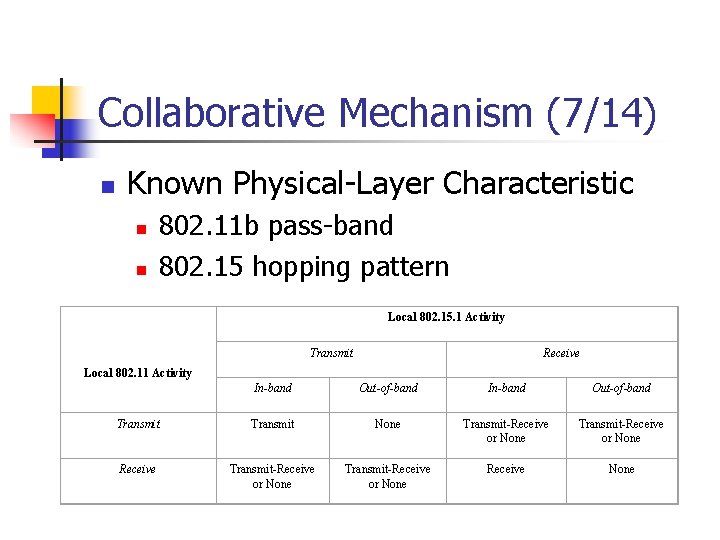
Collaborative Mechanism (7/14) n Known Physical-Layer Characteristic n n 802. 11 b pass-band 802. 15 hopping pattern Local 802. 15. 1 Activity Transmit Receive Local 802. 11 Activity In-band Out-of-band Transmit None Transmit-Receive or None Receive None
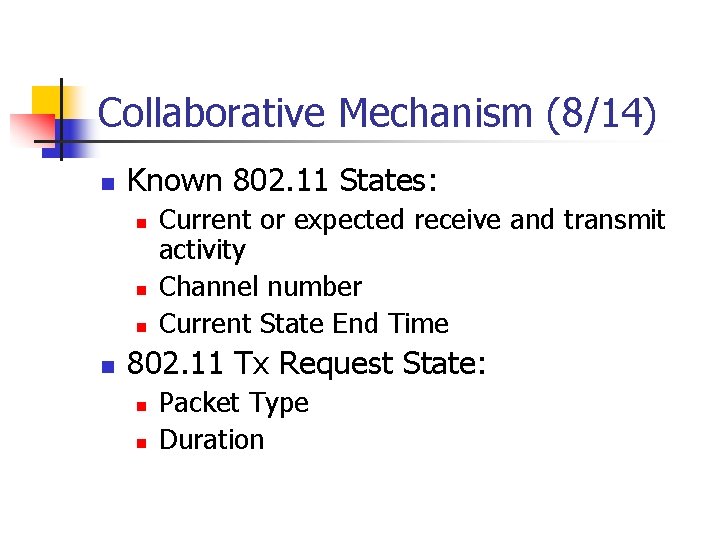
Collaborative Mechanism (8/14) n Known 802. 11 States: n n Current or expected receive and transmit activity Channel number Current State End Time 802. 11 Tx Request State: n n Packet Type Duration
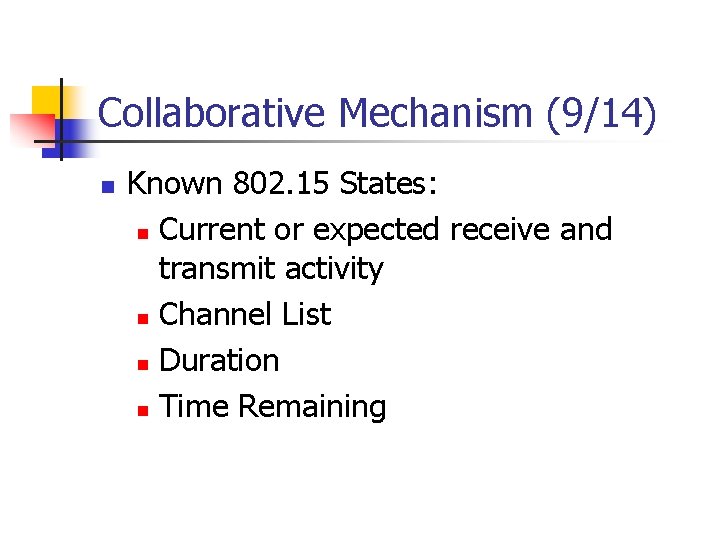
Collaborative Mechanism (9/14) n Known 802. 15 States: n Current or expected receive and transmit activity n Channel List n Duration n Time Remaining
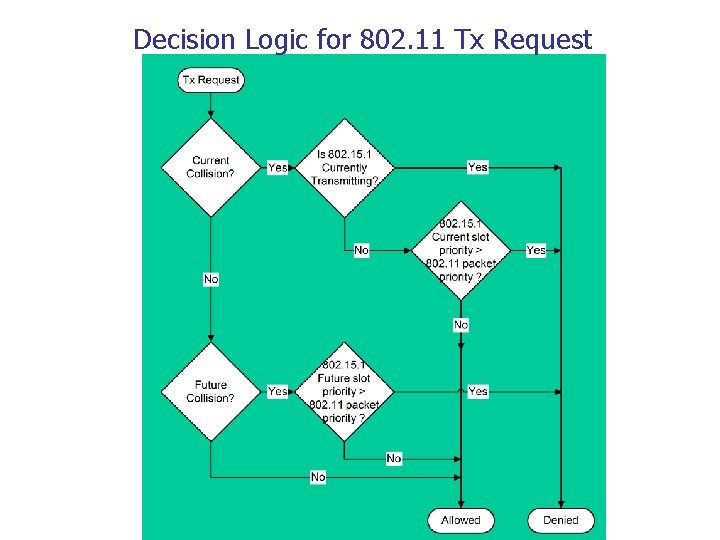
Decision Logic for 802. 11 Tx Request
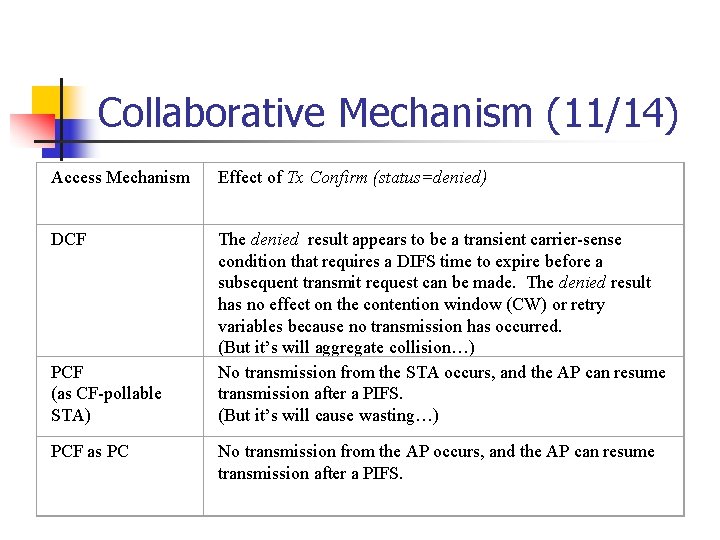
Collaborative Mechanism (11/14) Access Mechanism Effect of Tx Confirm (status=denied) DCF The denied result appears to be a transient carrier-sense condition that requires a DIFS time to expire before a subsequent transmit request can be made. The denied result has no effect on the contention window (CW) or retry variables because no transmission has occurred. (But it’s will aggregate collision…) No transmission from the STA occurs, and the AP can resume transmission after a PIFS. (But it’s will cause wasting…) PCF (as CF-pollable STA) PCF as PC No transmission from the AP occurs, and the AP can resume transmission after a PIFS.
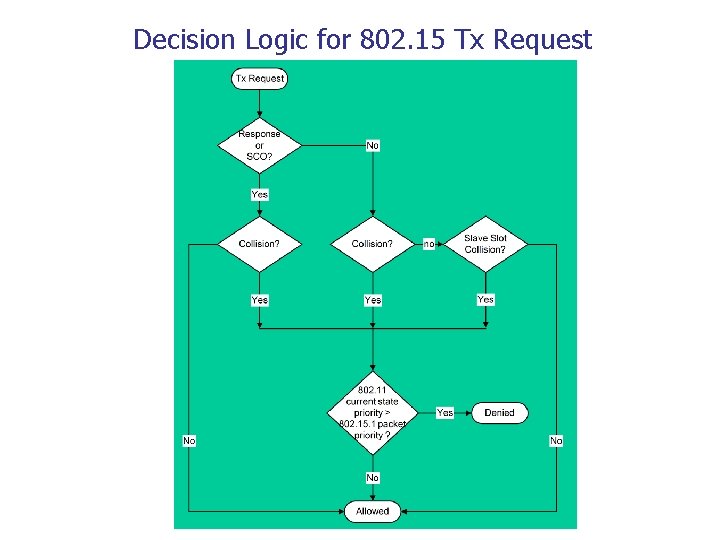
Decision Logic for 802. 15 Tx Request
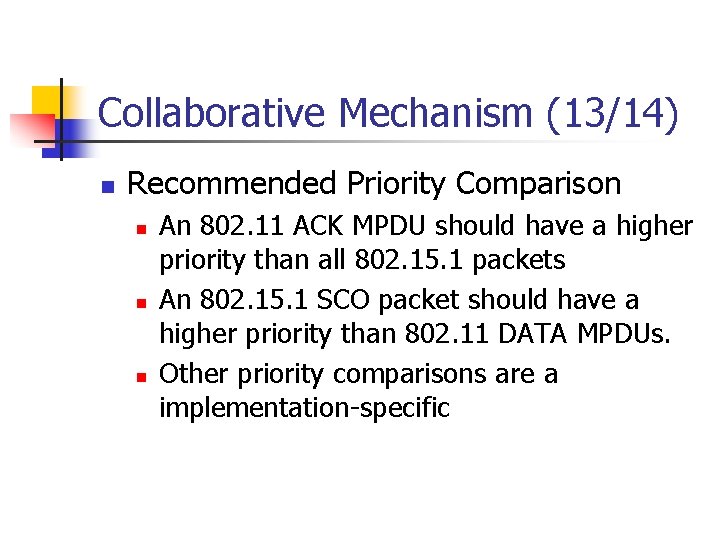
Collaborative Mechanism (13/14) n Recommended Priority Comparison n An 802. 11 ACK MPDU should have a higher priority than all 802. 15. 1 packets An 802. 15. 1 SCO packet should have a higher priority than 802. 11 DATA MPDUs. Other priority comparisons are a implementation-specific
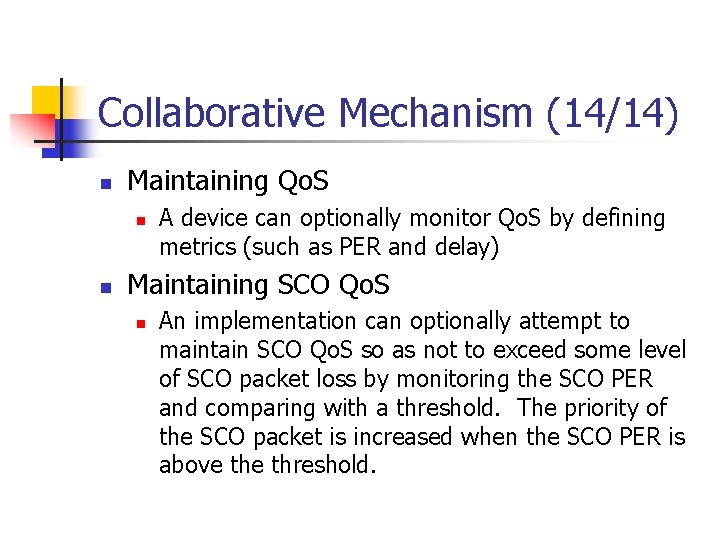
Collaborative Mechanism (14/14) n Maintaining Qo. S n n A device can optionally monitor Qo. S by defining metrics (such as PER and delay) Maintaining SCO Qo. S n An implementation can optionally attempt to maintain SCO Qo. S so as not to exceed some level of SCO packet loss by monitoring the SCO PER and comparing with a threshold. The priority of the SCO packet is increased when the SCO PER is above threshold.
Simulation Result (4) n n n Introduction Collaborative Mechanism (MAC Layer Solution) Simulation Result Conclusion Reference
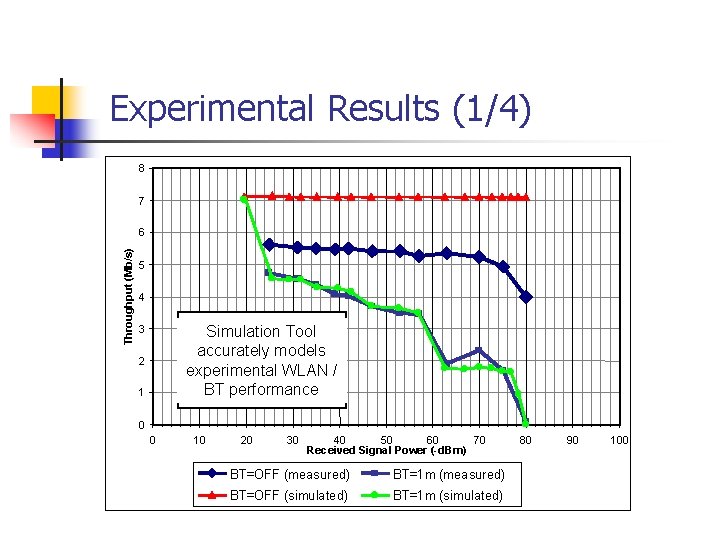
Experimental Results (1/4) 8 7 Throughput (Mb/s) 6 5 4 3 Simulation Tool accurately models experimental WLAN / BT performance 2 1 0 0 10 20 30 40 50 60 70 Received Signal Power (-d. Bm) BT=OFF (measured) BT=1 m (measured) BT=OFF (simulated) BT=1 m (simulated) 80 90 100
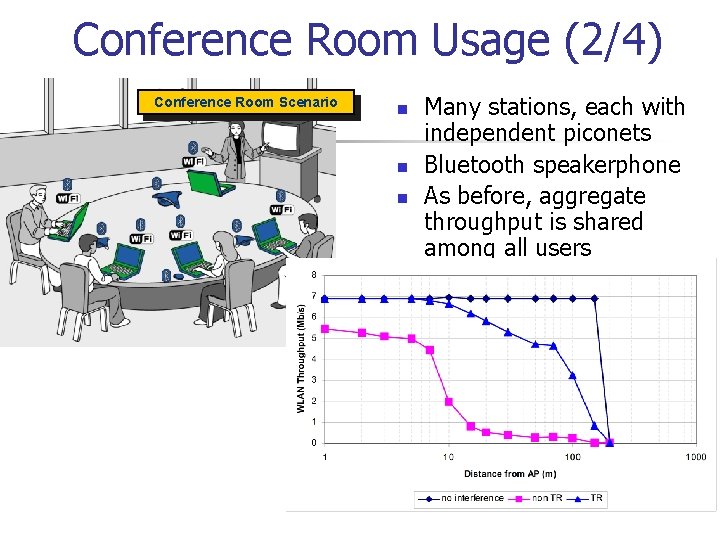
Conference Room Usage (2/4) Conference Room Scenario n n n Back to Single User Scenario Many stations, each with independent piconets Bluetooth speakerphone As before, aggregate throughput is shared among all users
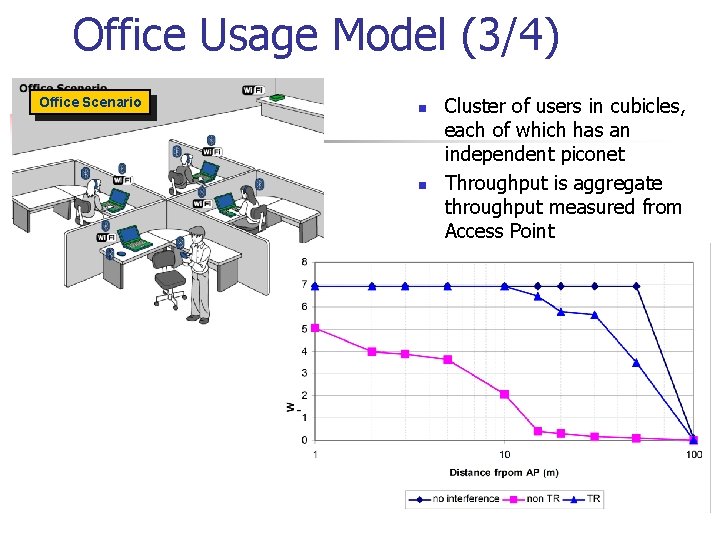
Office Usage Model (3/4) Office Scenario n n Back to Single User Scenario Cluster of users in cubicles, each of which has an independent piconet Throughput is aggregate throughput measured from Access Point
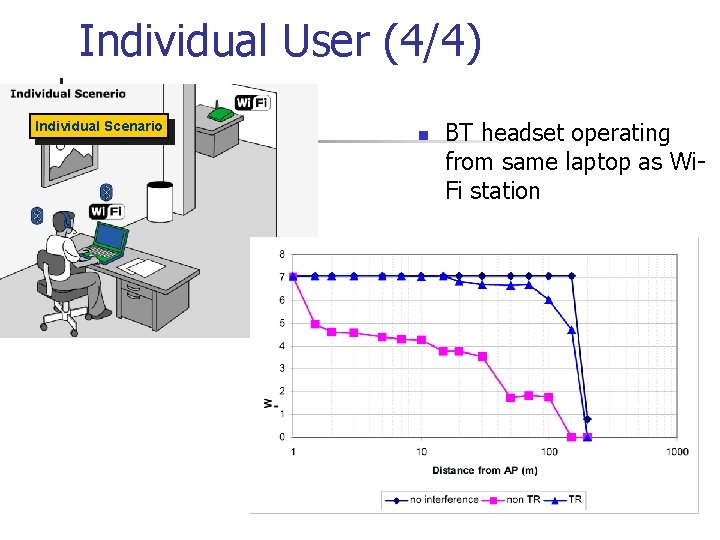
Individual User (4/4) Individual Scenario n BT headset operating from same laptop as Wi. Fi station
Conclusion n n Introduction Collaborative Mechanism (MAC Layer Solution) n n n Simulation Result Conclusion Reference
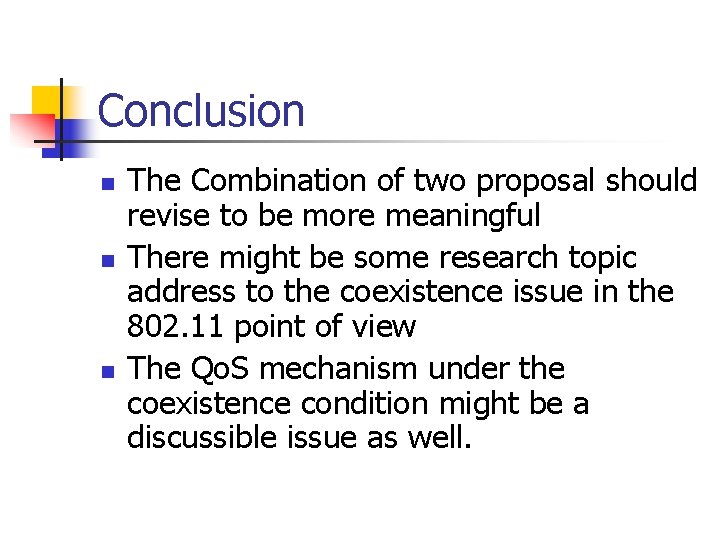
Conclusion n The Combination of two proposal should revise to be more meaningful There might be some research topic address to the coexistence issue in the 802. 11 point of view The Qo. S mechanism under the coexistence condition might be a discussible issue as well.
Reference(1/2) n TG 2 Submission Matrix n n TG 2 Coexistence Mechanism Summary Matrix n n IEEE P 802. 15 Doc 01/340 r 0 TG 2 Mobilian Draft Text n n IEEE P 802. 15 Doc 01/078 r 2 IEEE 802. 15. 2 Clause 14. 1 - Collaborative Coexistence Mechanism n n IEEE P 802. 15 Doc 01/078 r 0 IEEE P 802. 15 Doc 01/300 r 1 Clause 14. 3 - Adaptive Frequency Hopping n IEEE P 802. 15 Doc 01/366 r 1
Reference(2/2) n Clause 1 - Scope and Purpose n n Clause 5. 1 - Description of the Interference Problem n n IEEE P 802. 15 Doc 01/363 r 0 Clause 14. 2 - MAC Scheduling Mechanism n n IEEE P 802. 15 Doc 01/314 r 0 Clause 5. 3 - Overview of Coexistence Mechanisms n n IEEE P 802. 15 Doc 01/313 r 1 IEEE P 802. 15 Doc 01/316 r 0 Collaborative Coexistence Mechanism Submission: META + TDMA n IEEE P 802. 15 Doc 01/164 r 0