
IDP Workshop Part 1 Intrinsically Disordered Proteins 1

- Slides: 48
IDP Workshop, Part 1: Intrinsically Disordered Proteins 1. Why don’t IDPs and IDP Regions fold? 2. How common are IDPs and IDP Regions? 3. What are the functions of IDPs and IDP Regions? A. Keith Dunker Department of Biochemistry and Molecular Biology Indiana University School of Medicine (kedunker@iupui. edu) Thursday, May 24, 2018 Department of Chemical and Systems Biology Stanford University Palo Alto, California Center For Computational Biology and Bioinformatics
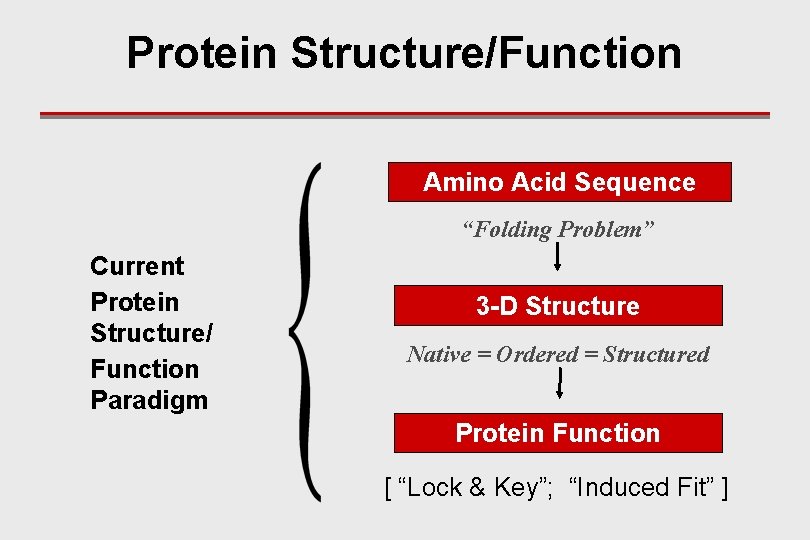
Protein Structure/Function Amino Acid Sequence “Folding Problem” Current Protein Structure/ Function Paradigm 3 -D Structure Native = Ordered = Structured Protein Function [ “Lock & Key”; “Induced Fit” ]
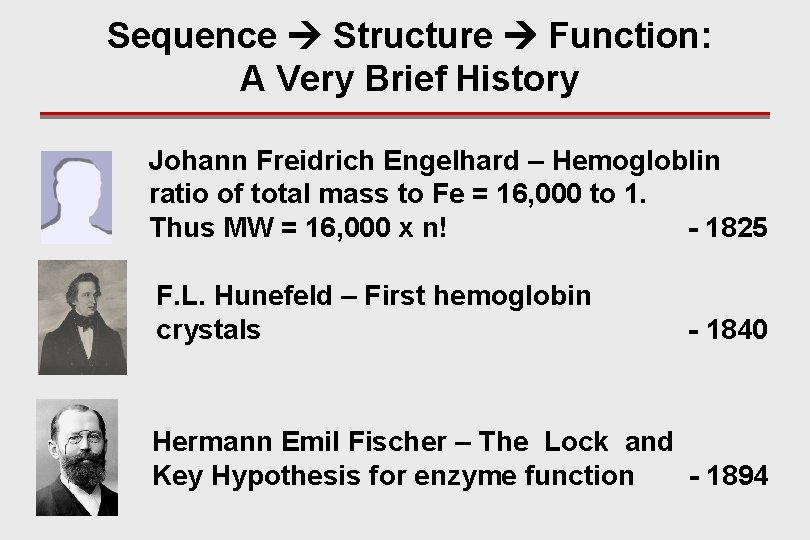
Sequence Structure Function: A Very Brief History Johann Freidrich Engelhard – Hemogloblin ratio of total mass to Fe = 16, 000 to 1. Thus MW = 16, 000 x n! - 1825 F. L. Hunefeld – First hemoglobin crystals - 1840 Hermann Emil Fischer – The Lock and Key Hypothesis for enzyme function - 1894
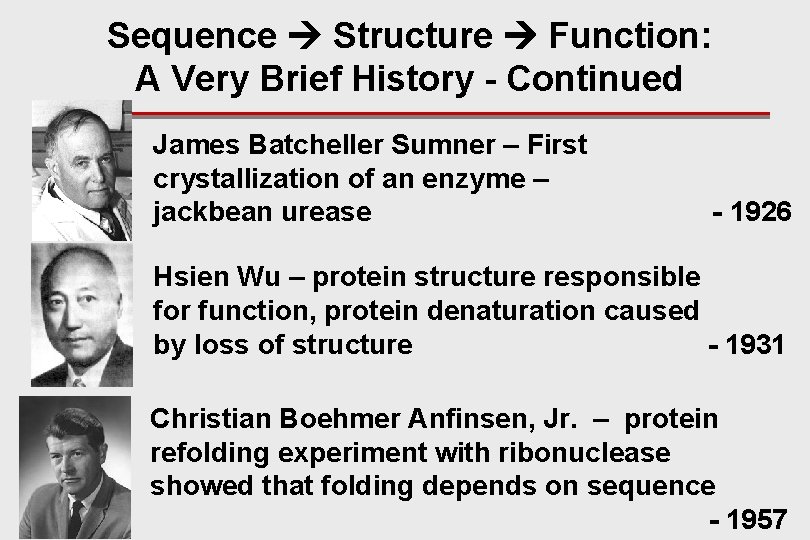
Sequence Structure Function: A Very Brief History - Continued James Batcheller Sumner – First crystallization of an enzyme – jackbean urease - 1926 Hsien Wu – protein structure responsible for function, protein denaturation caused by loss of structure - 1931 Christian Boehmer Anfinsen, Jr. – protein refolding experiment with ribonuclease showed that folding depends on sequence - 1957
Sequence Structure Function: A Very Brief History - Continued The sequence structure function paradigm has dominanated discussion of proteins from the 1930 s until now. David L. Nelson & Michael M. Cox Lehninger, Principles of Biochemistry. This biochemistry textbook, like all others, describes proteins in terms of sequence structure function.
Sequence Structure Function: A Very Brief History - Continued Gina Kolata has called the sequence structure function paradigm, “the second half of the genetic code. ” Stephen Kevin Burley, among many others, promoted the Protein Structure Initiative (PSI). The PSI was based squarely on the sequence structure function paradigm. NIH spent $764 million on the PSI from 2000 to 2015. Worldwide spending likely doubled this amount. The PSI awarded very large grants to a few huge teams of researchers.
Sequence Structure Function: A Very Brief History - Continued The PSI was based on high-throughput, industry-type work involving large teams of scientists. A few university consortia developed collaborative, industry-type teams. Expected PSI benefits included: ● Use structures to determine protein functions; ● Solve key biomedical problems; ● Discover new drugs by structure-based methods; ● Discover improved therapeutics for many diseases; ● Improve technology for protein structure determination. Unexpected PSI benefits: ● Discovered many IDPs and IDP regions ● Discovered many IDP- and IDP region-based functions
For a Detailed History of the Sequence Structure Function Paradigm Charles Tanford & Jacquiline Reynolds Published 2001
Intrinsically Disordered Proteins (IDPs) and IDP Regions ● Some proteins & regions lack structure, yet carry out function. ● We call these intrinsically disordered proteins (IDPs) and IDP Regions.
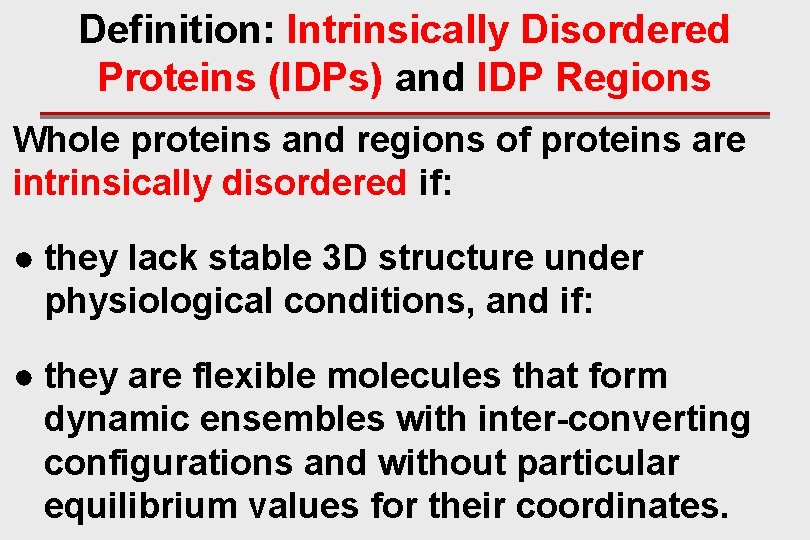
Definition: Intrinsically Disordered Proteins (IDPs) and IDP Regions Whole proteins and regions of proteins are intrinsically disordered if: ● they lack stable 3 D structure under physiological conditions, and if: ● they are flexible molecules that form dynamic ensembles with inter-converting configurations and without particular equilibrium values for their coordinates.
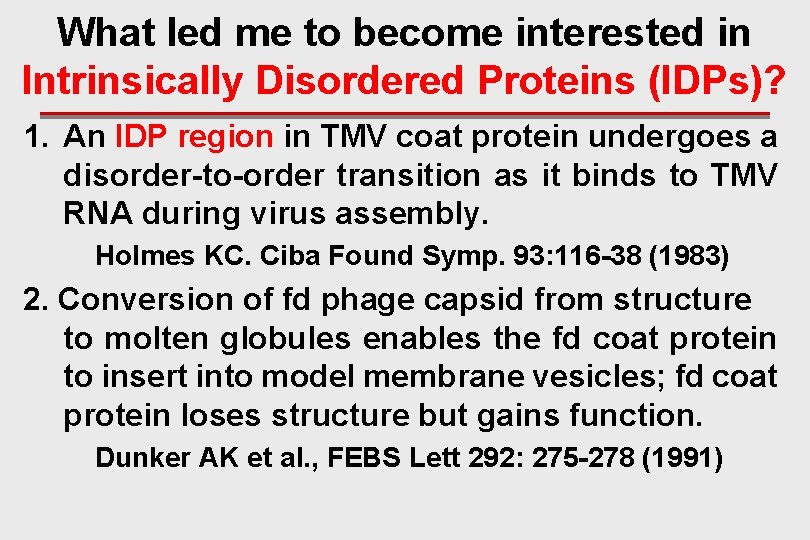
What led me to become interested in Intrinsically Disordered Proteins (IDPs)? 1. An IDP region in TMV coat protein undergoes a disorder-to-order transition as it binds to TMV RNA during virus assembly. Holmes KC. Ciba Found Symp. 93: 116 -38 (1983) 2. Conversion of fd phage capsid from structure to molten globules enables the fd coat protein to insert into model membrane vesicles; fd coat protein loses structure but gains function. Dunker AK et al. , FEBS Lett 292: 275 -278 (1991)
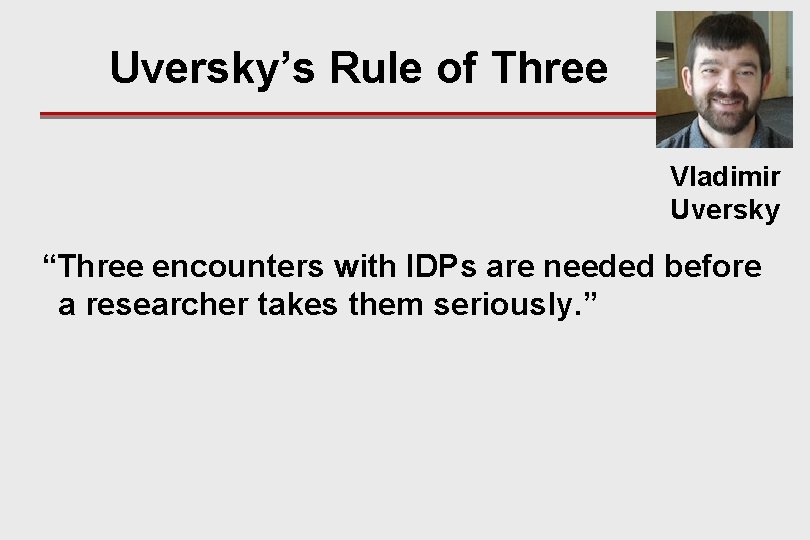
Uversky’s Rule of Three Vladimir Uversky “Three encounters with IDPs are needed before a researcher takes them seriously. ”
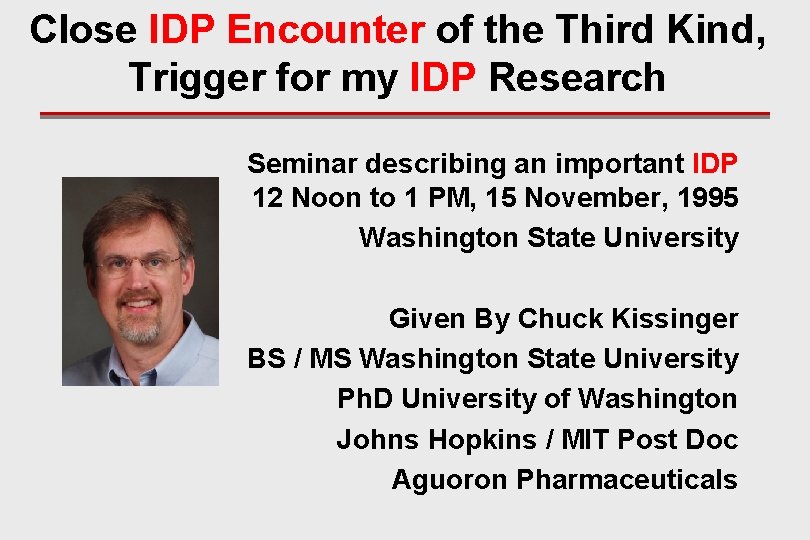
Close IDP Encounter of the Third Kind, Trigger for my IDP Research Seminar describing an important IDP 12 Noon to 1 PM, 15 November, 1995 Washington State University Given By Chuck Kissinger BS / MS Washington State University Ph. D University of Washington Johns Hopkins / MIT Post Doc Aguoron Pharmaceuticals
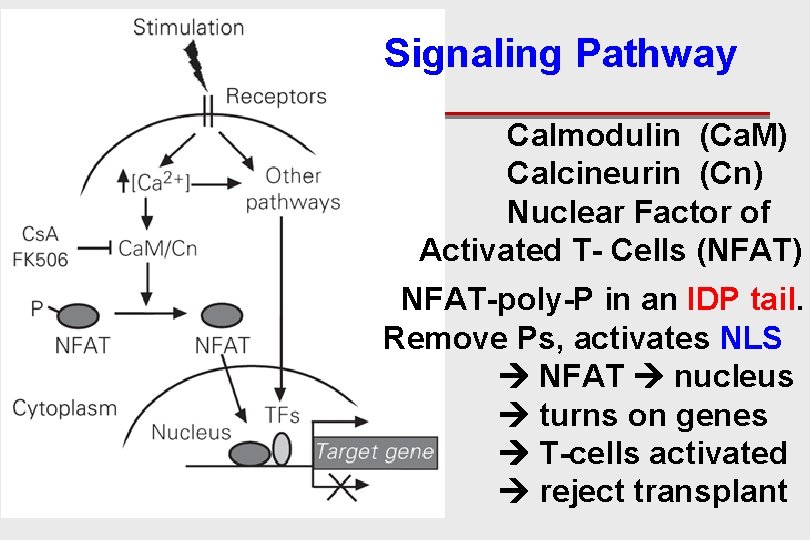
Signaling Pathway Calmodulin (Ca. M) Calcineurin (Cn) Nuclear Factor of Activated T- Cells (NFAT) NFAT-poly-P in an IDP tail. Remove Ps, activates NLS NFAT nucleus turns on genes T-cells activated reject transplant
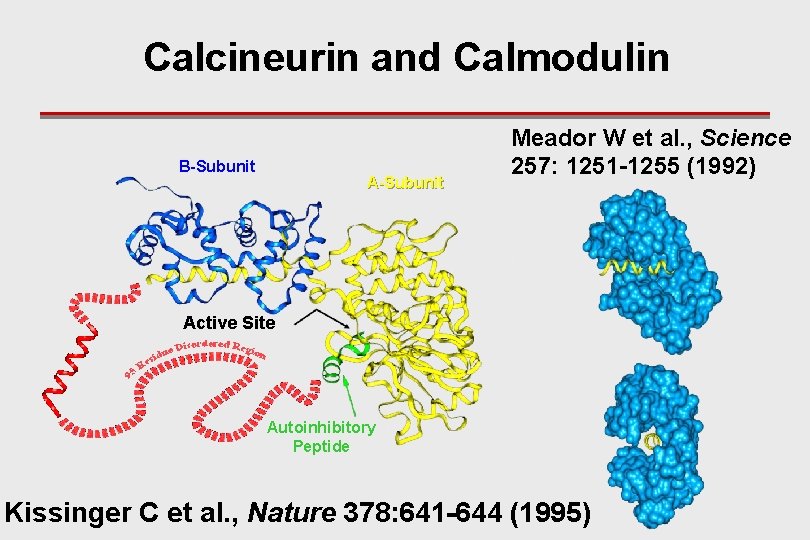
Calcineurin and Calmodulin B-Subunit A-Subunit Meador W et al. , Science 257: 1251 -1255 (1992) Active Site Autoinhibitory Peptide Kissinger C et al. , Nature 378: 641 -644 (1995)
Key Points I ● Consider Ca. N’s 140 residue region of missing electron density (MED): is this MED due to an IDP region or due to a structured, but wobbly domain? ● Ca 2+/Ca. M surrounds an isolated helical segment of the MED region, so this segment must be separated from the body of protein – this indicates that the MED is an IDP region; ● Elsewhere it was shown that Ca. N is hypersensitive to protease digestion at multiple sites, and that binding of Ca 2+/ Ca. M inhibits this protease digestion – this also indicates that the MED is an IDP region;
Key Points II ● IDP function: on-off switch for Ca. N; ● Ca. N activated by Ca 2+/ Ca. M – such activation is a well known, very important mechanism for regulating many enzymes and pathways; ● Ca. N is a phosphatase; phosphorylation / dephosphorylation is a very important, frequently used mechanism for many signaling pathways; ● Overall, Ca. N’s IDP region sits at the nexus of two extremely important signaling pathways!!
Summary of my IDP Knowledge as of 1 PM, November 15, 1995 ● An IDP region in the TMV coat protein undergoes a disorder-to-order transition as it binds to TMV RNA. ● The fd coat protein loses its rigid structure and gains the ability to dissolve in a membrane bilayer. ● A large IDP region in Ca. N is a Ca 2+/ Ca. Mregulated ON-OFF switch for Ca. N’s enzyme activity.
After Seminar Questions: Nov 15, 1995 ● Why don’t IDPs and IDP regions fold into 3 D structure? ● How common are IDPs and IDP regions? ● What are the functions of IDPs and IDP regions?
Why don’t IDPs fold into 3 D structure?
Why don’t IDPs fold into 3 D structure? First step: collect structured proteins from PDB and also collect IDPs / IDP regions. ● X-ray Structures from PDB: structured regions and MED regions ● NMR Structures from PDB: invariant regions and highly variable regions ● Literature, one-by-one examples: whole protein disorder (IDPs) from CD or NMR spectra
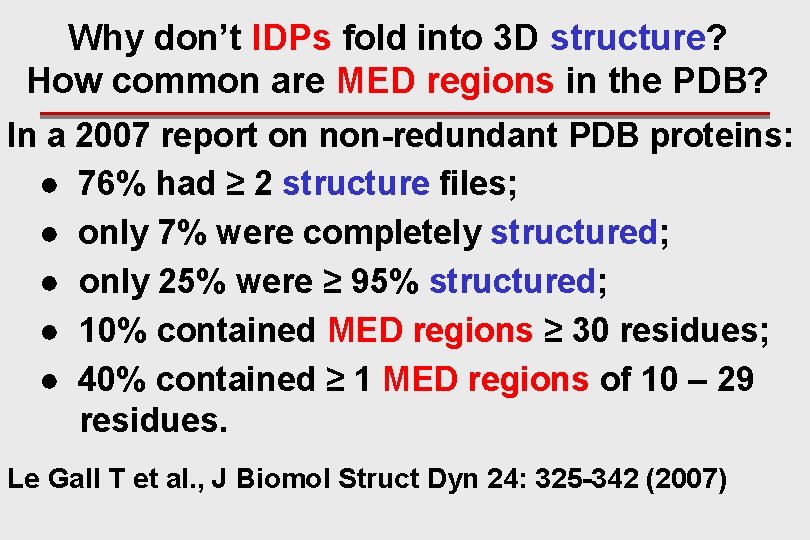
Why don’t IDPs fold into 3 D structure? How common are MED regions in the PDB? In a 2007 report on non-redundant PDB proteins: ● 76% had ≥ 2 structure files; ● only 7% were completely structured; ● only 25% were ≥ 95% structured; ● 10% contained MED regions ≥ 30 residues; ● 40% contained ≥ 1 MED regions of 10 – 29 residues. Le Gall T et al. , J Biomol Struct Dyn 24: 325 -342 (2007)
Why don’t IDPs fold into 3 D structure? Compare AA composition in structure and IDP
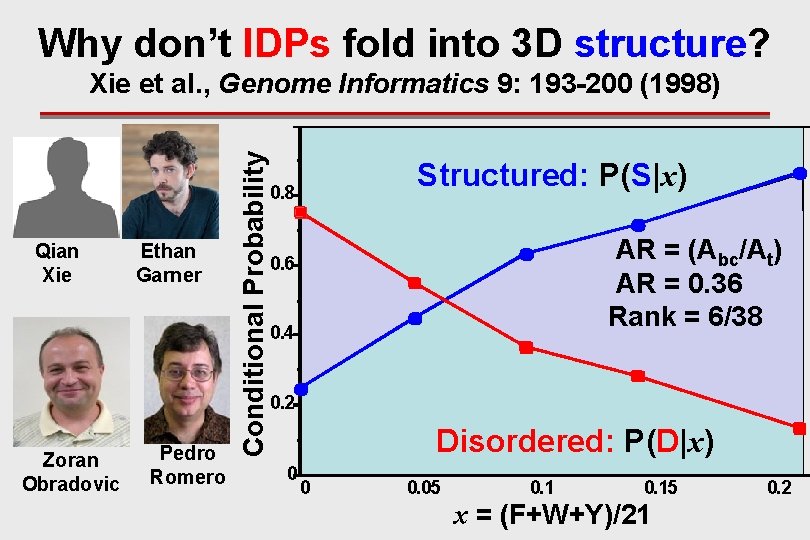
Why don’t IDPs fold into 3 D structure? Qian Xie Zoran Obradovic Ethan Garner Pedro Romero Conditional Probability Xie et al. , Genome Informatics 9: 193 -200 (1998) Structured: P(S|x) 0. 8 AR = (Abc/At) AR = 0. 36 Rank = 6/38 0. 6 0. 4 0. 2 Disordered: P(D|x) 0 0 0. 05 0. 15 x = (F+W+Y)/21 0. 2
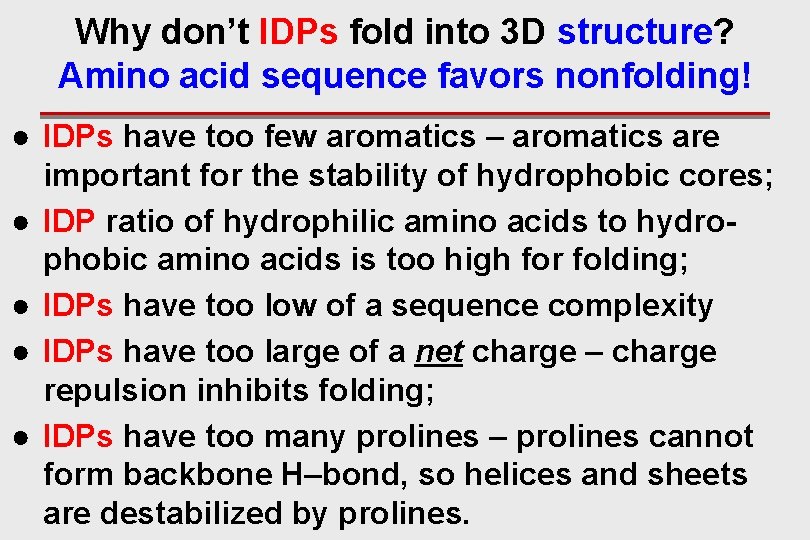
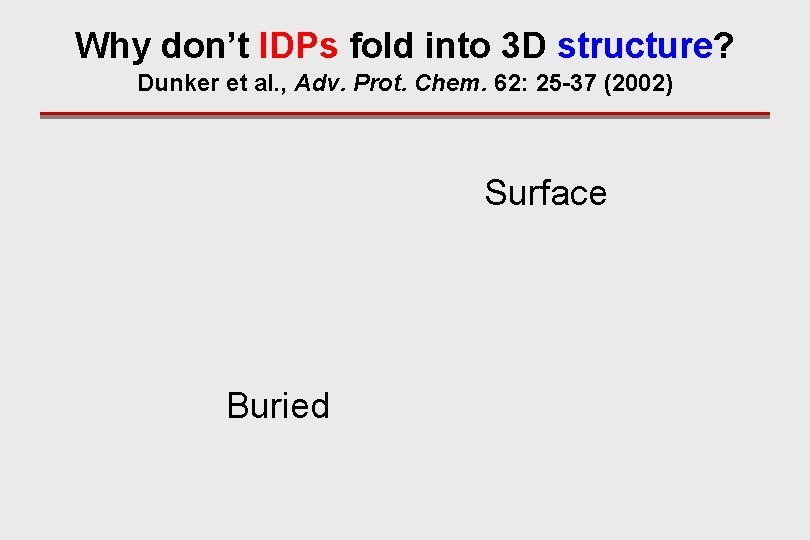
Why don’t IDPs fold into 3 D structure? Amino acid sequence favors nonfolding! ● IDPs have too few aromatics – aromatics are important for the stability of hydrophobic cores; ● IDP ratio of hydrophilic amino acids to hydrophobic amino acids is too high for folding; ● IDPs have too low of a sequence complexity ● IDPs have too large of a net charge – charge repulsion inhibits folding; ● IDPs have too many prolines – prolines cannot form backbone H–bond, so helices and sheets are destabilized by prolines.
Why don’t IDPs fold into 3 D structure? Dunker et al. , Adv. Prot. Chem. 62: 25 -37 (2002) Surface Buried
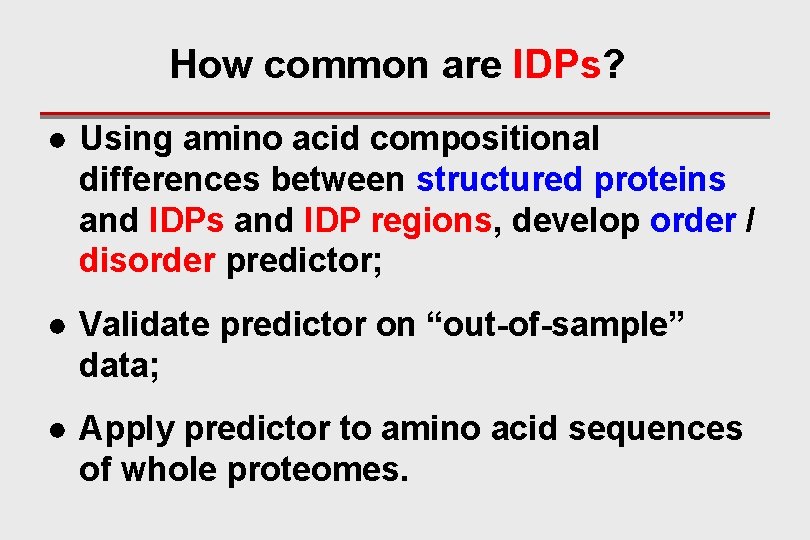
How common are IDPs? ● Using amino acid compositional differences between structured proteins and IDP regions, develop order / disorder predictor; ● Validate predictor on “out-of-sample” data; ● Apply predictor to amino acid sequences of whole proteomes.
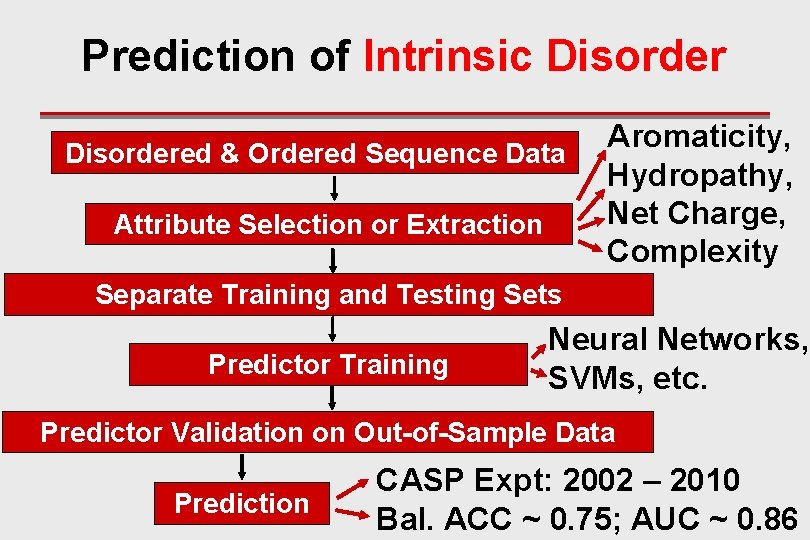
Prediction of Intrinsic Disordered & Ordered Sequence Data Attribute Selection or Extraction Aromaticity, Hydropathy, Net Charge, Complexity Separate Training and Testing Sets Predictor Training Neural Networks, SVMs, etc. Predictor Validation on Out-of-Sample Data Prediction CASP Expt: 2002 – 2010 Bal. ACC ~ 0. 75; AUC ~ 0. 86
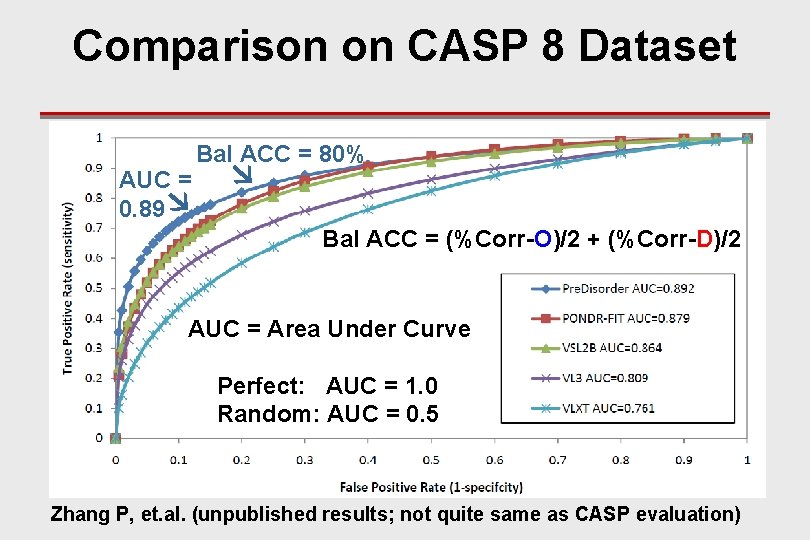
Comparison on CASP 8 Dataset AUC = 0. 89 Bal ACC = 80% Bal ACC = (%Corr-O)/2 + (%Corr-D)/2 AUC = Area Under Curve Perfect: AUC = 1. 0 Random: AUC = 0. 5 Zhang P, et. al. (unpublished results; not quite same as CASP evaluation)
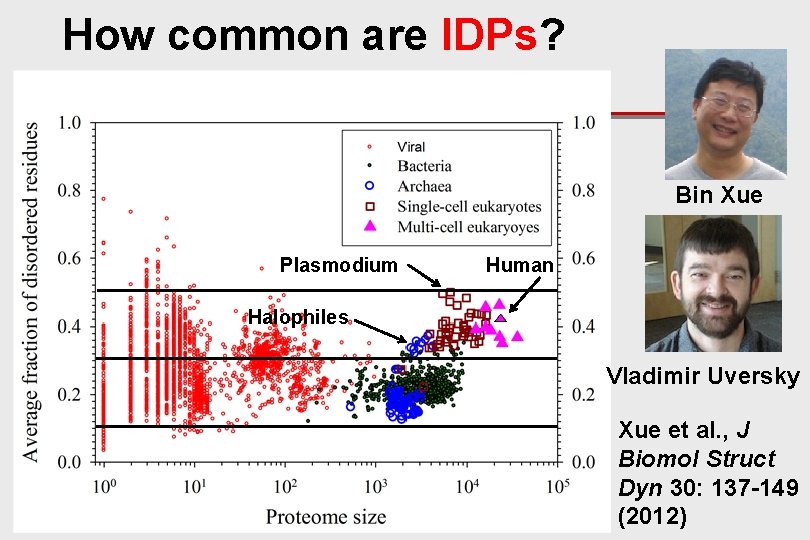
How common are IDPs? Bin Xue Plasmodium Human Halophiles Vladimir Uversky Xue et al. , J Biomol Struct Dyn 30: 137 -149 (2012)
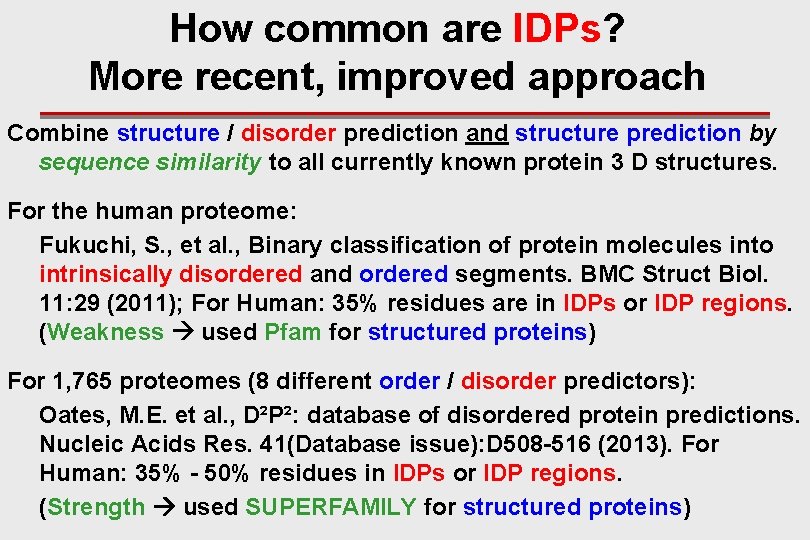
How common are IDPs? More recent, improved approach Combine structure / disorder prediction and structure prediction by sequence similarity to all currently known protein 3 D structures. For the human proteome: Fukuchi, S. , et al. , Binary classification of protein molecules into intrinsically disordered and ordered segments. BMC Struct Biol. 11: 29 (2011); For Human: 35% residues are in IDPs or IDP regions. (Weakness used Pfam for structured proteins) For 1, 765 proteomes (8 different order / disorder predictors): Oates, M. E. et al. , D²P²: database of disordered protein predictions. Nucleic Acids Res. 41(Database issue): D 508 -516 (2013). For Human: 35% - 50% residues in IDPs or IDP regions. (Strength used SUPERFAMILY for structured proteins)
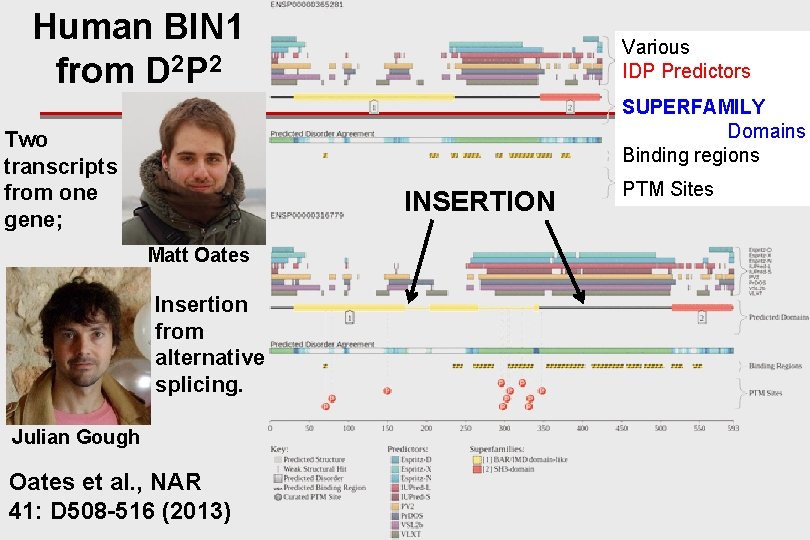
Human BIN 1 from D 2 P 2 Various IDP Predictors SUPERFAMILY Domains Binding regions Two transcripts from one gene; INSERTION Matt Oates Insertion from alternative splicing. Julian Gough Oates et al. , NAR 41: D 508 -516 (2013) PTM Sites
What are the functions of IDPs? ● Individual examples of IDPs and IDP regions and their functions: (calcineurin – Ca. N), lac repressor, signaling domain partners, p 53, BRCA 1; (p 21/p 27/p 57) ● Bioinformatics study to comprehensively determine functions of structured proteins and of IDPs and IDP regions.
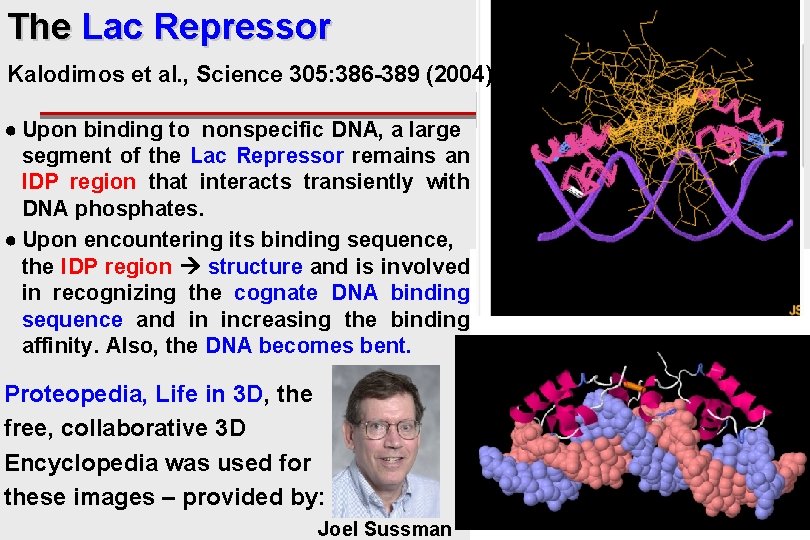
The Lac Repressor Kalodimos et al. , Science 305: 386 -389 (2004) ● Upon binding to nonspecific DNA, a large segment of the Lac Repressor remains an IDP region that interacts transiently with DNA phosphates. ● Upon encountering its binding sequence, the IDP region structure and is involved in recognizing the cognate DNA binding sequence and in increasing the binding affinity. Also, the DNA becomes bent. Proteopedia, Life in 3 D, the free, collaborative 3 D Encyclopedia was used for these images – provided by: Joel Sussman
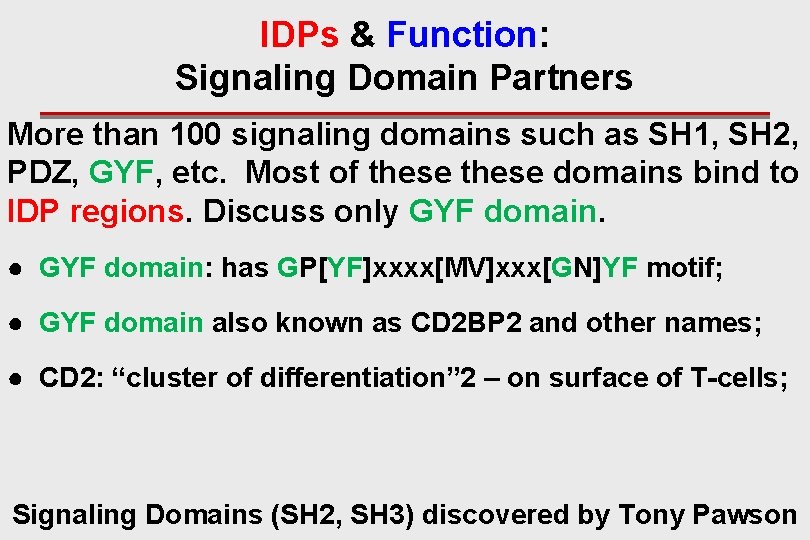
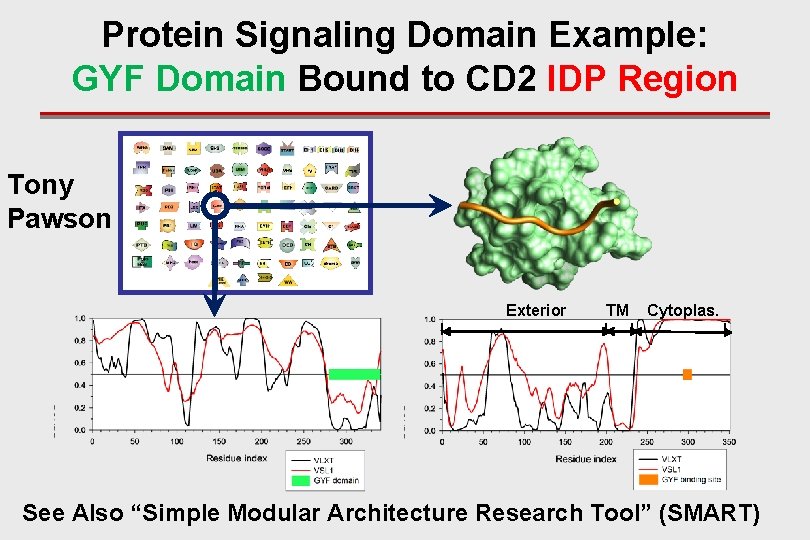
IDPs & Function: Signaling Domain Partners More than 100 signaling domains such as SH 1, SH 2, PDZ, GYF, etc. Most of these domains bind to IDP regions. Discuss only GYF domain. ● GYF domain: has GP[YF]xxxx[MV]xxx[GN]YF motif; ● GYF domain also known as CD 2 BP 2 and other names; ● CD 2: “cluster of differentiation” 2 – on surface of T-cells; Signaling Domains (SH 2, SH 3) discovered by Tony Pawson
Protein Signaling Domain Example: GYF Domain Bound to CD 2 IDP Region Tony Pawson Exterior I TM Cytoplas. I I I See Also “Simple Modular Architecture Research Tool” (SMART)
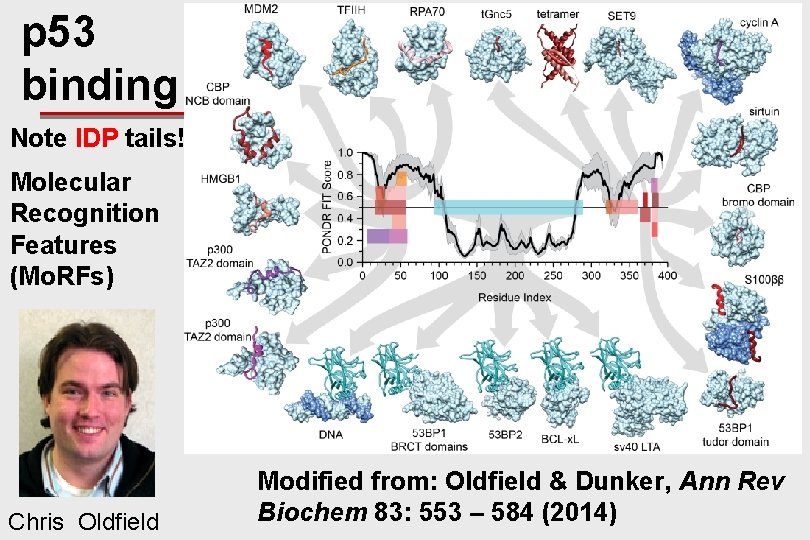
IDPs & Function: p 53: main isoform ~ 400 AA residues
p 53 binding Note IDP tails! Molecular Recognition Features (Mo. RFs) Chris Oldfield Modified from: Oldfield & Dunker, Ann Rev Biochem 83: 553 – 584 (2014)
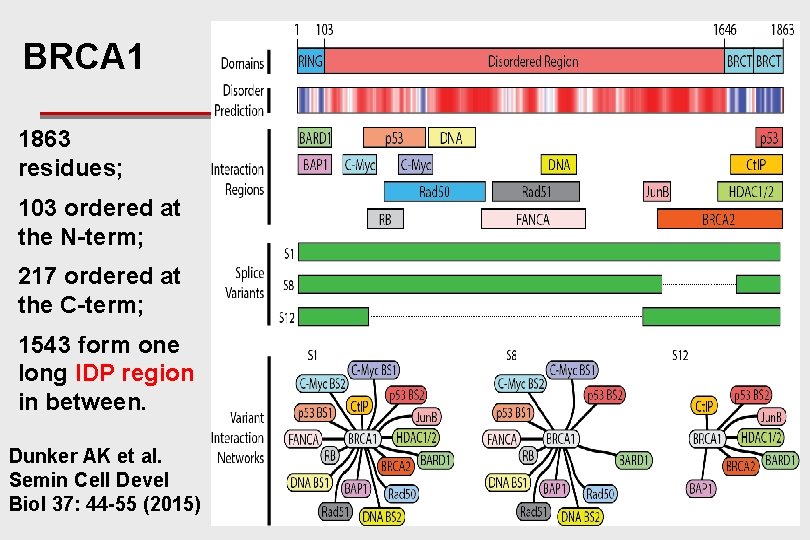
IDPs & Function: BRCA 1: main isoform ~ 1, 860 AA residues
BRCA 1 1863 residues; 103 ordered at the N-term; 217 ordered at the C-term; 1543 form one long IDP region in between. Dunker AK et al. Semin Cell Devel Biol 37: 44 -55 (2015)
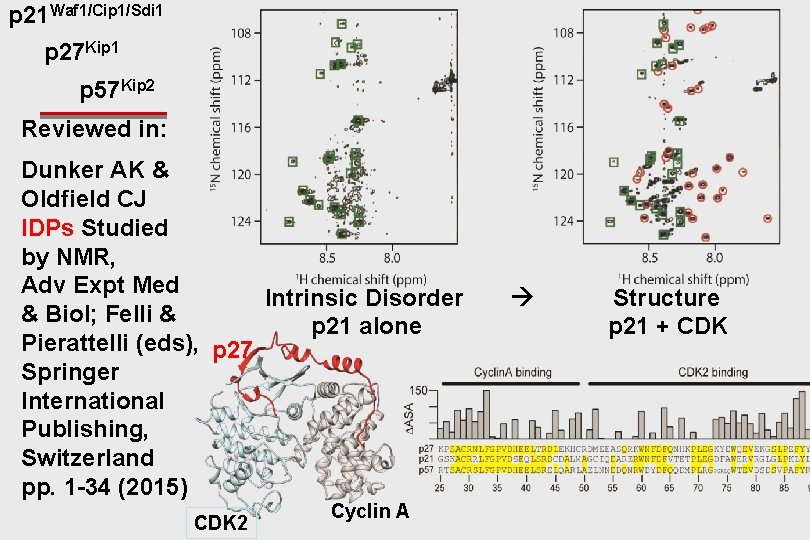
IDPs & Function: p 21/p 27/p 57 p 21 / p 27 / p 57: ● Each of these molecules is 100% IDP by both prediction and experiment; ● Each of these proteins is an inhibitor of the cyclin dependent kinase (CDK)-cyclin complex; ● Each of these proteins is involved in cell-cycle check point control; ● Removal of each of these proteins from the CDKcyclin complex involves a multistep process that may act as a signal coordinator.
p 21 Waf 1/Cip 1/Sdi 1 p 27 Kip 1 p 57 Kip 2 Reviewed in: Dunker AK & Oldfield CJ IDPs Studied by NMR, Adv Expt Med Intrinsic Disorder & Biol; Felli & p 21 alone Pierattelli (eds), p 27 Springer International Publishing, Switzerland pp. 1 -34 (2015) CDK 2 Cyclin A Structure p 21 + CDK
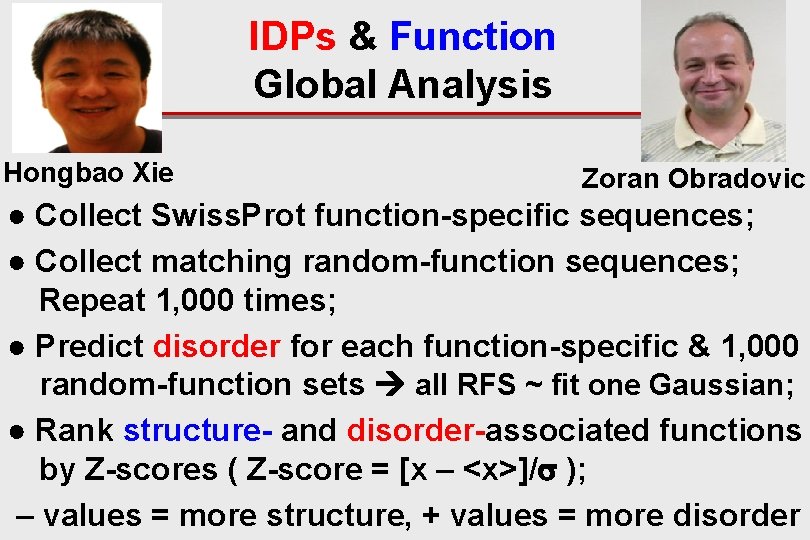
IDPs & Function Global Analysis Hongbao Xie Zoran Obradovic ● Collect Swiss. Prot function-specific sequences; ● Collect matching random-function sequences; Repeat 1, 000 times; ● Predict disorder for each function-specific & 1, 000 random-function sets all RFS ~ fit one Gaussian; ● Rank structure- and disorder-associated functions by Z-scores ( Z-score = [x – <x>]/s ); – values = more structure, + values = more disorder
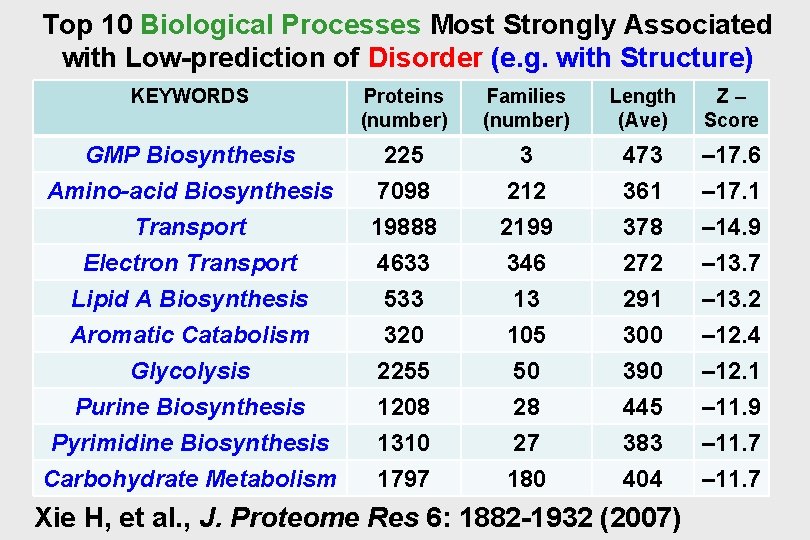
Top 10 Biological Processes Most Strongly Associated with Low-prediction of Disorder (e. g. with Structure) KEYWORDS Proteins (number) Families (number) Length (Ave) Z– Score GMP Biosynthesis Amino-acid Biosynthesis 225 7098 3 212 473 361 – 17. 6 – 17. 1 Transport Electron Transport Lipid A Biosynthesis Aromatic Catabolism Glycolysis Purine Biosynthesis Pyrimidine Biosynthesis Carbohydrate Metabolism 19888 4633 533 320 2255 1208 1310 1797 2199 346 13 105 50 28 27 180 378 272 291 300 390 445 383 404 – 14. 9 – 13. 7 – 13. 2 – 12. 4 – 12. 1 – 11. 9 – 11. 7 Xie H, et al. , J. Proteome Res 6: 1882 -1932 (2007)
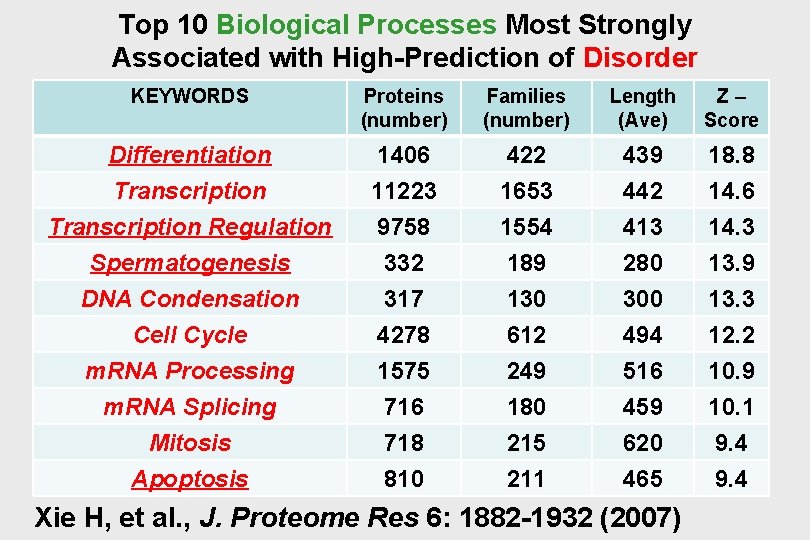
Top 10 Biological Processes Most Strongly Associated with High-Prediction of Disorder KEYWORDS Proteins (number) Families (number) Length (Ave) Z– Score Differentiation Transcription 1406 11223 422 1653 439 442 18. 8 14. 6 Transcription Regulation Spermatogenesis DNA Condensation Cell Cycle m. RNA Processing m. RNA Splicing Mitosis Apoptosis 9758 332 317 4278 1575 716 718 810 1554 189 130 612 249 180 215 211 413 280 300 494 516 459 620 465 14. 3 13. 9 13. 3 12. 2 10. 9 10. 1 9. 4 Xie H, et al. , J. Proteome Res 6: 1882 -1932 (2007)
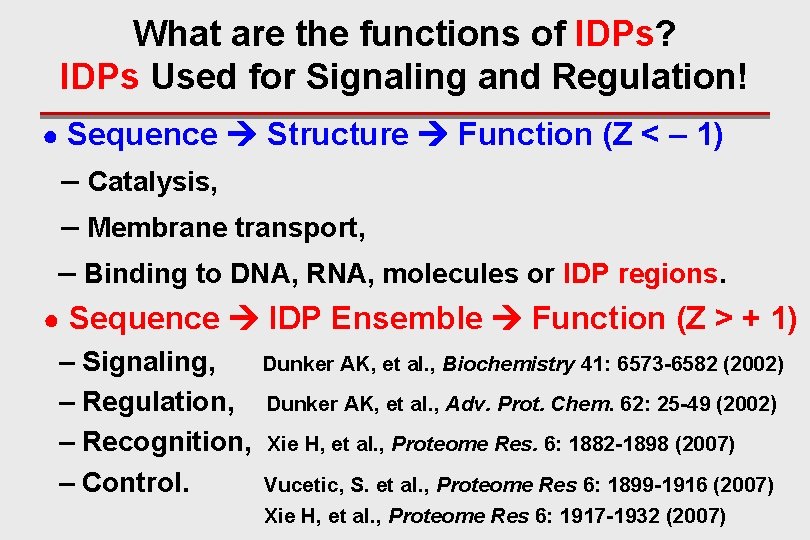
What are the functions of IDPs? IDPs Used for Signaling and Regulation! ● Sequence Structure Function (Z < – 1) – Catalysis, – Membrane transport, – Binding to DNA, RNA, molecules or IDP regions. ● Sequence IDP Ensemble Function (Z > + 1) – Signaling, – Regulation, – Recognition, – Control. Dunker AK, et al. , Biochemistry 41: 6573 -6582 (2002) Dunker AK, et al. , Adv. Prot. Chem. 62: 25 -49 (2002) Xie H, et al. , Proteome Res. 6: 1882 -1898 (2007) Vucetic, S. et al. , Proteome Res 6: 1899 -1916 (2007) Xie H, et al. , Proteome Res 6: 1917 -1932 (2007)
Summary Sequence Structure Function
Intrinsically Disordered Proteins THANK YOU!!! (kedunker@iupui. edu) Funding: NIH, NSF, INGEN IUPUI Signature Centers Initiative