
Identity Theft How to Protect Yourself Identity Theft

- Slides: 21
Identity Theft: How to Protect Yourself
Identity Theft n Identity theft defined: q the crime of obtaining the personal or financial information of another person for the purpose of assuming that person's name to make purchases. n Identity theft statistics (2010): q 8. 1 million victims q $37 billion total costs q Average out-of-pocket costs $631 q 26 million records exposed through data breaches q “Friendly” fraud is up – the victim know the thief
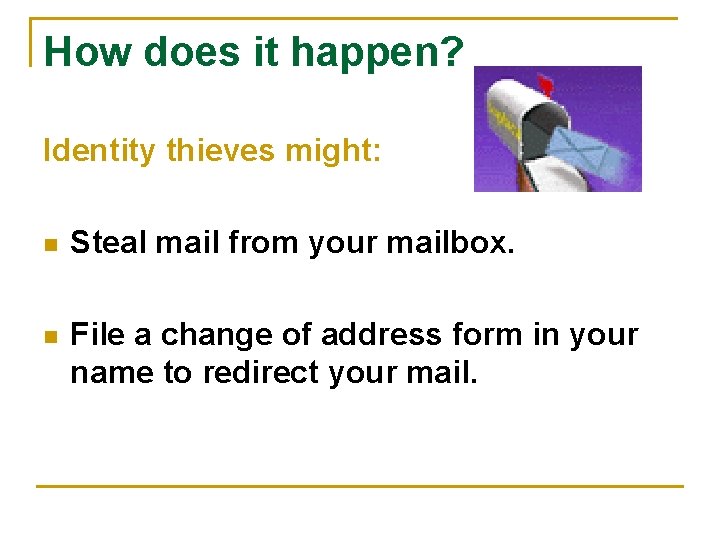
How does it happen? Identity thieves might: n Steal mail from your mailbox. n File a change of address form in your name to redirect your mail.
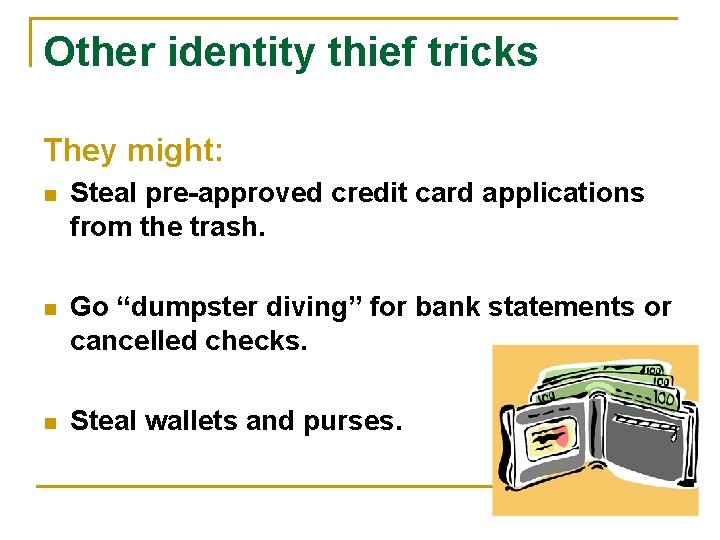
Other identity thief tricks They might: n Steal pre-approved credit card applications from the trash. n Go “dumpster diving” for bank statements or cancelled checks. n Steal wallets and purses.
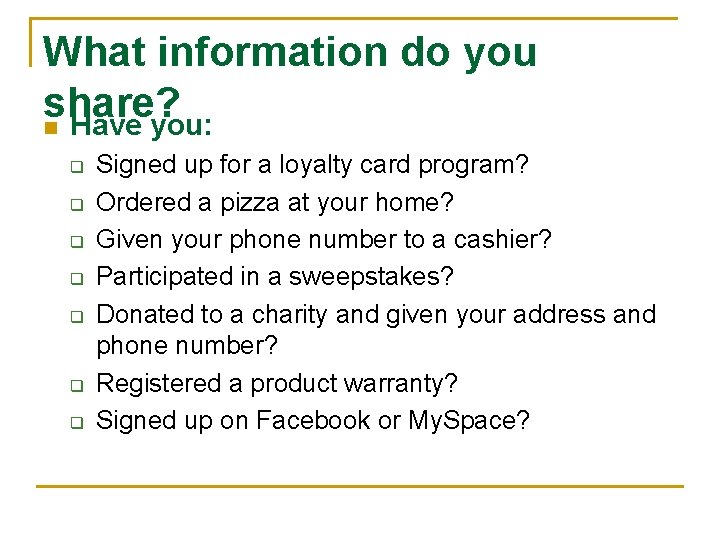
What information do you share? n Have you: q q q q Signed up for a loyalty card program? Ordered a pizza at your home? Given your phone number to a cashier? Participated in a sweepstakes? Donated to a charity and given your address and phone number? Registered a product warranty? Signed up on Facebook or My. Space?
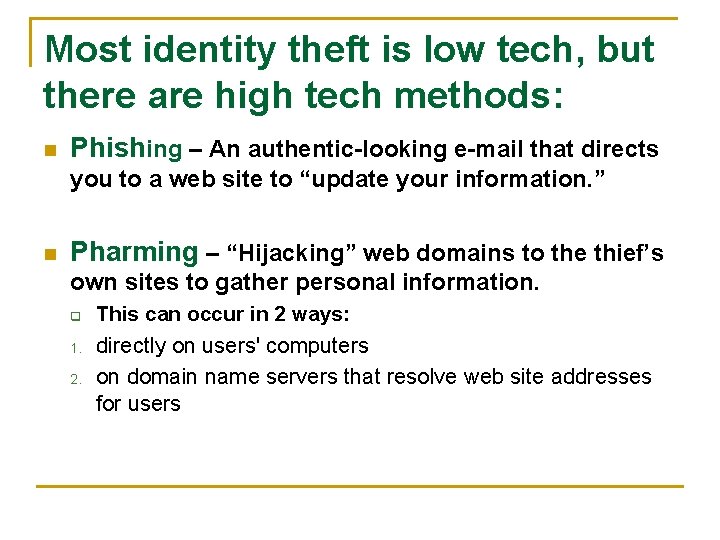
Most identity theft is low tech, but there are high tech methods: n Phishing – An authentic-looking e-mail that directs you to a web site to “update your information. ” n Pharming – “Hijacking” web domains to the thief’s own sites to gather personal information. q 1. 2. This can occur in 2 ways: directly on users' computers on domain name servers that resolve web site addresses for users
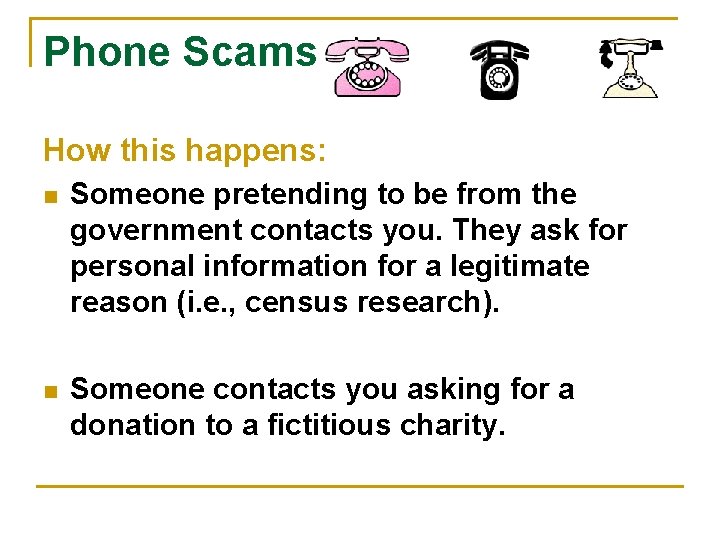
Phone Scams How this happens: n Someone pretending to be from the government contacts you. They ask for personal information for a legitimate reason (i. e. , census research). n Someone contacts you asking for a donation to a fictitious charity.
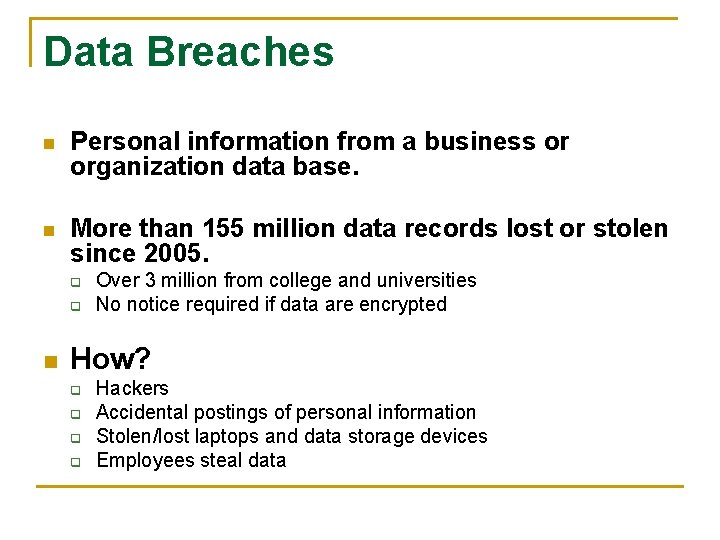
Data Breaches n Personal information from a business or organization data base. n More than 155 million data records lost or stolen since 2005. q q n Over 3 million from college and universities No notice required if data are encrypted How? q q Hackers Accidental postings of personal information Stolen/lost laptops and data storage devices Employees steal data
Twin Wi-Fi Hotspots n Hacker creates a hotspot with the same (or similar) name as a legitimate hotspot – at airports, coffee shops, etc. n Users connect to the hacker’s hotspot instead of the legitimate one n Hackers collect personal information
How to Protect Yourself Mail: n Put outgoing mail in secured mailboxes -- U. S. Postal Service mailboxes or the post office. n Monitor your mail. If a bill or statement doesn’t arrive on time, find out why not. n Buy a shredder. SHRED all billing statements and pre-approved credit card offers.
How Prepared Are You? n 1. 2. 3. 4. 5. True or False: I use a computer with a firewall. I don’t have a password or pin that is based on easily available information. I shred all documents with personal information on it. I never give out my SSN unless I initiate the contact. I use a mailbox with a lock on it.
How to Protect Yourself Banking: n Have new checks mailed to a P. O. Box or pick up them from the bank unless you have a secured mailbox. n If you get an e-mail or phone call asking you to update your banking records, do not give out personal information. Call your bank yourself.
How to Protect Yourself n Check out e-mails before answering. Never open an e-mail attachment unless you expected it or know what it contains. n Never click on a web link in an e-mail. Check it out by opening a new browser window and typing in the URL. Watch that the URL doesn’t change when the site comes up. Check out e-mail scams at www. snopes. com.
How to Protect Yourself n Don’t use easily available information (mother’s maiden name, birth date, the last 4 digits of your SSN or phone number, or consecutive numbers) for passwords and PINs. n Pay attention to announcements about data breaches. n Learn what legitimate hotspot web pages look like. Don’t send sensitive information through public Wi-Fi networks.
How to Protect Yourself: n Credit Freeze: puts a lock on access to your account. q q q n $3 in Georgia for each credit bureau Unless you are 65+ or a victim of identity theft Credit “thaw” within 15 minutes: $3 Some companies aren’t affected by the freeze q q q Insurance companies Existing creditors Law enforcement agencies
How to Protect Yourself: n Identity Theft Prevention Products q q q Life Lock Loud Siren Many more! Check to make sure they are legitimate
Monitor Your Personal Information n Check your credit card statements and bank records for unfamiliar transactions and report them. n Check your credit report! Visit www. annualcreditreport. com n If you must give out personal information via phone, do so in a secure area. You never know who could be listening.
Reporting Identity Theft If you think your identity has been stolen: n Contact one of the three major credit reporting agencies to create a fraud alert with all three: q q q Equifax: 1 -800 -766 -0008 Experian: 1 -888 -397 -3742 Trans. Union: 1 -800 -680 -7289 n Close accounts that have been tampered with. n File a complaint with the Federal Trade Commission. n File a report with the police.
Other Tips for Reporting Identity Theft n Act quickly! n Keep a record of all conversations. n Keep copies of e-mails. n Make a copy of all documents you send and use certified mail.
For individual help contact: The Peer Financial Counseling Program (insert web address, phone number, and/or e-mail)
Special Thanks to. . .