
Identities Abroad PERNELL WHITFIELD JMU SONYA HENRY GMU
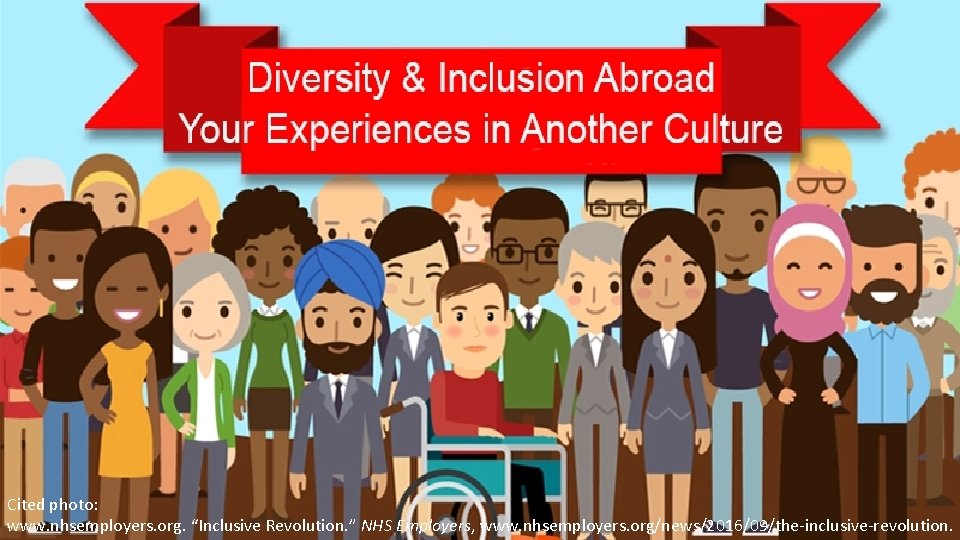
Identities Abroad PERNELL WHITFIELD (JMU) SONYA HENRY (GMU) Cited photo: www. nhsemployers. org. “Inclusive Revolution. ” NHS Employers, www. nhsemployers. org/news/2016/09/the-inclusive-revolution.
DIVERSITY & INLCUSION IN STUDY ABROAD Learning Outcomes: What should attendees know and be able to do as a result of attending this session? § Attendees will know and be able to summarize the U. S. demographics of study abroad students. This sessions is designed for study abroad returnees to discuss topics surrounding diversity and inclusion in education abroad, using their own study abroad experiences as points of reference. § Attendees be able to describe the various dimensions of culture and identity. § Attendees will discuss and relate to identity-based experiences that they and the other participants experienced before, during, and after a study abroad experience. § Attendees will develop resources and organize recommendations for increasing diversity and inclusion in all aspects of the study abroad process ideas and suggestions of best practices for study abroad programs to be more inclusive.
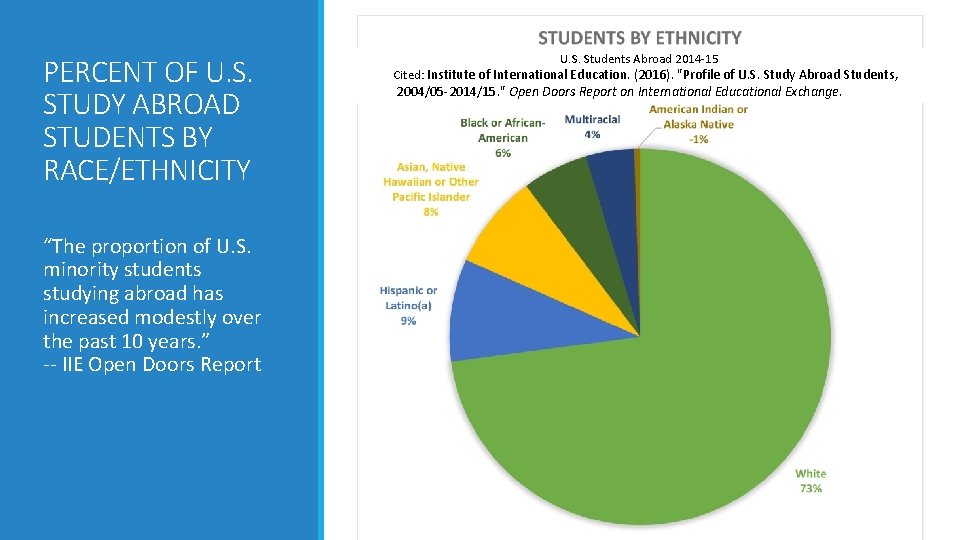
PERCENT OF U. S. STUDY ABROAD STUDENTS BY RACE/ETHNICITY “The proportion of U. S. minority students studying abroad has increased modestly over the past 10 years. ” -- IIE Open Doors Report U. S. Students Abroad 2014 -15 Cited: Institute of International Education. (2016). "Profile of U. S. Study Abroad Students, 2004/05 -2014/15. " Open Doors Report on International Educational Exchange.
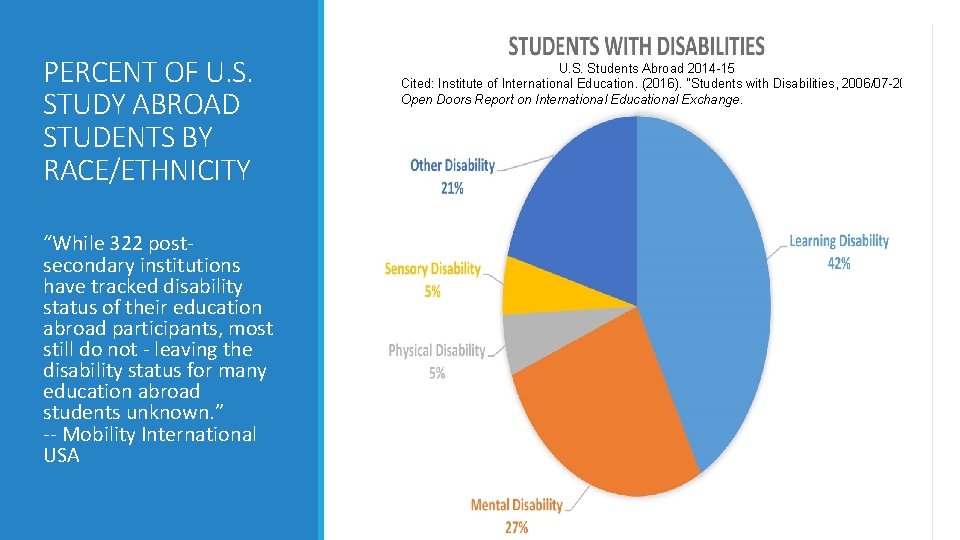
PERCENT OF U. S. STUDY ABROAD STUDENTS BY RACE/ETHNICITY “While 322 postsecondary institutions have tracked disability status of their education abroad participants, most still do not - leaving the disability status for many education abroad students unknown. ” -- Mobility International USA STUDENTS WITH DISABILITIES U. S. Students Abroad 2014 -15 Cited: Institute of International Education. (2016). "Students with Disabilities, 2006/07 -2014/15. “ Open Doors Report on International Educational Exchange. Other Disability Learning Disability Sensory Disability Physical Disability Mental Disability
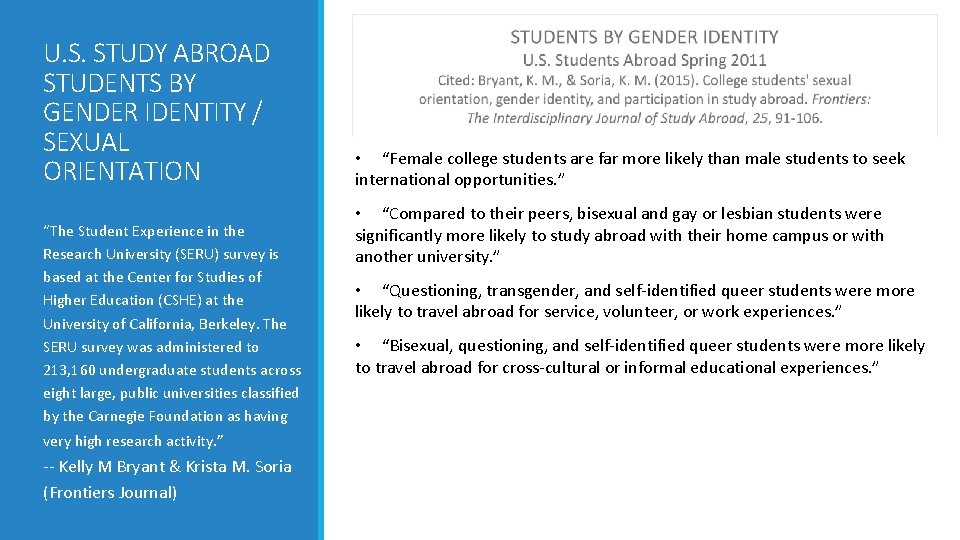
U. S. STUDY ABROAD STUDENTS BY GENDER IDENTITY / SEXUAL ORIENTATION “The Student Experience in the Research University (SERU) survey is based at the Center for Studies of Higher Education (CSHE) at the University of California, Berkeley. The SERU survey was administered to 213, 160 undergraduate students across eight large, public universities classified by the Carnegie Foundation as having very high research activity. ” -- Kelly M Bryant & Krista M. Soria (Frontiers Journal) • “Female college students are far more likely than male students to seek international opportunities. ” • “Compared to their peers, bisexual and gay or lesbian students were significantly more likely to study abroad with their home campus or with another university. ” • “Questioning, transgender, and self-identified queer students were more likely to travel abroad for service, volunteer, or work experiences. ” • “Bisexual, questioning, and self-identified queer students were more likely to travel abroad for cross-cultural or informal educational experiences. ”
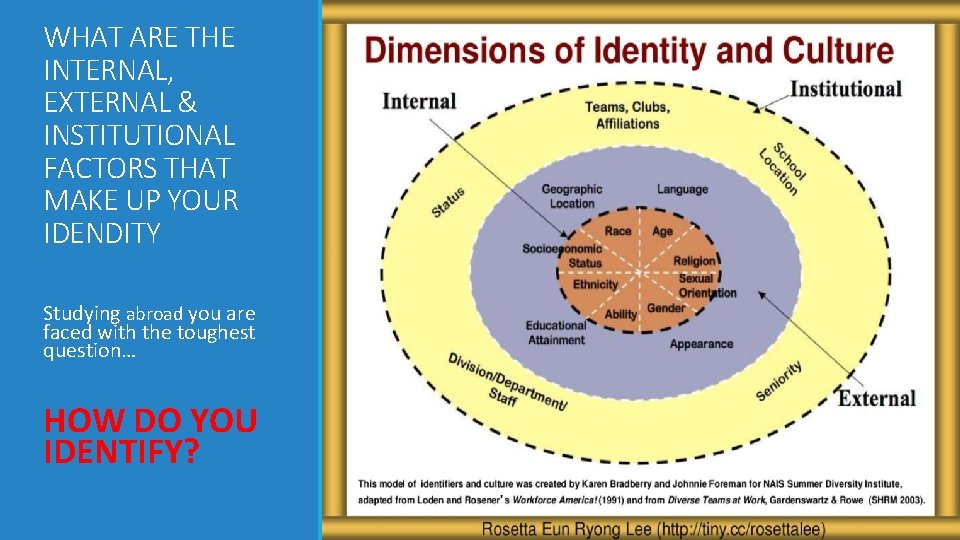
WHAT ARE THE INTERNAL, EXTERNAL & INSTITUTIONAL FACTORS THAT MAKE UP YOUR IDENDITY Studying abroad you are faced with the toughest question… HOW DO YOU IDENTIFY?
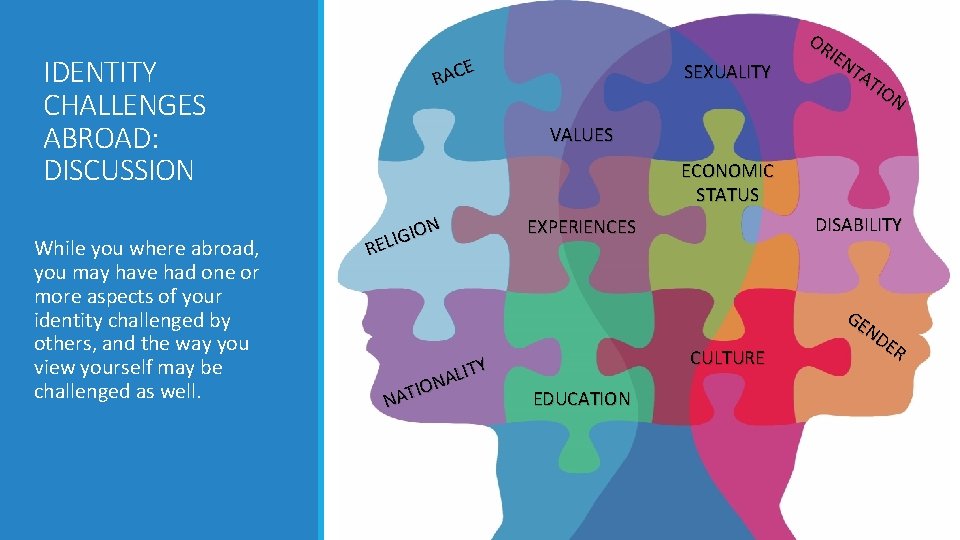
IDENTITY CHALLENGES ABROAD: DISCUSSION While you where abroad, you may have had one or more aspects of your identity challenged by others, and the way you view yourself may be challenged as well. E RAC SEXUALITY OR IEN TA TIO N VALUES ECONOMIC STATUS ON I G I REL ITY L A ION T A N DISABILITY EXPERIENCES CULTURE EDUCATION GE ND ER
PRE-DEPARTURE CHALLENGES § What were your hesitations about studying abroad before you left the United States? § What challenges did you encountered throughout the pre-departure phases? You may have felt varying levels of support preparing for your study abroad program. § How did you use your identity background to prepare for your study abroad experience? § What information do you wish was addressed prior to departure?
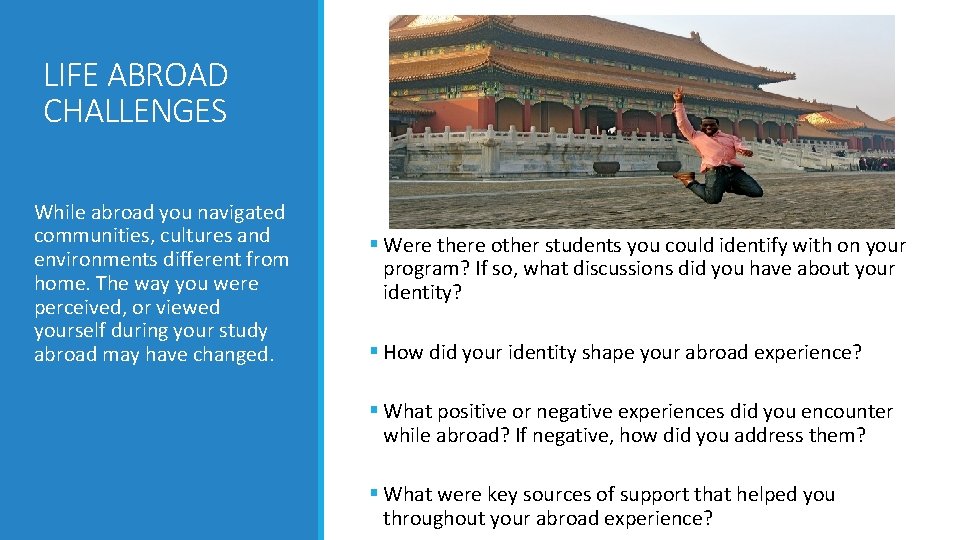
LIFE ABROAD CHALLENGES While abroad you navigated communities, cultures and environments different from home. The way you were perceived, or viewed yourself during your study abroad may have changed. § Were there other students you could identify with on your program? If so, what discussions did you have about your identity? § How did your identity shape your abroad experience? § What positive or negative experiences did you encounter while abroad? If negative, how did you address them? § What were key sources of support that helped you throughout your abroad experience?
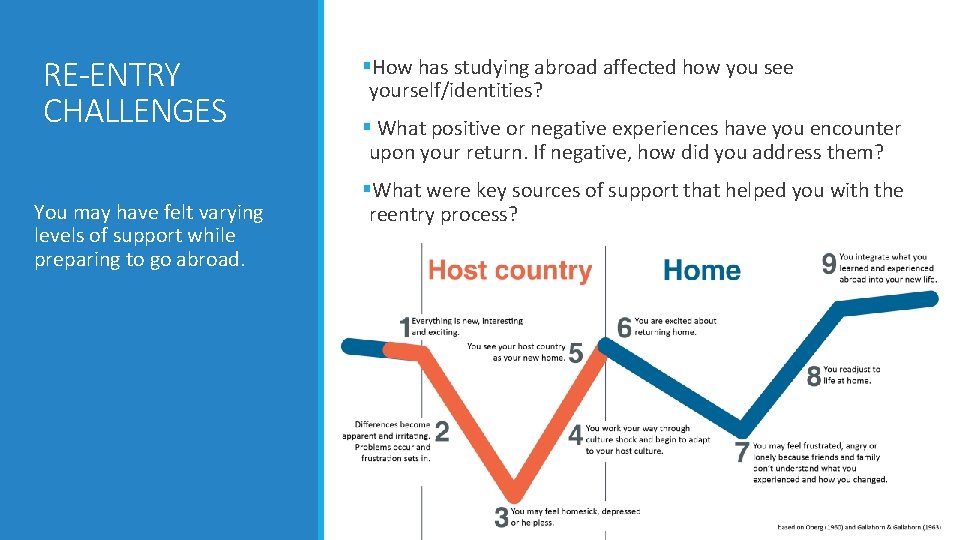
RE-ENTRY CHALLENGES You may have felt varying levels of support while preparing to go abroad. §How has studying abroad affected how you see yourself/identities? § What positive or negative experiences have you encounter upon your return. If negative, how did you address them? §What were key sources of support that helped you with the reentry process?
TOOL & ACTION You will remember your study abroad experience for the rest of your life. You have an opportunity to provide constructive feedback that can enhance study abroad for those that come after you. § In your opinion, what ways can study abroad programs seek to be more inclusive? § What advice would you give to students who may have similar identity issues? § What else would you like to discuss?
T ! s k n ha Any questions? Developed by Lessons from Abroad Advisory Board Contributors: La. Sharon Mc. Lean Perez (UCR), Darin Smith-Gaddis (CAPA), Sonya Henry (GMU), Macy Ring (UCR), Pernell Whitfield (JMU), David Wick (MIIS)
- Slides: 12