
Identifying Threads Sealing Methods and Industrial Fittings Module









- Slides: 80
Identifying Threads, Sealing Methods and Industrial Fittings
Module Objectives z. Explain the basic thread characteristics necessary to identify threads
Module Objectives z. Explain the basic thread characteristics necessary to identify threads z. Differentiate between and identify various types of threads used on industrial fittings
Module Objectives z. Explain the basic thread characteristics necessary to identify threads z. Differentiate between and identify various types of threads used on industrial fittings z. Explain the various sealing methods used for the different fittings
Module Objectives z. Explain the basic thread characteristics necessary to identify threads z. Differentiate between and identify various types of threads used on industrial fittings z. Explain the various sealing methods used for the different fittings z. Identify different types of fittings being used in the industrial market place
Thread Characteristics
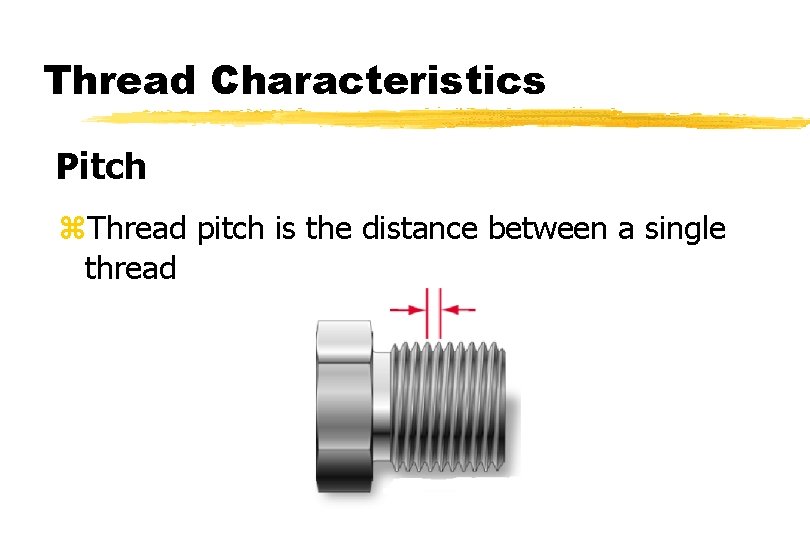
Thread Characteristics Pitch z. Thread pitch is the distance between a single thread
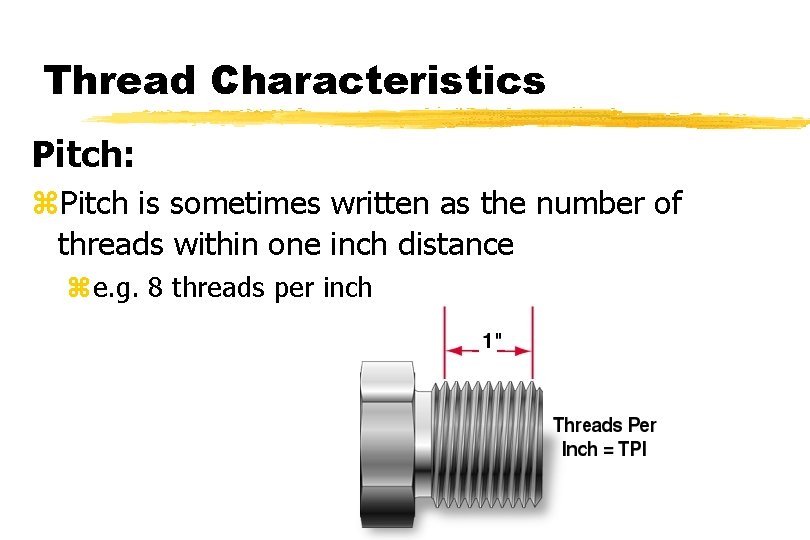
Thread Characteristics Pitch: z. Pitch is sometimes written as the number of threads within one inch distance ze. g. 8 threads per inch
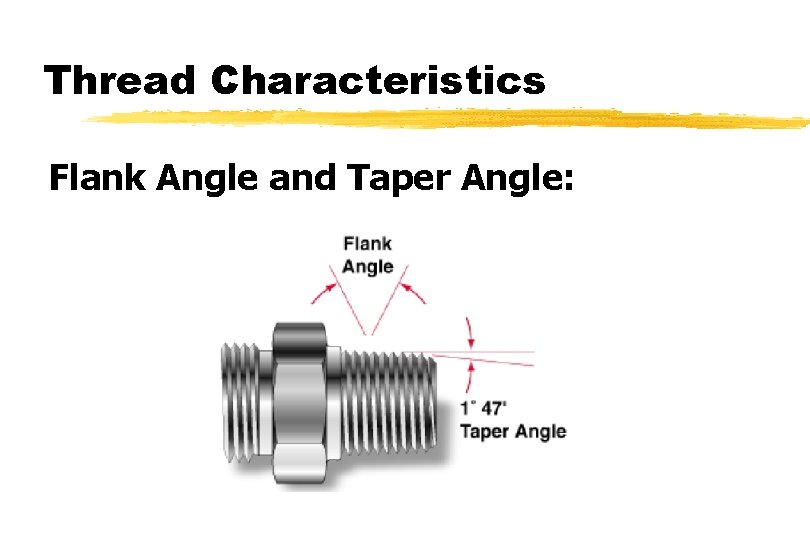
Thread Characteristics Flank Angle and Taper Angle:
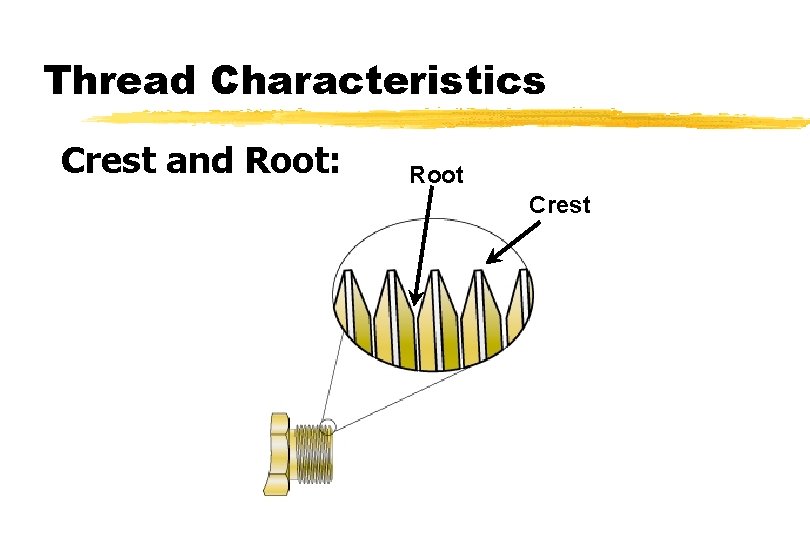
Thread Characteristics Crest and Root: Root Crest
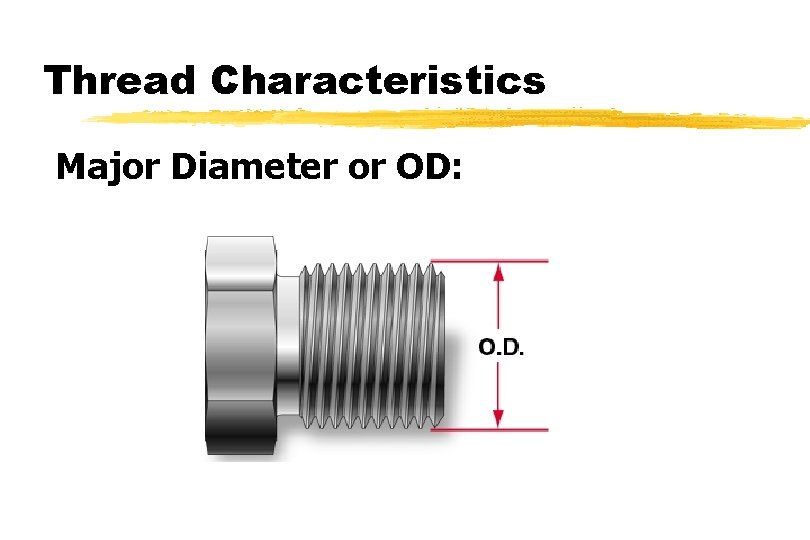
Thread Characteristics Major Diameter or OD:
Thread Style and Function
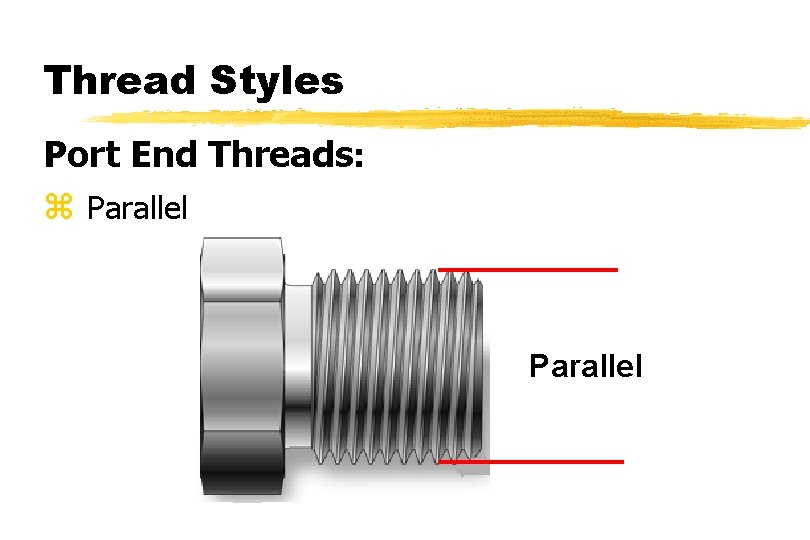
Thread Styles Port End Threads: z Parallel
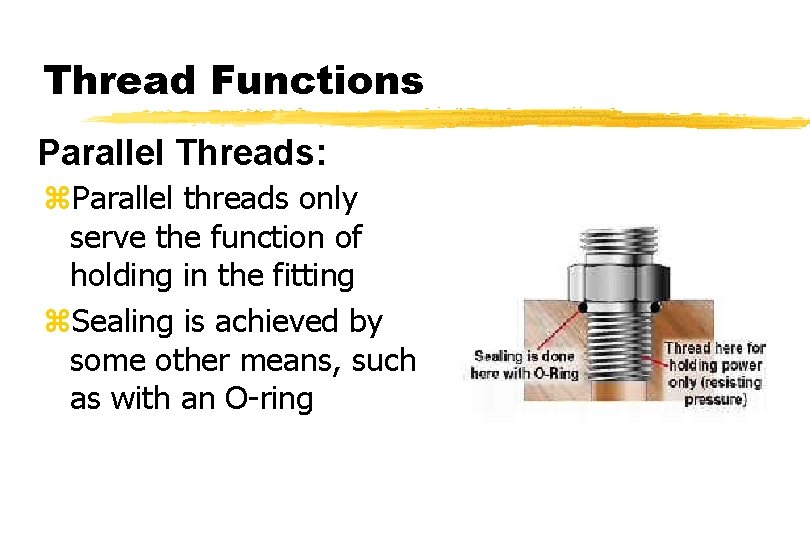
Thread Functions Parallel Threads: z. Parallel threads only serve the function of holding in the fitting z. Sealing is achieved by some other means, such as with an O-ring
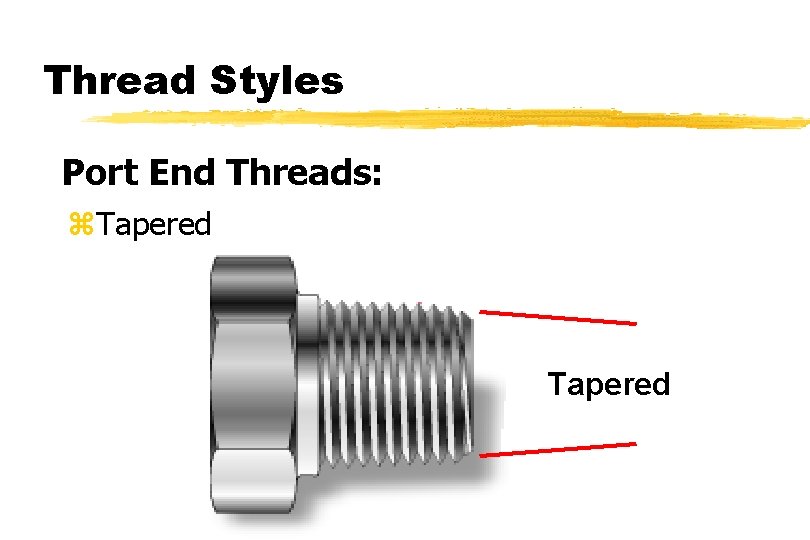
Thread Styles Port End Threads: z. Tapered
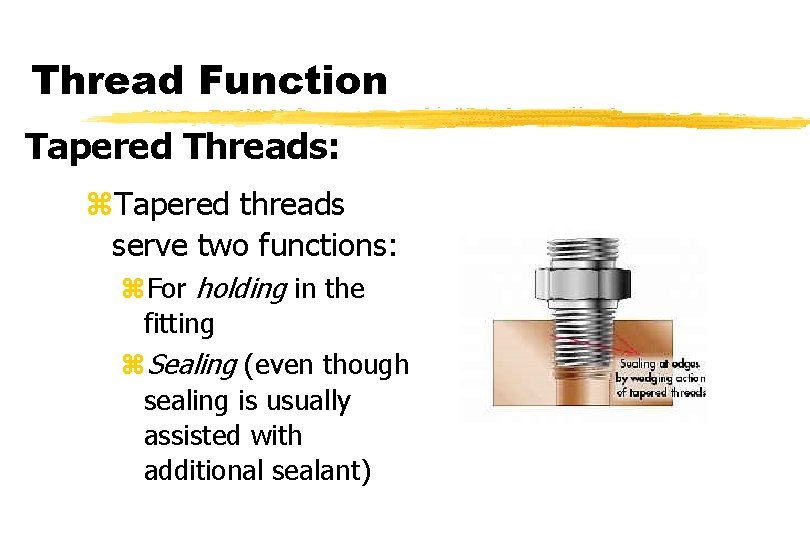
Thread Function Tapered Threads: z. Tapered threads serve two functions: z. For holding in the fitting z. Sealing (even though sealing is usually assisted with additional sealant)
Thread ID Tools
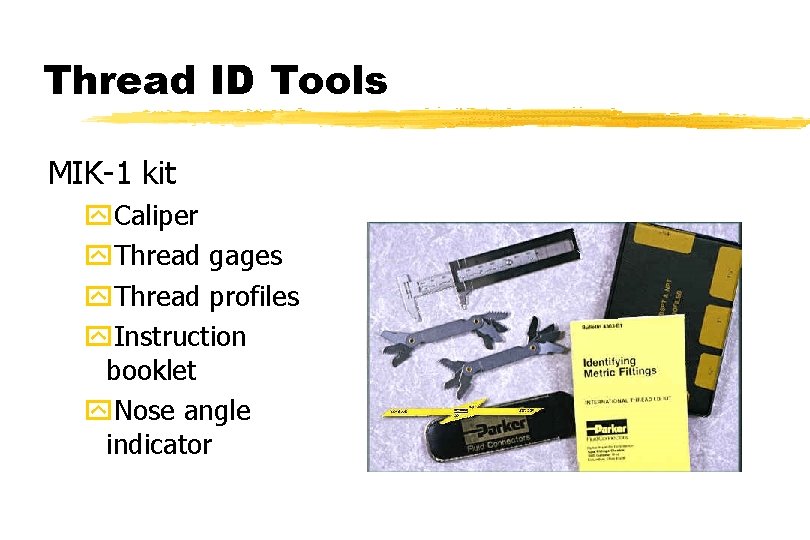
Thread ID Tools z. MIK-1 kit z. Port Boards z. Known Threads z. Markings and Tables
Thread ID Tools MIK-1 kit y. Caliper y. Thread gages y. Thread profiles y. Instruction booklet y. Nose angle indicator
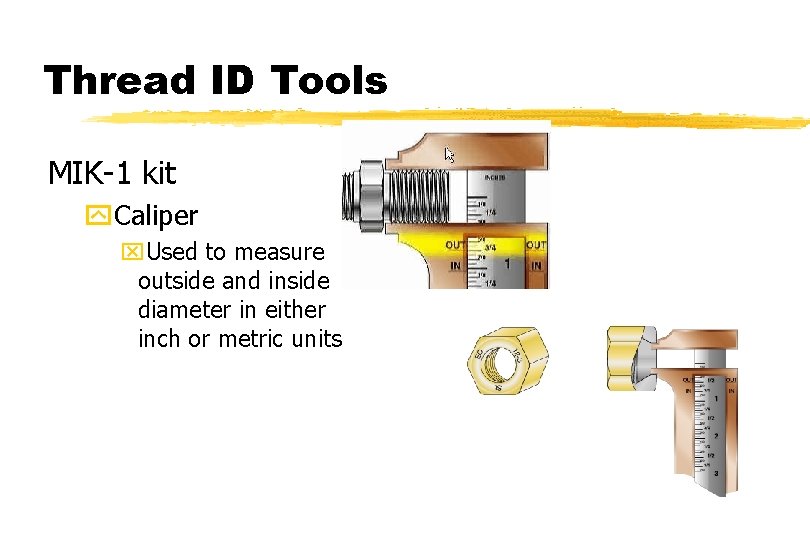
Thread ID Tools MIK-1 kit y. Caliper x. Used to measure outside and inside diameter in either inch or metric units
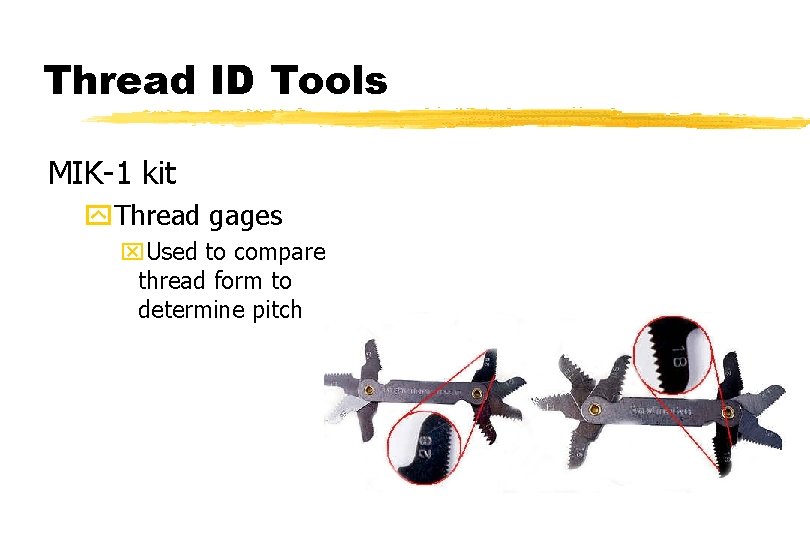
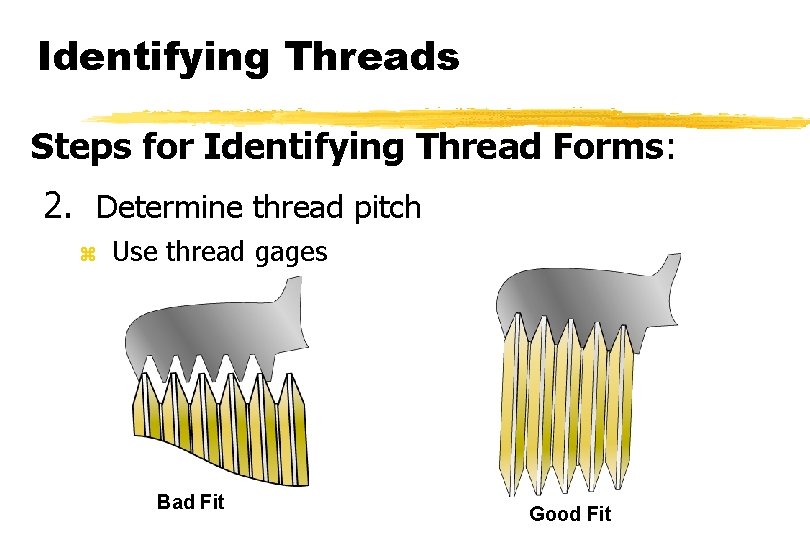
Thread ID Tools MIK-1 kit y. Thread gages x. Used to compare thread form to determine pitch
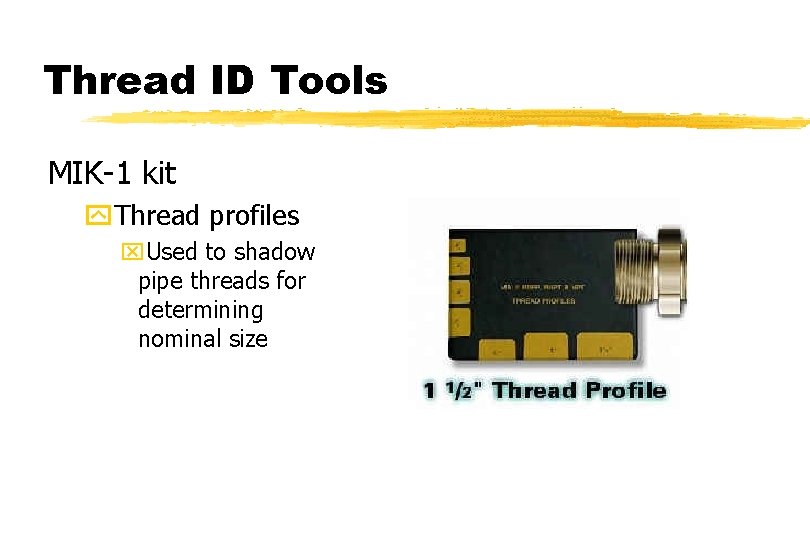
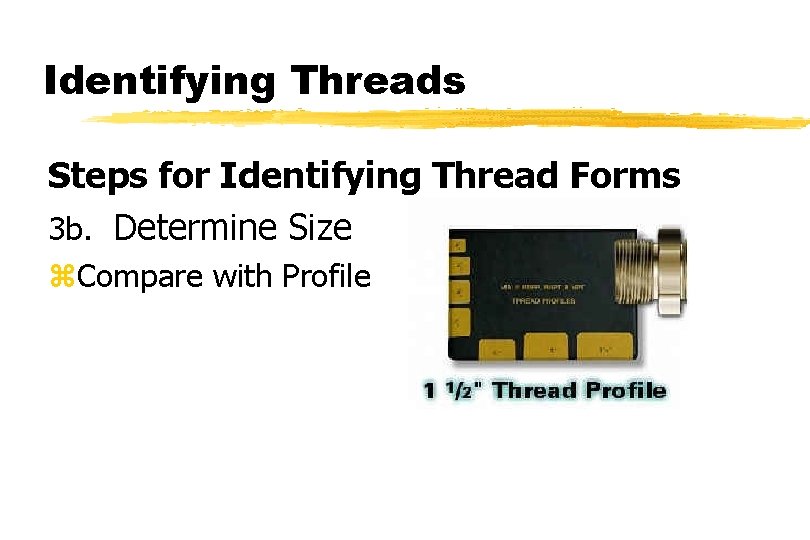
Thread ID Tools MIK-1 kit y. Thread profiles x. Used to shadow pipe threads for determining nominal size
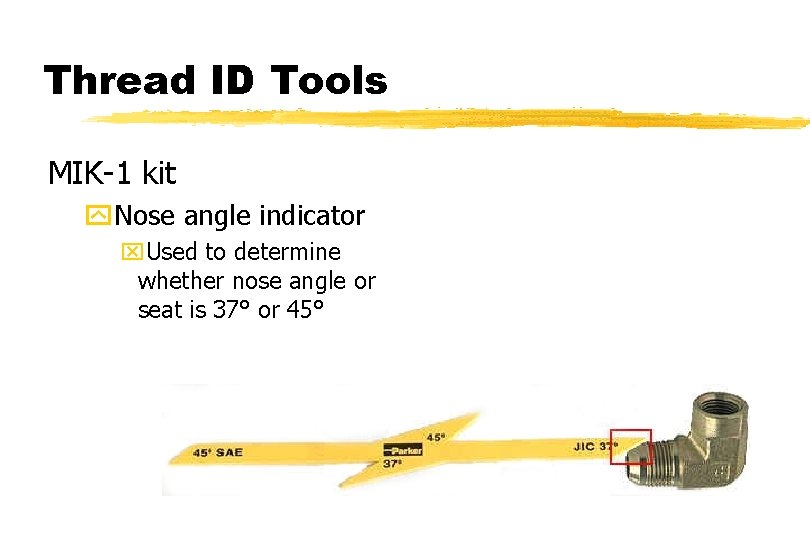
Thread ID Tools MIK-1 kit y. Nose angle indicator x. Used to determine whether nose angle or seat is 37° or 45°
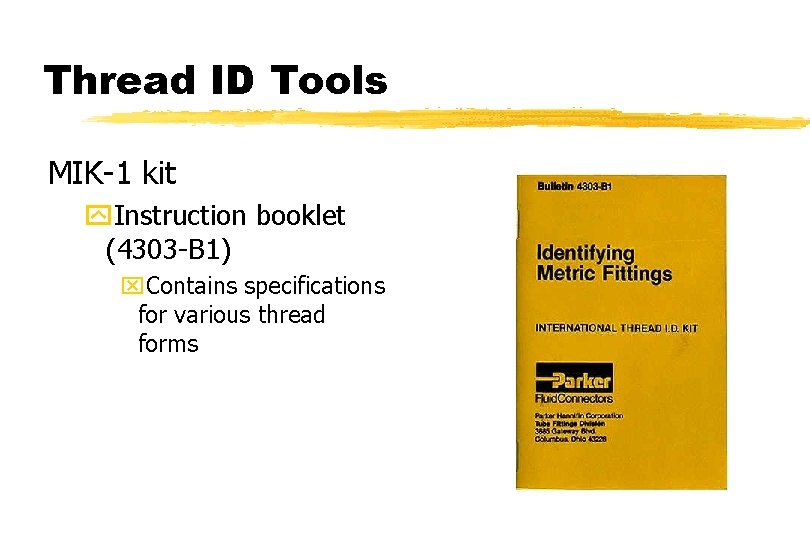
Thread ID Tools MIK-1 kit y. Instruction booklet (4303 -B 1) x. Contains specifications for various thread forms
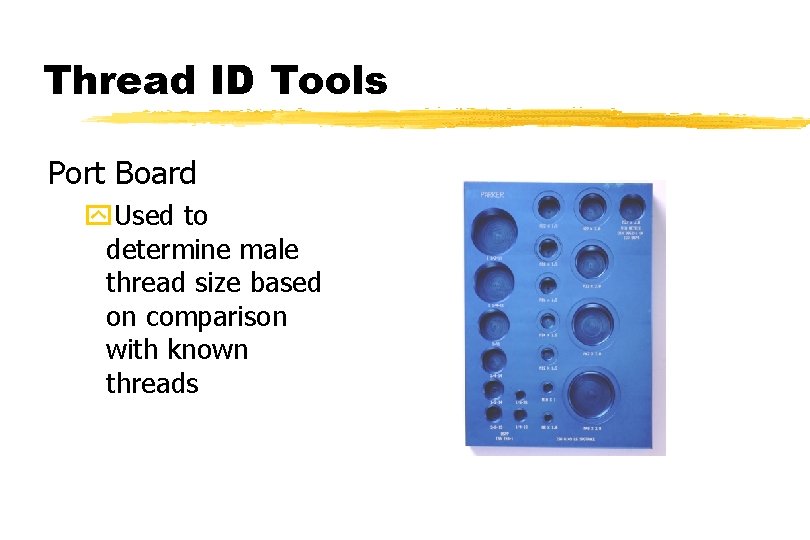
Thread ID Tools Port Board y. Used to determine male thread size based on comparison with known threads
Thread ID Tools Other Known Threads y. Tube nuts or other components where threads can be used for comparison
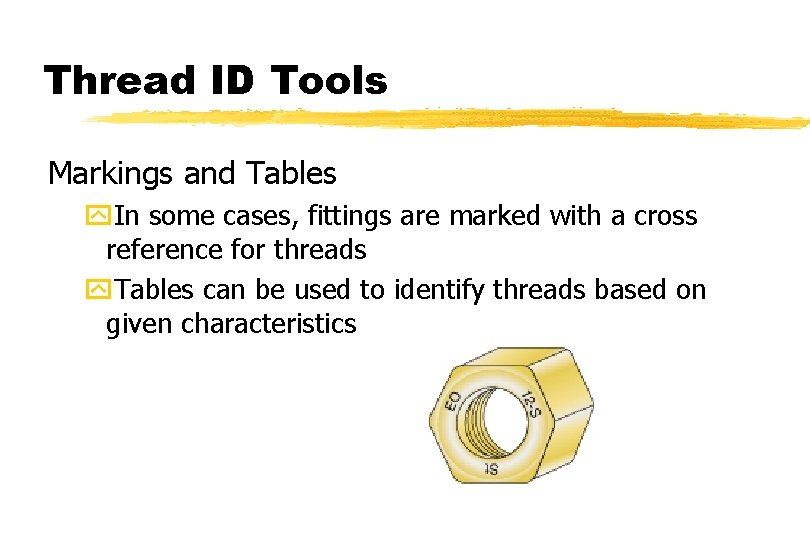
Thread ID Tools Markings and Tables y. In some cases, fittings are marked with a cross reference for threads y. Tables can be used to identify threads based on given characteristics
Identifying Threads
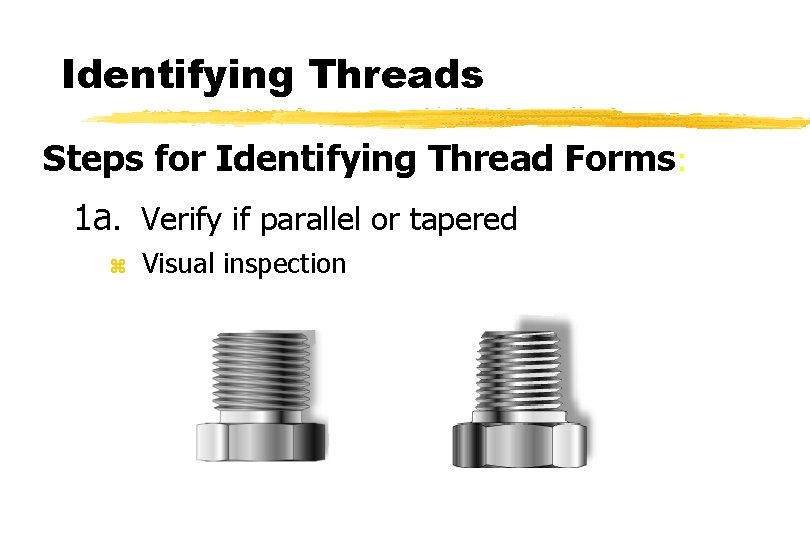
Identifying Threads Steps for Identifying Thread Forms: 1 a. Verify if parallel or tapered z Visual inspection
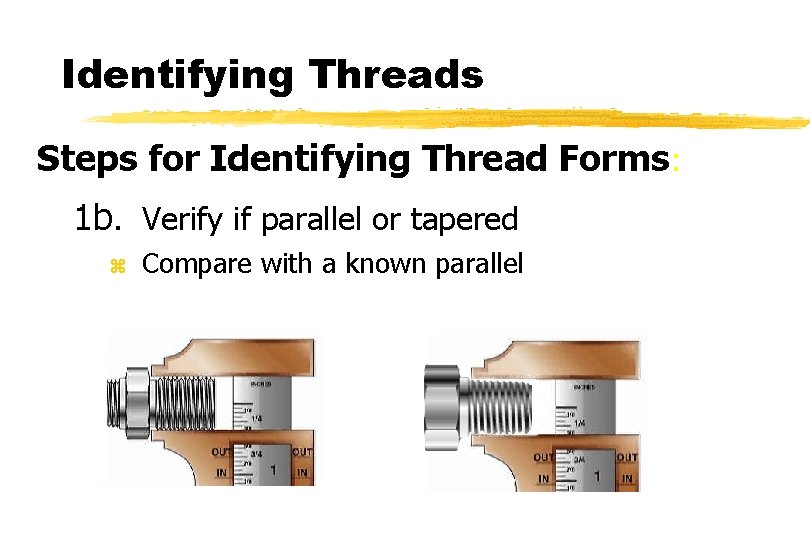
Identifying Threads Steps for Identifying Thread Forms: 1 b. Verify if parallel or tapered z Compare with a known parallel
Identifying Threads Steps for Identifying Thread Forms: 2. Determine thread pitch z Use thread gages Bad Fit Good Fit
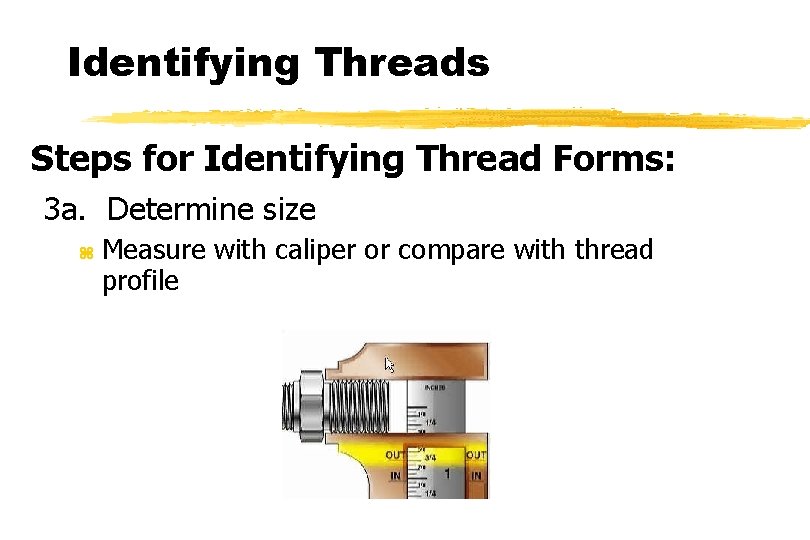
Identifying Threads Steps for Identifying Thread Forms: 3 a. Determine size z Measure with caliper or compare with thread profile
Identifying Threads Steps for Identifying Thread Forms 3 b. Determine Size z. Compare with Profile
Identifying Threads Steps for Identifying Thread Forms: 4. Define thread Threads are called out according to the type of thread y They usually follow a standard pattern and this is how they may appear on a print y
Identifying Threads Steps for Identifying Thread Forms: 4. Define thread NPT/NPTF - American Pipe Thread y Example: 1/4 -18 NPT y 1/4 = nominal size y 18 = pitch (threads per inch) y NPT or NPTF usually specified or NPT/NPTF where it does not matter if it is either one y
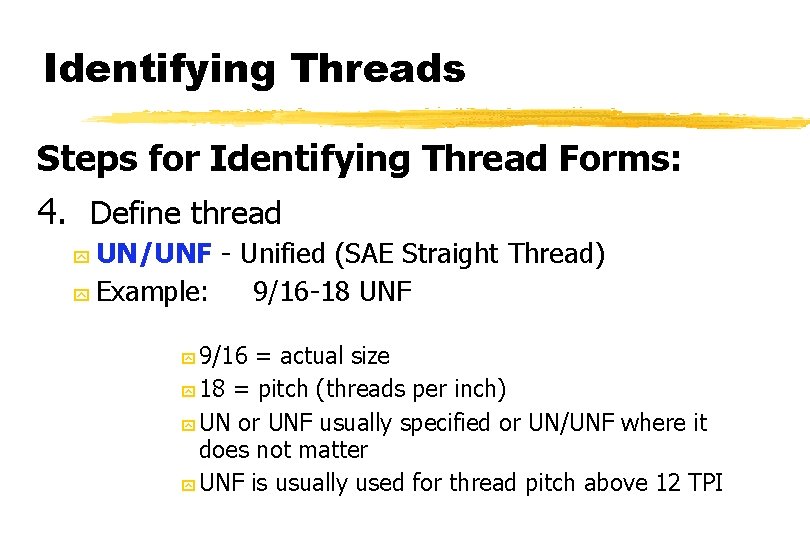
Identifying Threads Steps for Identifying Thread Forms: 4. Define thread UN/UNF - Unified (SAE Straight Thread) y Example: 9/16 -18 UNF y 9/16 = actual size y 18 = pitch (threads per inch) y UN or UNF usually specified or UN/UNF where it does not matter y UNF is usually used for thread pitch above 12 TPI y
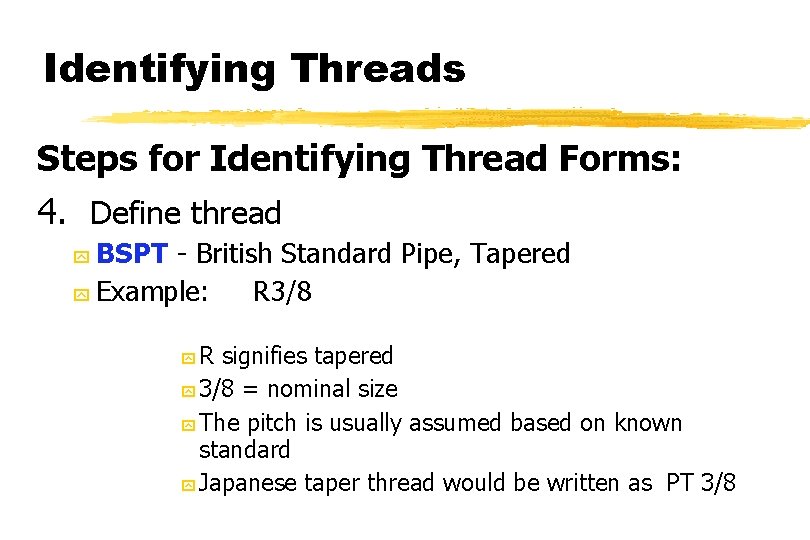
Identifying Threads Steps for Identifying Thread Forms: 4. Define thread BSPT - British Standard Pipe, Tapered y Example: R 3/8 y R signifies tapered y 3/8 = nominal size y The pitch is usually assumed based on known standard y Japanese taper thread would be written as PT 3/8 y
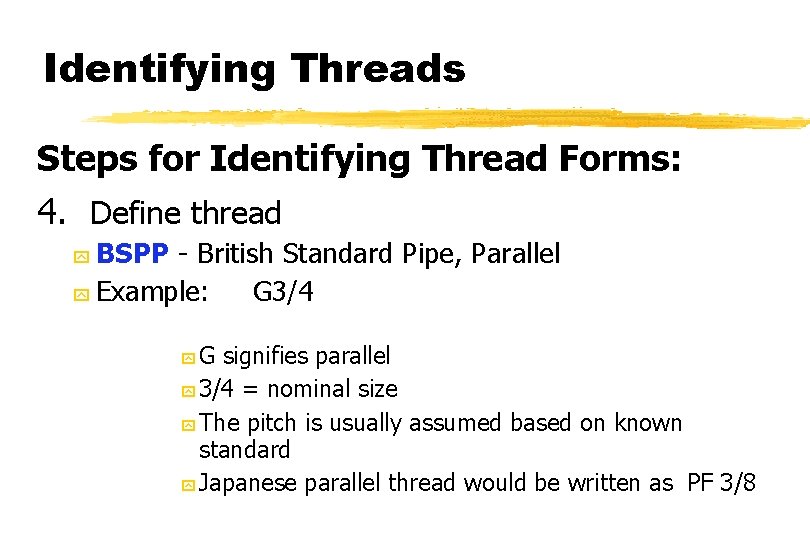
Identifying Threads Steps for Identifying Thread Forms: 4. Define thread BSPP - British Standard Pipe, Parallel y Example: G 3/4 y G signifies parallel y 3/4 = nominal size y The pitch is usually assumed based on known standard y Japanese parallel thread would be written as PF 3/8 y
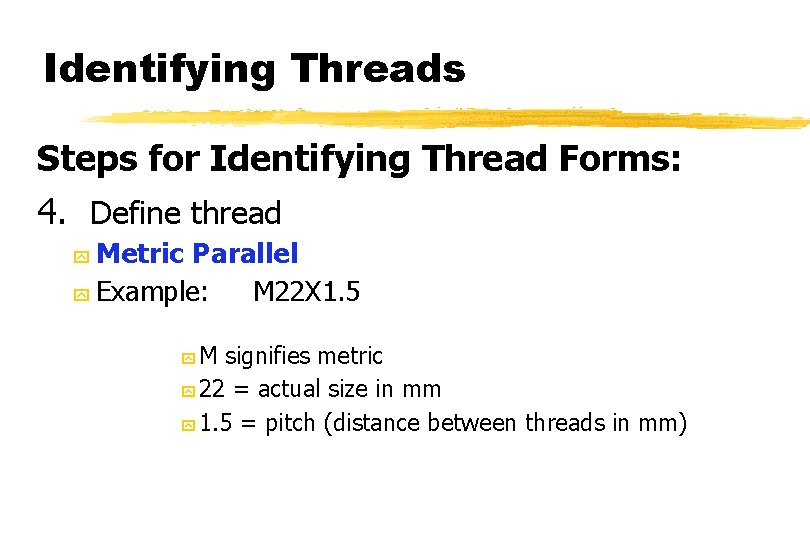
Identifying Threads Steps for Identifying Thread Forms: 4. Define thread Metric Parallel y Example: M 22 X 1. 5 y M signifies metric y 22 = actual size in mm y 1. 5 = pitch (distance between threads in mm) y
Identifying Threads Steps for Identifying Thread Forms: 4. Define thread Metric Tapered y Example: M 10 X 1 keg (or tapered) y M signifies metric y 10 = actual size in mm y 1 = pitch (distance between threads in mm) y keg is the abbreviation for the German word meaning tapered and if the thread is tapered, it will be specified y
Port End Sealing Methods
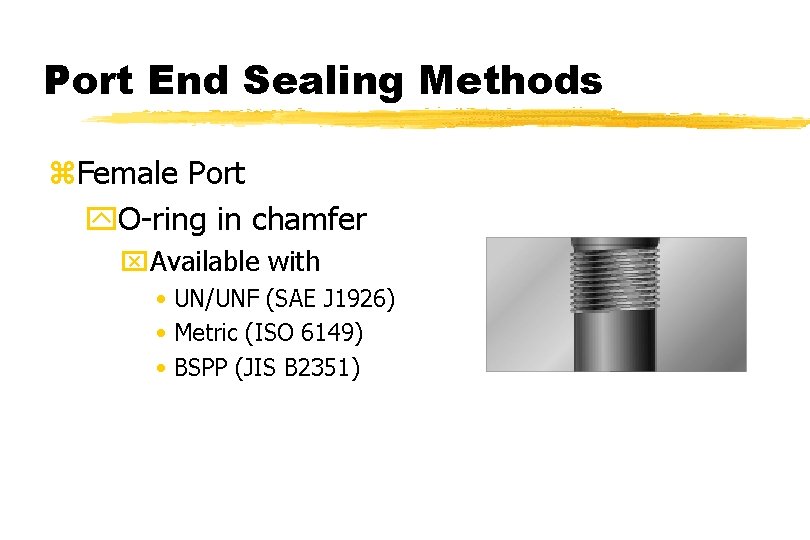
Port End Sealing Methods z. Female Port y. O-ring in chamfer x. Available with • UN/UNF (SAE J 1926) • Metric (ISO 6149) • BSPP (JIS B 2351)
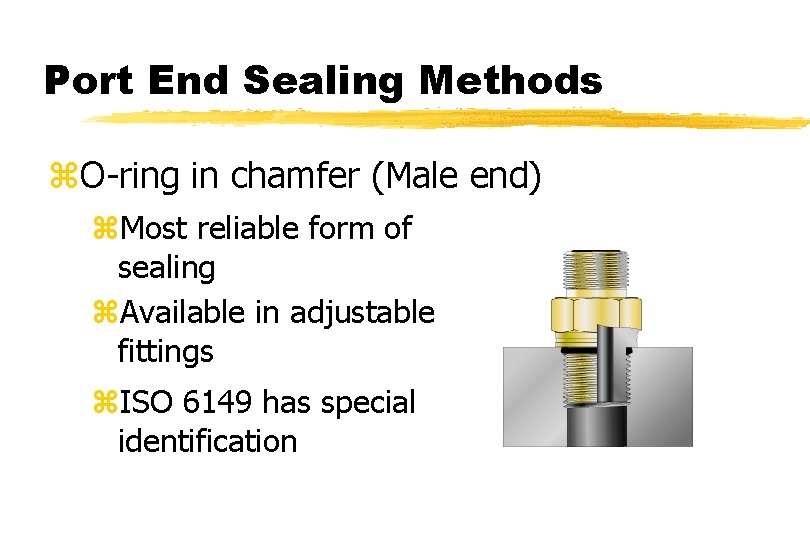
Port End Sealing Methods z. O-ring in chamfer (Male end) z. Most reliable form of sealing z. Available in adjustable fittings z. ISO 6149 has special identification
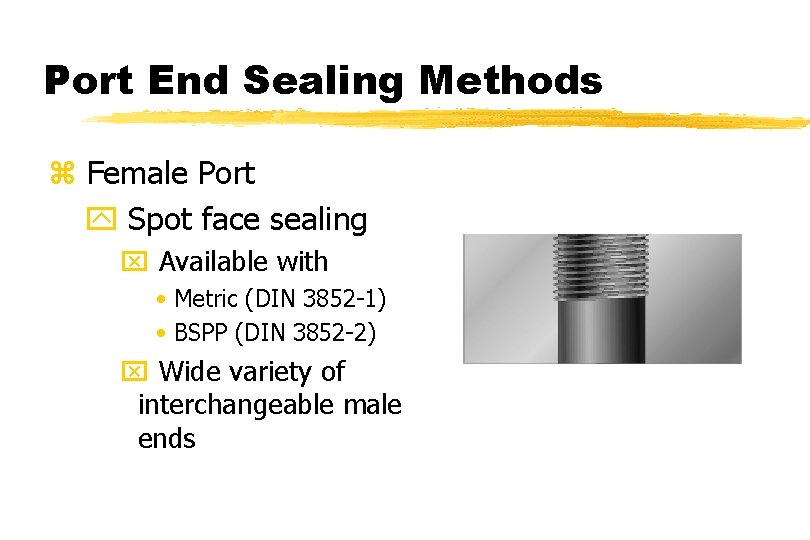
Port End Sealing Methods z Female Port y Spot face sealing x Available with • Metric (DIN 3852 -1) • BSPP (DIN 3852 -2) x Wide variety of interchangeable male ends
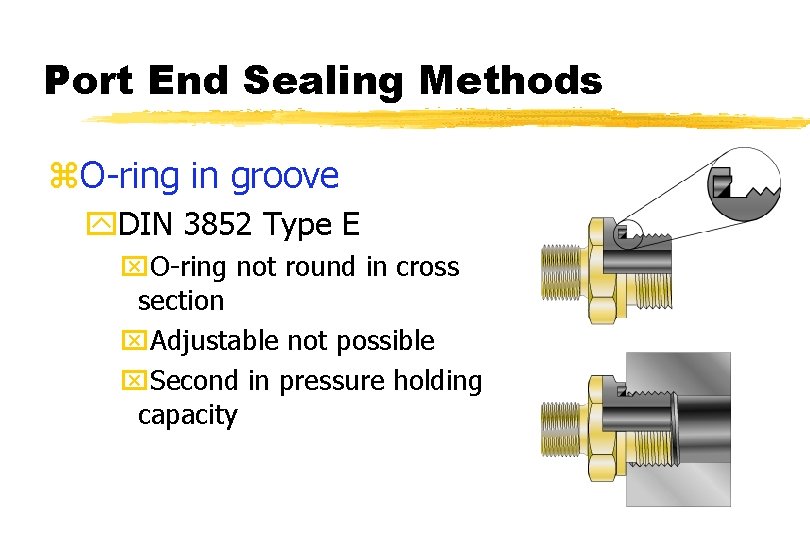
Port End Sealing Methods z. O-ring in groove y. DIN 3852 Type E x. O-ring not round in cross section x. Adjustable not possible x. Second in pressure holding capacity
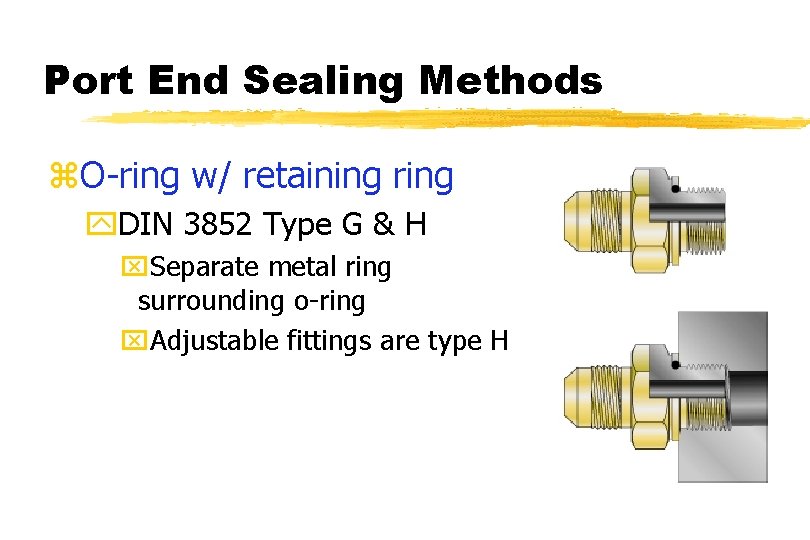
Port End Sealing Methods z. O-ring w/ retaining ring y. DIN 3852 Type G & H x. Separate metal ring surrounding o-ring x. Adjustable fittings are type H
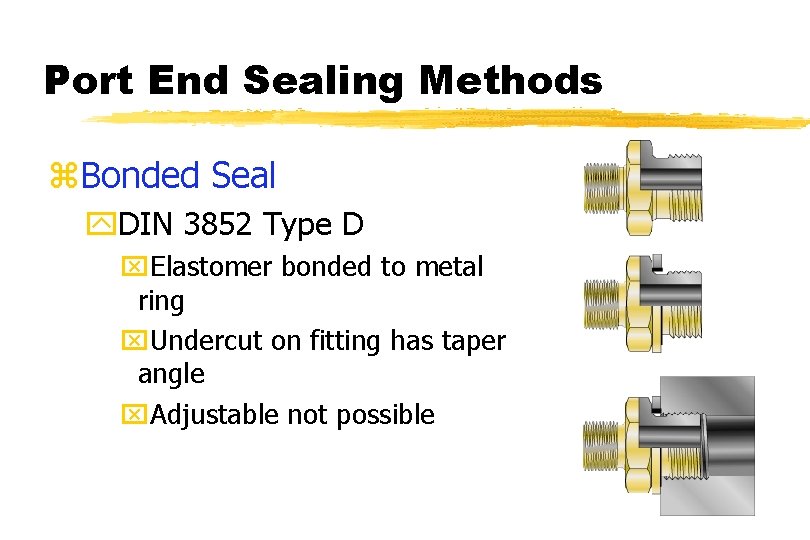
Port End Sealing Methods z. Bonded Seal y. DIN 3852 Type D x. Elastomer bonded to metal ring x. Undercut on fitting has taper angle x. Adjustable not possible
Port End Sealing Methods z. Hard metal seal y. DIN 3852 x. Typically used on Banjo fittings x. Seals by coining surface of port x. Limited reusability x. Useful for extreme temperatures x. Adjustable not possible
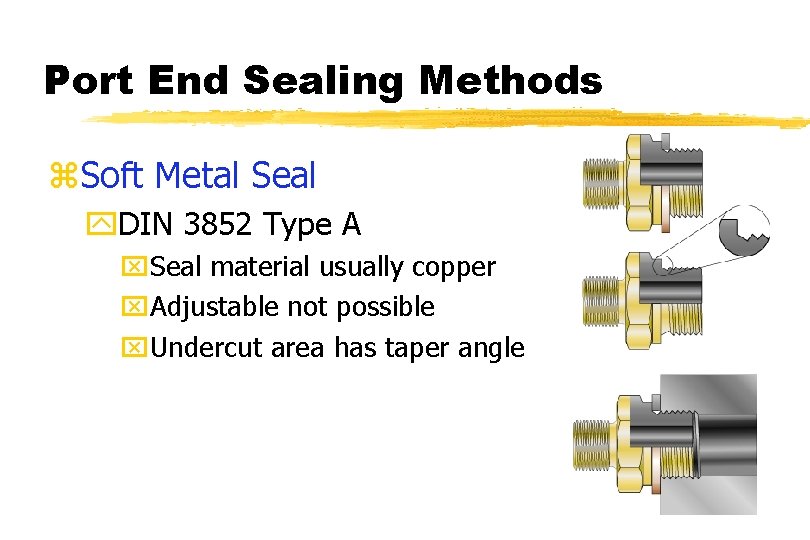
Port End Sealing Methods z. Soft Metal Seal y. DIN 3852 Type A x. Seal material usually copper x. Adjustable not possible x. Undercut area has taper angle
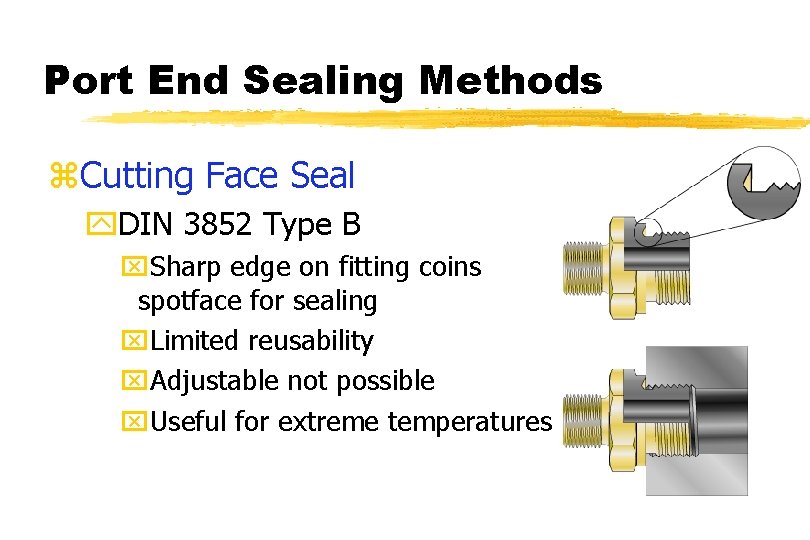
Port End Sealing Methods z. Cutting Face Seal y. DIN 3852 Type B x. Sharp edge on fitting coins spotface for sealing x. Limited reusability x. Adjustable not possible x. Useful for extreme temperatures
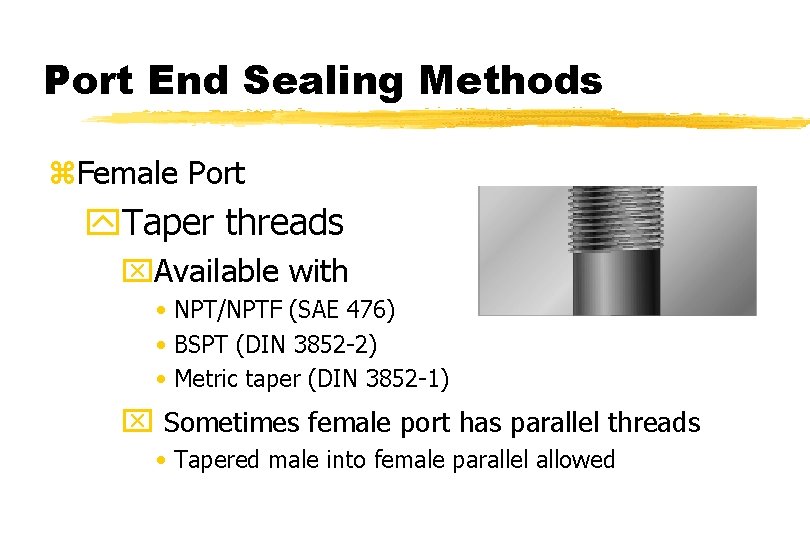
Port End Sealing Methods z. Female Port y. Taper threads x. Available with • NPT/NPTF (SAE 476) • BSPT (DIN 3852 -2) • Metric taper (DIN 3852 -1) x Sometimes female port has parallel threads • Tapered male into female parallel allowed
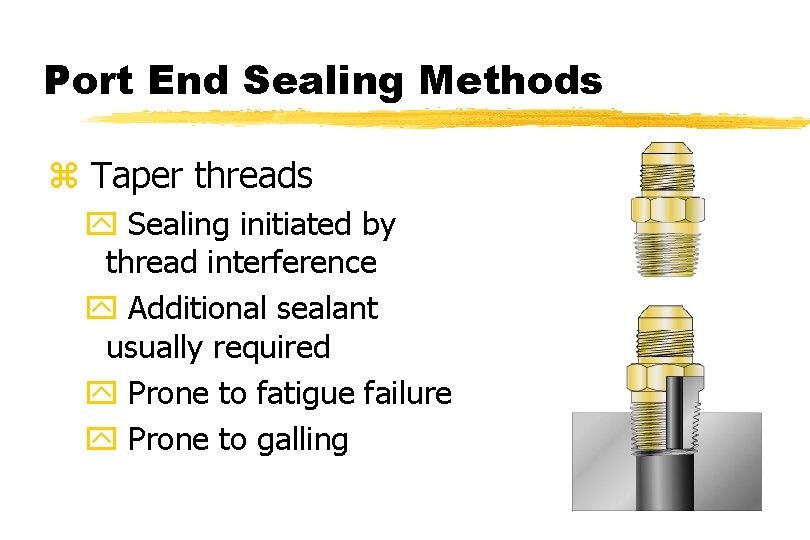
Port End Sealing Methods z Taper threads y Sealing initiated by thread interference y Additional sealant usually required y Prone to fatigue failure y Prone to galling
Tube/Hose End Sealing Methods
Tube End Identification Tube/Hose Ends y. O-ring face seal (flat face seal) y 37° flare y 45° flare y 24° flareless y. JIS 30° flare and 60° cone y. BSI (BSPP) 60° cone y. NPSM/NPT
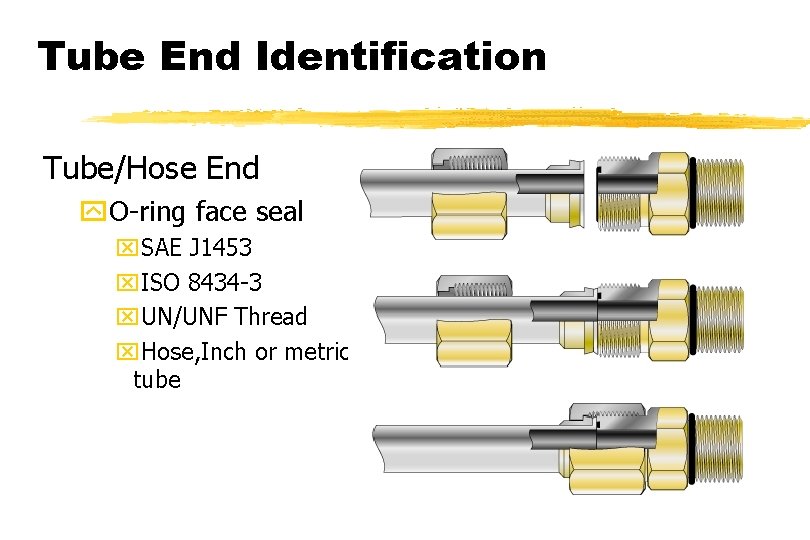
Tube End Identification Tube/Hose End y. O-ring face seal x. SAE J 1453 x. ISO 8434 -3 x. UN/UNF Thread x. Hose, Inch or metric tube
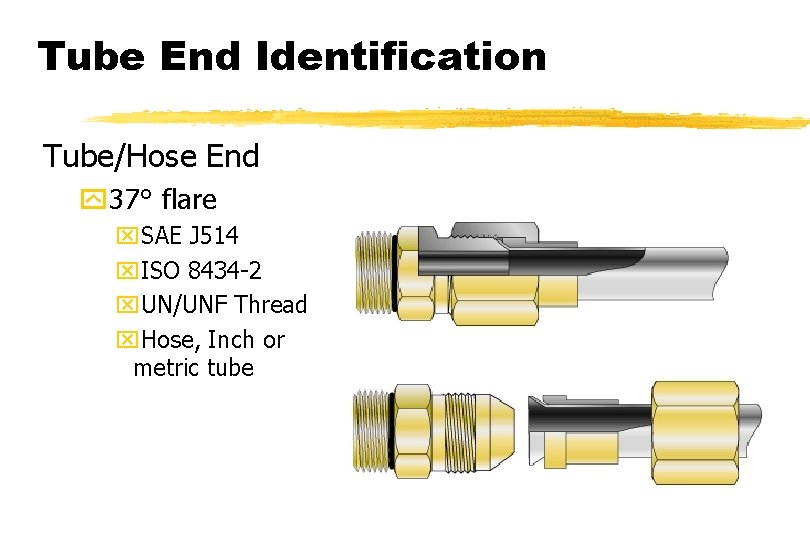
Tube End Identification Tube/Hose End y 37° flare x. SAE J 514 x. ISO 8434 -2 x. UN/UNF Thread x. Hose, Inch or metric tube
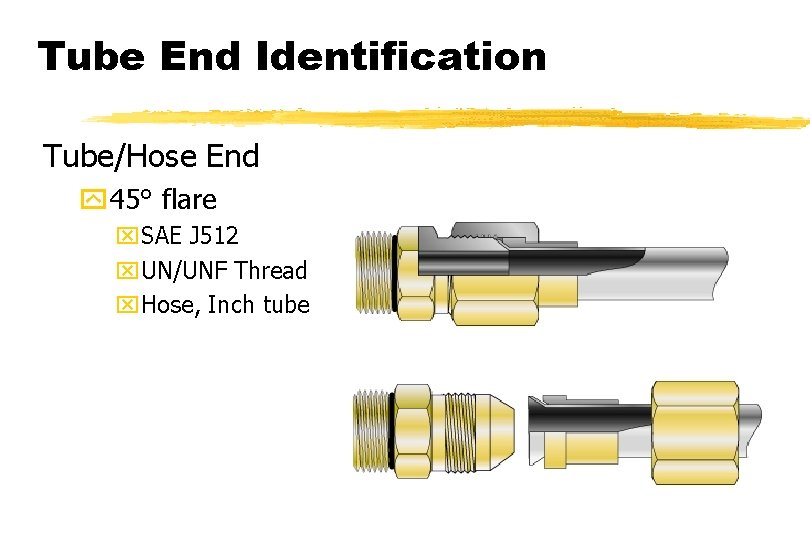
Tube End Identification Tube/Hose End y 45° flare x. SAE J 512 x. UN/UNF Thread x. Hose, Inch tube
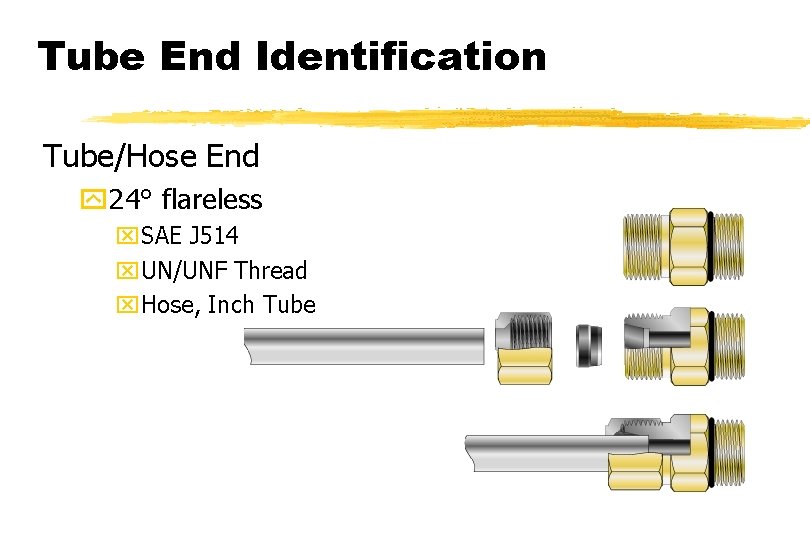
Tube End Identification Tube/Hose End y 24° flareless x. SAE J 514 x. UN/UNF Thread x. Hose, Inch Tube
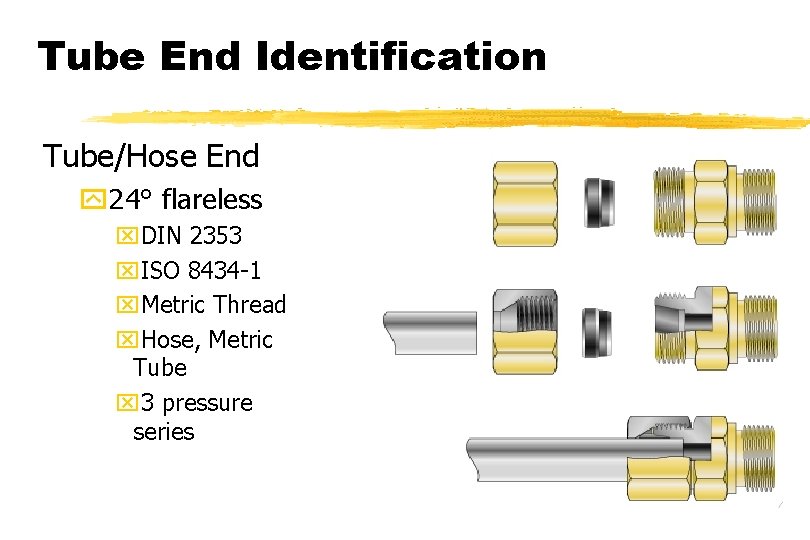
Tube End Identification Tube/Hose End y 24° flareless x. DIN 2353 x. ISO 8434 -1 x. Metric Thread x. Hose, Metric Tube x 3 pressure series
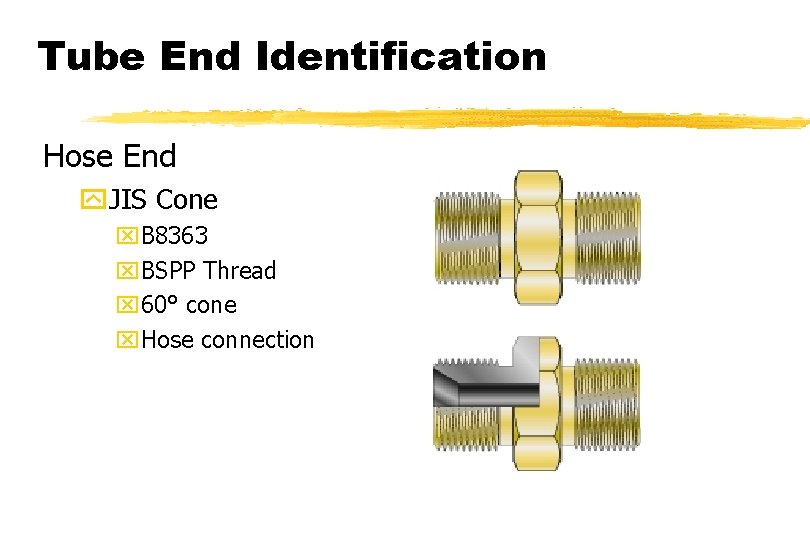
Tube End Identification Hose End y. JIS Cone x. B 8363 x. BSPP Thread x 60° cone x. Hose connection
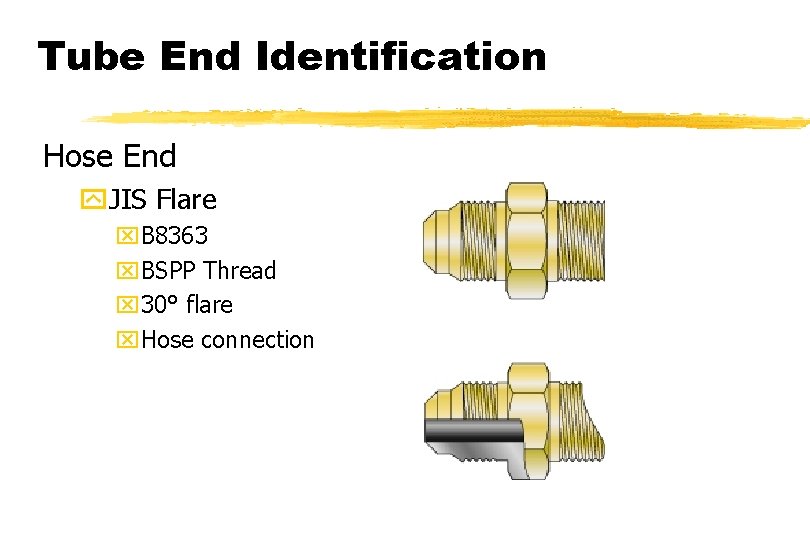
Tube End Identification Hose End y. JIS Flare x. B 8363 x. BSPP Thread x 30° flare x. Hose connection
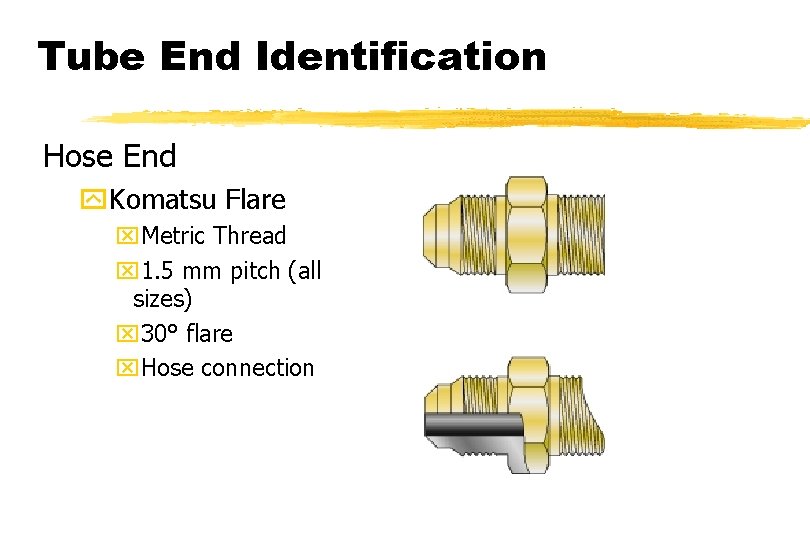
Tube End Identification Hose End y. Komatsu Flare x. Metric Thread x 1. 5 mm pitch (all sizes) x 30° flare x. Hose connection
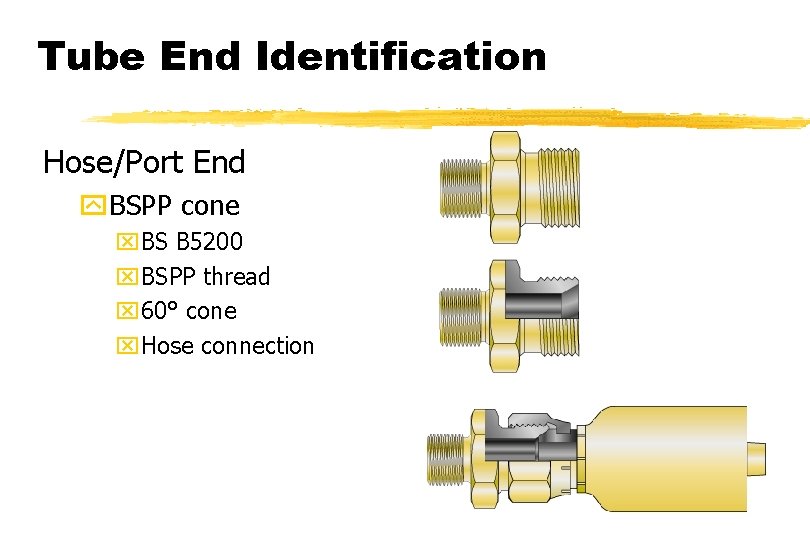
Tube End Identification Hose/Port End y. BSPP cone x. BS B 5200 x. BSPP thread x 60° cone x. Hose connection
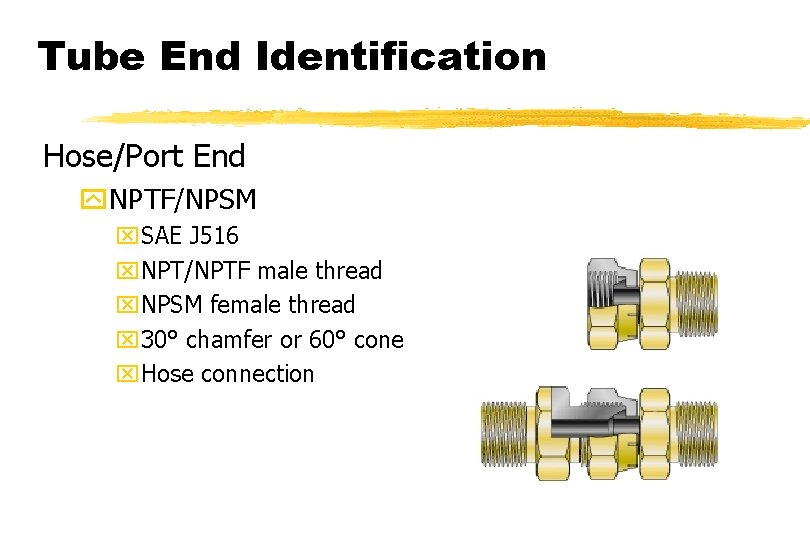
Tube End Identification Hose/Port End y. NPTF/NPSM x. SAE J 516 x. NPT/NPTF male thread x. NPSM female thread x 30° chamfer or 60° cone x. Hose connection
Identifying Metric 24° Flareless Fittings
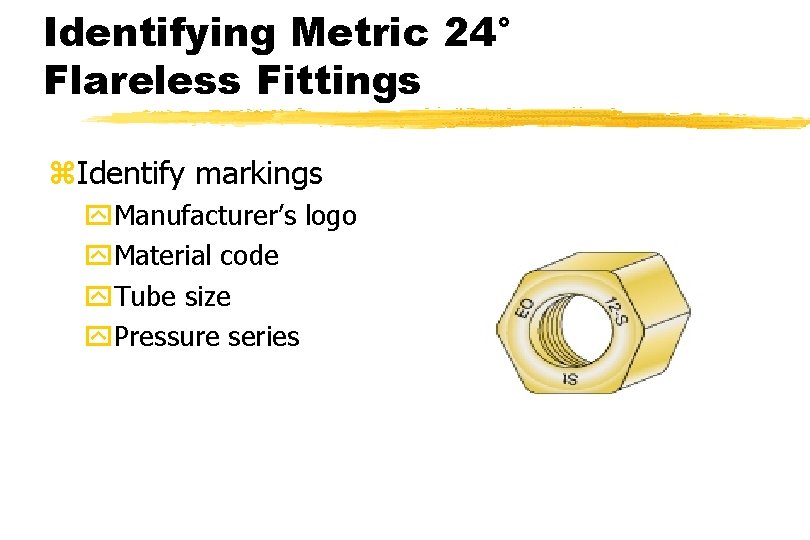
Identifying Metric 24° Flareless Fittings z. Identify markings y. Manufacturer’s logo y. Material code y. Tube size y. Pressure series
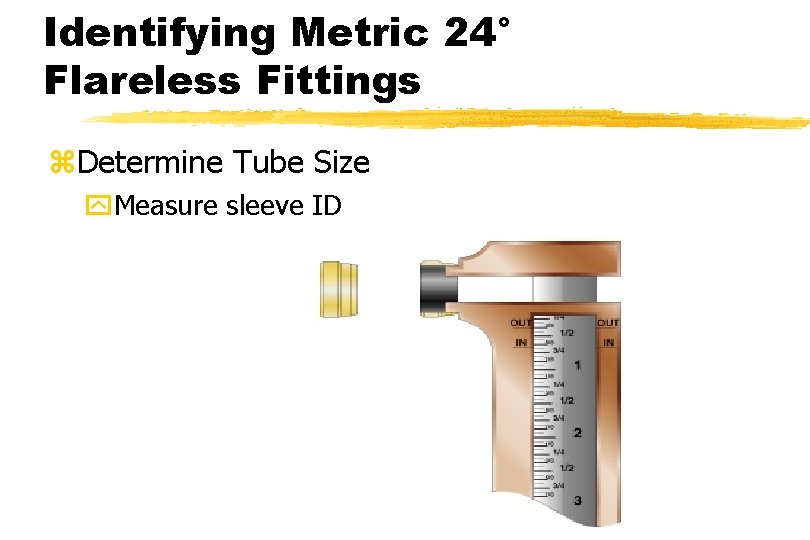
Identifying Metric 24° Flareless Fittings z. Determine Tube Size y. Measure sleeve ID
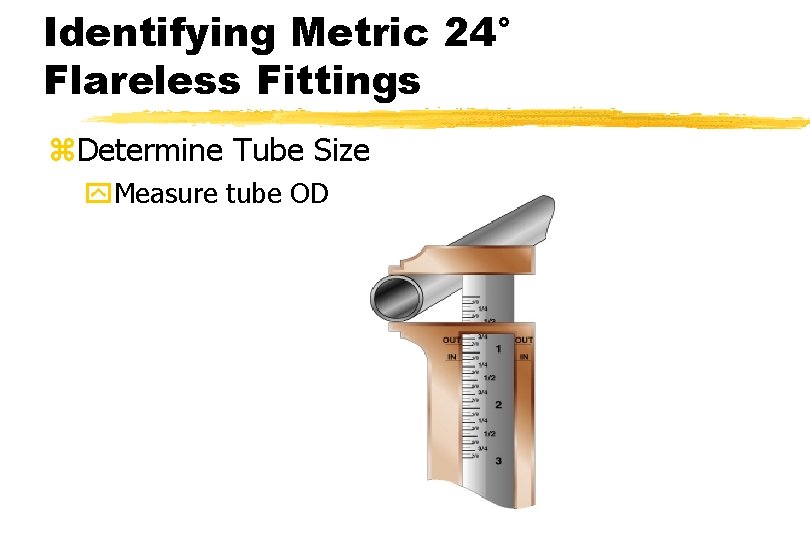
Identifying Metric 24° Flareless Fittings z. Determine Tube Size y. Measure tube OD
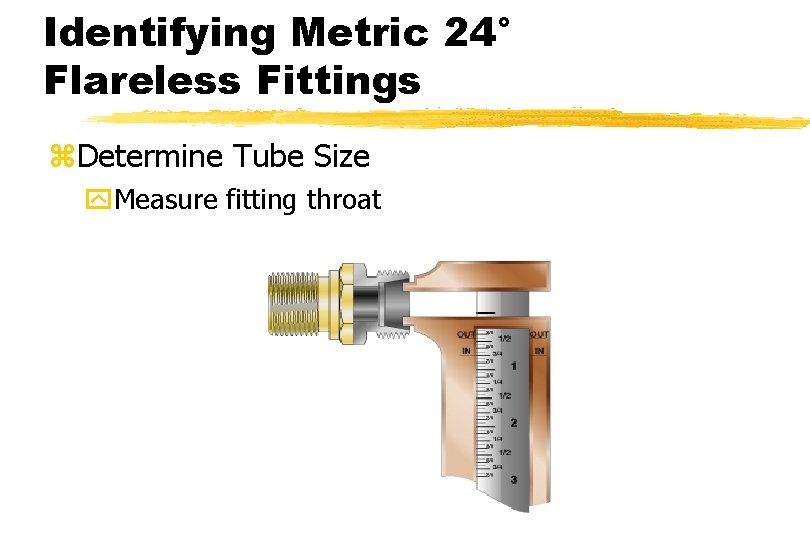
Identifying Metric 24° Flareless Fittings z. Determine Tube Size y. Measure fitting throat
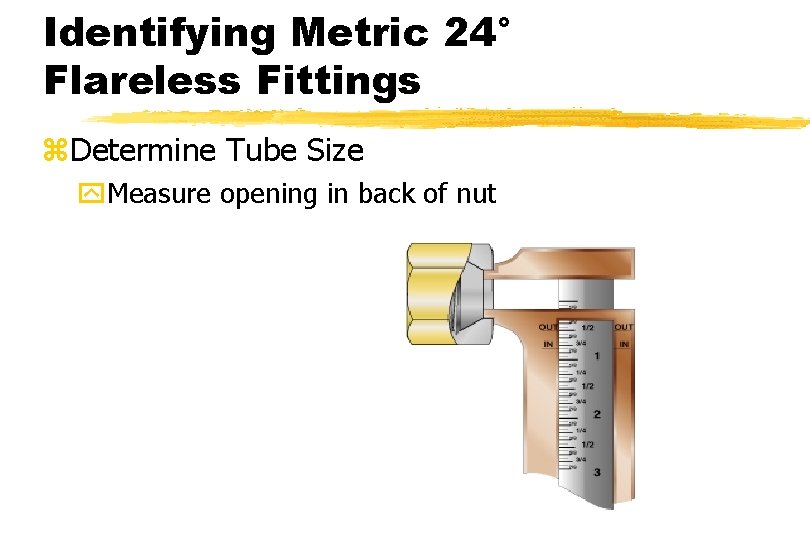
Identifying Metric 24° Flareless Fittings z. Determine Tube Size y. Measure opening in back of nut
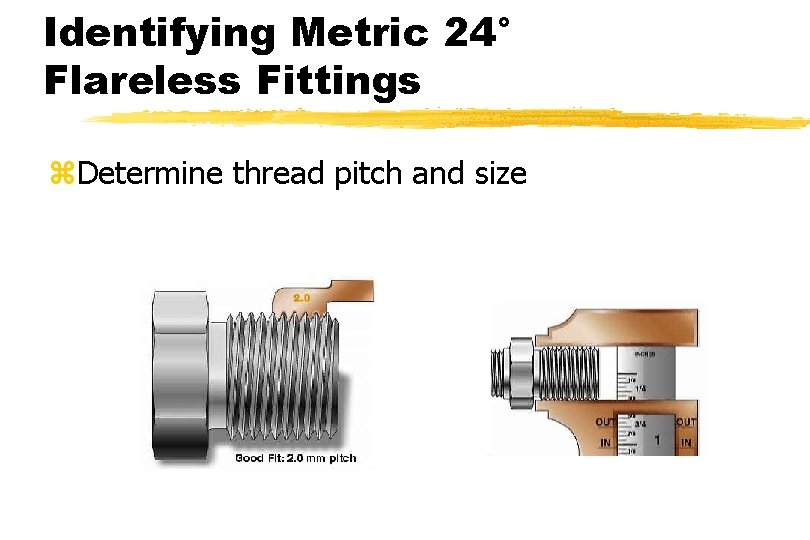
Identifying Metric 24° Flareless Fittings z. Determine thread pitch and size
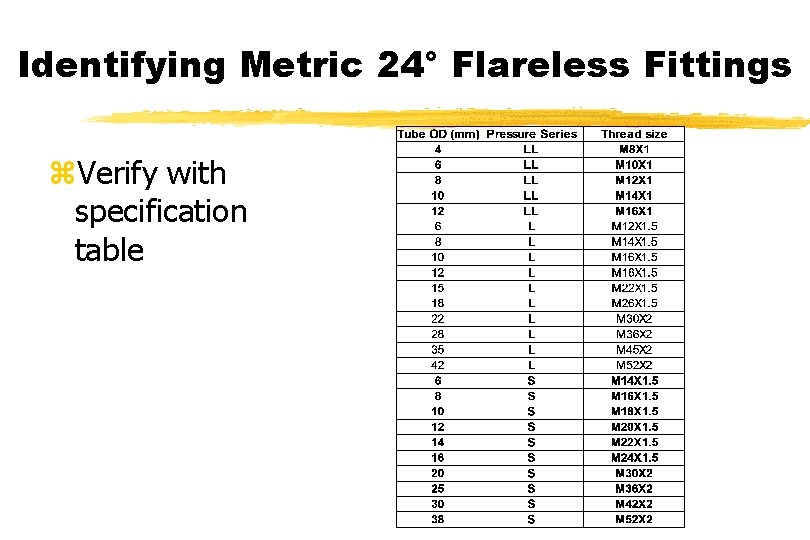
Identifying Metric 24° Flareless Fittings z. Verify with specification table
JIS and BSPP 60° Cone Fittings
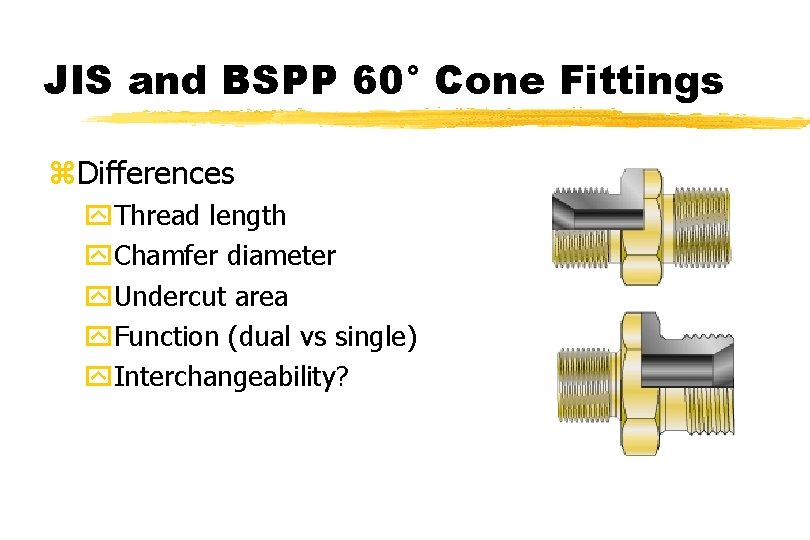
JIS and BSPP 60° Cone Fittings z. Differences y. Thread length y. Chamfer diameter y. Undercut area y. Function (dual vs single) y. Interchangeability?
Hands on Exercise
Standards Activity and Industry Trends
Standards Activity z. Merging of BSI and JIS 60° Cone Adapters z. ISO 16030 Pneumatic BSPP Port z. High Pressure Multi-Bolt Round Flanges
Industry Trends z. Metric Tube (plated) z. Elastomeric Seal z. EO-2 y. Machine Tool Builders z. ISO 6149 y. Ag Equipment Manufacturers y. Engine Manufacturers
What’s available From TFD
What’s Available from TFD z. K 4 Adapters z. Tube Fabricating Equipment z. Metric Tube z. EO and EO-2 Fittings & Accessories z. JIS Fittings z. Conversion Adapters and Plugs z. Metric Triple-lok z. Metric Seal-lok z. Metric Tube Clamps