
Identifying DNA as the Genetic Material History of
- Slides: 10
Identifying DNA as the Genetic Material History of DNA 8. 1
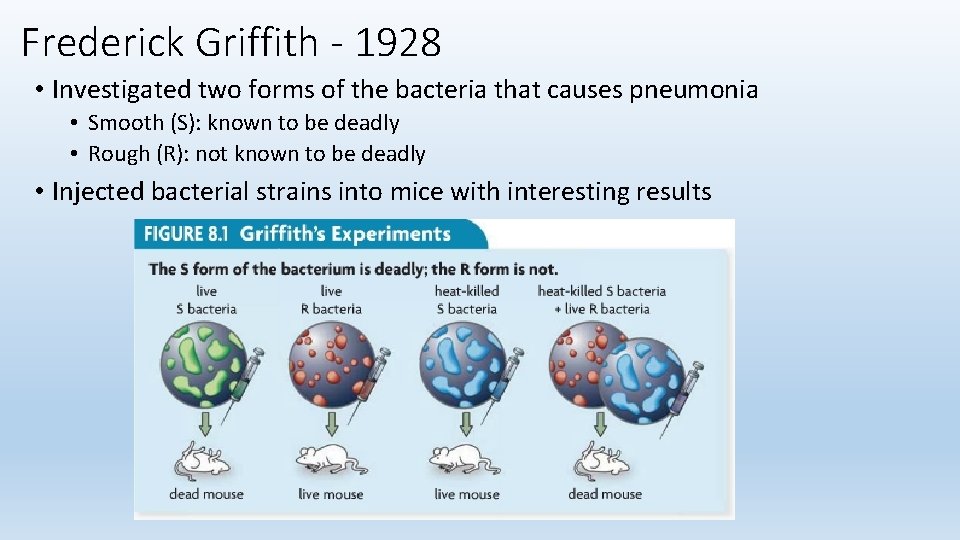
Frederick Griffith - 1928 • Investigated two forms of the bacteria that causes pneumonia • Smooth (S): known to be deadly • Rough (R): not known to be deadly • Injected bacterial strains into mice with interesting results
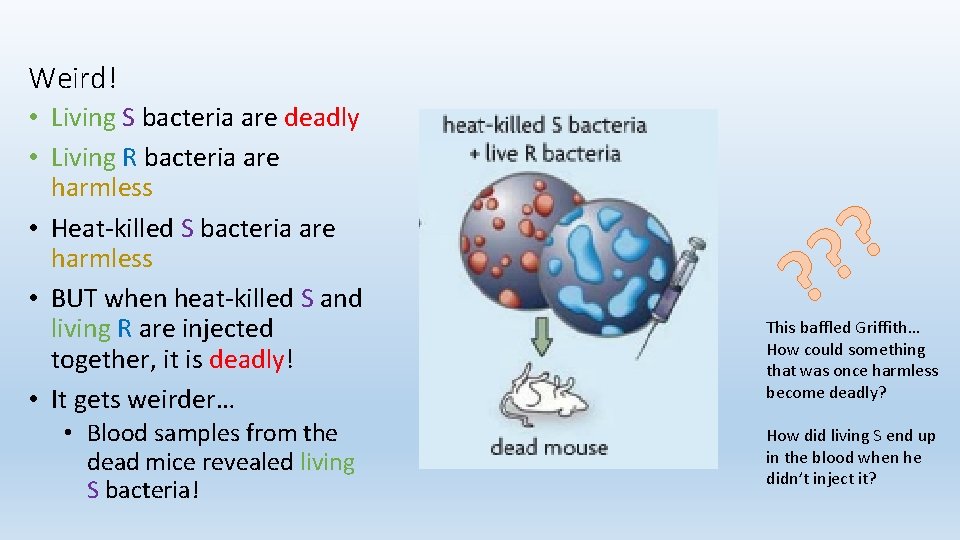
Weird! • Living S bacteria are deadly • Living R bacteria are harmless • Heat-killed S bacteria are harmless • BUT when heat-killed S and living R are injected together, it is deadly! • It gets weirder… • Blood samples from the dead mice revealed living S bacteria! ? ? ? This baffled Griffith… How could something that was once harmless become deadly? How did living S end up in the blood when he didn’t inject it?
The Transforming Principle • Griffith concluding that material from the dead S bacteria must have been transferred to the living R bacteria • This material had the power to turn a harmless bacteria into a deadly one • The big question: • What is the material!? • He named it the Transforming Principle • (Spoiler alert: It’s actually DNA)
Oswald Avery Works to Identify Transforming Principle The protein vs DNA debate • Avery and colleagues designed experiments to determine whether the transformation principle was DNA or Protein • Isolated special extract from S bacteria Tests conducted • Qualitative • Chemical Analysis • Enzyme tests
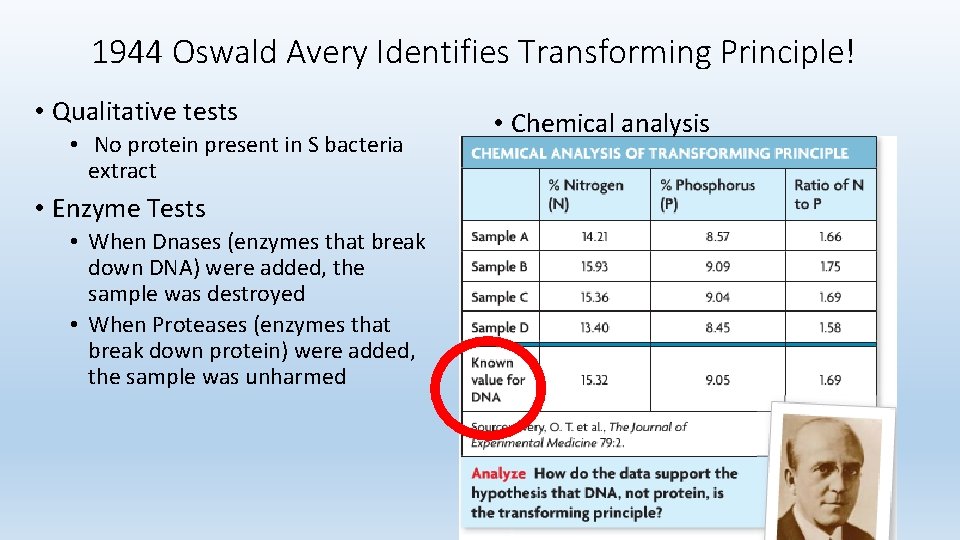
1944 Oswald Avery Identifies Transforming Principle! • Qualitative tests • No protein present in S bacteria extract • Enzyme Tests • When Dnases (enzymes that break down DNA) were added, the sample was destroyed • When Proteases (enzymes that break down protein) were added, the sample was unharmed • Chemical analysis
Not Convinced! • Some scientists still had trouble believing that something as simple as DNA could be the genetic material • They wondered if DNA of bacteria was the same DNA in other organisms. • Alfred Hershey and Martha Chase conducted an experiment to confirm it once and for all
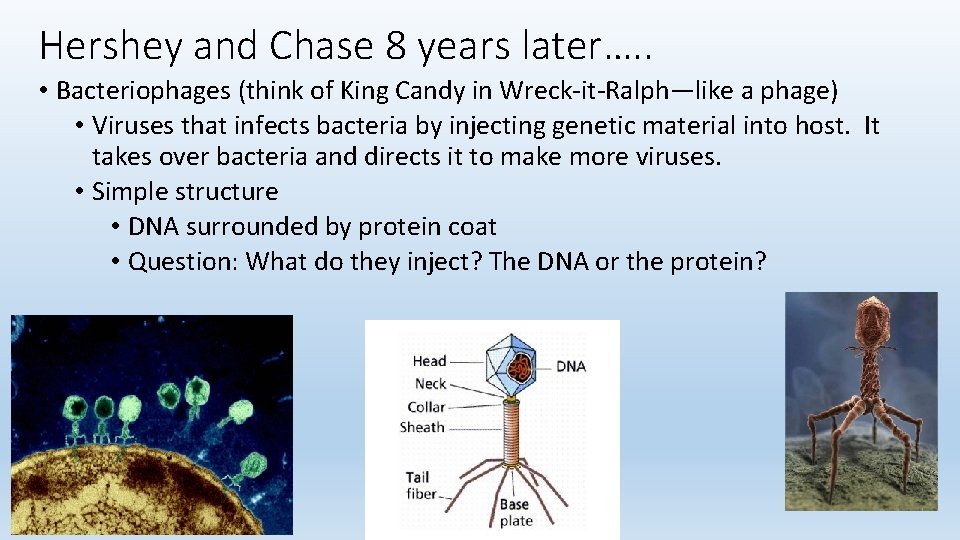
Hershey and Chase 8 years later…. . • Bacteriophages (think of King Candy in Wreck-it-Ralph—like a phage) • Viruses that infects bacteria by injecting genetic material into host. It takes over bacteria and directs it to make more viruses. • Simple structure • DNA surrounded by protein coat • Question: What do they inject? The DNA or the protein?
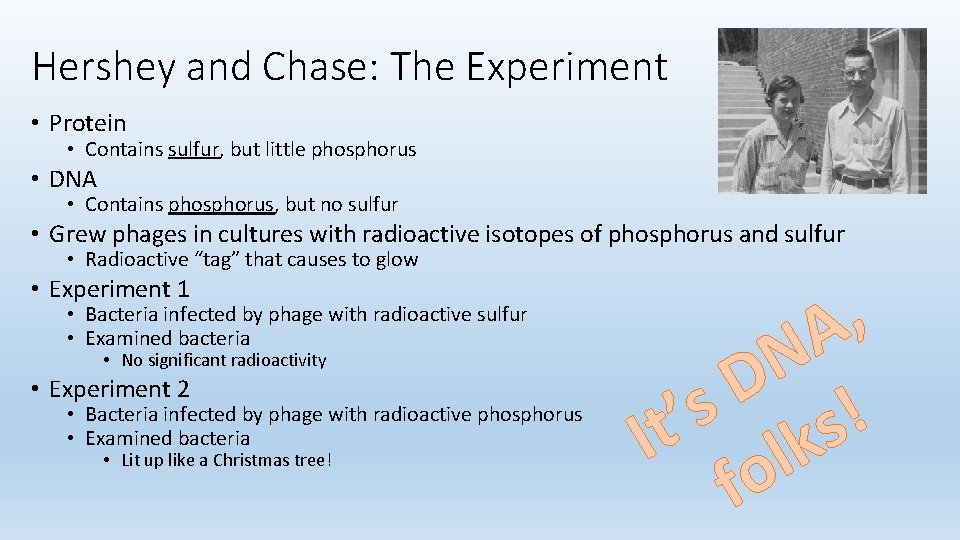
Hershey and Chase: The Experiment • Protein • Contains sulfur, but little phosphorus • DNA • Contains phosphorus, but no sulfur • Grew phages in cultures with radioactive isotopes of phosphorus and sulfur • Radioactive “tag” that causes to glow • Experiment 1 • Bacteria infected by phage with radioactive sulfur • Examined bacteria • No significant radioactivity • Experiment 2 • Bacteria infected by phage with radioactive phosphorus • Examined bacteria • Lit up like a Christmas tree! , A N D s ! ’ s t I k l fo
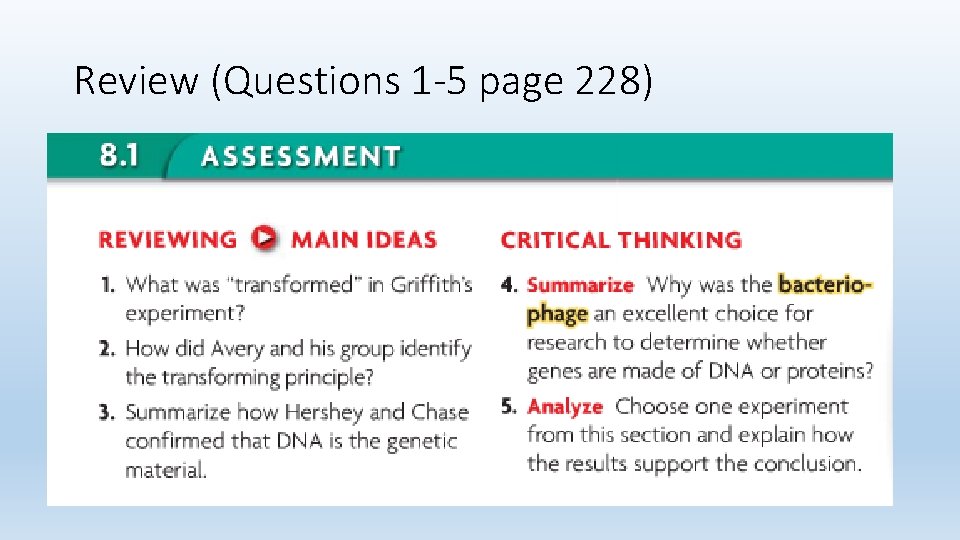
Review (Questions 1 -5 page 228)