
Identifying Conflict of Interest in the Public Service
Identifying Conflict of Interest in the Public Service Rabat, 25 May 2007 János Bertók Public Governance and Territorial Development Directorate OECD janos. bertok@oecd. org 1
Conflict of interest: A major challenge Ø What is conflict of interest? ØOrigin ØSources Ø Why conflict of interest is an issue? Ø How to manage conflict of interest? 2

What is conflict of interest? Ø Origin Ø Personal bias -- “no one may judge his/her own case” Code of Hammurabi 1760 BC Ø Sources = Private Interests Ø Relationships (family, friendship) Ø Activities (positions) Ø Business interest 3
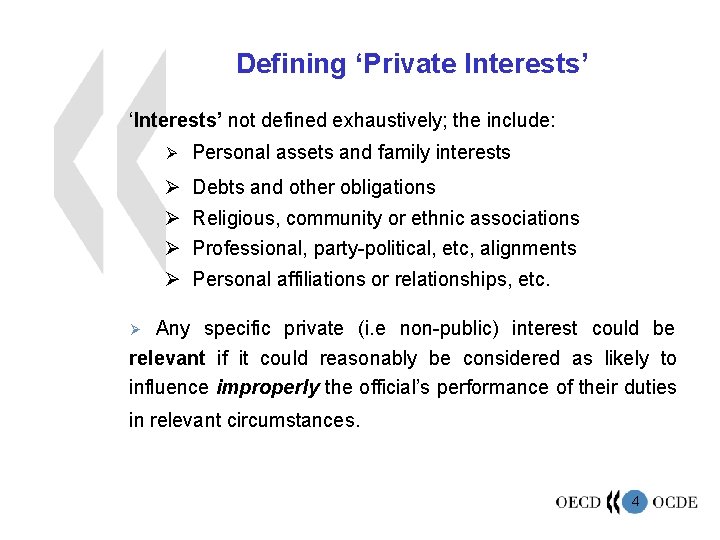
Defining ‘Private Interests’ ‘Interests’ not defined exhaustively; the include: Ø Personal assets and family interests Ø Debts and other obligations Ø Religious, community or ethnic associations Ø Professional, party-political, etc, alignments Ø Personal affiliations or relationships, etc. Any specific private (i. e non-public) interest could be relevant if it could reasonably be considered as likely to influence improperly the official’s performance of their duties Ø in relevant circumstances. 4
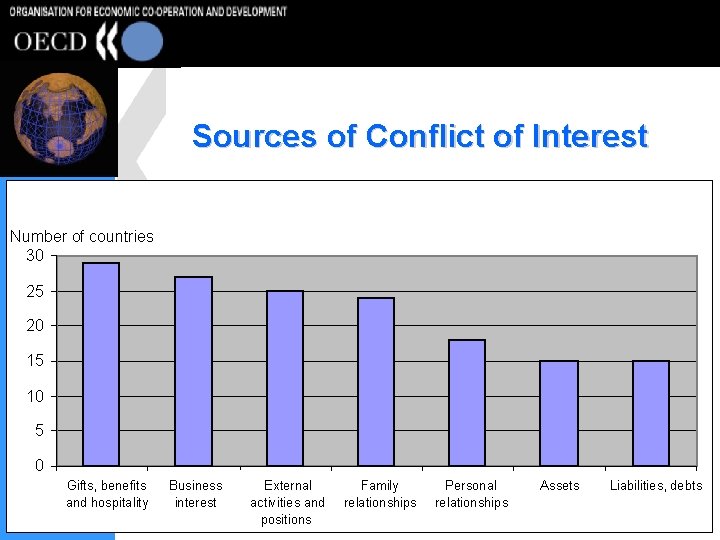
Sources of Conflict of Interest Number of countries 30 25 20 15 10 5 0 Gifts, benefits and hospitality Business interest External activities and positions Family relationships Personal relationships Assets Liabilities, debts 5
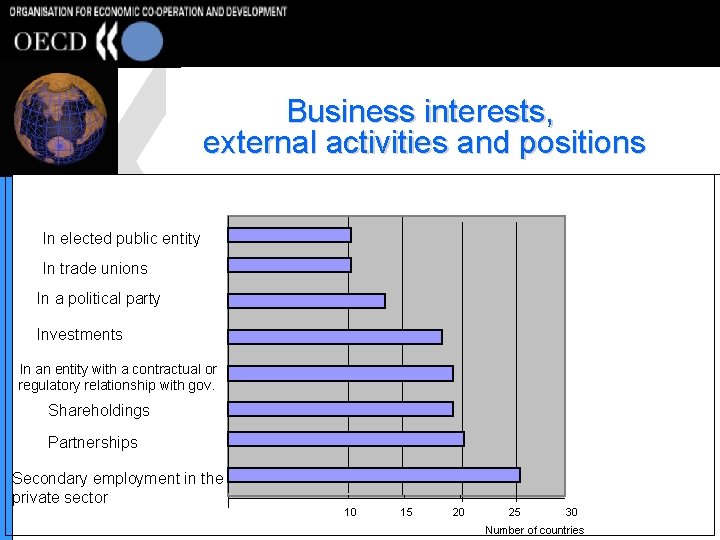
Business interests, external activities and positions In elected public entity In trade unions In a political party Investments In an entity with a contractual or regulatory relationship with gov. Shareholdings Partnerships Secondary employment in the private sector 10 15 20 25 30 Number of countries 6
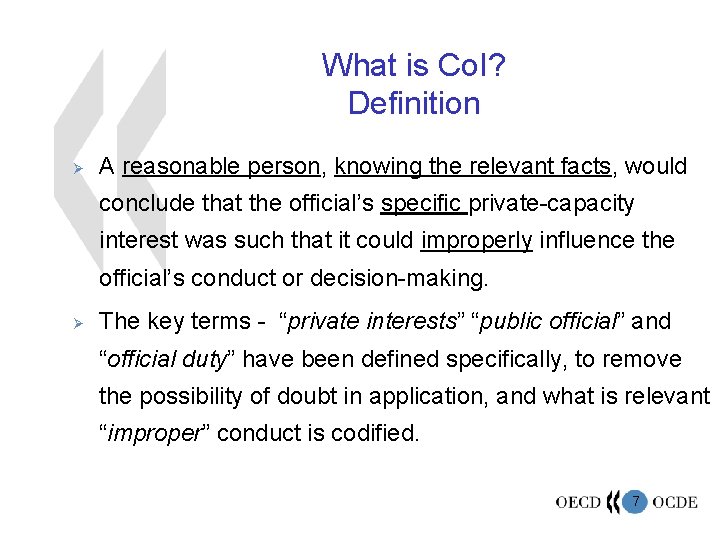
What is Co. I? Definition Ø A reasonable person, knowing the relevant facts, would conclude that the official’s specific private-capacity interest was such that it could improperly influence the official’s conduct or decision-making. Ø The key terms - “private interests” “public official” and “official duty” have been defined specifically, to remove the possibility of doubt in application, and what is relevant “improper” conduct is codified. 7
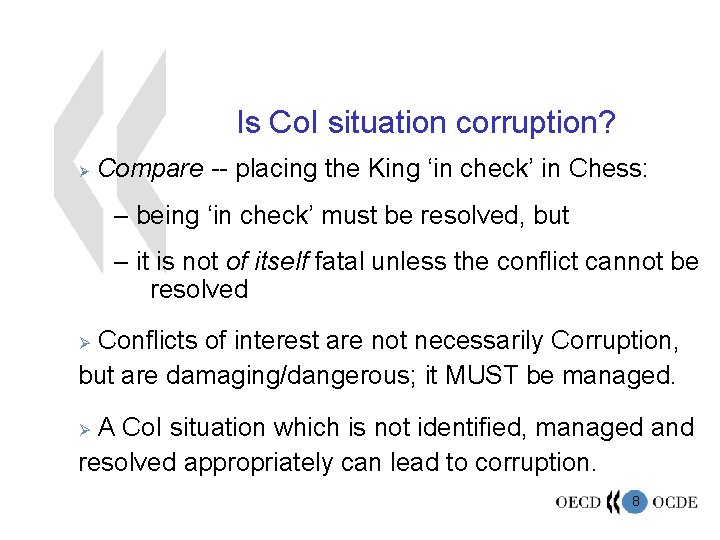
Is Co. I situation corruption? Ø Compare -- placing the King ‘in check’ in Chess: – being ‘in check’ must be resolved, but – it is not of itself fatal unless the conflict cannot be resolved Conflicts of interest are not necessarily Corruption, but are damaging/dangerous; it MUST be managed. Ø A Co. I situation which is not identified, managed and resolved appropriately can lead to corruption. Ø 8
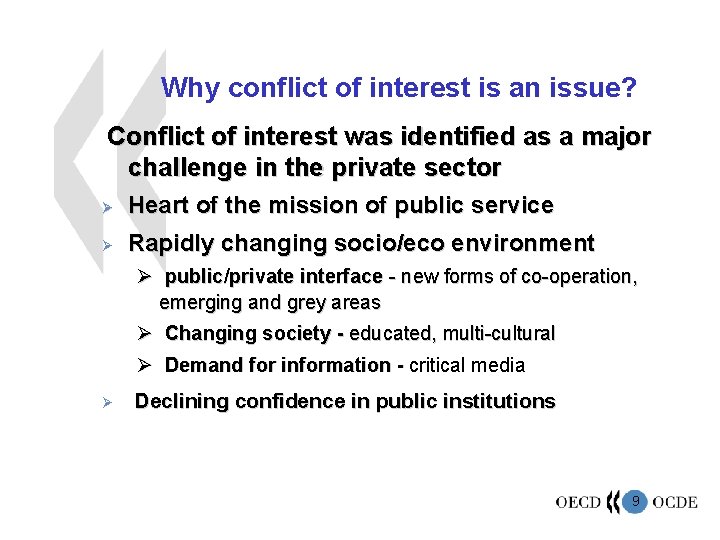
Why conflict of interest is an issue? Conflict of interest was identified as a major challenge in the private sector Ø Heart of the mission of public service Ø Rapidly changing socio/eco environment Ø public/private interface - new forms of co-operation, emerging and grey areas Ø Changing society - educated, multi-cultural Ø Demand for information - critical media Ø Declining confidence in public institutions 9
Toolkit AIM: HELP officials put conflict of interest regulations into practice Ø Ø Understanding Ø Skills to recognise and resolve Collection of explanations, checklists, model codes, procedures, self-test, training materials, case studies Ø 10
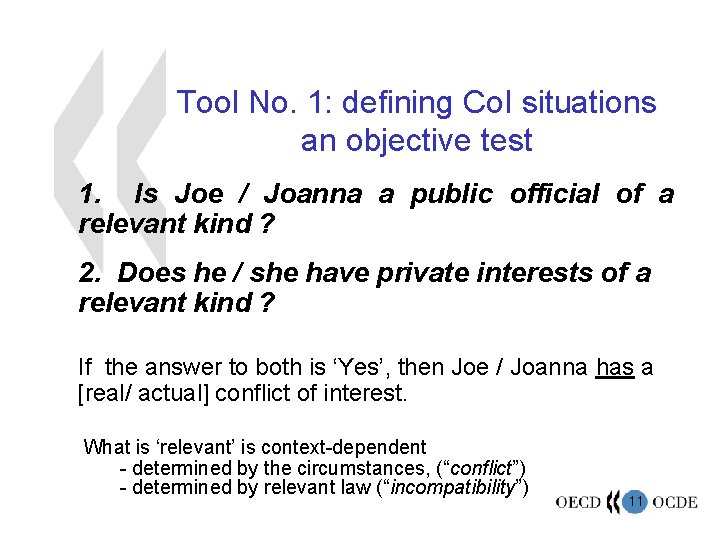
Tool No. 1: defining Co. I situations an objective test 1. Is Joe / Joanna a public official of a relevant kind ? 2. Does he / she have private interests of a relevant kind ? If the answer to both is ‘Yes’, then Joe / Joanna has a [real/ actual] conflict of interest. What is ‘relevant’ is context-dependent - determined by the circumstances, (“conflict”) - determined by relevant law (“incompatibility”) 11
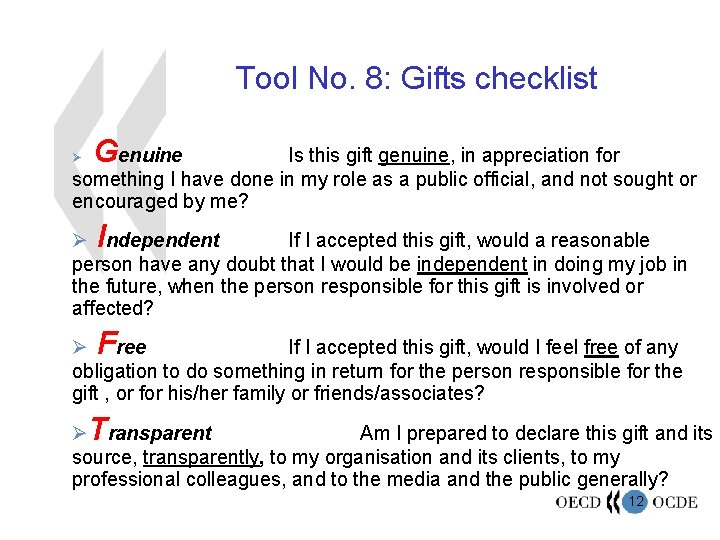
Tool No. 8: Gifts checklist Genuine Is this gift genuine, in appreciation for something I have done in my role as a public official, and not sought or encouraged by me? Ø I Ø ndependent If I accepted this gift, would a reasonable person have any doubt that I would be independent in doing my job in the future, when the person responsible for this gift is involved or affected? F Ø ree If I accepted this gift, would I feel free of any obligation to do something in return for the person responsible for the gift , or for his/her family or friends/associates? T Ø ransparent Am I prepared to declare this gift and its source, transparently, to my organisation and its clients, to my professional colleagues, and to the media and the public generally? 12
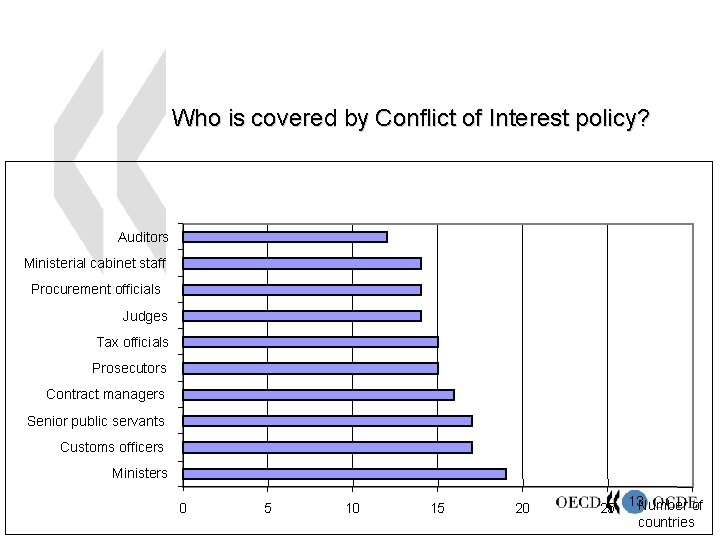
Who is covered by Conflict of Interest policy? Auditors Ministerial cabinet staff Procurement officials Judges Tax officials Prosecutors Contract managers Senior public servants Customs officers Ministers 0 5 10 15 20 25 13 Number of countries
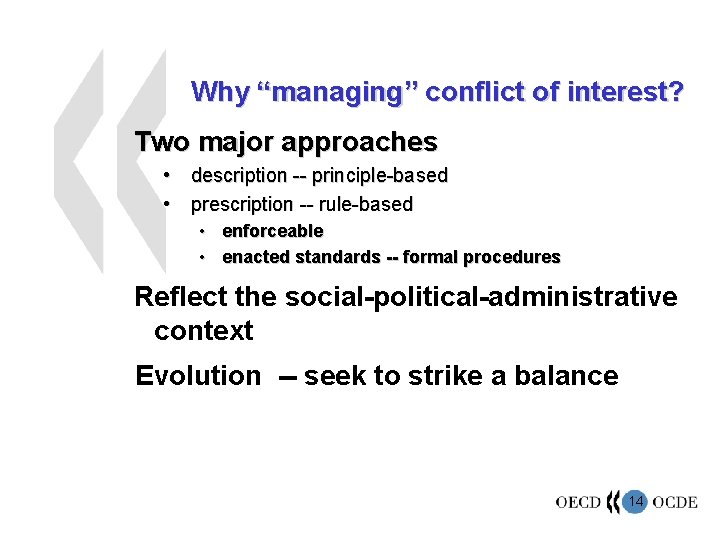
Why “managing” conflict of interest? Two major approaches • description -- principle-based • prescription -- rule-based • enforceable • enacted standards -- formal procedures Reflect the social-political-administrative context Evolution -- seek to strike a balance 14
CONCLUSIONS Ø Conflict of interest is a Reality Needs identification, prevention, resolution & proper management ü ü OECD Guidelines & Toolkit provide reference 15
OECD work on managing conflict of interest http: //www. oecd. org/gov/ethics 16
- Slides: 16