
Identifying and Generating Missing Tests using Machine Learning

- Slides: 33
Identifying and Generating Missing Tests using Machine Learning on Execution Traces Mark Utting – Bruno Legeard – Frédéric Dadeau – Frédéric Tamagnan Fabrice Bouquet This work was supported in part by the French National Research Agency: PHILAE project (N° ANR-18 -CE 25 -0013)
Motivations Efforts to automate tests are increasingly creating a project bottleneck (effort, time, ressources) and a strong reliance The growing interest for AI in the testing field The growing capacity of logs storage
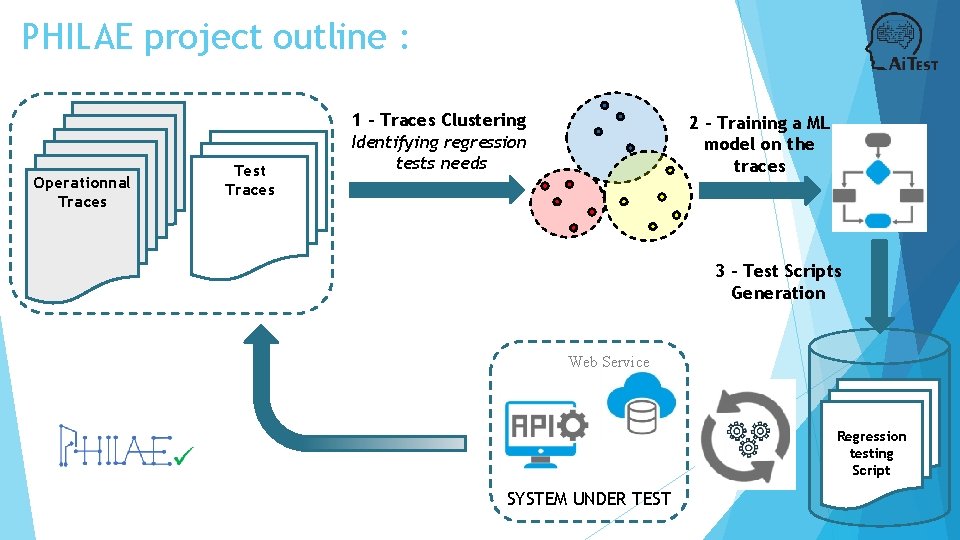
PHILAE project outline : Traces Operationnal d'exécution Traces utilisateur Test Traces 1 – Traces Clustering Identifying regression tests needs 2 – Training a ML model on the traces 3 – Test Scripts Generation Web Service Regression testing Script SYSTEM UNDER TEST
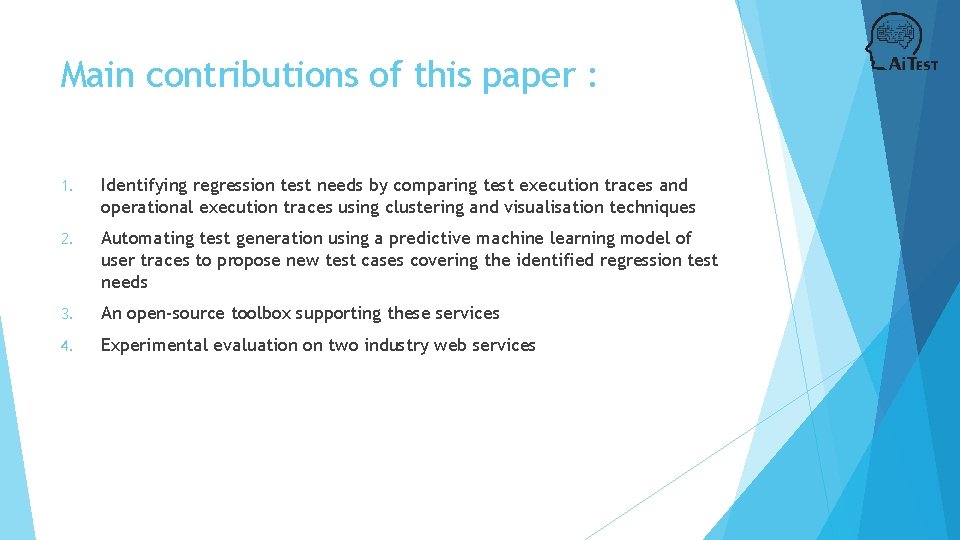
Main contributions of this paper : 1. Identifying regression test needs by comparing test execution traces and operational execution traces using clustering and visualisation techniques 2. Automating test generation using a predictive machine learning model of user traces to propose new test cases covering the identified regression test needs 3. An open-source toolbox supporting these services 4. Experimental evaluation on two industry web services
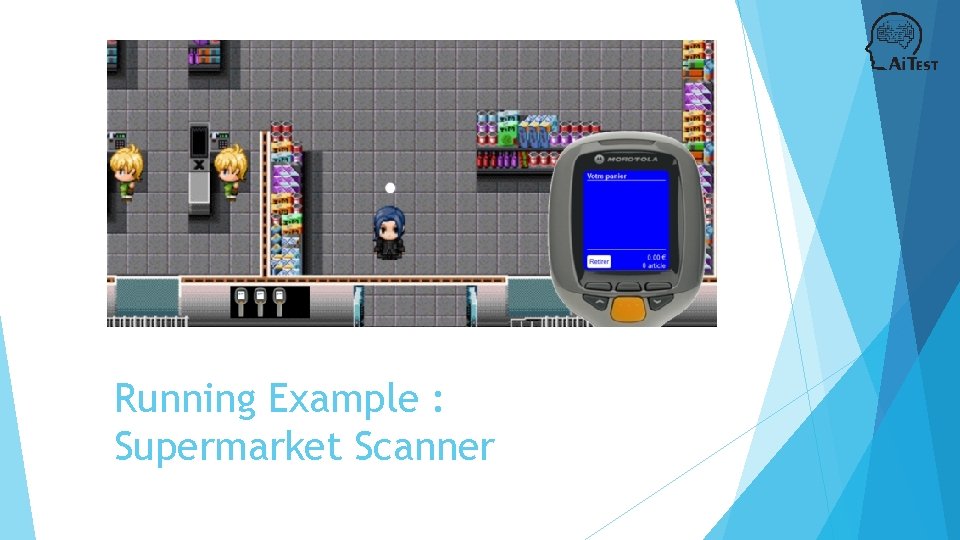
Running Example : Supermarket Scanner
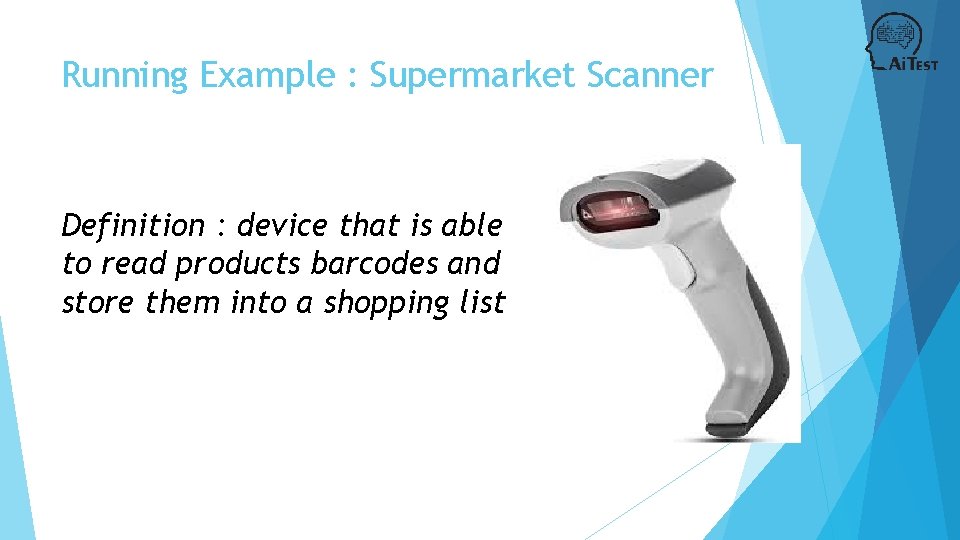
Running Example : Supermarket Scanner Definition : device that is able to read products barcodes and store them into a shopping list
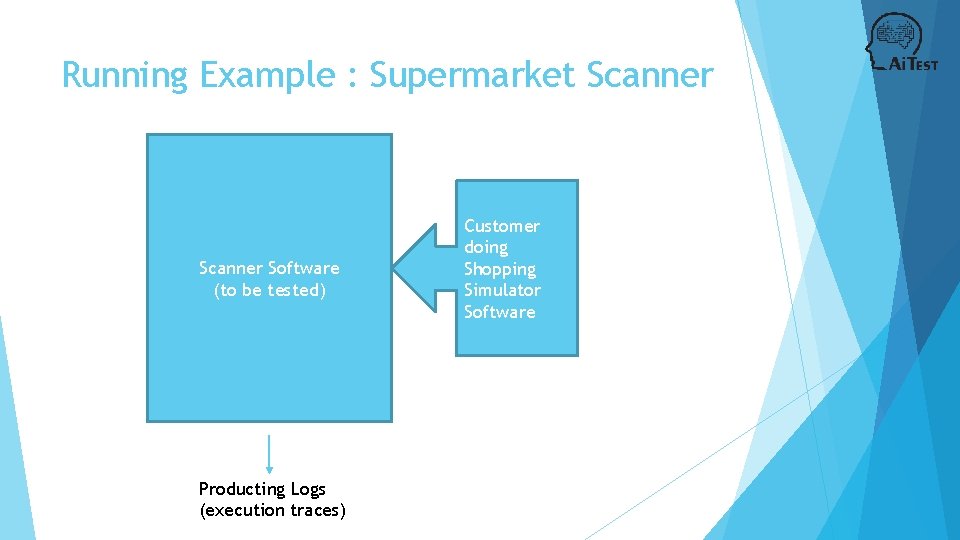
Running Example : Supermarket Scanner Software (to be tested) Producting Logs (execution traces) Customer doing Shopping Simulator Software
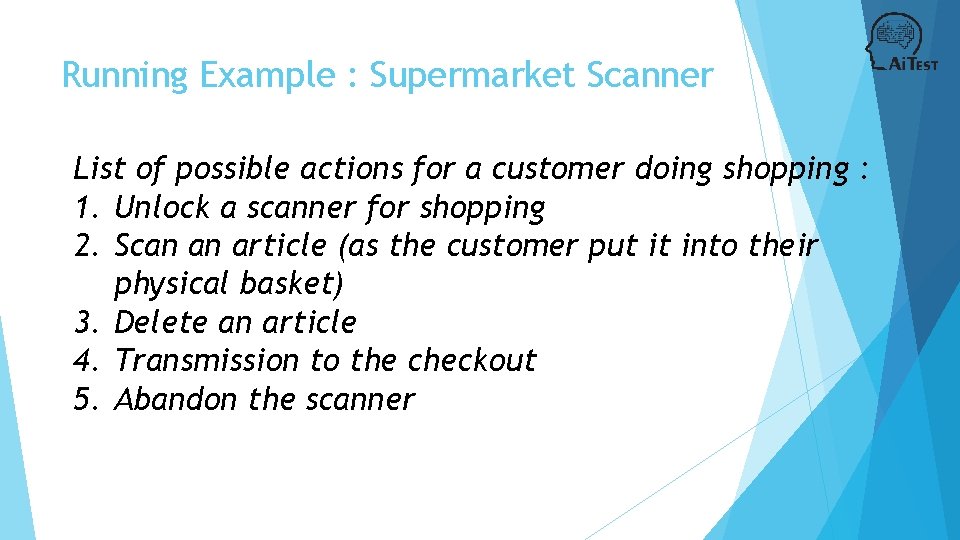
Running Example : Supermarket Scanner List of possible actions for a customer doing shopping : 1. Unlock a scanner for shopping 2. Scan an article (as the customer put it into their physical basket) 3. Delete an article 4. Transmission to the checkout 5. Abandon the scanner
Running Example : Supermarket Scanner Non-nomical cases : 1. The customer could scan an unknown bardcode. The article is added to the shopping list, but the cashier will have to add it manually later 2. The customer could be asked to a control check and have to re-scan the articles after the transmission
Running Example : Supermarket Scanner List of possible actions for the cashier during the checkout: 1. Open a session 2. Add an article 3. Remove an article 4. Close the session 5. Make the customer pay
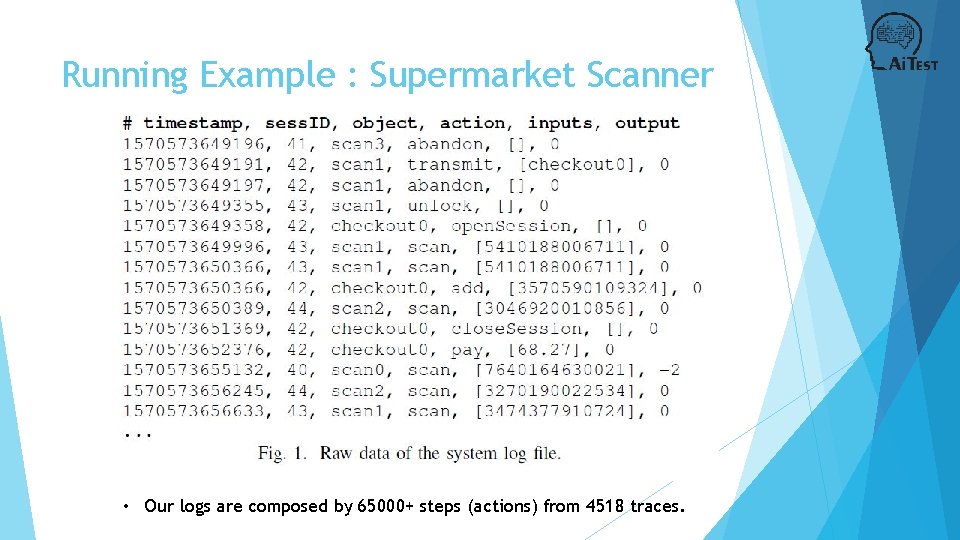
Running Example : Supermarket Scanner • Our logs are composed by 65000+ steps (actions) from 4518 traces.
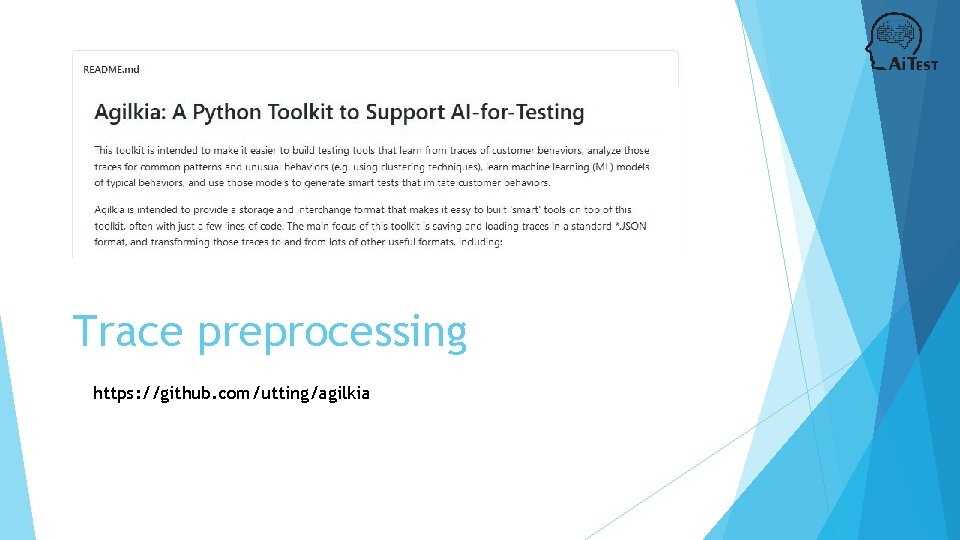
Trace preprocessing https: //github. com/utting/agilkia
Traces preprocessing Loading csv into a Agilkia « Trace » object that contains a sequence of « Event » objects Splitting and grouping the event by users session thanks to the user ID
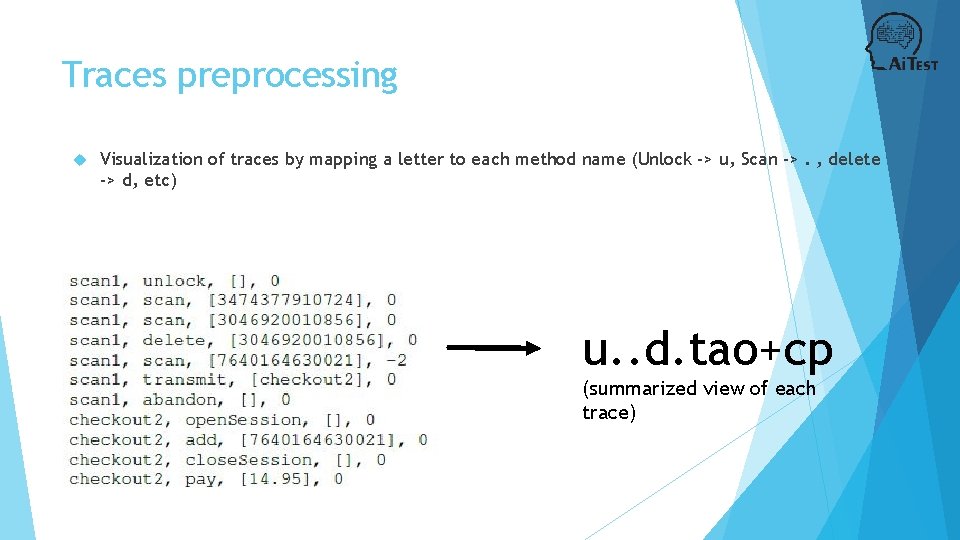
Traces preprocessing Visualization of traces by mapping a letter to each method name (Unlock -> u, Scan ->. , delete -> d, etc) u. . d. tao+cp (summarized view of each trace)
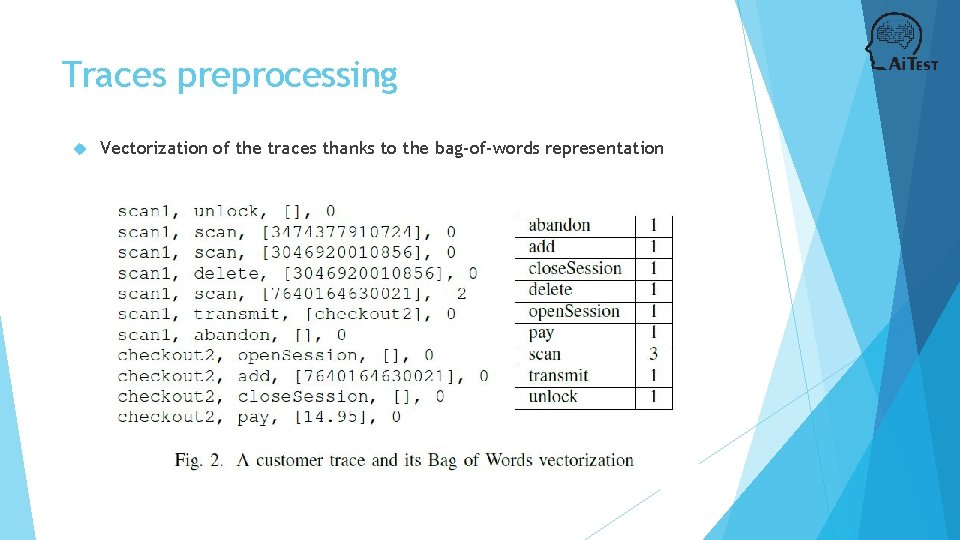
Traces preprocessing Vectorization of the traces thanks to the bag-of-words representation
Trace clustering, visualization and test need identification
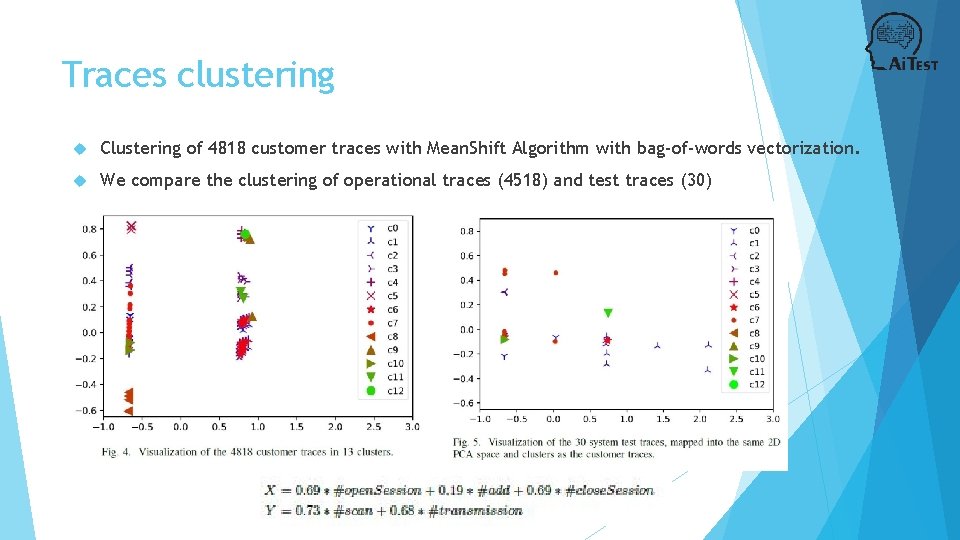
Traces clustering Clustering of 4818 customer traces with Mean. Shift Algorithm with bag-of-words vectorization. We compare the clustering of operational traces (4518) and test traces (30)
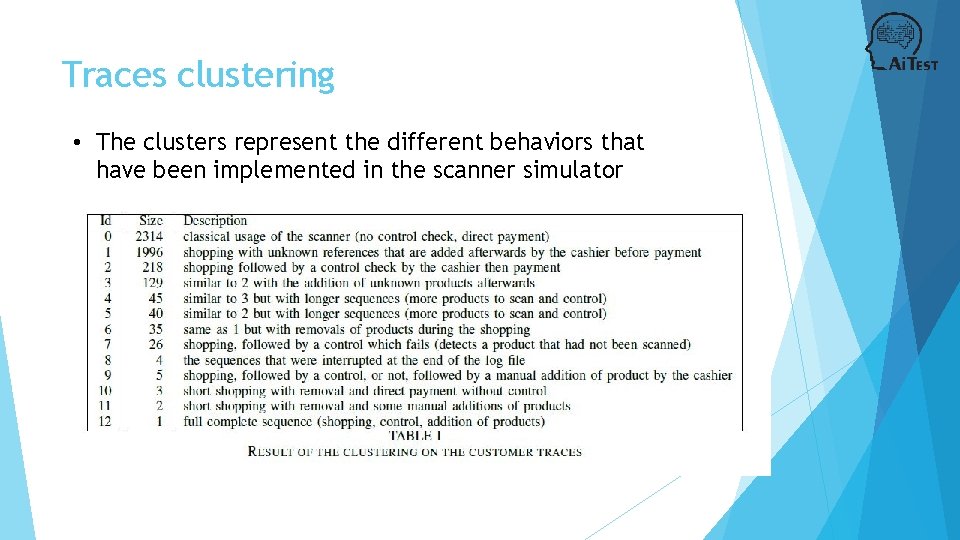
Traces clustering • The clusters represent the different behaviors that have been implemented in the scanner simulator
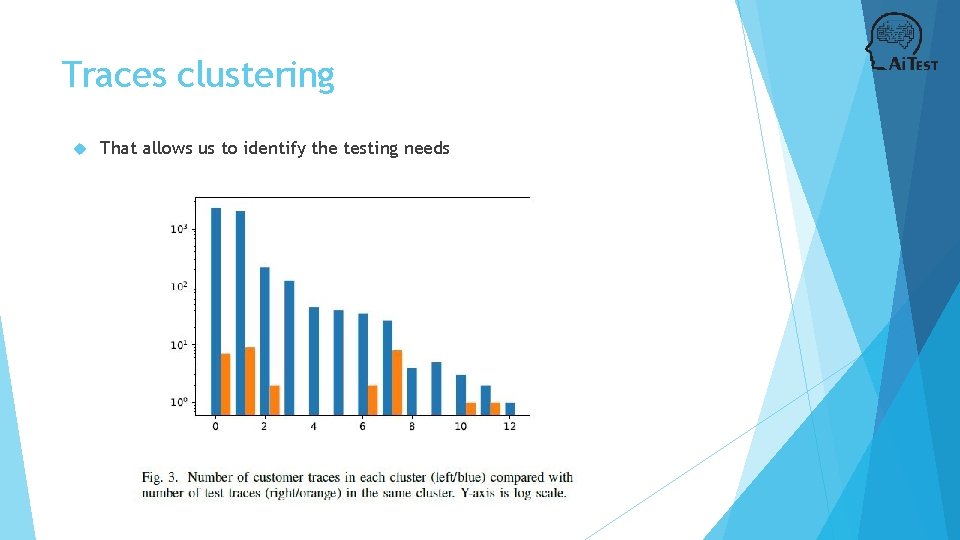
Traces clustering That allows us to identify the testing needs
Test generation using a predictive ML model
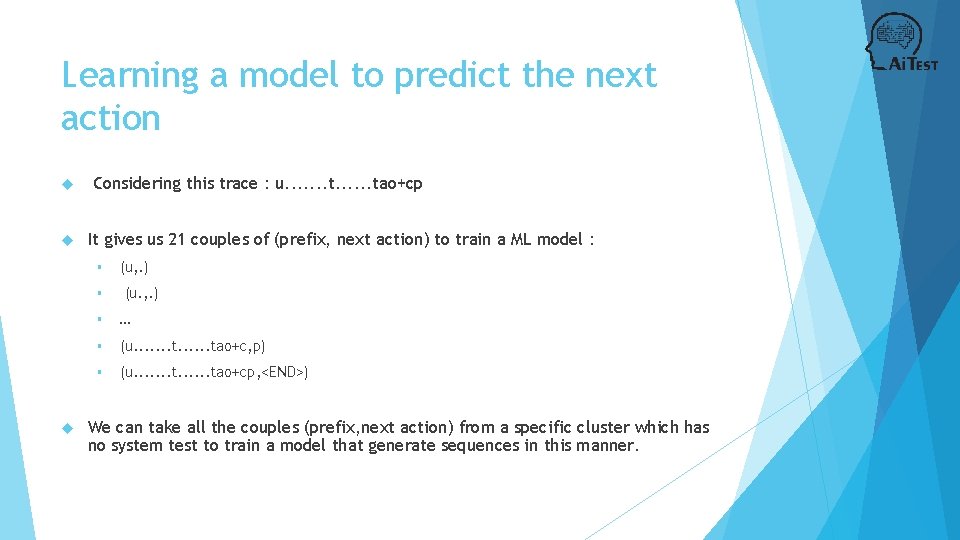
Learning a model to predict the next action Considering this trace : u. . . . tao+cp It gives us 21 couples of (prefix, next action) to train a ML model : § § (u, . ) (u. , . ) § … § (u. . . . tao+c, p) § (u. . . . tao+cp, <END>) We can take all the couples (prefix, next action) from a specific cluster which has no system test to train a model that generate sequences in this manner.
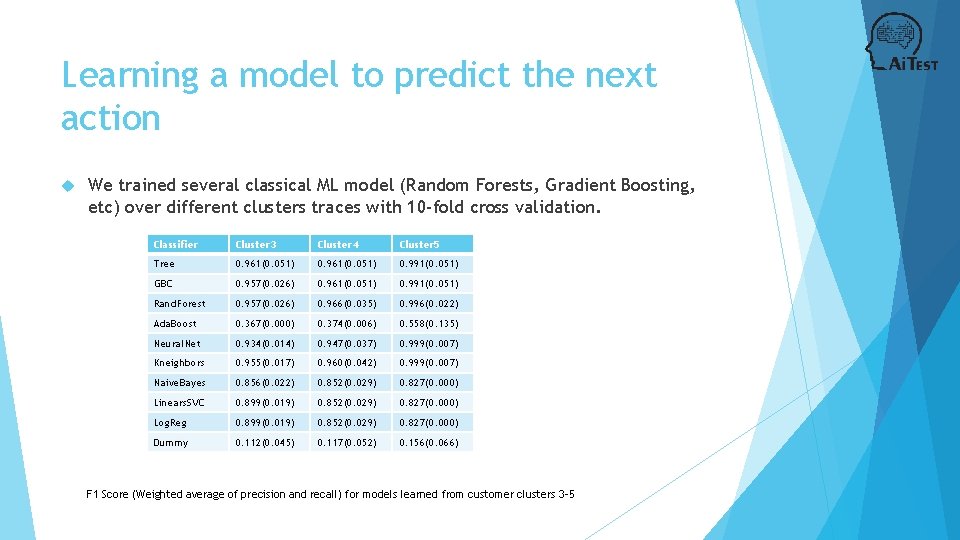
Learning a model to predict the next action We trained several classical ML model (Random Forests, Gradient Boosting, etc) over different clusters traces with 10 -fold cross validation. Classifier Cluster 3 Cluster 4 Cluster 5 Tree 0. 961(0. 051) 0. 991(0. 051) GBC 0. 957(0. 026) 0. 961(0. 051) 0. 991(0. 051) Rand. Forest 0. 957(0. 026) 0. 966(0. 035) 0. 996(0. 022) Ada. Boost 0. 367(0. 000) 0. 374(0. 006) 0. 558(0. 135) Neural. Net 0. 934(0. 014) 0. 947(0. 037) 0. 999(0. 007) Kneighbors 0. 955(0. 017) 0. 960(0. 042) 0. 999(0. 007) Naive. Bayes 0. 856(0. 022) 0. 852(0. 029) 0. 827(0. 000) Linears. SVC 0. 899(0. 019) 0. 852(0. 029) 0. 827(0. 000) Log. Reg 0. 899(0. 019) 0. 852(0. 029) 0. 827(0. 000) Dummy 0. 112(0. 045) 0. 117(0. 052) 0. 156(0. 066) F 1 Score (Weighted average of precision and recall) for models learned from customer clusters 3 -5
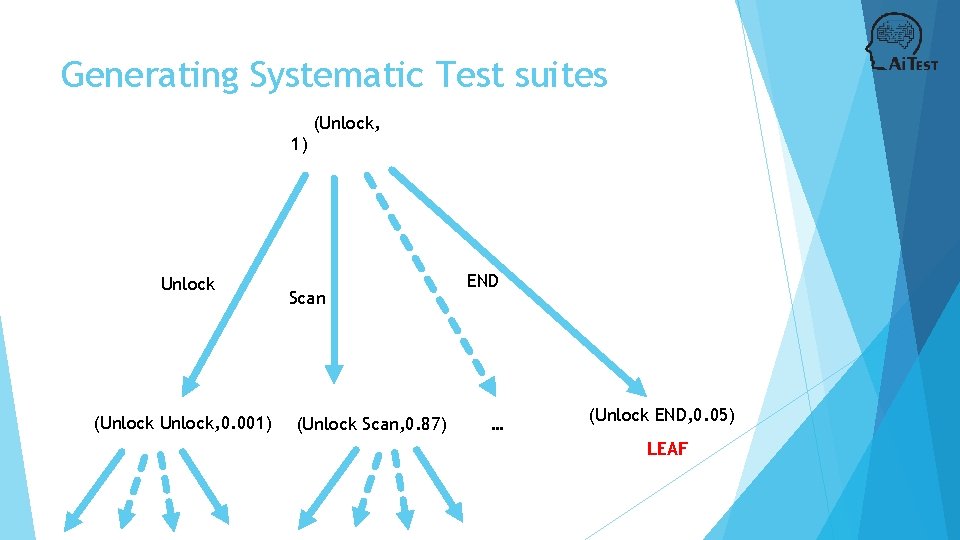
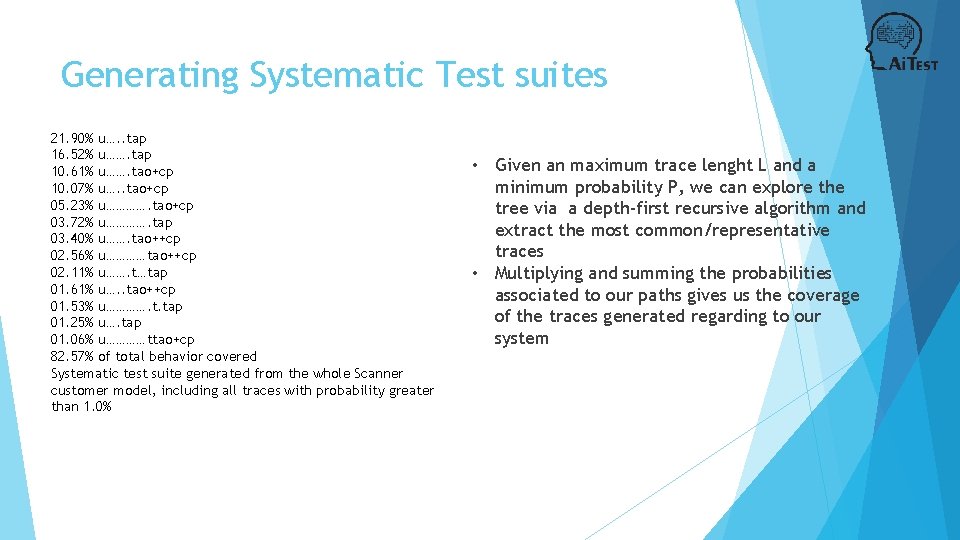
Generating Systematic Test suites We can generate all the most common sequences by unrolling our models The model has learned a function to map a trace prefix tr to probability distributions of the likely next events. Unrolling the model gives us a tree of (tr, p) where tr is a trace prefix and p the probability of that prefix.
Generating Systematic Test suites (Unlock, 1) Unlock (Unlock, 0. 001) Scan (Unlock Scan, 0. 87) END … (Unlock END, 0. 05) LEAF
Generating Systematic Test suites 21. 90% u…. . tap 16. 52% u……. tap 10. 61% u……. tao+cp 10. 07% u…. . tao+cp 05. 23% u…………. tao+cp 03. 72% u…………. tap 03. 40% u……. tao++cp 02. 56% u…………tao++cp 02. 11% u……. t…tap 01. 61% u…. . tao++cp 01. 53% u…………. t. tap 01. 25% u…. tap 01. 06% u…………ttao+cp 82. 57% of total behavior covered Systematic test suite generated from the whole Scanner customer model, including all traces with probability greater than 1. 0% • Given an maximum trace lenght L and a minimum probability P, we can explore the tree via a depth-first recursive algorithm and extract the most common/representative traces • Multiplying and summing the probabilities associated to our paths gives us the coverage of the traces generated regarding to our system
Application to two industry cases Bus system and Supply chain
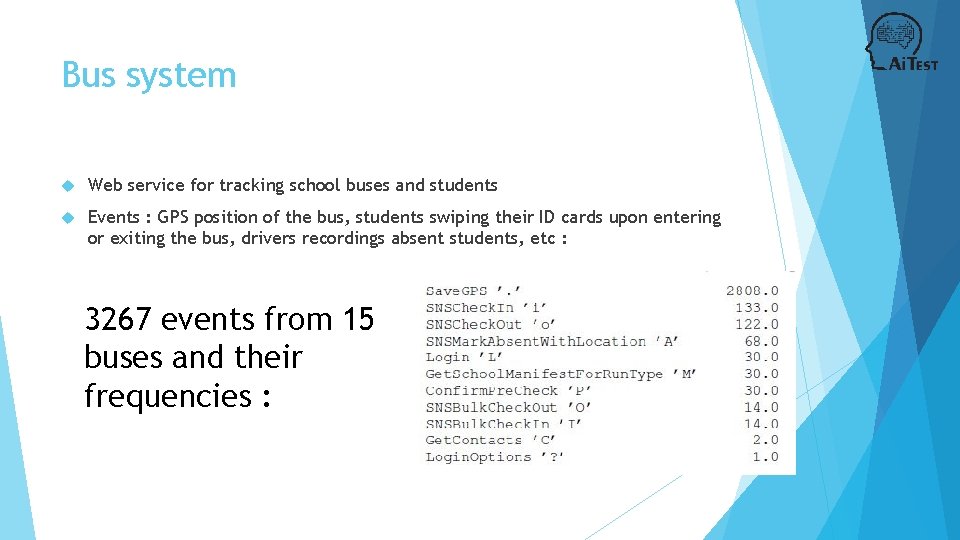
Bus system Web service for tracking school buses and students Events : GPS position of the bus, students swiping their ID cards upon entering or exiting the bus, drivers recordings absent students, etc : 3267 events from 15 buses and their frequencies :
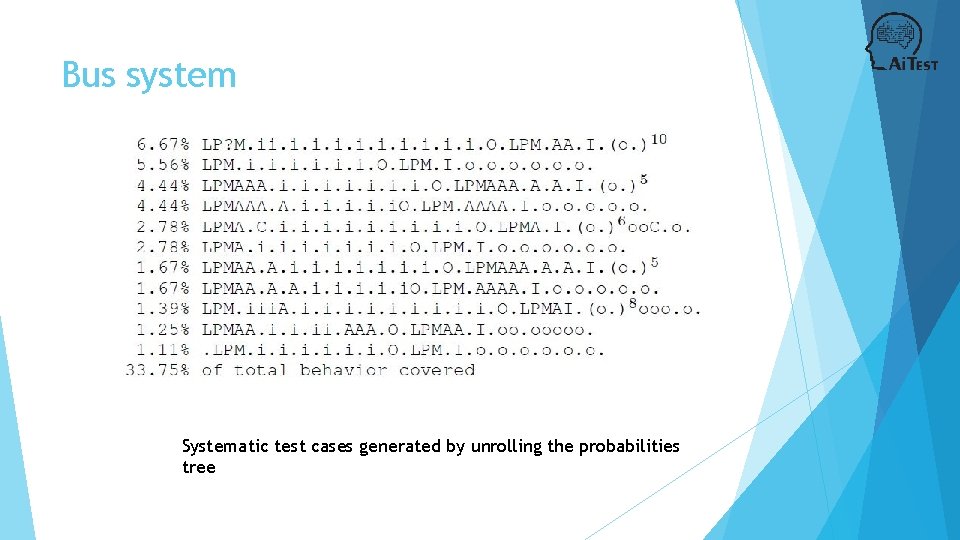
Bus system Systematic test cases generated by unrolling the probabilities tree
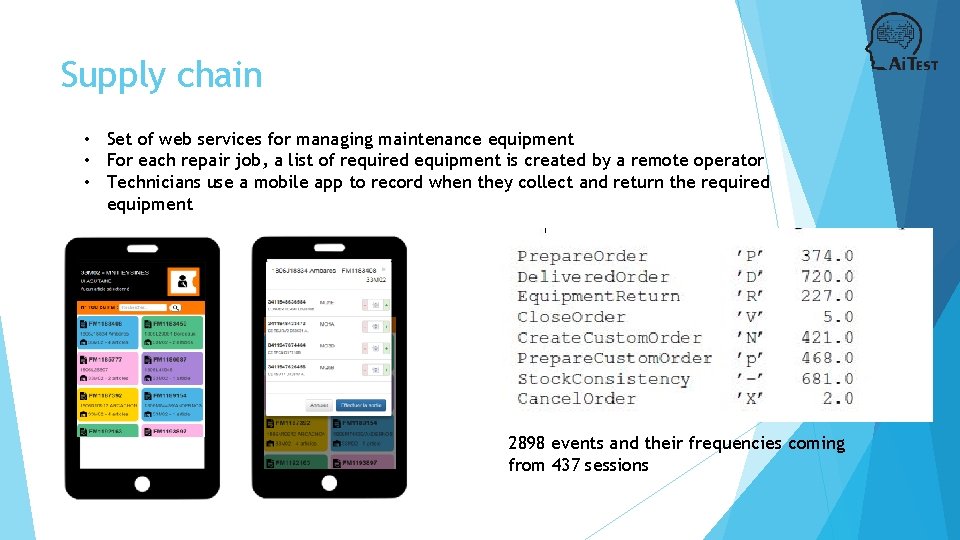
Supply chain • Set of web services for managing maintenance equipment • For each repair job, a list of required equipment is created by a remote operator • Technicians use a mobile app to record when they collect and return the required equipment 2898 events and their frequencies coming from 437 sessions
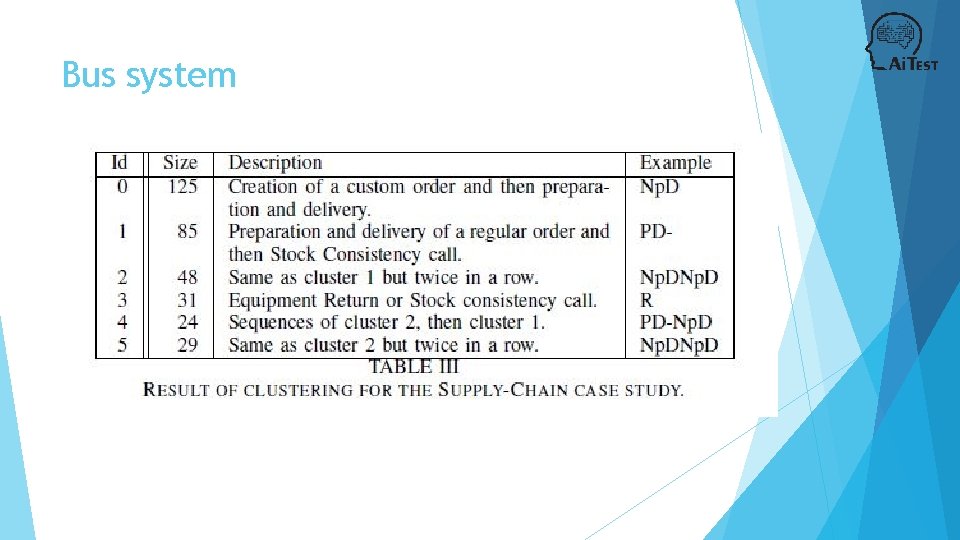
Bus system
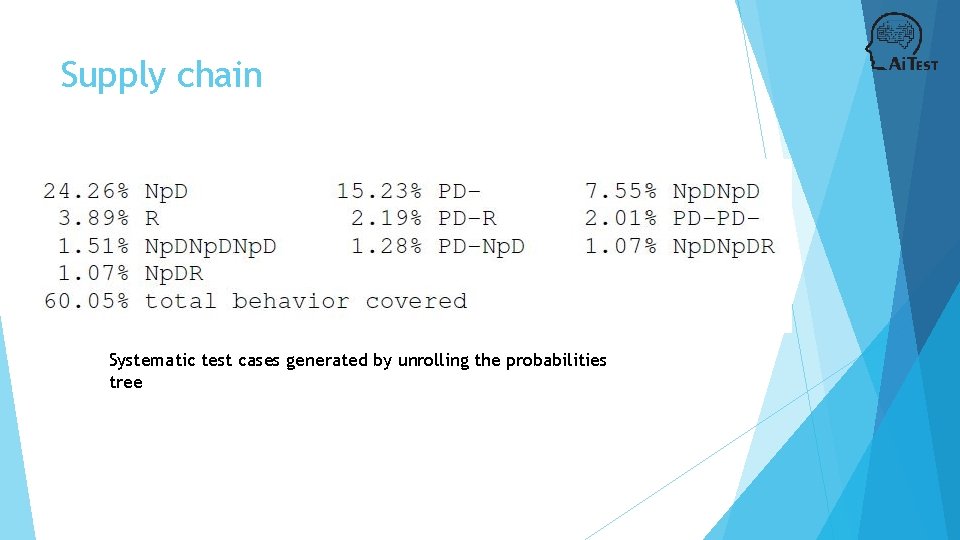
Supply chain Systematic test cases generated by unrolling the probabilities tree
Future directions Test generation : learning of test data equivalence classes on test execution traces Provide a complete, open source toolbox
Thank you !