
Identifying and Defining Bullying Lesson 1 Lesson Essential
Identifying and Defining Bullying Lesson 1
Lesson Essential Question What is bullying?
GET THINKING! “My Bullying Experience” Think about a time when you felt like you would were bullied. Write about the incident using the “My Bullying Experience” graphic organizer.
Ground Rules Everyone listens and takes turns talking No putdowns, mean remarks or gestures Everyone is supportive of others’ ideas and questions All questions are welcome
Bullying (Definition) Repeatedly causing someone to feel stressed, humiliated or threatened in an effort to assert power or control over that person There are many different types of bullying including physical, verbal, emotional/social and cyber bullying.
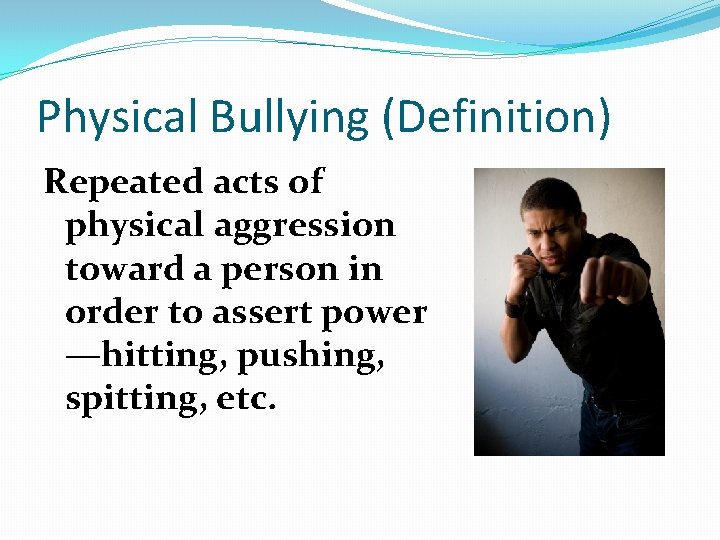
Physical Bullying (Definition) Repeated acts of physical aggression toward a person in order to assert power —hitting, pushing, spitting, etc.
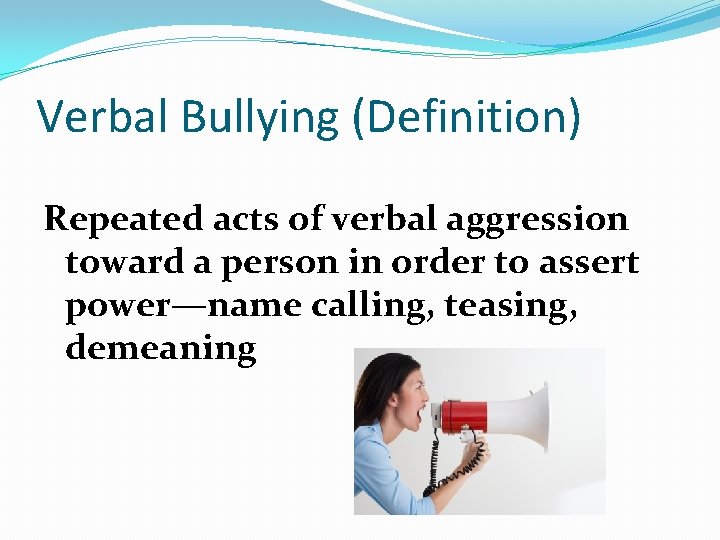
Verbal Bullying (Definition) Repeated acts of verbal aggression toward a person in order to assert power—name calling, teasing, demeaning
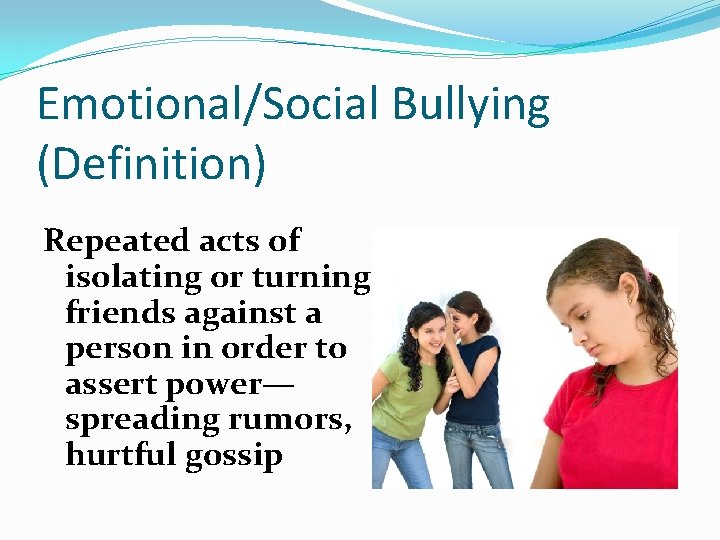
Emotional/Social Bullying (Definition) Repeated acts of isolating or turning friends against a person in order to assert power— spreading rumors, hurtful gossip
Cyber Bullying (Definition) Repeatedly using the internet or other digital communication technologies to communicate words, images or language in an effort to purposely cause distress to another
Group Time! In your groups, think about your assigned vocabulary word (physical bullying, verbal bullying, emotional/social bullying or cyber bullying). On the left side of your paper, brainstorm what your vocabulary word looks and/or sound like. On the right side of you paper, brainstorm how it feels like to be bullied in that way. Post the results!
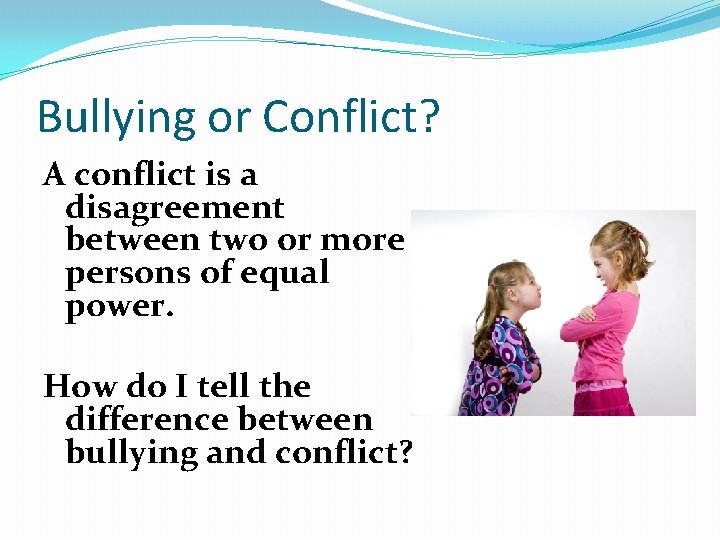
Bullying or Conflict? A conflict is a disagreement between two or more persons of equal power. How do I tell the difference between bullying and conflict?
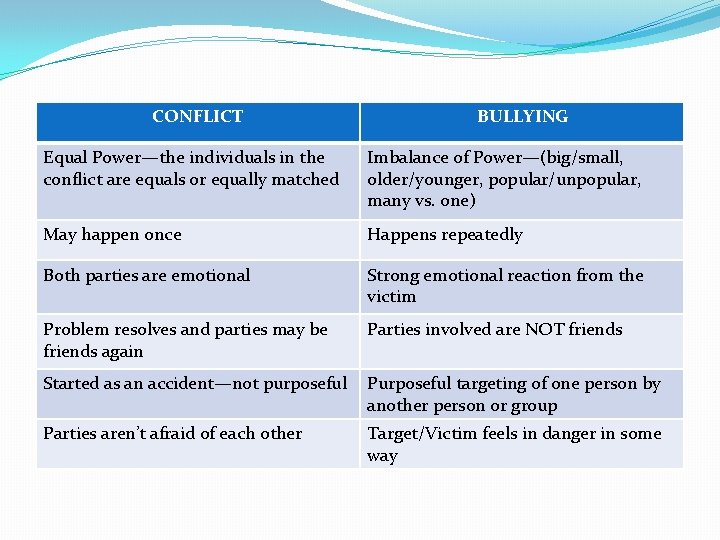
CONFLICT BULLYING Equal Power—the individuals in the conflict are equals or equally matched Imbalance of Power—(big/small, older/younger, popular/unpopular, many vs. one) May happen once Happens repeatedly Both parties are emotional Strong emotional reaction from the victim Problem resolves and parties may be friends again Parties involved are NOT friends Started as an accident—not purposeful Purposeful targeting of one person by another person or group Parties aren’t afraid of each other Target/Victim feels in danger in some way
Code of Student Conduct According to Section 7. 07 (page 44) of Polk County’s Code of Student Conduct: “Three criteria are necessary for an incident to be bullying: Any behavior that is unwanted, offensive, threatening, insulting, causes discomfort or humiliation, or interferes with the individual’s school performance which results in the victim feeling stressed, injured, or threatened 2. The behaviors are repeated 3. There is an imbalance of power between the bully and the victim. ” 1.
Think About It…. Look at the incident you wrote about at the beginning of class. Determine if your incidents meet the 3 -prong criteria of bullying as outlined in the Code of Student Conduct? Why or Why not?
B U L L Y I N G Complete the acrostic with types of bullying we discussed today!
Identifying Hot Spots Lesson 2
Lesson Essential Question How can we use a “hot spot” map to make our school safer from bullying?
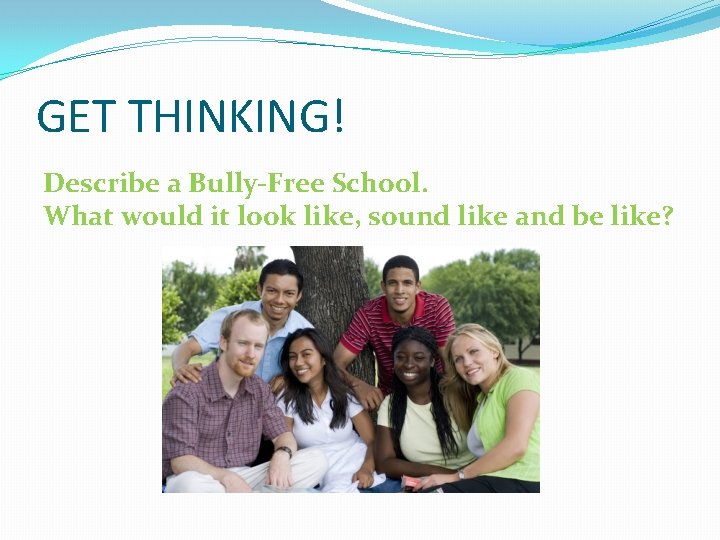
GET THINKING! Describe a Bully-Free School. What would it look like, sound like and be like?
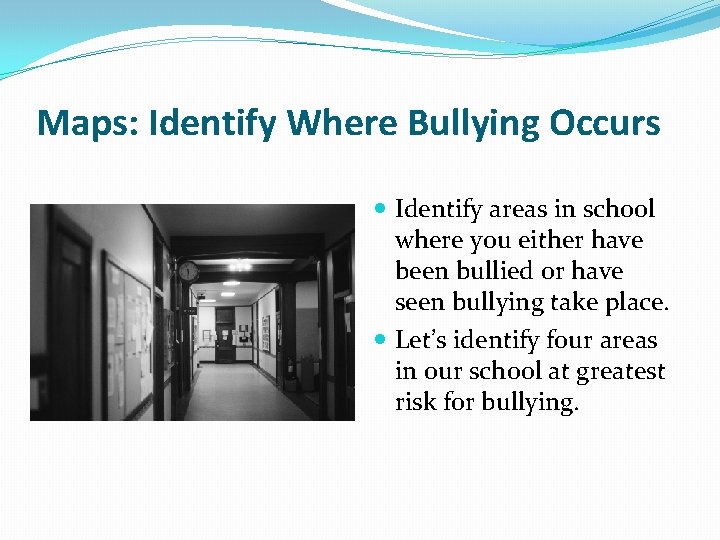
Maps: Identify Where Bullying Occurs Identify areas in school where you either have been bullied or have seen bullying take place. Let’s identify four areas in our school at greatest risk for bullying.
Cooling Those Hot Spots What can student do to make these four “hot spot” areas resemble the bully-free school we described earlier? What can staff/adults do to make the four areas resemble the bully-free school we described earlier?
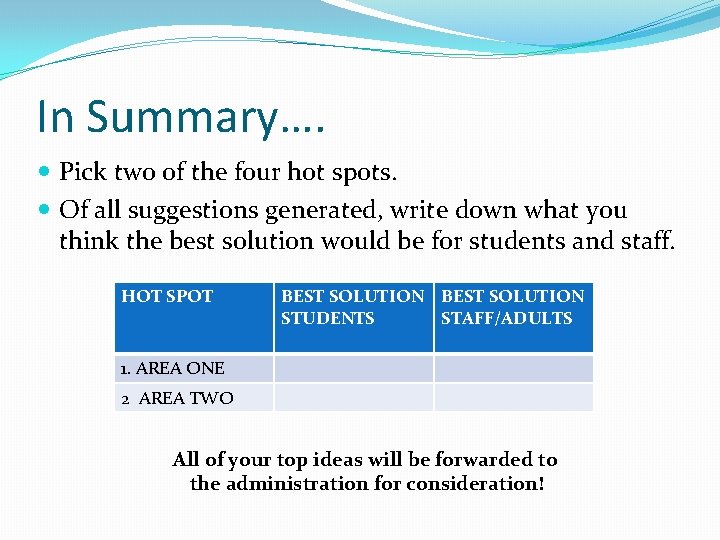
In Summary…. Pick two of the four hot spots. Of all suggestions generated, write down what you think the best solution would be for students and staff. HOT SPOT BEST SOLUTION STUDENTS STAFF/ADULTS 1. AREA ONE 2 AREA TWO All of your top ideas will be forwarded to the administration for consideration!
Targets and Bullies Lesson Three
Lesson Essential Question What types of behaviors characterize a target/victim and a bully?
GET THINKING! On a piece of paper, list the characteristics of a target/victim as fast as you can. You have three minutes! Go!
Characteristics of a Target/Victim Give yourself one point for each one that is listed. Alone and isolated Trouble making friends or between friend groups Small or weak; unsure of self New student at school Willing to keep quiet Sometimes irritable and provokes other students May have learning problems Cries easily and unable to stick up for self
Do you know of someone who has been bullied because they are different in some way? In what way? Do you feel that being different is a bad thing? Why or why not?
Tolerance (Definition) Willingness to recognize and respect the beliefs or practices of others No student deserves to be bullied because they are different than others!

Next you will learn about actual people who have experienced bullying. Try to guess who they are.
Do you know this victim? “I got beaten up a lot by people when I was younger. ” “I was a bit of an idiot but I always thought the assaults were unprovoked. ” Someone even stole his shoelaces once from his shoes! He still does not wear shoelaces. Who is he? ?

Robert Pattinson : Twilight's Resident Vampire!
Who am I? “I used to be the freak at school. I was 5 ft 9 in and really skinny. I used to get picked on a lot. There was this boy called Antonio who was so cruel. He used to say, ‘I do not want that tall, skinny, brace mouth, big forehead girl anywhere near me. ’ I just broke down. ”
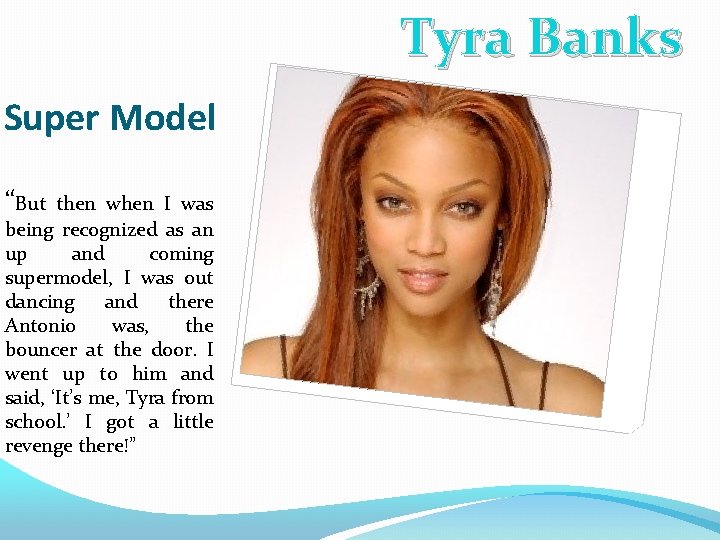
Tyra Banks Super Model “But then when I was being recognized as an up and coming supermodel, I was out dancing and there Antonio was, the bouncer at the door. I went up to him and said, ‘It’s me, Tyra from school. ’ I got a little revenge there!”
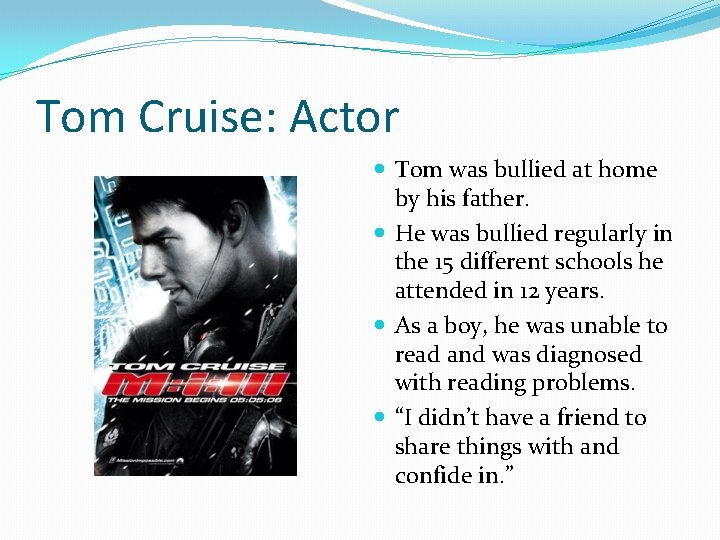
Tom Cruise: Actor Tom was bullied at home by his father. He was bullied regularly in the 15 different schools he attended in 12 years. As a boy, he was unable to read and was diagnosed with reading problems. “I didn’t have a friend to share things with and confide in. ”
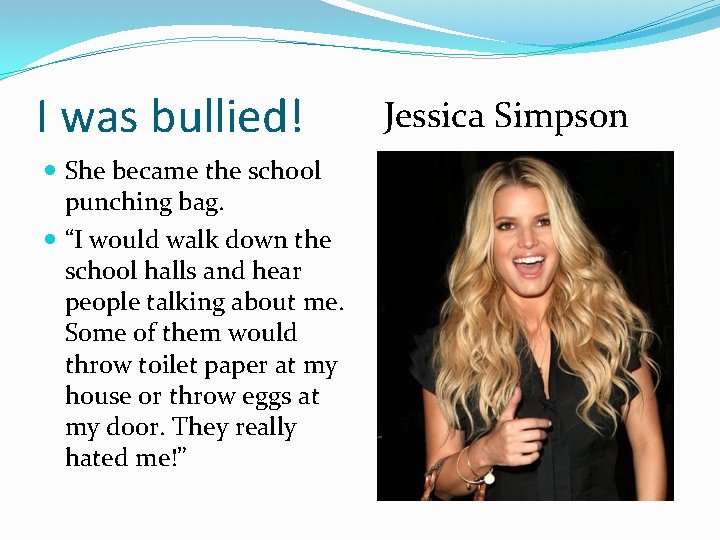
I was bullied! She became the school punching bag. “I would walk down the school halls and hear people talking about me. Some of them would throw toilet paper at my house or throw eggs at my door. They really hated me!” Jessica Simpson

Miley Cyrus “I was scrawny and short. I was locked in a bathroom by a bunch of mean girls. These were big, tough girls. I was trapped. I spent what felt like an hour in there, waiting for someone to rescue me, wondering how my life had gotten so messed up. ”
Then, who can be bullied? Anyone!

Who deserves to be bullied? No one!!!! Someone who is bullied should not have to stand alone.
Build a Bully Free Bob Draw the beginnings of a snowman (large, medium, small circles). Build Bob with characteristics that will help him ward off bullies. For example, bullies like to target students who cry easily or get angry. You may want to build Bob with a confident smile.
Why Do Bullies Behave So Badly?

Bullies Do you think there is a difference between how a girl bullies and how a boy bullies? What are the differences? Boys are usually more direct and more physical. Girls tend to engage in emotional/social bullying. Do you think that all bullies suffer from low self-esteem? Actually, most bullies have adequate self -esteem, friends, and bully for the “power” rush.
Why Students Bully Power Control Jealousy Poor coping skills Takes anger out on others Boredom Feels a sense of entitlement Lack of empathy Blames others Bullying behavior modeled at home Poor impulse control
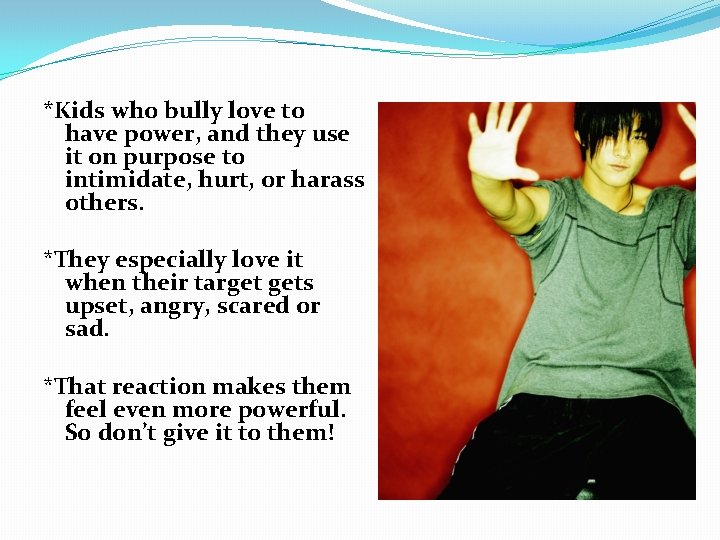
*Kids who bully love to have power, and they use it on purpose to intimidate, hurt, or harass others. *They especially love it when their target gets upset, angry, scared or sad. *That reaction makes them feel even more powerful. So don’t give it to them!
Can You Recognize Bullying? Think of one person. Complete the “Can You Recognize a Bully” worksheet with that one person in mind. Rate him/her with a 1 (rarely), 2 (sometimes) or 3 (most times). Put down your first guess; don’t ponder your answer. Then, add your scores to see if you view that person as a bully.
In Summary…. Summarize in one sentence each: (1) the most important thing you learned about targets/victims and (2) the most important thing you learned about students who bully.
Responding as a Target/Victim Lesson 4
Lesson Essential Question What should I do if I’m being bullied?
Get Thinking! Read and copy each statement below. If you agree put a check next to it. If you disagree put an X next to it. _____ Kids who are bullied should just get used to it because there is nothing they can do about it. _____ The best way to deal with a bully is to fight back. _____ Banding together with friends is a good way to ward off bullies. _____ Kids who are bullied deserve it. _____ No one at school ever believes it when a kid tells them they are bullied.
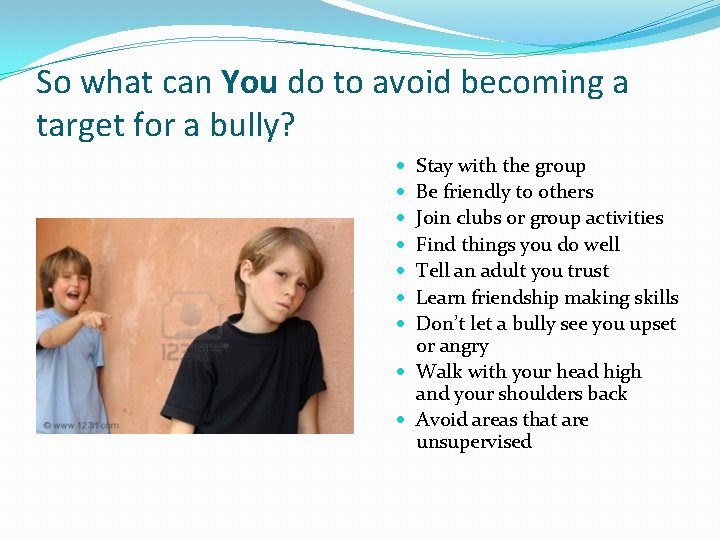
So what can You do to avoid becoming a target for a bully? Stay with the group Be friendly to others Join clubs or group activities Find things you do well Tell an adult you trust Learn friendship making skills Don’t let a bully see you upset or angry Walk with your head high and your shoulders back Avoid areas that are unsupervised

Beware Bullies…A News Report There is no way of telling who a bully is by how he/she looks. Bullies come in all shapes and disguises. Bullies bully in all different ways. Bullies all have one thing in common: they want to be powerful and in control If you are being bullied, there are things you can do to help keep you safe and help you steer out of the bully’s way. The following tips will help:
IGNORE INSULTS AND WALK AWAY! This can’t be said enough. It’s not easy, but don’t let the bully see that he/she is getting to you. Try to remain calm and in control without showing any signs of being upset or angry. Bullies gain power if they can get a reaction from you, so play it cool and get out of there. SAFETY IN NUMBERS! Stick close to your friends. Bullies are less likely to pick on people who are surrounded by friends. Make friends by smiling at people, saying “hello” in the hallways, and looking other people in the eyes when you talk to them.
FACE UP! SHOULDERS BACK! Beware of your body language. How you carry yourself sends a message. Slouching your shoulders, staring at the ground, and avoiding eye contact may make people think that you are afraid and are an easy target. Try walking with your head held high, greet people face-to-face, and smile! A bully is less likely to target you if you look confident. ASSERT YOURSELF! Practice what you would say if a person were to pick on you. Practice several times. You may even want to practice in front of a mirror to see what the other person sees. However, never argue with a bully. Make sure you keep your voice calm and cool.
AVOID A FIGHT! Don’t fight the bully, even if it means losing your possessions—your safety is more important than anything. Keep your eyes open for an escape route, take it and tell a trusted adult right away. EXPLORE YOUR TALENTS! Just because a bully says something ugly to you, doesn’t make it true. Everyone has talents. What are yours? If you are great at singing, join a chorus. Good at kicking a ball? Play soccer. Try something you have always wanted to do, and you may discover wonderful talents you never knew you had. It’s easier to make friends with people who have the same interests you do!
USE A BLAND RESPONSE! Think about a few bland responses that you could say to the bully. If you feel you need to say something, try, “whatever” or “so? ” and walk away. Other bland responses can include, “That’s enough, ” or “I don’t do this to you. Think about that. ” Deliver your bland statements in a calm, even tone. In this way, the bully doesn’t get the reaction he wants from you. TELL AN ADULT! No one deserves to be bullied. If you have tried to stop the bully from bullying you and nothing has worked, tell a trusted adult that can help you. If that person doesn’t help you, try another person until someone listens. Also, if you see someone else being bullied, find a trusted adult to tell. If kids stay quiet, the bullying will continue, and the bully wins because he or she stays in control. The way to stop bullying is to make sure adults know it is happening and so they can intervene.
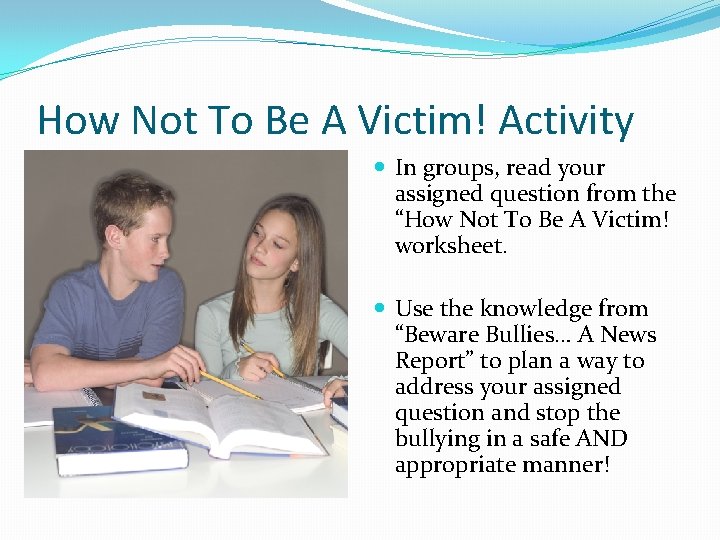
How Not To Be A Victim! Activity In groups, read your assigned question from the “How Not To Be A Victim! worksheet. Use the knowledge from “Beware Bullies… A News Report” to plan a way to address your assigned question and stop the bullying in a safe AND appropriate manner!
Report Bullying! Any student, parent or other interested party can report suspected bullying. BULLYING CAN BE REPORTED ANONYMOUSLY!
Ways to Report Bullying Call the school and give a report via the phone. Go to the school and talk to personnel in person.
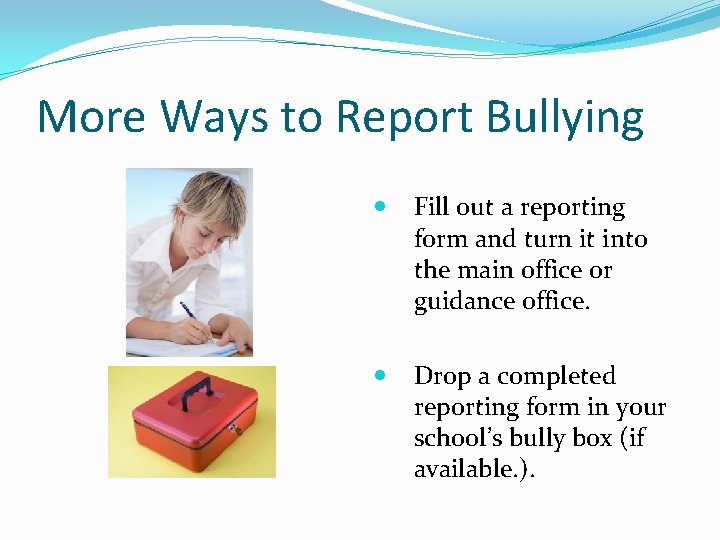
More Ways to Report Bullying Fill out a reporting form and turn it into the main office or guidance office. Drop a completed reporting form in your school’s bully box (if available. ).
Report Online Go to www. polk-fl. net, keyword bullying, scroll down and click on the “Report Bullying Online Now” button and follow the directions.
Reporting the 411 When reporting bullying, make sure you have all of the facts: W ho is being bullied? W ho is the person(s) bullying? W hat happened? W here did it happen? W hen did it happen? How often does it happen? Names of individuals who saw it happen (if any).
Reporting Practice Activity Using the “How Not to Be a Victim” scenario that you were assigned, complete a bullying report for your scenario. Fictitious names, dates, etc. should be used when not provided in the scenario.
In Summary…. Take out the “Bullying Anticipation Guide” that you completed at the beginning of this lesson. Check over your responses, changing any responses based on the information you have learned in this lesson.
Bystanders Lesson 5

Lesson Essential Question How can bystanders respond in a bullying situation to aid a target/victim?
GET THINKING! Who has the most power in a bullying situation: the bully, the victim or the person watching what is going on? Why do you think so?
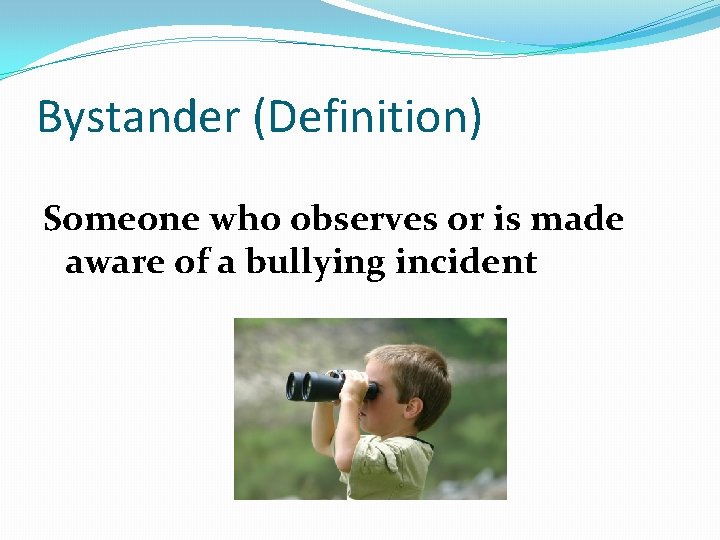
Bystander (Definition) Someone who observes or is made aware of a bullying incident
Types of Bystanders Sidekick—An active participant in the bullying who joins in at the bully’s invitation. Usually is a friend of the bully. Reinforcer—A student who upon seeing bullying occur, laughs and encourages the bully. Onlooker—A student who does not support the bully but does nothing when others are bullied. This student does not want to get involved and may feel that bullying is none of his/her business. Defender—This student tries to stop bullying while maintaining personal safety. May comfort the victim and get adult help if necessary.

Can You Recognize the Types?
Interesting Fact Most students are ONLOOKERS! They don’t support bullying, but they don’t get involved in helping the target/victim either. Why do you think students are reluctant to get involved?
Why Kids Don’t Get Involved 1. They don’t know what to do or how to stop it. 2. They are afraid that if they try to do something, they may do something wrong and make the situation worse. 3. They fear that if they intervene, they may be bullied next. 4. They think their friends may reject them if they reach out to someone who is an “outsider. ”
How can a bystander help? Say what you feel. Tell the bully that you don’t like what they are doing. Tell a trusted adult. Report bullying. When it isn’t safe to intervene alone, get help. Ask other friends to help. If it is beyond what you can do alone, ask friends to join you in helping the target. Having people close by can discourage the bully. Never leave the targeted person alone. It shows support, and bullies are less likely to pick on someone if they are with others. Don’t encourage the bully. Understand that you can make a difference. Put yourself in the target’s shoes. Treat others like you would like to be treated.
Rewind Activity Think about a time when you were a bystander and did nothing to stop bullying because you weren’t sure what to do. Write a short paragraph including the following: 1. Tell what happened. 2. Identify how you felt as a bystander. 3. Describe what you would do differently if it happened again.
Take a Stand School-Wide Lesson 6
Lesson Essential Question What can we do to decrease bullying school -wide?
GET THINKING! 1. What does it mean when someone “tells” on someone else? 2. Give an example of when you have been told on. How did it make you feel?
Telling vs Ratting: When a person reports something minor to an authority figure in hopes that it will get someone into trouble. Telling: When a person reports something important to an authority figure in order to prevent someone from being in danger or hurt.
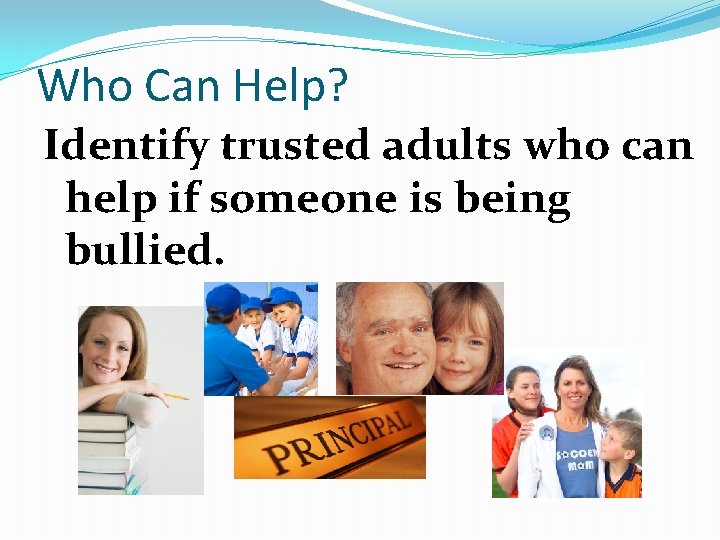
Who Can Help? Identify trusted adults who can help if someone is being bullied.
Who’s In My Corner? Identify and write down two adults at school, two adults in your family, and one adult in the community who would be willing to help if you or someone you know is bullied.
Power In Numbers Activity 1. Divide into pairs. 2. Take out a sheet of paper and divide it in half (like a hotdog). 3. On the left side of the paper, brainstorm ideas that you could do to take a stand against bullying. 4. On the right side, list ways the entire school can take a stand against bullying.
Bullying Can Stop with YOU! Make the pledge to keep your school bully-free by agreeing to: Report bullying to an adult Refuse to bully other students Treat others respectfully at all times Help a student if he/she is being bullied Refuse to harm or cause pain to others in any way
In Summary…. Think about the following quote: “In the end, we will remember not the words of our enemies, but the silence of our friends. ” --Dr. Martin Luther King, Jr. Write a paragraph about what this quote means and how it relates to bullying.
- Slides: 80