
Identifying and Classifying Communication Failures in Healthcare Developing

- Slides: 20
Identifying and Classifying Communication Failures in Healthcare: Developing Methods to Reduce Communication-Related Incidents Milisa Manojlovich, Ph. D, RN, CCRN 1 Elizabeth Umberfield, BSN, RN 1 Amir Ghaferi, MD, MS 2 Sarah Krein, Ph. D, RN 3, 1, 2 1 University of Michigan, School of Nursing; 2 University of Michigan, Medical School; 3 Department of Veterans Affairs, Center for Clinical Management Research
Acknowledgement • Risk Management Department
Background • Communication failures and patient safety • “In the moment” vs. retrospective methods • Characterizing and learning from failures • Hospital incident reports – Can they be used to identify failures?
Study Purpose To identify and characterize communication failures between nurses and physicians by applying a classification method to incident reports.
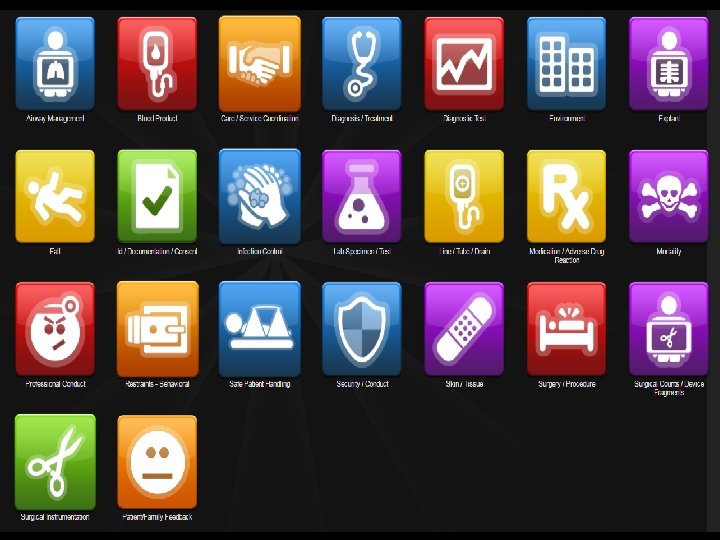
Study Design • Qualitative descriptive design • Large Midwest tertiary care health system • Electronically captured incident reporting system (RL 6: Risk)
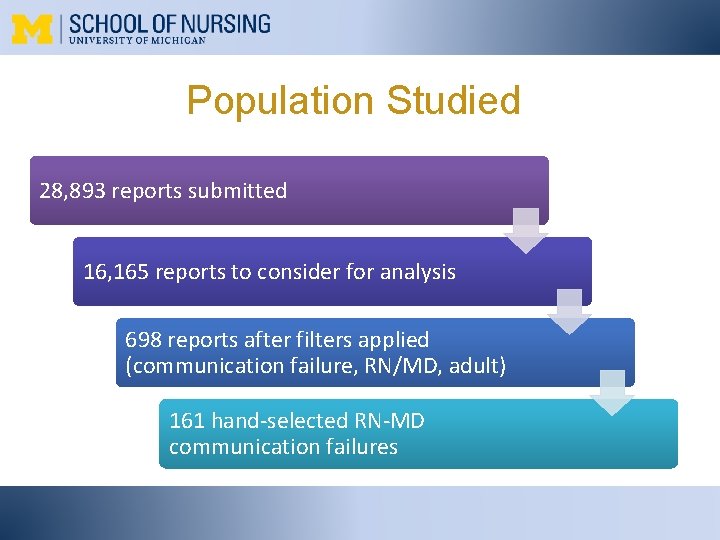
Population Studied 28, 893 reports submitted 16, 165 reports to consider for analysis 698 reports after filters applied (communication failure, RN/MD, adult) 161 hand-selected RN-MD communication failures
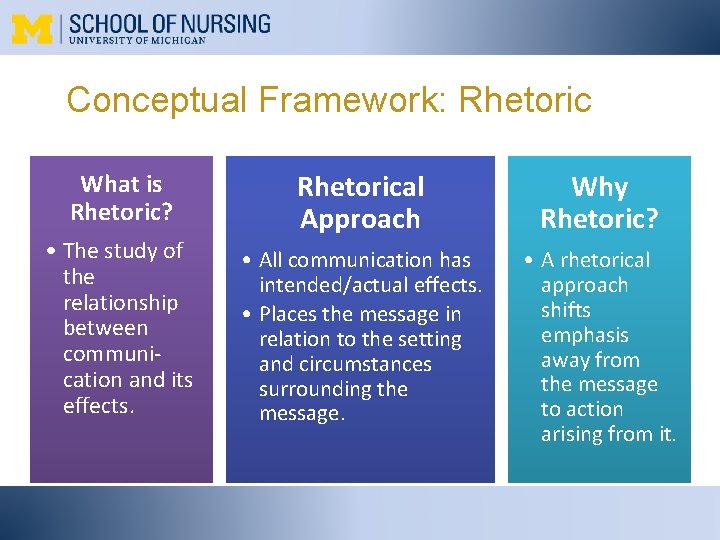
Conceptual Framework: Rhetoric What is Rhetoric? • The study of the relationship between communication and its effects. Rhetorical Approach Why Rhetoric? • All communication has intended/actual effects. • Places the message in relation to the setting and circumstances surrounding the message. • A rhetorical approach shifts emphasis away from the message to action arising from it.
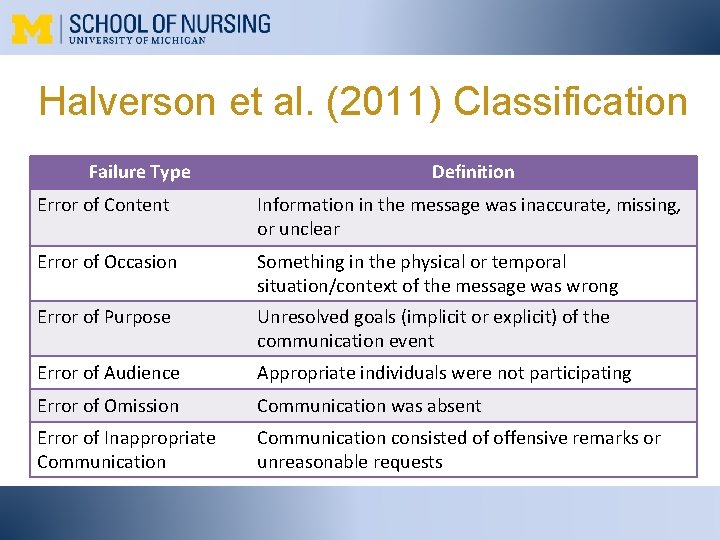
Halverson et al. (2011) Classification Failure Type Definition Error of Content Information in the message was inaccurate, missing, or unclear Error of Occasion Something in the physical or temporal situation/context of the message was wrong Error of Purpose Unresolved goals (implicit or explicit) of the communication event Error of Audience Appropriate individuals were not participating Error of Omission Communication was absent Error of Inappropriate Communication consisted of offensive remarks or unreasonable requests
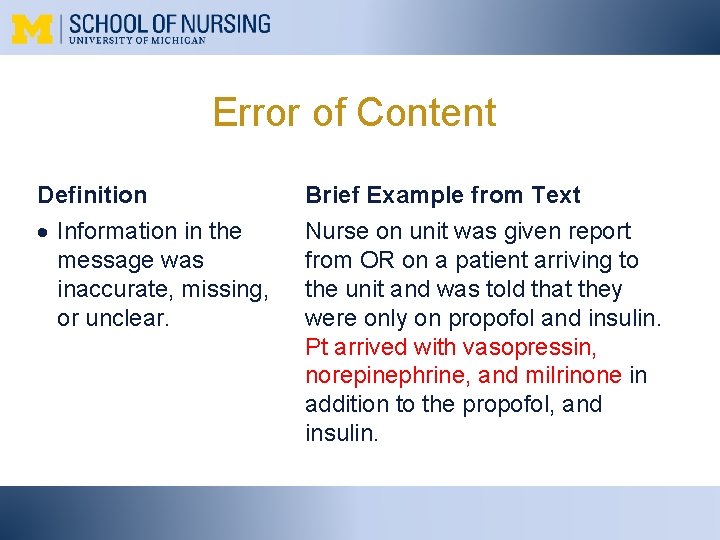
Error of Content Definition Brief Example from Text Information in the message was inaccurate, missing, or unclear. Nurse on unit was given report from OR on a patient arriving to the unit and was told that they were only on propofol and insulin. Pt arrived with vasopressin, norepinephrine, and milrinone in addition to the propofol, and insulin.
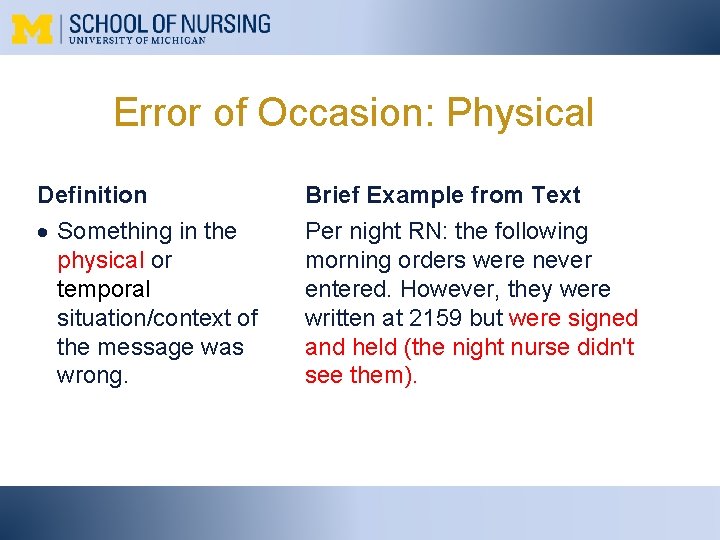
Error of Occasion: Physical Definition Brief Example from Text Something in the physical or temporal situation/context of the message was wrong. Per night RN: the following morning orders were never entered. However, they were written at 2159 but were signed and held (the night nurse didn't see them).
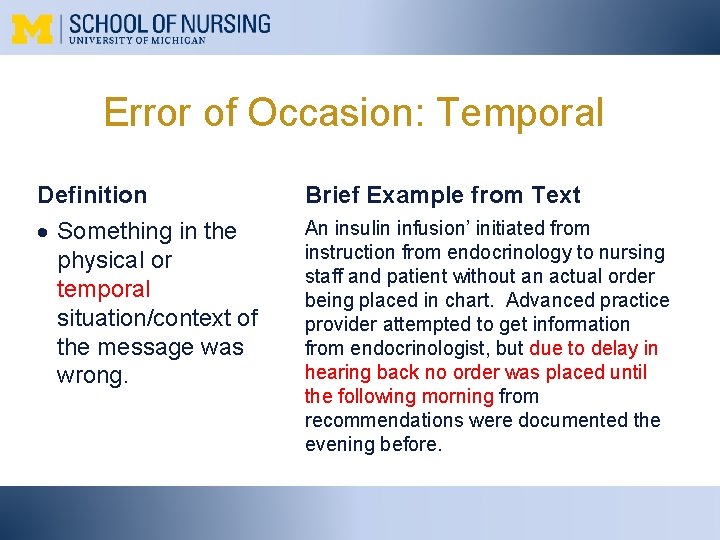
Error of Occasion: Temporal Definition Brief Example from Text Something in the physical or temporal situation/context of the message was wrong. An insulin infusion’ initiated from instruction from endocrinology to nursing staff and patient without an actual order being placed in chart. Advanced practice provider attempted to get information from endocrinologist, but due to delay in hearing back no order was placed until the following morning from recommendations were documented the evening before.
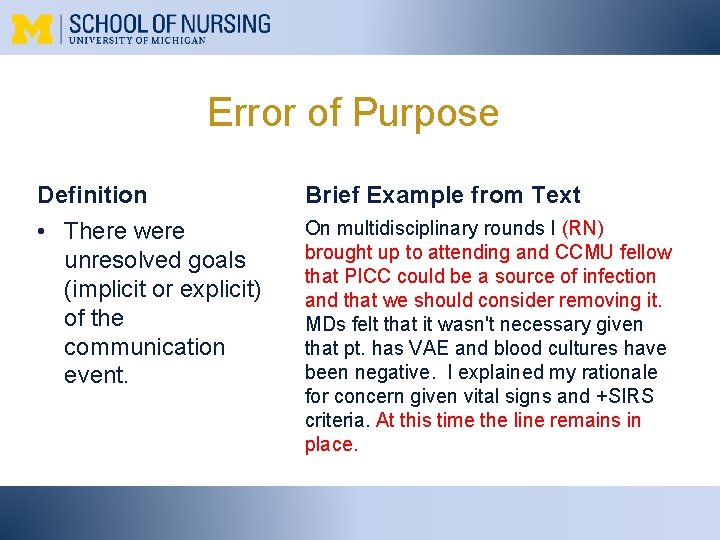
Error of Purpose Definition Brief Example from Text • There were unresolved goals (implicit or explicit) of the communication event. On multidisciplinary rounds I (RN) brought up to attending and CCMU fellow that PICC could be a source of infection and that we should consider removing it. MDs felt that it wasn't necessary given that pt. has VAE and blood cultures have been negative. I explained my rationale for concern given vital signs and +SIRS criteria. At this time the line remains in place.
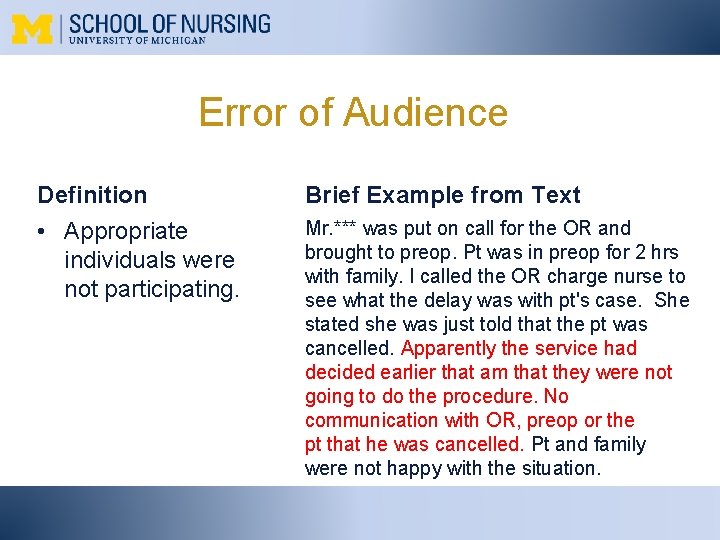
Error of Audience Definition Brief Example from Text • Appropriate individuals were not participating. Mr. *** was put on call for the OR and brought to preop. Pt was in preop for 2 hrs with family. I called the OR charge nurse to see what the delay was with pt's case. She stated she was just told that the pt was cancelled. Apparently the service had decided earlier that am that they were not going to do the procedure. No communication with OR, preop or the pt that he was cancelled. Pt and family were not happy with the situation.
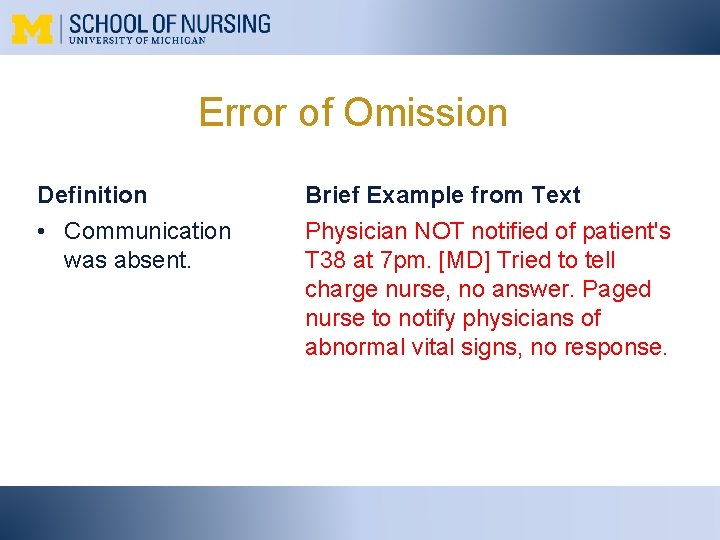
Error of Omission Definition Brief Example from Text • Communication was absent. Physician NOT notified of patient's T 38 at 7 pm. [MD] Tried to tell charge nurse, no answer. Paged nurse to notify physicians of abnormal vital signs, no response.
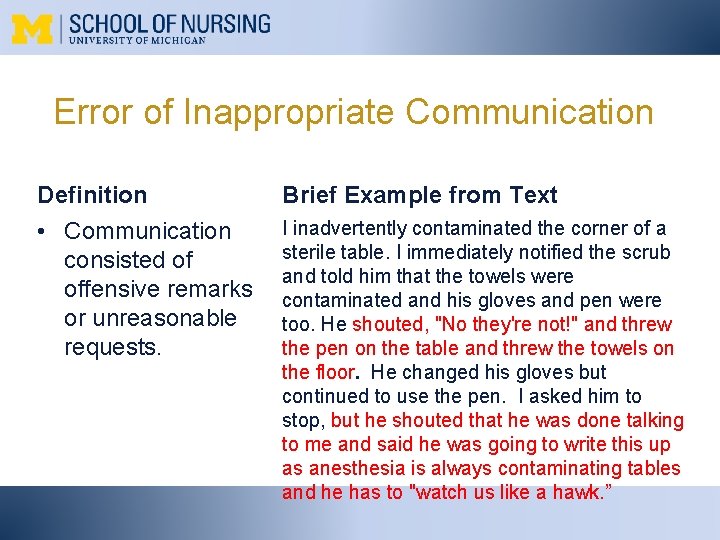
Error of Inappropriate Communication Definition Brief Example from Text • Communication consisted of offensive remarks or unreasonable requests. I inadvertently contaminated the corner of a sterile table. I immediately notified the scrub and told him that the towels were contaminated and his gloves and pen were too. He shouted, "No they're not!" and threw the pen on the table and threw the towels on the floor. He changed his gloves but continued to use the pen. I asked him to stop, but he shouted that he was done talking to me and said he was going to write this up as anesthesia is always contaminating tables and he has to "watch us like a hawk. ”
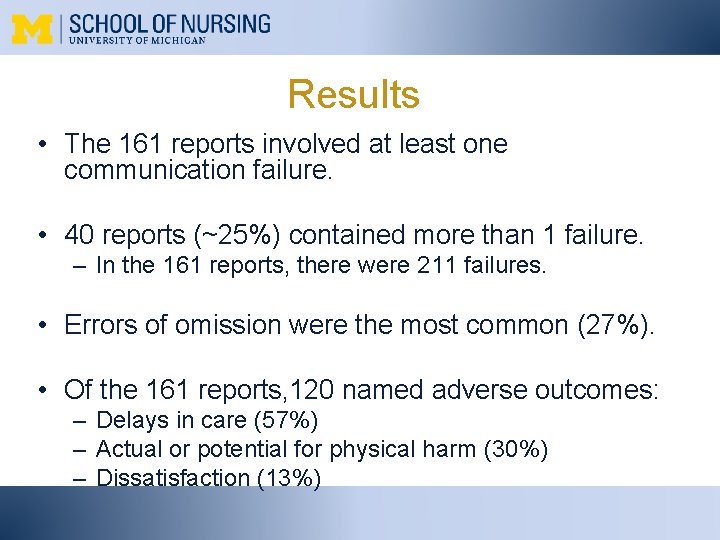
Results • The 161 reports involved at least one communication failure. • 40 reports (~25%) contained more than 1 failure. – In the 161 reports, there were 211 failures. • Errors of omission were the most common (27%). • Of the 161 reports, 120 named adverse outcomes: – Delays in care (57%) – Actual or potential for physical harm (30%) – Dissatisfaction (13%)
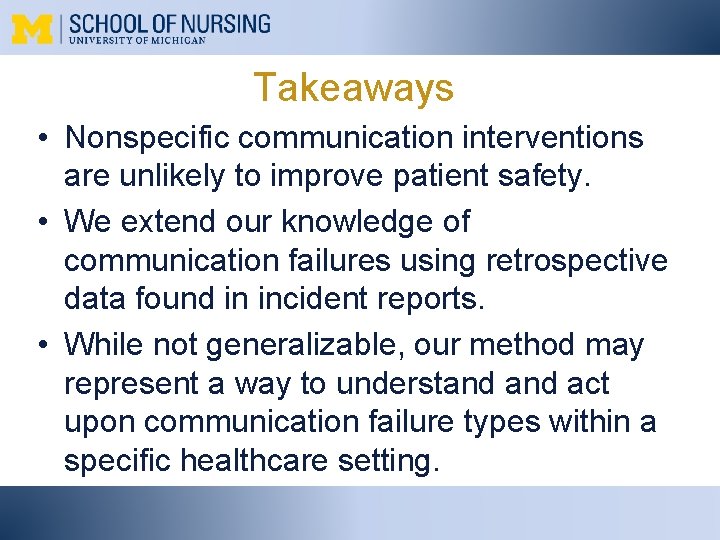
Takeaways • Nonspecific communication interventions are unlikely to improve patient safety. • We extend our knowledge of communication failures using retrospective data found in incident reports. • While not generalizable, our method may represent a way to understand act upon communication failure types within a specific healthcare setting.
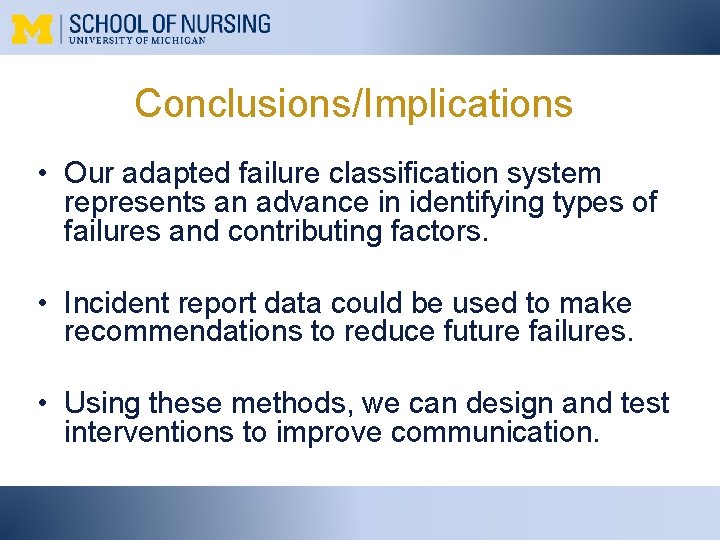
Conclusions/Implications • Our adapted failure classification system represents an advance in identifying types of failures and contributing factors. • Incident report data could be used to make recommendations to reduce future failures. • Using these methods, we can design and test interventions to improve communication.
Thank you!! Questions? Comments? mmanojlo@umich. edu @mmanojlo