
Identify the types and degree of burns Understand

• Identify the types and degree of burns • Understand the bodies metabolic, hormonal, and immune response to burn • Identify proper energy requirements for burn victims • Understand the significant of CHO, protein and fat in burn patients • Recognize the vitamins and minerals important in burn healing

• Burn injury • Severity depends on: – Depth of burn – Extend of surface area involved • Skin Layers • Epidermis – Tough protective barrier • Dermis – Contains blood vessels, nerve endings – Prevents water loss due to evaporation – Prevents loss of body heat
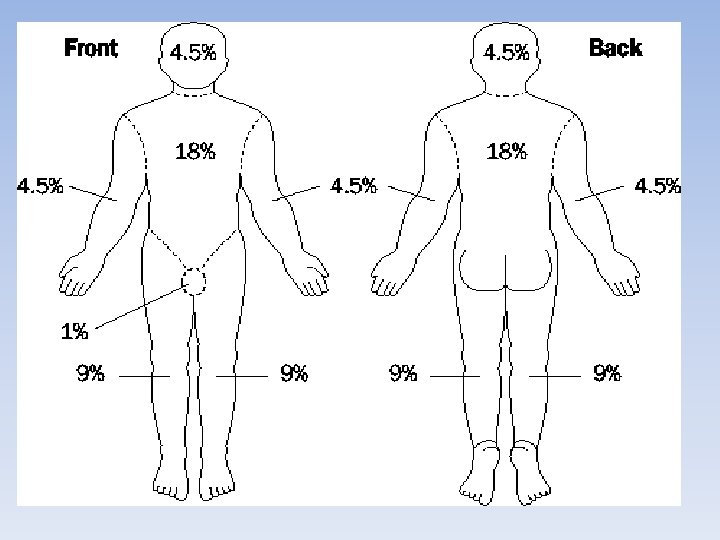

Rule of Nines • • Estimation of total burn area Percentage of total body area Head & Neck: 9% Arm: 9% Trunk: 18% each side Genitalia & perineum: 1% Leg: 18% each
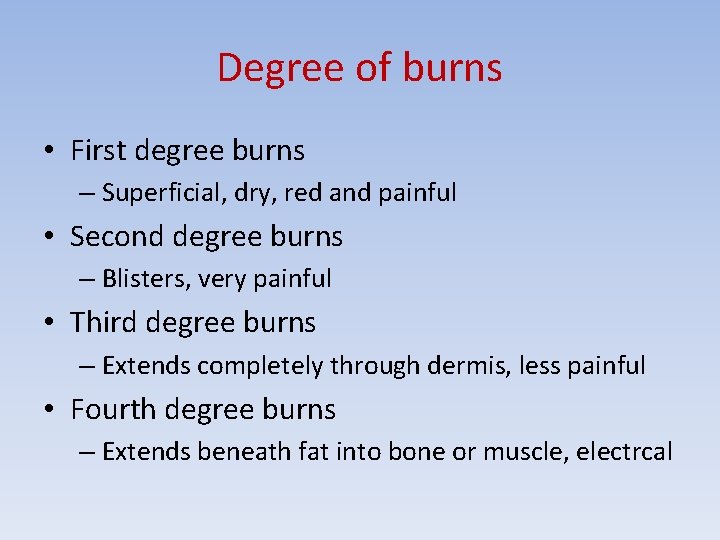
Degree of burns • First degree burns – Superficial, dry, red and painful • Second degree burns – Blisters, very painful • Third degree burns – Extends completely through dermis, less painful • Fourth degree burns – Extends beneath fat into bone or muscle, electrcal
Determining Severity of Injury • • • Size (surface area) Depth Age Prior status of health of victim Location of burn Severity of associated injury

Severity of burn injury ·mild: Ⅱ 0 <10%TBS ·moderate: Ⅱ 0 10 -30%; or Ⅲ 0<10%TBS ·severe: total area 30 -50%; or Ⅲ 0 10 -20%; or with shock, airway burn, combined injury ·major: total area >50%; Ⅲ 0 >20%; or with severe complications
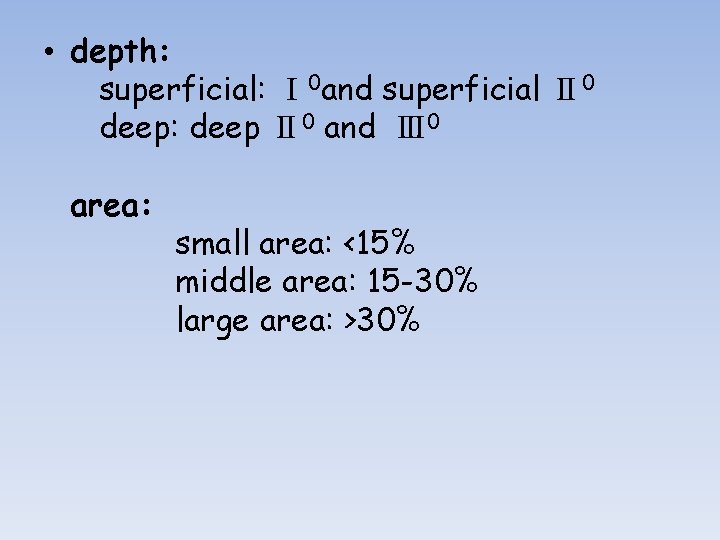
• depth: superficial: Ⅰ 0 and superficial Ⅱ 0 deep: deep Ⅱ 0 and Ⅲ 0 area: small area: <15% middle area: 15 -30% large area: >30%

Immediate Physiologic and Metabolic Changes after Injury or Burn • Metabolic Response • Hypermetabolism – Up to 100% basal metabolic rate is required – Severe weight loss • Up to 10%: increased mortality • >30%: almost 100% mortality • Decrease in basal metabolic rate in recovery
Hormonal Response • Increased circulating cathecolamines, cortisol and glucagon • Normal/slightly elevated insulin • Increased proteolysis and lipolysis • Release of large amounts of amino acids, glycerol and free fatty acids
• Evaporative water loss from burn wounds may reach 300 cc/m 2/h (normal = 15) • Heat loss may reach 580 Kcal/hour
Fighting the Metabolic Response • • Aggressive nutritional support Rapid wound closure Control pain and stress Prevent sepsis
Hypovolemic State: First 48° • Rapid fluid shifts • Capillary permeability with burns increases with vasodilation • Fluid loss deep in wounds • Metabolic acidosis • Protein loss • Hemoconcentration – Hct increases • Low blood volume, oliguria • Hyponatremia • K – damaged cells release K
Diuretic Phase: 48 -72° After Injury • Capillary membrane integrity returns • Edema fluid shifts back into vessels – blood volume increases • Hemodilution - low Hct, decreased potassium as it moves back into the cell or is excreted in urine with the diuresis • Fluid overload can occur due to increased intravascular volume • Metabolic acidosis - HCO 3 loss in urine, increase in fat metabolism • Increase in renal blood flow - result in diuresis (unless renal damage)
Goals of MNT • Prevent weight loss • Preserve lean body mass • Promote healing
Your responsibility • ASSESS PATIENT WITHIN 48 HOURS (TRY 24 HRS) • FOLLOW UP WITH THE PATIENT EVERY 3 DAYS • WEEKLY MULTIDISCIPLINARY BURN ROUNDS
Initial assessment • HEIGHT • ADMIT WT • USUAL WT • % TBSA • FOOD ALLERGIES / INTOLERANCES • DIFFICULTY CHEWING / SWALLOWING • SUPPLEMENTS PRIOR TO ADMISSION • PREVIOUS GASTROINTESTINAL ISSUES • PREVIOUS SUBSTANCE ABUSE?

• TORONTO FORMULA: • For all patients: • REE (kcal) = -4343 + (10. 5 x TBSA burned) + (0. 23 x kcals) +(0. 84 x Harris Benedict) + (114 x T (o. C)) (4. 5 x days post-burn) • TBSA = total body surface area burned; • kcals = calorie intake in past 24 hours; • Harris Benedict = basal requirements in calories using the Harris Benedict equation with no stress factors or activity factors; • T = body temperature in degrees Celsius; • days post-burn = the number of days after the burn injury is sustained using the day itself as day zero.
• • Activity Factor (AF): Bed bound immobile 1. 1 Bed bound mobile/ sitting 1. 15 -1. 2 Mobile on ward 1. 25
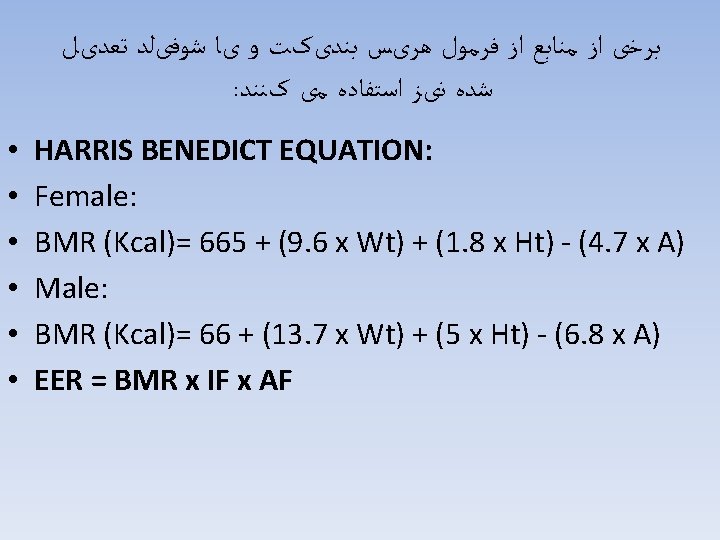

• • • Injury Factor (IF) Up to 10% burn: 1. 2 20%: 1. 4 30%: 1. 5 40%: 1. 7 50%: 1. 8 50%: 2< Activity Factor (AF): Bed bound immobile 1. 1 Bed bound mobile/ sitting 1. 15 -1. 2 Mobile on ward 1. 25

• MODIFIED SCHOFIELD EQUATION:
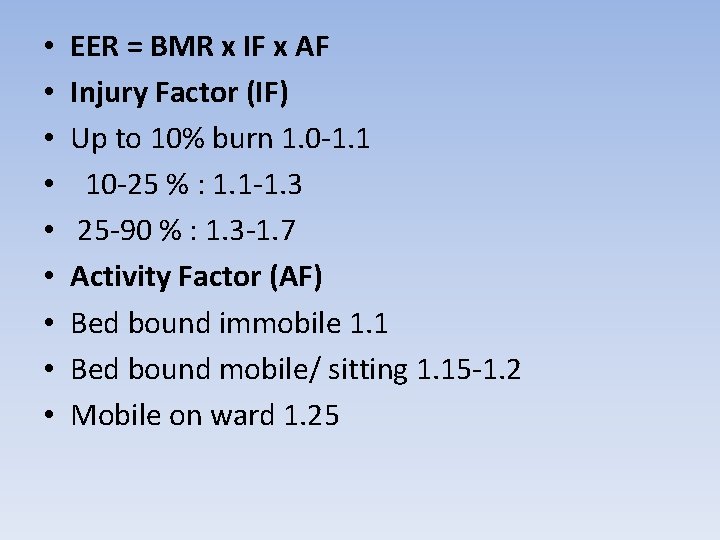
• • • EER = BMR x IF x AF Injury Factor (IF) Up to 10% burn 1. 0 -1. 1 10 -25 % : 1. 1 -1. 3 25 -90 % : 1. 3 -1. 7 Activity Factor (AF) Bed bound immobile 1. 1 Bed bound mobile/ sitting 1. 15 -1. 2 Mobile on ward 1. 25

Ireton-Jones 1997 Equations Ventilator-Dependent Patients: • EEE = 1784 – 11(A) + 5(W) + 244(G) + 239(T) = 804(B) Spontaneously-Breathing Patients: • EEE = 629 – 11(A) + 25(W) – 609(O)
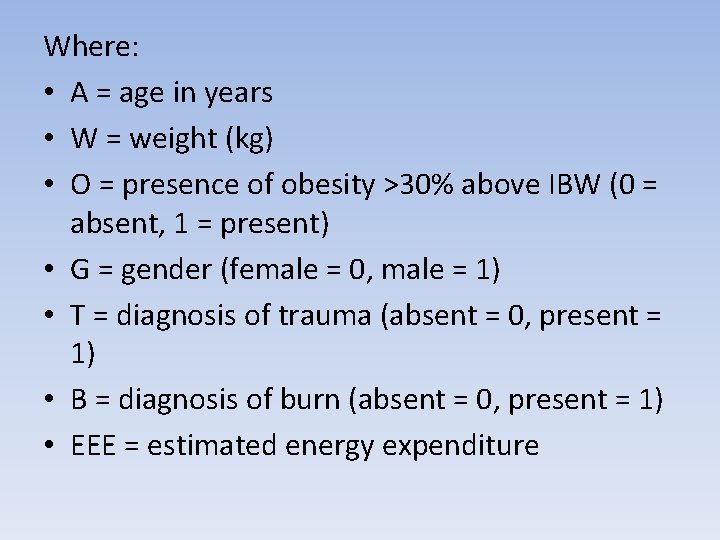
Where: • A = age in years • W = weight (kg) • O = presence of obesity >30% above IBW (0 = absent, 1 = present) • G = gender (female = 0, male = 1) • T = diagnosis of trauma (absent = 0, present = 1) • B = diagnosis of burn (absent = 0, present = 1) • EEE = estimated energy expenditure
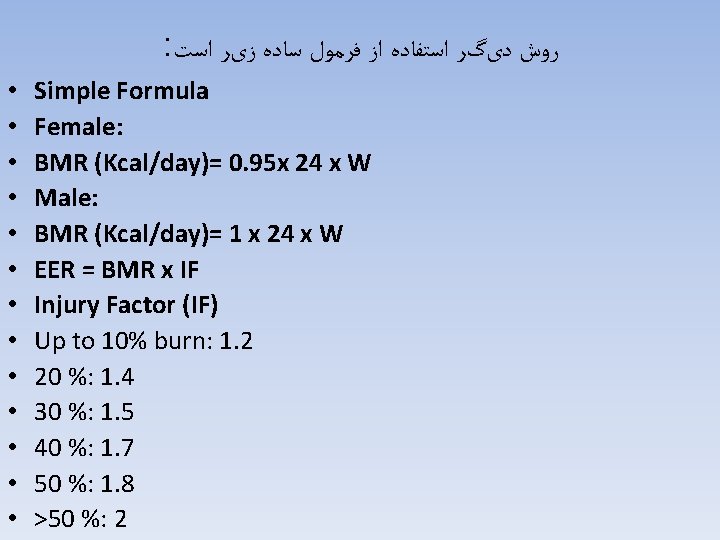
: ﺭﻭﺵ ﺩیگﺮ ﺍﺳﺘﻔﺎﺩﻩ ﺍﺯ ﻓﺮﻣﻮﻝ ﺳﺎﺩﻩ ﺯیﺮ ﺍﺳﺖ • • • • Simple Formula Female: BMR (Kcal/day)= 0. 95 x 24 x W Male: BMR (Kcal/day)= 1 x 24 x W EER = BMR x IF Injury Factor (IF) Up to 10% burn: 1. 2 20 %: 1. 4 30 %: 1. 5 40 %: 1. 7 50 %: 1. 8 >50 %: 2

• General rule: – For burns <40%: 30 -35 kcal/day – For burns >40%: 35 -50 kcal/day • Curreri formula: – 25 x ideal body weight + 40 x total burn surface as %
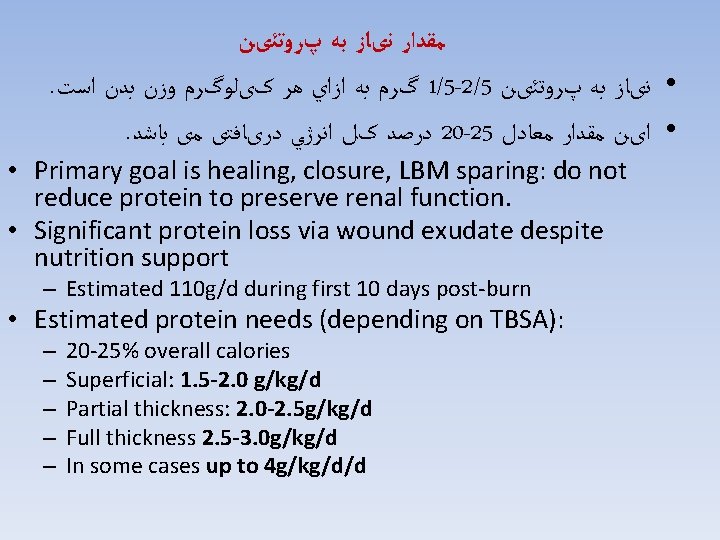
ﻣﻘﺪﺍﺭ ﻧیﺎﺯ ﺑﻪ پﺮﻭﺗﺌیﻦ . گﺮﻡ ﺑﻪ ﺍﺯﺍﻱ ﻫﺮ کیﻠﻮگﺮﻡ ﻭﺯﻥ ﺑﺪﻥ ﺍﺳﺖ 1/5 -2/5 • ﻧیﺎﺯ ﺑﻪ پﺮﻭﺗﺌیﻦ . ﺩﺭﺻﺪ کﻞ ﺍﻧﺮژﻲ ﺩﺭیﺎﻓﺘی ﻣی ﺑﺎﺷﺪ 20 -25 • ﺍیﻦ ﻣﻘﺪﺍﺭ ﻣﻌﺎﺩﻝ • Primary goal is healing, closure, LBM sparing: do not reduce protein to preserve renal function. • Significant protein loss via wound exudate despite nutrition support – Estimated 110 g/d during first 10 days post-burn • Estimated protein needs (depending on TBSA): – – – 20 -25% overall calories Superficial: 1. 5 -2. 0 g/kg/d Partial thickness: 2. 0 -2. 5 g/kg/d Full thickness 2. 5 -3. 0 g/kg/d In some cases up to 4 g/kg/d/d
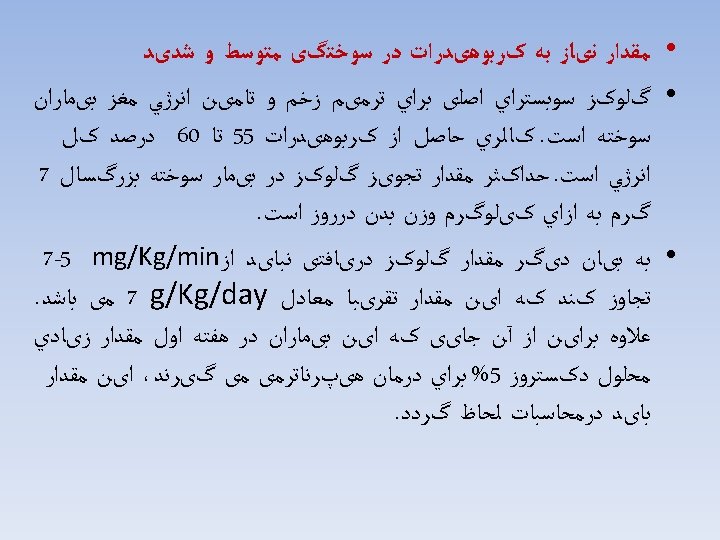
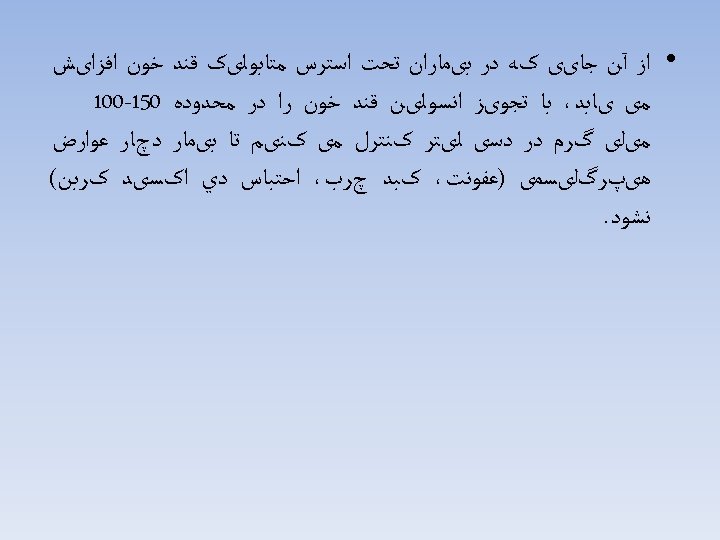
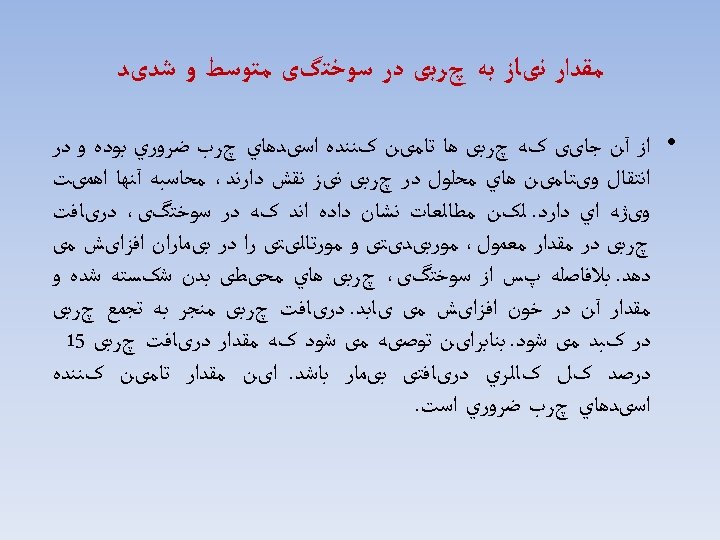
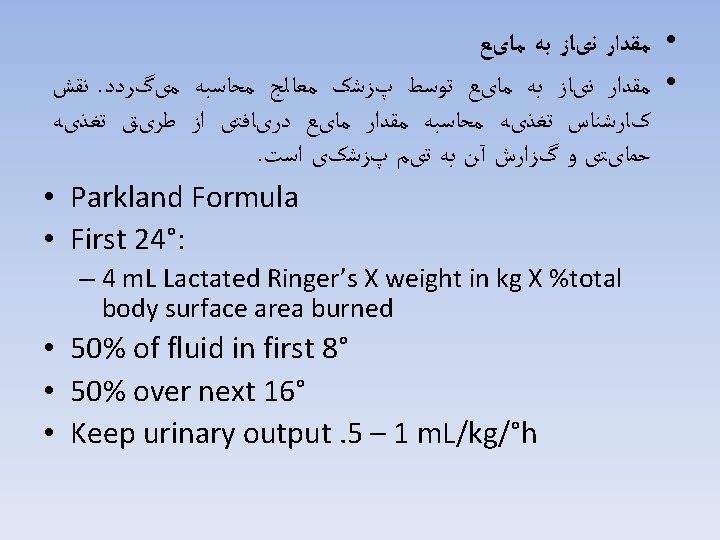
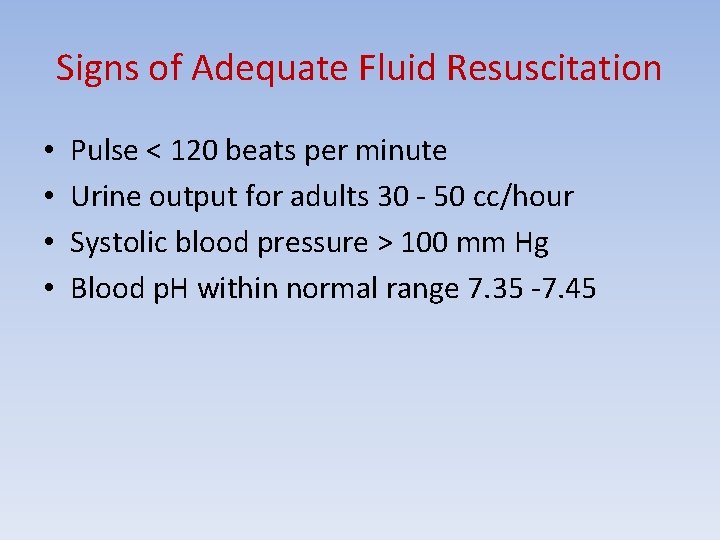
Signs of Adequate Fluid Resuscitation • • Pulse < 120 beats per minute Urine output for adults 30 - 50 cc/hour Systolic blood pressure > 100 mm Hg Blood p. H within normal range 7. 35 -7. 45
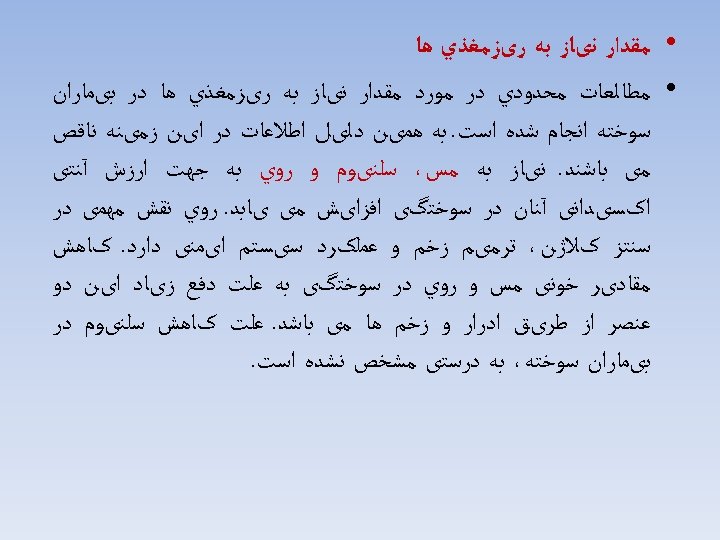
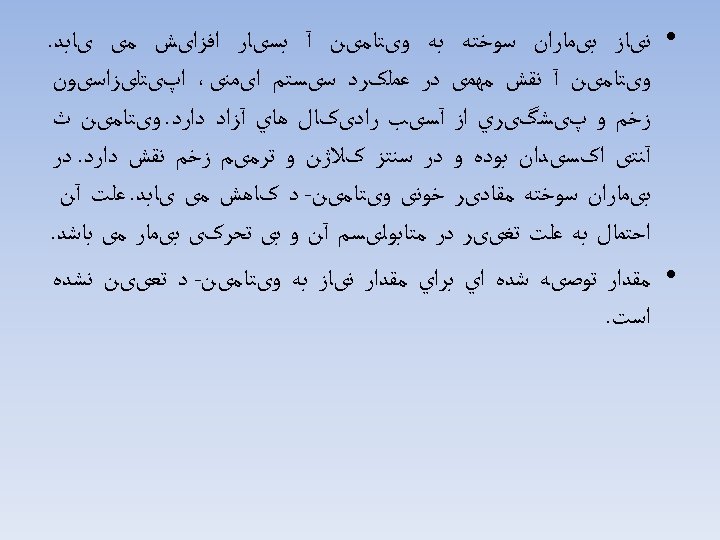
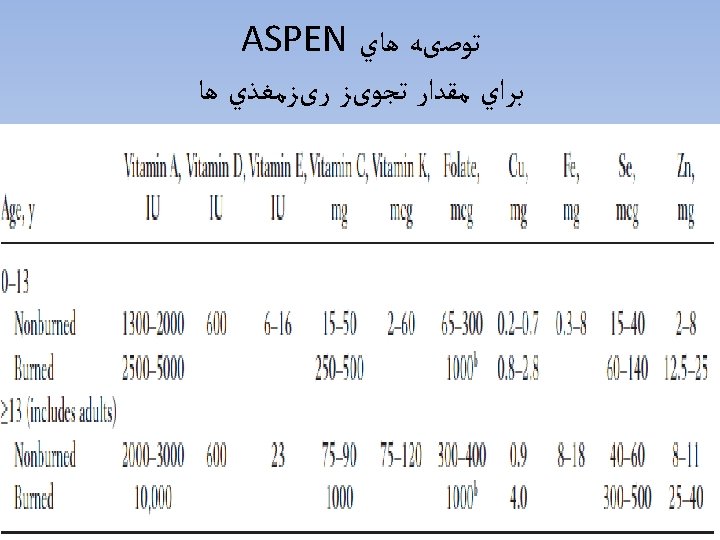
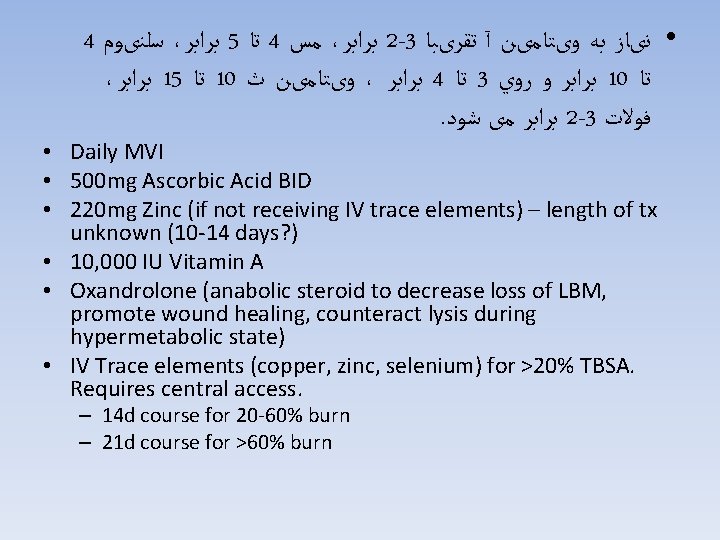
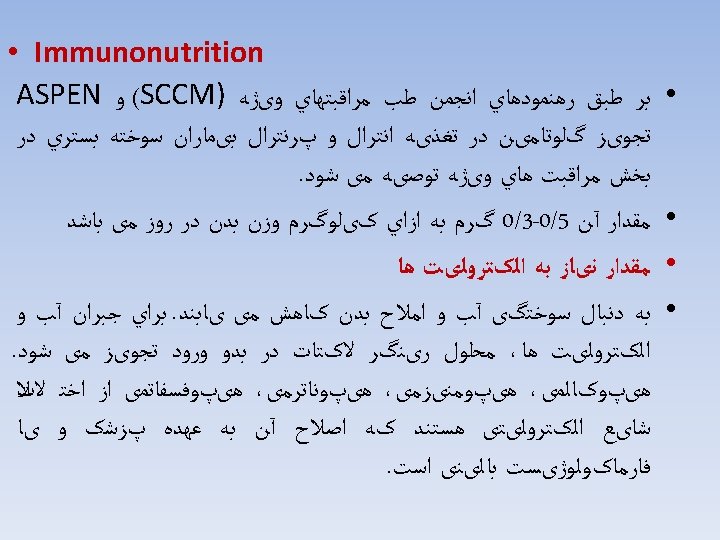
4 ﺳﻠﻨیﻮﻡ ، ﺑﺮﺍﺑﺮ 5 ﺗﺎ 4 ﻣﺲ ، ﺑﺮﺍﺑﺮ 2 -3 • ﻧیﺎﺯ ﺑﻪ ﻭیﺘﺎﻣیﻦ آ ﺗﻘﺮیﺒﺎ ، ﺑﺮﺍﺑﺮ 15 ﺗﺎ 10 ﻭیﺘﺎﻣیﻦ ﺙ ، ﺑﺮﺍﺑﺮ 4 ﺗﺎ 3 ﺑﺮﺍﺑﺮ ﻭ ﺭﻭﻱ 10 ﺗﺎ . ﺑﺮﺍﺑﺮ ﻣی ﺷﻮﺩ 2 -3 ﻓﻮﻻﺕ • Daily MVI • 500 mg Ascorbic Acid BID • 220 mg Zinc (if not receiving IV trace elements) – length of tx unknown (10 -14 days? ) • 10, 000 IU Vitamin A • Oxandrolone (anabolic steroid to decrease loss of LBM, promote wound healing, counteract lysis during hypermetabolic state) • IV Trace elements (copper, zinc, selenium) for >20% TBSA. Requires central access. – 14 d course for 20 -60% burn – 21 d course for >60% burn
GI problems • Diarrhea – If on antibiotics • Ileus – decreased GI motility due to pain medications • Gastroparesis – decreased GI motility most common with poorly controlled diabetes
• If <20% TBSA, can trial high kcal/prot diet with po supps, calorie count. 10 -20% TBSA may still need enteral nutrition if po suboptimal. • If ≥ 20% TBSA or <90% IBW, EN indicated. Usually started within first 24 h of admission. • TPN only indicated when EN fails, or in cases of abdominal compartment syndrome, significant pressor usage, etc

- Slides: 47