
Identify the parts of the human female reproductive
- Slides: 21
§ Identify the parts of the human female reproductive system. § Identify the parts of the human male reproductive system. § Define key vocabulary terms associated with the human reproductive system. § Identify the stages of the menstrual cycle. § Identify and define diseases and disorders of the reproductive system.
§System that allows living things to produce new individuals of the same kind.
§ Produce the female egg cells necessary for reproduction, called the ova or oocytes § Transport the ova to the site of fertilization § If fertilization and/or implantation does not take place, the system is designed to menstruate (the monthly shedding of the uterine lining) § Produce female sex hormones that maintain the reproductive cycle
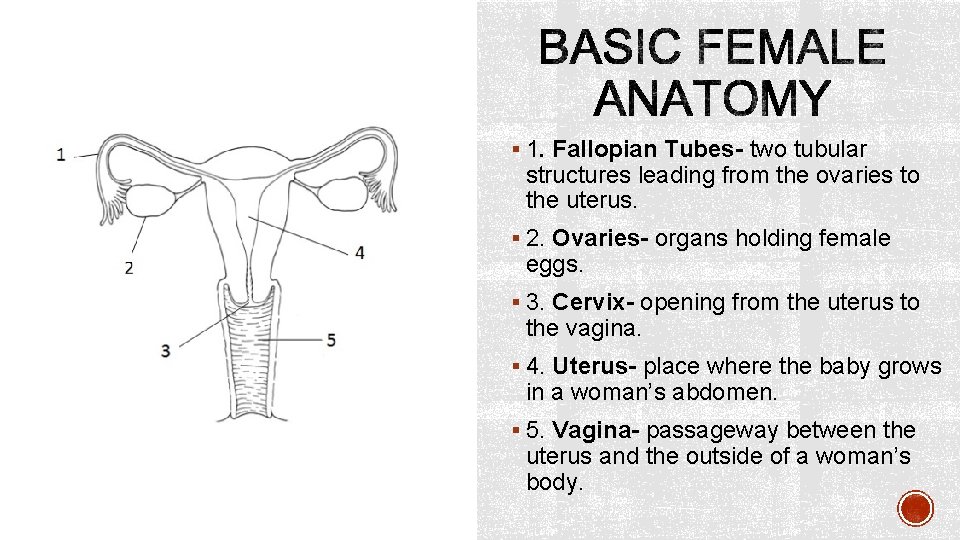
§ 1. Fallopian Tubes- two tubular structures leading from the ovaries to the uterus. § 2. Ovaries- organs holding female eggs. § 3. Cervix- opening from the uterus to the vagina. § 4. Uterus- place where the baby grows in a woman’s abdomen. § 5. Vagina- passageway between the uterus and the outside of a woman’s body.
§ Vulva- woman’s external genital area § Labia- the inner and outer folds of the vulva, at either side of the vagina § Clitoris- a small, pea-sized bump at the top of the labia that contains erectile tissue § Urethra- located below the clitoris; the opening to the bladder § Estrogen- hormone responsible for secondary sex characteristics and the for the sex drive in females; the “egg producing” hormone § Progesterone- hormone that builds up the lining of the uterus to prepare it for the fertilized ovum; the “egg setting” hormone § Ova (plural), Ovum (singular)- the female reproductive egg
§ To produce, maintain, and transport sperm (the male reproductive cells) and protective fluid (semen) § To discharge sperm within the female reproductive tract during sexual intercourse § To produce and secrete male sex hormones responsible for maintaining the male reproductive system
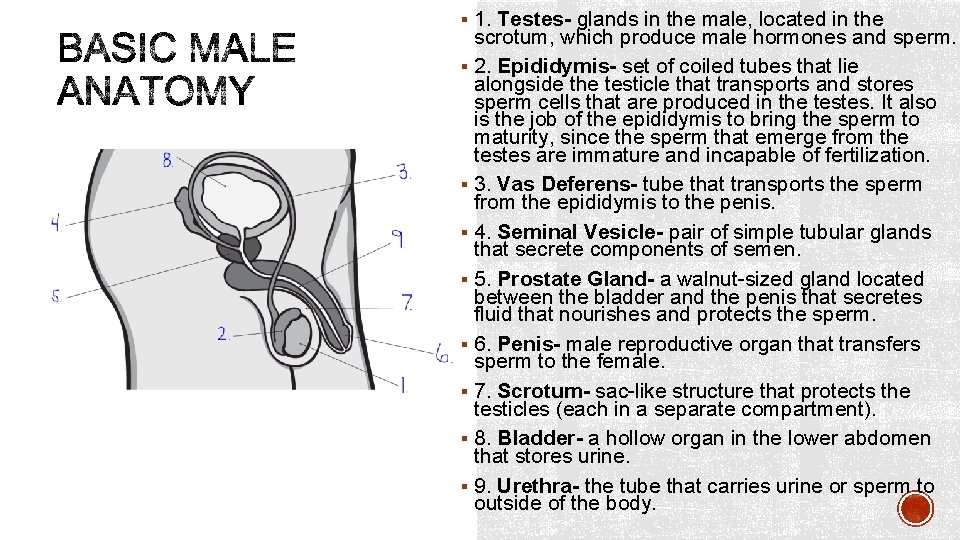
§ 1. Testes- glands in the male, located in the scrotum, which produce male hormones and sperm. § 2. Epididymis- set of coiled tubes that lie alongside the testicle that transports and stores sperm cells that are produced in the testes. It also is the job of the epididymis to bring the sperm to maturity, since the sperm that emerge from the testes are immature and incapable of fertilization. § 3. Vas Deferens- tube that transports the sperm from the epididymis to the penis. § 4. Seminal Vesicle- pair of simple tubular glands that secrete components of semen. § 5. Prostate Gland- a walnut-sized gland located between the bladder and the penis that secretes fluid that nourishes and protects the sperm. § 6. Penis- male reproductive organ that transfers sperm to the female. § 7. Scrotum- sac-like structure that protects the testicles (each in a separate compartment). § 8. Bladder- a hollow organ in the lower abdomen that stores urine. § 9. Urethra- the tube that carries urine or sperm to outside of the body.
§ Sperm- microscopic cells produced by the male’s testicles which can fertilize the female’s ovum § Ejaculatory duct- a short, straight tube that passes into the prostate gland opens into the urethra § Testosterone- the male reproductive hormone made by the testicles which is responsible for secondary sex characteristics, the production of sperm, and sexual urge
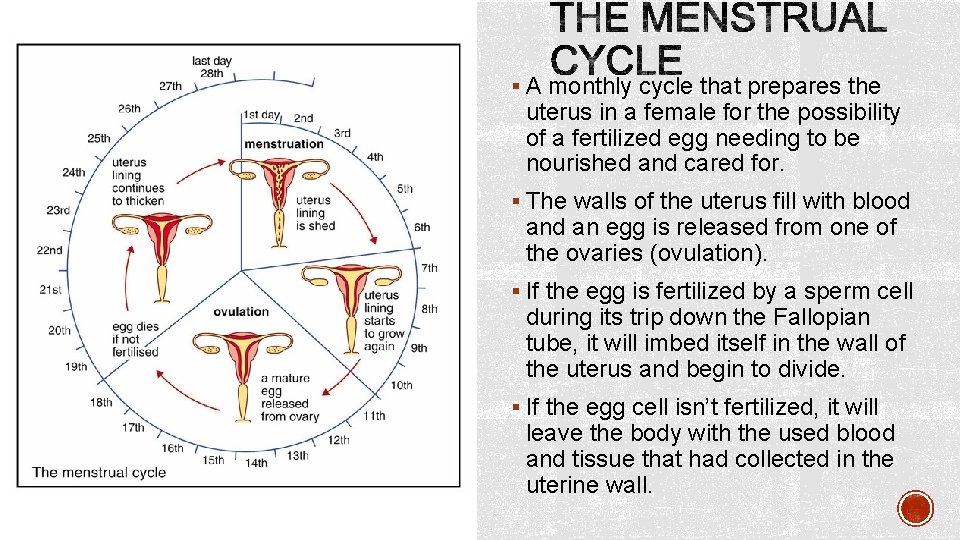
§ A monthly cycle that prepares the uterus in a female for the possibility of a fertilized egg needing to be nourished and cared for. § The walls of the uterus fill with blood an egg is released from one of the ovaries (ovulation). § If the egg is fertilized by a sperm cell during its trip down the Fallopian tube, it will imbed itself in the wall of the uterus and begin to divide. § If the egg cell isn’t fertilized, it will leave the body with the used blood and tissue that had collected in the uterine wall.
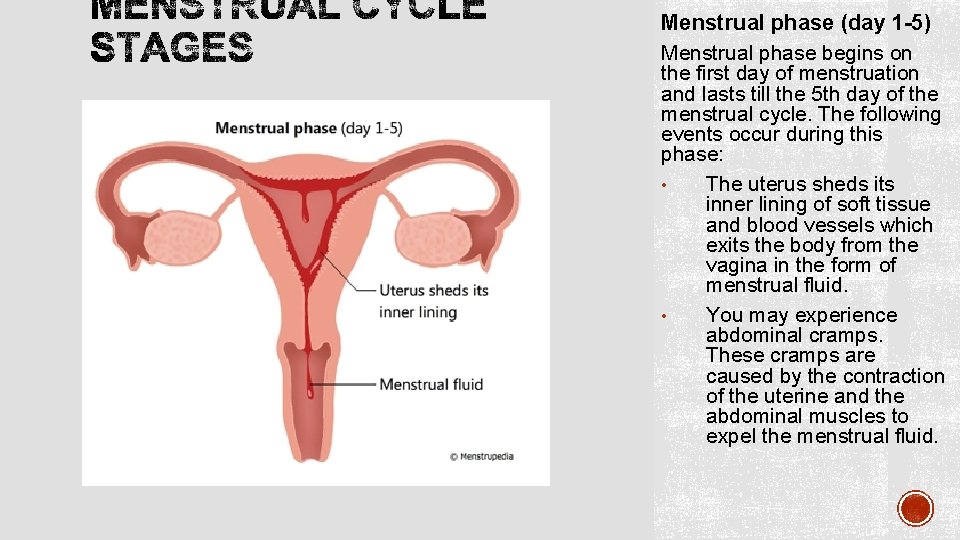
Menstrual phase (day 1 -5) Menstrual phase begins on the first day of menstruation and lasts till the 5 th day of the menstrual cycle. The following events occur during this phase: • The uterus sheds its inner lining of soft tissue and blood vessels which exits the body from the vagina in the form of menstrual fluid. • You may experience abdominal cramps. These cramps are caused by the contraction of the uterine and the abdominal muscles to expel the menstrual fluid.
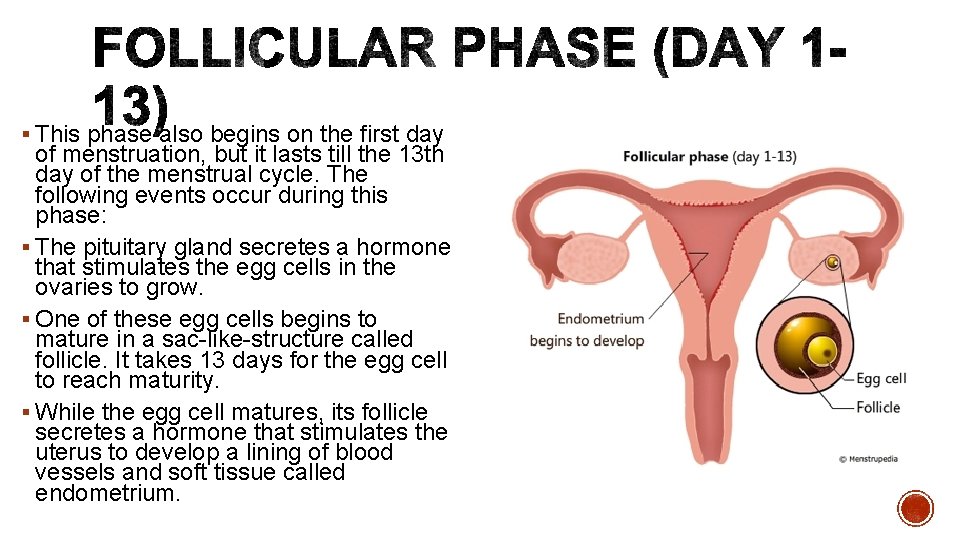
§ This phase also begins on the first day of menstruation, but it lasts till the 13 th day of the menstrual cycle. The following events occur during this phase: § The pituitary gland secretes a hormone that stimulates the egg cells in the ovaries to grow. § One of these egg cells begins to mature in a sac-like-structure called follicle. It takes 13 days for the egg cell to reach maturity. § While the egg cell matures, its follicle secretes a hormone that stimulates the uterus to develop a lining of blood vessels and soft tissue called endometrium.
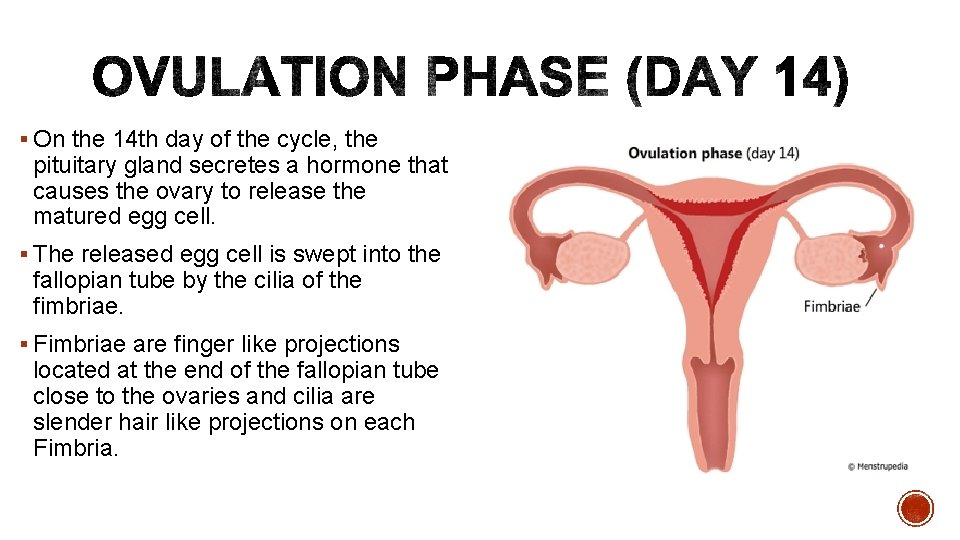
§ On the 14 th day of the cycle, the pituitary gland secretes a hormone that causes the ovary to release the matured egg cell. § The released egg cell is swept into the fallopian tube by the cilia of the fimbriae. § Fimbriae are finger like projections located at the end of the fallopian tube close to the ovaries and cilia are slender hair like projections on each Fimbria.
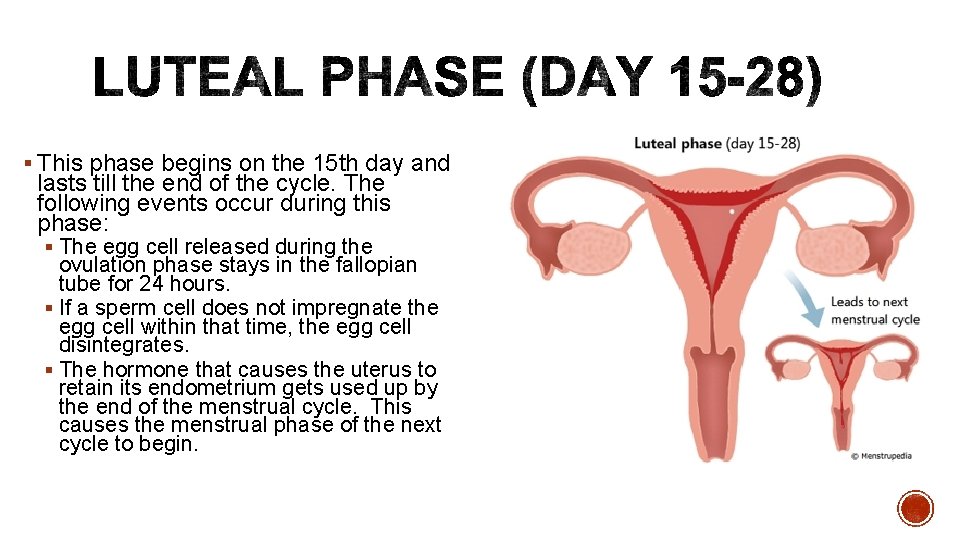
§ This phase begins on the 15 th day and lasts till the end of the cycle. The following events occur during this phase: § The egg cell released during the ovulation phase stays in the fallopian tube for 24 hours. § If a sperm cell does not impregnate the egg cell within that time, the egg cell disintegrates. § The hormone that causes the uterus to retain its endometrium gets used up by the end of the menstrual cycle. This causes the menstrual phase of the next cycle to begin.
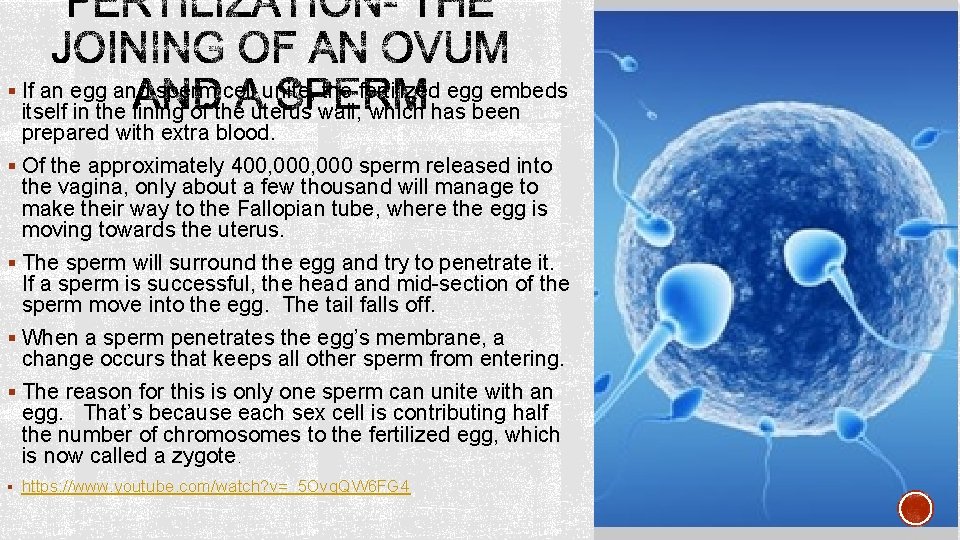
§ If an egg and sperm cell unite, the fertilized egg embeds itself in the lining of the uterus wall, which has been prepared with extra blood. § Of the approximately 400, 000 sperm released into the vagina, only about a few thousand will manage to make their way to the Fallopian tube, where the egg is moving towards the uterus. § The sperm will surround the egg and try to penetrate it. If a sperm is successful, the head and mid-section of the sperm move into the egg. The tail falls off. § When a sperm penetrates the egg’s membrane, a change occurs that keeps all other sperm from entering. § The reason for this is only one sperm can unite with an egg. That’s because each sex cell is contributing half the number of chromosomes to the fertilized egg, which is now called a zygote. § https: //www. youtube. com/watch? v=_5 Ovg. QW 6 FG 4
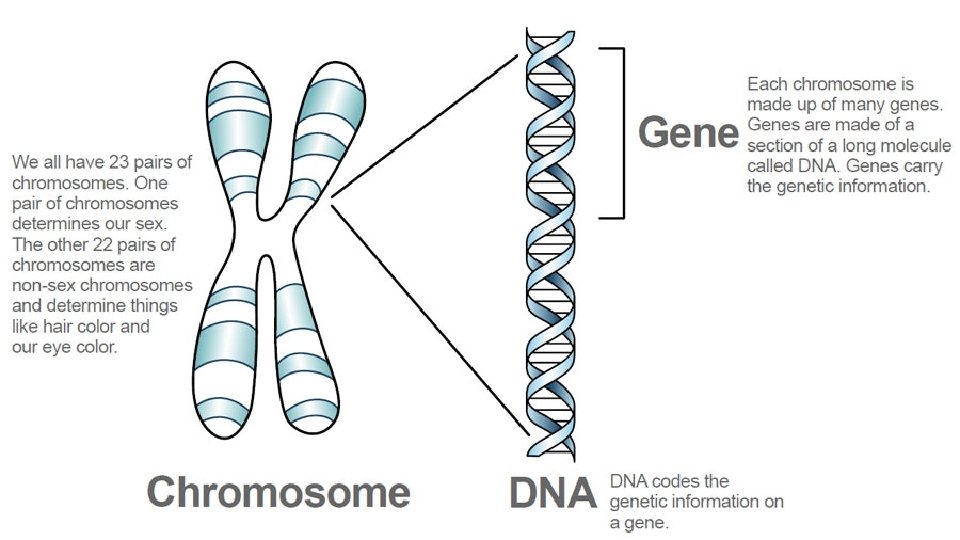
§ A chromosome contains hundreds to thousands of genes. Every human cell contains 23 pairs of chromosomes, for a total of 46 chromosomes. § Chromosomes are rod-shaped structures found in the nucleus of cells. § A chromosome contains hundreds to thousands of genes. § A gene is a segment of DNA containing the code used to synthesize a protein. § The chromosomes are responsible for passing on inherited traits (a trait is any gene- determined characteristic and is often determined by more than one gene) such as hair color, eye color, and skin color.
§ Infertility- the inability to conceive children after having regular unprotected sexual intercourse for more than one year. § It is estimated that approximately 10 -15% of couples are unable to get pregnant after one year of unprotected sex (infertility) or have difficulty getting pregnant or carrying a pregnancy to term. § Factors that play a role in this for females including: § Ovarian Function § Possible blockage in the fallopian tubes § Uterine Contour § Smoking § Excessive alcohol use § Extreme weight gain or loss § Excessive physical or emotional stress that results in amenorrhea (absent periods) § Age- Aging not only decreases a woman's chances of having a baby but also increases her chances of miscarriage and of having a child with a genetic abnormality.
§ Conditions that can contribute to abnormal semen analyses include— § Varicoceles- a condition in which the veins on a man’s testicles are large and cause them to overheat. The heat may affect the number or shape of the sperm. § Medical conditions or exposures such as diabetes, cystic fibrosis, trauma, infection, testicular failure, or treatment with chemotherapy or radiation. § Unhealthy habits such as heavy alcohol use, testosterone supplementation, smoking, anabolic steroid use, and illicit drug use. § Environmental toxins including exposure to pesticides and lead. § http: //safari 3. bucksiu. org/SAFARI/montage/play. php? keyindex=2352 13&location=local&chapterskeyindex=783933&filetypeid=11
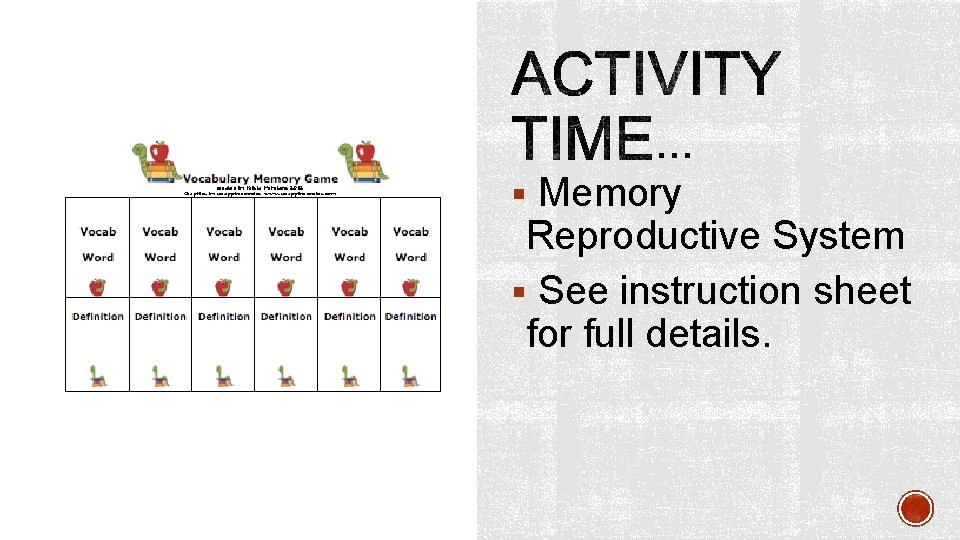
§ Memory Reproductive System § See instruction sheet for full details.
§ The reproductive system is a collection of internal and external organs in both males and females that work together for the purpose of procreating. § Due to its vital role in the survival of the species, many scientists argue that the reproductive system is among the most important systems in the entire body. § Therefore, it is imperative that one pay close attention to diseases that may affect the reproductive health of an individual. § There are many diseases that have an impact on one’s reproductive health. § We will explain them through an activity…